



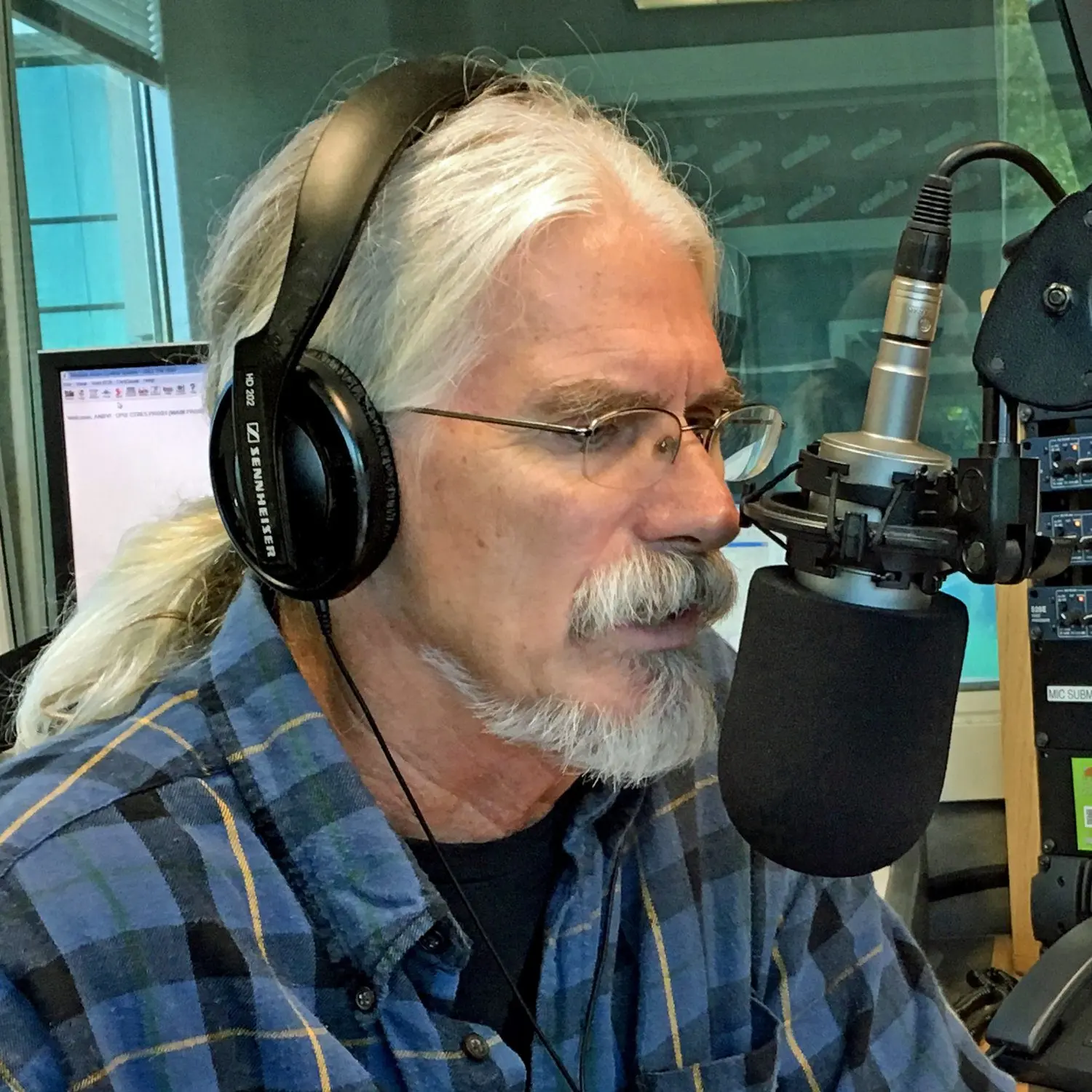
Join host Steve Gregg on this thought-provoking episode of The Narrow Path as he delves into the complex themes of Israel’s role as the chosen people and the implications of church membership in today’s diverse Christian landscape. With engaging caller questions guiding the conversation, discover the perspectives and scriptural insights that reveal new facets of these timeless issues. Gain valuable understandings on how the early church functioned in unity, and how we can strive for the same principles today.
SPEAKER 1 :
Thank you.
SPEAKER 02 :
Good afternoon and welcome to the Narrow Path Radio Broadcast. My name is Steve Gregg and we’re live for an hour each weekday afternoon. Take in your calls if you have questions about the Bible, the Christian faith, or anything like that. Or if you disagree with the host and want a balanced comment, I’d love to hear from you. We’ll be glad to talk to you. The number to call is 844-484- 5737. Now usually, or at least much of the time, I have to tell you the lines are full so don’t call right away. The lines are not full. We have two open lines right now. So if you call right now, you can be the first to take one of those and we’ll get to you certainly in today’s broadcast. So the number is 844. There’s one of them taken. 844-484-5737. All right, just an announcement. I’ve been doing this all week because I’m away from home. I’m in Oregon. I’m speaking every night of the weeks in various places. Tonight I’m speaking in a home, a pastor’s home, but I believe there’s still room for others who wish to come, in Albany, Oregon, tonight at 6.30. Tomorrow night I’m up in the, let’s see, tomorrow’s Saturday. So I’ll be up in the Portland area tomorrow. And then Sunday morning, I’ll be speaking in Rockaway Beach at the Rockaway, I think it’s the Rockaway Community Church, if I’m not mistaken. Might have a different name than that, but it’s in Rockaway Beach. And then, let’s see, Sunday night and Monday night. I’ll be in Salem speaking in the evenings. So if you’re in those areas and want to join us, you can certainly look at our website, thenarrowpath.com. Tap on the button that says announcements and find the date today, tomorrow, the next day, whatever. And it’ll show you where and when. to join us, and we’ll be glad to have you do so. All right, so we’re going to go to the phones now. Our lines are full at the moment. We’re going to talk to Kerry from Fort Worth, Texas. Kerry, welcome to The Narrow Path. Thanks for calling.
SPEAKER 06 :
Hi, Steve. I’d like you to comment on a comment I’m going to make, and it kind of goes along with the, I’ve heard you say many times, you know, when people talk about Israel as the chosen race, well, what were they chosen for? And I was just kind of reading in Acts 22 about Paul’s defense when he was in the temple, and the Romans had to rescue him, and he asked to speak to the crowd, and I mean, he basically gave his testimony, how he had been saved by the Lord Jesus Christ, and therefore making the resurrection true. And they listened to him attentively in everything until verse 22, when it said that he announced that the Lord was sending him to the Gentiles. And then all chaos broke loose. Yeah, they exploded. They wanted to kill him then, yeah.
SPEAKER 02 :
So what’s your question?
SPEAKER 06 :
Well, I’m just saying that they really didn’t have a problem with the resurrection. They didn’t have a problem with Paul’s testimony. The problem was that they were a bunch of racists. and that just like as in Jonah, he didn’t want to go talk to the Ninevites because he hated them, that the Jewish people somehow lost their way in knowing what they were chosen for. To be a light to the Gentiles. The knowledge to the Gentiles. But somehow they got to thinking they were a privileged people, and this privilege turned into racism.
SPEAKER 02 :
Well, I think you got a good point there. When we talk about someone being chosen, do we mean they were chosen to be somehow privileged or chosen to carry out a mission? No. you know, like special troops that were selected from the larger group to go out and carry out a special mission. Certainly the latter case has plenty in Scripture to support it. It’s going all the way back to the first time God’s promised Abraham that through his seed all the nations would be blessed. And then Isaiah said to Israel, it’s a small thing. for you to be my servant to raise up the children of Israel, but I’m going to make you a light to the Gentiles. Now, that was God’s idea. God chose Israel. And by the way, I’ve just been reading just the last couple of days, or when I’m driving, I’m listening to the audio book of Dennis Prager’s Rational Bible on the book of Exodus. And he just said in the portion I was listening to yesterday, he said Israel’s purpose was to take the knowledge of the true God, of the one true God, and of his laws to the Gentiles, which is true. I mean, that is what they were chosen for. And Dennis Prager being a Gentile. a Jew himself and a very knowledgeable Orthodox Jew, you know, he sees that clearly enough. But of course, the New Testament teaches that Israel did not fulfill that goal as a whole, but they did produce that seed of Abraham, whom Paul identifies as Christ, who is blessing the nations, you know, certainly all the nations of the world. have been blessed with salvation. Not every person in them, but individuals in every country have come to Christ and been saved. That is the blessing to the Gentiles. That is the light to the Gentiles. And it’s interesting because Paul, in Acts 13, was preaching at Pisidian Antioch. And when they rejected him, when the Jews rejected him, he says, well, since you reject the gospel, you count yourselves unworthy of eternal life. We’re going to go to the Gentiles. And he says, for the Lord has given us this command. And he quotes that passage from Isaiah, you know, I’m sending you as a light to the Gentiles. So Paul saw himself and the Christians in general as that faithful remnant of the Jews who follow the Messiah, who will be carrying out the mission that God gave to Israel. So Yeah, Israel as a whole did not carry out the mission. They did bring the Messiah into the world almost in spite of themselves because they tried to kill the prophets and they tried to kill, you know, God’s messengers. But despite them, God brought the Messiah through them anyway. And now the faithful remnant of Israel follows the Messiah and have taken over the mission because, well, because those who don’t follow the Messiah have not done it. And so the Messiah now is that light to the Gentiles. We carry that. So, yeah, I mean, the narration of the whole story of humanity from Old to the New Testament is a very smooth and I’d say a rather seamless one. Thanks for your call. We’re going to talk to Elia. I think it’s Elia or Elia in Sarasota, Florida. Next. Hello. Welcome to The Narrow Path. Thanks for calling.
SPEAKER 09 :
Hi there, Steve. Thank you for your ministry. I have one question, if time allows. Basically, the first one is about membership. And I listened to a lot of your answers and calls and lectures, but still don’t understand what to do. I’m a disciple of Christ. I’m just about 20 years old. And I used to be a formal member of one church organization until it got split just at the beginning of the year. And ever since I’ve been going to different congregations and serving where I can, including some international projects and stuff. And those churches are located in different cities. But two in particular that I have been attending, they have been asking me to settle down and become their member. They’re both Slavic Baptist churches.
SPEAKER 02 :
I’ll be glad to address that.
SPEAKER 09 :
It’s Eastern European culture. And basically, I serve the most in both of them. And I don’t mind. They don’t mind serving me in other elsewhere.
SPEAKER 02 :
Okay, well, let me address it. The Bible doesn’t talk about being the member of a church, except in the sense that the church globally is the body of Christ. And we are members of that body. as the word member there means an appendage, a limb, an organ of the body, a member in that sense. And Paul says in 1 Corinthians 12 that the Holy Spirit has made us members and put us in the body as it pleased him. So when you’re born again and you receive the Holy Spirit, the Holy Spirit inserts you into the body of Christ. Now this insertion into the body of Christ is not something that’s outwardly obvious because the body of Christ and its perimeters are not outwardly obvious. I mean, every Christian on the planet, if they’re true Christians, is part of this body of Christ. And now when you become a Christian, you are too. And so now you’re a member. Now, today, we have a very different situation that there was no parallel to it at all in biblical times. And therefore, the idea of membership in a church never would come up there And it certainly has never advocated or mentioned in the New Testament. The kind of membership we’re talking about is like joining a club, like being a member of Costco, you know, or Sam’s Club or something. You know, you get your membership card and now you have privileges and you belong to them that way and they belong to you. But you see, the thing that’s not parallel is that in the New Testament, there never was a town that had two different churches that that were separate from each other or that were not, you know, different campuses of the same fellowship. There was only one church, there were not denominations. Now, we live 2,000 years later and there are denominations and every town, at least every evangelized town, has multiple churches and some of them have hundreds of churches in them. So these churches, whether they would express it that way or not, and whether they even feel that way or not, in some measure, there’s a bit of a competition between them for membership because, I mean, there’s only so many Christians in a given town. And if they’re going to be members of a church, that means if they become members of a church, they’re not members of the other churches in town. So each church wants to have enough members at least to pay their bills. And so they’re kind of hoping that, you know, a new Christian or a Christian who’s new to town will choose their church instead of some other church to be a part of. Now, if you do go to a particular church, well, that’s great. I mean, God may guide you. to go to one particular church for the rest of your life. It could be, but they don’t own you. I mean, if we were to try to live according to the principles of the first century, we’re members of the whole church worldwide and of the whole church in our town. And the whole church in our town may have 100 or 200 congregations, but we’re members of all of them if they’re in the body of Christ. We’re members of all of them. And to say, yeah, but we want you to become a member in a special sense of our congregation or of our denomination. Well, what they’re saying is we want you to be a member of us in a way that you’re not a member of any other churches in the world. This is the one church we want you to be loyal to. And that’s identical to the mistake the Corinthians were making when they said, I’m of Paul, or I’m of Apollos, or I’m of Cephas. Of? What do you mean you’re of? You’re not part of a religion of Paul or a religion of Cephas. Paul himself said, did Paul die for your sins? Were you baptized in the name of Paul? Meaning, of course you were not, and therefore you’re not of Paul. You might go to a congregation that Paul leads, Or you might like Paul. You might even like his preaching better than Apollos’ or Cephas’. But you’re not of him. You’re simply part of Christ. You’re part of the body of Christ. And he says, well, who are Paul and apostles? They’re just gifts to the church that God has given to everyone for all of you to benefit from. So Paul is saying there’s only one body of Christ and you’re a member of it. And if you start saying, well, I’m of this, I’m of the Baptists or I’m of the Presbyterians or I’m of the Episcopalians or I’m of the Methodists or I’m of this denomination, what does that even mean? Does that mean I belong to them? Does that mean they saved me? And I mean, what does it mean? Whatever it means, it means you’re thinking divisively. And I believe it’s very unscriptural for a church to say, we want you to be a member here. Because, I mean, I would have to ask them, what does that mean? Now, what it usually means, if you ask them what it means, it means we want you to give your tithes to our church and not to someone else. We want you to attend our church at least, let’s say, three weeks out of the month. We’d like you to volunteer to serve here, we’d like for you to think of this as your home church. Now, I would just ask them, okay, could I do that here and everywhere else too? Could I go to all the churches, be members of them all? Now, of course, biblically, you could. Biblically, if you’re a Christian, you are a member of all the churches. And you could visit around to different ones, You could agree with some of them about their doctrine and agree with others about theirs. You could distribute your giving to more than one. But that’s, I mean, that’s obviously a biblical way of looking at it, but it certainly isn’t a very common modern way of looking at it. And so, I mean, if somebody asks you, will you become a member of our church? I would probably say, well, if I’m attending your church, I don’t know why that additional thing would have to happen. I’m already a member of the church. Not this one in particular, but if this church is part of the church, then I am too. And I’m part of you. And I’m part of all the churches. But what specific thing are you asking for? And in most cases, if they’re honest, they’ll say, we want you to join our church like it’s our club. And it’s our team. And the other churches in town are not our club and our team. Because if they were, they’d have no problem with you attending all of them. Now, I don’t recommend attending all the churches in town. In fact, I think it’s highly valuable to attend one church most or all the time, simply for the value of becoming acquainted with people, having people who become fast friends and having fellowship at a deeper level, which is very desirable. I’m not saying everyone should just visit a different church every Sunday. But if you did, you would not be violating any scriptural principle. That’s what I’m saying. And if they’re saying, well, we don’t want you to have the liberty to do that, then I’d say, I’m not seeing it that way. I mean, show me in the Scripture where this idea can be found. Let me just tell you in advance, they won’t. They can’t. There is nothing in the Scripture that resembles or is parallel to the concept of denomination or membership in one group of Christians in the town to some degree that you’re not a member of the other group. you know, all the Christians in town are your brothers and sisters, and you belong to them all. You know, I had, there was a pastor in Santa Cruz to Oregon and Idaho. I was away for a while, moved back to Santa Cruz, California. This is many years ago now, probably, what would it be, 25 years ago, probably. And one of the pastors who knew me took me out to lunch and said, Steve, I just want you to know, welcome you back to town. We want you to know you’re You’re welcome to be part of our church, which he named. I had preached there. I’d never been a member of his church before. He’d had me preach there before. And he said, you’re certainly welcome in our church. We’d love you to be part of it. And I said, well, Barney, you know that. I don’t believe in denominations. And he said, you’re right. He said, you don’t just belong to one congregation. You belong to the whole body of Christ. And I appreciated that, so I went to his church a lot. He had a good attitude. I still respect him a great deal. So, you know, that’s a rare attitude. And he was a denominational pastor. But if you went to his church, he didn’t really stress the denomination at all. In fact, you could probably go there a long time without knowing it was a denomination. Because he had a unity attitude. He had a biblical attitude toward it. And a lot of churches don’t. A lot of churches are more aware of their competition for members and for members’ dollars with the other churches in town than they are of their unity with the body of Christ. And I realize what he just said sounds very cynical, but I’m certainly not exaggerating this. I’ve had many pastors tell me, and they’re denominational pastors, that when they go to their denominations’ pastoral conferences, they get tired of all the emphasis on bricks and bodies and bucks. In other words, get more bodies in, build bigger buildings, and get more money But you can’t. There’s a limit to how much you get if the other churches in town are getting some of those bodies and some of those bucks. And it becomes like McDonald’s in competition with Burger King or something. It becomes a business-like thing. And trying to control people and make sure they don’t go to somewhere else. That’s just not a biblical attitude. On the other hand, when you do find a church that’s that feeds you and that has the right attitude and doesn’t inspire wrong attitudes, then it might be good to go there all the time or a lot of the time. But membership, in the sense that they’re talking about it, doesn’t exist in the Bible. In fact, one could argue that when Paul was talking about, I’m of Paul, I’m of Apollos, that he was actually condemning the concept, which didn’t really exist, but was kind of emerging at that time. He tried to nip that in the bud. He says, no, you’re not of Paul, you’re of Jesus. All of you are of Jesus. Yasi from Knoxville, Tennessee. Welcome to The Narrow Path.
SPEAKER 07 :
Hey, Steve, thank you. So I am, since the last time I called about Romans 5, I’m still toiling. Verses 12 through 18 say, And just to make it easy on myself, I wanted to hear your thoughts on this. While still holding the view on conditional immortality and age of accountability, so pretty much not Augustinian view and imputed sin, would it be responsible to substitute in verses 12 and 14 the word death with condemnation and not literally changing scripture, but the meaning of death being spiritual condemnation instead of physical condemnation. And I ask that because I think Paul did know that the fall brings physical death to all people, but I think since Paul is making the comparison that between Christ and Adam and those two bodies, that being in Christ brings justification, so also being in Adam brings spiritual condemnation, not because of It being imputed to us, I think verse 12 states that clearly. But yeah, what are your thoughts on that?
SPEAKER 02 :
Well, as you know, Romans 5, 12 through 18 is a very, or further on to the end of the chapter, is a very A complicated, short passage because Paul, the structure of the passage is so strange. He’s got a long parenthesis in the middle of it. And in the middle of the long parenthesis, there’s a shorter parenthesis, which really makes it an awkward construction, makes it hard to follow his thoughts. And then even some of the words he uses are hard to follow. And then, of course, he also doesn’t just use words and strange construction, but he makes caveats. He says, as sin entered the world through one man and death through sin, so sin came to all men. Then he talks about, but the effects of the one man’s sin, it wasn’t exactly like the effects of the other man’s sin and righteousness. And then he gives these caveats which are not entirely easy to understand. And so that this one passage, as some very good teachers I’ve known have felt, is one of the more difficult passages in Paul or even maybe in the New Testament. to understand. And I agree. I’ve always found it so. But it is also the passage that Augustine used to come up with the doctrine of original sin. And you’re saying that if instead of using the word death in the places where Paul uses it in that passage, if we said condemnation, would that make a difference? Is that what you’re saying?
SPEAKER 07 :
Yes. I mean, specifically in 12 and 14.
SPEAKER 02 :
Yeah. I think it could. I think it could make a difference, and not necessarily a good one. But again, this assumes that I know what the passage is trying to say, and perhaps I don’t. I mean, I’m not sure if anyone can be 100% sure they know what the passage is saying. But I think what he’s saying is sin entered the world through one man and death through sin. Now, you’d say, well, condemnation through sin. That is true. Condemnation did come through sin. But then it says, and death passed on to all men for all sinned. Well, did condemnation pass on to all men because of Adam’s sin? Well, I guess so since they all sinned. You know, but I think he is talking about death as the specific manifestation of condemnation. I mean, people can be condemned to other fates, but death is the fate he’s talking about being condemned to. And it becomes clear that, of course, all men, even babies who haven’t sinned, and this is how Augustine got wrapped up in his doctrine of original sin, even babies who don’t sin sometimes die. And therefore, they’re not dying for their own sins. They must be dying for Adam’s sins is how It’s usually argued. But are they condemned for them? In other words, if a baby dies, it may well be because Adam sinned, but is the baby condemned? I don’t know. I mean, I guess we could say condemned to physical death like everybody else, but is the baby in heaven or hell? If condemned, we would assume he’s not in heaven when he dies. And yet he does die. And I believe the reason is because Adam and Eve… were banned from the tree of life. And they left the Garden of Eden before any of their children were born. So all humanity that was born afterwards was born separated from the tree of life. And God said, one must eat of the tree of life to live forever. And that’s why he didn’t let them do it after they sinned. And so, you know, every baby today and every person on the planet has been born and lived their lives debarred from that tree of life in the Garden of Eden. None of us have had access to it. And so we don’t have eternal life as we would have if no one had ever sinned. So I think death definitely has come upon us because of Adam. But is death, in the case of an innocent party, is that a condemnation? Is that actually a judgment against them inside of God? I’m not sure I would feel as comfortable just switching those words around. I’m not saying you can’t do it. I’m just saying I’m not sure that I feel good about it. Continue to look into it, and I’ll give it some thought, too. But I probably would just stick with the words Paul used. I don’t know if that’s helpful. Thank you, Yossi, for your call. I need to take a break here. You’re listening to The Narrow Path. We have another half hour coming, but we are a listener-supported ministry, and if you’d like to help us pay the radio bills, you can write to The Narrow Path, PO Box 1730. Temecula, California, 92593. You can also do that from the website, though everything at the website is totally free. But the website’s thenarrowpath.com. I’ll be back in 30 seconds. Don’t go away.
SPEAKER 01 :
Take The Narrow Path with you everywhere on your phone or other device by downloading our app from the App Store or from Google Play. You can listen to the radio broadcasts live or later from the app, as well as many other lectures posted at our website. Search for the app by typing the same name as the website, The Narrow Path, and enjoy the learning experience. It’s rare to get such good stuff for free these days.
SPEAKER 02 :
Welcome back to The Narrow Path radio broadcast. My name is Steve Gregg, and we’re live for another half hour, taking your calls. If you have questions about the Bible or the Christian faith, feel free to give me a ring. The number is 844-844-8444. That’s 484-5737. And I want to remind those in Oregon, I’m speaking in Albany tonight, speaking in the Portland area in Portland tomorrow night. I’ll be in Rockaway Beach Sunday morning. I’ll be in Salem Sunday night and Salem again on Monday night. If you live in those areas or want to go there, go to my website, thenarrowpath.com. thenarrowpath.com and look under announcements and you’ll find the information about how to join us. Love to have you there. Now our lines are full, so I’m going to go again there and talk to our callers. Tina in Surrey, British Columbia. Welcome.
SPEAKER 08 :
Hi, thank you for taking my call. Yeah, I just wanted to know what will happen to the animals on the last day? And I’ll take my answer off the air. Thank you very much. Have a good day.
SPEAKER 02 :
Thank you very much. What will happen to the animals on the last day? The last day being when Jesus comes back. We’re not told. Nothing is said about them. However, we are told in 2 Peter 3, that the heavens will be dissolved and the earth will be burned up and all the works in it, and the elements will melt with the fervent heat, and then God will bring in a new heaven and a new earth. I would suggest that the animals on the earth, when everything is burned up, they’d probably be burned up with it. They’re not made of asbestos, so they’ll probably get burned up. There’s no indication that they have eternal life. Now, lots of people wonder, will there be animals you know, in the resurrection, in the new earth? Will our pets be there? People often wonder that. We have no information about that. Some people would take something like Isaiah 65 or Isaiah 11, where it talks about the wolf will lay down with the lamb and the bear and the kids shall lie down together in the calf or whatever and say, look, there’s animals there. In my own opinion, those are not references to the new earth. I have a different understanding of those passages, so I can’t use them to prove that kind of a point. However, I will say that God, when he made the animals before he even made man on this earth, every time he made something, he said, that’s good. That’s good. It’s great. It’s good. And then he made humans and that was good too. Now, I think that God likes animals. And I know people do. And I can’t imagine why God would exclude animals from there. However, if there are animals there, there’s no way to know if they are the same animals that were here that somehow are given eternal life in a new creation, or if he’s just going to replenish what was there. That’s bringing us more animals, only unfallen animals. So there won’t be any mosquitoes. That’d be my answer to that. Let’s talk to Max in Bronx, New York. Hi, Max. Welcome. Hey, Steve.
SPEAKER 05 :
Thanks for taking my call. I could see all the people who love animals are crying right now with that answer. Yeah. Okay. Let me get to the questions real quick. Dealing with what is the order of the four elements, you know, which came first? What’s the order? Scientists say that the fire, the plasma, then air, then water, then land. Do you agree with that, or how do you see it?
SPEAKER 02 :
You know, it’s a funny thing. I was just listening to an atheist podcast just before the show, and somebody called his podcast and said something about that. It wasn’t you, was it?
SPEAKER 05 :
Oh, no. I literally was… It was interesting, yeah.
SPEAKER 02 :
Somebody called and asked, made the same point, but he was saying, you know, those four elements were created, science would say, were created in the same order that the Bible has them being created. But, I mean, I thought the guy was stretching a little bit, but he was saying, well, in the beginning, that’s time. You know, God created the heavens and the earth, that’s space, you know, and then there’s water and so forth. I mean… I really don’t know that the order of those things is relevant. It’s very possible that time and space were created at the same time and same place. Actually, science would suggest, I should say, the popular scientific view of the Big Bang would suggest that time and space both came to a beginning at the Big Bang, so they would suggest it was simultaneously. And we don’t know from Scripture that it wasn’t simultaneously. If God created the heavens and the earth, I guess we’ve got time and space there. Certainly right from the beginning, before he did anything else, it says, you know, waters covered the face of the deep, so there was water. So I’d say all three of those things were there from instant one, you know. Interesting, interesting.
SPEAKER 05 :
Other things, I don’t know. Okay, real quick, two relational questions, dealing with relationships and stuff like that. Is it wrong to have physical preferences, any predilections, whether for a marriage partner, whether race, aesthetics, body, intelligence, personality, financial standing? I mean, when it comes to choosing someone, is it wrong to have any type of preference?
SPEAKER 02 :
I don’t think so. I mean, it seems to me that God deliberately made people attracted to each other uh but not everybody’s attracted to everybody else some people attracted some and some to others and just like some people like some kinds of food more than other i mean it’s just tastes it’s just personal taste uh it’s not a spiritual thing but but on the other hand if you know if if in the whole mix of what you’re talking about we mean intelligence, similar values, similar views, the same faith, all those things. Yeah, I’d say we definitely have to have some preference there. I mean, especially the same faith because Christians are not really permitted to marry non-Christians. But then even if you are both Christians, having the same values makes a huge difference in terms of compatibility. I mean, I will tell you this. I know I have experience with marriage and I will say marriage can be difficult. Marriage can be very hard. I never married a non-Christian, but I have been married to a Christian who didn’t have my same values, and it’s hard. Now, even if you have the same values, I mean, very few marriages, I think there are some, but very few marriages are seamlessly easy because people are so much alike. I agree. But very few marriages are like that. I think most marriages, even very good marriages, people have their moments where they prefer different things, have different opinions, value different things more highly at a moment. You know, you’ve got to be married and you’ve got to live in peace and in love with your partner no matter how many differences you have. But there’s nothing wrong with being careful to choose somebody who has the fewest differences with you. Now, you mentioned physical attraction. There’s nothing wrong with marrying somebody you’re physically attracted to because actually being married, part of the reason for being married is to have kids. And in order to have kids, you have to have sex. And in order to have sex, well, normally you have to have some measure of attraction. There are people that you would find hard to look at and much more hard to be intimate with on a regular basis. So there’s nothing carnal about preferring the looks of one person to the looks of another. On the other hand, it is carnal if there’s a number of options and the most spiritual and the most otherwise compatible option is not the most beautiful person of the options. In other words, you might… It’d be wrong to go on beauty primarily because, as it says in Proverbs 30, beauty is vain and charm is deceitful, but the woman that fears the Lord shall be praised. So, I mean, the first thing I would go for would be somebody who really loves God. Now, if someone really loved God, but I didn’t find them attractive at all, I don’t think I’d marry them, but I would value them as a friend, you know? But if you’re going to marry them, You’re going to have to look at them a lot, you know. And frankly, honestly, there are people that you probably find hard to look at. And probably there’s some people who find you and me hard to look at, you know. That’s just the way taste is.
SPEAKER 05 :
Yeah. I agree. Real quick, dealing with the same scenario, let’s say two people find each other decent and they’re feeling like, yeah, we could get married. But one is feeling like, well, it’s more of a compatibility thing. In other words, they feel this is a great guy or this is a great woman. I’m really not in love. I don’t feel those butterflies. I don’t feel the in love feeling. But they really are great. Should that person still marry them or should they say, well, no, maybe I should wait? What would be your advice on something like that?
SPEAKER 02 :
Yeah, with our American infatuations with romance and stuff, we want our spouse to have those butterflies. And we want to have those butterflies. But there’s nothing in the Bible indicates that those butterflies that you feel are somehow a necessary part of marriage. I would say it’s problematic. if the person you married has butterflies toward other people and not toward you, that doesn’t mean they can’t marry you. That doesn’t mean they can’t marry you, but they’re going to have temptations that, you know, let’s face it. We live in a, uh, a society that exalts romantic feeling, uh, far more than it deserves to be exalted. And, uh, as a value. And because of that, the culture will continually be, um, hammering at somebody who’s married to somebody who they don’t feel in love with but that’s no excuse not to stay married to them it might be a reason not to marry them in the first place but it’s not you know if you marry someone you don’t feel that toward and and you’re honest about it or maybe better yet You never mentioned you and you feel like you’re going to marry them because there’s enough good reasons to do so. And you value them. You want to spend your life and you want to serve them. You know, of course, you don’t have to mention to them that you don’t have those other feelings. But frankly, frankly, the person would probably want to believe that you do. So, I mean, we have to look back beyond our own culture in the past. Jewish culture, for example, or Middle Eastern culture in general, or even, frankly, Western cultures of certain types and Eastern European. Not always has it been that people got married because they felt those butterflies. A lot of times they had arranged marriages. Someone else chose their spouse for them. And I’m sure that some people married people who were rather repugnant to them. But in general, if they didn’t find their partner repugnant, but also didn’t get twitterpated about it, that was just normal. It was about normal. And what was their duty? To have kids, raise those kids, be faithful to each other, serve each other, be loyal to each other. And with those kind of commitments, you grow in love, even if you don’t grow in infatuation, you know. You become, the more you live together faithfully, the more gratitude, you have occasion to have for that person. And with the increase in gratitude comes an increase in warm feelings too. But the warm feelings are not the basis of marriage. And if you get married to someone and you don’t have them from the beginning, or you do, but then you lose them later, that in no sense is a basis for ending the marriage or for diminishing your service and love to the person. Love is in marriage… Yeah, it can be romantic, but love in general simply means you’re laying down your life for somebody else. That’s what Jesus said.
SPEAKER 05 :
All right, and I don’t know if I get one last one in.
SPEAKER 02 :
I think not. I talked to you all day, but our lines are full, and we only have 15 minutes left. Okay, understandable.
SPEAKER 05 :
And Dave is doing a great job.
SPEAKER 02 :
Thank you. Yeah, call again next week, and we’ll take your last question. All right, because I don’t want people to just have to sit there all day and not get on. Mike in Cool, California. Welcome.
SPEAKER 03 :
Hi, Steve. How are you this afternoon?
SPEAKER 02 :
Good.
SPEAKER 03 :
So I have a question. Do you think it’s possible for Christians to see spirits?
SPEAKER 02 :
I don’t think I’ve ever seen any, although the Bible does say that some have entertained angels unawares, which would mean that’s connected to the command to be hospitable, you know, show hospitality to people because some have inadvertently entertain angels in their homes when they thought they were just entertaining guests. So angels are spirits. So I assume that those angels in question were probably materialized in a human form. But to see spirits with natural eyes, generally speaking, would not be a commonplace. But on the other hand, there is such a thing as discerning of spirits. So I don’t know what that’s like to… see demons or angels or whatever. I don’t rule it out, but I don’t, I’m not going to affirm it either. I had something happen to me at church Sunday. Okay, if it’s going to be a story, please be very quick about it because there’s a lot of people. Go ahead.
SPEAKER 03 :
I saw something out of the corner of my eye and I looked over there and I believe with all my heart I saw a spirit leaving a person’s body. And the preacher was preaching about people needing to get rid of parts of their life to fully receive Jesus. And I have no idea how what I saw, I mean, I believe with all my heart in what I saw, I started shaking. It brought tears to my eyes. It was like nothing I could ever imagine.
SPEAKER 02 :
Yeah. I obviously can’t tell you what that was. I mean, I can’t help you there, but I will say, I won’t say you didn’t see a spirit because you might have. You might be, if I were in your shoes, I might want to talk to that person and say, did anything happen to you during that sermon? And find out if anything corresponds with or makes any sense of what it is you saw. Anyway, yeah, that’s interesting. I can’t tell you that it’s commonplace to see spirits. I’ve never seen one, and I don’t know very many Christians who have. But I have, I’ve known some Christians who appear to have seen demons, and the Bible talks about people who’ve seen angels. So I’m going to just say, however uncommon it may be, it’s not something that I feel I could rule out. All right, let’s talk to Angel in Baytown, Texas. Angel, welcome.
SPEAKER 10 :
Thank you. Yesterday you were speaking about getting rid of self-desire and dealing with self. And I was wondering if it is at all important to love yourself and is your relationship to yourself at all needed in your walk with the Christ and in the kingdom itself?
SPEAKER 02 :
Well, is it ever right to love yourself or is there any need to love yourself? It depends on what is meant by that. I will say this. Christians were, in many cases, able to be very holy and very well-adjusted and very outreach-oriented and very confident and very ideal in their Christian lives without the slightest interest in even thinking about self-love. The idea of loving yourself did not come into the church from the Bibles. It came from, you know, the hierarchy of needs of Abraham Maslow. It was basically humanistic psychology that began to teach Carl Rogers and others began to teach that people need to learn to love themselves. And then you got people, even Christians like Charles, I mean, like James Dobson and stuff who says, you know, the greatest need of Christians is to have self-esteem and self-love. Well, the Bible would not agree with that. although I’m not sure what is meant by it because if we use those same words, the Bible says, the only thing the Bible says where it puts the word self and esteem together is in Philippians chapter two where it says, let everyone esteem others better than himself. So it doesn’t say you have to esteem yourself well. It says you need to esteem other people above yourself. Now, some people have said, well, Jesus said you have to love your neighbor as you love yourself, which presupposes you have to learn to love yourself. No, it presupposes that you already love yourself. It’s saying, okay, the standard by which you have to measure your love for others is how much you love yourself. The assumption being you love yourself plenty already. And now you need to learn to love other people as much as you love you. Because loving you is natural. In fact, Paul said in Ephesians 5, no man yet ever hated his own flesh, but nourishes and cherishes it. So this idea, you know, problems come from people not loving themselves or esteeming themselves. There’s been lots of studies on that. Almost every criminal in the penitentiary is tested and found to have very high self-esteem and very high self-love. I’m not saying everyone who has those traits is a criminal, but it’s interesting that that the common denominator behind bad behavior has nothing to do with low self-esteem. If anything, bad behavior comes from placing self above others and certainly placing self even above God. No, there’s no, nothing in the Bible would say we have to learn to love ourself. Now, if what we’re talking about is, you know, there are people who have this got really unrealistically hateful attitude toward themselves. So they’re, you know, cutting themselves and they’re piercing themselves and they’re starving themselves with anorexia or whatever. Some people say, well, that’s because they hate themselves. Well, I don’t know exactly what causes that. I don’t know. I don’t know if they hate themselves. A person who’s, let’s say, starving herself because she believes she’s fat and ugly, she’s doing it because she loves herself and she doesn’t want to be fat and ugly. She wants the best for herself. She wants to look good. She wants to be attractive. That’s self-centered. It’s not hatred of self. She may hate her body, but I’ll bet, you know, I mean, there are people who get that deranged. And frankly, cutting and, you know, piercing oneself excessively and stuff, people do very… disgusting and disrespectful things to their bodies and i don’t know what’s motivating that i’m not going to say that’s because they need more self-love if it is i don’t know it to be the case uh i don’t know that it’s not demons frankly i mean that kind of behavior may well just be demonic um but you don’t get rid of demons by loving yourself more. Uh, self-love is never recommended in scripture. It is assumed that everybody naturally loves themselves and it’s very hard to stop loving yourself and that you start getting saved when you deny yourself and take up a cross and you put others above yourself. So, uh, there may be some sense in which self-esteem or self-love, uh, is, we could say it’s necessary because we’re contrasting that with self-destructive behavior. Um, And obviously people should not punish themselves with self-destructive behavior. But I’m not so sure that the people who are doing that really don’t love themselves a great deal. You know, if you look in the mirror and say, I’m so ugly, I hate myself. Well, no, if you hated yourself, you wouldn’t mind that you’re ugly. In fact, you’d kind of wish worse on yourself than that because you don’t love yourself. You love yourself. You just wish you were prettier. And so It’s very ambiguous when you talk about self-love and self-esteem. All I can say is those Christians who have argued that people need more of that are saying something that, A, the Bible never says. And if it was necessary, it seems like either Jesus or some writer of the Bible would say it. It seems like God would let us know. And, B, it’s like the opposite of what the Bible seems to say. Now, it may be that when the Bible says deny yourself, And someone talks about self-love and self-esteem. They may be talking in different categories, but that’s not evident. All I know is that I have never had any interest in developing self-esteem. If anything, my whole life has been trying to bring myself down in my own eyes. That’s what humbling yourself means, to make yourself low in your own eyes. And God gives grace to the humble. He resists the proud. So I would say most people who are advised to improve their self-esteem and self-love, see how it works out if you instead lower yourself, put yourself below other people and serve. I mean, don’t put yourself below other people so you can feel sorry for yourself. So poor me, everybody’s better than me. No, just say, I’m the servant. I’m here to serve others. Why should I get my way? Who am I that I should be exalted? Let me, you know, other people need affirmation. Let me spend my life affirming them, not myself. It says in Proverbs, let another man praise you, not yourself. And there will be people who, if you are virtuous, will praise you. But you don’t need to be contemplating how great you are. I would say people who do that more often than not are wise. spiritually damaging themselves. Remember, Nebuchadnezzar had conquered the world, and he was looking out over his conqueror and said, oh, I have done this by my great might. Now, there’s self-esteem on display for you. And God made him insane. Made him insane. And for seven years, he ate grass like an ox. And then after seven years, He came to his senses and glorified God, and it was not himself. When he came to his senses, he didn’t have greater self-esteem. He had greater God-esteem. If anything, his self-esteem was deflated, which is why probably he was able to come to his senses. Because, you know, if you think you’re great, you’re out of touch with reality. You come to your senses. In Job, Job was a very good man, and he thought very well of himself. But in the end of the book, in Job 42, he saw God, and he says to God, I’ve heard of you at the hearing of the ear, but my eyes now see you, and I loathe myself, and I despise myself, and I repent in dust and ashes. And that’s when everything worked out better for him. So loathing yourself in a healthy way, is there a healthy way to do it? Well, psychologists probably would say there isn’t. but they’re not mostly healthy either. Most psychologists, I think there’s a larger percentage of psychologists who commit suicide than is the case in the general public. And I’m pretty sure this, if it’s not exactly true, it’s pretty close to true, a larger percentage of psychiatrists and psychologists go and see a shrink as a patient than the general public percentage, I think, does. If my percentages are off, it is nonetheless very high in those cases, in those professions. So, no, I mean, if they tell me, no, I need self-esteem, I’d say, hey, you do you, I’ll do me. You know, I don’t want self-esteem. I’ve had plenty of that all my life. I need to do what I can to reduce that so that I can receive grace. God gives grace to the humble, not to the proud. All right, let’s see if we can get one more short call in here. Edward from Las Vegas, Nevada. Welcome. We’ve got a couple minutes maybe. Go ahead.
SPEAKER 04 :
Okay, so this might should be real quick. The parallels we were just talking about. When it comes to obeying God or loving others, I’m in a circle where someone always says loving others is an obedience to God or that’s more reflective of the verse in John that talks about obedience. I always favor, or I’m more in favor of saying, no, no, obedience is a true act of love. I’ll take that off for you if you can just speak on that.
SPEAKER 02 :
Okay, yeah. Obedience to God, is that more important than loving others? Well, again, the command of God is that you love others. And not only as you love yourself, but Jesus said, love others as I have loved you. So that’s the command. Jesus said all the law and the prophets boil down to loving God and loving people. And Jesus said, if you love me, you’ll keep my commandments. So his commandment is to love. I don’t think we can see a dichotomy between loving God and loving people or obeying God and loving people. Because loving people is obeying him. But we do need to learn how to love responsibly and not just let our emotions toward people run their course. I believe God’s commands are the description of how to love people. And even sometimes that’s tough love because the commands of God aren’t always to be mushy and accommodating to people. Hey, I’m out of time. You’ve been listening to The Narrow Path. We are listener-supported. Our website is thenarrowpath.com. You can get anything you want free there, but you can donate if you want at thenarrowpath.com. Thanks for joining us. Have a good weekend.
