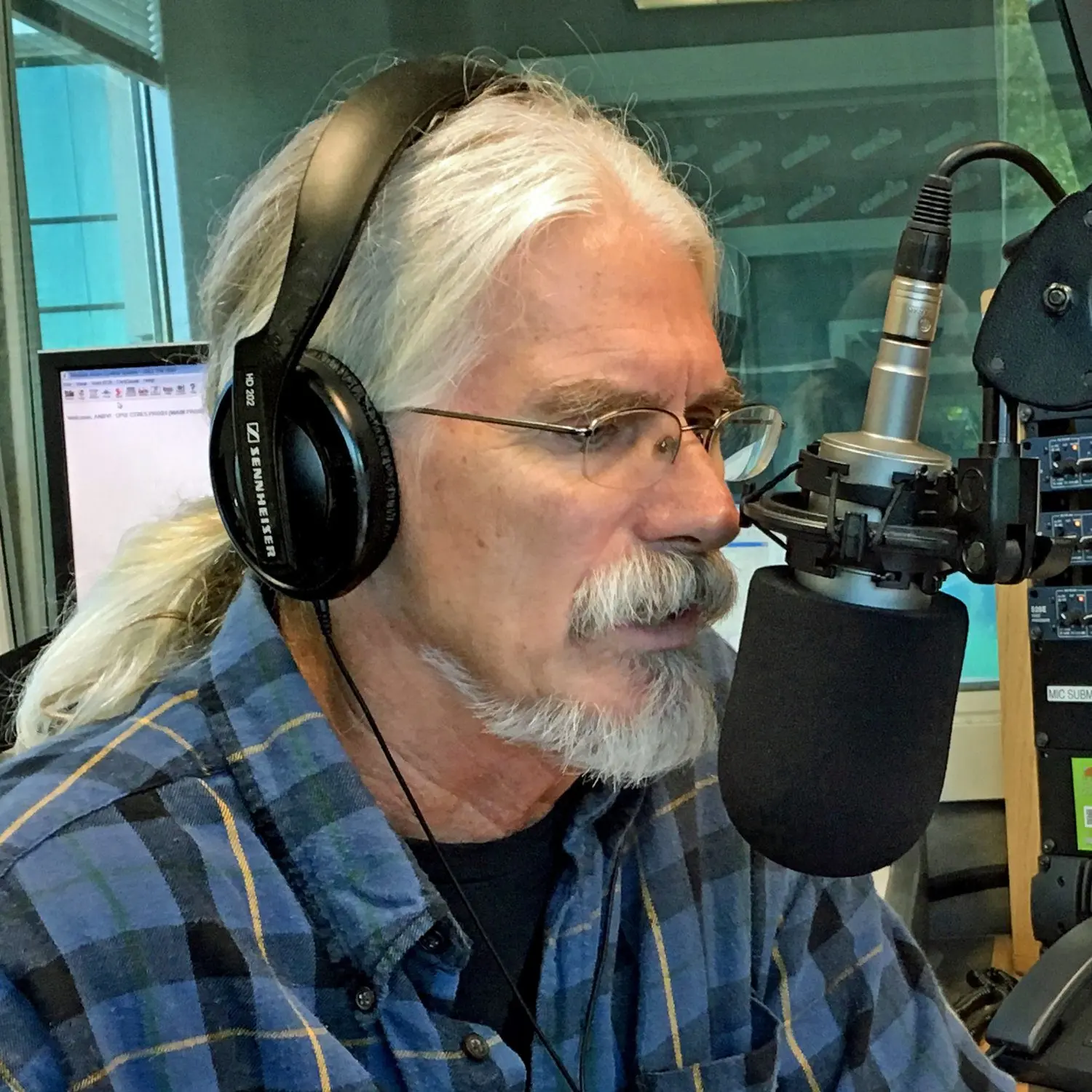
In this episode of ‘The Narrow Path,’ join Steve Gregg as he navigates the intriguing topics of Christian faith through listener calls. From the debate surrounding the inclusion of mythology and fairy tales in children’s readings to understanding the spiritual implications of those who watch us from the heavens, listeners are treated to a diverse range of discussions that provoke thought and introspection. Listeners will also explore the often debated topic of modern signs of the end times and how past and present perspectives shape our understanding today. Delve into cultural practices surrounding marriage through the lens of Abraham’s
SPEAKER 03 :
Good afternoon, and welcome to the Narrow Path radio broadcast. My name is Steve Gregg, and we’re live for an hour each weekday afternoon, taking your calls. If you have questions about the Bible or the Christian faith, you want to ask questions about it on the air, we’ll talk about those questions. If you see things differently from the host, I think you might be able to ask questions do well to balance comment for our audience, feel free to do that. The number to call is 844-484-5737. Right now we’ve got quite a few lines open, so this is a great time to get in. A lot of times, a few minutes into the show at the very latest, the lines fill up. So if you want to get in today on the air, there are some lines open right now. at this number, 844-484-5737. One announcement, and that is I’ve been in Oregon for about 11 days, and tonight is my last speaking engagement in Oregon, and I’m in Salem area. And if you’re interested in joining us, you can go to our website, thenarrowpath.com, and look under the tab that says Announcements, and arrange to be here if you’d like to. Again, it’s my last time speaking in Oregon for a while, and so if you’re in the Salem area, feel free to join us. I believe the meeting’s at 630 tonight, and it’s in Salem. Go to our website, thenarrowpath.com, and you will have the information you need about how to join us tonight. In Salem, Oregon. Now, I also want to remind you that we are going to be, I’m going to be in the Dallas, Texas area for a couple of days with some debates. Dr. Michael Brown and I will be debating the subject of, is the modern day state of Israel a fulfillment of prophecy? And we’re going to have three debates on one weekend. There will be a Friday night and a Saturday morning and I believe a Saturday afternoon. That’s on next month. It’s only a few weeks from now. It’s November 7th and 8th. And if you’re interested in that, I don’t have all the information yet. I’m still waiting for Dr. Brown to send me some of it. But I believe they’re going to want people to register, though there’s no cost. There’s no cost to attend. It’s free. But because of the… They don’t know what size the crowd will be. There’s a couple of different venues. One’s much larger than the other. And so they’re kind of wanting to have some advanced idea of how many people to expect. So they’re going to ask people to register. I don’t have that registration information posted at my website yet. We will soon. I just want you to be forewarned. That is coming up. And I wouldn’t be surprised. If you looked up Dr. Brown’s website, he might have the registration information there. I should check it out myself. Anyway, that’s coming up the 7th and the 8th of next month. That’s only, you know, about just about two weeks and a little more from now. So just so you’ll be forewarned. Now our lines are full, so we’re going to talk to our callers immediately. Kitty from Omaha, Nebraska is our first caller. Hi, Kitty. Welcome to The Narrow Path.
SPEAKER 08 :
Hello, Steve. Thank you for taking my call. Someone in my life has been saying to me that they would like to read books to my children that are what I would consider mythology, fables, you know, about what other cultures worshipped and believed. And I object to that because I don’t want my children to believe the wrong thing. They believe that they’re just really cool stories. What’s your opinion on that? And I’ll take my answer off the air.
SPEAKER 03 :
All right. Thanks for calling. I’ll be glad to talk to you about that. When it comes to children’s stories, you just have to know your children, and you have to keep tabs of what their ideas are and what their spiritual lives are. It shouldn’t be necessary for children to be shielded from all, you know, non-Christian stories, mythology, fairy tales, and things like that, even though they contain things like witches and magic and so forth. Because, frankly, they are fiction. They’re like cartoons. And so if your kids understand that they’re not true, and you can even explain to them, you know, the real nature of magic and witches and so forth isn’t anything like it is in those stories, that there’s a kind of magic and kind of witchcraft that’s very evil. And most of these stories, although the witches are usually evil, sometimes there’s even considered to be good, you know, magic or good, wizards and things like that, if that is so in the stories, you can just decide whether you think your children can handle that without getting enamored with the occult or whether, you know, you can just explain to them that it’s not really real. They should know, of course, when you talk to them about fairy tales or myths or things like that, that they are not true stories. And in many cases, they have imaginary things. Now, I’ve known people who didn’t want to read their children even, you know, C.S. Lewis’s Chronicles of Narnia because there’s witchcraft. It’s more like fairytale witchcraft and magic and so forth, of course, the witch is the bad person. And so, I mean, some people feel that they just don’t want their kids to be exposed to that kind of thing. The truth is, of course, at some point in life, they will be exposed to that kind of thing just because they will grow up and they’ll live in a world where people sometimes tell those stories or there are movies or other things that will expose them to them. So you just have to keep your finger on the pulse of where your children are at. If you’re reading fairy tales to them or mythologies, they may learn these things from someone else later on in life If you do it, if you read them to them, you can explain this is just pretend. This isn’t, you know, things don’t really, the real world isn’t really like this. This is just pretend like watching cartoons is pretend. So that’s what I would think. Now, you know, if magic is glorified in the sense of evil magic, if witches are glorified, then I would say, you know, you need to be careful about what the impression is being given to the children. But I will say that I was raised in a Christian home. I was a Christian from my childhood. And I was exposed to those kinds of things without any kind of sheltering. But it never attracted me into the occult. It never attracted me to magic. I knew they were pretend. And it was just nothing. It was nothing to me. And I think that’s how it is probably with most intelligent children. So I wouldn’t… I wouldn’t say, yeah, by no means expose your children to that stuff. It’s dangerous. I don’t know that it is dangerous, but it might be for some. If you find that your children are becoming too enamored with it, if they’re obsessed with it or something like that, or if you find that they’re becoming curious about real magic and real witchcraft, well then, I mean, it should never get to that point, of course, the way you read these stories and tell them about them, it should never have any such impact on them as to make them interested in real witchcraft. But if you felt that that was happening, which I think would be a rare situation, then I would just not expose them to it anymore for the time being and tell the stronger Christians. That would be my approach. The Bible doesn’t say exactly. Of course, the Bible does say not to bring any abomination into your house, but that’s talking about actually bringing idols into your house as objects of worship and that’s a very different thing than reading you know Grimm’s fairy tales or the Iliad and the Odyssey or you know some of that kind of stuff or for that matter you know the Chronicles of Narnia or whatever so I wouldn’t I wouldn’t be too uptight about it but you do want to be you do want to know what’s going on in your kid’s head in their spiritual life and I would suspect that in most cases reading those stories to the children would be harmless But if you found some reason to believe it was doing harm, then I’d pull back on that and not do that. That would be my advice. Let’s talk to John in Maine. John, welcome to The Narrow Path. Thanks for calling.
SPEAKER 06 :
Yes, I’m looking at Revelation 7, 7-9, and Hebrews 12, about… About witnesses being up in heaven there, do you think that witnesses up in heaven have access to us here and now? I had a daughter who passed away years ago, and I feel that she has access to me down here. And I was wondering if you, what do you think about that?
SPEAKER 03 :
Well, you mean access in the sense that they would know what’s happening down here and see us?
SPEAKER 06 :
Yes, yes, yes.
SPEAKER 03 :
Okay, well, first of all, you might be thinking of Revelation 6, because in Revelation 7 you’ve got the 144,000, which are not said to be watching us. And then there’s this innumerable company at the end of the chapter who are in heaven and we’re not told that they’re watching either, so there’s no… no evidence of people in heaven watching us. But in chapter 6, when the fifth seal is broken, he sees the martyrs, he sees the souls of those who have been martyred are under the altar in heaven, and they’re saying, how long, O Lord, before you judge and avenge our blood on those who dwell on the earth? Which simply means that they are aware that the people who killed them have not been judged yet. Now, That doesn’t mean they’re paying a lot of attention to what’s going on on earth. You know, how they know that, we don’t know. But we’re not really told that they’re paying that much attention to earth. Now, Hebrews 12, 1 does talk about we’re surrounded by a cloud of witnesses. And it’s referring to the previous chapter where he goes through the entire Old Testament, starting with Abel. and going through the prophets, and it’s referring to those as the cloud of witnesses. But witnesses doesn’t have to mean spectators. Witnesses can mean people who testify in court. I mean, the word witness has both meanings. Someone who witnesses something, meaning they see it. They’re spectators watching, like they’re watching something in the stands and they’re in the bleachers. Or it could be that it just means that they are like sitting in a courtroom bearing witness. They’re testifying. And I have the impression that it’s the second. I mean, the writer of Hebrews might mean either of those things. But I think he means that the lives of these people who were all justified by faith, and that’s the point he makes in chapter 11, they received a good report from God by faith, And their lives bear witness to us that this is true, that faith is the right way to go. So I don’t know that either of those passages really speak of people in heaven watching us. I don’t think they are. I mean, I could be wrong because it’s not stated specifically. But it seems to me that when we go to heaven, we’re going to be probably… focused more on God and enamored with Him. And I don’t know that we’re going to be watching what’s on earth. To tell you the truth, it would make heaven a rather miserable place if we could see everything going on earth. Because a lot of ugly stuff goes on on earth.
SPEAKER 06 :
Is there any place else in the Bible other than the two chapters I told you about?
SPEAKER 03 :
I don’t think there’s any reference in the Bible to people who have died watching us You know, Samuel, who died, was apparently not in heaven. And when Saul went to a medium to call up the spirit of Samuel, Samuel complained that he had been roused from his rest. You know, he’d been resting, and it doesn’t indicate that he’d gone, that he was somehow alive and watching things from wherever he was. So, I mean, we just don’t have any real information about that. Okay.
SPEAKER 06 :
Well, thank you very much. Take my call.
SPEAKER 03 :
All right. Well, thank you for calling and asking those questions. We’re going to talk next to Jose in Miami, Florida. Welcome to The Narrow Path. Thanks for calling. Boy, there’s a lot of noise on your line.
SPEAKER 05 :
Thank you for taking my call.
SPEAKER 03 :
Yeah.
SPEAKER 05 :
There’s a tendency to think that we’re living in the end times. because of the amount of natural disasters, the amount of wars, and the ultimate battles of good and evil being very evident. But hasn’t that always happened? And compared to ancient times or any other time, aren’t we in a considerable better state and less risk and living a better life than than another time. So is that something that we all, at some point, every civilization feels like it’s going to be there in time?
SPEAKER 03 :
Yeah, I think you’ve got a point. People think that because there’s earthquakes and wars and turmoil in the world, that that is somehow a sign that we’re in the end times. Now Jesus said, In Matthew 24, there will be wars and rumors of wars and earthquakes and famines and pestilences in diverse places. But he says, but the end is not yet. That’s not a sign of the end, he said. And he didn’t say there would be an increase of them either. He never said there would be more than usual. And as you mentioned, there’s always been these kinds of things. I think what he’s saying is when you see these kinds of things in your own time, there’s always a tendency to say, whoa, is the end of the world near? And he says, yeah, don’t conclude that. You’ll see these things long before the end. It’s not the end yet. Just don’t let those things lead you to a false conclusion that this is the end of the world. Actually, there is some evidence that at the end of the world, or just before Jesus comes back, people will be more or less complacent and feel safe. In 1 Thessalonians 5, Verse 1 and following, Paul said, judgment comes upon us, I believe he’s talking about the second coming of Christ, people will be more or less complacent. They’ll be saying peace and safety. And Jesus said in Matthew 24, it would be like the days of Noah. Now, of course, the days of Noah could be described, different features of them could be described. For example, we know that the days of Noah were very wicked and the earth was filled with violence. But that’s not the thing he said about the end times. That’s not the point of similarity. The point of similarity he made was it’ll be like the days of Noah in that the people were simply eating and drinking and giving in marriage. These are not bad behaviors. These are normal behaviors. People eat every day and they drink and they get married and they buy and sell. He said they’ll be doing all those things and will be oblivious right up until the the point where one is taken and the other is left. So he says that’s how it was in the days of Noah. The people were eating, drinking, getting married, buying and selling. In other words, they’re behaving normally. They’re acting as if it’s not the end of the world, like they’re clueless. And he says, until the day that Noah went into the ark and the flood came and took them all away. So it looks like Jesus and Paul are saying, It’s not going to be unusually disastrous. If anything, people will be more or less secure right up to the moment that he comes. Now, that doesn’t mean there won’t be any bad stuff going on in the world, but it certainly doesn’t indicate that things will be worse than usual. And you are also right, I think, in saying that by most metrics, modern times are the best of times for many people. Now, of course, there’s parts of the world where, you know, there’s civil war, there’s starvation, there’s famine, there’s obviously pestilence, horrible things, horrible tribal wars. conflicts and you know child trafficking there’s there’s some real bad stuff going on in many parts of the world however there there was a time when that stuff was going on everywhere in the world and more and more of the world has uh up until the present you know adopted more civilized ways and there’s also better uh medicine better better treatments for illness than there ever were before There’s rapid transportation for when that’s necessary. There’s rapid communication. There’s, you know, I mean, if you’re in the western part of the world, especially if you’re in America, people have never lived so well as they do in our times. And so, you know, to say these are the worst of times is to suggest, first of all, is to suggest that they don’t know very much about the times, about most times. Most times have been far worse than this. And it also suggests that they are thinking that that’s an indicator of the end times when things are bad. And I think on both points, those are mistaken notions. So I’m on your side about this. I think you are seeing it the same way I would biblically. Thank you for your call. Victoria in Lemon Grove, California. Welcome to The Narrow Path. Thanks for calling.
SPEAKER 09 :
Hello, Steve. Thank you for taking my call. I’m just curious about with Abraham, when he married Sarah, do you think that wasn’t it the custom that they would have many wives at the time and that they would have many children during those times so that wouldn’t it be a little bit unusual that if Sarah couldn’t have children that he wouldn’t have taken another woman, you know? I’m just curious about that.
SPEAKER 03 :
Well, I will say that in those days, polygamy, taking more than one wife, was not necessarily frowned upon as adultery or an immoral thing. But that doesn’t mean most men wanted multiple wives. I mean, the men who loved their wives would no doubt want to just have one wife and have the kind of monogamous relationship that’s the most fulfilling kind of marriage there is. And most people who took additional wives in those days, at least the godly ones who did in many cases, were people who their only wife they had couldn’t have children, couldn’t get pregnant. And that was the case, of course, with Sarah. And also it was the case with Rebecca for the first 20 years of her marriage. And it was the case with Rachel after a certain point in her marriage. at the beginning and later. So sometimes men whose only wife that they loved couldn’t have children took another wife, not out of love so much as to more or less be able to leave a legacy, to be able to have children to carry on their name and their inheritance. But what you’re pointing out, I think, is that Abraham was in just that circumstance for the He was 75 years old when he came into Canaan. He was already married to Sarai. And how long he had been married to her, we don’t know, but they had no children. And she remained barren for the first 25 years that they were in Canaan. Now, that’s a long time for somebody to not have kids. And especially when God had promised him he’s going to have a multitude of children, you know. you it’s not surprising that sarai herself told abram you know you’re not having any kids by me it looks like so go ahead and take hagar my maid and have some kids by her that was very customary in this time but the fact that abram hadn’t thought of that uh would suggest either that he uh you know loved love sarah pretty you know with with unusual fidelity um Or that he was just trying to trust God about the matter. I don’t know. But even though polygamy was allowed in biblical times, it doesn’t mean that most men had multiple wives. Abraham was a fairly wealthy man and could afford to have more than one wife, but most people weren’t wealthy. And one wife was quite enough, you know, to take up all their resources. So polygamy was permitted in those days. But it wasn’t, I don’t think it was ever practiced by the majority. I think it was a minority thing to do. And probably something that a man who had a meaningful relationship with his wife would not wish to do unless it became necessary for the purpose of having a family besides just the marriage. We can’t imagine in our society, at least most people can’t, why the absence of children between a couple would somehow justify bringing another wife into the situation. But we don’t have the same culture and the same values that they had. In those days, the assumption was that’s how you make yourself immortal, by having children and grandchildren. They didn’t have, in the Old Testament, much in the way of God telling them anything about the next life, like afterlife. And so, you know, to live on after your death was thought to be something you do through your children and your grandchildren. So to die without children is sort of like to just disappear and have no So it was very important in that culture, more than props in our modern Western culture, to have kids. And it was considered to be so important that you might take a second wife. Now, there were obviously people in those days who took multiple wives just for, I assume, for other reasons. David had eight wives. He didn’t need them in order to have kids. Solomon had 700 wives. He certainly didn’t need that many. This is partly probably due in David’s case, and maybe Solomon’s too, that they like to have multiple women. But it was also the case that king’s status was often measured by the size of their armies and the size of their harems and things like that, and the size of their bank accounts. So it may be that David and Solomon had a little bit of that going on, taking additional wives, because that’s what kings did, and that was a status symbol for kings. But I’m not going to rule out that they were just carnal, that they just wanted a lot of women. In any case, yes, Abraham obviously must have been reluctant to take a second wife since he went 25 years and more with one wife who couldn’t give him children. It’s a good observation. As far as why he didn’t, I would not be in the position to actually answer that. I don’t know why he didn’t. Thanks for your call, though, Victoria.
SPEAKER 06 :
Thank you.
SPEAKER 03 :
Good talking to you. We have a break coming up here. We have another half hour after that, so don’t go away. You’re listening to the Narrow Path Radio Broadcast. My name is Steve Gregg, and we are on Monday through Friday at this same time and have been for 28 years. We started this program in 1997. Some of the stations you may be listening on, we haven’t been on there that long. and we may be kind of new in some of the areas where listeners are listening, so you may not be familiar. But if you want to know more about the ministry, just go to our website, thenarrowpath.com. There’s also archives of our programs going back many years, and over 1,500 of my lectures on the Bible, on different parts of the Bible, at our website, thenarrowpath.com. We are listener-supported, but you can donate. Everything at the website is free, but you can donate there if you want to to help us stay on the air. That’s thenarrowpath.com. We’re going to take a 30-second break, and we’ll come back and take your calls again for another half hour. Please stay tuned.
SPEAKER 11 :
Thank you very much.
SPEAKER 03 :
Welcome back to the Narrow Path Radio Broadcast. My name is Steve Gregg and we’re live for another Half hour taking your calls. We have some lines that have opened up. Our lines were all full about ten minutes ago, and we’ve talked to some of these callers. I think some may have hung up, so we have some lines open. If you’d like to join us, you have questions about the Bible or the Christian faith you want to raise for consideration here on the air, you want to present an alternative viewpoint contrary to the host viewpoint on some subject, we always are very happy to have people call and do that. The number to call is 844-484-5737. That’s 844-484-5737. Mary in Mariposa, California is next. Hi, Mary. Welcome. Hello? Hi. You’re on the air. I see. Okay.
SPEAKER 07 :
Yeah, I’m glad I had to wait because I had to kill a snake while we were waiting.
SPEAKER 03 :
Really? Why do you kill snakes?
SPEAKER 07 :
He’s a rattler.
SPEAKER 03 :
Oh, wow. Oh, yeah. Yeah, most snakes are harmless. I probably would kill a rattler in my yard. Yeah, go ahead.
SPEAKER 07 :
Yeah, we have a lot of small animals. So Matthew 14, 13, I know you gave a talk about it. I did listen to it this morning. regarding specifically the part where the Lord withdrew into the wilderness after they told him about John the Baptist. He withdrew to grieve. And since you did the lecture before in your verse-by-verse, have you had any more thoughts on that particular passage when he withdrew to the desert?
SPEAKER 03 :
Well, what kinds of thoughts? I mean, Jesus…
SPEAKER 07 :
I don’t know. I don’t know. Is there any more insight on it?
SPEAKER 03 :
Yeah, Jesus withdrew from crowds on many occasions. Sometimes it was just to be alone to pray, and sometimes it was to be alone with his disciples. On this occasion, probably he just wanted to get away from the crowds because his friend and cousin and fellow prophet, you know, John, had been beheaded. You know, I mean, it’s like when somebody very important or dear to you or a servant of God is killed. I mean, a lot of people, remember, were very impacted by Charlie Kirk’s death not too long ago. Not that he’s John the Baptist, but the point is that, you know, it’s a great loss and you want to process it. I think Jesus probably did. Remember, Jesus was not. unsympathetic and unable to have human emotions about people’s death. He wept at the grave of Lazarus and of course we don’t read of him weeping over John the Baptist but it says when he heard it he departed from there by boat to a deserted place by himself. Now It may be that he just wanted some alone time, although when he got across the lake, there were people waiting for him, and so he gave them his time, as he always seemed to do when they caught up with him. But it also, it may be that he figured, well, you know, Herod has just killed John the Baptist. Maybe Herod now has the, you know, the scent of blood is in the water. Maybe he’ll come after me next. It’s possible, because when Jesus crossed the lake, He crossed out of Herod’s territory. And so it may be that he thought, well, he’s had John in prison for quite a long time now. And suddenly he moves on it to kill him. Maybe he’ll come after me. Now, it’s not like Jesus was afraid to die, but throughout his ministry, we see him avoiding those who wanted to kill him until it was his time, until it was his hour. So, I mean, many times people took up stones to throw at him, and he withdrew and went away alone to avoid that because it wasn’t his hour. But when it was his hour, he surrendered to those who wanted to kill him. But I think you could say it either way. You know, he just needed to…
SPEAKER 07 :
process it needed some time alone it was a great thing to grieve over and uh and also maybe he thought well yeah that makes the things are a little hot here in galilee now so maybe i better go across the lake the the essence of my question wasn’t why he withdrew it was more a little bit more poignant thinking that yes he withdrew to grieve and because he he did express grief in several occasions But his grief was rather brutally interrupted by the crowds. He couldn’t breathe. So it’s a poignant passage. I just thought maybe there would be a little bit more light on it. But thank you.
SPEAKER 03 :
Yeah, I’m not sure what else you’re looking for. But, yeah, that’s all the thoughts I have.
SPEAKER 09 :
Okay. Thank you, Steve.
SPEAKER 03 :
Okay. Thanks, Mary. Good talking to you. All right. Let’s talk to Fred from Alameda, California. Fred, welcome.
SPEAKER 02 :
Yeah, I was reading Psalm 119, and it seems really good, you know, if you can apply it to your life. But the very last verse, and I think it’s verse 176, it says something negative. And it’s like, well, this is not so good. Like if, you know, Psalm 119, verse 176.
SPEAKER 03 :
Yeah, which says, I have gone astray like a lost sheep. Seek your servant, for I do not forget your commandments.
SPEAKER 02 :
Yes, but the thing is, if you read all the other verses before that, it’s full of man receiving God’s righteousness. And I’m just wondering, the last verse is the purpose that God’s trying to keep us in check.
SPEAKER 03 :
Well, I’m not sure if I’m seeing there what you’re referring to. The Psalms, sometimes a Psalm will carry a theme out, you know, from the first verse to maybe several verses longer, maybe through a whole Psalm, one theme will be talked about. Psalm 119 is a little different. There is one theme that keeps recurring, but it’s simply… It’s simply the Word of God, the commandments of God, the statutes of the Lord. These are the themes that come up in almost every verse of the longest chapter in the Bible, Psalm 119. And generally speaking, it’s praising the Word of God for its virtues, but each verse is its own unit, sort of like Proverbs. In Proverbs, generally speaking, if a chapter has 30 verses, it’s got 30. probably 30 different subjects. Each verse is kind of a standalone bit of wisdom. In Psalm 119, unlike some other psalms, each verse is its own standalone thought. And the vast majority of them, I think there might be two or three exceptions, verses that are not, that this isn’t true of, but Mostly it’s statements about God’s word, which is called sometimes your judgments, your statutes, your commands, your word, things like that. He uses different expressions for it, but he’s talking about the word of God. And usually he’s saying how great the word of God is, how beautiful it is, and how he has benefited from meditating on the word of God day and night and all of that. And in the last verse, he also mentions it. He says, I do not forget your commandments, which is a good thing. Now, he says, I’ve gone astray like a lost sheep. Seek your servant, for I do not forget your commandments. He’s saying, because I’m loyal to you. Now, gone astray like a lost sheep doesn’t mean he’s left God. I don’t think it does because he hasn’t forgotten his commandments. He hasn’t abandoned God’s word. He’s saying, I’ve been faithful to you. So I think maybe he’s saying, you know, my life has gone sideways here. You know, things are going for me a certain way that it just feels like this isn’t where I’m supposed to be. You know, it’s like a sheep who’s gone off into the weeds or into thorns and thickets or whatever. This is my life. is not what I would have thought it would be, so come and find me and rescue me because I’m faithful to you. I haven’t forgotten your commandments. I’m thinking maybe that’s what he’s saying. That would be my impression. But, you know, there’s no necessity that any one verse in this long chapter would have to follow a theme, you know, or a mood or anything like that that is based on the verses before it, or even after it, if this wasn’t the last verse. Each verse kind of has its own ecosystem, you know, and its own stand-alone meaning. So, yeah, I’m not seeing something there that’s problematic. I don’t see something like that. Well, that really stands out. It, too, like all the other verses, is talking about God’s word. It’s just saying, you know, I haven’t forgotten your word, so come after him when I’m in trouble. And I think the general thought is probably expressed in quite a few of the other verses in that psalm. So, yeah, I don’t have any special wisdom on that beyond points like that. I appreciate your call, though. If there’s more there, it must be over my head. I’m missing it. That as far as, you know, as if that’s a strange verse in the psalm. I’m not seeing it as so strange. Okay, let’s talk to Leland in Jamaica Plain, Massachusetts. Leland, welcome.
SPEAKER 04 :
Hi, Steve. Thank you. You said the word that I wanted you to share with us, wisdom. The Bible points to wisdom is supreme. Could you share with us the chapter and verses that lead us to wisdom, please?
SPEAKER 03 :
Now, chapter and verses, there’s whole books.
SPEAKER 04 :
Well, in other words, your understanding of how we’re led to wisdom through the Bible, and I know you know a lot of chapters and verses.
SPEAKER 03 :
Well, that’s kind of an unusual question because I think the entire Bible is wisdom. You know, Jesus, at the end of the Sermon on the Mount, which are instructions he gave to his disciples that occupy three successive chapters, Matthew 5, 6, and 7. At the end of that, he said, Any man who hears these sayings of mine and does them is like a wise man who builds his house on a rock. And any man who hears these sayings of mine and does not do them is like a foolish man. Now, the contrast between wise and fools is a common contrast. Sometimes in the Psalms, especially in the Proverbs, You know, it’s one of the most common things you read in the Proverbs is the wise man does such and such, but the fool does the opposite. In fact, the book of Proverbs at the very beginning says that the book was written and the Proverbs were collected for the sake of giving wisdom to the simple-minded. So if you wonder what verses do we go to to learn wisdom, well, a lot of them. If you heed the Sermon on the Mount, Jesus said, That makes you a wise man to do that. The book of Proverbs is a whole book of wisdom. And there’s much wisdom in other things, too. There’s much wisdom in the law of God. We were just talking about Psalm 119 with the previous caller. And, you know, the psalmist indicates that wisdom is one of the great benefits that one gets from meditating on God’s law. Now, the law is found in the first five books of it. bible so that’s even yet another passage of scripture to many times but in psalm 119 for example it says beginning at verse 97 oh how i love your law it’s my meditation all the day through your commandments you through your commandments make me wiser than my enemies for they’re ever with me i have more understanding which is another thing like wisdom Then all my teachers for your testimonies are my meditation. I understand more than the ancients because I keep your precepts. That’s Psalm 119, verses 97 through 100. So he’s saying, by meditating on your laws, I have become wiser than my enemies, even wiser than my teachers, because I meditate all the day long on your law. They’ve made me wise. So you’ve got, you know, these statements are made about the law of God, which you find especially in Exodus and Leviticus and Numbers and Deuteronomy. Then you’ve got the books that are called wisdom books, which are specifically written to impart wisdom to the reader, Proverbs being chief among them. Ecclesiastes would also be in that category, as is the book of Job. And then, of course, Jesus said that his teachings… confer wisdom to people. So obviously, both in the Old and the New Testament, wisdom is a high value. You know, in Proverbs, the fool is almost synonymous with the bad person. In fact, the bad person is your quintessential fool. The fool has said in his heart, there’s no God, David said in Psalm 14.1. So the fool, the atheist is the fool, the person who acts like there’s no God. is a fool, and therefore not good. Because the fear of the Lord is the beginning of wisdom in Proverbs. So wisdom is had, first of all, by fearing God, and then by heeding his commandments, and then by, frankly, thinking things through in a biblical way, from a biblical worldview. And listening to Christ, who is our wisdom. According to 1 Corinthians 1.30, it says that Christ has become our wisdom. 1 Corinthians 1.30. So, you know, which chapter and verse do we look to for wisdom? I kind of say the whole Bible, though some parts maybe more than others are specifically focused on wisdom. The law, the wisdom literature, and the teachings of Jesus are all portions of the Bible which are specifically said to confer wisdom. And so that would be, I bet, half of my answer. Thank you for your call. Let’s see, we’ve got Linda in Northern California next. Linda, welcome to The Narrow Path. Thanks for calling.
SPEAKER 01 :
Good afternoon, Steve, and thank you for your ministry. I have a friend who is a semi-retired pastor, and he believes, based on Daniel and Revelation, that the papacy is, in fact, the Antichrist. Oh, my gosh. I’m feeling emotional. And also, I’d like your opinion on that and what’s the best way to read Revelation, since I’m not involved in the Internet. And then the last thing I’d like your opinion on or how you read Scripture about, is God displeased if we don’t, I feel emotional, keep the Saturday as the Holy Sabbath? Okay. Thank you. I’ll listen. Thank you so much.
SPEAKER 03 :
Okay. By the way, is the pastor you mentioned, is he a Seventh-day Adventist?
SPEAKER 01 :
He has a ministry, and they meet at 2 o’clock on Saturday afternoon.
SPEAKER 03 :
Sunday afternoon?
SPEAKER 01 :
On Saturday afternoon at 2 o’clock.
SPEAKER 03 :
Okay. The reason I ask is because it is the official view of the Seventh-day Adventist, not only that we have to keep the Sabbath on Saturday, but also that the Pope is the Antichrist. Okay. Both of those views agree with the Seventh-day Adventists. But there are people besides them who also keep the Saturday Sabbath. For example, there are Seventh-day Baptists and there’s other Seventh-day Church of God and things like that. So there are Seventh-day groups besides the Adventists. I’m not as familiar with them as I am with the Adventists. I know the Adventists do believe. The papacy is the Antichrist. Now, let me just say about the papacy, there is a possibility that the little horn in Daniel chapter 7 does refer to a papacy. And the reason for that is the little horn grows out of the fourth beast. Now, I believe the fourth beast that came out of the sea in Daniel 7 is the Roman Empire. And Daniel sees and watches until that fourth beast is killed and his body is burned, which sounds like the end of the Roman Empire, the fall of Rome and so forth, or of the empire. And then this little horn is focused upon. And he’s a blasphemous little thing, grows out of the fourth beast, and has a career of blasphemy for a period of time. Now, it is historically the case that when the Roman Empire fell, the power that rose to fill that vacuum was the papacy. And the things that Daniel said the little horn would do are, in fact, things that some of the popes did do. Not every pope. But there have been many popes who have been guilty of the very things that the little horn is said to do. And so the reformers, not just Adventists and so forth, but Luther and Zwingli and Calvin and all the reformers, and even before the Reformation, Hus and Wycliffe and Tyndale, they believed that the papacy was the Antichrist and that it was the little horn. Now, they also thought that the papacy was the beast of Revelation 13. I’ll say this. I can see some case to be made for the little horn in Daniel 7 being identified with the papacy. I mean, there’s just the correspondence to what is predicted and the time frame and, you know, that kind of thing and what happened. You know, that makes it a credible identification for the little horn. However, I don’t see the beast in Revelation as the papacy. So, you see, there’s a tendency for Christians to come up with this one evil power, the Antichrist. In the case of those who think it’s the papacy, it’s not just one man. It’s a system that transcends centuries. But it continues, and it’s the man of sin. It’s the little horn. It’s the beast out of the sea in Revelation. It’s the willful king that we read about in the latter part of Daniel 11. These are all, you know, evil entities. And the tendency has been, I think, frankly from the early church on, not the apostolic church necessarily, but but the church fathers, they have tended to see all of these as the same thing, as the same bad entity. And as I pointed out, some saw it as an individual man, and some still do. And they call him the Antichrist. Some do not think it’s an individual man. They think it’s a system, like the papacy. And they call that the Antichrist. But what they all seem to do, at least they tend to do, is to think all these bad entities mentioned in these different books of the Bible are the same thing. And I don’t agree. I don’t think so. I mean, certainly there’s some bad entities, some bad men and some bad organizations throughout history. And some of them are mentioned in the Bible. But to me, it’s entirely artificial to suggest that the beast of Revelation 13 is the same as the little horn of Daniel 7, and also the same as the man of sin in 2 Thessalonians 2. I mean, it seems to be the most popular view, and I think it’s the laziest view. I think it’s just lazy to say, well, here’s a bad guy, here’s another bad guy, here’s another bad guy. Let’s just make it all the same bad guy. Then we don’t have to really, we can just put all these in the same bag. And actually, I think in some cases, it’s different bad guys. I won’t go into that now. Anyone who wants to listen to my lectures on Daniel or Revelation or 2 Thessalonians will find out what I think about that. But yeah, it was not uncommon at all. In fact, it was normative in the Reformation for Protestants to see the beast in Revelation as well as the little horn of Daniel 7 as the papacy. So this pastor you have, your friend, who identifies the papacy as the Antichrist, he’s kind of on the same page that a lot of Protestants have been on, and even people before the Protestant Reformation, some. But I wouldn’t necessarily agree with the Revelation 13 identification. Anyway, then you asked about the Sabbath. The Sabbath, according to Exodus, the Sabbath was the sign of the covenant God made with Israel in Mount Sinai. And he first commanded it there. Now, he actually told them to keep the Sabbath a few days before Mount Sinai when they were gathering manna. It was only a few days before. He said, don’t gather manna on Saturday. Gather twice as much on Friday, and don’t go out and do it on Saturday. So that’s the first mention of the Sabbath command. People say, well, wait, no. Genesis 2, 1 through 3, that’s the first mention of the Sabbath commands. No, there are no Sabbath commands in Genesis 2, verses 1 through 3. There’s a Sabbath. But the only person who’s rested there is God. There’s no people resting there that we know of and no command there that anyone should. So the Sabbath observance does not go back to Genesis 2, 1 through 3. That’s where it just records that God rested on the seventh day and made that day different, holy, than other days. But he gave no command, for example, to Adam and Eve or to anyone else, as far as we know, to keep it. The first command to rest on the Sabbath was given in Exodus 16 with reference to manna collection. And then the next time it’s mentioned is in the Ten Commandments and a few chapters later, chapter 20. And God said, I think it’s in the 30th chapter of Exodus, he said to Israel that the keeping of the Sabbath would be the sign between him and them of the covenant. So it specifically is related to the law. It’s specifically related to the covenant that was struck at Mount Sinai. Now that covenant has been made obsolete by the coming of a new covenant. The Bible says that where there’s a new covenant, the old one is obsolete. That’s Hebrews 8.13 says that. And the new covenant does not make any reference to keeping the Sabbath. Every covenant has its own stipulations and its own obligations and And Paul compares the covenants with like marriage covenants. He says in Romans 7, verses 1 through 4, that at one time God’s people were married to him through the covenant at Mount Sinai. Israel was his wife. He was their husband. But now that has come to an end due to the death of Christ, he said. And now God’s people are married to God through another covenant. We’re married to God. the one who has risen from the dead, that we might bear fruit to God, he said in Romans 7. So the new covenant is like a new husband. The old covenant is like an old husband who has died. Now, the analogy, we should have no trouble understanding that. If a woman has a husband and he says, listen, here’s how I want the house to run, well, then that’s how the house runs. But if he dies and she marries another man and he says, now, this is how I want the house to run. It’s not, you know, there’s some overlap, some similar things, but some different things. Well, she’s not obligated to do what the dead husband said, not even any of them. But she is obligated to, you know, follow the headship of the new husband. And in our case, the old husband, the law, said you have to keep the Sabbath day holy. The new husband, Christ, has made no such command. In fact, if anything, there’s no subject over which he locked horns with the Jewish leaders more than on his refusal to keep the Sabbath in the way they thought he should. But he said because his father worked every day, He said, my father works every day, so I do too. So he didn’t feel like it was necessary to keep Sabbath, and he never told his disciples to do so. Thank you for your call. I apologize to the people waiting to go on that won’t be able to get on today. This is only Monday, though, and essentially every day of the week we have a show. So those of you who didn’t get on, please call tomorrow, and we’ll hope to get your calls and your questions answered then. Thank you for everyone who has called, and for those of you who wanted to get on, Again, please call again so we can get you on. You’re listening to The Narrow Path. Our address is The Narrow Path, P.O. Box 1730, Temecula, California, 92593. And our website is thenarrowpath.com. Thanks for joining us. God bless.