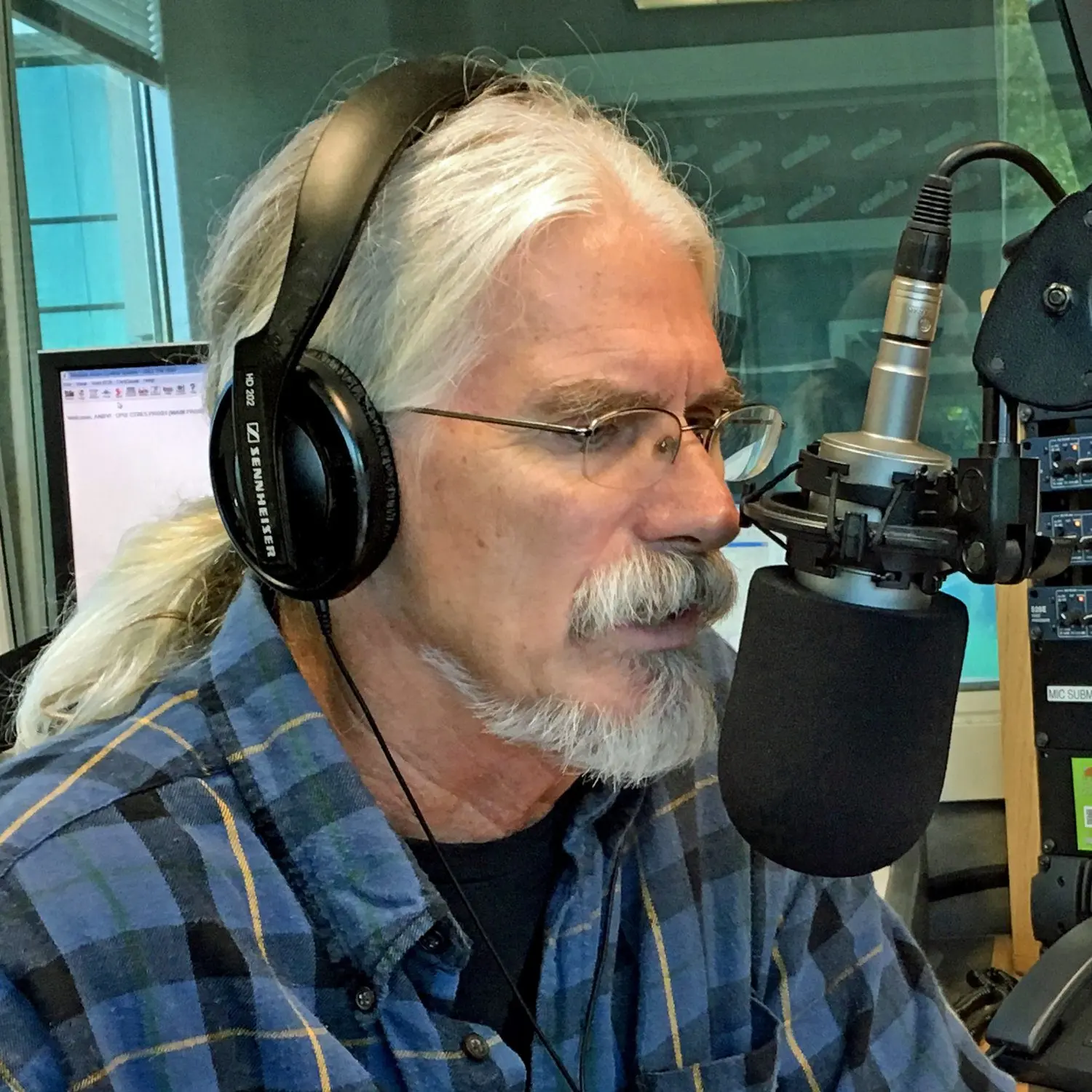
In this insightful episode of The Narrow Path, Steve Gregg dives into the heart of listener questions, exploring complex topics regarding Christian beliefs and teachings. From a deep dive into Rebecca Brown’s controversial books to dissecting various theories about the origins and nature of demons, listeners are provided with an enlightening examination supported by scriptural references. As always, the lines are open for thoughtful dialogue, enriching the discussion with diverse perspectives on these challenging topics.
SPEAKER 1 :
Thank you.
SPEAKER 03 :
Good afternoon and welcome to the Narrow Path radio broadcast. My name is Steve Gregg and we’re live for an hour, taking your calls. If you have questions about the Bible or the Christian faith, I’d be glad to hear from you today. Feel free to call me up and we’ll talk about it. If you see things different than the host and want to disagree and say why, you’re welcome to do that too on my dime. Give me a call. This is the number, although I’ll tell you what the lines are for right now, but they will be opening. They open up every time I talk to a caller, and they go along. And sometimes they open up just because people get tired of waiting. So take this number, and if you want to get through in a few minutes, just try it, and you may find a line has opened for you. The number is 844-484-5737. That’s 844-484-5737. We’ll go directly to phones and talk to Emmanuel from Laredo, Texas. First of all, hi, Emmanuel. Welcome.
SPEAKER 05 :
Hi, Steve. Thanks for taking my call. Hi. Here’s one. Hey. Listen, Steve, I was wondering, you’re engaged with Rebecca Brown’s books and materials, particularly with the book, He Came to Set Captives Free, which I know is considered quite controversial. I recently read Jesus’ Victor after hearing mentioned it in a previous episode in your radio show. And I could, I mean, tell or notice that it’s a strong parallel between, you know, Blumen’s testimony and the tense or topics in Rebecca’s book, especially regarding spiritual behavior and warfare. So I really appreciate hearing your thoughts here and if you see connections or what are your thoughts on this Based on your experience.
SPEAKER 03 :
Based on your experience. I’m sorry. Some of what you said, I’m not sure I understood. Did you say these are books by Michael Brown you’re naming?
SPEAKER 05 :
No, it’s Rebecca Brown’s. Rebecca Brown’s. I don’t know if you’re familiar.
SPEAKER 03 :
Oh, Erica Brown. Okay. He came to set the captives free. Were all of those books you mentioned Erica Brown’s books?
SPEAKER 05 :
Yeah, Rebecca Brown’s books. Correct. Yes.
SPEAKER 03 :
Yeah. Okay. Oh, I see. Rebecca Brown. Okay. I’m not hearing you real well for some reason. But anyway, I’m not really familiar with him. I remember when he came to set The Captives Free first came out, and there was a lot of talk about some of the ideas she had about the demonic world and spiritual warfare and stuff. But I never read her books, and so I can’t really comment on them. Is there something in particular that she said that you would like me to address? I can’t address the book as a whole since I haven’t read it, but if there’s something in particular…
SPEAKER 05 :
Yeah, in particular, regarding, for example, Jesus’ victory, you know, the testimony of the pastor saying that he can talk directly to spirits, and they comment or make some statements about they were, you know, in the past life humans, and that is very controversial for me. I don’t know if you can explain a little more.
SPEAKER 03 :
Okay. Is it real or not? So you’re referring to the Blumhart book that I sometimes refer to?
SPEAKER 05 :
Yes.
SPEAKER 03 :
Pastor Blumhart? Yes.
SPEAKER 05 :
Yes, correct, correct.
SPEAKER 03 :
Okay, so he said that he thought maybe some of the evil spirits that possessed the girl he was dealing with had been people who had lived and died, in other words, as human spirits, as opposed to, say, fallen angels or something like that. Is that what your question is about?
SPEAKER 05 :
That’s correct, sir. That’s correct, sir.
SPEAKER 03 :
Yeah.
SPEAKER 05 :
Correct, yes.
SPEAKER 03 :
I have to say, most Christians do not accept the idea that demons are the spirits of departed people. On the other hand, the Bible isn’t entirely clear about the origin of demons or their nature. We know from the Scriptures that some angels have fallen. There’s mention of angels that fell in 2 Peter 2, verse 4, I think it is, and then also in Jude, verse 6. Both those places talk about angels that sinned and fell, but we’re not told if those fallen angels are the same as the demons. In fact, we’re told that those fallen angels are kept in chains under darkness waiting for the judgment day, which might suggest they’re not the same as the demons. Maybe some of them are and some of them are not chained. I really don’t know. We don’t have extensive biblical teaching on that. But I have to say many Christians that I’ve known have assumed that the demons are the same as the fallen angels. That may be true, but also there’s some reasons to question that. Now, if they’re not the fallen angels, what are they? Now, there are some people who believe there was a race of people who lived before Adam and Eve, that there was a gap after Genesis 1.1. Genesis 1.1, of course, says, In the beginning God created the heavens and the earth. And they believed that when God created the heavens and the earth, he had it inhabited with a race of beings, perhaps very much like human beings. But they sinned and came under judgment. So the next verse in Genesis, that is chapter 1, verse 2, says the earth was formless and void. Or they would say it can be translated the earth became formless and void. Now, you know, most of us would read Genesis 1 and 2 and say, God created the heavens, the earth, and the earth was formless and void, and not see any gap in there. But there is what’s called the gap theory, that between those two verses, there’s a whole long period of time where there was a pre-Adamic race, there’s a race before Adam and Eve. and that they had a whole history, and that they fell and got judged, and that’s why the earth became formless and void. And those who believe such things as that have sometimes suggested that the demons are not fallen angels, but they’re the evil spirits of the people, the wicked people that were judged in that pre-Adamic society. Now, I don’t believe that theory. I don’t believe there was a gap there. I don’t think the Bible really allows for it. I’m not going to go into that in detail. So that’s not the view I would hold. Another view that some have held is that the Nephilim, or the spirits of the Nephilim, who are mentioned in Genesis 6, are possibly the demons. We read of sons of God who took wives of the daughters of men and had children. And then, of course, some people think that the children of those marriages were the Nephilim. It doesn’t say so in the passage, but some people think the Nephilim were the children of those marriages, and they believe the sons of God were angels. So that’s a few assumptions that the Bible doesn’t say. The Bible doesn’t say that the sons of God were angels, and it doesn’t say that the Nephilim were the children of those marriages. So there’s a lot of assuming going on here. But on the assumption that angels married human beings and their children were the Nephilim, who were kind of a half-breed, demon human, and that the demons today are the spirits of those Nephilim that were killed in the flood, some people think that’s where the demons come from. Now, none of these theories are confirmed in Scripture, and some of them come from very nebulous scenarios that are not, I mean, they’re frankly very questionable scenarios the Bible doesn’t specifically teach. But, yeah, Pastor Blumhardt in Germany, who is dealing with demons and a girl, a lot of demons, got the impression that through his experience from things the demons said and so forth, that some of them were the spirits of people, including people from that town. And even in one case, a woman who had gone to his church and who had died and who had killed her baby. And so, I mean, this is the information he got. Now, he took it largely at face value. A lot of us would say, well, you don’t want to trust what demons say. You know, they can say anything they want about themselves, and who knows if they’re telling the truth. And that’s true, which means we can’t necessarily trust that testimony either. So what do we have? We’ve got different theories. Some people think the demons are fallen angels. Some think they’re the spirits of a pre-Adamic race that was judged before Genesis 1-2. Some believe it’s the spirits of the Nephilim mentioned in Chapter 6 of Genesis. And then some think they could be the spirits of wicked people, Blumhart, the pastor, kind of concluded that the demons were the spirits of people who had been very wicked and who had sold their soul to the devil in their lifetime for power or whatever, and that they now had to serve the devil. Now that they died, their spirits were tormented and forced to serve Satan, and that they were the demons. Now, all of those are theories. The Bible doesn’t confirm any of them, and I can’t confirm any of them. But, yeah, you were wondering about that. You know, I think of the four theories I just mentioned, the likelihood that they are fallen angels or that they are the spirits of wicked people perhaps have the least against them in Scripture, in my opinion. But it’s still something the Bible never really explains completely. All right, let’s talk to Paul in Buena Vista, Colorado. Paul, welcome.
SPEAKER 07 :
Hi, Steve. A couple questions. I read your website on Word of Faith. It was quite interesting. But I’ve been attending a new church lately that the pastor and his wife are Word of Faith, and they’re missionaries from around the world, too, though, and they’ve seen some miraculous signs in their own lives and overseas.
SPEAKER 04 :
Sure.
SPEAKER 07 :
Well, my question is, Is the Word of Faith tied in with the NAR, the New Apostolic Revelation? Or does it stand alone? And what would be the difference between those two or similarities?
SPEAKER 03 :
All right. Well, the NAR definitely incorporates the beliefs of the Word of Faith. But the Word of Faith teaching was around a lot longer ago than the NAR. The New Apostolic Reformation teaching, I don’t know when it first started. I’m going to say maybe in the 1990s. I’d never heard of it before that. And, of course, that’s the movement that’s kind of centered in Bethel Church in Redding, California, where there’s a very strong emphasis on miracles and healings and the supernatural. And we might just say they’re kind of hyper charismatic. Now, they do hold to the Word of Faith views, but But I wouldn’t say the word of faith is tied in with them so much as they’ve tied in with the word of faith and with maybe some other things besides the word of faith. The word of faith is the movement started by Kenneth Hagin pretty much and carried on by his disciples like Kenneth Copeland and a lot of others that teaches that you can be healed if you simply have enough faith and you will be prosperous financially if you have enough faith. And therefore, if you are sick and can’t get well, And if you are poor and can’t get out of it, you don’t have enough faith because they believe that there’s a law called the law of faith which governs the universe. Kenneth Hagin actually said that even God is subject to the law of faith. He said he used the law of faith to create the world. And so the law of faith apparently is even above God. But the law of faith to him was a spiritual law just like the law of gravity is a physical law, and everything submits to it. Everything is subject to it. Now, the law of faith, they say, is that if you say positive things and you only confess positive things, you’ll have what you say. That if you give a negative confession, if you say, boy, am I broke? Or, man, am I sick? Well, that’s a negative confession. And they say, well, you will have what you say because that’s the law of faith. You’re kind of operating this spiritual law. What you say is what will happen. Now, they also, of course, have Jesus in the mix here. They say that when Jesus died, he purchased our healing and our prosperity. He basically canceled out the curse of the law. And they say the curse of the law was sickness and poverty and death. So if Jesus ended the curse of the law, then we should not be subject to sickness or poverty or death. Sickness and poverty are the ones they emphasize the most, since word of faith people die just like everyone else does, and nothing seems to change that by having enough faith. But really, having enough faith doesn’t make you rich or well either. There are no promises of God that say if you have enough faith, you will in every case be rich or you will in every case be well. This is not a scriptural teaching. It comes from the, well, it comes from the mind science cult. Before Kenneth Hagin started the movement, he was reading books by a guy named E.W. Kenyon. And Kenyon is the one who really taught this stuff and came up with it. And he came from a school in, I think, Massachusetts called Emerson College or University. I don’t know what it is. which was the hotbed of many mind science cults like Christian Science and Mind Science and things like that. And these cults are very much like the Word of Faith. In fact, some of our listeners may be familiar with the book, what’s it called, The Secret. And for a while, Oprah was promoting that book, The Secret. And it’s just the same thing as the Word of Faith, only there’s no God in it. There’s a universe instead of God there. To the Word of Faith, if you have enough faith, God will make you rich. God will make you well. He will heal you and give you prosperity. But to the so-called, the secret, the secular. And they say, well, the universe will give you those things. And instead of calling it positive confession, they call it manifesting. If you say negative things, you’re manifesting negative energy that’s going to bring about negative results. If you say positive things, then you’re doing the opposite. So, I mean, that’s just a mind science cult. And the word of faith is simply a mind science cult baptized with some Bible verses. The problem is the verses they use don’t teach what they’re saying. So, you know, it’s wrong. And it can be very dangerous. I mean, if you tell people that all they have to do is believe and say the right words and they’ll never get sick or they’ll get well, many people have decided that if that’s true, they won’t go to doctors. When they could, and they could be cured, instead they die. There is a A man named Morgan Freeman. I think that’s his name. I don’t mean if Morgan Freeman is an actor. It’s another Freeman. No, someone Freeman. Hobart Freeman. That’s kind of like Morgan Freeman, isn’t it? Hobart Freeman. That’s the name. Who is a pastor, Word of Faith pastor. And it is said that over 90 people in his congregation died of sicknesses that could have been helped by doctors. But they didn’t believe in going to doctors. So the thing can be dangerous. Now, you said that this pastor and his wife have been missionaries. They’ve seen a lot of miracles. I wouldn’t dispute that. I think missionaries see lots of miracles. I think people even in this country sometimes see miracles. But I think missionaries see even more. And so, anyway, but that doesn’t confirm anything about the Word of Faith. The Word of Faith is a philosophical, theological error. But it’s, you know, it’s not just Word of Faith people who believe in miracles. I mean, Long before there was the Word of Faith, Jesus was working miracles and the apostles were working miracles, but they didn’t follow the Word of Faith. So, you know, you don’t have to. You don’t have to believe that doctrine to work miracles. And if you see miracles, it doesn’t confirm that doctrine. In fact, I’ve seen plenty that disconfirms it. I’ve told these stories before. I won’t go into detail, but I knew two women who had terminal cancer. One of them believed in the word of faith and the other didn’t. The one who believed in the word of faith was confessing her healing of cancer right up until the day she died. And it took months, but every time you saw her, she said, I’m healed. Jesus has healed me. You know, she was word of faith all the way. And, of course, she didn’t get healed. I mean, I shouldn’t say of course, but it’s very common for people who say they’re healed to still die because the word of faith doesn’t work. It’s not a true doctrine. You don’t get what you say. I mean, you might sometimes, but that would be just the luck of a draw, you know. But it’s not the case that there’s some promise that you’ll have what you say. So this woman, a friend of mine, died of cancer while she was confessing she was healed. Another woman who also had terminal cancer was confessing that she would die. And she thought God had even told her the date that she would die. And she told me what date it was. She said, don’t pray for me to be healed. I know I’m going to die. This is the day I’m going to die. And that day came, but she didn’t die. In fact, she was healed. That day she was healed of cancer. And she’s, I don’t know where she is now because this was, it’s going to be 30 years ago almost. But, so she may not be alive now, but I saw her five years later and the cancer had not returned. So it was not just a fluke. And so, you know, I’ve known people who said they died, but they didn’t. They got healed. I’ve known people who said they’d get healed, and they didn’t. They died. So it simply is not the case that you will have what you say. All right. Let’s talk to Megan from O’Fallon, Missouri. Hi, Megan. Welcome.
SPEAKER 10 :
Hi, Steve. Thank you for taking my call.
SPEAKER 03 :
Yeah.
SPEAKER 10 :
So in Genesis 18, Sarah denies laughing at God, and then he calls her out on it. And I’m wondering why his response to her lie is far different from his response to Anna and Sapphira lying to God.
SPEAKER 03 :
Well, Anna and Sapphira didn’t lie to God. Peter said they lied to the Holy Spirit. But I guess that’s lying to God. But I think it was… They were lying to the apostles, really, and the apostles were the Spirit’s agents. So in lying to the apostles, they were lying to the Holy Spirit. But they weren’t trying to fool the Holy Spirit. That’s the point. They’re not trying to fool the Holy Spirit about the nature of things. They were trying to fool Peter and the apostles. And Peter said, well, you’re actually, in doing that, you’re lying to the Holy Spirit. But that wasn’t their thought. You know, that’s a different situation than Sarah. There’s been a lot of people, frankly, who’ve lied to church leaders and who’ve lied about very similar lies to the ones that Ann Nice and Sapphira told and who’ve not dropped dead. God made an example of them at the beginning of the church to put the fear of God in people in the church who would maybe consider being dishonest in the future. He kind of set a precedent there. But he doesn’t kill everyone like that who lies. In fact… Same thing kind of happened when the tabernacle was set up. Two priests, Nadab and Abihu, they offered strange fire, and God struck them dead. And that was the first day of the tabernacle service. But lots of priests after that did worse things than that, and God didn’t strike them dead. I think in both cases, Ananias and Sapphira in the case of the early church, and Nadab and Abihu in the case of the tabernacle, God made an example of them right at the beginning just so from then on everyone would know that that’s not okay. Now, he doesn’t strike everyone dead who does that, but it’s not okay. I mean, he’s saying this is what I think about that. So that’s what’s hanging over your head if you’re doing that kind of thing, even if you don’t drop dead. Now, Sarah, she was just embarrassed. I mean, she, you know, God was there in a human form. And I don’t think she knew it was God. There was a guest. There were three guests, God and two angels came. But they looked like human beings, and they ate a meal in the house. So I don’t think she knew it was God. And after he ate, the guest, who happened to be God, said to Abram, where is Sarah, your wife? And Abram said, she’s in the tent. And God said, well, this time next year she’s going to have a baby. Now, I think Sarah thought it was just a guest in the home. kind of wishing a well-wishing on their host because of the hospitality. Oh, you know, God will give you a new child, you know. And she knew that she was barren and that she was 90 years old. And she figured her guest didn’t know that, so she chuckled at it. And she thought it was funny. And then the man who was God said, why did Sarah laugh? Is anything too hard for Yahweh? And I think at that point she realized, oh, this guy’s Yahweh, God. And so she said, I didn’t laugh. I think she just got caught in the moment. She was embarrassed. And he said, but you did laugh. And that was the end of that story in the Bible. But I don’t think she did anything. I don’t think she meant any ill of it. She wasn’t like trying to cover sin. There’s nothing wrong with laughing when you find something amusing. But then when she was challenged on it, I think she wanted to just pretend like it didn’t happen. Not like Not like it’s the same thing as lying to the Holy Spirit like Ananias and Sapphira did. I don’t see it as a parallel. But, I mean, technically, yes, Ananias and Sapphira did lie to the Holy Spirit. But they didn’t know that. They weren’t intending to. And actually, when Sarah lied, I don’t think she… Well, she might have known it was Yahweh by the time she said, I didn’t lie. But she didn’t when she laughed. Anyway, I don’t think they’re parallel cases. they’re true both of them said something that wasn’t true in the presence of God but kind of very different situations in my opinion okay thank you alright thank you let’s see we got a break coming up here maybe I shouldn’t take another call until after the break because it’s a hard break you’re listening to the Narrow Path radio broadcast my name is Steve Gregg we do this for an hour every weekday And we’ve been doing it since 1997, which if you do the math, that’s been 28 years now daily we’ve been having this program. And you might say, well, you’ve probably heard a lot of questions. Probably most of the questions there are. In fact, so many that somebody has taken 25,000 calls to this show and put them in a topical index online, which you can listen to those questions individually if you just look up the questions. The website is Matthew713.com. Matthew713.com. If you go there, there’s other features there that are valuable, too, but one is the topical index. And if you click on that, you’ll see a listing. I think there’s about 2,000 different topics and quite a few questions under each of them. And some of the topics probably have 100 questions because all the questions that have been called into this program in the past, not the whole career of the program, but over the past, I think, 13 years or so, have been cataloged there. And you can just choose the question you like, click on it, and it will hyperlink you right to that call. And you’ll hear the question asked by someone prior to you and the answer. So it’s really quite a convenient thing. That’s at Matthew 713. And, yeah, I probably have heard most of the questions out there, though there’s always some. Once in a while, I’m surprised people come up with a question I’ve never heard. You might have noticed, if you haven’t been paying attention and you’re new, there’s no commercials. This is not a commercial. I’m not selling you anything. All of our stuff online is free, including Matthew 713. But without commercials, we still have to pay the bills for the radio program. How do we do that? Well, we’re listener supported. If you’d like to help us stay on the air, People do that. They write to us and they donate if they want to. You can do that if you want to. You can write to us at The Narrow Path, PO Box 1730, Temecula, California, 92593. That’s The Narrow Path, PO Box 1730, Temecula, California, 92593. Now, it’s possible to donate online, too. Our website is thenarrowpath.com. Thenarrowpath.com. And there’s a donation link. There’s also a lot of other things there, and it’s all free resources, too. And there’s more than you’d imagine. There’s like 1,500 lectures of mine that are free to listen to, verse by verse through the whole Bible, thousands of topics. Well, maybe thousands, hundreds anyway. Anyway, check it out at thenarrowpath.com. If you want to donate, that will help. If you don’t want to donate, just take the stuff for free. We don’t care. thenarrowpath.com. I’ll be back in 30 seconds. We have another half hour, so don’t go away.
SPEAKER 01 :
Everyone is welcome to call the narrow path and discuss areas of disagreement with the host, but if you do so, please state your disagreement succinctly at the beginning of your call and be prepared to present your scriptural arguments when asked by the host. Don’t be disappointed if you don’t have the last word or if your call is cut shorter than you prefer. Our desire is to get as many callers on the air during the short program, so please be considerate to others.
SPEAKER 03 :
Welcome back to the Narrow Path Radio Broadcast. My name is Steve Gregg, and we’re live for another half hour, taking your calls, trying to hear and answer, if possible, any questions you might raise about the Bible or the Christian faith. Or if you have a difference of opinion, feel free to call about that. That’s always welcome here. We’re going to go back to the phone. Oh, the phone number, by the way, I’ll give you, but the lines are full at the moment. The phone number is 844-484-5737. We’re going to talk next to Steve in Long Beach, California. Hi, Steve. Welcome.
SPEAKER 02 :
Hey, thank you, Steve, for your ministry. Before I ask you a question… Real quick, I don’t know if you’re a college or experiencing this, but for some odd reason, you’re breaking up really heavy today. Oh, that’s not good. A lot of crackling. I don’t know if it’s because you’re still out of town in Oregon or wherever.
SPEAKER 03 :
Well, that isn’t good. That is not good. Right. I’m not sure what to do about it. You know, each day I have the Internet connection. I do. I am away from home, and that might be the problem. I might not have a good Internet connection. I wasn’t aware, but I’m glad you told me. I did hear one of the callers was kind of breaking up talking to me, and that could have been at my end, too. I didn’t know whether it was or not. That’s okay. Is it possible to hear the complete answers, or is it just hopeless?
SPEAKER 02 :
No, no, I can hear you. You’re breaking up pretty good, but I can hear you. Okay, my question, get right to it, is regarding the baptism of the Holy Spirit. So if you could connect these two for me, I just want to hear your explanation on it. and see how you would deal with someone who received Christ and someone who is a Christian and believes that one size fits all. Upon conversion, you receive and you get as much of the Holy Spirit as you’re ever going to get. Let me start off by saying, John 20, 22, after the resurrection, Jesus breathed on the disciples and said, receive the Holy Spirit. And I know he hadn’t gotten to the Father yet, and the promise was coming from the Father at Pentecost. And then at Pentecost, when they did receive the baptism of the Holy Spirit, how important is that, this experience of being baptized with the Holy Spirit? And then if you led an unbeliever to Christ in Temecula, where you live, and you were discipling him, how would you share with him that he needs the importance of the baptism of the Holy Spirit? number one, and number two, with Christians who don’t believe in the baptism of the Holy Spirit, what would you share with them?
SPEAKER 03 :
Okay, I’ll try to remember all of that. People who don’t believe in the baptism of the Holy Spirit, usually we would say they don’t believe the baptism of the Holy Spirit is a separate thing from salvation. Most Christians believe in the baptism of the Holy Spirit, but some believe that you automatically are baptized with the Holy Spirit when you are converted. And others believe that that’s not necessarily so. And sometimes after you’re converted, you may need to be baptized with the Holy Spirit subsequently. If you ask how important it is to be baptized with the Spirit, I think it’s very important. I think it’s normative Christianity. And Jesus said you’ll receive power when the Holy Spirit comes upon you, which is what he called the baptism of the Holy Spirit in Acts chapter 1. In Acts 1.5, he said, you will be baptized with the Holy Spirit not many days from now. And three verses later, he said, you’ll receive power when the Holy Spirit comes upon you. So when the Holy Spirit comes upon you, that’s being baptized in the Spirit, he said, and that’s when you receive power. I don’t know how a person can live the Christian life without power. If we just see Christianity as a Jesus fan club, and he’s the president, so we follow his rules, and we just try to live the way Jesus said to live. Well, we do need to do that, but we can’t. Only Jesus can live that way. Only the Holy Spirit that was in Jesus can live that way. And so to live defeating sin in our lives and to be able to do the works of God with his power, that’s normal. If we try to be Christians without it, I don’t know what we’re expected to happen. We’re supposed to be doing the works of God as members of his body, and his Holy Spirit gives us gifts. that enables us to do those things with his power and with his help. So I’m going to say it’s fairly necessary to be baptized in the Holy Spirit if you want to live a normal Christian life. Now, I do believe that some people are baptized in the Holy Spirit when they’re converted, and that may happen a great deal. But I also know that some people have been converted and they haven’t received the power of the Spirit. I know because that was my experience. I was converted as a child. I preached to other people. I was following Jesus the best I knew how. I was actually more serious than most people in our church youth group about following Jesus. It was very important to me. But I didn’t know anything about the power of the Holy Spirit until I went to another church, which was Calvary Chapel in Costa Mesa in the Jesus movement, and I found out about the baptism of the Spirit. Well, I researched it in Scripture and became convinced that it was indeed something that the Bible teaches. So, So I received that, and that made a huge difference in my life. So in my case, I wasn’t baptized in the Holy Spirit when I was converted, but some people are. Now, someone might say, well, wait a minute. How can you say you weren’t baptized in the Holy Spirit when you’re converted? Maybe you weren’t really converted. Well, that’s always sort of a subjective thing. I repented. I believed in Christ. I followed him the best I understood. What I believe is that when you’re converted, you do receive the Holy Spirit, but I don’t equate that with being baptized in the Spirit. Paul said in Romans 8 and 9, if anyone does not have the Spirit of Christ, he’s none of his. And so all people have the Spirit of Christ if they are Christ’s people. But that doesn’t mean they’re filled with the Spirit or baptized in the Spirit. It doesn’t mean that they’ve got the power that they should have. So anyway, I personally believe that anyone who is converted has the Holy Spirit. I don’t think that always translates into being filled with the Spirit, because Paul, when he wrote Ephesians in chapter 1, he told his readers that they had received the Holy Spirit when they were converted. But later he’s told the same readers in the same book, he said they need to be being filled with the Spirit. He said, don’t be drunk with wine, which is debauchery, but be filled with the Spirit. And it seems like the Greek means be being filled with the Spirit. That’s what the tense of the verb suggests. So they had the Holy Spirit, but it wasn’t taken for granted that they were filled with the Spirit. That was their responsibility to walk in the Spirit. Anyway, of course, I do have lectures on that where I go into it in more detail. But if I was telling somebody that didn’t have that, that they needed that, I would have to say, you need to seek God’s spirit and his power. Now, if it so happened that they said, well, I already had that. I mean, that’s already happened to me when I got converted. I would not assume they were lying. I would suggest that’s a possibility. However, if a person is filled with the spirit, they’re going to have the fruit of the spirit. love, peace, and joy, and all this stuff, you know, patience and self-control, if I don’t see that in their life, I’m going to say, I think maybe not. I don’t think you’re filled with the Spirit. You might have the Spirit. You might be born again, but I think you need to be filled with the Spirit yet. But, if on the other hand, they seem to me to be walking in the Spirit and living the Christian life and the fruit of the Spirit in their life, I would not I would not contend that they don’t have that. I think a lot of people are baptized in the Spirit at the time of conversion, which was the norm, frankly, I think, even in Acts. But it’s apparently possible to come to Christ and be baptized and believe and all that stuff, and still at some other point realize there’s something missing here. There’s supposed to be some kind of power in my life that I’m just totally lacking. In which case, I think the baptism of the Spirit is what’s probably lacking in their case. I have lectures on this. I have a series on our website called Charisma and Character. And the first few lectures speak specifically about this in greater detail. But I appreciate your call, Steve, and I hope that might answer your question. Let’s talk to Noah in Hartford, Connecticut. Noah, welcome to The Narrow Path. Thanks for calling.
SPEAKER 06 :
Hi, Steve. Thank you for taking the call. I have a couple of questions for you. First of all, I want to say I do appreciate you, and you have helped me grow the amount of take-up from the slaves. Thank you. But the question is, we have decided to homeschool our kids, and I was wondering if there’s any curriculum that you will recommend or anything you want to use for your kids when you’re raising them? And then the second question will be, in the book of Revelations, the letter to the churches, it says the letter to the angel of the churches. I got a little confused about that because I just felt like if you’re writing to the church, you probably will say like the pastor of the church or the deacon of the church. Why did it say to the angel of the churches? Is there anything significant about that?
SPEAKER 03 :
Okay, so you’re wondering a couple things about homeschool curriculums and also why the letters to the seven churches were addressed to the angels of the seven churches. Did I get that right?
SPEAKER 06 :
Yeah. Okay.
SPEAKER 03 :
When it comes to homeschooling, when my kids were homeschooled, it was very early in the movement. It wasn’t done by very many people back then. We’re talking about 40 and more years ago. um so you know in those days there weren’t that many people homeschooling and there wasn’t as much curriculum now there was some and uh there were several publishers that published curriculum for homeschooling and we used some of their books but we never we never relied on one publisher’s curriculum for everything we actually you know picked and chose we you know for different subjects we picked what we wanted from different publishers or some books we had on hand um Now, today, things have changed. There’s gazillions of people homeschooling, and there should be even more because the public schools are so dangerous for children now in many cases. But I would say that now, though I haven’t kept abreast of it because my kids are grown up. I mean, my kids are in their late 30s and early 40s and so forth. So we haven’t looked into homeschooling for a long time. But I know there’s online courses. and there’s homeschool support groups where different parents kind of work together with each other to kind of share the burden of homeschooling. I’m not the one to ask about that, even though we were early on involved in homeschooling. The movement has changed so much, and the available resources now, there weren’t even computers when we started yet, personal computers. They didn’t exist yet, much less the Internet. And now, you know, there’s so much there. So I can’t, you can have talk to some, maybe some other people who are currently homeschooling or just do some research online to see what’s available out there. I can’t recommend anything in particular. Now, why did Jesus address the letters to the seven churches to the angel of the church? To the angel of the church of Ephesus, write this. To the angel of the church of Samaria, write this, and so forth. Well, many people believe that it is referring to a human messenger in the church. The word angel, angelos in the Greek, is the ordinary word in the Greek for a messenger. And although many times when the New Testament talks about these messengers, or about messengers in general, it’s talking about heavenly messengers that come down with messages from God. But a human messenger who takes a message to another human being, the Greek word for that is also angel or angelos. So many people think that the angels or the angeloi of the seven churches are human messengers. And for that reason, a lot of commentators say it’s the pastor of the church. Now, as far as I know, they didn’t have a pastor of any churches in the time that Revelation was written. At least they didn’t in Paul’s lifetime, though Revelation might have been written after that. But it could still be that in a world where most people were, let’s say… and didn’t have books, never learned to read, it’s possible they would have a reader, somebody who read messages to the church, and they were called the messenger of the church when people would send letters or send messages that that person would address the church and pass along the message. We don’t know. We don’t know how the churches were structured, but a lot of commentaries believe that the angels of the churches were humans. either pastors or some other human messenger. We don’t have any other information that would tell us otherwise, though some people think it’s like each church has its own guardian angel or something like that. But this is one of the mysterious things about the book of Revelation. If you read 50 commentaries on it, like I have, you’ll see various guesses that people make. And even the best guesses are really guesses still. So I can’t really say why the letters were addressed to the angel of the church. But I’m thinking that the idea that it was a human being that it was written to is probable. Because, I mean, does God send mail to angels? I mean, these are letters. Does God send letters to angels? Doesn’t he have more direct communication with them than to use the postal service? I would think so. So, I mean, this would be probably probable. understood to be human messengers. And that, I think, is probably the majority view among commentators, though there are obviously other possible views that people have. All right. Let’s see. We’re going to talk next to Jonathan in San Diego, California. Hi, Jonathan.
SPEAKER 08 :
Hi. Dad, I got in to talk to you. I didn’t even think I was going to get to your question, but I have my marriage going on and it’s kind of a complicated situation so I have kids from a prior marriage and it’s been it’s been difficult because well let me just say something about that if I could let me say something about this um
SPEAKER 03 :
Do you have a specific question?
SPEAKER 08 :
I mean, I feel sorry for you.
SPEAKER 03 :
What’s that?
SPEAKER 08 :
Yeah, yeah, yeah. It’s a biblical question. So this is what it is. So I know that you’re supposed to forgive 777 times. When you have a vow with your wife, then you have to follow that vow because that vow is also a God. But what do you deal with when you’ve had prior kids from a prior marriage and then she’s jealous for the kids? and then those kids are having a really hard time spending time with me. So then, you know, do I forgive her continually?
SPEAKER 03 :
Is your wife a Christian?
SPEAKER 08 :
She is, but she’s struggling with that.
SPEAKER 03 :
Okay, I’ve seen that very problem close hand. You know, I had a daughter from my first marriage, and my later wife who had other children with me, really is a little bit like Cinderella and her stepmother and you know kind of things and it’s a shame it’s a very unspiritual thing for a stepmother to be jealous of the kids of the previous marriage or whatever but some people have struggles with it and somehow you’ve got to you’re going to have to balance the situation where you don’t neglect your kids and And where you also let your wife know that you don’t see them as competing with her. You love her. You’re devoted to her. And she’s married to somebody who has kids. And so she’s got to be a grown-up, you know. And so do you, of course. But she’s got to be a grown-up. She married a guy with kids. What does she expect? You’ve got kids. You’re going to be spending some time with them. And she would do well to learn to love them because… Your marriage is always much better if you love the people your spouse loves, and especially their children. So I just don’t, you know, I mean, she might be not a very spiritual Christian. Some Christians do have jealousy and things, but this is just something you’re not allowed to be jealous of. This is going to be her battle. Her battle is to live with the fact that there are children from another marriage, They continually, first of all, remind her that there was another woman in your life, which might make her jealous. They also, you know, they have some of your affection and take some of your time, so she could be jealous about that. But she also needs to remember she chose to marry you, and she knew those kids were there. And so she’s just going to have to adjust. But then, of course, you as a husband, knowing that she has troubles with this, You’re going to have to adjust as much as you can to not allowing, you know, your commitment to your kids to take you too much away from your wife to such a degree that she’s, you know, you’re inspiring difficulties. You’re tempting her by doing so. You’ve got a delicate situation. You know, it’s a fine line, but it’s something that you, I mean, you bought that too. You know, I mean, she bought it when she married you. She got you and your kids. She knew she was doing it. Now she’s got to take responsibility for that and grow up and live with it. And you also knew. that you’re taking on a wife and you’ve got kids, and if it’s harder to balance that than you thought it was, well, that’s how life is. Usually many things in life are harder than we thought they’d be. But if we’re to be godly, we’re just going to be responsible and love them both. Do your best to give the best you can to both. Now, if your wife simply is totally unreasonable, and every time you’re with your kids, it makes her mean and nasty, I think you’re going to have to confront her about that, and kindly. I mean, don’t get in a big fight. Just say, listen, we’re grown-ups. We’re supposed to behave like grown-ups. You married a man with children. I married you because I love you, and I want to be your husband. But I can’t just wave a magic wand and make my children disappear, and neither can you. So let’s live responsibly in the situation we are in. Apart from that, I don’t know what to say. Of course, if you go to marriage counselors, they can spend a lot more time exploring what I can’t explore with you here on the air because there’s a lot more that I don’t know about, obviously. But that would be my general approach to the problem. The specifics, probably you need someone closer to you who knows your situation to tease those out with you and help you through specific situations. Okay, Linda from Grass Valley, California. Welcome to The Narrow Path. Thanks for calling.
SPEAKER 09 :
Hi, thank you, Steve, for taking my call. Just one question first. Do you know about a thing called the Agenda 2030?
SPEAKER 03 :
Well, I’ve heard of it, but I’m not that familiar with it. I mean, I don’t know what the contents of it is. Lots of people I know have mentioned it and alluded to things in it, but I haven’t looked it up to find out anything authoritative about it.
SPEAKER 09 :
Okay, well, it kind of makes it look like we would be a one-world government by then. Anyway, it’s kind of scary, but it’s on the good Christian stations that I go on the Internet and do it up. And I got hit with this, and it was just shocking to me.
SPEAKER 03 :
Yeah, you’ll have to listen to somebody other than me because I’m not that smart about it. I don’t know that much.
SPEAKER 09 :
Okay, then I have just one other question. Is there any verses at all in the New Testament… which specifically say that we must observe the Sabbath?
SPEAKER 03 :
No. And it’s not a New Testament obligation. No, it’s part of the old covenant. There’s a new covenant now.
SPEAKER 09 :
Okay. You know, I kind of was laying that way, and I thought this is a big relearning for me because I’ve been a Christian for over 40 years.
SPEAKER 03 :
Well, there’s a lot of Christians who think you should keep the covenant. I think that they have a problem. understanding what a covenant is, I mean, they think we should keep the Sabbath. The Sabbath was the sign of the covenant between God and the nation of Israel. That covenant that it was a sign of was struck between God and Israel at Mount Sinai. We call it the Sinaitic covenant. That covenant is no longer valid. It says in Hebrews that there’s now a new covenant, and the new covenant makes the old one obsolete. And that means, of course… We don’t go to the terms and stipulations of the old covenant to define our duties because that covenant is over. We now are part of a new covenant, which means we follow Jesus. Now, Jesus never told anyone to keep the Sabbath. And many people would have said he didn’t keep it himself. He was criticized for that all the time. At one point, in I think it’s John 5, 17, it says the Pharisees sought the Lord to kill him because he not only had broken the Sabbath, but that he had said, God was his father, makes himself equal with God. So it says, John says that Jesus had, in fact, broken the Sabbath, and they wanted to kill him because of that. But he didn’t break it wrongfully because he wasn’t under the law. He wasn’t under the Sabbath. He said he was the Lord of the Sabbath. It was not the Lord of him. He said the Sabbath was made for man. Man wasn’t made for the Sabbath, which means man’s interests matter. trump those of the Sabbath day, but he said he is the Lord of the Sabbath. So it’s like, yeah, okay, he broke the Sabbath, but he was not under obligation to keep it. It’s a little bit, I think it’s a lot like when a policeman or an emergency vehicle screams down the freeway at 90 miles an hour with their lights on and their sirens on. Well, they’re breaking the speed limit. I mean, they’re breaking the law. But they’re not subject to the law in that case. When they’re Code 3, they’re above the law.
SPEAKER 09 :
Oh, that’s an interesting analogy.
SPEAKER 03 :
Yeah, Jesus was the king, and he was the lord of the Sabbath. He didn’t have to keep it, and he said his disciples didn’t have to, unless he wanted them to, but he didn’t ever say he wanted them to.
SPEAKER 09 :
And then, just if I could, in a quick way, if you can, I have these friends that are Torah keepers. I’ve known her for like 40 years, and she’s been into this about five.
SPEAKER 03 :
What a shame.
SPEAKER 09 :
I don’t think it’s right.
SPEAKER 03 :
No, it’s not right.
SPEAKER 09 :
Do you agree?
SPEAKER 03 :
Biblically, it’s definitely not right. I mean, the whole book of Galatians was written to discourage that. There were Gentile Christians in Galatia, and there were Judaizers, which are people who came and told them that you’ll be a better Christian, and you need to be a Christian by keeping the law of Moses. And Paul wrote a whole book to say that ain’t so. And that’s Galatians. And there were other things Paul taught related to it in the books that he wrote to Timothy and in Romans and in Colossians, a few other places. You do find other references to the fact that we’re not under that Torah.
SPEAKER 09 :
Now, I would suggest… I just want to say, basically we’re supposed to just forsake not the assembling of ourselves together and basically just go to church, right? For the New Testament?
SPEAKER 03 :
Well, yeah. I mean, we’re supposed to meet with Christians. It doesn’t matter what day of the week we do. The Sabbath law was not primarily about going to church anywhere. It was about resting and doing no work. That’s what the Sabbath command was. You shall do all your work six days and don’t do any work on the seventh day. Now, it’s later on. God told the Israelites to gather together for a holy convocation on the seventh day. But that wasn’t originally part of the command. That’s not the essence of it. And we can meet on Saturday or Sunday or any day we want to, but we don’t have to keep the Sabbath day. You know, I have a series of lectures at my website called Torah Observance, which debunks
SPEAKER 09 :
Yes, I was going to read that.
SPEAKER 03 :
I found that this morning. Yeah. Torah observance. I don’t know about reading it, but the audio can be listened to at my website. And, of course, there are websites that have the transcripts of my lectures, too. But, yeah, find the series. It’s a series on Torah observance at thenarrowpath.com. All right. Well, thank you for your call. I’m sorry we’re out of time. We had some callers that wanted to get on, and we weren’t able to get them on. But I’m out of time. You’ve been listening to The Narrow Path. As I said earlier, if you want to help us stay on the air, we are listener supported. You can write to The Narrow Path, P.O. Box 1730, Temecula, California, 92593. You can also donate if you want to from our website where everything is free. It’s thenarrowpath.com. Thanks for joining us. Let’s talk again tomorrow. God bless.