



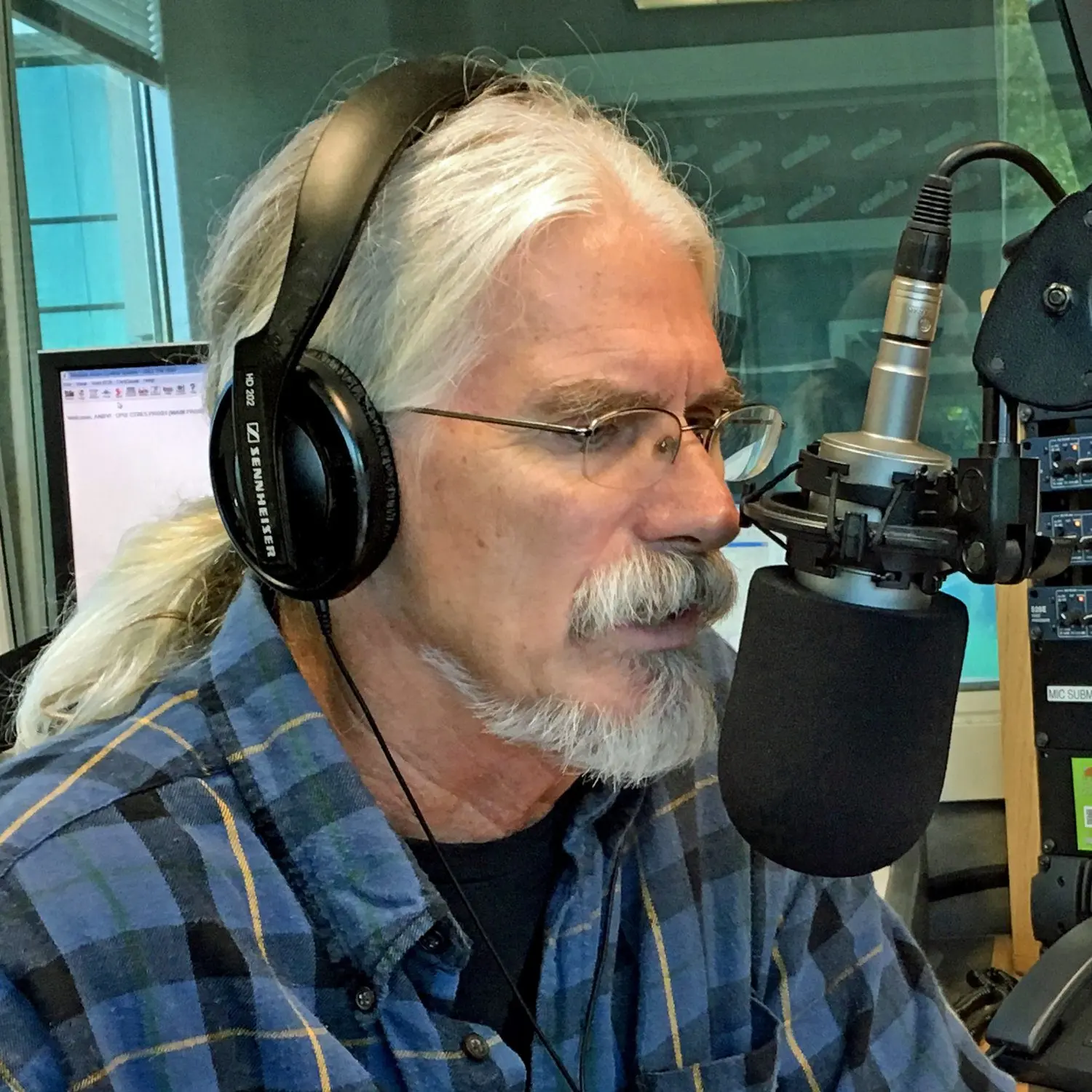
Join us on The Narrow Path as Steve Gregg discusses an upcoming debate in Dallas, Texas, with Dr. Michael Brown on the state of Israel today. Steve addresses listener calls on diverse topics ranging from tectonic plates and divine intervention to the importance of questioning scientific claims in the light of faith. The episode delves into the role of church membership, mentorship, and how these influence personal spiritual growth.
SPEAKER 1 :
Thank you.
SPEAKER 03 :
Good afternoon and welcome to the Narrow Path radio broadcast. My name is Steve Gregg and we’re live for an hour each weekday afternoon, taking your calls. If you have questions about the Bible or the Christian faith or an alternative viewpoint and you’d like to balance comment, feel free to give me a call. I’m looking at one open line on our switchboard right now, so this is a good time for you if you’re quick. The number is 844-484-5737. If you’d like to call and be on the air today, 844-484-5737. And before we go to the phone lines, I just want to be sure to make sure, be positive that I’ve given enough publicity to this debate coming up in Dallas. Some of you who’ve known of it for a long time might get tired of hearing it, but someone may not have heard of it yet. On November 7th and 8th, that’s the first Friday, or maybe the second Friday, I don’t know, and Saturday of November, That’s in Dallas, Texas. I’ll be debating Dr. Michael Brown on the subject of the state of Israel today. And we have three debates in two days. One is Friday night, one is Saturday morning, and one is Saturday afternoon. So if you even want to travel to Dallas for that, you’ll get more for your money because there will be three debates in one weekend. Anyway, people have asked me if it’s going to be live cast or live streamed. I am under the impression that the church that is hosting is going to live stream it. I asked Dr. Brown if they will also be giving us access to it to post it at our ministry pages, and he said absolutely, though I have to say he doesn’t speak officially for the church. Hopefully they will do that. In any case, you can find out details of the time and how to register, because it doesn’t cost anything to go to the thing. But they have limited seating, and therefore they want people to register so they know when they’ve gotten a full facility. And if you want to do that, you can go to our website, thenarrowpath.com. That’s thenarrowpath.com under Announcements. And scroll on down to the dates, November 7th. There will be information there about the website you can go to. The church that’s hosting has a website where you can register. As I said, it doesn’t cost anything to go, but you need to register. And there’s only… I believe there’s only something like 170 seats left. So those might go away fast. I don’t know. But if you want to get in, I suggest you don’t delay so you can get a registration there. That’s at thenarrowpath.com under announcements. And scroll on down to the dates, November 7th and 8th. And there will be three debates between myself and Dr. Michael Brown over the subject of modern Israel. Okay, let’s go to the phone lines now and talk to Howard, who’s calling from Boise, Idaho. Hi, Howard. Welcome. Welcome. Thanks for calling.
SPEAKER 08 :
Hi, Steve. A while back, somebody said that they were going to send you an article showing that if the tectonic plates had moved after the flood or during the flood, it would have made all the water evaporate because there would be so much heat. Do you remember that topic?
SPEAKER 03 :
Yes, yes, and he did. He did send me those. I have to say that the articles were a little above my head. I mean, they had calculations and scientific data that I have no power to check the validity of. So I don’t really know if it’s true or not. However, I would say this, that if God wanted to move tectonic plates without it burning up and boiling all the water, I think God’s able to do that. It’s a little like the question of if God stopped the earth from spinning for a day in the time of Joshua, Wouldn’t things fly sideways at the speed of a thousand miles an hour? Well, yeah, if God didn’t keep them in place. The Bible indicates that God keeps everything in place. The planets, the molecules, he holds all things together. And so if God wanted, he could stop the earth on its axis and hold everything in place. Now, if that’s what he did, I don’t know. But That’s certainly not an impossibility. At least people who believe in God don’t think it’s an impossibility. Likewise, if God wanted to move the continents without the friction of the movement of tectonic plates causing the waters to boil, I’m not even sure if naturally that would happen, if it would cause the water to boil, but let’s just say it was so. I mean, like I said, I didn’t fully understand everything in the documents sent to me because they were written for scientists, not for me. But… In any case, I will say that I don’t see any problem with God moving tectonic plates and preventing the heat from making the waters boil. If he could have Shadrach, Meshach, and Abednego walk into a fire furnace and not get burned, or even if he couldn’t or didn’t, I would say I don’t know of anything that God cannot do. I would be… not quite foolish enough to make a list of things that God cannot do unless the Bible says he can’t do them. One thing he can’t do is lie, the Bible says. He also cannot deny himself. He cannot be tempted with evil. Those are things the Bible says. But as far as manipulation of physical laws, I read of nothing that he cannot do. So if that’s what happened, then it doesn’t present any difficulties for God.
SPEAKER 08 :
On the related note, you had had a discussion with somebody who didn’t understand that scientists have a bias as they’re interpreting data. And about six decades ago, when the sonar readings of the Atlantic Ocean showed the splits where the continents had been spreading apart, the report actually removed the sonar readings that showed that because It was, oh, no, you’re trying to say there was continental drift and they still hadn’t accepted the idea. But they just straight out removed data.
SPEAKER 03 :
Well, you know, we’re always told to trust the science. But it’s often hard to find out what the science is as opposed to the claims of scientists. I mean, we went through a COVID pandemic where scientists were telling us all kinds of things that turned out to be lies. We now know they’re lies. One of the leading scientists in the world said, has shamed himself by being exposed as having lied completely and led the whole world into an economic disaster. And he was speaking as a scientist. In fact, he said, if you don’t believe me, you don’t believe the science because I am the science, he said. Well, he’s not the only scientist who’s made such ridiculous claims, but it’s very commonplace. There’s a bunch of scientists who also signed some documents saying that boys can become girls and girls can become boys. That’s not science. That’s ideology. But you see, you’re right. Scientists are not persons with no opinions or no values or no morals of their own that they would prefer. They are ordinary human beings who go to work and do a job. And they work with data. But the thing is, when you have data, there’s a question about how you interpret data. For example, all the evidence that is provided for evolution by evolutionary scientists, the same data that they use can be interpreted without embarrassment by people who don’t believe in evolution. So it’s a real question of what your worldview is and what is the paradigm you’re trying to force data into and use data to support. So I don’t know. I don’t know about this matter of the shifting of the tectonic plates would cause the ocean to boil. If somebody wants to argue that it didn’t happen and it couldn’t happen, They might be able to use some real fancy words to say so, but someone else looking at the same data with different presuppositions, even if their presupposition is God can do whatever he wants to and he can cause ordinary adverse effects to be curtailed. Well, that’s a different worldview. And most scientists, of course, don’t bring God into their calculations because that’s not considered to be scientifically. But science isn’t the only source of information in the world. Scientists are not scientists, but people who are devoted to scientism, which is the view that science is the only source of information. There are so many things in the natural universe they cannot explain. In human nature, for example, they can’t prove scientifically why somebody falls in love with one person. These are things that aren’t part of science. They’re part of something else, part of humanity. you know, behaviors. Anyway, scientists do have their own worldviews. Some of them are Christian, some are not. The ones who are not are often atheists, and the ones who are atheists are definitely naturalists, as they don’t believe there’s any supernatural things. So every datum they handle will be interpreted in conformity with their naturalism. This is beginning with a bias and then forcing data to confirm the bias. Yeah, scientists have had a long run of being accepted as the final authorities on most things. And I think COVID did deflate them quite a bit. Quite a few other modern discoveries just in the past couple of years. I made a list of them once, you know, things that the scientists said were true, and they said it for decades and generations sometimes. You know, they’ve been shown in recent studies not to be true. So, I mean, I have a list of things like that that I’ve been collecting. I won’t go into right now because we’ve talked for a quarter of the program already, but I appreciate your call.
SPEAKER 08 :
Thank you.
SPEAKER 03 :
Thank you very much. Good talking to you, Howard. Okay, let’s see. Ilya from Sarasota, Florida. Welcome to The Narrow Path. Thanks for calling.
SPEAKER 01 :
Hello Steve. Thank you for taking my call. I have two questions. A week ago I called you about a question on membership and I talked to one of the pastors with whom I have a great relationship. He’s a great friend of mine and he’s really into me, wants me to become a mentor and disciple me to become a better Christian and stronger leader. And I talked to him about membership. He wants me to become part of his church, but I’m not sure what to answer to him because he argues that he needs to be under his leadership into his church because he can’t serve everybody in the locality that we live in.
SPEAKER 03 :
Let me ask you something. How long have you been a Christian?
SPEAKER 01 :
For five years.
SPEAKER 03 :
Have you been a pretty consistent, stable Christian for that period of time? I had a lot of unknowns, but yes. Have you read your Bible much? Of course. Okay. Well, not all Christians do, I ask, because I don’t know you. So then I would suggest that a Christian who’s been relatively stable for five years and reads their Bible would not need to be mentored by a pastor. Unless he’s being mentored into a particular position, like to be an elder in the church or something, then if the pastor thought, well, You know, you’re doing great. You’re elder material, but there’s a few things about eldership that you may not know, and I’d be glad to teach them to you. Okay, maybe. But I think that pastors who feel that others have to be mentored by them are forgetting there’s such a person as Jesus and such a person as the Holy Spirit. Jesus is the good shepherd, and the Holy Spirit guides true Christians who are following Jesus into all truth. Now, that doesn’t mean there aren’t older Christians and pastors who know things that we don’t know and from whom we can learn. But we can learn those things without being mentored. Now, if you’re being mentored, like I said, mentoring is basically training for some kind of specific activity, not just for general Christianity. Jesus is our mentor for that. And Paul said, be imitators of me as I am of Christ. I mean, I’ve had people that are kind of mentors to me, but we didn’t have an official mentoring relationship. They’re people I admire. There’s people whose biographies I’ve read, and they inspire me to be a certain way. And one of my earlier pastors I really admired, too. And I learned a lot from him, not just from his pulpit ministry, but from his life. But we weren’t in a mentoring relationship formally. I just went to his church. But… Yeah, I mean, to me, my main mentors have always been, from the time I was 16 until now I’m 72, my principal mentors have been Jesus and the Apostle Paul. I like the other apostles, too, but we don’t have as much about them as we do about Paul, so I feel like I know him better. There’s other people, like I said, who have died whose biographies have inspired me. And some other men I’ve known in real life who do. But I’ve never had a formal mentoring relationship with anyone. And I’ve never understood why anyone would need one unless, like I said, they’d be trained for a special task. Or the person being mentored is simply unstable. You know, they need someone to hold their hand. They need someone to keep them accountable. They need somebody to make sure they don’t fall back into whatever it is self-destructive or sinful that they’re doing on a regular basis. If you’re not doing things that are sinful on a regular basis, let’s say no more than the pastor himself is, then I don’t know why you should be mentored by him. Now, I do know that there are churches where the pastors really want control over people’s thinking and over people’s lives. And the degree to which they want that control is, is a degree to which I would become concerned about their own egos and their own understanding of what it means to follow Christ. But I can see a pastor choosing an especially promising individual in the church to say, I think this person could teach. I think this person could lead. I think this person has potential to do what many other Christians are not called to do, And I’m going to do my best to help groom him to those things. So I don’t know. What is he wanting to mentor you for?
SPEAKER 01 :
Yeah, probably the letter case is more relevant. He wants me to become a leader.
SPEAKER 03 :
Okay. Well, but he said he can’t do that unless you’re a member, right?
SPEAKER 01 :
Yes.
SPEAKER 03 :
Okay. Well, I don’t know anyone in the Bible who joined a local church. The local church, I don’t remember our call before, but I assume I told you that in the Bible, the local church consisted of every Christian in a locality. There weren’t several different ones, and that you had to be loyal to one as opposed to another. No, you’re loyal to Christ and to his body. And when an individual church says, but we want you to be loyal to us particularly, Meaning, not to the whole body of Christ in exactly the same way, but to us in a way that you’re not loyal to the rest of the body of Christ. I mean, what else could it mean? If you have to be loyal to them in particular, what does that mean? But not as loyal to any other Christians as you are to them. I think that’s divisive.
SPEAKER 01 :
He’s trying to point out that a person should still probably have some kind of home church where they more, like, have a closer relationship. Well, sure, I agree. I agree with that.
SPEAKER 03 :
I think people should have a home church where they have closer relationships to some than others. But they don’t have to put that in writing. The Bible doesn’t ever recommend it. I think every Christian in the New Testament was expected to have a group of people that they met with regularly and that they became close to, and that relationships could be mutually edifying and mutually servicing. So… I personally believe that too, but I don’t see why we have to put it on a piece of paper. And if he says, well, because I need to have on paper the people I can call on and the people I can count on, well, that doesn’t make sense. Every church in the United States, I believe, at least certainly it’s the norm, maybe there’s some exceptions, every church has more people on the membership roles than they have in the church. The truth is, the average is about half. About half the people who are members of churches actually attend them. Now, I don’t know how good or bad that is. All I can say is it means the membership rules don’t tell you anything. They don’t tell you anything about who you can trust or who you can depend on. But real relationships are such that you can tell if you can depend on someone. I ran a Christian school for 16 years. We had people on staff. I never had them you know, sign some loyalty statement to me, why should they? You know, their relationships with me were enough to know who was, you know, ready to serve and who I could count on. And a pastor should have that. Now, one of the problems pastors often have is they don’t really have that kind of relationships with their people. They don’t really know their people that well. And maybe that’s what he’s trying to correct in your case. Maybe he wants to get to know you better in a way that’s helpful. But that’s because he wants to mentor you, you said. But as far as membership goes, unless it’s a very tiny, tiny church, the pastor will not get to know most of the people in such a way as to know whether he can count on them. So as a substitute for relationships, you often have on-paper commitments. And they try to get as many people as possible to sign up for that, but Once people are on the list, you still don’t know if you can count on them or not. So what’s the use of that? I mean, the purpose of Christian leadership shepherds is to know their sheep and for the sheep to know them. But I think it’s very difficult when a church has one pastor. And I don’t recall if your church does or not, but it’s very common for a church to have one main pastor and maybe a few people who are called associate pastors or You know, singles pastors or marriage, family pastors and things like that. But, you know, in early church, they had not one pastor in a church. They had elders in a church. And there hopefully were enough elders that they could that every person in the church could be actually known by somebody else. who was involved in the shepherding of them. But, yeah, I see it differently than he does. The way he sees it is the way many, many churches do. It’s not the way they did in the New Testament, but it’s the way many churches today do. I don’t consider it to be the most ideal thing, but I’m not going to say you can’t do that. I mean, maybe… Maybe it’s a door God is opening for you in the ministry, and if there’s no other one, then perhaps you should take it. However, once you become a member of a church, I’d want to find out what would it take for me to say, I don’t like what this church is doing. I’m not going to be specially loyal to them anymore. I mean, what if you decided that you wanted to start attending another church some of the time? In all likelihood, if you have membership in this church, they’re going to say, hey, you’re supposed to be over here. Because most of the time when you declare your membership or apply for membership in a church, there’s, you know, there’s certain conditions. They want you to pay your tithes there. They want you to attend there at least several times a month, you know. And not somewhere else. Okay, so is it okay with them if you don’t do those things? Because the Bible doesn’t tell you to do those things. So, you know, if he’s mentoring you to be a Bible-following Christian, and yet he’s got a philosophy that isn’t biblical, then that’s not the man I’d want to be mentored by. But you have to make your own decision. May I ask one more question? Well, we’re almost up to a break. Go ahead.
SPEAKER 01 :
It’s about church media but you know there’s common to have some resources with a lot of like visual and audio visual ministry on the camera slides and a lot of churches recently emphasize on that that they need to improve that and I know some of the things from this and some churches want me to improve this ministry in their churches and I’m not sure if Well, that’s something that we’re supposed to do.
SPEAKER 03 :
Yeah, in this age where a lot of the impact of a church is through live streaming to an international audience on the web or simply posting their resources online so that others can access them later, I think that’s in many ways an improvement over the the older times when you couldn’t expand it outside the walls of your church. So I think media ministry is a positive thing. I think people can become overly concerned about production and entertainment value and things like that. I say that only because my media is simply talking heads, just a camera that doesn’t move that shows me talking. So obviously I’m not into production and entertainment values but some churches do more than I do about that and that’s okay they’ll probably watch they’ll make videos that are more fun to watch but at the same time you know we need to be careful because when you’re videotaping putting something online where thousands of people see it it’s almost like being on TV and being on TV is one of those things that can make people self-conscious about their showmanship and things like that more than their content But I’m just talking about dangers there. I’m not talking about universal problems. Anyway, yeah, I’d say if they want you to help out in the media department, I would not see any problem with that. But thank you for your call. God bless you. All right. God bless.
SPEAKER 1 :
Bye.
SPEAKER 03 :
All right. We have a hard break coming up here. And so I’m not going to take another call until after the break. We have another half hour coming up shortly, so don’t go away. The Narrow Path is an hour of commercial-free Q&A, people call in like they have been, and I do my best to answer them, but we don’t take breaks. We don’t sell things. Our ministry has stuff, but we don’t have anything for sale. It’s all free at the website. The one exception is that my hard copies of my books, we don’t have the ability to give those away free, but we don’t sell them either. We do give away, however, at our website the audiobooks of three of my five books. And we would give away all of them gladly, except that my first two books are published by publishers who have some rights to them. And we can’t simply give away the audiobooks because they also have rights to the audiobooks. So, you know, the books that I have not used major publishers to publish are free audiobooks at our website. You can buy hard copies of them at any bookseller, Amazon or Barnes & Noble, whatever. But you can get for free the audio versions of my books, most of them, at our website, thenarrowpath.com. We do, however, support the ministry with donations from people like yourself. If you’d like to help us pay the radio bills, we certainly always welcome that. If you’d like to help us out, you can write to thenarrowpath.com. P.O. Box 1730 Temecula, California, 92593. Or you can do so from our website where everything is free. It’s thenarrowpath.com. I’ll be back in 30 seconds. We have another half hour together, so don’t go away.
SPEAKER 02 :
The Narrow Path is one feature of the teaching ministry of Steve Gregg. Steve’s philosophy of teaching is to educate, not indoctrinate his listeners. He believes that Christians should learn to think for themselves about the Bible and not be dependent on him or any other teacher for their convictions. We hope to teach Christians how to think, not what to think about the Bible.
SPEAKER 03 :
Welcome back to the Narrow Path radio broadcast. My name is Steve Gregg, and we’re live for another half hour, taking your calls. If you have questions about the Bible or the Christian faith, I’ll be glad for you to call in. I’ll answer the best I know how. You don’t have to believe my answers. I attempt to answer from Scripture in every case, if possible. And if I fail to do that, or if you think I’m not understanding Scripture points correctly, you’re always welcome not only to seek a second opinion, but you’re always welcome to call in and share with me and our audience what you think went sideways. Because… You know, when I’ve listened to other radio shows, most of them are not live call-in shows, and therefore they’re recorded. And I might hear something I don’t agree with. And if I want to contact them, but I can write to them and say, hey, I don’t agree. And many people have done that with me. They write to me. But better yet, call in and disagree. Because then you’re reaching the same audience I’m reaching. I would love it if I could. You know, call in and correct some things I hear on other radio shows, but they don’t have that call-in feature, and they’re not live usually. We are. So feel free to call in to disagree if you think you have got reason to do so. I’ll be glad to have you on the air. The number is 844-484-5737. Our lines are full at the moment. You can’t get through right now, but if you call in a few minutes, lines will be opening up. And we’ll be talking next to Kerry from Fort Worth, Texas. Hi, Kerry. Welcome to The Narrow Path.
SPEAKER 07 :
Hi, Steve. I heard some teaching on the Abrahamic covenants the other day that I had never heard before, and I’d like to get your comments.
SPEAKER 03 :
Okay.
SPEAKER 07 :
This man was saying that the Abrahamic covenant continues into the New Testament or is continuing today because that when the covenant was made that Abraham himself didn’t walk through the sacrifice but that it was God alone who walked through the sacrifice and so thus Thus, he was saying it was actually a covenant with himself, with God himself. That’s what they say. An everlasting covenant.
SPEAKER 03 :
Well, let me just say, let me jump in here quick about that. That’s a very common thing for people to say if they are dispensationalists or otherwise, you know, Zionist or whatever. They say, well, when God made a covenant with Abraham in Genesis 15, He told Abraham to take these animals and divide their bodies and set them apart from each other, which was a very common way that covenants were made in the ancient Middle East. And what would normally happen if two people were making a covenant together or contract? They would set up these animals, separate their parts, and the two people would pass through between them. Now, this is very strange to our Western thinking, but the idea… of that in their thinking was, if I should violate this covenant, may what happened to these animals happen to me. In other words, they were cut in two. May I be cut in two if I violate this covenant. And as both parties would usually pass between, they were both wishing such an imprecation on themselves if they would break the covenant, so it made it very solemn there. Now, what they say is that Abram laid out the pieces of the animals as God instructed him, but Abram himself never passed between them. But there were two objects that did. It says, excuse me, in verse 17, Genesis 15, 17, it says, It came to pass when the sun went down and it was dark that, behold, there was a smoking oven… and a burning torch that passed between those pieces. Okay, now, is that self-explanatory? I don’t think it is. But the popular way that especially dispensationalists have taken it is that the smoking oven represents God the Father, and the burning torch represents Christ. So is Christ and the Father making this covenant? Well, it’s a very interesting interpretation, since it was never made clear ever in the Old Testament that there was covenant. God the Father and Jesus Christ as a separate person. I mean, I’m not saying there wasn’t. It’s just not revealed in the Old Testament. So I don’t know that Abraham would have understood it that way. And I’m not sure why we should, because I don’t know of any other place where God is likened to a burning oven or that Jesus is likened to a flaming torch. So, I mean, this is entirely arbitrary. And I think people, you know, they hear it. They hold on to it because the thing is so peculiar and they can’t think immediately of some other meaning. But there is no actual biblical meaning, or I should say no biblical reason, at least none that you can draw from the Bible. You have to kind of insert it in there with your imagination. Nothing in the Bible suggests that a smoking oven refers to God the Father. Or that the burning lamp refers to Jesus. It might, and I think it’s for lack of thinking of other possibilities, that some people just accept that. Now, let me just say this. I don’t think that is what it means. But even if it did, if it is saying that God is making an unconditional promise to Abraham… that his seed will be given the land, which is what follows. It says in verse 18, On the same day the Lord made a covenant with Abraham, saying, To your descendants I have given this land. And he tells what land it is. Well, okay, so God did. He made a covenant that he’d give them that land. And then he gave it to them. Okay, covenant fulfilled. We know he gave it to them. The Bible records that he gave it to them. In… Of course, in Joshua chapter 22 or 21. Yeah, it’s 21. Joshua 21 verses 43 through 45 says, So the Lord gave to Israel all the land of which he had sworn to give their fathers. And they took possession of it and dwelt in it. The Lord gave them rest around according to all that he had sworn to their fathers. And not a man of all their enemies stood against them. The Lord delivered all their enemies into their hand. Not a word failed of any good thing which the Lord had spoken to the house of Israel. All came to pass. If you’re not familiar with that verse, I know you are, Brother Brett. I know some listeners may not. That’s Joshua 21, verses 43 through 45. It all came to pass. So if we understood that God the Father and God the Son were making a covenant with each other here, that God’s going to give this land to Abraham’s seed, which is what was promised, then fine, he did. He did. He fulfilled that promise. There’s other promises God made Abraham that were fulfilled later in Christ. But this particular land promise was fulfilled in the time of Joshua. So that worked. Now, I think it’s somewhat different. Because just before this smoking oven and burning torch we’re seeing, it says, that God made this promise to Abraham. It says in verse 13, Then he said to Abraham, Know certainly that your descendants will be strangers in a land that is not theirs. That’s, of course, referring to the Jews going into Egypt into captivity. And they will serve them, and they will afflict them for 400 years. And also, the nation whom they serve, meaning Egypt, I will judge, which he did in the time of Moses. Now, as for you, you shall go to your fathers in peace. You should be buried in a good old age. But in the fourth generation, meaning after 400 years, they shall return here. For the iniquity of the Amorites is not yet complete. And then it came to pass, when the sun went down, that he saw this smoking oven and burning torch. Now, the promise that God had made, specifically, besides that he would give them the land, was that this giving of the land would not be something that failed due to an intervening captivity in Egypt. That is, his descendants would go into Egypt for 400 years. It might seem then that God had not given them the land or was not going to, but he says, don’t worry, I’m going to bring them out. I’m going to judge that nation, and I’m going to bring your descendants back here again. So he’s talking about the captivity in Egypt and the deliverance from Egypt as the means of giving Abram’s descendants the land. Okay, so that’s what he spoke about. What if we understood the smoking oven to be representative of this captivity? and the burning torch representative of the deliverance from that captivity. At least we would have something in Scripture to base that on, because there are three times in the Old Testament, once in Deuteronomy 4.20, then again in Jeremiah 11.4, then again in 1 Kings 8.51. There’s four different kinds of portions of the Bible, the Law, the Prophets, and the historical books. Three times we read of the captivity in Egypt called a burning furnace, a furnace of iron. He says he delivered them out of the furnace of iron. Now, a smoking oven, a furnace of iron, they’re not exactly the same words, but they certainly sound like the same concept. And then in Isaiah 62.1, God speaks of his deliverance of his people from Babylon saying, as a torch burning or a lamp burning. So deliverance from Babylon, which very much is the same thing as the deliverance from Egypt, is likened to a burning lamp. That’s in Isaiah 62.1. So since God has just told them they’re going to go into captivity for 400 years, they’re going to come out again because God’s going to deliver them and give them the land. That could be represented visually by a smoking oven, or as later speakers call it, an iron furnace, on the one hand, and the deliverance as a burning torch or a burning lamp, as Isaiah speaks of it. So the uniting of these two phenomena as if they’re inseparable. That is, yes, God’s going to take them into captivity, but that’s an inseparable reality with the fact that he’s going to deliver them out of it again. strikes me as at least another possibility. I came up with that many years ago just kind of comparing Scripture with Scripture, which is the way I come to my theology. And I always had doubts about this popular interpretation of this is God making a covenant with himself. Well, I mean, it could be, but there was just nothing in the Bible that gave any warrant for equating an oven with God, the Father, and a lamp with… with Jesus until you maybe get into the New Testament where he says, I’m the light of the world. But he says we are too. We’re the light of the world too. But the point here is there’s just nothing that would justify that particular interpretation. Whereas there are passages elsewhere in the Bible where you use the very same image or extremely similar image to represent captivity and deliverance from captivity, which is what God has just been speaking to Abraham about in the verses just before this. So I’m not going to assume that this is God making a covenant with himself and therefore making it unconditional. Abram doesn’t pass through the pieces so he doesn’t have to do anything to make it happen. Well, he’s already done what he had to do. God had told him in chapter 12, leave your family, your kindred, and come to follow me and I’ll take you to a land that I’ll give to you and your descendants. Well, Abram met that condition and You know, and then God fulfilled it. We should note, though, that God fulfilling it does not mean nothing will ever change it. Because God promised this would be so forever. But most of the forever promises in the Bible have conditions attached. In fact, I don’t know of any that do not. And in Genesis 18, 19 says, God is speaking about his promises to Abraham and to his descendants. And he says in Genesis 18-19, For I have known him, that’s God says, I have known Abraham, in order that he may command his children and his household after him, that they keep the way of the Lord, to do righteousness and justice, so that the Lord may bring to Abraham what he has spoken to him. Okay, so in order that God can fulfill the promises he made to Abraham about his seed, his seed have to keep the way of the Lord and do righteousness and justice so that God can do that, he says. That’s God speaking. So, in other words, Abraham obeyed God. And God fulfilled the promise. He gave the land to his descendants. But as for later developments, that’s dependent on the children of Abram keeping the way of the Lord and doing justice and righteousness, which as we read from the historic documents they wrote about their own people in the Old Testament, they just didn’t do that. They just didn’t keep the way of the Lord. And And crucifying the Messiah, turning him over to Pilate and blackmailing Pilate so that he’d have to crucify Jesus, that was pretty much not keeping the way of the Lord on their part. And that’s why things are not the same as they were in the Old Testament with them. All right. Thanks for your call, Perry. Benjamin in Sacramento, California. Welcome to The Narrow Path.
SPEAKER 06 :
Hello.
SPEAKER 03 :
Can you hear me, Steve? Yes, sir. Go ahead.
SPEAKER 06 :
Oh, okay. Yeah. I have a question about baptism. I was baptized in 2009, and at the time I was baptized, the certificate here says the name of the church, and it also says baptizing, receiving water baptism in the name of. jesus christ okay is that is that a correct uh i just wanted to know what do you think about that or sure yeah sure i mean in the in the book of acts they baptize in the name of jesus christ regularly i mean acts uh what is it 238
SPEAKER 03 :
When people said, what must we do? Peter said, well, repent and be baptized every one of you in the name of Jesus Christ. For the remission of sins, and you shall receive the gift of the Holy Spirit. You know, when Philip baptized the Ethiopian eunuch, he baptized him in the name of Jesus Christ. When Paul baptized 12 men in Ephesus in Acts chapter 19, verses 1 through 7, it says they were baptized in the name of Jesus Christ. So being baptized in the name of Jesus is exactly right. Now you may be wondering, what about being baptized in the name of the Father and the Son and the Holy Spirit? Well, Jesus said to do that in Matthew 28, 20 or so. Yeah, it must have been 20 or maybe 19. And so, I mean, that’s good too. I mean, if they said we baptized you in the name of the Father, Son, Holy Spirit, well, they did it the way that Jesus worded it. If they baptized you in the name of Jesus Christ, Then they did it the way the apostles worded it. In my opinion, the name of the Father, Son, and Holy Spirit was the name of Jesus. At least that’s how I think the apostles understood it, since they heard Jesus command them. to baptize in the name of the Father, Son, and Holy Spirit, and they did it in the name of Jesus, I assume that unless they were deliberately rebelling against God, against Jesus, which I don’t think the apostles did, I think they did what they understood his words to mean. And so either way would mean the same thing, as far as I understand. So you’re good, I mean, as far as that goes. There’s nothing wrong with the way they say you were baptized. Okay, let’s see. Let’s talk to Walter in Wheatland, Wisconsin. Wyoming. Hi, Walter. Welcome.
SPEAKER 05 :
Hi, Steve. Thanks for taking my call. Sure. I have a question for you concerning Psalm 51 and verse 5.
SPEAKER 04 :
Yes.
SPEAKER 05 :
It says, Behold, I was shaven in iniquity, and in sin did my mother conceive me. And I hear a lot of people in this church I’m going to now use this scripture to to support their view of the sin nature.
SPEAKER 03 :
An original sin.
SPEAKER 05 :
An original sin. And, you know, I’m an ex-Catholic and things like that, so that kind of, you know, I don’t like that doctrine very much, and I just was curious to hear your thoughts on it.
SPEAKER 03 :
Well, I’m not sure how the Catholics understand this verse, but I know that the Catholic Church owes a great debt to St. Augustine, and Augustine is the one who came up with this interpretation. that when David said, behold, I was brought forth in iniquity and in sin my mother conceived me, Augustine based, that was the entire Old Testament case that Augustine used to prove his doctrine of original sin, which taught that when Adam sinned, we all sinned. And so Augustine taught that. I don’t believe anyone in the church fathers before him taught it quite like that. But he used two scriptures. The one he used in the Old Testament was Psalm 51.5. The one he used in the New Testament was Romans 5.12, which I don’t believe either of those are unambiguous. Now, I mean, I don’t know why the particular doctrine of original sin would be very important for us to believe for the simple reason that We all sin. So whether we’re born in sin, in some kind of condition of sin, or whether we just all did it. because we all have, because we’re selfish, and that’s the natural bent of all living things, is to be selfish, and humans, when they’re selfish, are sinning. So, I mean, that’s, you know, I don’t know what difference it makes, because the bottom line is everybody’s a sinner. I think the only difference it would make would be if a baby dies who has committed no sins. According to the Augustinian view, the baby is a sinner. And the modern Augustinians are called Calvinists. Calvinists who hold Augustinian views, they believe one of two things. They believe that either the baby that dies in infancy is condemned because it died before it was converted, proving it was not one of the elect. Because if it was elect, it would have been supernaturally made to live. God sovereignly would have had it live and become a Christian. because that’s how you know somebody is elect, if they become a Christian, and that’s the sovereignty of God. But if someone dies without having become a Christian, they say, well, he wasn’t elect, and obviously can’t be saved. So if a baby dies, on the Calvinist view, the baby is lost, except for there’s a milder Calvinist view that says, well, maybe the baby’s not lost. God knows if it was elect or not. Now, by Calvinist thinking, which says that God sovereignly brings all the elect to himself, which would mean he would not let them die before they have come to him, because he’s guaranteed that they will come to him. That’s part of the doctrine of election that they hold. The fact that the baby died and didn’t become a Christian when God could have prolonged its life and it could have become a Christian… means that he hadn’t elected it to become a Christian, and therefore it’s lost. But, again, there are some Calvinists who they find that a hard pill to swallow, even though it’s the most consistent Calvinist position. They say, well, no, God knows whether the baby was one of the elect or not, and so he’ll deal with it as an elect one or a non-elect one. That is, the baby’s either going to go to heaven because God knows it would have become a Christian because he elected it, or the baby’s going to go to hell. because it would have grown up to be a non-Christian anyway and gone to hell anyway. So Calvinism, both versions, have babies going to hell, not all of them, but some of them have all babies going to hell when they die, and others have only maybe most of them, because relatively few humans become Christians in the grand scheme of things. So you’ve got a pretty hard doctrine there, and it’s based on the idea that the baby, even though it’s done nothing wrong, is born guilty of Adam’s sin. And where do they get that? They get it largely from this verse. Because David said, in sin my mother conceived me. Now, it’s not obvious that that’s the only way to understand that verse. In fact, it’s not a real obvious understanding at all. I mean, if David had an Augustinian view of original sin, he might express it in those words. But where would David have gotten that view? David was a Jew. The Jewish religion didn’t have this view. You know, in the Garden of Eden, God had not mentioned it when Adam and Eve sinned, didn’t mention that now all your posterity is going to be born guilty because of what you did. I mean, he just said you’re going to die because of it, and everyone does that. So, I mean, David, we have no reason to believe that David held a view like Augustine’s view of original sin. He might have, but Where he would have gotten it, we don’t know because it’s not taught in the scriptures. And David got most of his theology from the Torah. He meditated day and night on the Torah. And the Torah does not teach that doctrine. So, I mean, maybe so. But what if David meant, in sin my mother conceived me, he meant she was sinning when she conceived him. Not that he was sinning when he was conceived. Not that he was conceived as a sinner. But that his mother was sinning. Now, we don’t know otherwise.
SPEAKER 05 :
But his mother was married, though.
SPEAKER 03 :
We don’t know. We don’t know if his mother was married. We don’t know who his mother was. There’s no record of who David’s mother was. But we do know that there were… Jesse was his father, right? That’s exactly right. And whether Jesse messed around with other women, we don’t know. And to say, oh, that’s a mean thing to suggest, well, I’m only taking the words at their face value. I mean, if I said my mother conceived me in sin, I think 99 out of 100 people would say, oh, you’re saying your mother, you were conceived out of wedlock, right? Because your mother’s doing something sinful when you got conceived, right? that’s what the words would most naturally be understood to mean, unless you had some Augustinian doctrine in your mind and say, that’s what David meant this other thing. I don’t know. Now, before we say, well, how dare we say that David could have been illegitimate? Well, God often uses illegitimate people. Jephthah, one of the judges that delivered Israel in the book of Judges, he was the son of a harlot. His dad had had a relationship with a harlot. And Jephthah was born, and God used him, chose him, delivered the people through him. He’s a great man. You know, there’s no stigma on a person who was born out of wedlock. The stigma is on the parents, not on the child. And it’s interesting that Jephthah’s brothers, according to the book of Judges, hated him, and they drove him off from the family. David’s brothers didn’t like him much either. And we don’t know why. You know, when Samuel came to Jesse and said, bring your sons here, one of them is going to be anointed king, he brought in seven sons but left David out in the field, didn’t bring him in. And when it turned out, Samuel said, well, none of these seven are the right ones. Do you have any other sons? Oh, yeah, I have this David out in the field. And Samuel said, call him in. Why didn’t Jesse call him in in the first place? Maybe he was embarrassed of him. Maybe he was disowned. When his brothers were at the battlefield ready to fight Goliath or ready to cringe and not fight Goliath, David showed up to bring them food, and they started scolding him for showing up. What’s with that? I mean, he’s bringing them food. They should be thankful. They said, who’s taking care of those sheep ears? You need to get back. And he said, what’s up? What did I do wrong? And the question is, what did he do wrong? Maybe nothing. Maybe he grew up as an outcast from his brothers and his father. Remember David said in Psalm 2710, when my mother and my father reject me, the Lord will take me up. Well, how many people contemplate their father and their mother rejecting them just out of the blue? I mean, there is a possibility. I don’t say it’s the case, but there’s certainly more scripture on the side of this business. than there is on the case of Augustine in Psalm 51.5. So I certainly wouldn’t go with Augustine on this, especially since it makes babies who are innocent go to hell. I don’t think God does that.
SPEAKER 05 :
I agree 100%.
SPEAKER 03 :
I don’t think God does that. Thank you for your call. I’m out of time. You’ve been listening to the Narrow Path radio broadcast. My name is Steve Gregg. We’re on Monday through Friday at this time. This is Friday, so we’ll talk again Monday. Our website is thenarrowpath.com. We are listener supported. You can donate there if you want, but it’s all free.
