



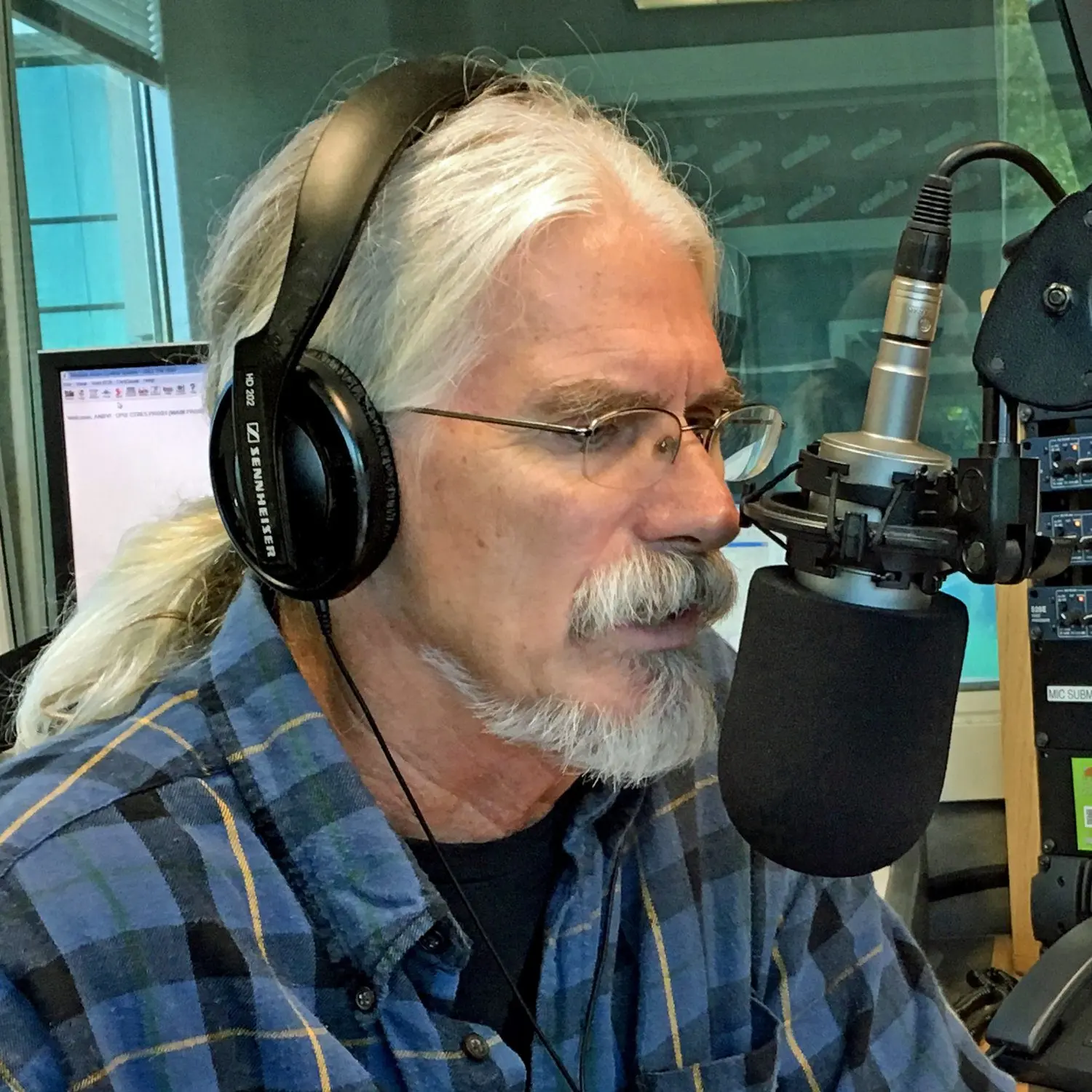
Join Steve Gregg on an enlightening episode of The Narrow Path as he explores complex biblical themes concerning Zechariah’s vision and its modern interpretations. The discussion delves into the different perspectives of covenantalists and dispensationalists on prophecy fulfillment, offering insights into how these theological frameworks interpret key passages. Listeners are invited to delve deep into the nuances of understanding prophetic texts and how they relate to both historical and spiritual contexts.
SPEAKER 1 :
Thank you.
SPEAKER 03 :
Good afternoon and welcome to the Narrow Path radio broadcast. My name is Steve Gregg and we’re live for an hour each weekday afternoon and we’re taking your calls during this hour. If you want to call in with questions to discuss on the air about the Bible or the Christian faith or some things like that or you disagree with the host or want to tell me why, feel free to give me a call. The number is 844-484-5737. That’s 844-484-5737. I want to remind you that on November 7th and 8th, which is less than two weeks from now, there will be a debate in Dallas, Texas between myself and Dr. Michael Brown. And we’ll be talking about, is the modern state of Israel a fulfillment of prophecy? Not just a debate, three debates. We’ll be debating on Friday night, Saturday morning, and Saturday afternoon. That’s November 7th and 8th. It’s in Dallas, Texas. But if you’d like to go, and I know some people who are planning to fly in for it from other states, but you may be in the Dallas area, and it may be very convenient for you if you’re interested. you can go to our website, thenarrowpath.com, and look under those dates, and you’ll see the login there where you need to register to come because the seats are limited, and there’s no cost. There’s no ticket price, nothing like that. But they want to know in advance how many are coming so they know if they have enough seats, and therefore they want people to register. So just go to thenarrowpath.com. under announcements, and you can see how to register at that place. All right. We’re going to go to the phones now and talk to Emily in Idaho. Emily, welcome to The Narrow Path. Thanks for calling.
SPEAKER 06 :
Hi, Steve. Thanks for taking this call. My question is regarding Zechariah 2. I’m doing a study with a friend, and I’m going through your verse-by-verse on it. And in the first part of that chapter, there’s the vision of the man with the measuring line who gets interrupted on his way to go measure Jerusalem. And then in verses 6 through 13, it seems to me like it’s sort of a commentary on the vision that Zechariah just saw. And when you’re doing the verse-by-verse, It seems like you were saying, well, it’s unclear to me who is being discussed when it says, He sent me after glory. Surely I will shake my hand against them. Then you’ll know that the Lord of hosts has sent me. And my NKJV Bible capitalizes the me, the my, almost like it’s referring to Jesus. But in your verse by verse, you were saying that you thought maybe that was actually referring to Zechariah. That way you will know that the Lord of hosts has sent me, meaning Zechariah. And so I’m just wondering about this passage and how do dispensationalists and covenantalists see this differently? And what’s your take on this?
SPEAKER 03 :
Yeah, I have to say, this is the kind of passage where, and there are others in the prophets, where a he could refer to, or me, whether it’s God’s, if it’s God speaking, then me refers to God. If it’s the prophet speaking in his own voice, it refers to him. And often the prophet goes back and forth from speaking in his own voice on the one hand to speaking in God’s voice on the other. Which means that the only way in some cases that we know who the me is he’s talking about is by the context of what is being said. Would the prophet say it about himself or would only God be able to say that about himself? In a case like this, since the verse is actually quite unclear, not entirely clear what’s being said, it’s equally unclear whether it’s the prophet or God speaking when he says, he sent me after the glory. Okay, what does that mean? Now, you know, it could mean that Jesus was sent by God so that God could be glorified. That is to obtain glory for God and to the nations which plunder you. So, you know, Jesus, I don’t think the nations were plundering Israel in Jesus’ day. but they were plundering Israel in Zechariah’s day. So this could mean God the Father, because he would be defending Israel from the nations of plunder, but how was God the Father sent? It’s more likely Zechariah was sent. But he does say, he who touches you touches the apple of his, that is God’s, eye. So the first person he sent me, would probably refer to Zechariah, whereas his refers to Zechariah speaking about God, that whoever touches Israel touches God’s pupil. That’s what the apple of the eye means. It’s his pupil. Now, that would be saying that whoever touched God’s people. It’s as though they’re poking God in the eye. And, of course, God protects it just like we protect our eyes from being intruded into by things, by shutting our eyes to protect them. So I think that the his refers to God and the me refers to Zechariah. Now, I don’t really know what the difference would be if we didn’t say me refers to Zechariah. And it looks like the New King James Version, by capitalizing both me and his, may be implying that me, the translators are assuming that me refers to Jesus, and his would be a reference to the Father, you know, implying sort of a Trinitarian understanding, which is not at all obvious in the Old Testament, and I don’t know that that’s a very likely thing. By the way, the capitalization in our English translation states, is not reflecting capitalization in the Hebrew. The Hebrew doesn’t capitalize these pronouns. So it’s the translators trying to express their view. Now, how does a covenantal theology or dispensationalist understand this differently? Well, all I know is that the dispensationalist believes that this applies to Israel at all times. How it would apply in this particular time of Zechariah would probably just mean that as God sees Israel as his favorite people, the apple of his eye, his beloved. So at that time that Zechariah is writing also, he does so. And that God’s going to glorify himself in defeating the nations that plundered Israel. That’s probably true. what a dispensatious would believe, but I don’t actually see any reason why covenantal theology would not see it the same way. I mean, we do believe that Israel is an entity that’s not strictly made up of Jews because there always were Gentiles in Israel as well. There were always proselytes, people who got circumcised and became Jews, even though they weren’t born that way. So, I mean, Israel was racially mixed. Right from the very day they left Egypt, a mixed multitude went out of Egypt and became part of Israel. So, you know, Israel is the faithful of God, Jews and Gentiles. And covenantalists would say that’s true of Israel at all times, including now. That is to say, what we call Israel now is the new covenant faithful, which we could also call Christians. But this is not apparently talking about that yet. Now, a little later on, it seems as though what he is saying may well apply to Christians. But that’s as a secondary thing. He’s actually telling the people of his day to escape from Babylon, verse 7. So he’s talking to people still in Babylon about their need to come back. to the land, which some of them did, but most of them did not. And then it begins to talk about in the day that they become my people. It says in verse 11, Many nations shall be joined to the Lord in that day, and they shall become my people. Many nations mean Gentiles. And I will dwell in your midst. Then you will know that the Lord of hosts sent me to you. Now, me, of course, can refer to Zechariah. Or, like they did capitalize it in this translation, could mean Jesus. But I’m going to lean toward it meaning Zechariah, but I have no objection to it being Jesus. I’m just thinking that it’s not common in the Old Testament to distinguish between Jesus and the Father. It may be that sometimes it does, but I don’t see a need for it here.
SPEAKER 06 :
Okay, so in verse 11 when it says, Many nations shall be joined to the Lord in that day, is that something that had a fulfillment in Zechariah’s day? Because I read that also thinking about the Gentiles, thinking about the church age, and I’m confused how that would have been something that would have made any sense to the people in Zechariah’s time.
SPEAKER 03 :
Right, it is the church age. But you see, it starts by talking about escaping from Babylon. Now you’ll find… I made a chart, I don’t know if it’s posted or not, but it will be soon, of passages in the New Testament that quote or allude to Old Testament passages where the original is referring to escaping from Babylon and coming back from the exile. But the New Testament is quoted as fulfilled spiritually in Christ. So the New Testament writers understood that the return of exiles from Babylon was a type and a shadow of salvation in Christ, just like I think most Christians assume correctly that the exodus from Egypt was a type of salvation in Christ. God delivering his people out of bondage, bringing them to freedom. That happened when Moses led the people out of Egypt. That happened when Cyrus released the people from Babylon. These are instances of God intervening to save his people from bondage. And the New Testament refers to both of these things, the Babylonian exile ending and the return of the Jews from exile. On the one hand, and the Exodus from Egypt, both of them are seen as types of salvation. Now, that’s because, I have to assume, unless the New Testament writers did not have their understanding, they might understand the scriptures, as the Bible says they did. If they did understand correctly, then they saw that there was a typological fulfillment with an ultimate fulfillment in Christ. The typological fulfillment is the return of the Exodus from Babylon here. The ultimate fulfillment in the spiritual sense is not a physical liberation from some country where we travel from one country to another, but the spiritual deliverance from the bondage of a spiritual Babylon, as it were.
SPEAKER 06 :
Oh, okay, that makes more sense. Okay, last comment, very briefly. And the Lord will take possession of Judah as his inheritance in the Holy Land and will again choose Jerusalem, verse 12. Is that one of those places where a dispensationalist would think that’s yet future? Like the Lord will come again and choose Judah again, choose Jerusalem like physically, literally?
SPEAKER 03 :
Well, they probably would. They probably would. But the way I see it is when the captives from Babylon come back, which they did, not all of them, but a significant remnant did, when they come back, God will dwell among them in Jerusalem again. They’re going to build the temple again. They did in Zechariah’s day. They built the temple again. And God dwelt in their midst there. However, Jerusalem there is also a type of spiritual Jerusalem, which is what we come into when we are saved. Because it says in Hebrews chapter 12, And verse 22, but you have come to Mount Zion and to the city of the living God, the heavenly Jerusalem, to an innumerable company of angels, to the general assembly and church of the firstborn who are registered in heaven. So it says we’ve come to the church, which he also calls Mount Zion, the city of the living God, and the heavenly Jerusalem. So, you know, Jews came back from Babylon to physical Jerusalem. We who have come to Christ. We who have come to the church have come to the spiritual Mount Zion, the city of God, and the heavenly Jerusalem. So that, too, is a type. I think it’s literally talking about God returning to dwell among the exiles who have come back from Babylon as they build the temple, and he’ll dwell in it. But that’s just a type and a shadow of, again, the spiritual temple, the spiritual Jerusalem, and the spiritual people of God in Christ. All right. Let’s talk to either, it must be Gee in Indianapolis, Indiana. Is it Gee? Am I pronouncing that correctly?
SPEAKER 10 :
It’s Gee.
SPEAKER 03 :
Gee. Okay. It could have gone either way. It could have gone either way. G-E-E, right? Correct.
SPEAKER 10 :
The question I have is, there’s a statement that says, not by my might, not by power, but by my spirit. What does that really say Each word, each breath, like not by my might means, what does a might mean? What does power mean?
SPEAKER 03 :
Okay, might and power are very similar terms. Might means strength, and power obviously can mean strength. You’re talking about Zechariah 4, 6 here, and this too is in the context of Zechariah where the Jews have come back from Babylon, and their task is to rebuild the temple. and to reestablish the nation from scratch, because 70 years earlier or less, the Babylonians had burned everything to the ground, and it was laying waste for 70 years, just a habitation for jackals and snakes and stuff. And then they came back from Babylon, a pretty small group, 50,000, which is a very small percentage of those who ever went away, and they have the task of building Jerusalem and building the temple. Now, their leader was Zerubbabel. And this is a prophecy to him. It actually says that this is the word of the Lord to Zerubbabel. And here’s the word to him. Not by might nor by power, but by my spirit, says the Lord of hosts. Who are you, O great mountain? Before Zerubbabel, you shall become a plain. And he shall bring forth the capstone with shouts of grace, grace. Now, what he’s saying is he will finish the temple. He is building the temple. I mean, he’s heading up the temple building crew. He will ultimately finish it. He’ll bring forth the capstone as people celebrate it, saying grace, grace to it. That is to say, the capstone is the last stone put on. So he had begun to build the temple. It’s saying he will finish it. He will not do it in his strength or in his power. In fact, the truth is the Jews at that point had very little strength and power. They were a small number of people. They had a small budget compared to what Solomon had had earlier when he built the first temple. And he’s saying, well, this is not going to be accomplished through might or power, not human might or power, but through the Spirit of God. So the point is being made that this task, which seems overwhelming to Zerubbabel, it’s like a mountain in front of him. He says, well, this mountain was going to become a plane. In other words, I’m going to move that mountain out of your way. And I’m going to allow you to finish the job and put on the capstone. So, This is simply a word of encouragement to Zerubbabel and to the Jews under his leadership, that though their strength seems small, the Spirit of God is more than adequate to the task, and they would succeed. Now, of course, this verse is quoted sometimes by Christians today in other contexts. And I believe there probably are contexts where it would work. I guess the application would depend on what context is being used. The original means what I just described. But if someone wants to take that principle and say, well, God’s work is going to be accomplished not by human flesh, not by human power, but by God’s spirit, I think that could be encouraging to anybody who seeks to do God’s work, especially those who feel like they have little power, though even if you have a lot of power, Human power is not what God uses to finish his projects. He doesn’t care about human power. If his spirit doesn’t build it, it’s not his building. So whatever we do, we may have a lot of power or even very little power, but if it’s God’s work, his spirit will enable it to be done successfully. That’s the principle there, and that was applied to Zerubbabel in those days. Mike from Cleveland, Ohio, welcome. Thank you.
SPEAKER 09 :
Hey, Steve. How are you? Good, thanks. A question regarding church order and leadership. I was talking with some brothers about us being a family rather than a corporate structure like most churches are. And they kept saying, well, at the end of the day, someone still has to make a decision. Typically in our church, at the end of the day, either the elder or the a minister would make the final decision or not even the final decision, pretty much make most decisions. So they still held that at the end of the day, someone has to make a decision regardless of what the congregation discusses. Someone has to stand up to say, okay, we’re going to go down this road. How would you counter that or would you agree with that, I guess, is my question. Like I’m thinking in my house, I’m head of the house, and I can get feedback from my kids and wife, but at the end of the day, I still have to, I guess, make the final call.
SPEAKER 03 :
Right. Although we don’t have anybody in the church who is the head, except for Christ. Christ is the head of the church. You are the head of your home, so that’s a little different situation. No human being is the head of the church, despite what the Roman Catholics say. Now, let me tease this out a little bit. Somebody has to make the decisions for the church. What kind of decisions are we talking about here? Now, I think in the pastor’s mind who says that, he is still thinking of the church as a corporate business kind of thing. We need to make choices about who to hire. We need to make choices about who to fire. We need to have choices about what building to buy. We have to make choices about how to modify the buildings, how to add to them or break them down, how to do this or that business stuff. Now, if a church has to do that kind of business stuff, I suppose that decision could be made by the church as a whole. preferably by consensus or possibly by majority vote, or they could appoint some leaders to, you know, like a committee to work on that and make a decision for them. There’s lots of ways that can be done, but I don’t think those kinds of decisions are the kinds of decisions the early church leaders had to make. The early church leaders were not business leaders. They were spiritual leaders. They were leaders of the people’s spiritual lives. They taught the people. They counseled the people. They went after the straying ones and tried to bring them back. They visited the sick. These kind of decisions are not corporate decisions. These are decisions that are made by family members toward the rest of the family. So, I mean, the ones who actually do go after the strays, the ones who really do counsel, the ones who really do teach are no doubt the true spiritual leaders, though they don’t have to have a title because a person in the church can do that whether he has a title or not. And I know many people who do that very kind of thing, myself included, who who don’t have titles in churches. But but I have done those kinds of things. So, you know, you don’t have what decisions are we talking about? I think. I think the leader you’re talking to is still thinking of the church in terms of a business in which business decisions have to be made. Now, if the church is a business, it does need someone to make business decisions. And that’s what most churches have because most churches run like businesses in many respects. I mean, they don’t sell things per se, although they might if they have a bookstore or a coffee bar there. But, I mean, they basically give their product away free for an offering, which is fine. I mean, it’s not very businesslike to do that, and that’s good. But the truth is that many churches have the same interests that business do. They’re trying to build more customers. They’re trying to build a bigger building. They’re trying to prosper, make more money. And things like that. I mean, you can tell. I mean, just ask most pastors if that’s not the kind of stuff by which other pastors measure their success. It is. It’s a business-like mentality. And when you have a business-like mentality, you need business-like leaders because you make business-like decisions. If the church is simply a family, then like any family, there are people who will voluntarily you know, counsel one another, teach the younger ones, you know, go after the strays if they’re, you know, those who are going wrong and have an intervention. This can be done with or without a corporation, with or without business type leaders. And frankly, the less business like the leaders are, the more likely they are to be real spiritual leaders, I think. That might be not a correct assessment. That’s what I think, though. So I think the question itself comes from more of a business corporate idea of the church, because the kinds of decisions that need to be made by someone official would be relatively few in the church. Even when it comes to church discipline, Paul told the church of Corinth, when the whole church has come together, and my spirit with you in the name of Jesus. Deliver that person over to Satan for the destruction of the flesh, so his soul might be saved in the day of Christ Jesus. So he didn’t say anything about the elders or the leaders or the pastor there being involved, yet that’s a very serious decision the church makes. But the church, preferably, is made up of real Christians. I mean, that’s what it’s supposed to be. I realize many churches teach a very watered-down gospel, so their membership often… is quite thick with people who may not really be converted, but in the New Testament times, they converted people before they led them into the church. And so they had converts in there. And converts have the Spirit of God. And converts have the mind of Christ. And I believe, like, you know, I’ve been in a church once where decisions were simply made by the brothers of the church getting together on Tuesday nights to see if there was some money the church had received, and They got together to decide which family needed it most because the church is not an entity. The church is people. And so money that’s given to the church, it didn’t go into pockets of anyone who is like a leader. We didn’t even have official leaders there, but no one was paid anything. But money was given so that just like in the days of the apostles, I don’t think they were salaried either. But money was given to the apostles to distribute to the poor. And they had to make a decision among themselves. I don’t suppose they could get all 3,000 church members together to make a decision. Our church was much smaller than that. But the point is that decisions like that can be made. And if the church wants to appoint a group, call it a committee if you want to. I don’t like the name because that sounds businesslike. But just call a group of people. They say, listen, you guys, please investigate the needs. Just like the apostles appointed the seven for that very purpose. They had to distribute food to the poor. So they appointed seven people who were spiritually qualified and set them loose at it. And their decisions were trusted by the church. But we don’t know that this is a business-like thing. It’s more like all 3,000 people couldn’t be discussing it together. It would take too long to get anything done. So they appointed seven people to do it. That can be done. But they could be an ad hoc committee, too, who are just appointed for that particular task, not necessarily people who have an office. So, I mean, I think we just should rethink the assumptions we have about the way a church works. I think the person that’s talking doesn’t quite understand the concept of church acting like a family rather than a business. Hey, I need to take a break. All right. Hey, I appreciate your call. I need to take a break here, but I appreciate your call. I hope it’s helpful. You’re listening to the Narrow Path radio broadcast. The show is not over. The music makes it sound like it is, but we’re actually only halfway through. We have another half hour coming, so don’t go away. And if you want to call in with your question, we have a few lines open. The number to call is 844-484-5737. We’ll be taking calls again after this short break. We are a listener-supported ministry. If you want to help us pay the radio bills, you may write to us at The Narrow Path, P.O. Box 1730, Temecula, California, 92593. Or go to our website. Everything is free at our website, but you can donate there if you wish. That is thenarrowpath.com. I’ll be right back in 30 seconds, so don’t go away. We have another half hour.
SPEAKER 01 :
If you call the narrow path, please have your question ready as soon as you are on the air. Do not take much time setting up the question or giving background. If such detail is needed to clarify your question, the host will ask for such information. Our desire is to get as many callers on the air during the short program. There are many calls waiting behind you, so please be considerate to others.
SPEAKER 03 :
Welcome back to the Narrow Path radio broadcast. My name is Steve Gregg and we’re live for another half hour taking your calls. If you have questions about the Bible or the Christian faith or a disagreement with the host, feel free to call The number to call is 844-484-5737. It looks like we have two lines open, so this is a good opportunity for you to get through. Right now, the number, 844-484-5737. Our next caller is Robert from Santa Clarita in California. Hi, Robert. Welcome.
SPEAKER 02 :
Hi, Steve. Thanks so much for your ministry. I really appreciate it. What I want to look at, if you have the time, is Paul’s argument in Romans 5, 12 through 19. Okay, I find it confusing.
SPEAKER 03 :
I’ll let you know up front, but maybe you can give me some insight. Go ahead.
SPEAKER 02 :
Well, to me it’s simple because you have two men, two acts, and two results. You have Adam’s transgression so the death passed to all men and you have Christ’s work of righteousness which will eventually pass to all men verse 19 is pretty clear to me it says for as by one man’s disobedience many were made sinners which was everyone so by the obedience of one shall many be made righteous and I’ve seen some people try to dodge that and dance around it But to me, Paul is being very specific and clear, and I would just like your take on that passage.
SPEAKER 03 :
Yeah, well, I think you’re probably coming from the evangelical universalist position, if I’m not mistaken.
SPEAKER 02 :
Well, I do believe in the victorious gospel of Jesus Christ.
SPEAKER 03 :
Right, and I’m not criticizing that. I believe that there are grounds for believing such things. And I’m sympathetic toward it emotionally. and maybe even to some degree exegetically, though I’m not 100% sure that that is the only view that could be defended from Scripture. I will say this. I’ll play the devil’s advocate at this point. Okay. Not because I think you’re wrong, but because I know what others would say who don’t. So do I. Okay, yeah. Because they would say, and they… They take verse 18, which I think you do well to include, too, because it’s very good for the position, I think. Therefore, as through one man’s offense, judgment came on all men, resulting in condemnation. Even so, through one man’s righteous act, the free gift came to all men, resulting in justification. And then the verse you use, for as one by one man’s disobedience, the many were made sinners. which the previous verse says all men were made sinners. And so also by one man’s obedience, the many will be made righteous. Again, the previous verse says in place of the many, it says all men. So I think someone who, let’s just say, first of all, in favor of your view, This sounds like it is saying that as many people as were condemned in Adam will be justified and saved in Christ. That’s one of the principal verses.
SPEAKER 02 :
Exactly. That’s what Paul’s argument is.
SPEAKER 03 :
Right. That’s one of the principal verses in the case for universal reconciliation. Now, you’ve heard the opposite, but let me just say to listeners, they may not have. The opposite view would be when Paul says, By one man’s sin, it resulted in all men condemned. He says, so through one man’s righteous act, the free gift came to all men. Now, they would say that all men is in Christ. I mean, in Adam, in the first case. But the all men in the second case is only those in Christ. Now. Paul doesn’t actually word it as if that’s his meaning. So it’s a weak or somewhat a rather weaker interpretation than, let’s just say, yours would be. Yours is a stronger interpretation of that verse. But some feel that the whole, you know, panoply of Scripture relevant to the subject might lean toward a different view, and therefore that would require this verse to be interpreted in light of what they think.
SPEAKER 02 :
I think the problem, brother, is in verse 20, we say, well, the law entered that the offense might abound, but where sin abounds, grace abounds a little bit. But that’s not what Paul says.
SPEAKER 03 :
Much more.
SPEAKER 02 :
It’s much more.
SPEAKER 03 :
And that’s another thing. That’s another thing about these verses in chapter 5, verses 12 and following. is that he repeatedly says, much more, much more. That what Christ did is not much less than what Adam did, but much more than what Adam did. So this, again, sounds like it supports the position you’re championing, because to say that, well, Adam affected all people with condemnation, but Jesus only really affected a few people relatively, and therefore Jesus did much less to the human race than Adam did. Adam did more harm to the human race than Christ was able to redeem. And yet, that’s not the way Paul talks. Paul talks as if Christ did much more to the human race than Adam did. So, I mean, I believe these verses support your position pretty handsomely.
SPEAKER 02 :
Well, I appreciate your view on that.
SPEAKER 03 :
Yeah, well, yeah, my view, a lot of people are not used to a teacher like myself. I personally don’t hold a view about this because, you may be aware, I wrote a book on the three views of hell. And I studied, you know, all three views very carefully. And in my book, I present all three views, their pros and cons, very objectively, because I actually don’t hold any of them because they are bad. well, let’s just say more than one of them, have an impressive scriptural case. However, I do give plenty of respect to this view and also to the conditional immortality view. They’re very opposite to each other, but they both have a considerable amount of scripture that would seem to support them. And so whenever I’m talking about one of them, I can talk as if I’m its advocate. That’s what I did in my book. I gave a chapter advocating each view separately, in which case I put on the hat of a person who holds that view, and I argue the view as if it is my own. And then each of those chapters is followed by another chapter cross-examining them, and I put on the hat of a critic of that view. So, you know, a person reading my view, I think, would not be able to tell – the strength of one view from another from any bias I would be found to have because I’m simply trying to present the best case for each view and the best case against each view. So, I mean, I’m very familiar with the universal reconciliation view. I find it very attractive. I do think it has some very strong scriptural support, although I don’t think it’s the only view that has strong scriptural support. So that’s why I remain sort of in the undecided category. But, you know, if somebody called here talking about, let’s just say, conditional immortality, which is a different view, I could discuss that very favorably, too. I could talk about the strength of the witness of Scripture toward that, too. So the truth is I don’t advocate either, but I do think one of those two probably is correct. I fortunately don’t have to decide because it’s not mine to decide what happens to people after they die. It’s God’s. But if God has given us any inkling, of the matter, then I think those two views come closest to giving a picture that actually affirms the character of God as it is presented in Scripture generally. Hey, I appreciate your call, brother. Thanks a lot. Thanks for calling. All right. Bye now. Everett in San Diego, California. Welcome.
SPEAKER 08 :
Yes. Hi, Steve. I really appreciate all the study and effort you’ve done with your life. I got a question here on eternal security. I’m hearing that we’re under a new and different covenant, grace alone, grace alone, grace alone. And then, like, out with the old covenant, you know, which talked about, you know, actions and how you behave. So, and this predestination thing, in other words, I’m hearing that we’re eternally saved by grace no matter how evil the person becomes.
SPEAKER 03 :
I mean, I think that would be news to all the biblical writers, especially Paul. Yeah, I’ll be glad to talk about that. Here’s what Paul said. He’s talking about the judgment day. And he says in Romans 2, verse 6 through 10, he says that God will render to each one according to his deeds. Then he kind of unpacks that. He says, eternal life to those who by patient continuance in doing good seek for glory, honor and immortality. But to those who are self-seeking and do not obey the truth, but obey unrighteousness, indignation and wrath, tribulation and anguish on every soul of man who does evil. Of the Jew first and also of the Greek. But glory, honor, and peace to everyone who works what is good. To the Jew first and also to the Greek. So, Paul says that the judgment, there will be eternal life to those who by patient continuance and doing good seek for glory, honor, and immortality. But there will be You know, tribulation, anguish, indignation, wrath to those to every soul of man who does evil. Now, it seems to me that Paul is the one that many people want to quote about this grace alone thing. So they might want to have a talk with Paul about this, because Paul said on the day of judgment, everyone who does what is evil is going to have indignation and wrath. Now, he’s talking about if they don’t repent of it. But if they do repent of it, then, of course, that’s a good thing, too. That’s one of the good things is repenting. But if someone is sinning without repentance, then it doesn’t sound like Paul has much hope for their salvation. Likewise, in 1 Corinthians 6, verses 9 through 11, well, he says, Do you not know that the unrighteous will not inherit the kingdom of God? Do not be deceived, neither fornicators, nor idolaters, nor adulterers, nor homosexuals, nor sodomites, nor thieves, nor covetous, nor drunkards, nor revilers, nor extortioners will inherit the kingdom of God. Now he says, and such were some of you, that you were washed, you were sanctified, but you were justified in the name of the Lord Jesus Christ. Now he’s saying, you guys used to live this way, but now you’re saved and you don’t live that way. So, I mean, if someone says, well, once you’re saved, it doesn’t matter how you live. Paul says, no, when you’re saved, you don’t live that way. Now, if you find people who say they’re Christians, but they’re fornicators. idolaters, adulterers, homosexuals, sodomites, thieves, covetous, drunkards, revilers, extortioners. Well, Paul has simply said they will not inherit the kingdom of God. Now, a person who is those things is a person who does those things. That’s how you know somebody’s a fornicator. They fornicate. That’s how you know somebody is an idolater. They worship idols. Now, in Galatians 5, likewise, verses 19 through 20, I’m going to make it earlier, No, 19 is good, through 21. Now, the works of the flesh are evident, which are adultery, fornication, uncleanness, licentiousness, idolatry, sorcery, hatred, contentions, wrath, selfish ambitions, dissensions, heresies, envy, murders, drunkenness, revelries, and the like. of which Paul says, I tell you beforehand, just as I told you in time past, that those who practice such things, okay? Now, I don’t care if they call themselves Christians or not. He says those who practice such things. This is behavior. It doesn’t matter what they say they believe. This is what they do. Those who practice such things will not inherit the kingdom of God, Paul said. So I’m not sure if, you know, if somebody’s out there says, well, I’m once saved, always saved. I believe in Jesus. And that means all my sins, past, present and future are, you know, are covered. And I don’t need to ever repent again and change. Well, I don’t think Paul’s going to be in your court. If you stand before God and say, well, Paul told me I could do this. I think Paul’s going to say, what? You must not have read anything I wrote. Well, maybe John, you know, the apostle of love. Maybe he’s the one who said that. that you’re once saved, always saved. I don’t think he did say that. In fact, he says in 1 John 3.4, no, 3.7, Little children, let no one deceive you. Now, apparently it’s possible to be deceived about this subject, so don’t let anyone deceive you. He who practices, that’s behavior, he who practices righteousness is righteous, just as he is righteous. He who sins is of the devil, for the devil has sinned from the beginning. Okay, so he says in verse 9, whoever has been born of God does not sin. He means he doesn’t practice sin. For his seed remains in him and he can’t do that because God has rebirthed him because he’s been born of God. So Paul and John, and by the way, Jesus said a lot about this. He talked about the seed that fell on ground, and it came alive. It didn’t have deep roots, but it came alive and sprang up. It was converted, was saved, had life in it, but it fell away because of tribulation and so forth, and then, you know, of course, it was dead. So, you know, anyone who says that there’s some teaching that no matter what you do after you’re saved, you’re still saved, that person sounds like the one John’s saying might be deceiving you. It certainly is someone who just disagrees with Paul. And if you’re going to disagree with Paul, where are you going to get your gospel of grace alone? It’s only in his writings that we read of that. And yet he apparently is being misunderstood. If somebody thinks we’re saved by grace alone means it doesn’t matter what you do and you’ll still be saved. Paul said, no, if you practice certain things. and there’s a long list of them, you will not inherit the kingdom of God. It doesn’t sound like Paul thinks you’re still saved at that point. You’re not going to inherit the kingdom of God in such a case. So I’m going to have to say I disagree strongly.
SPEAKER 08 :
Yeah, I wrote those down. Thank you.
SPEAKER 03 :
All right, brother. Thanks for your call. All right, let’s talk to Kitty in Omaha, Nebraska. Kitty, welcome to The Narrow Path. Thanks for calling.
SPEAKER 07 :
Thank you, Steve. My question is if you could condense down, you know, St. Augustine, his writings, if you could condense down, like, what his heresies or his – he was wrong about – a lot of people I know have read his writings and seem to agree 100% with what he said. And I’d like to read them, but I’m also worried about being led astray. Okay.
SPEAKER 03 :
Well, I wouldn’t be too worried about being led astray by Augustine, although I don’t believe his teachings were all good. I just don’t think anyone’s going to read all of them. I’m looking at my shelf with the Church Fathers, and it looks like there’s about six volumes of his writings. It might be four or five. I’m not counting them, but there’s lots of volumes of Augustine there. And you’d have to be very devoted, maybe writing a doctoral thesis on Augustine’s work to really read it all. Unless you’re kind of making a project of reading all the church fathers in your lifetime because it takes about that long to read them all. But, yeah, Augustine held mostly doctrines that many Christians would have no problem with and that I have no problem with. But when we talk about Augustinianism, there are certain controversial things that people find disagree with him. One of them I agree with him on is that he was amillennial. Now, he was not the first amillennialist. Origen was amillennial before him and Justin Martyr who was a dispensationalist excuse me he was not dispensationalist he was a premillennialist he suggested they were amillennialists among the leaders and Christians of his time so Augustine wasn’t the first to believe in amillennialism but his championing of it made it dominant in the church because almost everything that Augustine championed became dominant in the church he was the most influential theologian In church history, he’s the father of Roman Catholicism and also the father of the Reformation. So Western Christianity owes a great deal to Augustine, some of which is good, some of which, well, we have to decide what’s good. Now, the things I disagree with Augustine about perhaps most are a few of the doctrines that are perpetuated in the system we call Calvinism today because Augustine was the first, definitely, to teach those. Church fathers before him never taught any of these five-point type things. The idea that man is born guilty of Adam’s sin and being in sin he is totally depraved and cannot do anything like believe or repent. unless God first regenerates him because he’s dead in trespasses and sins, which to them means he can’t do anything. That’s Augustinian. That’s not Bible. No one before Augustine, around 400 A.D., taught such things as that. The doctrine of, you know… Unconditional election, the doctrine of perseverance of the saints, the doctrine of irresistible grace. These are all derived from Augustine, and Calvin himself said so. Calvin said that he only taught in his massive book called Institutes of the Christian Religion. He said he didn’t teach anything that wasn’t in Augustine. However, he could not claim that he did not teach anything there that was not in the Bible. Nor even did he teach, could he say that he taught things there that were not in the church fathers. Or they didn’t teach anything that wasn’t. The church fathers before Augustine didn’t hold these views. The Bible doesn’t hold them. Augustine originated them. And he came out of a Greek philosophy. He was a Manichean before he was a Christian. And a lot of the stuff that he introduced that we call Calvinism. came from his Manichean ideas that he’d now brought into the Christian faith. And they infiltrated all the Western church, as they still do to this day. But, you know, if you’re aware of the Calvinist doctrines, you know, well, you’re going to find stuff in Augustine, you know, that you’ll hear other places. Nothing Augustine taught, to my knowledge, is considered heretical here. in any churches, unless people just consider Calvinism to be heretical. And some do. But, I mean, we have to live with the fact that lots of Christians are Calvinists. And so even if we think it’s heretical, we have to realize that it has not prevented lots of people from being saved, believing it, because tons of people who are great Christians believed it. Of course, many people who are great Christians disbelieved it, too. You can’t. You can’t say Calvinism is good because a lot of great people believed it because you’ll find a lot of great people who didn’t also. So, yeah, Augustine, I’d read him. But you’re going to take a long time to read him because there’s many volumes of his work. So welcome to it.
SPEAKER 07 :
Would you say that Calvinism is the main disagreement with the Augustinian works?
SPEAKER 03 :
The main one I know of. Yeah, I haven’t read all those works either.
SPEAKER 06 :
Okay. Well, thank you very much.
SPEAKER 03 :
All right, Kitty. Thanks for your call. Let’s see here. Don in Rising Sun, Indiana. Welcome to The Narrow Path.
SPEAKER 04 :
Hi, Steve. I appreciate the opportunity to speak with you. Sure. I have a church policy question. I’ve been an ordained minister since the early 80s, and one of the early churches that, one of our early ministries, had a policy that they would not marry people who were living together. unless the couple was willing to separate for a time before the wedding. And I’ve continued that policy, and I’m just interested. I can explain more of why I’ve continued it as you are interested or just like to hear your opinion of that particular approach.
SPEAKER 03 :
Yeah, well, of course the Bible doesn’t say, doesn’t give us that policy. So I would say one should not be legalistic about it. But on the other hand, it’s not a bad policy if a church wants to adopt it. I can see, you can tell me if there’s other reason behind it that I don’t know about, but I can see the main reason would be so that people would not lightly get married because they’re already shacked up and they want to be accepted in the church and so they want to jump through the hoop. of getting married so that no one will criticize or judge them, but they may or may not take marriage very seriously. If they really took it seriously, they should have gotten married in the first place, or at least made plans to do so. But if they find out only that, well, you know, the church doesn’t approve of this unless we get married, so let’s just go ahead and have a ceremony. If they had to separate for a period of time, I’m not sure what most churches would, I mean, what your church would require. I would, you know, something like a few months maybe. Then it would show that, you know, they’re willing to take this more seriously, that they’re more or less condemning their fornication and moving forward. with a fresh start after a period of separation. This, I mean, to my mind, this makes sense. I’m not against it, but I can’t say that the Bible requires it. Because I could see, you know, a situation where people already, let’s say they have kids, they’re living together, their finances are very tight. to move out and separate one of the parents from the kids for six months or something it would be disruptive and it might make more sense just to sanctify the union with marriage vows but I would want to make sure that they understood that but on the other hand we marry people I mean churches marry people all the time whom we cannot know for sure how seriously they’re taking their vows because a great number of people who get married in churches, even after churches have done premarital counseling with them and thought this is a good deal, they have left their vows behind. So I would say as a policy, I would not condemn it, but I wouldn’t insist upon it as scripture. Is there another reason for it that you know about that I don’t know about?
SPEAKER 04 :
Well, this is my approach, and I agree and am fully aware that, yes, this is not something that you could point to a chapter and verse and say, this is why. My approach with couples is to begin with, why do you want to get married in a church? Why do you want to have a minister involved? And lead from that about, by getting married in a church, and by me in particular, my personal policy is that you’re asking God to be part of your union and your family. And by my representing God, you need to understand that in your relationship right now, you’re going against God’s command and his standard for what, between a man and a woman in a sexual relationship. And the opportunity to separate is basically a visible demonstration that, yes, we’re, you know, they might not put it in these words, but they’re They’re showing some repentance, some recognition that, hey, this is a part of our life that isn’t right. And we’re asking God now to be part of this part of our life. And so we’re getting in line with God’s commands now.
SPEAKER 03 :
Right. And I understand that that is sending a good message by them doing that. So, I mean, I’m not against that policy. I just, yeah, I mean, I don’t know that I’d have to follow it rigidly, but. I think it’s a good policy in general, just because it does mean they have to show signs of repentance before you would marry them, because you won’t marry a Christian to a non-Christian, for example. Hey, I need to leave. I’m out of time. Our website is thenarrowpath.com. Thanks for joining us. God bless.
