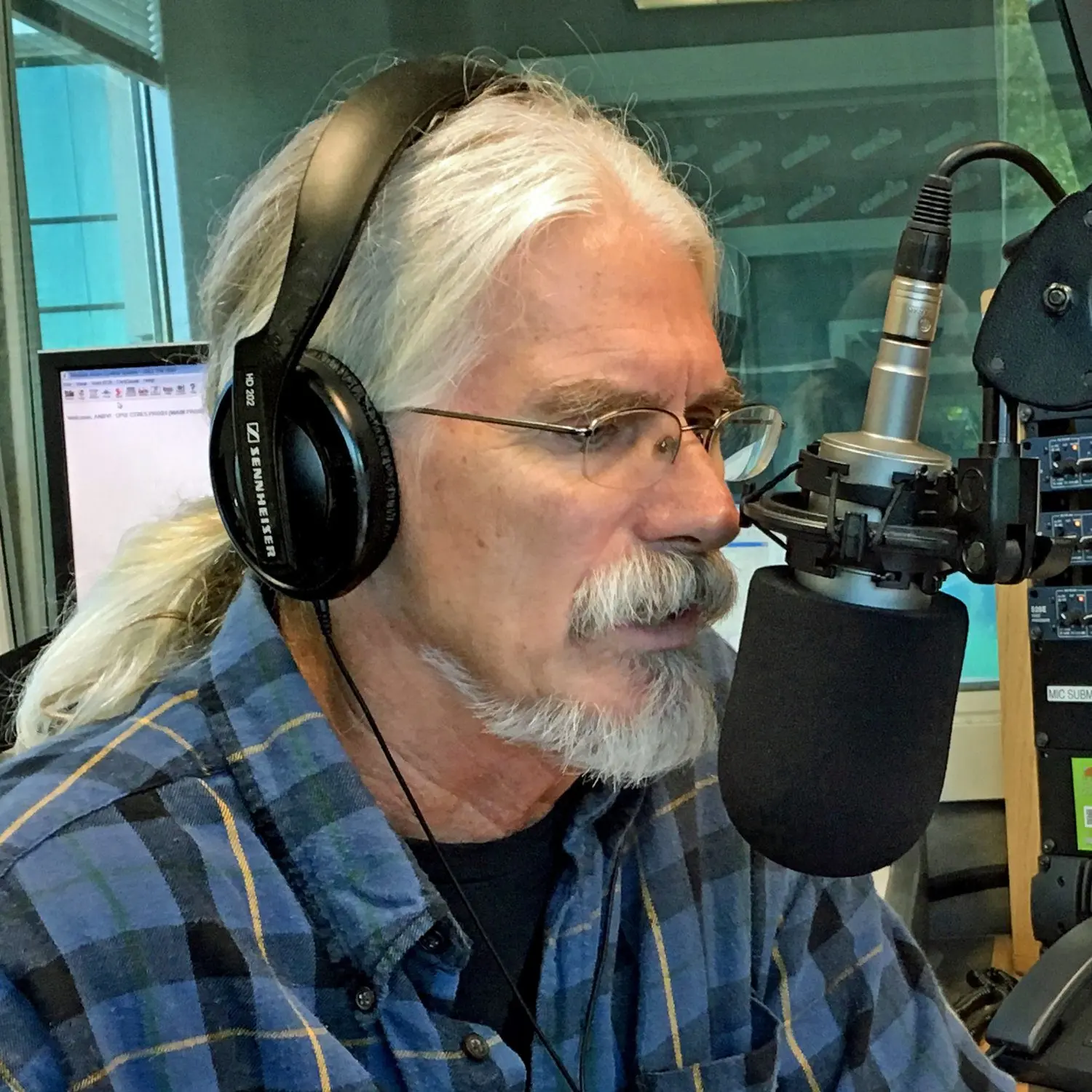


In this engaging episode of The Narrow Path, Steve Gregg delves into listener questions with his usual insight and thoughtful approach. Starting with a lively announcement about an upcoming debate in Dallas, Steve discusses the implications of whether modern Israel fulfills biblical prophecy, offering a glimpse at the intense discussions yet to come. As listeners call in, Steve tackles complex theological questions, shedding light on the nature of baptism as presented in Acts and deciphering the mysterious parable of the fig tree cursed by Jesus, revealing its potential symbolic meanings regarding Israel.
SPEAKER 1 :
Thank you.
SPEAKER 02 :
Good afternoon and welcome to the Narrow Path Radio Broadcast. My name is Steve Gregg and we’re live as we are each weekday for an hour taking your calls. If you have questions you’d like to ask on the air about the Bible or the Christian faith or anything related thereto, Or maybe you’ve listened before or today you’ll hear something you don’t agree with and you’d like to balance comment. Feel free to call about that too. Right now I’m looking at a couple of open lines. The number to call is 844-484-5737. That’s 844-484-5737. And I’ll be announcing this for another week and a half, I guess, starting next Friday. Not this Friday, but the following Friday and Saturday. We have three debates in Dallas, Texas, between Dr. Michael Brown and myself on the subject of whether Israel today, the nation of Israel, is a fulfillment of prophecy in the Bibles. His position obviously is that it is. My position is that I do not know of any prophecy that is fulfilled by it, and we’re going to discuss that. We have three debates on one weekend, Friday night, Saturday morning, and Saturday afternoon. That’s November 7th and 8th. It’s in Dallas. We probably have enough people listening in Dallas to fill the place, but many are coming from other places, too. And it doesn’t cost anything to go, but you do need to register because they want advance notice of how many people to expect. Now, how do you register? You go to my website, thenarrowpath.com. Look under, well, announcements and go down to the November dates, November 7th and 8th. And there’s a link. You’re going to have to, you know, copy and paste it into your search bar of it. There’s a link to a page which allows you to register for the event. And, again, it doesn’t cost anything, but they do need to know in advance how many are coming right now. In fact, they’ve got a running tally. of how many seats are left. It looks like only about 100 seats are left. So if you’re interested in going to that event, you may want to get your reservation in there or your registration in there or whatever. All right, enough on that. Let’s go to the lines, and we’ll talk to Dwight in Denver, Colorado. Hi, Dwight. Welcome to The Narrow Path. Thanks for calling.
SPEAKER 08 :
Thank you, Steve. In Acts 22.16, I think – Ananias may have had a mistaken understanding of baptism, saying that it would wash Paul’s sins away, since his sins were already washed away three days earlier on the road to Damascus. What do you think?
SPEAKER 02 :
Well, yeah, we’re not told whether his sins were washed away three days earlier. We assume Paul became a believer. and therefore a convert, and therefore justified in the sight of God on the road to Damascus. But we don’t know why it had to be three days before someone came to baptize him. I don’t know why God didn’t just send somebody to meet him when he first arrived in Damascus to do so. It may be that Paul was still wrestling with the revelations. Not that he was rejecting it, but maybe he was having a hard time fully embracing it. Let’s face it, the man had made a career of persecuted Christianity. He was very sincerely believing that Christianity was an error and that it was a heresy and that it was dangerous. It was such a bad thing that people should be put to death for it. That was his opinion. And then he meets Jesus on the road to Damascus. He obviously had a positive impression in a sense. He said, what would you have me to do, Lord? Which sounds like he’s embracing Christ as Lord. But people can call Jesus Lord without really fully having… I mean, that was almost for the moment. He may not have really… wrestled with counting the cost and things like that. That may have been what he was doing for those three days. I don’t know. But I do think that many people have thought that the words of Ananias, the man who came to baptize him, are teaching that he needed to be baptized to wash away his sins. The actual statement of Ananias was, now, why are you waiting? Arise, be baptized, and wash away your sins, calling on the name of the Lord. Now, Many have understood this to me, that being baptized is washing away your sins. Although there’s something else there, too. He says, calling on the name of the Lord. And I believe that since the Bible says elsewhere, whoever calls on the name of the Lord will be saved, that it is no doubt the calling on the name of the Lord, even more than baptism, that saves a person. I don’t know if his sins are washed away in water. The Bible never talks about sins being washed away in water. They’re washed away by the blood of Christ. So I’m thinking maybe calling on the name of the Lord is what would cause him to wash away his sins. But you mentioned, well, didn’t that happen three days earlier? Well, we’re not told whether it did or not. I mean, I think we kind of assume that Saul was fully converted on the road to Damascus. And maybe it’s just that he got a revelation, which greatly rattled his cage. And he had to think about that to know exactly and count the cost to know exactly whether he’s committed to that or not. You’d think it wouldn’t take that long, but he was pretty dyed in the wool the other direction before. And it was definitely a game changer for him, a world changing revelation. So I don’t know if Ananias was mistaken or not.
SPEAKER 08 :
Okay. Yeah, that’s a possibility. Thank you.
SPEAKER 02 :
All right, Dwight. God bless you. Thanks for calling. Kerry from Fort Worth, Texas. Welcome to The Narrow Path.
SPEAKER 09 :
Hey, Steve. I want to ask you first, how was your hunting trip?
SPEAKER 02 :
Hunting trip?
SPEAKER 09 :
Yeah, I got a message. I follow you through YouTube. Got a message, and it said, I’m going on a hunting trip with my brother and my son. And we’ll be away for a week, and my daughter is going to be taking care of everything.
SPEAKER 02 :
Well, I didn’t send a message like that. I didn’t send that message. I thought it was very strange. Yeah, was it asking for money? Was it saying, I got robbed in the woods and they took my credit card and everything. Please send $10,000 to the nearest bank and I’ll pay you back Tuesday for a hamburger today.
SPEAKER 09 :
It was just a statement saying, I’m not going to be in for a week. I’m going hunting. With my brother and son.
SPEAKER 02 :
That’s very interesting. It sounds like something that would be fun to do. It’s just that I have never hunted in my life. Was that on Facebook Messenger?
SPEAKER 09 :
No, it was on YouTube.
SPEAKER 02 :
Oh, YouTube. That’s strange. Was it my face? Was it my face with it?
SPEAKER 09 :
Up in the corner. Up in the corner had your face.
SPEAKER 02 :
That must have been AI. I don’t know. So it begins. So it begins. Okay.
SPEAKER 09 :
Well, my question is, and help me out, when Christ first the fig tree, there’s got to be a deeper message than just that he was angry that it didn’t have any figs on it. Can you help me out here?
SPEAKER 02 :
Well, yeah, earlier in Luke 13, Jesus told a parable that he left unfinished. In fact, Luke tells us, it says he began to tell this parable. Essentially, most times the Bible says Jesus told this parable. But in this particular case, Luke says he began to tell this parable. And the man had a certain fig tree. in a vineyard, and he came seeking fruit on it, and he didn’t find any. He said to the keeper of the vineyard, Look, for three years I have come seeking fruit on this fig tree and find none. Cut it down. Why does it use up the ground? And he answered and said to him, Sir, let it alone this year also, until I dig around it and fertilize it. And if it bears fruit well, if not, after that you can cut it down. Now, I believe this is, of course, considerably earlier, maybe a year or half a year earlier than Jesus cursed the fig tree on the Mount of Olives. But this parable doesn’t tell how it ends. It says, okay, this fig tree is burdening the ground. It’s not producing the fruit it’s intended to produce. Might as well just take it down. And that’s apparently the owner, God, is saying that. Now, the tender of the fig tree, I believe to be Jesus. He says, well, let’s give it one more year. I’ll fertilize it. I’ll dig around it. Maybe we can get some more. Maybe it gets fruit. Let’s try to save it if possible. But if it doesn’t bear any fruit this year either, Then we’ll just cut it down. Now, the fig tree, I think the only way to understand this sensibly is that the fig tree is Israel. It’s not uncommon in the Scripture for Israel to be likened to fruit-bearing plants. It’s likened to a vine. It’s likened to an olive tree. It’s likened here, I believe, to a fig tree. And the idea is that Israel had not borne the fruit, just like the Old Testament says, Israel has not borne the fruit God wanted from them. And he’s saying he’s given them one more season, one more growing season. So this could have been maybe a few months before Passover or whatever, but before Jesus was crucified. But a growing season more. We’ll see if it gets some more fruit. So he’s saying, OK, Israel for centuries, the prophets have complained that Israel has not produced fruit for God as it was intended for. And he’s saying now they’ve only got one more year, less than a year. And if it doesn’t bear fruit in this time, it’ll never bear fruit again. It’ll be taken down. Now, so Jesus then comes to a fig tree some months later. And it looks like it should have fruit because it’s got a lot of leaves. And he looks. Between the leaves, there’s no fruit. And he says, no one shall ever eat fruit from you again. Now, some people say that Jesus was mean to the tree. But, you know, how can you be mean to a tree? Trees don’t know, don’t have any feelings. So this is not a cruel thing to do. You know, people cut down trees all the time if they need them for wood and for fire and for building houses and for stuff like that. So, you know, for a tree to die is not an act of cruelty, but it was a symbolic act in my opinion. It was the conclusion of the parable, because in the parable, they just said, let’s see if it produces fruit in this last year. If it won’t, we’ll take it down. But the parable ends there and doesn’t say whether it did or didn’t. And that’s because I think the story hadn’t finished being told yet. And I think by the time he came to the fig tree on the Mount of Olives, the time had passed. They said, OK, still no fruit here. You’re not going to bear fruit anymore. Now, there may be people who don’t like the implications of that statement because it says if the fig tree here is Israel, Jesus is specifically saying they will never again bear fruit ever. Whereas there’s many people, dispensationalists particularly, who think that Israel is going to bear fruit in the end times. Now, I don’t believe the Bible predicts it. They do. They interpret certain scriptures differently than I do. I’m not sure how they interpret this one because I’m not – I mean, you either have to just say Jesus was peeved and he got angry at the tree, which is hard to believe. You know, he never got angry at the nets that didn’t produce fishes for his disciples. He just said, throw the net on the other side of the boat, and he made them produce fishes. But – You know, he could have made it produce figs if he’s really that hungry, but he didn’t. And so it was a symbolic act. And if so, what did it symbolize? Well, the simplest answer, and frankly the only one I’ve ever heard offered, is that it represents Israel. Israel’s been given their last chance to bear fruit. Just as he announced this, they were within days of crucifying him. And he said, okay, that’ll be the end. That’s the end of their opportunity to bear fruit. Never again will anyone eat fruit from him. That’s how I understand it.
SPEAKER 09 :
Well, thank you, Steve. That explains a lot.
SPEAKER 02 :
Okay, Kerry. Thanks for your call. Eddie in New Haven, Connecticut. Welcome to the Narrow Path.
SPEAKER 04 :
Steve, how are you today?
SPEAKER 02 :
Well, thank you.
SPEAKER 04 :
Good, Steve. Steve, we know in the New Testament that Jesus is, I guess our view is he’s all God and he’s all man at the same time. But my question to you, Steve, when you read in the Torah or the Old Testament, it says no man can die for another man’s sins. Now when you fast forward to the New Testament, you say, well, if he’s all God and all man, God cannot die on the cross. So what part died there? You say, well, the man part died. But the Torah says a man can’t die for our sins. Then you say… Well, the New Testament says there’s one God and one man, one mediator between God and man, the man, Christ Jesus. So he is a man. So you’re saying, how do I make sense of the Torah says a man can’t die for your sins. The New Testament says, well, he’s all God and all man together, but not God. I mean, God can’t die, so the man died. So how do you make sense of this?
SPEAKER 02 :
Yeah, well, I think the confusion comes from mistaking the meaning of certain passages. For example, Deuteronomy teaches that a man will not be put to death for his son’s sins, and the son will not be put to death for his father’s sins, which is a rule for the judges. In many cases in the Middle East and ancient times, if a man did something wrong, Not only he, but his whole family would be punished for it. It’s just Middle Eastern pagan justice. And so the Deuteronomy in the Torah says don’t do that. You can’t kill a man’s son for what the man did. Or you can’t kill a father for what the son did. And so it’s giving rules to the justices. It’s not actually mentioning what God can or cannot do. He’s not even saying that a man can’t die for the sins of another. He’s not talking about that. He’s talking about an additional person in addition to the guilty party being put to death along with the guilty party. That’s not really a substitutionary situation it’s talking about at all. The other place you’re thinking of, maybe Ezekiel 18, where God is talking about the Jews’ misperception of what’s going on because they say, well, we’re going to be going into Babylon, according to this prophet, suffering, Because of what our ancestors did, because they introduced idolatry and all that stuff. And so the prophet Ezekiel is saying we’re going into captivity. But we, you know, our fathers did that. And they had this saying, the fathers have eaten the sour grapes, but the children’s teeth are set on edge. In other words, normally if you eat sour grapes, you’ll grimace. Because, you know, just like you take a bite into a lemon, you know, you’re going to grimace. You’ll wince. Your teeth will be set on edge is the term they use. And they’re saying, but the fathers are the ones who ate the wild grapes. Why do we have to have our teeth set on edge? The point being, our suffering is a result of what our fathers did. And so Ezekiel 18 is written to say that’s not correct. Only sinners will die. The son is not going to die for his father’s sins. The father is not going to die for his son’s sins. only the soul that sins will die. Now, he’s talking about the judgment coming from God. He’s going to judge only those who are guilty. Now, he’s not saying that in the broad scheme of things, God could not have a plan where a man dies for the sins of the world. But he’s talking about in the Babylonian exile, the people have no right to blame God with injustice. In fact, that’s what he says. You say I’m unjust. You’re the ones who are unjust. What he’s saying is, You know, your fathers did eat the sour grapes, but you are, too. And, you know, you’re suffering not just for your father’s crimes, but for your own. You people are still idolaters. So the point is here, you’re not dying because your fathers commit adultery. You’re dying because you did as well. So, you know, this is, again, not addressing the topic that you’re thinking is addressing. There’s nothing in these passages. that say that God cannot allow for a man to die in the place of someone else, especially if that man is more than a mere man. Now, I believe, you know, when you say Jesus is all man and all God, you are reflecting sort of a talking point of evangelical Christianity or Trinitarian Christianity. I’m Trinitarian, and I do believe Jesus is God. I believe he’s man, too. But I believe it would be more accurate to say he’s the God-man, rather than saying he’s all God. Well, then where’s the man part? Or he’s all man. Well, then where’s the God part? No, he’s the God man. God and man are God is revealed in his humanity. God was manifest in the flesh, the Bible says. So Jesus is the human manifestation of God himself among us. And so, you know, he’s a unique man. And if God wished to say, I, who have become a man. I, God, who have become a man, am prepared to lay down my life in order to balance the scales of justice so that everybody else can go free. There are examples of this kind of thing in human relations where a person puts himself in the place of others, steps in front of a victim and takes a bullet for him, or pushes them out of the way of a speeding car and gets hit by the car themselves. or things like that. Those kinds of things happen. There are people who put themselves in the place of another person and die for them and thus rescue them. Now, exactly how that all worked, I do not know. I mean, there’s many, many opinions about the atonement and how it is that the death of Christ worked. The one you’re thinking of is called penal substitution, the penal substitutionary view. is that Jesus took the penalty for mankind. I believe he did, but I don’t think that’s the only view. I think that and several other views, at least four or five other views, exist of how the atonement works. And I don’t know which one is best. I think they’re all good because they’re all scriptural. But to say, well, in human analogies, this can’t be done. Well, that’s probably true. That may be why there’s so many different human analogies. That’s why there’s so many different ways it is described in human terms, because none of them by themselves really fully fit the facts. And it wouldn’t be too surprising if there are things about God for which there’s no perfect analogy in the natural world, only partial analogies. And I think that’s probably true when we’re told about the atonement, too. But your problem, you’re saying, is not just the fact that people can’t die for other people. Of course, they can, and they do many times. But you’re saying it’s a conflict with what the Old Testament said, that a man can’t die for another’s sins. And I think the only two passages I know that would possibly support your view aren’t saying that. They’re saying something different. The one in Deuteronomy is saying that the courts cannot punish the guilty party and his son too, who’s innocent, or and his father, who’s innocent. He can only punish the guilty party and not punish the innocent. That’s a very different thing than saying a man can’t die for someone else. They’re actually saying they die for their own sins. And so also Ezekiel 18 is saying, So basically, these people are saying we’re suffering for our father’s problems and misdeeds. And God is saying, no, you’re suffering for your own. You know, they did it and you did it, too. And your teeth are going to be set on edge, not because your fathers ate the sour grapes, but because you did as well. So that’s how I would understand those things, which that seemed to be problematic to you. I appreciate your call. Let’s see here. Chris in Manchester, New Hampshire. Welcome to The Narrow Path.
SPEAKER 06 :
Steve, God bless you. Thank you. Just curiosity, really. Throughout time in human history, human beings have died without the privilege of knowing or learning of Christ at all with the message. My question is this. How will God judge those people that never even had the privilege of knowing Christ or hearing the message of Christ? How will God judge them?
SPEAKER 02 :
Yeah, you’re right. That is a problem that has often been wrestled with, and no one knows the exact answer. What we do know is that God is not willing that any should perish, but that all should come to repentance, and that Jesus died for the sins of the world, these things being true. suggests that God could save everybody somehow, if he wished. Now, some people think he doesn’t want to. Some people think, you know, maybe he’s got a plan where a certain percentage have to go to hell anyway, even though he could have saved them. Some say he can’t save them because he can’t change their mind. But, you see, all of those considerations have to do with people who’ve heard the gospel and don’t receive it. The Bible never talks about those who have not heard the gospel. And who don’t receive it, per se. Or at least, it doesn’t talk about people to whom light has been withheld. The Bible suggests that everybody has light. And their response to light, Jesus said, in John 3, determines whether they’re condemned or not. Jesus said, this is the condemnation. This is somewhere around, what is it? Verse 17 and 18 maybe in John 3. She said, this is the condemnation that light has come into the world and men love darkness rather than light. So they’re condemned because they received the light, not because they didn’t have any. And because they received it and hated the light because they loved darkness because their deeds were evil. That would be true of people who have heard the gospel and people who have not heard the gospel. They received some light. And if they hate light because their deeds are evil, then they’re condemned, Jesus said. Now, there are people who receive light in some measure, but maybe not the complete understanding of the gospel. In fact, even you and I don’t fully understand everything that we’d like to understand, which means the light we have is limited. We have tremendous light in the Bible. We have tremendous light in Jesus. But even our perception of Jesus is limited. It means that even the revelation we have now is not as bright light as we will someday have. So we respond to it as we have grasped it. We respond to it as it’s come to us. And so, you know, I don’t know what God will do with people who have never heard the gospel, but I do believe all people have had some light. Paul talks about people who have seen the attributes of God in the things he’s made in Romans chapter 1. John chapter 1 verse 9 says that Jesus is the true light that enlightens every man that comes into the world. So every man that comes into the world has received some light. And John says, and that light is the one who was the word and the word was God and who became flesh and dwelt among us. He says he was that true light that enlightens everyone that comes into the world. So, you know, I would assume that their response to that is viewed as their response to him. I could be wrong. And it sure doesn’t mean that, you know, people don’t need to hear the gospel. But they may need to hear it for different reasons than we think. If we just think people just need to go to heaven, well, we don’t know how God’s going to deal with people who have had less light than we have, but I think all people need the gospel because they need to know Jesus, because they need to live for the glory of God, and they can’t do that without Jesus, because they need to be delivered from their sins, which they can’t do without Jesus, because they have to be delivered from their demons, which they can’t do without Jesus. They can’t be part of the body of Christ and fulfill the role that God made them for without Jesus. So everyone needs to hear about Jesus. But whether some people who’ve never heard about Jesus will be judged charitably at the judgment, we really can’t say based on what we know. Hey, I need to take a break. Our website is thenarrowpath.com. We have another half hour coming, so don’t go away. I’ll be back in 30 seconds.
SPEAKER 01 :
If you’ve been listening to The Narrow Path for very long, you know how much it has enhanced your study and understanding of Scripture and possibly your whole Christian life. Don’t you think all your friends should benefit from the program as you have? You help to partner with us in impacting the body of Christ when you tell all your friends to listen to The Narrow Path. If you have not done so, visit the website thenarrowpath.com and discover all that is available for your learning pleasure.
SPEAKER 02 :
Welcome back to the Narrow Path radio broadcast. My name is Steve Gregg and we’re live for another half hour. Taking your calls if you have questions about the Bible or about the Christian faith. I’d be glad to talk to you. Right now our lines are full, so it won’t help to call right now, but I’ll give you the number if you want to call a little later. The number is 844-484-5737. In our first half hour, somebody called in perplexed because on a YouTube channel that he watches with my videos, there was a post saying that I had gone hunting with my brother and my son and some things like that, And it would be gone for a week. I had never heard of it. I had no idea. It certainly wasn’t me. My crack research team, which is my wife who’s sitting across the room from me, has done some research and looked it up and found out that the post was on the YouTube page that shows my videos, but that’s not my page. The guy who runs the page, that was his message to people. I guess indicating that he wouldn’t be uploading more videos to his page for a week. But, yeah, that was not me. So, yeah, the YouTube pages are not actually run by me. There’s at least two YouTube pages that have a lot of my videos on them. These have been set up by other people who run them, and I don’t really have any input to them. So, yeah, so if you see personal messages there, they’re not going to be from me. They’re going to be from whoever is running the page. Mystery solved. Okay, let’s go to Steve in Maine. Steve, welcome to The Narrow Path.
SPEAKER 07 :
Hi, Steve. Thank you for taking my call. I actually have kind of a one, two, three question thing. It’s hard to get through. Does the Bible mention AI, and does the Bible also mention cremation? And the last part is, what does it mean to blaspheme the Holy Spirit?
SPEAKER 02 :
Okay.
SPEAKER 07 :
I know it’s loaded questions here.
SPEAKER 02 :
Okay. All right. No, I can answer at least two of those three fairly easily and maybe the third one too with some reservations. All right. First of all, does the Bible mention AI? No, it does not. The Bible doesn’t talk about modern technology at all. because it doesn’t talk about modern times. At least if it does, it doesn’t tell us that it does. It talks about times when the Assyrians invaded Israel, and when the Babylonians conquered Judah, and when God released Judah from the Babylonians and brought him back to their land, and when the Messiah came, and when the apostles went out into the world to preach the gospel, and it talks about the destruction of Jerusalem in AD 70. After that, I don’t know of any passage in the Bible that talks about times later than that, which would include our times. So I don’t believe there’s anything in the Bible about modern times. I realize you’re probably, well, what about the book of Revelation? Yeah, including that. So I do believe there is a future second coming of Christ that is mentioned in the Bible. But that’s not the same thing as talking about modern times. It is a modern event. It’s an event in our future when Jesus comes back. He’s going to change the world and all that. But the Bible doesn’t tell you anything about the features of the times that the world will be in. I realize people think that it does, but that’s not how I’m reading it. So no AI, no computers, no modern nations that we know of today are mentioned in the Bible. How about cremation? No, cremation is not mentioned in the Bible either. We do know from some passages that burning of bodies was sometimes done as a dishonor to the dead. Taking a dead body and burning it would be treating it with great disrespect, and that was a shame-based culture. You might say, well, who cares what they do with my body after I’m dead? Well, that’s my attitude, but I don’t live in a shame-based culture. To know that you’re going to die and that people after you will treat you with indignity was more important in a culture like that than us. And so the threat of being burned, having your body burned after you’re dead, was a threat that people took more seriously than we would. However, there’s nothing in the Bible that says that burning the dead body is dishonorable in the sight of God. For example, many righteous people have been burned at the stake. Many martyrs who are crowned with glory in heaven their bodies were burned up by their enemies. So the Bible does not say that if your body is burned up, that somehow God is displeased with you, nor even necessarily displeased with those who burned it, although in the case of the martyrs, God would be upset with those who burned them because, well, they burned them alive, for one thing. But the thing is that what is done with a body is, usually in the Bible, is buried. What people preferred was that their body be buried underground. They’d like to have their bodies, in most cases, buried in their ancestral tombs, you know, with their ancestors. And therefore, you know, burial is the means of disposing of a dead body that you frequently read about in the Bible. And you never read about anyone requesting to be burned up after they die. But just because they didn’t doesn’t mean that God has spoken against it. I mean, what we read in the Bible are the, you know, when we talk about what people in the Bible wanted, we’re not always talking about what God wanted. So, no, the Bible doesn’t say anything specifically about the choice of being cremated. Many Christians believe it is not. A good thing. Many Christians believe it’s even, you know, something God disapproves of. But I don’t know of anything in the Bible that says that. So I’m going to say no, the Bible doesn’t mention creation. As far as the blasphemy of the Holy Spirit, there are many views of that. What I can say is that it obviously means showing great indignity to the Holy Spirit, but not just that. many people think that it refers to doing so until the day you die. That is, if you die having not repented of the indignity you show to the Holy Spirit by the rejection of Christ, then you die with that sin upon you, and you won’t be forgiven for that. That’s what many understand it to mean. There are other things, but now some people think there’s actually a sentence you can say or a phrase you can say. Somehow you can frame your words that become blasphemy of the Holy Spirit. Well, if that is true, the Bible doesn’t tell us what those words are, which would seem to be something that we would need to know. I mean, if Jesus wants us to know that blasphemy of the Holy Spirit is a really bad thing, but doesn’t tell us what that looks like, what it sounds like, what words are used in such cases. It would be very strange that we don’t get any information about that. So most people think it has to do merely with rejection of the testimony of the Holy Spirit and rejection of Christ for a lifetime. And, you know, that could be the thing. Now, if somebody thinks, no, I’m afraid I have said those words that become blasphemy of the Holy Spirit and I can’t be forgiven, well… I believe that if you had come into a state in which God was unwilling to forgive you, he also would not convict you of your sin. Why would he do that if he wasn’t willing to forgive you? God doesn’t want anyone to perish. The Holy Spirit convicts us so that we’ll repent. Why? So that we’ll be saved, which means we’ll be forgiven. If the Holy Spirit is convicting you, then salvation is not beyond the range of your reach. There are people whose hearts are so hard. that the Holy Spirit can’t even convict them because they’re just hard as nails, hard as stone, and nothing can penetrate. Well, maybe those people have become guilty of the blasphemy of the Holy Spirit. But if you’re concerned about your soul, you have not. At least as I would understand it, you have not. All right. Thank you for your call. Let’s talk to Mike in Phoenix, Arizona. Mike, welcome. Welcome.
SPEAKER 05 :
Hey, my brother Steve. How are you? I’m well, thanks. Good, my brother. I think we spoke a long time ago. I’m a pastor here in Phoenix, Arizona at Harvest Christian. And, you know, I’ve been listening to your program. I think you and I, we have a lot in common just because some of our theology and teachings are sometimes unorthodox to the mainstream evangelicalism. So I really appreciate your teachings on the radio. The question I have for you, my brother, is in reference to some of your eschatological doctrines and teachings that I think I would like a little bit more clarity on, and I think that maybe that, you know, I have a little bit of disagreements on too, maybe unless you clarify a little bit. I was listening for the past, you know, three, I’ve been listening all the time, but majority of the time, you know, you quoted something on Matthew 23, someone had called on Matthew 23, specifically on do not seek to be called rabbi or master or teachers. And then I think yesterday or maybe the day before, you had one guy get on there and talk about he had a pastor who wanted to be a mentor, you know, for him. And, you know, some of the things that you were saying, I think, may have been an overcorrection. I don’t know. Maybe that is your thoughts and your ideas. But you seem to have attacked – I think the thing is, or how you came off on was, yeah, we shouldn’t call anybody a teacher, we shouldn’t call anybody a pastor, or we shouldn’t call anyone these things. While in the scriptures, I believe, and now I’ll give you time to clarify, of course, but in 1 Timothy 3 where it talks about, you know, desire, if a man desires the office of a bishop, he desires a good thing. You know, and the Apostle Paul called himself a father. He called himself also a teacher, an apostle. Jesus called Nicodemus a teacher. You know, there’s a lot of, of course, a lot of other things like the Didache, the writings of Ignatius, Polycarp, and the early church writings that really, you know, address teachers and bishops and deacons as such. Now, of course, we’re not to seek those things, you know, oh, call me teacher or call me this. But I think I would like to get a little bit more clarity, you know, considering that I don’t believe that being called a teacher or being called or even you calling, if I call you a teacher, like I believe you are a Bible teacher, if I say, oh, yeah, he’s a great teacher in the Bible, you know, a teacher in the Scriptures, or, yeah, he’s a great pastor, he shepherds the church very well, that that is okay versus Matthew 23 more indicating that a person should not seek title only or, you know, by being called title. So I’m hoping you can give a little bit more clarity because it seems like you’re kind of putting a cloud on someone who is called a teacher or a professor. Maybe you can help me out there.
SPEAKER 02 :
Well, I certainly don’t mean to do that, and I think I understand just the way you do. I mean, what Jesus said, the scribes and Pharisees love to be called rabbi, rabbi by people in the markets, in the marketplace. This is, of course, Matthew 23, 8 and following. But Jesus says, but verse 70 says, but do not be called rabbi. For one is your teacher, the Christ, and you are all brethren. Do not call anyone on earth your father. For one is your father, he who is in heaven. And do not be called teachers. For one is your teacher, the Christ. Now, he’s talking about your attitude toward being called something. The rabbis love to be called rabbi, rabbi in the marketplace, because that’s a term of respect. But he says, listen, don’t be called rabbi. Don’t be called teacher. And don’t call anyone your father. Now, he doesn’t mean your earthly father. He’s talking about religious titles here. He’s talking about religious titles of respect. Sure, I mean, everybody would talk about their father as their father, and even Paul said he was a father to the Corinthians, so he never asked them to call him by that title, and I don’t know that they ever did. Now, when a Catholic priest expects to be called father, well, then that’s getting closer to what Jesus was concerned about here. If I speak of somebody as a spiritual father to me, I’m not giving him that title. I’m describing his relationship with me. Now, if a person who goes to the average Catholic church calls the young priest there father so-and-so, well, they’re not really describing, in most cases, that person’s relationship to them. In fact, unless that person led them to the Lord. then they are in no sense their father. And you don’t need to call them that. You can just call them brother. Like Jesus said, don’t be called those things. You’re all brothers, he said. So, you know, if somebody calls me a teacher, that’s fine. If someone calls me his teacher, I get more uncomfortable. If someone just calls me teacher, that’s awkward. I mean, I’d just as soon just be called Steve. When I was in Africa… A couple of years ago, a few years ago, I was teaching a group of African pastors there for a couple of weeks, and they all have titles, bishop and apostle and stuff like that they give each other. And one of them said to me after a few days after I was teaching, they said, what shall we call you? I said, well, my name’s Steve. Call me Steve. And they said, but what are you? Are you like an elder? Are you an apostle? What are you? And I said, I don’t have it. I’ve never given any thought to that. Why should I give any thought to that? My name is Steve. Just call me that. I’m not an apostle. I’m not, you know, it’s just, why do I need to be called something? Now, if somebody calls me something because that describes the role I played in, let’s just say they’ve sat under my teaching a long time. They say, Steve’s a teacher to me or whatever. Well, that’s not what Jesus is worried about. Jesus is concerned about people wearing honorific titles and labels. And I think that’s what you’re telling me, too. You agree with me. He’s not in favor of that. I have no problem calling a person a teacher or calling a person an elder or calling a person a deacon or calling even Paul. I call him an apostle and Peter, too, and some others, you know. So, no, when the caller you’re referring to was on the line, it seems to me like what he was saying was, was the pastor wanted him to join the church so that the pastor could be his mentor. And I was saying, well, there’s only a few situations in which I would think he’d have to mentor him. One would be if he’s a really stumbling Christian who can’t really stand on his feet without being babysat and having his hand held, then I suppose maybe the pastor would have reason to want to take him under his wings, especially to get him stabilized. Or if he was being mentored to take a position that he was unfamiliar with and the pastor was and he could mentor him in that. I mean, those are situations that I could see having somebody mentor you. And you can call me a mentor too, yeah.
SPEAKER 05 :
Yeah, Steve, do you believe that that person, when the pastor said to him, now obviously it’s not me, but another pastor, if the pastor says, listen, I need you to join the church so I can mentor you, don’t you think that’s appropriate? Because he’s saying, I can’t mentor you if you are not one of the Believers are members of this church. I don’t have that role. But if you want me to mentor you or if you need to be mentored, I have to have that spiritual authority by you becoming part of this local body. Wouldn’t that be more appropriate in what the pastor said versus the other way around?
SPEAKER 02 :
Well, I’m not sure what I know. It’s a common way of speaking, but I don’t necessarily think that a pastor has a special spiritual authority. over the flock. He may, as the CEO of the 501c3 church, he may have some authority to, you know, act as a CEO. That’s different. When it comes to, you know, shepherding the sheep, really, I think that the pastor’s role is to point them to Christ and not to try to take authority over them. I’m not sure why he would need to. I mean, teach them to follow the authority of Christ. Jesus would make disciples, teach them to observe everything I have commanded you, which means he’s the authority. Paul said the head of every man is Christ. So I think that the Christian is answerable to Christ. And Jesus said to his disciples, you know, the rulers of the Gentiles exercise authority over them, but it shall not be so among you. You see, I believe that, you know, now I have discipled people in my life. I mean, all my life. Since I was in my teens, I had people that were being discipled by me. I didn’t have authority over their life. The Bible did. And what I did is I taught them what the Bible said. I gave them what Jesus said. Because I wasn’t discipling them to be my disciples, but to be Christ’s disciples. So he’s the authority. That’s how I look at it. I mean, I realize the churches operate differently than that, but that’s how I look at it.
SPEAKER 05 :
So in Hebrews chapter 13, 8, when it says, Obey those who have rule over you, for they watch over your souls. Who is he talking to then? Or who is he talking about? And then also Peter talking about being a good shepherd, feeding the flock. And that word feeding means to rule and guide the household of God.
SPEAKER 02 :
Well, yeah, I believe that’s what shepherds do. I believe shepherds should do that. They should feed the flock. They should teach the word of God. and they look out for the strays. I mean, that’s what shepherds do. If somebody’s going astray, the shepherd leaves the 99 who aren’t going astray and goes looking for the one who is. The ones who aren’t going astray presumably are self-feeders. They behave. The ones who are not behaving are the ones the pastor really needs to go after. And I think that’s what 1 Thessalonians 5 is telling leaders to do, It doesn’t mention leaders, but it mentions the behavior of them. Because 1 Thessalonians 5, 12, for example, talking to the church themselves, the congregation says, We urge you, brethren, to recognize those who labor among you and who stand before you in the Lord and admonish you. There’s people who do that. And esteem them very highly in love for their work’s sake. and be at peace among yourselves. Then he speaks, I think, to the elders or the leaders. He says, Now we exhort you, brethren, warn those who are unruly, comfort the faint-hearted, uphold the weak, be patient with all. Now, so he talks to the sheep, you know, respect these people who are leading you. Respect the leaders. But… But you leaders, you need to go after the ones who are unruly and weak and unstable and faint. They’re the ones who need your care the most. Because, frankly, in a church that is healthy, most of the people in it, if they’ve been Christians for a few months or a year or something, should be able to walk on their own two feet. They shouldn’t need to be babysat. And, you know, the more they’re babysat, the more their growth is stunted, I think.
SPEAKER 05 :
You would think, right?
SPEAKER 06 :
Yeah.
SPEAKER 02 :
Yeah, you’d think so.
SPEAKER 05 :
You would think. Yeah, you would think so. But, yeah, I appreciate your time, and thank you so much, my brother. You’re right. I mean, we do have the same thoughts and beliefs. I think it’s just sometimes, you know, when it talks about, you know, obeying those who have rule over you and leadership, sometimes people can overcorrect and say, I don’t need to call anyone teacher or something, or maybe they feel like I don’t have to be part of anything. And I know that your eschatological doctrines may seem this way, but I really appreciate your clarity. Thank you so much. Oh, yeah.
SPEAKER 02 :
Thank you. Thank you very much. And I should say that, you know, the verses in Hebrews 13, verse 7 and 10, which talks about in the King James says, you know, and 7, it says, remember those who have the rule over you, who have spoken unto you the word of God. And then verse 10 says, or is it 17? I need to go look there. Is it 17? Yeah, it’s 17. It’s 7 and 17, as I recall. Anyway, it says, obey those who have the rule over you. The King James says have the rule over you, but the Greek says who lead you. I mean, anyone can look up the Greek there and see that the meaning of the word is who lead you. And I believe there are leaders. There’s even a spiritual gift of leadership that Paul mentions in Romans 12. It’s just someone who’s given the gift of leadership. So leading, I think, is in most cases when the Bible talks about people leading, it talks about them setting an example. As Paul said, he imitators of me as I am of Christ. Now, Paul was an apostle. He had lots of authority. But he told the Corinthians, he said, it’s not that we have dominion over you. but we’re just helpers of your joy, for by faith you stand. He’s an apostle writing to a really bad church. I mean, it’s a church that’s got a lot of problems. He says, listen, I don’t have dominion over you. I’m here to help you stand. I’m here to help you joy. You can stand on your own two feet, and you don’t need me to have dominion over you, but I do have to correct things at times. And he tells them in 1 Corinthians 11, 1, be imitators of me as I am of Christ. In other words… You guys are really going astray. Instead of me exercising the authority over you that I could do as an apostle, I’m just going to tell you, look at the way I live. Follow my example. And, you know, in my opinion, when you’re dealing with people who really love God and really love Jesus, and those are the people that should be in the church, the ones who don’t really need to get converted and then come into the church. But if people love Jesus and love God, they’re looking for role models. They’re looking for someone who shows them how it’s done rather than lays down the law for them. You know, I mean, it’s one thing to exercise authority over someone. It’s another one to be an example. And those who are looking for an example, those who are the real sheep of Christ, will follow. If you find your church is full of people who don’t, who won’t follow a good example and don’t want to follow Christ, well, frankly, I just pity a pastor who has to deal with that many high-maintenance people who may not really be converted. They may have just said a prayer or something, and if their hearts aren’t converted, then they’re not converted. And if their hearts are converted, then their heart wants to follow God. That’s what happens to a heart when it’s converted. It wants to follow God. All right, let’s see. We don’t want to run out of time. We’re almost out. I’m sorry to say. Let’s talk to Mike from Paulsboro, Washington. Mike, welcome.
SPEAKER 03 :
Hello. Hey, thank you, Steve. I’ll attempt to make this quick. We have four young kids. My wife homeschools, and I work a lot. And we put the toughest child for my wife to homeschool, which was kind of distracting the other. It’s our second oldest. In the cheapest Christian-ish private school we could find, which is actually a Seventh-day Adventist school, even though we are not Seventh-day Adventists. But I know I would not have put my kid in like a Mormon school or a Jehovah’s Witness school, but the Seventh-day Adventists don’t seem… I don’t know too much, but it doesn’t seem that we’re too far off from, and they also don’t, aren’t supposed to be teaching when they teach Bible. They say that they’re not teaching Seventh-day Adventism leaning supposedly. So, but there is a event where they’re inviting the families to a Thanksgiving service for a historical reading. And so my wife asked if I wanted to go. And so I’m curious about, if we should go to stuff like that and support our daughter’s school via the thing. And then the second part of the question is we’re considering looking to maybe put more kids in a – there’s another school always across town, and it’s Christian, but it leans – heavily reformed Calvinistic theology, which is really off-putting to me.
SPEAKER 02 :
Let me jump in before we’re almost out of time. The music is playing. I’ve got less than a minute. I have no problem with kids being in a Seventh-day Adventist school or in a reformed Christian school. I’d be more concerned about the peer group they’re with. And they may be fine, but sometimes it’s bad kids who are put into the Christian schools because they’re They just don’t work out at homeschooling or they don’t work out at public school. So they get shoved into a Christian school in the hopes that they’ll learn to behave, which, if that is so, your child may meet other children of that same kind who are problematic. And so I’d be wanting to know something about the peer group. But I wouldn’t rule out that school just because it’s 70 Adventists. I’m sorry I’m out of time. You’re listening to The Narrow Path. Our website is thenarrowpath.com. Thanks for joining us.