


- Posted
In this insightful episode, host Steve Gregg delves into a complex discussion about the nature of Jesus Christ, defining…

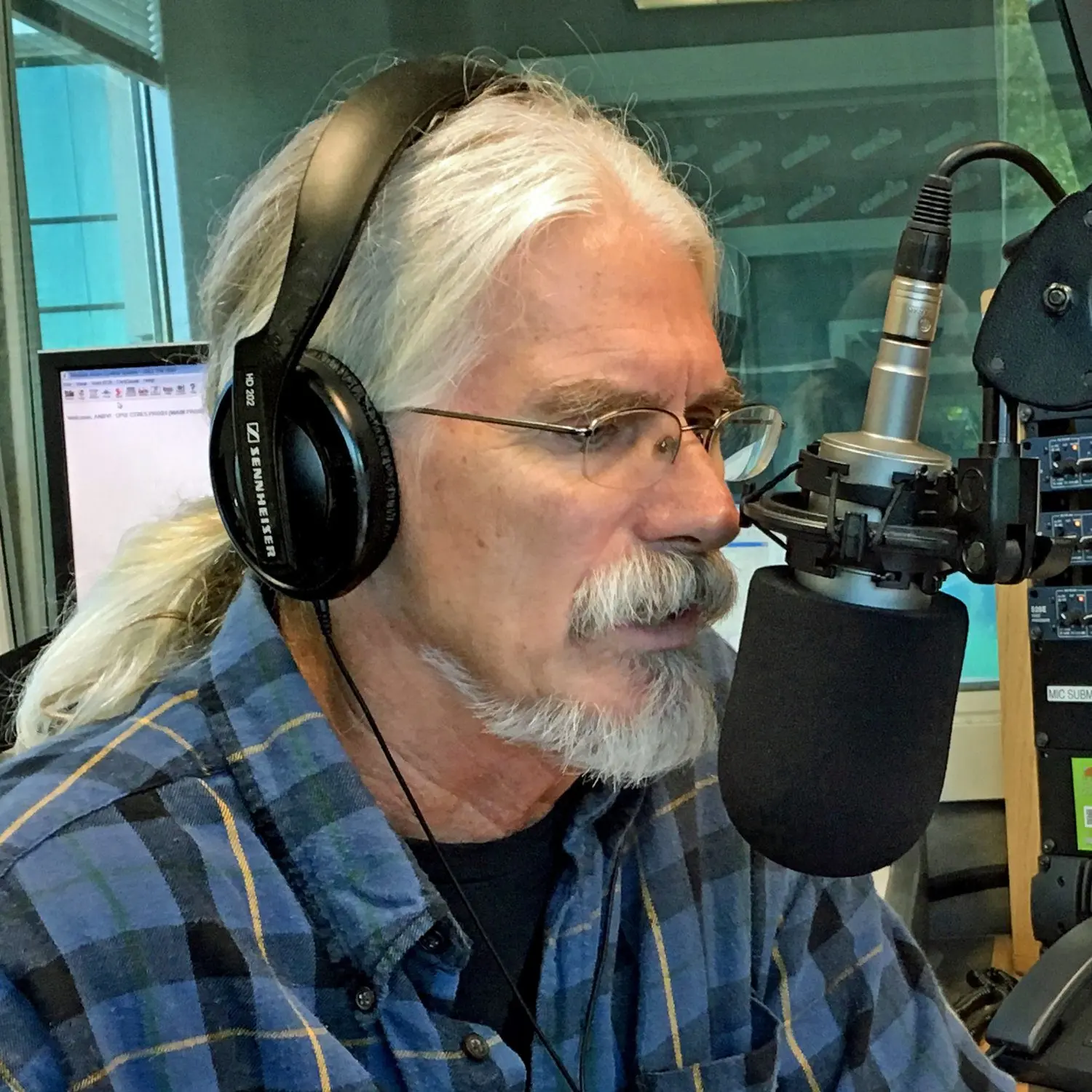
Join Steve Gregg as he navigates listener questions and delves into deep biblical topics on this enriching episode. Starting with a captivating discussion on biblical prophecy, Steve explores the controversial subject of whether modern Israel is a fulfillment of such prophecies alongside Dr. Michael Brown. Discover the significance and potential misinterpretations of Proverbs 13:22 as Steve offers insight into leaving a legacy and managing family relationships wisely.
SPEAKER 1 :
Thank you very much.
SPEAKER 02 :
Good afternoon and welcome to the Narrow Path radio broadcast. My name is Steve Gregg and we’re live for an hour each weekday afternoon taking phone calls from people just like you who have questions about the Bible or the Christian faith they’d like to discuss on the air. I’ll be glad to discuss them with you. If you have problems with the Bible, you don’t believe in the Bible, you’re not a Christian, you disagree with the host about something, even if you are a Christian, you disagree, that’s fine. We’d love to hear from you. Feel free to call in. The number is 844-484-5737. Now, we have some lines open, so go ahead and call now so you can get through for sure. The number 844-484-5737. I’ve been announcing that this debate is happening next weekend, actually a week from tonight. And tomorrow, there’s three debates, one on Friday night, two on Saturday, between myself and Dr. Michael Brown, on the subject of, is the modern nation of Israel a fulfillment of prophecy? His position is, yes, it is. My position is, I don’t see it as such, partly because I can’t think of any prophecies in the Bible that have not already been fulfilled or been forfeited by God. not meaning the conditions. All the prophecies of the Bible, all the promises God made to Israel, either were fulfilled literally, which is true of almost all of them, or some of them were conditional, and the Israelites didn’t meet the conditions, so they haven’t been fulfilled and won’t be because the conditions were not met. And a third category are those that were fulfilled in Christ. So you take all the prophecies in the Bible, And anyone is welcome to bring up any particular prophecy in the Bible they’d like, and I’d be glad to talk about that. I’m familiar with all of them, so if you want to bring them up, we can talk about them. But I don’t know of any prophecy in the Bible, promises made to Israel, which were not fulfilled in ancient times. And there are none that I know of being fulfilled today. All right, so that’s the position I’ll be taking. Michael Brown’s taking the opposing position to that. And that’s going to be in Dallas, Texas, live. Michael’s flying in from the East Coast. I’m flying in from the West Coast. We’ll be meeting in Dallas for this live event. If you’re interested, you can fly in, too, or you may just walk across the street if you live nearby and want to show up. That’s going to be at the Mercy Culture Church in Dallas, Texas. If you want to come, it costs nothing to come, but that is there’s no admission fee. But they do want people to register so they’ll know how many to expect. If you’d like to register, you can go to our website, thenarrowpath.com, and look under announcements. And the website that they have set up for you to register is linked there. You can get there from our website. That’s at thenarrowpath.com under the tab that says announcements. Another thing is, and you can get this information at thenarrowpath.com in the same place under announcements. Next Wednesday, we have our monthly Zoom meeting on Wednesday evening. That’s at 7 o’clock p.m. Pacific time. And you can find out how to log on to that Zoom meeting also by going to thenarrowpath.com under announcements. All right, we’re going to go to the phones now. There are a line or two open right now. If you’re interested in calling, the number is 844-484-5737. Our first caller today is Rayma calling from Detroit, Michigan. Hi, Rayma. Welcome.
SPEAKER 01 :
Hi, today’s question is about Proverbs 13, 22, about leaving an inheritance to your children’s children. I want your biblical perspective for those adult children who are ungrateful and don’t deserve a dime. Any other scriptures you can share?
SPEAKER 02 :
Okay, well, yeah, when it says that the good man leaves an inheritance to his children’s children, but the wealth of the sinner is stored up for the righteous. What he’s saying is that this is one of many proverbs that suggests that righteous people will prosper. Now, of course, not all righteous people prosper, not equally anyway. And, of course, it has a lot to do with what country you live in, too, sometimes, and what your birth circumstances are. But all things being equal, a more righteous man, will be more diligent, more thrifty in his lifestyle, less wasteful, and he’ll have something to leave to his offspring. That is, his children will be better off, and his grandchildren, supposing that his children also are thrifty and use their opportunities well. The idea is that a righteous life tends toward a prosperous life, and this prosperity can be generational. Now, the contrast is with the wealth of the sinner. is stored up for the righteous, which means that the sinner, you know, he squanders his wealth. He loses his wealth many times in various lifestyle choices and so forth. And that wealth will be added, as far as God’s concerned, to the righteous because of the righteous using righteous business practices and so forth. And a righteous lifestyle, which is more, let’s just say the more righteous your lifestyle is, the more inexpensive it is compared to alternatives. Because the more righteous you are, the more frugal you’ll be because you’ll be concerned about the stewardship issues. You’re going to have to answer to God for those things. Now, is this saying that if you’re a righteous person, you will make sure that your children and grandchildren receive a substantial portion of your inheritance, of your estate? No, it’s not making that point. The assumption is being made in ancient times in the Middle East, children did revere their parents. In fact, there were stiff penalties in those cultures for children who didn’t revere their parents. And therefore, the parents and the grandparents, the patriarchs especially, and the grandparents were revered and honored. And so the point here is not a question of will you leave anything to your rotten children or grandchildren who have disrespected you and disowned you or brought shame on the family. The assumption is that the righteous man is going to have righteous children. That’s not always the case, but that’s the baseline for his thinking here. A righteous person who presumably has respectful children, which would be more often the case than not in a society like that, he’ll have plenty to leave to them when he dies. That’s the idea. God will prosper him, and generations after him will benefit because of it. Now, if there are people who don’t deserve the inheritance, then that changes things. I would not want to leave nothing to my children, even if they were, you know, even if they’re totally profligate, but I wouldn’t want to leave them enough to get into trouble. I’d want to leave them enough just to let them know that I hadn’t forgotten them, I hadn’t disowned them. But if they know very well their lifestyles are disagreeable to my values, they should know, frankly, before I die. I should let them know that, you know, I’m not going to support that lifestyle either in life or in death. So and I think that you can do that with your children and grandchildren. But, you know, the money that you have, the wealth you’ve accrued as a righteous person, it belongs to God. And your responsibility is to steward it in a way that pleases him and that promotes his interests. And again, I would I would not leave nothing. Even to the worst of my children. It would be a very small amount if I’m afraid they’re going to use it wrongly. And I would certainly leave the majority of my wealth, if I haven’t, when I die, to Christian ministries or to children who are righteous. You know, my own children who are living righteously or grandchildren. The idea is that it’s a desirable thing. People want to leave something to their children. And it’s saying that the righteous will be able to do that. It’s not saying that every righteous person will leave a substantial part of their estate to their children and grandchildren. There obviously would be people. I mean, in that society, a child being greatly disrespectful to his parents could get him killed. That’s just not something that was allowed. So, you know, there wouldn’t be many cases where a really rotten child would even be in the position to receive anything when the parent dies. That child might not outlive their parents. So, yeah, I just say this proverb is not setting up a rule or an absolute promise. This is stating, you know, what’s the tendencies of nature. The tendencies of providence are that if you live a righteous life, you’ll do well. You’ll be industrious where other people might be lazy because you’ll do your work for the glory of God, not working as unto men but unto God. And therefore, you’re going to make the most wealth as can be generated in the circumstances you’re in. And then you’re going to waste as little as possible. You’re not spending money on drugs and alcohol and stupid and evil even entertainment. You’re just going to be stewarding your money for good. And God will bless that. Anyway, that’s what I believe it’s saying. It’s not saying you have to leave your estate to children or grandchildren who you’re pretty sure it’ll ruin them and they’ll waste it. So just so we don’t put too much of an absoluteness on any Proverbs, the Proverbs are wise counsel. They are not promises. They aren’t intended to be taken as promises or even rules or laws. They are wise counsel. based on normal tendencies and things. All right, let’s talk to Shannon in Arkansas. Shannon, welcome.
SPEAKER 08 :
Hey, Steve, how’s it going?
SPEAKER 02 :
Good.
SPEAKER 08 :
Hey, in reference to a Unitarian full preterist, they love to use this verse, 1 Corinthians 15, 28. I’m sure you’re familiar with it. You want me to read it?
SPEAKER 02 :
Is that the one about baptizing for the dead?
SPEAKER 08 :
No, sir, it’s about… Oh, that’s verse 30.
SPEAKER 02 :
Go ahead.
SPEAKER 08 :
Yeah, verse 30. And when all things are subjected to him, then the Son himself also will be subjected to the one who subjected all things to him so that God may be all in all. They love to use that verse.
SPEAKER 02 :
Well, what point are they trying to make from the verse, first of all? You said they’re Unitarians and what? Full preterists? Is that what it was?
SPEAKER 08 :
Yes, sir. Yes, sir. Unitarian, full preterists. And they show the separation that the Father and Jesus are separate. Okay.
SPEAKER 02 :
All right. Well, let me just say, full preterists… which are people who believe that all scripture is fulfilled, would believe that this has already happened. That, you know, all things have been put under Jesus’ feet already, and he’s turned it over to the Father. Because by definition, full preterists do not believe there are any future predictions that have not been fulfilled. So they had to fit everything. I’d say they’re the ones who have to exegete this, because it does not appear to me that Jesus has brought all things under subjection to himself. God has given him authority over all things, but that’s a very different thing. then saying he’s brought everything under subjection, especially when Paul goes on to say, until every last enemy of his is under his feet. And he says the last enemy that will be destroyed is death, and that will be at the resurrection. Of course, full preterists believe the resurrection happened in 70 A.D., but death somehow continues to exist. Now, the covenant eschatology camp and the full preterists, they say, well, that’s only talking about spiritual death. although there’s not the slightest reason to believe that, except that they need to believe that for their view to be true. That’s the problem with much of full preterism. They will assert something to be true. They’ll say death means covenant death or spirit death or, you know, some other kind of death, not physical death, even though there’s not the slightest hint in the Bible that they’re correct about that. And in almost all cases where death is mentioned, it’s talked about physical death. And then there are some metaphorical deaths, like the prodigal son was dead, but then he was alive when he came back to his father. But most of the time, and certainly unless it’s obviously so, death means physical death, and that has not been completely abolished yet. We still die. Now, preterists who do that, they’ve already decided. When they do exegesis, they come to the task with the answer already in mind. And then they just take whatever shoehorn is necessary to cram any particular verse into their paradigm. Yeah, I mean… From my reading of preterists, most of them do not, I’m talking about full preterists here, most of them do not know what exegesis looks like and maybe have never seen any, but they certainly don’t do any. They make assertions about things. They’ll say that the heavens and the earth is symbolic for the temple and the temple system. Well, okay, prove that. They can’t. There is no proof of it. No biblical proof, no extra biblical proof. You just have to accept their word for it. And then they can tell you that the new heavens and new earth have already come because there’s a new covenant and the old temple is gone. This is how they operate. They will decide that something is so before they read any scriptures about it. And then every scripture they find, no matter how hostile to their proposition is, They’ll hammer it into, you know, a round peg into a square hole because they’ve got no choice. They’ve only got one proposition, and that’s all Scripture was fulfilled in 70 A.D., and therefore, you know, they just have to make it work. This is not exegesis. This is deciding prior to investigation that every verse is going to fit this paradigm. Real biblical exegesis means you come at the verses and say, what evidence is there in the passage that just that the writer intends his readers to understand a certain thing from this. And let’s draw it from the language of the passage. Let’s look at the common usage of that language in Scripture. Let’s look at the common usage of that language by that same author. You know, let’s follow his train of thought in the passage and see what role this particular statement plays in that train of thought. This is what exegesis looks like. Again, I do not believe full preterists have ever become acquainted even maybe with, well, I think they know the word exegesis. They just must not know what it means, or they have no respect for it, I have to say. Now, as far as the idea that there’s a distinction between the Father and the Son mentioned in 1 Corinthians 15-28, where the Son hands over the kingdom to the Father, they say, see, there’s a difference between Jesus and the Father. Therefore, the Trinity is false. Well, except… Trinitarians have always acknowledged there’s a difference between Jesus and the Father. People who try to prove Unitarianism and disprove the Trinity, they do so by quoting verses that no Trinitarian has ever failed to recognize or no Trinitarian has failed to accommodate. You can’t just quote a verse that your opponent is as comfortable with as you are and say, see, I proved my point. Well, no, you don’t prove your point until you show that that verse is better understood the way you understand it than the way your opponent does. And since if you’re Unitarian, you’re in the vast minority of biblical students and vast minority of biblical scholars, it doesn’t mean the scholars are all right. And it doesn’t mean the minority view can’t be true. But if you have a view that’s a tiny minority view, held by a tiny minority of those who are fairly expert in the material, then you’ve got a real heavy burden of proof. If you want to say, okay, everyone who disagrees with me, though maybe they outnumber me nine to one out of ten, yeah, well, they’re wrong. Okay. Okay, say they’re wrong and then show us why they’re wrong. You can’t quote a verse that they also can quote. And that they also can accommodate with their theology just as easily as you can and think you’ve won the debate. You don’t. And this is something that I’m afraid too many people who want to debate don’t realize. You’re not really debating when you’re just making assertions. Well, at least let’s put it this way. You’re not conducting yourself in a debate in any way that a serious Christian should pay any attention to or have any respect for unless you’re showing that the verse you’re quoting is works much better for your position than it works for the opponent’s position. If they can do that, I’d be interested in hearing it. If they can’t, then they’re just, frankly, they’re just blowing smoke, in my opinion, and they’re not really making progress in their understanding. All right. Thanks for your call, brother. Let’s talk to Kyle in Washington State, I guess, or maybe Washington, D.C. Hi, Kyle. You’re in Washington State, right?
SPEAKER 04 :
I am. Washington State, yes. Yeah, okay, go ahead. Just a very general question. What should a gathering of a group of Christian believers look like? I just look at church services and that, and I guess is there a biblical precedent set for what? what we should look like when we gather with other believers in a larger group.
SPEAKER 02 :
There really isn’t a detailed description anywhere. The most detail you get comes from 1 Corinthians 14, but 1 Corinthians 14 is not necessarily describing the average Christian group. Paul is concerned because the Corinthians meeting were not proper. And he’s telling them how to rein in their chaos, it seems to me. He’s just telling them to limit some of their chaotic behavior by principles that would bring it into orderly behavior. Now, in saying that, he’s not sending some kind of a detailed picture for Christians to know precisely how a meeting would normally be done. Now, some people think that 1 Corinthians 14.26 describes a normal Christian meeting. In 1 Corinthians 14.26, Paul says, how is it then, brethren? Whenever you come together, each one has a psalm, has a teaching, has a tongue, has a revelation, has an interpretation. Let all things be done for edification. Now, a lot of people quote this verse and say, okay, when we come together, everyone should have a psalm or a teaching or a tongue or a revelation or an interpretation because Paul said that. No, Paul didn’t say that. Paul didn’t say, this is how it should be. He said, this is how it is with you. He says, how is it, brethren? He’s not saying, how should it be? He’s saying, how is it? Whenever you come together, everyone wants to talk. Everyone wants to have his say. Everyone wants to present something. But he said, let all things be done for edification. Now, let all things be done is giving instructions. But the first part is not giving instructions. It’s descriptive. The, you know, let all things be done for edification is prescriptive. But how is it then, brethren, is descriptive. He’s describing how they, the church in Corinth, which admittedly is fairly out of control and fairly chaotic and fairly shameful, Paul said. He says, how is it whenever you come together, everyone wants to present something. Everyone has a psalm, a teaching, a tongue, a revelation, an interpretation. Now, he’s not saying that there can’t be all of those things in the course of a church service. What he’s saying is everything should be done decently in order. But he’s not saying that a church service has to have all that either. He’s not saying that they are right to come to church with an eagerness to hold the floor and present things. Maybe they are, maybe they’re not. That has to be decided on a different basis. All I’m saying is, you know, if somebody has a small meeting where there’s few enough people that everyone could say something, and everyone who has something to say is truly edifying, well, I got no complaints about that. You got, what, half a dozen people? Maybe a dozen people in a meeting. You could have time for each of them to present something. But although in most church services, not everybody has something specific. to say that would be particularly helpful or edifying. Paul makes clear he only wants things to be done that are for the use of edifying. That’s how he ends this statement. Let all things be done for edification. So, in other words, 1 Corinthians 14.26, which is, by the way, I hear that verse quoted more than almost any of my people, saying this is what the church should look like. He doesn’t really say that’s what the church should look like. He’s saying that’s what the church in Corinth is like. And we can tell from him writing several chapters to them on various subjects that they are not exactly a model church in their behavior. Like getting drunk at communion, for example, is not exactly something that he’s recommending. In fact, it’s something he’s rebuking, but it’s something they were doing. So, you know, we don’t really have a description. Now, in general, have you listened to my… My series called Some Assembly Required.
SPEAKER 04 :
I’ve actually just started listening to it, yes. Okay.
SPEAKER 02 :
Yes. Yeah, in my series, I don’t lay out some kind of a protocol for the churches because I don’t think the Holy Spirit has given us a protocol for church services. I think the more that we follow protocol, the more we become entrenched in tradition. Now, that doesn’t mean there can’t be protocol. It doesn’t mean there can’t be liturgy. I mean, some people are finally edified by liturgy. And, you know, I’m not quite so much as some are, but some are. Paul said, let everything be done for edification. So I’d say regardless of whether a church gathering conforms in structure, in protocol, in liturgy, or behavior with any other particular, or any, let’s just say, the majority of other churches do, it doesn’t really matter. But what it should look like is a gathering of people who love Jesus, who are promoting his kingdom, who love each other enough to sacrifice for each other, maybe even to die for each other, and to die for Jesus. This is the kind of people that are called Christians in the Bible. I know we call a lot of kinds of people Christians who aren’t like that. I guess God will have to decide when he meets them at the Judgment Day how much he thinks they were Christians. But in the Bible, Christians are people who are willing to die for Jesus and die for each other. In other words, they love each other, and greater love has no man than that. Now, some people say, yeah, I would die for my brothers. Yeah, well, will you give up some money for them when they’re in desperate need? Will you give up some of your time to help them, to counsel them if they’re lonely or in crisis? I mean, if you would give up your life, I’m sure you’d give up a few hours of your life or a few dollars of your life for them. And if you won’t even do that, then I seriously doubt you’d give up your life for them. So giving your life for the brethren doesn’t just mean jumping in front of the bullet and catching the bullet for them. It’s laying down your prerogatives and your preferences. and your privileges in order that somebody else will be truly benefited by it. And that’s what love is, according to the Bible. And that’s what church should look like, people who are like that. When they meet together, what should they do? Well, one thing they did in the Bible was eat together. There’s a lot of eating together. They can pray together. They can study the Word of God together. And they can fellowship together. Those are things that in Acts chapter 2, We read that the Christians did on the day of Pentecost and afterwards. So those would be some suggestions. But my series called When Should These Things Be? would be what I’d recommend most about this. I appreciate your call. We’re out of time for this segment. We have another half hour coming up. Our website is thenarrowpath.com. I’ll be back in 30 seconds. Don’t go away.
SPEAKER 03 :
In a 16-lecture series entitled The Authority of Scriptures, Steve Gregg not only thoroughly presents the case for the Bible’s authority, but also explains specifically how this truth is to be applied to a believer’s daily walk and outlook. The Authority of Scriptures, as well as hundreds of other stimulating lectures, can be downloaded in MP3 format without charge from our website, thenarrowpath.com.
SPEAKER 02 :
Welcome back to the Narrow Path radio broadcast. My name is Steve Gregg, and we’re live for another half hour, taking your calls. If you have questions about the Bible or the Christian faith, we welcome you to call us in this half hour. And you can also call if you disagree with the host. Many, many people listening right now do disagree with the host on one thing or another, or maybe on almost everything. I wouldn’t be surprised. Feel free to call about that. We’ll discuss it here on the air quite freely. The number is 844-484-5737. All right. Our next caller is Peter calling from Forest Lake, Minnesota. Hi, Peter. Welcome.
SPEAKER 05 :
Hello. Yeah, hi, Steve. First of all, I want to thank you for coming up to Minnesota. I think it was in September there at Isanti, Minnesota. And I did catch one of your meetings there on the overview of Revelation. I thought that was pretty good, the four views of Revelation. Was that at that house?
SPEAKER 02 :
Was that at the house outdoors?
SPEAKER 05 :
No, no, not at the house. It was at the church Friday night, Friday evening.
SPEAKER 02 :
Okay, I did it in more than one location. Go ahead.
SPEAKER 05 :
Yeah, I know you had a couple of other meetings or at least another meeting that I didn’t get a chance to. But anyway, the one quick question I have also is that on the debates, do you know if they’re going to be streaming that live by any chance? I know they’ll probably have it taped so you can catch it later, but.
SPEAKER 02 :
They are streaming live. I think, I don’t know if on our website, I think at our Facebook page. Yeah, on our website too? Okay, well, either at our website or the Facebook page or both, we have, I think, the link to watch this live stream. Now, I also have been told that both Dr. Brown and I will be given
SPEAKER 05 :
copies of the debate and and we will i’m sure both of us will post them okay on youtube yeah well i i’m obviously going to be on your side uh i used to be kind of a dispensation was probably you know kind of like you uh you know listening to the late great uh hal lindsey you know influenced by him and then i kind of went towards uh historicism you know with the reformers and that and i kind of put my foot in my mouth a number of times doing that too so uh But now I’m more towards your partial prejudice and that view.
SPEAKER 02 :
Well, I’m not married to any particular view about that. But, yeah, I do take a partial prejudice view, yeah.
SPEAKER 05 :
So I know it’s going to be probably a good debate. Dr. Brown’s a smart guy, so I look forward to hearing it.
SPEAKER 02 :
Yeah, I’m looking forward to it, too.
SPEAKER 05 :
You also, Steve.
SPEAKER 02 :
Well, you know what? I’ll tell you this. In many cases, people debate because they want to show how smart they are, and they want to walk away with everyone saying, boy, you nailed it. You killed it. You showed your positions a lot better than his, and you’re smarter than him, and so forth. That kind of reaction kind of disgusts me. I’m not interested in showing myself to be smarter than anyone else. One thing I always want to avoid in every debate is, As much as I can, I want to avoid leaving my opponent embarrassed in any sense or feeling ashamed, unless he’s a shameful, evil person, but I don’t think that about my opponents, generally speaking. I don’t want to make them look silly or stupid. I just want the audience to know how their points would best be answered, and that’s my interest in debating.
SPEAKER 05 :
Great. Yeah, that’s good.
SPEAKER 02 :
All right, brother. I appreciate your call.
SPEAKER 05 :
Yeah, thank you.
SPEAKER 02 :
All right. Bye now. Matthew in Minnesota. Also two calls from Minnesota in a row. Hi, Matthew.
SPEAKER 09 :
Hey, thanks for taking my call. I just caught the tail end of a conversation you had about preterism. I’m just wondering if you could, I guess, the Talk on that a little bit. What are your thoughts on preterism?
SPEAKER 02 :
Okay. Are you relatively unfamiliar with preterism, or do you have some familiarity with it?
SPEAKER 09 :
I have some, so I’m just, you know, it’s kind of a new thing to me.
SPEAKER 02 :
Okay. Well, I’ll tell you, there’s two kinds of preterism. There’s actually a whole bunch of subtypes, but there’s two major kinds of groups that call themselves preterists. One are the full preterists, and there’s about 30 different varieties of them, almost all of them heretical. They get into, like the caller said, Unitarianism and other kinds of things. It’s interesting, once you go to full preterism, There doesn’t seem to be any respect for church history, because full preterism is the view that all scripture was fulfilled in 70 A.D. or no later, and therefore there’s no future second coming, no future new heavens and new earth, no future judgment, no future resurrection. All those things happened spiritually in 70 A.D., so nothing else has been predicted to ever happen. Now, that view arose in the 1970s, apparently. which is kind of recent in terms of church history. You know, it’s in my lifetime. And church history has been going on for 2,000 years. Up until that time, every branch of Christianity, you know, Roman Catholic, Protestant, Eastern Orthodox, Coptic Christianity, non-denominational, you know, every kind believed that the Bible teaches Jesus will come back in the future at the end of the world. The first people to say otherwise were the full preterists. And they, like I said, their view was enunciated first in the 1970s. Now, there were some people before that in the 1800s who came very close to that. J. Stuart Russell being one, who in the 1800s, he believed that every prophecy in the Bible was fulfilled by 70 A.D. except for one. He believed there was one exception, which he found in Revelation 20. But if you believe there’s any exceptions… then you’ve given away the farm, you know, you’ve sold the farm. Because everybody believes that some prophecy has been fulfilled in the past and some has not, unless you’re full preterist. The full preterist distinctive is that there is no unfulfilled prophecy. I mean, you can believe that there’s one or two or ten or a thousand unfulfilled prophecies and still be a partial preterist, but you cannot be a full preterist and allow that any prophecy still remains to be fulfilled because that’s the meaning of full preterist. That’s the way it’s distinguished from all other preterism. Now, other preterists would be called partial preterists. And that is the belief that some prophecy, part of the biblical corpus of prophecy, has been fulfilled in the past. The word preterist means past. Past fulfillment is what preterism refers to. So if you’re a full preterist, you believe there’s been a past fulfillment of all prophecy and there’s no future prophecy to be fulfilled. If you’re partial preterist, you mean part of the biblical prophecy about things has been fulfilled in the past. But not all. There’s still some yet to be fulfilled. That’s what I am. And that’s what virtually all Christians are, though they don’t call themselves by that label. I don’t know of any Christian who does not believe that hundreds of prophecies in the Old Testament were fulfilled no later than the time of Christ. Most Christians believe as many as 300 Old Testament prophecies were fulfilled by Jesus himself in his first coming. And then, of course, even before that, There are lots of prophecies about the destruction of Babylon and Moab and Edom and the Philistines and Assyria and Egypt, which happened long before Jesus was born, which means that there’s a huge, huge block of biblical prophecy that was fulfilled in the past. But people who wear the label partial preterist, although all Christians are technically partial preterists, but the ones who accept that label are the ones who also apply the principle of a past fulfillment to some of the passages that others really want to apply to the future, like the book of Revelation or the Olivet Discourse in Matthew 24 and 25. If you believe that those passages are are fulfilled in 70 AD, then you could wear the label partial preterist. Though the term partial preterist is very obscure, since everybody is some kind of a partial preterist, except for the full preterist. The partial preterist is distinguished from the full preterist, in that the partial preterist thinks he’s also a partial futurist. He believes some of the things will still be fulfilled in the future. So that’s what those views mean. That’s what those terms mean. And that’s, in a nutshell, an overview of the meaning of the movement. Now, I will say this. Partial preterists often do not use the word preterism. very frequently. It’s not the label they wear. Like, you know, some people wear their denomination like a badge. I’m a Baptist, I’m a Presbyterian, I’m a Catholic, I’m an Eastern Orthodox, whatever. But only full preterists wear their preterism as a badge. It’s their whole identity. You talk to full preterists or you read their blogs, I don’t think they know anything to talk about except that 70D was the end of everything. And so it is their whole identity. Many of them would say they’re Christians. I mean, they’d all say they’re Christians, but their real identity is in full preterism, at least if you want to judge by what they talk about with every breath and every pen stroke or every computer stroke. They’re really almost entirely into their identity as full preterists. Now, partial preterists, since all Christians are some kind of partial preterists, even those that are called partial preterists because they believe in a preterist view of Revelation, yeah, they’re not always going around talking about being preterists. If someone asks what my view of Revelation is, I’ll say I’m a preterist. I don’t mean a full preterist. I mean, that’s my view of Revelation. It’s not my view of 1 and 2 Thessalonians. It’s not my view of 1 Corinthians 15. I’m not a preterist about those. But, you know, unless you’re talking about a particular position, usually about Revelation or maybe the Olivet Discourse, A partial preterist usually doesn’t even use that term with reference to his own views. It’s a very good term for someone who believes those portions were fulfilled by AD 70, but it’s just not an identity. I’ve never met anybody for whom being a partial preterist is their theological identity. It’s just the way they understand certain passages, whereas the full preterist, they’re very vocal. I mean, almost always, if you look up the word preterist online, you’re always going to be finding the full preterist. Because that’s their identity. That’s what they label themselves as. Someone like me, if you say, what’s your view of Revelation? I’d say, well, I’m partial preterist. Okay. What’s your view of other things? Well, preterism is not going to be my label for everything. That’s just for that one thing. So anyway, that’s the thing. If you look up preterism online, I’m going to say, I haven’t done this, but I’ve been in this debate for years. I wrote a book several years ago against full preterism. And I’m going to say that probably nine times out of ten, what comes up on a search is going to be full preterism. And they just call themselves preterists.
SPEAKER 09 :
All right? I guess, specifically, I guess I had a question. I’ve heard people have used that topic about Israel in, you know, the… Israel being replaced by the church in the preterism.
SPEAKER 02 :
Well, that’s not preterism. Of course, preterists do. I mean, all preterists will say something, will take that position. But it’s not. But that view is around long before there were preterists. You know, the preterist view, the full preterist view, like I said, arose in 1973 or something like that. The idea that there’s unfulfilled promises yet to be fulfilled to Israel became popularized in the 1800s. There were some people, Puritans primarily in the 16th and 17th century, who did believe Israel would come back to their land and things like that, but they were in the minority of the church, and the majority of Christians believed And I don’t mean a small majority. I mean the official position of every branch of Christianity for about 1,500 years was that Christ is the fulfillment of the promises made to Israel. God fulfilled his promises to Israel through Christ. The New Testament says this many, many times. This is the view the church held. It seems unambiguous in Scripture. But especially in the 1830s, It became popular in a new movement called Dispensationalism at that time to say no, no, no. The promises to Israel have not been fulfilled in Christ. They will be fulfilled at the end of time through a unique geopolitical development in the Middle East, which they believe began to happen in 1948. And they believe that that… is going to be the fulfillment of the promises made to Israel. And so when these people, whose views arose like the day before yesterday in terms of church history, when they talk about the historic view of the church, namely that Jesus is the fulfillment of the promises made to Israel, they call that replacement theology. It’s a term of disdain. People who actually hold the view don’t call their own view that. And dispensationalists know that’s true, but they like to use it just because the term replacement theology has come to have, it’s only been used negatively ever since those who hold it don’t use it as a term. So only the enemies of it do. So replacement theology has come to have a, you know, defilement about it that if someone says replacement theology almost always they mean this is bad and uh so i mean dispensationalists and christian zionists like to use that term to speak of the view which the church always held until their recent movement arose so in other words that’s not really related to preterism it’s just related to historic christianity uh Who held to replacement theology, or supersessionism is the better word for it. That’s the official word for that doctrine, supersessionism. Well, all the church fathers that we know of did. The Roman Catholic Church did. All the reformers did. And most denominations after the Reformation did, right up until the 1830s. So the vast majority of Christians everywhere did. until 1830, were supersessionists. There were some who were not. You can quote a Puritan author here or there, or Irenaeus and maybe Hippolytus were early church fathers. They’re sometimes quoted as if they didn’t hold it, but they did hold it. They did hold it. They did believe Israel would come back to its land in the end times, but they didn’t see that as a fulfillment of biblical promises that God made to Israel that were unfulfilled. They saw that as the work of the Antichrist. Irenaeus and Hippolytus both very distinctly said that the Antichrist will draw the Jews back to their land and he’ll rebuild their temple. And so, you know, some of the, but most of the church fathers never even expressed any belief that the Jews would come back to their land, but the couple or three who did They always said that’s the work of the Antichrist. So they didn’t indicate this is God fulfilling unfulfilled promises to Israel. No, this is God judging Israel by allowing the Antichrist to bring them back to their land to kill them all or to kill most of them. So anyway, that’s the idea that preterism and replacement theology are the same thing needs to be abandoned. First of all, replacement theology should not be used since nobody who believes in the doctrine would call it that. Calling it fulfillment theology or remnant theology or simply supersessionism would be disagreeable to nobody. Everyone agrees that those names work. But, yeah, anyway, it’s not just preterists. I mean, almost all Calvinists, Lutherans, Catholics, Church of God, Church of Christ, these people, they’re also supersessionists, as I am. But it’s not because I’m a preterist. I’m a partial preterist, but I was a supersessionist years before I knew anything about preterism. And that’s just from reading the Bible. You know, I was raised dispensationalist, and I taught it, and therefore I taught something different than I believe now. But I was still in my 20s when I studied enough of the Bible to realize that dispensationalism wasn’t true and uh and i became a superstitious only because i believe the new testament and the new testament is of course what jesus and the apostles taught all right i appreciate your call brother i need to take some more calls uh unfortunately there’s not enough time to take them all but let’s see how many we can get in uh danny from new rochelle new york welcome oops give me a guy hit the button hey hey steve how are you thank you happy halloween thank you yeah steve uh
SPEAKER 07 :
Listen, I actually want to ask you, you know the Book of Mormon, right? The Mormon?
SPEAKER 02 :
Yeah.
SPEAKER 07 :
Yeah. I want to ask you first, do you agree with their perceptions? Do you agree with their writings and their teachings?
SPEAKER 02 :
No.
SPEAKER 07 :
And share all of them, or no?
SPEAKER 02 :
No, no, no. The books are not genuine. I mean, the Book of Mormon and Pearl of Great Price and Doctrines and Covenants, In the Mormon church, those three books are put on the same level with the Bible. But what that really means is they’re put above the Bible, because if you try to show that they’re wrong by quoting the Bible, they’ll go with those books instead of the Bible every time, 100% of the time. So they believe those books instead of the Bible. Now, none of those books are inspired by God. Book of Mormon, Joseph Smith said he got gold tablets inscribed in Reformed Egyptian hieroglyphics, And with the magical tool that came with him, called the Urim and Thummim, he was able to translate this Reformed Egyptian hieroglyphics into King James English, which is what the Book of Mormon is written in, even though Joseph Smith did not live at a time when anybody spoke King James English. It’s a strange thing that the miracle of the Urim and Thummim would take a language, which was apparently ancient and a dead language, and translate into another language that’s ancient and no one’s speaking anymore. That’s a very strange thing. But what he wrote was not Christian and not true. So I don’t have time to go into all the reasons for that. I’ve got something posted at Matthew713.com, Matthew713.com. I have an article there called Problems with Mormonism, and you might want to access that, and you’ll find out why you shouldn’t be a follower of Mormonism. Okay. Jason in Beaverton, Oregon. Welcome.
SPEAKER 06 :
Yes. I have a question. I think I got into a discussion regarding total depravity because my friend was saying that people cannot do a single good act without Christ. And that’s not my question, but it led me to think about on how different we are than Adam before the fall. And I always assumed that we’re no different or that Abel was no different than Adam before the fall, except for maybe life expectancy. Or it just doesn’t seem the Bible says much. And it just seems like people introduce a lot of sin nature, which I cannot find much in Scripture. And I’m wondering if you could tell me, what’s the difference between pre-fall Adam and me today?
SPEAKER 02 :
Well, we’re never told that in Scripture. Augustine, in the 5th century, in the late 4th century, came up with an idea called original sin, which Calvinism usually calls total depravity. But the view is that every child after Adam sinned was born with a depraved nature. And like you say, so depraved that they couldn’t do one good thing. Dead men, dead in trespasses and sins cannot do anything good. That’s what your friends have told you. The Bible doesn’t teach that anywhere, and therefore I don’t teach it. In fact, it doesn’t seem to agree with the Bible. Abel might not have been as innocent from birth as Adam was from the moment of his creation. I don’t know. But I will say that Abel was not incapable of doing good things. He, in fact, did a good thing. He offered the proper sacrifice, and Cain did not. That was a good choice. God approved of it. God showed favor on it. And Abel didn’t know Christ. And, you know, there’s no suggestion he was totally depraved. Noah was not said to be totally depraved ever. In fact, he said he was uniquely righteous in his generations. Enoch, who lived before Noah. was apparently very righteous and walked with God. No suggestion he was totally depraved. There’s actually no suggestion in the Bible that people are totally depraved. There are certainly very unflattering descriptions of sinners, which says, you know, they’re evil, their tongue is full of venom, and their hearts are full of wanting to do evil and so forth. You know, like the people before the flood. In Genesis 6, it says God saw that the iniquity of man was great on the earth. And it says the thoughts of men’s hearts was only evil continually. Now, that’s a good scripture for total depravity, except it wasn’t universal. Noah was an exception. Noah wasn’t like that. So, in other words, he was describing some people, but not all people. And there are times when the wicked, wicked people are very much in the majority, greatly in the majority. But there’s never been a time when there was not one person or a few people or a small percentage of people who were choosing righteousness. Now, your Calvinist friend who thinks total depravity is in the Bible, he would say, well, yeah, those people who are exceptions, they were regenerated. Really? Where does it say that anywhere? Well, I’ll just save you some time. It doesn’t say that anywhere. Why would they say it then? Because their theology demands it. Their theology is that you can’t do anything right unless God regenerates you, because otherwise you’re dead in trespass and sins and can’t do anything right. Yeah, but the Bible never teaches that any of the people in the Old Testament were regenerated. Being born again, the Bible suggests in 1 Peter 1 and verse 3, that people are born again by the resurrection of Jesus Christ, which hadn’t happened in the Old Testament times. Even after Jesus rose from the dead, people who didn’t know him sometimes did good things who weren’t regenerated. It says in Acts chapter 10, verse 1, there was a certain man in Caesarea called Cornelius, a centurion, a Roman pagan of what was called the Italian regiment. It says he was a devout man, one who feared God with all his household. who gave alms generously to the people and prayed to God always. It says about the ninth hour of the day, he saw clearly in a vision an angel of God coming to him, St. Cornelius. And he said, your prayers and your alms have come up as a memorial before God. I mean, he likes that. Your prayers are good. God recognizes them. He likes them. And therefore, he’s going to tell you how to meet a man who will tell you the gospel. And he sent him to Peter. But here’s a man, a pagan, a non-Jew, who feared God. He gave charity. He prayed to God. And an angel said, yeah, God likes that about you. Now, it doesn’t sound like he conforms to the doctrine of total depravity to me, even though he was not regenerated. So I’m going to have to say, yeah, the doctrine has no support in scripture. There are lots of verses that Calvinists can point to that show how wicked, wicked people can be. And how evil, evil people sometimes are. And sometimes most people are quite evil. But none of these passages say there’s no exception. Now, if it does say there’s no exception, like when Paul in Romans 3 quotes Psalm 14, where it says there’s none that does good, no, not one, that’s hyperbole. A few verses later, the psalmist says that God is in the congregation of the righteous. There are some righteous people. When he says none’s doing good, no, not one, he’s using hyperbole. He’s like saying nobody goes to church anymore, which is not literally true. Hyperbole. Our website is thenarrowpath.com. I’m out of time. Thanks for joining us. Have a good weekend. Let’s talk again Monday.