



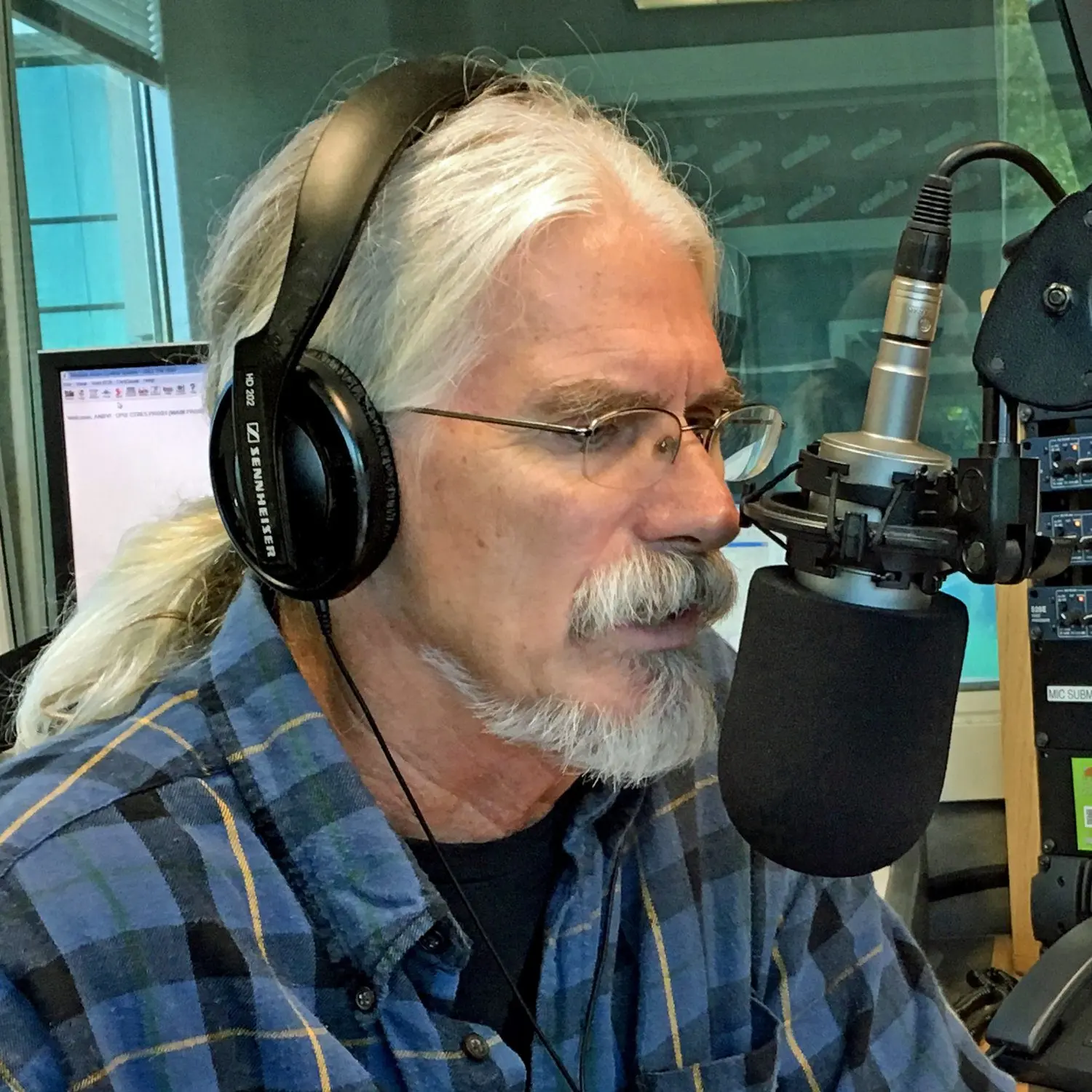
Join Steve Gregg on The Narrow Path as he navigates complex theological questions and interpretations from various angles. Starting with calls about the Seven Mountain Revelation, Steve dives into historical contexts and today’s implications for Christian involvement in cultural sectors. In this episode, listeners will explore various interpretations and misconceptions, from prophecy and revelation to modern ethical concerns.
SPEAKER 1 :
Thank you.
SPEAKER 09 :
Good afternoon and welcome to the Narrow Path radio broadcast. My name is Steve Gregg and we’re live for an hour each weekday afternoon, taking your calls. If you want to call in with questions about the Bible or the Christian faith that we can discuss together here, or you have a different viewpoint from the host, which we could also discuss here, You may freely call. We have some lines open. In fact, right now we have a number of lines open. This is a very good time to get through. The number is 844-484-5737. That’s 844-484-5737. A couple of announcements this week. A couple of important things happening this week. One is rather routine this Wednesday. and the first Wednesday of every month, but still only once a month. We have a Zoom meeting in the evening, which anybody around the world is welcome to join us in. It is held at 7 p.m. Pacific time, and we sometimes get calls from as far away as England, so it’s quite late at night for people like that, but you’ve just got to do the calculations about what time it is where you are. Wednesday night, 7 p.m. Pacific time, you’re welcome to join us on the Zoom call. You can find the login information at our website, thenarrowpath.com, under the tab that says Announcements. The other announcement is not routine at all. It’s perhaps a once-in-a-lifetime event. This weekend, I will be in Dallas, Texas, and Dr. Michael Brown and I will be debating three times on the weekend, Friday night, Saturday morning and Saturday afternoon, we’ll have three different debates on the same subject. And this has to do with Israel. What is God’s plan for Israel? Is the modern state of Israel, you know, the fulfillment of some prophetic plan? Destiny, is it a sign of the times or whatever? Dr. Ram and I have very different views on these questions, and we’ll be debating them in Dallas, Texas at Mercy Culture Church there, which is hosting the event. And the information about going there is at our website. Well, not at our website, but we give you a link there. Well, I guess we could give you the address, too, but you have to register to come. You don’t have to pay anything. It’s free, but they want to know who’s coming, or at least how many are people coming, and so they’ve asked that everyone register. Now, this is free, but we have a link to the registration page at our website. Now, that’s at thenarrowpath.com. And the tab there is announcements, both for this Wednesday’s Zoom login information and for this Friday and Saturday’s debate between Dr. Michael Brown and myself in Dallas, Texas. And, again, you have to register, but the – The website, the link to do that is there at our page, thenarrowpath.com, under announcements. Both of those things are under announcements. All right. I think we can just go to the phones now and talk to Paul from Buena Vista, Colorado. Hi, Paul. Welcome to The Narrow Path.
SPEAKER 06 :
Hi, Steve. I was just curious about the Seven Mountain Revelation that I’m hearing about. Are you familiar with that concept?
SPEAKER 09 :
Well, yeah, I think I know what you’re referring to. It’s not very recent. I first learned of this back in, what, the 80s or something like that. It’s the idea that there are seven spheres of cultural influence or spiritual influence which Christianity must aim at infiltrating and dominating with the kingdom of God. Is this what you’re talking about?
SPEAKER 05 :
Yeah, I think that must be it. Was Charlie Kirk part of that? That’s what I’m hearing.
SPEAKER 09 :
He could have been. I don’t know. I mean, lots of Christians are. It’s definitely something popular among post-millennialists. But you don’t have to be post-millennialist to believe in it. It’s not a biblical idea. I mean, the Bible doesn’t teach it. But the first I heard about it was back in probably the early 80s. when I heard that Lorne Cunningham, the founder of YWAM, was visiting with, I believe it was, with David Wilkerson, the founder of Teen Challenge. And they were talking about what they felt God had been speaking to them about. And one of them, I think maybe Lorne Cunningham, said that he had come up with this idea that there was these seven spheres that kind of dominate the culture and that Christianity had to seek to penetrate those spheres. in order to have dominance in the culture. And he listed them, and as the story was told to me, David Wilkinson said, God gave me that exact same information. Now, both of these men are Pentecostals, and obviously believe in getting divine revelation. Some people would not believe in that, but The story of them meeting and having this conversation is where I first heard of it. Like I said, it was in the early 80s. They may not have been the first. They were just the first I ever heard of to talk about that. And I’ve heard it a lot of times since. The idea is that church, just by having church meetings and doing evangelism and bringing people into the church, is not fulfilling the Great Commission because the Great Commission is is to make disciples of the nations. Now, making disciples of the nations can simply mean go make disciples of Gentiles, that is, of people who are from all the nations. The word Gentiles and nations is the same in Hebrew and in Greek. But the At least in Hebrew. So make disciples of the nations can simply mean go reach the Gentiles. But some have understood it to mean we need to reach the nations as national political entities and disciple them. That is teaching them to observe all things Christ commanded. Now, the seven mountains, I don’t know if I can remember them off the top of my head. They are like politics, education, entertainment. religion, arts, and government, the media. I mean, some of these maybe overlap some of the ones I mentioned before. But these are areas which influence people. And, you know, if we just bring people into the church and preach to them every Sunday, well, many times we do that, but it doesn’t change the culture much. And they’re saying that Jesus didn’t tell us to do that. He told us to go and make disciples of the nations. And so they said these are the things we need to aim at. We need to get Christians in politics. We need to get Christians in the media. We need to get Christians in education realms and things like that. And there are seven of these places. Now, do I agree with it or disagree with it? Well, I think Christians should be everywhere. And I think wherever Christians are, they should be Christians. So, you know, if Christians feel inclined to take some civil leadership in their communities or in the country. I don’t think that’s necessarily something the Bible forbids. And if Christians are in those realms, of course, they should be Christians. Like Daniel was in the political system and Joseph in the Old Testament was. And they had influence, had influence over pagan governments. And I think, you know, when the church is going to be leavened and leavened the lump, I think it means we affect the world around us. You know, if a Christian is in government, they should be a Christian in government, and they should think like Christians and talk like Christians, and what they do should reflect the fact that they have Christian values. Same thing if a Christian is a, let’s just say, an entertainer. Let’s say they’re a Hollywood actor or a famous singer or maybe not so famous, but they are, you know, that’s the realm God has them in, that they should be Christians in that realm. They should be godly. They should speak for Christ when they have a chance. They should If they are songwriters, write music that is reflective of either the gospel itself or at least Christian values, that kind of thing. Likewise, educators should be Christian in their realm. But you see, I don’t even think it’s very controversial, maybe somewhat, but I don’t think it’s extremely controversial that Christians can be involved in all these realms, these seven mountains, so to speak. And the question is, whatever a Christian is doing for a living, Should they be a Christian in that role or not? Well, obviously they should. Well, what does it mean to be a Christian? Well, it means to stand for Christ, to stand for Christ’s kingdom. And so I don’t know that it takes any special strategizing, although maybe it does. Maybe Christians have been too mousy and shy and reluctant to speak up in their places of employment. And the only place they talk about faith or Christ is in their churches. But this idea would be, no, Christians ought to speak for Christ everywhere. We should seek to bring people to Christ. We should bring their values and their behaviors under Christ, under his teaching. Jesus said, you know, if you continue in my words, you’re my disciples indeed. So obviously, if we’re going to make disciples, teaching them to observe all things Jesus commanded, then we’ll do that wherever we are. And so that’s the doctrine as I understand it. I don’t know if Charlie Kirk held to it, but I wouldn’t be surprised if he did. Most Christians who are somehow involved in government in an active way are somewhat sympathetic toward this seven mountains view. Whether they’ve actually heard the term the seven mountains or not, I don’t know. But what it refers to is something that a lot of Christians do agree with. And I can’t I can’t find anything to disagree with about it except if they think they’re going to make the kingdom of God come through politics. That could be a dangerous idea. However, if we believe that, you know, we’re called to be in the political realm and to behave like Christians there, then I certainly can’t think of any reason to object to that. All right. Thank you, brother. Let’s talk to Carolyn in Seattle, Washington. Carolyn, welcome. Thanks for calling.
SPEAKER 16 :
Hi.
SPEAKER 09 :
Hi.
SPEAKER 16 :
Can you talk a little about… Could you get a little closer to your phone?
SPEAKER 03 :
There. Is that better?
SPEAKER 09 :
Well, yeah, that’s a lot better.
SPEAKER 03 :
Oh, I’m sorry. I had the wrong… But about America being Babylon?
SPEAKER 09 :
Well, I don’t see America as being the Babylon that’s referred to in Revelation, though some people do. It’s fun. When I was a dispensationalist in the 70s, we had the impression that Babylon was the realm of the Antichrist and that You know, this was going to be a 10 nation confederacy in Europe, which is a revived Roman Empire. I think it’s a dispensational idea. And so I kind of thought of. Babylon as a somewhat European, you know, anti-Christian entity. And the first time I went to Europe, which was when I was 19, I went over to preach in Europe for about five weeks. And talking to some of the older Christians I met there, I said, I don’t know why it came up. We talked about lots of things, but it came up. What do you guys believe Babylon is in Revelation? And they said, well, most people I know think it’s New York City, which was kind of funny because we thought it was them and they thought it was us. But anyway, a lot of people think. that America could be Babylon or some other modern entity, maybe some future united world, maybe with New York as the center. Most would say with Rome as the center or something. But that’s, of course, taking the eschatological view of Revelation, the future’s view. I no longer hold a futurist view, so I would obviously see things different from that. I wouldn’t necessarily identify anything in Revelation with America or with any modern entity. If you wonder what I would think, I’m a partial preterist, and in my approach to that, I see Babylon either as a reference to Rome, ancient Rome, Or, I think more probably, to ancient Jerusalem. And so those are the ways I look at it. But of course, in a short call like this, I mean, in the format we have here, I can’t go into all my reasons. I do, however, in my lectures on Revelation. So nobody need ever ask me what I think about anything in Revelation because I have verse-by-verse lectures free. Anyone can listen to them who wants to at our website, thenarrowpath.com. And I do go into that in as much detail as I can there. Thank you for your call. Linda in California, welcome to The Narrow Path. Thanks for calling.
SPEAKER 07 :
Yes. I wanted to know, I have a question about the Day of the Dead. Is it in the Bible? No.
SPEAKER 09 :
Are you talking about the Mexican celebration of the Day of the Dead?
SPEAKER 07 :
Yes.
SPEAKER 09 :
No, that’s not in the Bible.
SPEAKER 07 :
Well, is it like worshiping another god because this god is the god of the living? That’s what I think.
SPEAKER 09 :
Well, I don’t know if the day is worshiping any god at all. I think it may be showing reverence to people’s ancestors, if I’m not mistaken, which is not a Christian thing to do. You know, a lot of cultures other than Western civilization worship. revere their ancestors I mean African cultures do many Asian cultures do and if I understand correctly those who celebrate the day of the dead are in some measure revering their ancestors but I have to say I’m not an expert on Mexican culture and I didn’t even know about the day of the dead until that movie came out that Walt Disney or Pixar animated movie some years ago and I didn’t even know what the day of the dead was before that And I still don’t know very much about it. So, yeah, that’s not in my realm of expertise at all. It’s not a biblical topic. And I don’t know if there’s any gods being worshipped there. I don’t even know if it’s a religious festival or if it’s just showing respect for their dead ancestors. I plead complete ignorance about it. But you know what you could do? There’s this thing called Google. If you check that out, they’ll probably tell you as much about that as you’d ever want to know. More than I know, to be sure. I appreciate your call, Linda. Thanks for joining us. Dallas in Bath, New York. Welcome to the Narrow Path. Thanks for calling.
SPEAKER 12 :
Hi, Steve. I hope you’re doing well.
SPEAKER 09 :
So far, so good?
SPEAKER 12 :
Good, good. I wanted your thoughts on something. When it comes to vaccines, Is it ethically wrong to use a vaccine that was developed with aborted fetal stem cells?
SPEAKER 09 :
Well, I don’t know. I don’t know. I’m certainly against abortion. I would certainly be against doing abortions in order to get materials for a vaccine or in order to do anything else. To kill a baby is murderous. Now, you know, Whoever kills babies will answer to God for that, for shedding innocent blood, and it’s a great crime and a great sin. Once a body is dead, whether it was murdered or died of natural causes or whatever, I don’t know what the rules would be about using materials from that dead body. For example, I’m not 100% sure I know what God thinks about Organ donations, organ transplants, which is a different subject, of course, but it’s also related to taking materials from a dead body. And, you know, if I’m if I were in favor of organ transplant, I don’t know that God’s for or against it. He might be against it. But if he’s not against it, I don’t know if taking the organs from, let’s just say, someone who was a victim of criminal violence and had died, if taking their organs would be worse than… than any others. You know, it’s the crime. The murder is the crime. And whoever commits the murder is guilty of the crime. But I don’t know much about the vaccine. I didn’t get as interested in that as everybody else did. I didn’t take the vaccine. I would have resisted it if they tried to force me to. I wasn’t afraid of COVID. And I’m not afraid of it now. I’m not into vaccines, period. I mean, I’m not against them. I think some vaccines may do good. I don’t give them much thought. I don’t get them, generally speaking. That being so, I didn’t look into it. I did hear people say, well, the vaccine was made from fetal tissue gained possibly by abortions several generations ago or something like that or lots of years ago. And I don’t know. I mean, that’s simply not a biblical topic. If you find a dead body… And, I don’t know, and you do something good with it. I just don’t know that that would be bad in itself. Now, if you’re killing people in order to do that, like if you’re the Chinese government killing prisoners of conscience, political and religious prisoners, to harvest their organs and, you know, sell them on the black market, well, that’s a horrible thing because you’re killing people. You’re murdering in order to get the materials. But if the murders had taken place years ago, it was still evil. But what must be done with the bodies of the dead, I don’t know that the answer would come clearly from Scripture. So I don’t have a firm opinion about that. I personally think everything about the COVID vaccine was suspicious to me, and I’d never advise anyone to take it. But as far as the ethics of that particular aspect goes, You know, there’s nothing in the Bible that addresses it directly. It’s like the question of, you know, should Christians celebrate Halloween when, in fact, Satanists do so? It’s not really the same question, but it’s like, you know, if you say, well, if a Christian celebrates Halloween, they’re not doing what Satanists do. Satanists worship Satan. Christians don’t. And they’re doing something that isn’t specifically forbidden in the Bible. But it has associations in some people’s minds with the occult, and therefore some would say Christians shouldn’t do it because it’s tainted by those associations. I think people often say the same thing about vaccines. They may be tainted by the fact that. Somewhere many years ago, some baby was murdered and materials from its body were used to make a vaccine. Well, if I was in favor of the vaccine more, I might have more of a tendency to say, well, maybe that’s okay. I’m not sure I would, you know, I’m not very favorable to the vaccine. So, I mean, I’m not in sympathy with it at all. But if it was saving lives, truly, yeah. It might be that, you know, the baby whose life is taken wrongfully in murder actually ends up helping somebody live. That doesn’t justify the murder. But it might, in fact, make the baby in heaven glad that, you know, its death was not for nothing. Its murder was not for nothing. But I’m not going to argue that that’s so. I’m just talking. I’m thinking out loud. Yeah, I don’t know much about vaccines.
SPEAKER 12 :
All right. I appreciate it.
SPEAKER 09 :
Okay, Dallas. God bless. All right. We’ll talk to James from Clear Lake Oaks, California next. James, welcome to The Neuropath.
SPEAKER 08 :
Yeah, hi, Steve.
SPEAKER 09 :
Hi.
SPEAKER 08 :
Yeah, I got a couple of quick ones. I was just hearing you talking about the body parts and stuff. Well, I had a three-fuse disc in my lower back, and they put cadaver bones in there, and I didn’t know that until after the surgery, so I was kind of tripping on that.
SPEAKER 09 :
But my real question is… What would you think if you found out that the cadaver from whom your bones were taken had been the victim of murder?
SPEAKER 08 :
Now that, I would be… I don’t think I could give him back, but I think I’d be worried about that. Yeah, that would concern me tremendously.
SPEAKER 09 :
It’d be definitely a gray area. It’d be ambiguous. Yeah.
SPEAKER 08 :
Yeah. My other question is, I saw the Trump Prophecy movie. And I get the newsletters, Worthy Brief, that gives the real news about what’s going on and the Christians that are being killed and all that. So I asked my pastor, I said, hey, let’s do the Second Chronicle 714 deal and pray. He goes, no, that was only for the children of Israel back in the day. It’s not for us now. What do you think of that?
SPEAKER 09 :
Well, I think Christians, I think prayer is for Christians, too.
SPEAKER 08 :
Yeah, prayer is part of Christianity.
SPEAKER 09 :
Prayer is a Christian thing to do. Now, the part about repenting and humbling themselves, I would say that would be a good thing for people to do if they’ve sinned and they’re proud. They definitely need to humble themselves and they need to repent of their sins and pray. I’m for all those things. Now, as far as the promise goes, that you’re referring to, that if my people who are called by my name shall humble themselves and pray and seek my face and so forth, then I will heal their land. Well, technically it’s true that that was referring to Israel. I mean, that Israel’s land was in fact God’s covenant people’s land. And therefore, not everything he promised to do for them as a nation can just be you know, borrowed by every other nation and say, well, we’re going to take that. You know, on the other hand, even if that’s so, to humble ourselves and pray and seek his face certainly can only be good. And, you know, the idea that God would have healed Israel’s land if they did it, well, that’s how he’s disposed toward people who do that. Maybe he’d heal ours, too. You never know.
SPEAKER 08 :
Yeah, I figured if you go into the New Testament and you study long enough, you’ll find every component of that prayer in there that, yes, we can pray for our land to be healed, we can do this and that, and it would pretty much be the same thing. But I was just concerned because I know we’re grafted into the tree, so we are Abraham’s children. So for him to say that that was only for the children of Israel, well, wait a minute, that’s what we are now. Am I wrong with that?
SPEAKER 09 :
Well, no, you’re right that we are children of Abraham now. But, you know, to the prophet, that was referring specifically to a specific land. He says, I will give their land, means the land of Israel. You know, right now, he didn’t he’s not talking about healing a people, but a land or a nation particularly. So it’s kind of a national kind of a national problem. So though we are children of Abraham, that doesn’t mean that God has a national specific national interest in our nation. But I don’t know that he doesn’t. As far as I’m concerned, America is very significant, very significant in terms of God’s. through the ages, and so I certainly would not be deterred from praying for God to heal our nation. Absolutely. All right, brother. I need to take a break here. Thank you for your time. I appreciate your call. God bless you, James. Bye now. All right, we have another half hour coming up, but we take a break at this point simply to let you know The Narrow Path is a listener-supported ministry. If you’d like to help us stay on the air, you can go to our website, thenarrowpath.com. And there’s a tab that talks about donating if you want to donate. Everything on the website is free. Take all you want, but you can donate if you want at thenarrowpath.com. I’ll be back in 30 seconds. Don’t go away.
SPEAKER 01 :
Are you aware of the wide variety of teachings available without charge at the Narrow Path website? In several hundred lectures, Steve Gregg covers every book of the Bible individually and gives separate teachings on approximately 300 important biblical topics. There’s no charge for anything at our website. Visit us there and you’ll be amazed at all you’ve been missing. That web address again is www.thenarrowpath.com.
SPEAKER 09 :
Welcome back to the Narrow Path radio broadcast. Sunday we’re going to have to update that announcement that was just given. It says, like, our website not only has verse-by-verse teachings through the whole Bible, but I think it says 300 topics. Yeah, that announcement was made probably 15 years ago. I think there’s probably 1,000 topics on there now. But we are slow at getting around to changing things, including those old recorded announcements. In any case, whether it’s 300 or 1,000, it is true if you go to our website, everything there is free. There are, I believe there’s a total of about 1,500 lectures there, verse by verse through the Bible, as well as on lots and lots, hundreds and hundreds of topics. And they’re all free. I would… advise you to take advantage of them. That’s at our website, thenarrowpath.com. We’re going to go back to the phones. If you’d like to be on the air today with your question about the Bible or the Christian faith, or maybe you’d like to disagree with the host, you’re welcome to call and do that. The number to call is 844-484-5737. I’m looking at two open lines on our switchboard, so this is a good time to call. 844- All right, our next caller is John from Kent, Washington. Welcome to The Narrow Path, John.
SPEAKER 11 :
Hey, thanks, Steve. Yeah, I just appreciate your program. Romans 11 verse 26 about the deliverer will come from Zion. Is that something that the Zionist movement uses as a cherry pick or to bring about their their political movement and that kind of about what they believe?
SPEAKER 09 :
You know, it is definitely a very popular verse. among those who are looking for a restoration of the people of Israel and their salvation in the end times. Because Paul says in verse 26, so all Israel will be saved. And then he quotes the verse you mentioned from Isaiah. Behold, I lay in Zion a stumbling… Oh, I’m sorry, I’m looking at the wrong one here. The deliverer shall come out of Zion, which is Isaiah 59, 20. And he will turn away ungodliness from Jacob. Now, this does talk about someone being saved and someone having their ungodliness turned away, which means they’re brought to repentance. And the persons or the group that is said to be saved and that has its ungodliness turned away is called Israel and Jacob. Now, this is the conclusion of a three-chapter long discussion by Paul on the subject of Israel. And there’s different people who, I mean, people would give different ideas about of what Paul is really saying here. Many people think that Paul is saying that in the end times, all of the Jewish people, Israel, will be saved. That means they’ll become Christians. And that this will fulfill this prophecy that God would turn away ungodliness from Jacob. That’s probably the most popular view today. It’s the dispensational view. There’s then the view that I think comports much more with Paul’s discussion in Romans 9 through 11. He’s not discussing the future of Israel. He’s discussing how God fulfilled his promises that he would save Israel. And Paul begins in Romans 9 by saying, well, Israel doesn’t always mean the same thing. Yeah, it’s true the Bible in the Old Testament said the Messiah will save Israel, but not all are Israel who are of Israel. So he says, okay, the Israel that God made these promises to is an Israel that does not include all who are descended from Israel. And he goes from chapter 9, 6 on to describe how Abraham’s descendants were not all in the same category in God’s mind. Ishmael and Isaac were both Abraham’s descendants, but they weren’t in the same category. Jacob and Esau were Abraham and Isaac’s descendants, and they weren’t in the same category. God chose one over the other to be the ones that he’d fulfill those promises through. And so what Paul is saying is that God distinguishes among those who are descendants from Abraham, and not everyone descended from Abraham is really expected to be receiving the specific promises God made to Abraham. Now, what Paul goes on to point out in Romans 9.27 is that only a remnant of the ethnic Israel will be saved. Okay, so later in chapter 11.26 when he says all Israel will be saved, we have to wonder, wait a minute, wait, wait, wait. Didn’t he just say that only the remnant would be saved? Why is he now saying all Israel will? Well, this goes back to what he said in 9.6. They are not all Israel who are of Israel. The Israel that will be saved is only the remnant of the larger Israel that is in the nation of Israel. It says in the prophecy, they may be as numerous as the stars of the sky or the sand of the seashore, but only the remnant of them will be saved. That faithful remnant in Israel are the true Israel that not all who are descended from Israel belong to. And so at the end, where he concludes what he began, he says in verse 26, In this way all Israel will be saved. And by that he means all of the Israel that is going to be saved. Only a remnant. Only a remnant of the nation will be saved. But that remnant is the true Israel. And so that’s what he’s saying there. Now, do Zionists use this to support Zionism? Well, Zionism is not only the idea that Jewish people turn to Christ, But it also includes the idea they will do so in their own land, in the Middle East, in what used to be the land of Canaan, that they conquered from the Canaanites, which has more recently been called Palestine before it became Israel, that they’ll be there. Now, Paul, of course, mentions nothing about that. nor any concern about it. Paul, in all his writings, never mentions that he had any interest or awareness of some future return of the Jews to the land. When he says all Israel be saved, even if he’s referring to all Jews, which I don’t believe he is, but even if he were, that doesn’t mean anything about where they’ll be. There are Jews in New York City who are saved. There are Jews in Russia who are saved, in Poland who are saved. There are Jews all over the world who are saved. and I’m saved I’m not Jewish but I’m saved too and I’m not in Israel to be saved doesn’t predict anything about where they will be so Paul doesn’t say anything about the restoration of the nation of Israel even if he is saying that all Jews will come to Christ well maybe they will maybe they won’t I don’t think that’s what he’s predicting but whether he predicted or not it could happen I don’t know if it will happen nor will it matter I mean, it would be great. It would matter to them. It would be a great thing. But it won’t matter in terms of God’s purposes for the Middle East. That’s all I’m saying. So Zionists sometimes just assume that Paul is affirming a future fulfillment of some of the things the Old Testament prophets said about Israel. God in the Old Testament did say to the Israelites that they would be brought back from all the nations that they had been driven into. And that they’d come back to Zion. They’d come back to Israel. They’d rebuild Jerusalem after it was destroyed. They’d build the temple again. The prophets said all of that. And it happened. It happened long before Jesus was born. It happened around 539 B.C. See, all the prophets wrote about it before that time. And they predicted it. And then it happened. God had driven Israel into all the nations through the Babylonian dominions. And then in 539 B.C., the Persians conquered the Babylonians. The Persian king Cyrus gave permission to the Jews to go back. All the ones who wanted to did go back, and they built the nation again. The nation was restored. They built the temple again. So all those promises were fulfilled. And interestingly, after that, no such promises were ever uttered again. You can’t find them. After the Jews came back with Zerubbabel and Ezra and Nehemiah in the time of the restoration, which was still five centuries before the time of Christ, not again was there ever a whisper in the Bible, in the Old Testament or in the New. That God would ever, in the end times or some other time, bring Israel back to their land. The promises he made were fulfilled. And to say that Paul in Romans 11, 26 is somehow alluding to those promises and that he’s somehow affirming that those are going to happen. Yeah, I think Zionists would jump at everything they can, but they’ve got nothing to stand on there. There’s nothing in Paul’s writings that affirms such an expectation, or Jesus’s, or Peter’s, or any New Testament. There’s not a hint in the New Testament that the nation of Israel in the end times will be brought back from the diaspora and establish an end times Israeli nation. By the way, I would point this out. There is a nation in that place today. As of May 14, 1948, there has been a nation called Israel on that plot of land. But it’s not the Israel of the Bible. There’s only one Israel in the Bible, and that is the nation, I mean, one nation of Israel, and that is the one that was formed at Mount Sinai by a covenant that God made with them. And he said, if you obey me, if you keep my covenant, you’ll be a holy nation of it. You’ll be my people. There never was in biblical times from the establishment of Israel at Mount Sinai until the destruction of the temple and of Jerusalem in 70 A.D., In all that period, there never was an Israel that did not have a temple, that was not based on a covenant with God, that did not have Yahweh worship as a leading feature of its existence. Today, there’s a secular nation just as secular as France or Germany or America or Canada. And that nation is not what Israel was. This is not a covenant nation. Less than 20% of the Jews in Israel are religious Jews. Maybe as much as 30% if you extend it to people who are kind of religious. But, you know, certainly the minority… The nation is built upon secular grounds. The Knesset, which is the ruling parliament, is two-thirds secular, and I think a third of the members are Jewish believers. Not in Jesus, but Jewish religious people. This is not a nation built on a covenant with God. The majority of the people in the nation don’t even know if they believe in God. And if they do, they don’t necessarily talk about a covenant with God. So we’ve got a secular nation there, just as secular as any other nation in the world. It’s not a religious nation. It’s not a nation honoring Christ or God. So it is certainly not the nation of Israel as Israel is defined in Scripture. But people want to think it is, and they’ll use whatever Scriptures they can grasp at. And there’s just none in the New Testament. So, yes, they will grab it, you know, Romans 11, 26, because, I mean, what else can they do? They’ve got nothing. I appreciate your call. Epi from Spokane, Washington. Welcome to The Narrow Path.
SPEAKER 14 :
Hi, Steve. Thank you for taking my call. Hi. I have a couple of questions about the Ethiopian Bible. I’d just like to get your thoughts between the Bible that we use nowadays versus that one. And then the second question would be built on that Bible about
SPEAKER 09 :
fortune-telling medium does it talk about those kind of things and I can take the answer off the air well you can stay on the line if you want to if you want to have a follow-up I have to say I don’t know very much about the Ethiopian Bible I believe the Ethiopians use the Coptic Bible the North African Christians I think are mostly followers of the Coptic Bible And Coptic is a language. It’s, you know, it’s the language of Egypt and Ethiopia at some point in history. And so, you know, that’s, it’s sort of like Rome for a long time followed the Vulgate, which is the Latin Bible. Or, you know, I imagine, you know, the Eastern Orthodox Church follows the Greek Bible. They follow the Septuagint in the Old Testament and the Greek New Testament. So, The Bible has been translated from Hebrew into a lot of different languages, and people in different regions often have a version of the Bible translated in the language of their region, which is why there was the Vulgate in Rome and the Coptic in Egypt and Ethiopia and the Greek in the Greek Orthodox. So the parts of their Bible that correspond with our Bible, which I assume they have all of the books translated, I don’t know this to be true, but I assume that the Coptic Bible has all of the books of the Bible that we have in our English Bibles. But they also have additional books. Now, by the way, the Catholic Bible does too. The Catholic Bible has additional books. We call them the Apocrypha. But I believe the Catholic Bible has only seven such books, and the Coptic Bible, I have heard, has more. I don’t know exactly how many more. But my position is, that the books that are in the Protestant Bible, which would not only be our English Bibles, because, of course, some Catholic Bibles are in English and they have the Apocrypha, but the Protestant Bible, the books in it are accepted because they were written by prophets or apostles, or at least they traditionally have that ascription of their authorship. Now, in the Catholic Bible, the Apocrypha, as well as the additional books that the Coptic Bible has, are, in my opinion, not written by prophets or apostles. In fact, those books that they have were written in the intertestamental period. Now, that’s a period between the last book of the Old Testament, which was Malachi, and the first book of the New Testament. There’s 400 years. after Malachi, before John the Baptist came and the New Testament writings pertain. So in that 400 years, which is called the intertestamental period, because it’s after the Old Testament but before the New Testament, lots of religious writings were written by Jews that were not prophets. They were not inspired. Just like I would say that I think C.S. Lewis wrote some wonderful books, But he’s not a prophet. He’s not inspired. You could certainly call into question some of his thoughts because he was simply not an inspired writer, not a prophet, nor did he claim to be. And the same is true of those that… Okay, the same is true of those that wrote in the intertestinal period. I was handed a note that says the Coptic Bible has the same number as ours, 66 books. But I’ve also been told that they have the Book of Enoch, which we don’t have. So if it’s true that they have some apocryphal books in there, but their total is still the same as ours, there might be some books I don’t know about of our Bible that they don’t have. I was not aware of it. The Catholic Bible… The Catholic Bible has more books than the Protestants have because they do have seven apocryphal books, but they also have all the 66 that the Protestants have. So I’m very unfamiliar with the Coptic Bible. I would have no reason to pursue an interest in the Coptic Bible when I already have a very complete Bible written by the prophets and apostles, that is, by the inspired writers. And, you know, any any books that are additional to those, I think, would have to fight for the right to be there because they unless they’re written by prophets and apostles. But I know no such other books that were. What was your second question? What was your second question?
SPEAKER 14 :
Well, I’m just curious if those Coptic Bibles or like the Ethiopian Bible are proof of fortune telling or like medium kind of thing. I know our Bibles don’t.
SPEAKER 09 :
Right. Do you have a reason for thinking they do? Because I would imagine not, but I don’t know enough about the books that are in there that I don’t have in my Bible.
SPEAKER 14 :
I don’t know. It was just a question coming kind of from a conversation with a friend that beat me to it.
SPEAKER 09 :
I see. Could it be possible? I don’t know the answer to that. If the Coptic Bible does have some books in it that approve of the occult, then those books certainly would be disqualified because the Law of Moses, which is the earliest part of every Bible, I mean, whether it’s Catholic, Coptic, Eastern Orthodox, Protestant, all the Bibles have the five books of Torah at the beginning. You know, they absolutely forbid all occult dealings. So if some later books were written and put into the Coptic Bible that promoted it, they certainly would be disqualified from being in the Bible. But I don’t know that any such exists. I would imagine they don’t, but I mean, again, there’s many things I don’t know, and many of them have to do with the Coptic Bible.
SPEAKER 14 :
But I think you answered my question, bringing up the Moses law, because that would be the earliest, yeah. Thank you so much, Steve.
SPEAKER 09 :
All right. God bless. Thank you. Danny in New Rochelle, New York. Welcome to the Narrow Pass. Hey, Steve.
SPEAKER 04 :
Hey, how are you?
SPEAKER 09 :
Good.
SPEAKER 04 :
Yes, good to see you all. uh, I want to say, uh, um, I had a grandma, I have a grandmother who passed away a couple of years ago. Yeah. Uh, yeah, it was my mom’s mom, my mother’s mom. And, uh, and, you know, and, and we didn’t want her to pass away. None of us did, obviously, but she was, she was very ill, right? She was very ill. So, uh, so I’m going to say, uh, you know, um, the thing is, I didn’t pray for her when she was alive, when she was suffering. I, I don’t, I, I don’t think I really prayed for her. So, uh, but, um, You know, like going back to the Bible, like the story of Lazarus, right? Lazarus, when he was dead for three days and then Jesus raised him from the dead. So my concern is that if you don’t pray for somebody while they’re still alive, does that mean that they’re going to die? Or let’s say I’m going to pray for her because she cured and got better?
SPEAKER 09 :
I wouldn’t flog myself over that. I mean, I don’t know. I don’t know if you had prayed for her, if she would have gotten better. I wouldn’t put that on yourself. Obviously, we should pray for whatever God puts on our mind to pray for, but we have to realize, too, that everybody dies sometime, especially when you get older. I mean, I don’t know how old your grandmother was. All of my grandparents have died, but… And in no case was it greatly surprising. They were quite old. And as people get older, they eventually die. Now, maybe she died an untimely death. Maybe your grandmother died younger than the average, let’s say. You mentioned none of you wanted her to die. Well, I don’t suppose anybody wants their grandparents to die, right? In fact, probably no one wants to die themselves, most people, and yet that’s going to happen. So, yeah, if you had prayed for her, would she have lived? I have no idea. Maybe it was her time to go. If it was her time to go, then prayers for her to survive or to live might not be granted because the Bible indicates that God only grants prayers that are according to his will. We can always pray for the recovery of anyone we love from sickness, and we leave it in God’s hands. And, you know, we know that God will take our requests into consideration. And if they are according to his will, and if we have faith, and if we’re asking in Christ’s name, then he grants it. If it’s not according to his will, then we entrust him to do the best thing, even if it’s different than what we prefer. But, yeah, I’m sorry for your loss, but I wouldn’t – chastise yourself over that. Who knows? But, I mean, God knows. But she died and she’s, you know, in God’s hands. So God will decide what’s best. And he loves her more than you do. So that’s all I can really say about your grandma. I don’t know much more about that. I appreciate your call. John in Paradise, California. John, welcome.
SPEAKER 10 :
Hey, Steve, you almost said Sacramento. That’s because my wife and I came and saw you two years ago in Sacramento when you were speaking at a church teaching the Bible.
SPEAKER 09 :
Great, great. Hey, we’ve got very little time. Go ahead. What’s your question?
SPEAKER 10 :
I want to ask what the Bible says for us to all pray for those in authority over us. So that’s all the way from the policeman to the president, man. And I do. I pray for President Trump, his wife, and his cabinet every day. My question is, how often should I pray? I pray for the man every day. I love him. I think he’s an answer to prayer. How often should I pray?
SPEAKER 09 :
Well, I mean, that would be as the Spirit leads. We’re supposed to pray in the Spirit. We’re supposed to be led by the Holy Spirit when we pray. And, you know, I think you should, you know, always be available to respond to the Spirit’s prompting to pray. The Bible doesn’t say how many times a day to pray or how many times a week to pray. Some listening would say, Steve, tell them. Tell them. The Bible says pray without ceasing. Yeah, well, yeah, but that, I mean, pray without ceasing. We can talk about that another time if we have more time. But it certainly does not tell you that you have to pray for all those in authority specifically without ceasing. There’s other things to pray about, too. I would just say pray as frequently as you remember to do so about it. I mean… Whenever you pray. Now, I do believe that daily prayer is expected in Scripture because Jesus said, when you pray, say, give us this day our daily bread. So we’re asking each day for the bread of that day, which means that prayer is appropriate to pray every day. But, of course, the other things we add to that prayer may not be the same every day. I know some people who make prayer lists where there’s certain groups of people they pray for on Monday and other groups of people they pray for on Tuesday and so forth because there’s so many people on their list. They scarcely have time to pray for them all at one time. But that’s simply as there’s no rule about that. There’s no rule about that. Just as you feel led by the Holy Spirit. But, yeah, as you remember, pray for those in authority because at least the better ones are in danger because the bad people are out there gunning for them. So, yeah, I pray for those in authority, too, that way. All right. God bless you, brother. Hey, I’ve got to take another call, right? We don’t have much time, but I appreciate your call. Teresa in Sacramento, let’s talk to you. We’ve got one more call to get in here. Hi, Steve.
SPEAKER 13 :
Thank you for taking my call.
SPEAKER 09 :
Sure.
SPEAKER 13 :
I want to just reiterate that caller that was talking about humble yourself. Yeah, I think that’s definitely, I just don’t understand how people don’t think that God knows the beginning to the end, and that I think that everything in the Bible is talking to us now even, you know, and people just don’t. feel the same way I do, and maybe not everything, but a lot of things in there, you know, and definitely that he can heal our world, and we should believe that now. That’s my feeling on it.
SPEAKER 09 :
Well, of course, everything in the Bible, God can speak to you through it. And when he speaks to you through it, that’s fine. I mean, I would take it as a word from the Lord for you. But I think he was wondering if the statement in Scripture was intended to be used generally, true of all nations. And I don’t know that, because when we decide, like when Jesus said to the twelve apostles, in the regeneration, he said, you twelve will sit on twelve thrones, judging the twelve tribes of Israel. Now, I don’t know that I can say that applies to me because I’m not one of those 12, and I don’t expect to be on one of those 12 thrones. So, I mean, there are things that God promises to some people that have to do with their situation and their special conditions and their special status, which I don’t think I can just say, well, God, you know, that’s a promise to me. But certainly there are plenty of promises in the Bible that were made to other people. Christians of earlier generations, or even the Jews of Old Testament times, which promises simply underscore the character of God and the purpose of God and his relationship with his people. And the idea that, you know, we could say, well, God told the people to pray in the Old Testament, and therefore I feel like we should pray. Yeah, well, right. I mean, that’s something that’s universally true. Some promises are and some are not. And that’s what he was asking about, I think. Hey, I’m out of time for today’s program. Thanks for joining us. You’ve been listening to The Narrow Path. Our website is thenarrowpath.com. Thanks for joining us. Let’s talk again tomorrow.
