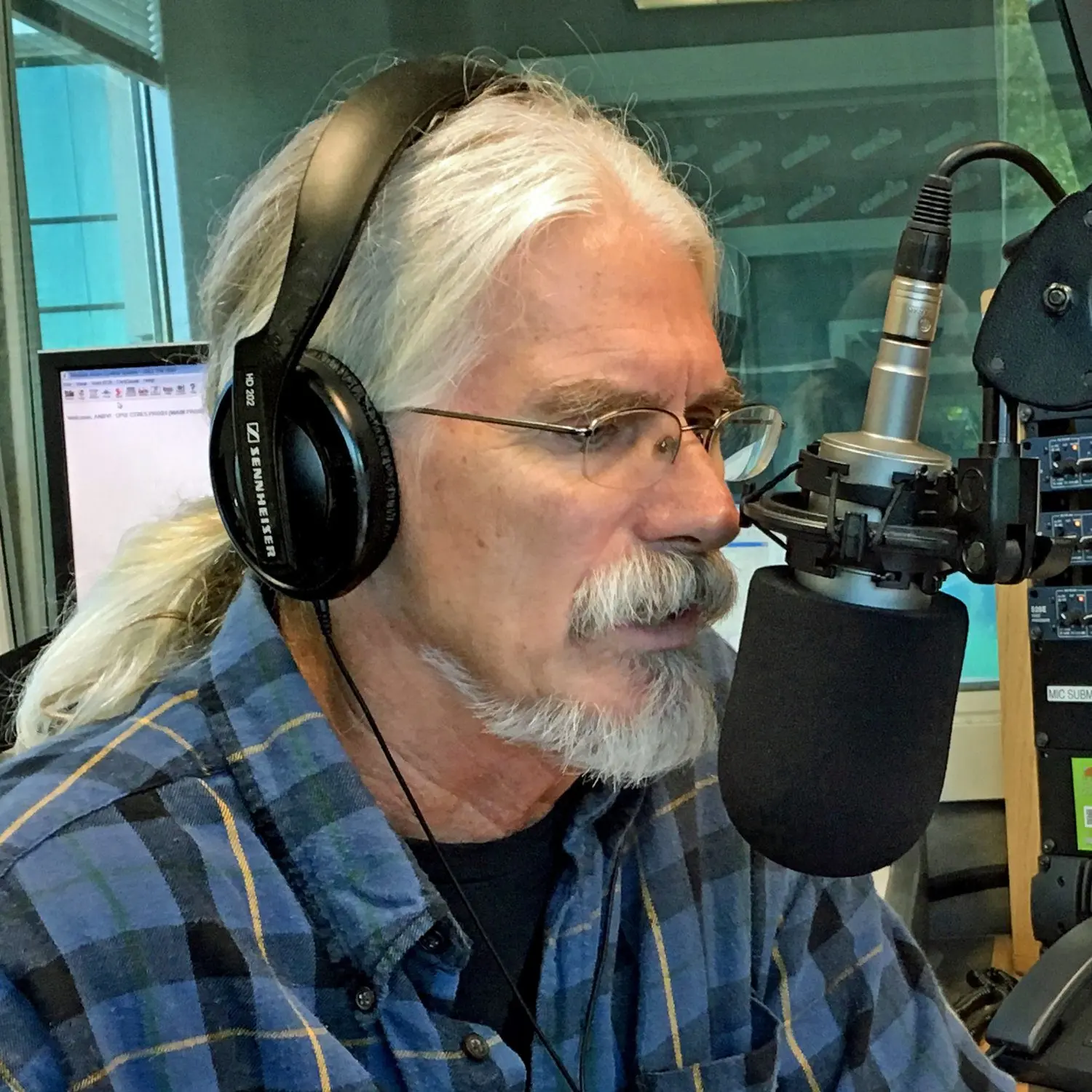

In this engaging episode of The Narrow Path, Steve Gregg takes live questions touching on a variety of profound topics. Starting with a discussion on inappropriate behavior from a church leader, Steve advises on scriptural responses and the importance of confronting issues within pastoral roles. As always, listeners are encouraged to call in and share different interpretations and thoughts.
SPEAKER 07 :
Good afternoon and welcome to the Narrow Path radio broadcast. My name is Steve Gregg and we’re live for an hour each weekday afternoon. We’re taking your calls during this hour as usual. If you have questions you’d like to call in about the Bible or the Christian faith or anything roughly related to those things, we’ll talk about them on the air. If you see things differently from the host, want to disagree with something you’ve heard here on the air, feel absolutely free to do so. The number to call is 844-484-5737. Right now there’s two lines open on our switchboard. It’s a good time to get through. 844-484-5737 is the number. And tomorrow night is Wednesday, the first Wednesday of the month, and that means we have our monthly Zoom meeting tomorrow evening. And by evening, I mean Pacific time where I live at 7 p.m. Some of you are listening in time zones further away and maybe it’s morning or something for you there. But anyway, you have to do the calculations tomorrow night, 7 p.m. Pacific time. We have our monthly Zoom meeting. It’s also a question and answer period. And it differs from this program in a couple of ways. One is that we can see each other there. which we can’t on the radio. And the other is that we have less limits on our time. We’re not paying for the time like we do on the radio, so we can run over if we need to, and often we go to an hour and a half or so. Anyway, so that’s tomorrow night. And then, of course, this Friday and Saturday, I’m involved in three debates with Dr. Michael Brown on the subject of modern Israel and prophecy and the Bible. We do not see the matter the same way as each other, and therefore we’re going to debate three times this weekend in Dallas, Texas. This is going to be not on Zoom or anything like that. This is going to be live in Dallas, Texas, in a church, the Mercy Culture Church in Dallas. Friday night is one debate. That’s this Friday. And then Saturday we have a morning and an afternoon debate before we’re done. Then there’s an audience question and answer. a period after the last of those debates. So three debates and a Q&A all this weekend on the subject of modern Israel and Bible prophecy. And let’s see, you’ll need to, if you want to go to the place, if you’re going to come into there or if you live near there, if you’re going to be in the building, you need to pretty much register in advance. They want to know how many people are coming. And it doesn’t cost anything. You can come for free, but they’ll want you to register online. And you can find out how to do that by going to our website, the narrow path dot com. And under the tab announcements, you’ll find both the information about our Zoom meeting tomorrow night, how to log in. And you’ll also find a link to the church’s Web site where they want you to register if you’re coming to the debate. Both of those are listed under the appropriate dates. at thenarrowpath.com under the tab that says Announcements. All right. We’ll go directly to the phones now and talk to Russ in Las Vegas, Nevada. Hi, Russ. Welcome.
SPEAKER 06 :
Hi, Steve. My question is I was wondering if you could help me with providing Scripture for a friend of mine. She’s got to confront a pastor who is saying inappropriate things, just words. Well, I’ll give you one example out of the 100. He got behind the pulpit and said that he told the congregation that he’s not attracted to his wife because his wife is overweight. He doesn’t like fat women. And many of you women in this congregation are overweight, and I don’t like that. And through therapy, he’s been able to understand that it’s not his fault because he had seen his mother in the shower as a child, and she was closely obese. So to me, stuff like that, he says from behind the pulpit, seems very insensitive to his wife and to the congregation and to his mother. This is just one example of the kind of things that he says. He had taken some kind of a psychological course called heart change, and it seems to have made him feel like whatever he feels, he just wants to understand himself. He doesn’t care about being rude to others anymore. But what she needs is some kind of a scripture because he won’t listen to her.
SPEAKER 07 :
Well, is this man some kind of – has he been a pastor for a long time?
SPEAKER 06 :
I think so. Or is he young? I think he is 50-something. I think this pastor is 50-something.
SPEAKER 07 :
I’m surprised he hasn’t learned more about, you know, being a pastor. Yes. Well, you know, I just – to me, almost without any special scriptures – it should be known that the man is inappropriate. You know, he’s talking about personal things that don’t, they’re not his personal things. They’re his wife and his mother’s and other things like that. And, yeah, it’s simply dishonoring to his mother and to his wife. He might not see it that way, but it is. And instead of, I mean, there’s rules, of course, for a person who’s going to be qualified to be an elder. and he’s always described as somebody who’s pretty much beyond reproach, somebody that the community would look up to as one of the best citizens, one of the best men. He’s got to be, I mean, all the qualifications, they don’t mention him saying inappropriate things from the pulpit for the simple reason that I don’t know that they had you know, anyone in their pulpits in biblical times who weren’t mature Christians. This man doesn’t seem to have, you know, learned any boundaries, you know, to what he says in the pulpit. I think quite apart from what the scripture says, I mean, she can read him the, you know, the qualifications for a Christian leader in 1 Timothy chapter 3, verses 1 through 7, and it’s also found, you know, mostly the same with a few variations in Titus chapter 1, verses 6 through 9, but none of them specifically mention his, you know, inappropriate statements in the pulpit. I don’t know if the Bible, you know, if the Bible says things about, now, I mean, the Bible in general talks about let no Yeah, well, maybe this is helpful. In Ephesians chapter 4, Paul says, What does he call it? He calls it… Now, he might say, well, what’s so corrupt about what I said? Well, it’s not so much that. It’s the next part of the verse. This is Ephesians 4.29. That it may impart grace to the hearers. So I would suggest that maybe she and some other church members who feel the same should just say, you know, you’re saying things from the pulpit that are by they fall very short of being edifying. You know, they’re not ministering grace to people there. You know, it’s maybe borderline corrupt communication, depending on what we consider corrupt. But what Paul is saying is let nothing come out of your mouth. And this is not just for pastors. This is for everybody. But how much more for the pastor? who has to be an example to others. Yeah, but he should only speak such things that edify other people. So I think, you know, now if one person approached him about that, he might say, well, I don’t know that this doesn’t edify people. I’m intending to edify people with my comments. Well, I think that’s where she should probably have maybe a number of people, three or four maybe. Maybe talk to some of the other church leaders about, And say, do you find that edifying? If so, I mean, if not, then he should stop doing it. I don’t know. You say that’s only one of like 100 things. Are all the things he says just like that, or is he just kind of crude in general?
SPEAKER 06 :
Yeah, it’s actually even worse when it’s not from the pulpit. He talks to her in ways that are inappropriate by talking about others in the church, naming their names, and talking about how they’re not correctable and they’re not teachable. And he forwards their emails and their private letters to her. And this is stuff that’s been done in confidence. You know, he talks to her about intimate things about him and his wife and his love life with his wife. I mean, he’s just a very inappropriate person.
SPEAKER 07 :
Yeah, why is he sharing these things with her? Is she on the church staff or something?
SPEAKER 06 :
He had put her into a leadership position. He had wanted to put her into a leadership position. And she just doesn’t want to. There’s a reason why she can’t leave right now. But she wants to get out. But right now she can’t. And so what she can do right now is confront him and let him know that he’s being appropriate. His whole thing is Hebrews 13, 17, which I heard you talk about last week, I think. Oh, yeah. Constantly. You need to submit and you need to obey. It’s his favorite verse.
SPEAKER 07 :
So, yeah, he’s not a pastor. I’m not sure why anyone would sit under him. He’s a tyrant. I mean, he feels like he can say whatever he wants, doesn’t have to care whose confidence he’s betraying, doesn’t seem to have to honor his wife or his mother with their privacy. I mean, there’s just too many things about him. I don’t even know that he’s a Christian. I mean, I wouldn’t bet on it. I can’t say he’s not a Christian because, I mean, some Christians are pretty stupid, but he certainly is not a Christian who should be in leadership. Yeah, I would tell her to use Hebrews 13 on him because it says in verse 17, Obey those who lead you, that’s what it says in the Greek, and be submissive, for they watch out for your souls as those who must give account. He mentions 10 verses earlier in Hebrews 13, 7, He says, remember those who lead you. That’s the same term as in verse 17. 17 says, obey those who lead you. Here he says, remember those who lead you, who have spoken the word of God to you, whose faith follow, considering the outcome of their conduct, and who have a faith that you want to imitate, whose faith follow. Follow their faith, he says. Now, you know, you can easily tell if a man’s faith is like Christ. Paul said in 1 Corinthians 11.1, be followers of me as I am of Christ, or modern translations would say, be imitators of me as I am of Christ. A godly man should be able to say to anybody, hey, the things I’m teaching are things you can see me doing. You know, that’s why I’m here. I mean, that is why I’m here teaching, because I’m not, you know, not only because I know something, but because I’m here to be an example to the flock. That, again, is what Peter said to the elders. In 1 Peter chapter 5, he told them to be examples to the flock, that is to the people. Now, you know, the problem with it is none of these passages speak specifically of the kinds of statements this man is making. Because… It is assumed in the Bible that Christians don’t do that. And if they do, they’re not leaders. And no one would look at them as a leader. We now have such compromised churches that a man can be maybe not even a Christian. And if so, he might be the most carnal one in the congregation and the most immature and the most un-self-controlled in his mouth. And, you know, and yet somehow he can get a job and hold a job as in the pulpit. It says this in James chapter 3, which you might help her to bring to him. Verse 1, My brethren, let not many of you become teachers, knowing that we shall receive a stricter judgment. For we all stumble in many things. If anyone does not stumble in word, he is a perfect man, able also to bridle his whole body. Indeed, we put bits in the horses’ mouths that they may obey us, and we turn their whole body. Look at ships, though they’re very large and driven by fierce winds, they’re turned by a very small rudder, wherever the pilot desires. Even so, the tongue is a little member in both great things. See how great a forest fire, a little fire kindles. And the tongue is a fire, a world of iniquity. The tongue is so set among our members that it defiles the whole body, sets on fire the course of nature, and is set on fire by hell. This is why it’s so important, of course, for a person to watch their speech, because it’s so destructive, like a fire. It spreads. But also, this is very important for him in James 1, 26 and 27. It says, if anyone among you thinks he’s religious and does not bridle his tongue but deceives his own heart, this one’s religion is useless. So a man who thinks he’s religious, I imagine a pastor normally thinks of himself as fitting that description. But if he doesn’t bridle his tongue, his religion is useless. It’s empty. In other words, it’s of no value anymore. you know, he can be as religious as he wants to, but if his tongue is not restrained, if he doesn’t govern his tongue with grace and ministering grace to others, then, yeah, his religion is worthless. Those are some of the things she might want to share with him.
SPEAKER 06 :
Thank you, Steve. You’re the best, and you’ve given us what we need to deal with it. Thanks a lot.
SPEAKER 07 :
Appreciate it. Okay, Russ. God bless you. Thank you. Michael from Seattle, Washington is next. Michael, welcome.
SPEAKER 05 :
Hey, thanks for taking my call, Steve. Yesterday I was listening, and a guy was wondering, where are the seven mountains or hills of the woman, the harlot? And I knew that was in Scripture somewhere in the book of Revelation, Revelation 17.9.
SPEAKER 07 :
Yeah, but that’s not what he was asking about. He was asking about a doctrine called the seven mountains doctrine. He wasn’t talking about that passage.
SPEAKER 05 :
Well, I thought he was, but here I discovered that it does say there’s seven mountains or hills the woman sits on, which is the harlot. And then what’s interesting is that there’s also two words of wisdom there. It’s called wisdom on Revelation 17, 9, but also Revelation 13, 8. 18 also says wisdom. And the only reason why I went to 13, 18 is because it’s referenced in Revelation 17, 9. Right. So what’s your question? To Revelation 13. Right.
SPEAKER 07 :
I know about those things. What’s your question?
SPEAKER 05 :
I mean, I know you’re not dispensational, right? You don’t look at things more literally in the Scriptures. Wait, wait, wait.
SPEAKER 07 :
You say I don’t look at things literally?
SPEAKER 05 :
Well, you’re not taking… I’m listening to you over here.
SPEAKER 07 :
Okay, let me explain that. There are genres in the Bible that are literal genres, like historical narratives. Most of the Bible actually is historical narrative. I take those all literally. There are also poems in Psalms. They use metaphorical language and hyperbole. I don’t take them all literally because… You don’t take poetry literally if you do, you’re being silly. There’s parables. There’s parables that are illustrative stories, but they’re not literally true. And there’s apocalyptic prophecies, which are written in apocalyptic language, which is the opposite of literal language. So it’s not that I don’t take things literally. It’s that you honor scripture best. by taking, you know, every passage in the way it was intended to be understood. If I took the parables of Jesus as literal stories, I would not be taking them the way that Jesus meant for them to be understood. You know, and so it’s, if I take Revelation 7, or 17, excuse me, 9, about the seven mountains. Yeah. Yeah. I don’t take those literally because he said the seven heads of the beast represent seven hills upon which the woman sits, and they represent seven kings. Five are fallen, one now is, and one is yet to come. So, I mean, no, they’re not literal heads on an animal. That would be literal. But he says, no, we’re not talking about an animal with literally seven heads. These heads represent something. They represent a couple of things. The seven hills on which the woman sits. Well, who’s the woman? At the end of that chapter it says she’s the great city who rules over all the kings of the earth. Some people think that refers to Rome, which was always known as the city on the seven hills. But then he says the seven heads are also seven kings. So there’s a lot of symbolism here. And I don’t take symbols literally because that’s not what symbols are supposed to be understood as. So anyway, I mean, when people say, I know you don’t take things literally. Well, no, I think I take the Bible much more literally than some. In fact, Revelation chapter one says that it’s describing things that will shortly take place. I take that literally. Dispensationalists don’t. And when it says the time is at hand in Revelation 1-3, I take that literally. I think the time was at hand when he said that. Dispensationalists don’t believe that. So what we have to do is recognize there are portions of the Bible that are written as narrative and in a literal form. Some are poetic. Some are symbolic. Some are apocalyptic. And when you know something about the genre, you’re reading. then you know whether you should take it literally or not. But the whole thing about the seven mountains, the seven mountains doctrine, I don’t think is based on revelation at all. Although you’re right, I knew that when they mentioned it. I just knew they weren’t talking about that. They were talking about a modern doctrine that identifies seven spheres of influence on culture. And they call them mountains, but it’s just in their… in the way they’re looking at, but that’s not what revelation is referred to.
SPEAKER 05 :
What’s your, what Bible do you read out of? Have you ever, do you have a Charles Reier study Bible, you know, for Moody?
SPEAKER 07 :
No, I don’t use Riley. I know Riley is a hyper dispensationalist. Um, I personally prefer a Bible that doesn’t tell me what things mean. I just prefer a Bible that has the text of the Bible in it, which is, I just use a New King James. Now, Ryrie’s Bible is what they call a study Bible, which means he has study notes in the bottom, which means it’s his commentary at the bottom of the page. There’s also, of course, the Schofield Bible has the same features, and so do many other study Bibles. I don’t usually use study Bibles, except when I want to consult a commentary. then I do have some study Bibles, and I might pull one or two of them off the shelf to see what the commentary says, but I don’t mistake that for Bible. The Riley Study Bible is not just a Bible, it’s a Bible and commentary. I make a distinction between the Bible and commentary, because the Bible is inspired, the commentary is somebody’s opinion.
SPEAKER 05 :
Well, yeah, I mean, I’m… I study with Bible Study Fellowship, and I’ve done that for over 30 years. It’s out of Dallas Theological Seminary, pretty much. I’m very familiar with it. But I do love the Bible. I’ve got a Charles Royer Bible because it was my wife’s Bible who passed away.
SPEAKER 07 :
Okay, listen, I’ve got my lines. My lines are full. I’d love to talk about you.
SPEAKER 05 :
I just want to say I’m looking forward to your debate with Michael Brown. I’m going to be listening in.
SPEAKER 07 :
Cool. Great to hear from you.
SPEAKER 05 :
Okay, Mike. Bye now.
SPEAKER 07 :
Okay, Danny from Maine. Welcome to The Narrow Path.
SPEAKER 03 :
Hi, how are you? Well, thanks. So I just got a quick question. I don’t want to take up too much of your time. One is Elijah. So Elijah was taken up without dying into heaven, correct?
SPEAKER 07 :
As far as we know, he was caught up. We’re not told whether he died or not, but it does not record that he died. So many people believe he did.
SPEAKER 03 :
Yeah, so I was bringing that up because I’ve been listening to some of your other older broadcasts and they’re talking about the transfiguration. Okay, go ahead. So I was thinking that might be part of the answer to the transfiguration since Elijah didn’t die and that’s why he was able to appear. Well, Moses died and he appeared. Yeah, but Elijah didn’t die. He appeared.
SPEAKER 08 :
Okay.
SPEAKER 03 :
Thanks, Peter. Yeah, just bringing that up because I was listening to him. The other one is, you know, I’m from Maine, and we have a radio station here that does have you on, thank God. But I was looking to donate, but when I go to your website, it doesn’t really say that we’re donating from a certain area in Maine. We get messages saying that you might be taken off the air because there’s not enough donations from here.
SPEAKER 07 :
You know, at this point, I don’t think any of our stations are in danger.
SPEAKER 03 :
Okay.
SPEAKER 07 :
But, yeah, if you donate online, I think you put your address in there, don’t you?
SPEAKER 03 :
Well, I didn’t look that far, but I was just wondering if there was a way to say, okay, I want to make sure this goes to the radio station in Maine because I do hear some notifications that, You’re going to be taken off the air.
SPEAKER 07 :
Yeah, I’ve never donated online, so I don’t know. But I think if you go to the online donation part, I think you put your name and address in there and stuff when you make your donation. And when we see your address, if we see you’re in Maine, we realize we don’t have a lot of stations in Maine that are carrying us, so we apply it to your station.
SPEAKER 03 :
Oh, I see. Okay, well, thank you very much. Take care. God bless you.
SPEAKER 07 :
Thank you, Russell. Great talking to you. God bless you. Bye now. I said, did I say Russell? That was Daniel. Sorry, Russell’s our next caller from Maine also. Maybe that’s what confused me. Anyway, you know, it’s time to take another call, but it’s also time for us to take a break at the bottom of the hour. The Narrow Path has an app, which if you don’t have, You should, unless you don’t like The Narrow Path. If you like The Narrow Path, that is if you like the program, you will really like the app. But what I wanted to tell you is I think you can get an app for The Narrow Path at the App Store and if you have iPhone or from Google Play if you’ve got an Android, but those are older apps. And we have a newer app now that is actually web-based, but you can put a little icon on your phone and it works just the same as if it wasn’t web-based. What you do, you go on your browser, maybe Safari, maybe Google, one of those, and you go to this website on your phone. The website is thenarrowpath.app. Our regular website is thenarrowpath.com. You can go there, too. But if you go to thenarrowpath.app, you’ll find it’ll say there’ll be buttons there. There’s a drop-down menu up in the top left corner. And the first item on the drop-down menu says How To. And it’ll tell you how to add to your screen, to your phone screen, the little icon for The Narrow Path. And it’s got tons of stuff. It’s got my audio books you can listen to for free. It’s got, you know, like 1,500 lectures of mine you can listen to for free. You can listen to the radio show for free in archives or live. You can call the show from there. It’s at thenarrowpath.app. Check it out. We need to take just a brief break and we’ll come back. Don’t go away. We have another half hour.
SPEAKER 02 :
Tell your family, tell your friends, tell everyone you know about the Bible radio show that has nothing to sell you but everything to give you. And that’s The Narrow Path with Steve Gregg. When today’s radio show is over, go to your social media and send a link to thenarrowpath.com where everyone can find free topical audio teachings, blog articles, verse-by-verse teachings, and archives of all The Narrow Path radio shows. And tell them to listen live right here on the radio. Thank you for sharing listener-supported The Narrow Path with Steve Gregg.
SPEAKER 07 :
Welcome back to the Narrow Path radio broadcast. My name is Steve Gregg, and we’re still taking calls for the next half hour. If you have questions about the Bible or the Christian faith or a disagreement with a host, feel free to call this number, and it’ll put you on the air. It’ll put you in the queue to go on the air. The number is 844-484-5737. That’s 844-484-5737. Now, our last caller was from Maine, and so is our next one. And our last caller said that he gets messages sometimes that we may be in danger of dropping the station in Maine, and he wonders if we’re getting enough donations. We don’t send out those messages, so I’m not sure where to get. But I do sometimes, if he’s listened for years, there have been times over the years where I’ve said, you know, when we don’t get enough donations from a certain area, we sometimes have to drop a station. We haven’t had to do that for a while, and we’re in pretty good shape right now. As long as donations keep coming, we’ll be able to stay on. But I appreciate that concern. It is true sometimes when we don’t get any donations from an area, or at least not enough, that we do drop a station in that area. But that hasn’t been the case very recently, and I don’t think we’re looking at anything like that immediately either. So I don’t know where that – maybe he just heard a generic message once on the radio that we sometimes have to drop stations. But in any case, yeah, thanks for asking. Anyone who wants to donate can go to thenarrowpath.com and see how to do that there. Our second main caller today – is Russell. Russell, welcome to The Narrow Path. Thanks for calling.
SPEAKER 04 :
Thank you, Steve. It’s great to talk to you. I’m a first-time caller, and I do hear that same message that the previous caller mentioned on WBCI, and so I’m glad that you’ve cleared that up, that it isn’t going to be dropped. Thank you. Yeah, not anytime soon, though, no. Yeah. And thank you for the the answers that you provide. I wanted to follow up, if I may, on the caller that called about the pastor who was speaking inappropriately, and that breaks my heart. I’m sorry to hear that. But I wanted to add one thing if that person is still listening. I don’t know if that church is part of a denomination, but if they are, they usually have a ministerial committee that a pastor is accountable to. And I don’t think you mentioned that, but if that person is aware of that, they can bring that to the attention of that group that would want to hold that person accountable.
SPEAKER 07 :
I appreciate you bringing that up because that is true, of course, and I know that is true, but it didn’t cross my mind to bring it up. Largely because a lot of times, but I don’t know this to be true in their case, a lot of times pastors of this type run little independent churches, almost cult-like groups, which don’t necessarily answer to any of it. You’re right. If it’s a denominational church, they should probably, if they don’t get any satisfaction talking to him, probably go to his superiors.
SPEAKER 04 :
And he needs some counsel.
SPEAKER 07 :
Yeah, he does. He definitely needs some oversight. I appreciate that. Okay, Russell, thank you for sharing that.
SPEAKER 04 :
Take care.
SPEAKER 07 :
All right, you too. Bye now. Okay, Martin from Phoenix, Arizona is next. Martin, welcome.
SPEAKER 01 :
Good afternoon, Steve. Hey, I was just sitting here thinking that I read something that said that 70% of the world’s population uses the Internet. And I thought of that Bible verse about the whole world marveled after the beast and followed it. And then I thought about the Antichrist and the false prophet. And these are just kind of just opinions, but could the beast be the Internet? and the false prophet be basically the international, national corporations in the world banking system, and the Antichrist be like the law system, you know. Recently in Arizona, there was a guy that was executed, and after 29 years of committing the crime and on death row, he murdered a whole family. It took 29 years basically to get rid of him, you know. But I thought, well, that’s really such a false way of running a, you know, justice system and because I know Jesus is the truth. I don’t know anybody that lived 29 years after killing a whole family. The whole system is wrong to me, like the money system.
SPEAKER 07 :
So your question then is, do I think that the Internet might be the Antichrist?
SPEAKER 01 :
Yeah, yeah. Do you think it could be the Antichrist?
SPEAKER 07 :
Yeah, well, I don’t think the Internet is the Antichrist. The Bible says… that whoever denies that Jesus is the Christ, the same is anti-Christ, it says in 1 John 2. And so, yeah, there’s a lot of people on the Internet who deny that Jesus is the Christ. But then on the other hand, there’s also a very large number of people, possibly an equal number, I don’t know, on the Internet who don’t deny that Jesus is the Christ. I mean, it certainly has been used quite effectively by Christians for outreach. whether it’s Christian podcasts or as most churches send out, they live stream their church services on the Internet. We and most radio stations, I think, have access to their programs on the Internet. So there’s a lot of information out there. In fact, almost all the good information you could want. can be found out there somewhere. Or just like the printed page. You know, the Internet is a medium. It’s a medium that carries information. And since it carries any kind of information, it would not specifically be anti-Christ. I would say there are elements on the Internet that are anti-Christ. And there are elements on the Internet that are pro-Christ. So I don’t think it would be uniformly evil. It can be used for evil or for good. But see, to me, that’s not really different than the invention of the radio or the invention of the printing press. You know, I mean, to disseminate information to a lot of people more quickly than it was possible to before, you is a scary thing and a wonderful thing, you know, in a sense. Bad news can travel around the world instantly. Bad ideas can, but good ideas can too. And so it’s not the medium that can be blamed. We can become a little alarmed if we feel the medium has gotten so large that it’s kind of gotten out of control. But then the printing press did that, too. I mean, every kind of bad idea has been printed in books, but also an awful lot of good things have been. Yeah, I’m not inclined to take any technological medium and refer to that as the Antichrist. Now, I do believe there are governments. I believe there are, no doubt, political conspiracies of some sort. I do believe there are, you know, people who have podcasts and so forth that are very Antichrist and that are very… very much undermining the work of Christ and the message of Christ. But that only means that Christians need to rise up and do the same, only for good. That would be the way I would look at anything like that kind of a medium. Thanks for your call. Jennifer from New Haven, Connecticut. Welcome to The Narrow Path. Thanks for calling.
SPEAKER 09 :
Hi, Steve. I appreciate your ministry so much. Thank you. God bless you. Thank you. So, thank you. Yeah, I’ve learned a lot from you, too. But I don’t agree with you on Hebrews 6 and 4. I think you think it’s people that are saved and they can walk away from God. And the reason why I don’t is because I think every single clause refers to someone that is at the beginning stage, like, I don’t have it in front of me right now. Actually, I can get it. It says those that are enlightened, and we all have to be enlightened first before we repent. Then it says those that are… Taste of the heavenly gift.
SPEAKER 07 :
Yeah, they’ve tasted the heavenly gift.
SPEAKER 09 :
Oh, yeah. Okay, thank you. Thank you. And tasted always, in any language, always means the beginning of something. It’s not being fully submerged. And I had heard you say that Jesus tasted death, didn’t really die, but it was temporary, and that’s why they used the word tasted, because he’s alive now. It might not have been the perfect word, but that’s why tasted is used. And then, what’s the other clause?
SPEAKER 07 :
Oh, they became partakers of the Holy Spirit?
SPEAKER 09 :
partakers of the Holy Spirit. They’re not, like Judas is somebody that was a partaker of the Holy Spirit, somebody that was working in the ministry, and it doesn’t say filled with the Holy Spirit. But what is another cause?
SPEAKER 07 :
Another one is that they tasted the good word of God and the powers of the age to come.
SPEAKER 09 :
The powers of the age to come, yes. So, now… Oh, and then the last part is to bring them back to repentance. It didn’t say for them to be saved again. It’s all beginning stuff. And this sounds like the perfect example is those depart from me and renew people, those people that were doing all this work in the ministry. And he said, I never knew you. So that’s my stance. It’s because to me, if it was somebody that would say, they wouldn’t say partakers. They would say filled with the Holy Spirit. Oh, no, no, no, no.
SPEAKER 07 :
That’s not necessarily true. I mean, the way the scripture speaks of being a partaker. Paul says we Christians have been partakers of Christ. And it says in 2 Peter 1 that we’ve been partakers of the divine nature. So, I mean, partakers means that we have received it. We’ve received it. So to be a partaker of the Holy Spirit.
SPEAKER 09 :
And we’ve been enlightened also. And we’ve pasted all these things. It can mean those people that, you know, with all this pasting and pasting twice, And then you never really, you know, these people that weren’t saved, every one of those causes could describe them. And if it was saved people, it would be more of a definite thing. Yeah, that’s all I have to say. Okay. All right.
SPEAKER 07 :
I appreciate you saying that. Let me respond. Let me respond. I’d love to respond to you. I’m very much aware of that view. In fact, whenever I teach Hebrews chapter 6, I give that as one view that some people hold, which is you’re one of those people who do. There’s about three or more, three or four views I know of this, and yours is very well known to me. And that is the idea. For those who don’t know the passage, I’ll read it. The writer of Hebrews says in Hebrews 4, I mean 6-4 through 5, For it is impossible… for those who were once enlightened and have tasted the heavenly gift and have become partakers of the Holy Spirit in the interest of any modern theological controversy about once saved, always saved. Many, many evangelicals in America today do believe once saved, always saved. No one taught that doctrine, really, as far as I know, prior to Darby. Calvin… had the doctrine of the perseverance of the saints, which is kind of similar, that if you’re really elect, you will never fall away. though the view of once saved, always saved I was raised with was that even if you do fall away, you’re still saved. But the thing is that no form of once saved, always saved, neither the Calvinist form nor the Darbian form, none of them existed before the time of Augustine. So the first 400 years, the church never discussed the question of people being once saved, always saved. It was known that to be a Christian is to be a disciple of Jesus. That’s what the word Christian means in the Bible. The disciples were first called Christians in Antioch. So a disciple is a Christian, and a Christian is a disciple, according to Acts 11.26. Now, if you’re a disciple of Jesus, Jesus said, if you continue in my words, you are my disciples indeed. Not just if you obey me for a little while, but if you continue doing so. If you continue in my words, you’re my true disciples. Otherwise, not so much. Now, that being so, the early church for the first four centuries never had any doubts that only people who are following Christ are Christians and are saved. Now, when the writer of Hebrews was writing this, the whole discussion of once saved, always saved never had come up. And he was writing to a church that knew only one doctrine on this subject. And so when he said it’s impossible for those who were enlightened, now this is a term that the early church used for people who, when they get saved, they’re enlightened. That’s actually a term that was used in the early church for a saved person. And have tasted of the heavenly gift, presumably that heavenly gift is Christ himself or of salvation, and have become partakers of the Holy Spirit. Now, we have no evidence anywhere in the Bible that anyone is a partaker of the Holy Spirit in the New Testament sense, who’s not a born-again person. We partake of the Holy Spirit when we’re regenerated by the Spirit, and then he comes to dwell in us. And have tasted the good word of God. Of course, a non-Christian could be said to taste the good word of God, but it is something that the Christians themselves primarily would be identified with. and the powers of the age to come. Now, the powers of the age to come probably has to do with the power of regeneration, because in the Messianic age, the Holy Spirit comes and he regenerates. That’s the manifestation of the Spirit’s power in our life. Now, these people have tasted those things. Now, you’re right. The word tasted, and by the way, for people with your interpretation of this, they hang everything on this word tasted. They tasted it, but they didn’t really indulge in it. They didn’t really buy into it completely. Well, it would be helpful if the writer of Hebrews meant that for him to just give that little caveat because he’s just listed five things that are all true of Christians and not generally true of non-Christians at all. Some of them are, as far as we know, never true of non-Christians. But if he’s talking about people who aren’t really Christians… In this way, he could have said what your view would say. They’ve had all these experiences, but they have failed to be converted. They have not really known Christ. I mean, that could be added if the writer of Hebrews wanted it to be understood that way. And it’s hard to imagine that anyone would understand it that way without him saying so. He should at least be a good communicator and say, listen, I don’t want to confuse you here. These things that all Christians do, and non-Christians generally, it can’t be said of them. I’m talking about people who are still non-Christians, but who came awfully close to becoming Christians. Then the question becomes, why would it be that if these people came close to being Christians and then kind of drew back a bit, that they could never be brought to repentance in the future. What is it about checking out the gospel a little bit and not ever buying into it that makes you incapable of being converted? It’s not at all clear how that is. So to my mind, that is not a very obvious meaning. It would be obvious to me if I already held a doctrine that people who are really saved cannot fall away. If I was a good Calvinist, then I would have to import that doctrine. But no church father ever imported it until Augustine, which is 400 A.D. So for the first four centuries of Christianity, no one would have read it the way you’re talking about. And I’m not sure why they would. I’m not sure why they should think they should. Because, actually, the doctrine of perseverance of the saints has a lot more against it in the New Testament and even in Hebrews than this passage alone. For example, I mean, just so we’ll know what the writer of Hebrews believed about such things, in Hebrews 3.1, he said, Okay, holy brethren, these must be Christians, I assume, partakers of the heavenly calling. There’s that word partakers again, but I think he’s calling the holy brethren partakers of the heavenly calling. He goes on, blah, blah, blah, and in verse 12 he says, Beware, he tells them, beware, lest there be in you an evil heart of unbelief in departing from the living God. Okay, so you guys who are holy brethren and partakers of the heavenly calling, there’s a danger of departing from the living God because you begin to have an evil heart of unbelief. Now, that’s not the only other place in Hebrews that he brings this up. The writer of Hebrews brings up these warnings about five or six times in the book, and chapter 6 is only one of them. But, I mean, honestly, if you’re living for Jesus and you’re loyal to Jesus, I don’t really care how anyone interprets Hebrews chapter 6. There’s, like I said, about four different ways to take it. I have certainly considered the way you’re talking about it many, many years ago, and the things that caused me not to see it there. are still there. And so I’m not buying it. But I appreciate your bringing it up because I always do invite people to bring up an alternate viewpoint. And you’ve done as I asked. Thank you, Jennifer, very much for your call. You’re welcome. Bye-bye. God bless you, sister. Bye now. All right. Let’s talk to – let’s see here. We’re going to be talking to Cheryl in Minneapolis, Minnesota. Hi, Cheryl. Welcome. Hi. This is Sherry. Oh, Sherry. Hi.
SPEAKER 10 :
Hi. So, hi, Steve. I have a question. Great. I am trying to figure out what to do with life, what God wants me to do. Anyway, so I kind of had an interest in being with people towards, like, the end of their life. And I always worry about, like, if people are saved and if they’re going to heaven. And it just bugs me. It doesn’t matter if you’re a stranger or if I know you. So my question to you is, is there anything in the Bible that any verses or books I could read that would be helpful on what to say to people towards the end of their lives?
SPEAKER 07 :
Well, you know, I would think that a person at the end of their life needs to hear the same things anyone does at any time since any one of us may be much closer to the end of our life than we realize. I think people need to realize that every breath they have is one that goes by one time and they don’t get that one back. And there’s a limited number. There’s a very limited number of breaths any of us will take, a very limited number. It’s a finite number anyway of heartbeats that we will have. And as we sit here talking, several heartbeats and several breaths have already gone by. And the longer we wait, the fewer there are. Now, we don’t know when any of us will die. But if somebody’s in, like, hospice or something like that, they know they’re going to die pretty soon, unless something unexpected happens. But I think that in their case, it only, I don’t know, I guess it only underscores what should be understood by everybody. And that is we could all die today. And when we do, we’re going to stand before God. And God has given us opportunities. These are described by Jesus in parables like quantities of money to invest on his behalf. Now, of course, the parable isn’t necessarily talking just about money, but whatever opportunities we have that we can employ for Christ’s benefit. Now, a person is in hospice. doesn’t have a lot of opportunities to use, and they may have already come to the end of their opportunity to invest much of anything. And they’re more in the position of the thief on the cross who said, Lord, remember me when you come into your kingdom. And Jesus said, today you’ll be with me in paradise. what these people need most of all, therefore, is to recognize that Jesus is the king and that their repentance from rebelling against him, whether they thought of themselves in the past of rebelling against him or not, they were following a different claim on their life than is the right one. He has claim on all of our lives. We’ve been bought with a price by his own blood. He owns us. He is rightfully the king of all of us. And and that we are all either submitted to the king willingly or in rebellion, either willingly or by default, rebelling against him. And I’m going to stand before God someday and answer for my stewardship of how I use my life. Now, if you’ve come to the end of your life, and you haven’t used your life for God at all, at least you can plead for mercy and you can receive forgiveness. I mean, if someone says, well, if you can do that at the end of your life, why can’t you just neglect stewardship and just plead for mercy on your deathbed? A couple of reasons for that.
SPEAKER 10 :
Is there a verse that I can say? Is there a suggestion, a verse I could say to them in the Bible?
SPEAKER 07 :
Well, I don’t have a little promise book or something of Bible verses. I would just share with them from the Bible whatever they don’t know and need to know. And whenever I share with people, I’ve got the whole Bible in my head. And of course, if you don’t have the whole Bible… then the part you do know is the part you need to share from. But, you know, I was going to say, you know, a lot of times people will wait to the end of their life, like the thief on the cross, to repent. And sometimes they’re actually figuring on doing that. Although not everybody has the advantage of knowing that they’re going to die in the next moment. Many deaths are sudden and unexpected. And people who are young especially are pretty much unaware or at least unsuspicious that their life will end quickly. But even if you do manage to repent on your deathbed, you’ll have occasion to regret that you haven’t done it earlier when you could have done more with your life for Christ. And if someone says, well, I won’t care as long as I get to heaven. I won’t care if I did anything for Christ. Well, then you’re probably not repentant because when you repent, you’re realizing that the whole reason for your existence is to bring glory to God and to serve him and to please him and to bring fruit in his kingdom. That’s what repentance makes you aware of. And anyone who has become aware of that is, of course, going to regret that. Not having done more. I will regret not having done more. And I’ve been serving God since I was a child. But I mean, there will be a time come where if I’m aware of it, my death is near. I’ll be thinking, boy, I wish I’d done more. Wish I’d done more. But however little we have done and however much of our life we’ve wasted not following Christ. We need to stop now, you know, stop doing that now and and follow him now. Even if someone’s on their deathbed, you know, they can still give their hearts to Jesus. They can repent. They can accept his mercy. They can be devoted to him. They can testify to him. They can be baptized. They can do all those things and should. But when you say you’re sharing with people near the end of their life, it depends on how near they are. I mean, if we’re talking about people in hospice who are going to be dead in a few weeks, I would just share the gospel with them and urge them to take Christ seriously. If we’re talking about people who are in their 80s and 90s but aren’t particularly sick, that is by definition the end of life too, unless you’re going to live to be 100 or more. But it’s the same thing. And you see, I don’t have a different message for people who are 95 years old than I would have for one who’s 15 years old. We all have the same crisis. We’re all going to face God someday. And if we’re not prepared to meet him, we just aren’t prepared to meet him and we’re not prepared. If we’re not prepared to die, we’re not really prepared to live yet. We ought to find a reason to live so that we’ll have something we will have died for. I’m sorry, I can’t be more specific. Read your Bible and follow it. We’ve got resources on our website, thenarrowpath.com. You might check that out and see if there’s something helpful to you there.