



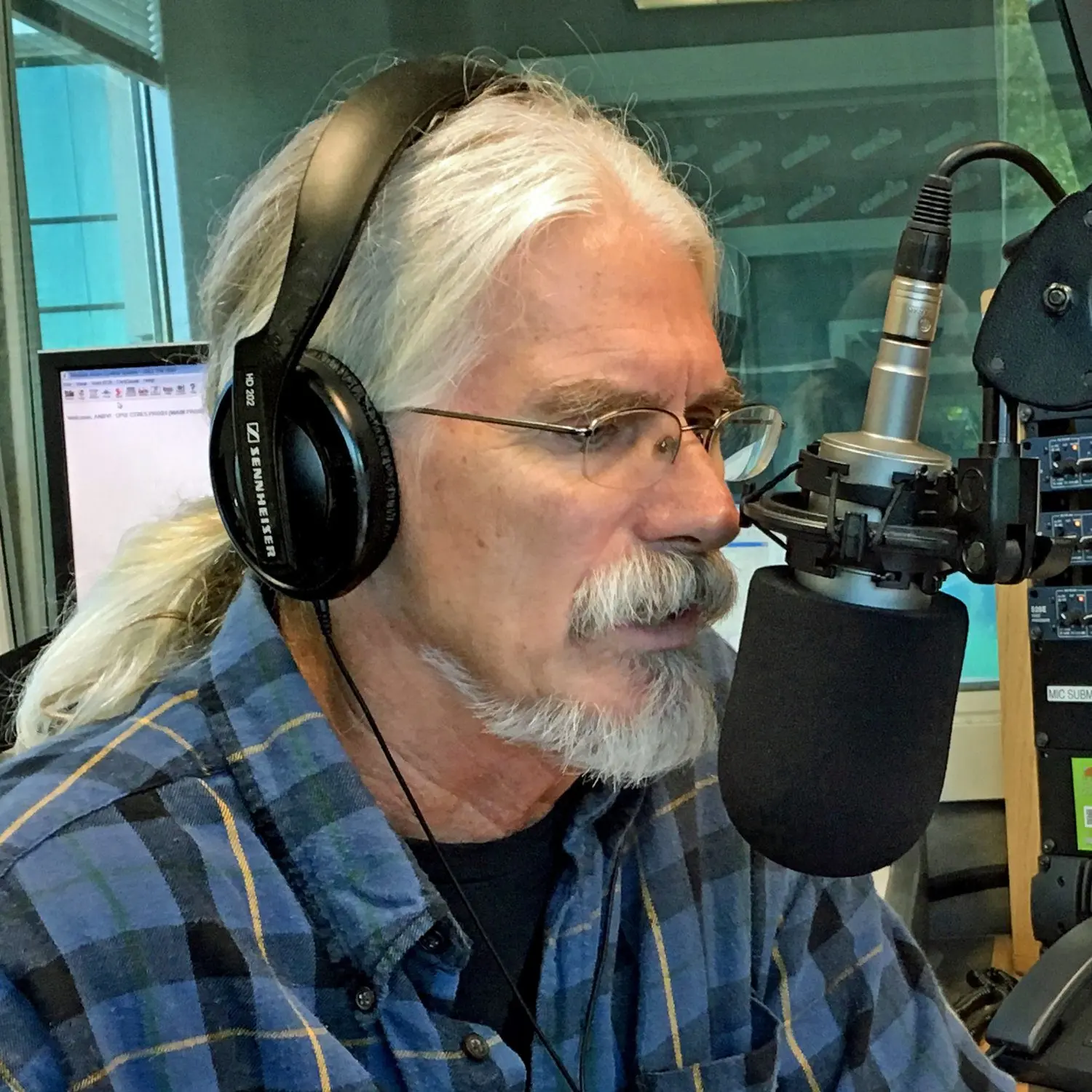
In this episode of The Narrow Path, host Steve Gregg engages listeners with profound discussions ranging from the influence of the Holy Spirit in the Old Testament to an intriguing conversation on governmental authority and its limitations. Listseners are introduced to insightful thoughts on Calvinism, especially focusing on the doctrine of total depravity and its interpretations, contrasted with biblical accounts of faith and righteousness from the Old Testament.
SPEAKER 02 :
Good afternoon and welcome to the Narrow Path radio broadcast. My name is Steve Gregg and we’re live, as usual, for an hour each weekday afternoon, commercial free, and the entire time can be used by responding to people like yourself, calling in if you have questions about the Bible you’d like to discuss here on the air, about the Christian life, anything like that, or if you disagree with the host, You’re always welcome to call in to disagree and to balance comment. The number to call is 844-484-5737. That number again is 844-484-5737. Right now I’m seeing a couple of lines open on a switchboard, a good time to call. A couple of announcements have to do with this weekend. It’s the third Saturday of the month, and we have certain things that happen normally on the third Saturday of the month. Saturday morning at 8 o’clock, we have a men’s Bible study in Temecula. So if you’re in Southern California, both of these events are in Southern California. In Temecula, we have a men’s Bible study. at 8 o’clock this Saturday. And then in the evening, we just have a Q&A gathering in Buena Park. If you’ve been coming to our Buena Park meetings or thought about doing so, this is going to be our last one until further notice. And we’ve been doing it for many years. But I’ve just been getting kind of busy, traveling a lot, and so I’m just not going to do it right now. This will be the last one this Saturday night at our Buena Park Location, it’ll be just a Q&A But feel free to join us there And if you don’t know where either of those locations are Well, I can solve that problem for you Just go to thenarrowpath.com thenarrowpath.com And look under announcements And you’ll find this Saturday’s gatherings are described there And the location as well Alright, so now we’ll go to our phones Our lines have filled up Let’s talk to Arnold in Pittsburgh, California Hi Arnold, welcome
SPEAKER 06 :
Hi, Steve. Thanks for taking my call. So I have a question. I consider myself like a 4.5 Calvinist, point Calvinist. I know you’re not a Calvinist.
SPEAKER 09 :
Right.
SPEAKER 06 :
But my question is on the Holy Spirit and the Old Testament. If total depravity is true, then it depends a lot on the Holy Spirit changing the Old Testament believers so they could be believers. What scripture have you seen? Well, I know you’re not a Calvinist, but what scripture have you seen, and what’s your response to the scripture concerning the Holy Spirit and the Old Testament changing people that would, you know, changing their hearts because, you know, they wouldn’t be changed as a Calvinist? Yeah.
SPEAKER 02 :
Yeah, well, the Holy Spirit did come upon some people in the Old Testament, but they were usually special cases, like King Saul, when he was anointed, As king of Israel, the Holy Spirit came upon him. King David, when he was anointed, the Holy Spirit came upon him. Some of the judges, the judges in the Old Testament, the Holy Spirit came upon them to lead Israel. Obviously, these examples are examples of leaders in the nation. And then more predictably, the Holy Spirit comes on the prophets. Now, prophets were also, you know, unusual people. So the Holy Spirit was never really given to all of God’s people in the Old Testament. And Moses mourned that. In Numbers, Moses said, would to God that all the Lord’s people were prophets and that he’d put his spirit upon them. But God didn’t in the Old Testament. Now, Joel, however, in Joel chapter 2, beginning of verse 28, did predict that God would do that. He said, I’ll pour out my spirit on all flesh, and your sons and daughters will prophesy, and your old men shall dream dreams, your young men shall see visions. So, you know, Moses wished that God would pour out his spirit on all people, but Joel predicted that he would, and this happened on the day of Pentecost. Of course, it wasn’t on all the people on the earth, but all of God’s people, all the remnants of Israel were gathered in the upper room, and the Holy Spirit was put on them. Now, before that happened, Jesus, one of the only times he just stood up in a public place and just started preaching to a crowd that was not already gathered to listen to him, In other words, the first time we know that he really intruded himself into a public situation, just started shouting, was in John chapter 7, verses 37 through 39. And it was at the Feast of Tabernacles. He said, If anyone thirsts, let him come unto me, and he that believes on me, as the Scripture has said, out of his belly shall flow rivers of living water. Now, it says by way of commentary in John 7, 39, this he said concerning the Holy Spirit. For the Holy Spirit was not yet given because Jesus was not yet glorified. So we see that the Old Testament predicted an age of the Holy Spirit where all God’s people would have the Holy Spirit. It had not come in the Old Testament times. In fact, it had not yet even come in Jesus’ lifetime. Because John says in John 7, 39, the Holy Spirit was not yet given because Jesus was not yet glorified. Now, the glorification of Christ, of course, was in his crucifixion, resurrection, and enthronement at the right hand of God after his ascension. And it says in Acts chapter 2 that this Jesus, whom you crucified, is now at the right hand of God. And he’s poured out this, which you’re now seeing here, meaning the Holy Spirit. and thus began the prophesied era of the Holy Spirit. And so I think that’s one of the primary differences between the New Covenant and the Old, is that in the Old Covenant, on rare occasions, a person would be filled with the Spirit if they were, usually if they were a special person. Not every righteous person, and certainly not every Jew, had the Holy Spirit. But prophets and kings and judges did. But… But then when Jesus came, after he rose and ascended, he poured out the Spirit on all of his people. And the Bible indicates that having the Holy Spirit is now one of the marks that we truly are Christians. It says in 1 John, we know that he abides in us and we in him because he has given us of his Spirit. I think that’s the last verse in 1 John 3. I don’t remember the verse number. And it says in Romans 8 and 9 that if anyone does not have the Spirit of Christ, he’s not one of his. So it’s obvious that every Christian who’s a real born-again Christian does possess the Holy Spirit, and that is a feature of the new covenant that did not exist in the old covenant.
SPEAKER 06 :
Yeah. I listened to your Doug Wilson debate and also your James White debate. Any other debates that you might have covered in this? Because I don’t remember that in this debate.
SPEAKER 02 :
Well, I don’t remember that came up. Yeah, that may not have come up in those debates. I don’t know how this directly affects Calvinism except to say that the Calvinistic doctrine of total depravity suggests that if a person is not regenerated by the Spirit… then they can’t do any good. They can’t believe, they can’t repent, or anything like that. And yet, we do have people in the Old Testament believing and repenting. And yet, the Holy Spirit was not yet given, so they weren’t regenerated in the New Testament sense. In fact, in 1 Peter 1.3, it says that we have been born again by the resurrection of Jesus Christ from the dead. And so, you know, people who who lived and died before Jesus was risen from the dead, were never born again in the sense that New Covenant Christians are, apparently. Now, that means that the Calvinist doctrine must be mistaken, at least as it’s described. You know, whatever total depravity might be meant to mean, you know, if we say that until a person is regenerated, they can’t do any good, they can’t believe they can’t repent, we certainly are speaking at cross purposes from Scripture because Scripture doesn’t agree with that. There are people who did good and who did believe. I mean, Hebrews chapter 11 goes through Abel and Enoch and Noah and Abraham and Isaac and Jacob and goes on through Moses and David of the prophets and so forth. And it indicates that these people had faith and they obeyed God and so forth. So clearly people who are not regenerated in the Old Testament, actually have done good things. And that’s the starting point of the five points of Calvinism, the total depravity. If total depravity is true, as the Calvinist teaches it, then it is my opinion that all five points must be true because they follow seamlessly with an unbroken logic. If you get the first point of Calvinism and establish that to be so, it seems to me that you cannot have any less than all five. On the other hand, if the first point of Calvinism is not so, it definitely undermines all the other points as well. And I believe the first point isn’t so.
SPEAKER 06 :
Okay, I have to do my research. Thank you very much for your agency.
SPEAKER 02 :
Okay, brother. Hey, have you watched my video set called God’s Sovereignty and Man’s Salvation?
SPEAKER 06 :
I think I might have some time to go, but I’ll check it out again.
SPEAKER 02 :
All right. God bless you, man.
SPEAKER 06 :
Thank you. God bless you.
SPEAKER 02 :
All right. I’m Martin in Phoenix, Arizona. Welcome to The Narrow Path.
SPEAKER 08 :
Good afternoon, Steve. Hey, I just had one question. What is this thing I keep hearing about called the Maitreya? I try to look it up on the Internet or something. It just didn’t make sense or something about a Roman Catholic’s miter or something on his head. I don’t know what they’re talking about. Can you help me or just? Have you ever heard of this Maitreya thing? Is that the Antichrist or something? What is it? What are they talking about?
SPEAKER 02 :
Well, I don’t know that I’ve ever heard it referred to as the Maitreya, but the Pope’s mitre that he wears on his head, I have been told, has the words in Latin, Vicar of Christ. Now, Vicar of Christ means instead of Christ. You know the word vicarious? Vicarious, yeah, well, it means like someone, like, you know, I can make a vicarious trip to Africa if I read National Geographic. I don’t have to really go there. I’m really kind of, in essence, going there without going there. I’m doing it vicariously. You know, reading the magazine is instead of making that trip. Now, the word vicar from Latin is the root of vicarious, and it means the vicar of Christ, which is the title to give to the pope, instead of Christ or in the place of Christ. And now what’s interesting, and I’m, you know, I don’t know, I’ve just heard this all my life from various sources. I’m not here to affirm it. But if you take the letters, vicar of Christ from the mitre and take the Roman numeral, numeration of the letters, that it comes out to 666. I’ve heard that. Is that what you’ve heard?
SPEAKER 08 :
Yeah, I’ve heard something like that. And then I’ve also heard if… Then the Catholics said, well, they took this lady in the Seventh-day Adventist church called Ellen Gould White, and they did the same thing with hers, and it was 666. So, you know, whatever it is.
SPEAKER 02 :
That’s interesting. Ellen G. White started the Seventh-day Adventist movement, and she definitely identified the papacy as the Antichrist. Now, she wasn’t the first to do that. All the Reformers did that. That was… That was, in fact, what we call the Protestant view. That was called the Protestant view right up until the middle 1800s. L. N. G. White came out of an earlier movement called the Millerites, and William Miller had predicted the second coming of Christ in a given year in the early, I forget the exact year, you know, in the middle 1800s. And Jesus didn’t come back, and his movement followers pretty much dispersed, but L. N. G. White and a few of them who were in his group started a new movement called the Seventh-day Adventists. And they retained this older Reformed view that the Antichrist is, in fact, a reference to the papacy. Now, I don’t believe that 666 is a reference to the papacy. And one reason I don’t is because John, who gave us that number in Revelation 13, 18, he said, let him that has wisdom calculate the number of the beast. It’s the number of a man. And his number is 666. Now, I do believe, I think the word you’re thinking of, I think you said Maitreya or something like that. Maitreya. Maitreya. I think you’re thinking of Gematria. Oh, okay. Maybe. I mean, I guess I think that’s what you’re referring to, because Gematria refers to taking the letters of a word and finding their numeric equivalent in the original language and then adding them up. And 666, you know, is something that John thought that his readers could figure out. Now, they lived 2,000 years ago. They lived in the first century. So the number must refer to something that they were capable of being familiar with because he urged them to be clever enough to figure out who it is. And, you know, it wouldn’t be the Pope because there were no Popes back then. The Popes didn’t arise until probably after about 600 A.D. So I don’t think the number refers to the Popes. Although I will say this, I’ve heard some very good arguments in favor of the man of sin or the man of lawlessness in 2 Thessalonians 2. being the papacy or the popes. Now, most people think that the man of sin in 1 Thessalonians 2 is the same identity as the beast in Revelation 13. I don’t see it that way. That’s not an assumption I’m willing to make. So, I think the popes have done a lot of harm, especially in the Middle Ages, but and maybe even today, but I don’t think that the mark of the beast is referring to the popes, or else John’s readers could have guessed it. All right.
SPEAKER 08 :
Well, thank you.
SPEAKER 02 :
Yeah, thank you. Thank you for your call. Ade, or Addy, in the United Kingdom, welcome.
SPEAKER 05 :
Yeah, hello. How are you doing?
SPEAKER 02 :
I’m doing well, thank you.
SPEAKER 05 :
All right, so thanks so much for all your teaching, by the way. I was just listening to your teaching on the Nephilim on YouTube. I know you said it’s also one of your most asked questions, the Nephilim in Genesis 2. I just had just a clarification question that leads to another question. So the first clarification question is, did you ever study the father of the Anakim, whose name was Arba, who in Joshua 14, 15, was called a human being, Gadol Adam, a great human being. And my question to you is, if… the father of the Anakim who were called Nephilim in Numbers 13, 33, it says that the descendants, it says that they saw the Nephilim, the descendants of Anak who came from the Nephilim, And they were like grasshoppers in their own sight. If their father was a human being, how can they have descended from sons of God? And I know you don’t take the sons of God view in terms of the angel that fell that’s very close to the book of Enoch. But my question to you is, how do people derive basically that these human hybrids were not humans if the Bible calls the father of the Nephilim in Joshua 14, 15 a human being?
SPEAKER 02 :
Yeah, that’s a good point, and I agree with you. I don’t think that there’s good evidence in the Bible that the sons of God in Genesis 6 is a reference to angels. As you know, and if you’ve listened to me teach on it, sons of God could refer to angels in some contexts, and I think they probably do in the book of Job, though I’ve heard people make a case for it not even being angels, even in the book of Job, but If sons of God refer to angels in any passage of Scripture, I believe it would be in Job. We don’t have evidence for it other places. For example, in Hosea, where God says that Israel be called sons of the living God. Or where the New Testament says that we are sons of God. We who, you know, as many as received him, to them he gave the power to become the sons of God. In 1 John chapter 3, it says we are now sons of God. You know, it does not yet appear what we shall be. So, I mean… uh… sons of god more often than not in scripture is referring to people godly people and uh… you know there it may be an exception job course job is the oldest book of the bible and it’s possible that that image uh… of sons of god was used for angels at that time prior to the time of moses uh… But we just don’t have a good reason to say that they are angels. Because as you say, Anak was of the Nephilim. That is, Nephilim I think just generically probably means giants. And Anak was one of the giants. And the Anakim were therefore of the Nephilim too. But the Nephilim, it’s interesting in the book of Genesis in chapter 6, it doesn’t actually say that the Nephilim were even born from those couples. When it says the sons of God saw that the daughters of women were beautiful to look at and they took wives of them as many as they chose. And then it says the Nephilim were in the world in those days and also after that. In other words, you know, before and after these marriages took place, the Nephilim were already there. It’s not telling us that the Nephilim came from those marriages. And this is something that people often assume. I just, I mean, from following Enoch mainly. It’s the book of Enoch, as you pointed out, that introduced this idea of angels marrying human women. And it sounds an awful lot like some of the Greek myths and the Roman myths of gods, you know, having sex with women or human women and then But their children were not human. Their children were gods. Hercules, I believe, was, if I’m not mistaken, the son of Zeus and some human woman, I think. And so in the mythologies of the Greeks and the Romans, I believe that the gods who had children with women, their children were gods, not human. But there is no mention of Nephilim being gods. And what you bring up is a good point. It sounds like they’re not gods. And even in Genesis, where it talks about the Nephilim were there, it says God saw that the wickedness of men was great in the earth and that the thoughts and imaginations of men’s hearts were always evil continually. And it says, he said, my spirit will not always strive with men. Now, he didn’t say with, you know, half human demigods or gods or deities or angels. He said, my spirit will not always strive with man. And so it sounds like God’s complaint was with humans, not with fallen angels here. And so anyway, it sounds like you and I are kind of on the same page about that.
SPEAKER 05 :
Yes, we are. And I wanted to ask about the Sons of God doctrine linked to the Divine Council doctrine. I don’t know if you’ve heard of the Divine Council doctrine that’s been around recently, from Deuteronomy 32, verse 8, saying that God divided the inheritance of the sons of men according to the numbers of the sons of God, which I think was taken from the Eucharistic text. And I just wanted to know your thoughts on that, and if you believe that that’s an accurate biblical description of that text.
SPEAKER 02 :
Well, that’s Michael Heiser’s view that has become so popular, the late Michael Heiser. Yeah. I read his book, and I just found that there were too many of the scriptures that he quoted for his position that I have already been not only familiar with, but already had come to understand them pretty satisfactorily in a different way than he was taking them. Now, that one passage in Deuteronomy, I’m not sure what to do with it. Because it does seem to say, according to the number of the sons of God, or some say the number of the sons of Israel, I think some manuscripts say. I’m not a Hebrew scholar, nor certainly a textual scholar. And that verse stands out as one that I feel like I have not been able to do my own examination of. I have with a great number of verses that I’m interested in. I just haven’t yet taken sufficient interest in that verse to do a deep dive into it. And that’s because… While Michael Heiser’s views are very popular and in some measure could be true. I’m not here to debunk him at all. I just am not very interested in them. To me, I see no practical value in them to me. And, you know, if there’s a divine counsel, I mean, certainly there’s a divine counsel. There’s mention of divine counsel, but they’re not gods, in my opinion. I believe that they’re just kind of angelic beings.
SPEAKER 05 :
You mean the one from Psalms 89 and Psalms 82, right?
SPEAKER 02 :
No, I don’t believe that Psalm 82 verse 6 is talking about divine counsel. I literally believe that’s talking about the judges of Israel, and I can make a case for that, but I won’t take time now. But I would say in, for example, 1 Kings chapter 22, when Prophet Micaiah sees God with a counsel around him. To my mind, that counsel, no doubt, simply is the leading angels. Now, Michael Heiser… talks about them as sort of divinities or something like that. But he also mentions they’re not really gods, they’re created beings, which means that they’re really what many of us would normally call angels. So he’s just maybe using more controversial language for something that’s not very controversial.
SPEAKER 05 :
Okay, okay. And does that impact the New Testament in any way?
SPEAKER 02 :
I’m sorry, what about the New Testament?
SPEAKER 05 :
Does it impact the understanding of the New Testament in any way?
SPEAKER 02 :
It does not for me. I mean, when I’m listening to Michael Heiser speak or reading his book, I’m not seeing anything in it that really would impact him. my interpretation of anything in the New Testament, really. I mean, there’s certainly spiritual warfare, and there’s principalities and powers and rulers of the darkness of this age and spiritual wickedness in heavenly places in Ephesians 6, but I’m able to see those as hierarchies of demonic beings without importing a divine counsel theory.
SPEAKER 05 :
Thank you so much. That was very helpful.
SPEAKER 02 :
Well, thank you so much for your call. God bless you.
SPEAKER 05 :
Bless you.
SPEAKER 02 :
Bye now. All right. John in Boise, Idaho. Welcome. Hi. Hi.
SPEAKER 04 :
I really enjoy your show. I’ve been listening to it for years. And your lectures on your website are great. And I want to thank you for everything you’ve done to contribute to my faith. My question has to do with Acts 22 and Paul’s conversion when Ananias comes to him. Yeah. It says in verses 13 through 16, it says that he stood beside me and said, Brother Saul, receive your sight. And at that very moment, I was able to see him. In verse 14, it says, then he said… I’m wondering if that refers to that paragraph or the paragraph before where the Lord speaks to him. Is that a vision or did Ananias give him his commission there?
SPEAKER 02 :
Then he said, The God of our fathers has chosen you that you should blah, blah, blah. I think that that’s Ananias. I think that’s Ananias communicating what God had revealed to him about Paul. So, yeah, Ananias, I believe, is the one giving that commission to Paul, which he’s simply, I believe, repeating what God said to him. Because Ananias had said, hey, God, why should I go to this guy? And God said, well, he’s a chosen vessel to me, and he’s going to have all this importance. So I think that’s just Ananias sharing what God had earlier said to him. Hey, I need to take a break. I appreciate your call. You’re listening to The Narrow Path. Our website is thenarrowpath.com. We’re not done. We have another half hour, so don’t go away. I’ll be back in 30 seconds.
SPEAKER 10 :
As you know, the Narrow Path radio show is Bible radio that has nothing to sell you but everything to give you. So do the right thing and share what you know with your family and friends. Tell them to tune in to the Narrow Path on this radio station or go to thenarrowpath.com where they will find topical audio teachings, blog articles, verse-by-verse teachings, and archives of all the radio shows. You know listeners supported Narrow Path with Steve Gregg? Share what you know.
SPEAKER 02 :
Welcome back to The Narrow Path. My name is Steve Gregg, and we’re live for another half hour taking your calls. Right now I see two open lines on our switchboard. That’s an unusual thing. If you’d like to call right now, you can get through at 844- That’s 844-484-5737. Barry in Austell, Georgia. I’m not sure if I’m pronouncing that right. Hi, Barry.
SPEAKER 07 :
Yeah, hey, Steve. That’s right, Austell, Georgia. Thanks for taking my call. Yeah. I have a quick question. It shouldn’t take long. I’ve been a Christian since the mid-’90s, and I’ve always kind of had a difficult time with submission to governmental authority. And I’m wondering if there’s any biblical evidence of reasons why Christians or followers of God should submit to a secular worldly governmental authority. I certainly don’t have any issues there. with my obedience to authority. I don’t want to wind up physically harmed for disobedience, so I definitely follow the rules and I’m the best citizen I try to be. But in terms of overall authority, I don’t necessarily feel called to submit to any sort of governmental authority, but I want to know if I’m off the mark or if there’s any biblical reference you can point me to that would compel me in my growth as a Christian and a follower of God to actually respect governmental authority more and actually be more willing to obey.
SPEAKER 02 :
Yeah, well, I mean, there are three passages, especially in the New Testament, perhaps more could be applied, but The main ones would be one from Jesus and one from Paul and one from Peter. So you’ve got a variety of witnesses here. Famously, Jesus said, render to Caesar what is Caesar’s and to God what is God’s. Now, Jesus doesn’t tell us what things are Caesar’s that we have to render to him. But he does suggest that there are some things that Caesar rightfully has the right to be obeyed about. but you don’t want to obey him at the expense of obeying God. So he’s basically saying we should give Caesar what is rightfully his, but not if it ends up depriving God of what is rightfully his. Now, in that context, Jesus might be speaking only of the coin itself, because, of course, they asked him, should we pay tribute to Caesar? And Jesus said, well, you have a coin, and they brought it out, and it had Caesar’s face on it. And Jesus said, whose face is that on the coin? They said, that’s Caesar’s face. And Jesus said, Render, the word render actually means give back or return to Caesar what is his. So he’s saying it looks like that’s Caesar’s face on there. That must be his. Give it back to him if he wants it back. But don’t neglect to give God what is his. Now, of course, he might be even going so far as to imply the coin is clearly Caesar’s. It has Caesar’s image on it. You have God’s image on you. You’re made in the image of God, so you belong to him. you give God, you give Caesar back what has his image on it, and you give God what has his. But the main thing is that Jesus does not deny that Caesar has some authority Now, when he was before Caesar, I’m sorry, before Pilate, Caesar’s representative in John 18, Pilate, who was a Roman official under Caesar, said to Jesus, don’t you know I have authority to crucify you or to let you go? And Jesus said, you would have no authority if it was not given to you from above. Now, Jesus didn’t say you don’t have any authority, but he certainly implied strongly you don’t have any more authority than what God gives you, right? I mean, you’d have none if it wasn’t given you from above. Now, whatever authority you may have has been given to you, and you have no more than that. Now, that’s kind of what Paul and Peter say also, especially Paul in Romans 13, where he says, “…let every soul be subject to the governing authorities.” Now, here’s his statement. For there is no authority except from God, and the authorities that exist are appointed by God. Now, he says, therefore, whoever resists the authority resists the ordinance of God, and those who resist will bring judgment on themselves. Now, that judgment on themselves, he’s not referring to God’s judgment. He’s talking about the authority’s judgment. He says, for rulers are not a terror to good works, but to evil. Do you want to be unafraid of the authority? Do what is good, and you’ll have praise from the same, for he’s God’s minister to you for good, or God’s servant. But if you do evil, be afraid. He does not bear the sword in vain. Free is God’s servant and a venture to execute wrath on him that practices evil. So he’s saying if you do violate the authority, the will of the government, you may suffer consequences. You’ll suffer some punishment. Now, but the first verses especially, I’d say the first one is especially helpful. He says there is no authority except from God. That’s what Jesus said to Pilate. You would have no authority unless it was given to you from above. But to say that God has given Pilate whatever authority he has doesn’t mean that Pilate can claim to have all authority and claim God’s sanction on that. That’s not the case. Only Jesus has all authority in heaven and earth given to him. So nobody else has any authority unless God delegates it to them. Now, when God does delegate authority to somebody, delegation of authority is limited to a certain sphere. You know, parents have a sphere of authority that includes their children, but not the neighbor’s children. You know, the president of the United States has a sphere of authority that extends to whatever the Constitution allows the president to do, but not beyond that. You know, if he goes beyond the Constitution, he’s beyond his sphere. God has defined a sphere of authority for parents, for masters, for, you know, kings, for anything. Now, what is the sphere of authority that God has appointed to the government? Well, he says there in verse 4, he is God’s servant to you for good. But if you do evil, be afraid he does not bear the sword in vain. He is God’s minister and avenger to execute wrath on him who practices evil. So, you know, it’s criminal justice, basically. God has ordained the government to maintain a criminal justice system and keep criminals from, you know, preying upon the innocent or the helpless. Now, when Paul says in verse 1 there, the authorities that exist are appointed by God. He’s not saying because God appointed them, they can do anything they want to and you have to submit. No, he’s saying because they are appointed by God, they answer to God. When you’ve been given authority, when you’ve been appointed to a role, you’ll have to answer to the person who appointed you for your role. They give you a certain sphere, limited sphere of authority. If you do well in that sphere, then those who appointed you will be happy with you. But if you abuse that… well, then you have no real authority. You’re acting beyond your sanction. And the fact that they are appointed by God means they have to answer to God. God is above them. It’s the one above who does the appointing of those below. So Paul is saying government officials do have some authority. They have whatever authority God has given them. But that’s not an unlimited sphere. That’s limited. And he says, basically, it’s limited to maintaining criminal justice. Now, Peter says the same thing in 1 Peter 2. He sounds like Paul pretty much, but he’s not using the exact same words. Verses 13 and 14, 1 Peter 2, 13 and 14. Therefore, submit yourselves to every ordinance of man for the Lord’s sake, whether to the king as supreme or to governors, as to those who are sent by him for the punishment of evildoers, and for the praise of those who do good. So, again, the government officials are appointed by God to punish evildoers and to praise those who do well, or in other words, to punish criminals and to encourage and commend good behavior. Now, what this means is that whatever authority God has given to the rulers is limited, as far as we know, to these things that God wanted them to do. punish criminals, and, you know, vindicate good people. So insofar as a government is doing that, if a government makes it illegal to rob or to kill or to abuse innocent people, well, then the laws that the government makes against that are God’s appointment, and we should submit to that. Because God has appointed them to do that. To do what? To punish evildoers. Well, Christians should never be evildoers. In fact, Peter actually says that later on in chapter 4. He says, but if you, where does he say this here? Okay, here, yeah. He says in 1 Peter 4, 15, but let none of you suffer as a murderer, a thief, an evildoer, or as a busybody in other people’s matters. Yet if anyone suffers as a Christian, let him not be ashamed, but let him glorify God in this manner. So Christians should never suffer as murderers or thieves or evildoers. Now what he means is that they should never be murderers or thieves or evildoers. They may. If they do… they will suffer for that, or they should, because that’s what the government is there for, to punish evildoers. So he’s saying, you Christians, don’t be evildoers. And that’s the same advice I think Paul’s giving in Romans 13. Just, you know, the government is there to carry out a righteous administration of law, and as they do it, don’t get in their way. Don’t rebel against them. God has appointed them for that purpose. Now, that doesn’t mean… that everything the government dictates has that authority behind it. Again, a government official may act beyond his sphere. Actually, in the United States, for example, legally, the supreme law of the land is the Constitution. And there is no officer in the government… who has authority to go against the Constitution. I mean, if there’s a certain prescribed way to amend the Constitution, if America wants to change the Constitution, that can be done a certain way. But as it stands, the Constitution dictates the perimeters. For example, the federal government’s authority. Now, I will say this. For a very long time, the federal government has been getting involved in a lot of things that are outside of its sphere of authority. Indeed. And I don’t believe we have any obligation to submit to commands that they give that are contrary to or not within the realm of what they have the legal authority to do. I mean, anyone can claim to have authority to do something, but do they have legal authority? In this case, now different countries would be different, but in our country, the Constitution is the absolute law. And so, you know, a president or a, you know, Senate or whatever, Supreme Court or a governor or a mayor who goes against the Constitution can be his authority. He doesn’t have any authority. He has no authority to do it. He’s outside of his sphere. And if a person doesn’t have any authority, you don’t have to obey him. Now, of course, having said that, our government routinely puts restrictions on people that are not, they have no real authority to do because the Constitution doesn’t give them that authority. But we have to pick our battles. I mean, the fact that a government official says you have to do a certain thing, and we say, wait a minute, they have no right to say that, doesn’t mean we have to disobey, unless the thing they’re telling us to do is, you know, if it involves us in disobeying God, then of course we have to obey God rather than men. And the Bible makes that very clear. But in most cases, the government just kind of wants to oppress people a little more than the Constitution would allow them to. And if it just means I’m enduring more oppression than I legally need to, it’s probably wise for me to put up with it, unless there’s a whole bunch of people being harmed by it, in which case rising up against it might have value. But revolution against evil laws would not be a violation of what Paul said, because evil laws simply are not authorized by God.
SPEAKER 07 :
So when you say I’m free to use discretion, we’re free to use discretion as Christians to gauge that authority that they may or may not have with a certain situation. Because I agree with you with the murdering, the crime and the violent crime and the criminals and keeping good people safe from ill-intending people. But it’s the other thing. It’s the local thing.
SPEAKER 02 :
Right.
SPEAKER 07 :
Well, I’ll tell you. Like I said. No, it’s not righteous.
SPEAKER 02 :
Yeah, like I said, the majority of laws on the books today probably have nothing to do with justice anymore, which means they are not constitutional, at least federal laws. See, the federal government has no more authority in America to do anything that is not specifically designated as their duty in the Constitution. The Constitution actually says anything that’s not given to the federal government to do here in these documents is they have no authority to do. Now, when it comes to state constitutions, state governments, local governments, mayors and police forces, as long as they don’t go against the Constitution, they may have some narrower range of things that they can impose. I don’t know. I don’t know how. I would just say this. If a law is unjust, that is not just to say that if I don’t like it, But if it is definitely against justice, then it is not something the government is authorized by God to do. And if a government makes a restriction or a rule… that is not within the realm of authority that God would give them, which is easily determined by whether it’s just or not. Well, then it’s at our discretion to decide if we’re going to follow it or not, I think. In most cases, unless it’s going to involve us in spiritual compromise, we probably should obey those laws, too, simply out of wisdom. I mean, I don’t mind going to prison for being a follower of Christ. But I don’t want to go to prison for something less than that, you know. Right. So, I mean. Oh, I understand.
SPEAKER 07 :
I totally do my share of obedience to stay out of harm’s way.
SPEAKER 02 :
I totally understand.
SPEAKER 07 :
That’s wisdom.
SPEAKER 02 :
And I think Paul brings that up, too, there. All right, brother. I need to take another call. We’re running low on time. Thank you very much, Steve.
SPEAKER 07 :
I appreciate the breakdown.
SPEAKER 02 :
Great talking to you, Barry. God bless. Jimmy in Staten Island, New York. Welcome.
SPEAKER 01 :
Hi, Steve. Hey. Hi, Steve.
SPEAKER 02 :
Good to hear from you again.
SPEAKER 01 :
Yeah, how you doing? I wanted to focus on John 17 too. And it’s regarding those, a particular group of people. As thou hast given him, speaking about Jesus, about himself, power over all flesh, that he should give eternal life to as many as thou hast given him. So here it’s saying that Christ gives eternal life to as many as the Father gave him. Now, this begs the question, when were they given to the Son? And it was, you know, Ephesians 1-4, He chose us in Him before the foundation of the world. And I just wanted to get your, you may go to John 6 to demonstrate in 637, all the Father giveth me shall come to me. But we have to look at cause and effect. Now, there’s a particular group of people that the father had possession of that he gave the son. And now he gave Jesus authority over the whole world. And I believe that Jesus died for everybody. But he’s only given eternal life to as many as the father gave him.
SPEAKER 02 :
All right. Well, the Calvinist doctrine that you’re enunciating is something that no one felt a need to read into these verses until at least Augustine’s time in the 5th century. So it must not be obvious that that interpretation is correct because I don’t think that the church fathers, whose native language is Koine Greek in many cases, which is the language of the scripture, I think they would have spotted it. And I’m looking at it in English. I’m not a Greek scholar. But I do see Jesus in John 6 and John 17 referring several times to those that the Father has given him. Now, he said many things about those that the Father has given him. They will come to him. All that the Father gives me shall come to me. And I give them eternal life. And here he says that in verse 2 of John 17. I give eternal life to as many as you’ve given to me. But who are these people? Now, you’ve suggested that God gave them to him before the foundation of the world. because there’s references to being elect or predestined a long time before we’re born and so forth. But I don’t know that we have any warrant for thinking that Jesus is talking about some giving to him that took place before the foundation of the world. Because, as you said, these were people who were God’s people, and he gave them to Jesus, and Jesus said that in verse 5. He says, Father, glorify me together with yourself. No, it’s not that verse. It’s verse 6. He says, I have manifested your name to the men whom you have given me out of the world. There’s the men that God gave to him out of the world. They were yours, and you gave them to me. Now, before Jesus showed up, who were God’s? Who were God’s people? Well, they’re who we would normally refer to as the faithful remnant of Israel. Mary and Joseph obviously were of that group. Simeon and Anna in the temple were obviously of that group. Of course, Zacharias and Elizabeth were of that group. John the Baptist himself was of that group. Before Jesus ever began preaching, there was a remnant, and there always was. Throughout Israel’s history, there always was a remnant in Israel who were faithful to God. The remnant was, in reality, what the nation as a whole was supposed to be in theory. In theory, the nation was supposed to be an obedient nation to God, but they weren’t. But there was a remnant who really were, and they were the true Israel of God. They were the true remnant. Now, they were the ones who were God’s people before Jesus showed up. And Jesus shows up, and the Father gives them to him. In other words, God directed the faithful remnant to Christ to be his disciples. And that’s why all the faithful remnant became disciples of Jesus and became what we call the church. So Jesus said, they were your people already, and you gave them to me. He’s certainly not, I won’t say he certainly is not, but I don’t think there’s any reason to believe that he is. Referring to, you know, God gave them to Jesus before he was even here, there’s no indication of that. He’s talking about something that, you know, those that the Father gives me will come to me. Well, they couldn’t come to him before he was born, before they ever heard of him. The ones that God gives them, Because he gives them to him, come to him. They were God’s people before they heard of Jesus, before Jesus came. When Jesus did come, because they were God’s people, and because Jesus is the Messiah that God sent to his people, God directed his people to follow Jesus. And they came to him just like Jesus said they would. And he gave them eternal life, which is something they didn’t have previously. So that’s how I understand that. I don’t see some primordial election of the saints there. I see this simply as a statement that the people who followed Jesus were people who were already following God before he showed up. And it was natural enough. Just as the faithful remnant in the Old Testament would follow Elijah or Elisha or Isaiah. Isaiah had disciples, the Bible says. You know, the faithful remnant in the Old Testament, they were obedient to God according to the covenant God made. Most Israelites were not, but some were, and they were God’s true people. And, you know, it’s interesting, too, because in Hosea, addressed to the northern kingdom of Israel when it was apostate, God says, you are not my people. You know, one of Hosea’s kids means no kin of mine or not my people. And God says, name your son that because you are not my people. In other words, while Israel was disobedient, the disobedient Israelites were not God’s people, but the ones who were obedient were. And those are the ones that Jesus said, they were your people, and now they’re my people because you gave them to me. They were faithful Jews, now they’re faithful disciples of Jesus. That’s what he’s referring to. Hi. I’m sorry, I’ve got to go. I mean, you’ve called many times. You can call again any time you want to. We’ll talk, but we’ve got a lot of people waiting and only a few minutes left. Kathy in Salem, Oregon, welcome to The Narrow Path. Thanks for calling.
SPEAKER 03 :
Hi. So a couple weeks ago, I heard that the Vatican allowed islamists or whatever they are to have a reading room or a prayer room or something in their library. And immediately when I heard that news, I thought of a sermon that I heard years and years ago about that the Vatican is going to burn and the ships at sea, being the Mediterranean, we’re going to be able to see it.
SPEAKER 02 :
Yeah, they were referring to Babylon in Revelation chapter 19, or yeah, 18 probably, where it talks about how the merchants at sea would moan or grieve over and lament over the fall of Babylon. And whoever you heard that from was identifying Babylon the papacy and the Vatican and the Roman Catholic institution with Babylon. I don’t make that identification. I’m not fond of the Vatican or the papacy, but that’s not how I understand Revelation. I understand it differently. Now, as far as letting Muslims have a reading room in the Vatican, the Vatican is not a holy place. God doesn’t dwell in buildings made with hands. Traditional superstitious Christianity associates the presence of God with certain places and people who are ordained to special holy orders and things like that. The Bible indicates that whoever is is a follower of Christ truly is holy and is part of the temple. that God dwells in his people. And Peter said in 1 Peter 2.5, we’re like living stones built up into a spiritual temple and like a holy priesthood offering spiritual sacrifices. So the Vatican is just a building. It’s not particularly a place where godly things have always been done. I’m not saying no Christians have ever been there. I don’t believe that all Catholics can be excluded from the category of Christian. I think there have been Catholics who follow Christ. But there’s also been a lot of Catholics who have not, and some of them were popes. And so, you know, a building is just a building. I think it’s inconsistent for the Pope to think that, you know, the Vatican is the center of Western Christianity, and yet, you know, Islamists can come in, or at least Muslims can come in and avail themselves of it. I don’t think the present Pope is great. And so… In fact, most popes I don’t think have been great at all. So I guess I’m not too surprised at crazy things that popes do. But, I mean, from the standpoint of the Catholic understanding of the Vatican being a holy place where the Holy Father dwells, it does seem strange, seems inconsistent. But, you know, inconsistency is part of the Roman Catholic Church’s ways, which Luther himself mentioned. when he said that the popes have often contradicted each other at the Diet of Worms when he was refusing to cave in when they told him to renounce his doctrines. He said, well, the popes have often disagreed with each other, contradicted each other. So there’s a lot of contradictions. It has been for a long time. By the way, there’s plenty of those in the Protestant churches, too, unfortunately. I appreciate your call. Mary from Spokane, Washington. We don’t have much time.
SPEAKER 11 :
I just wanted to mention that I enjoy listening to your program, and I’ve been listening to it for years. And one of your previous callers talked about Maitreya. And actually, Benjamin Cram, he was like a New Age guru.
SPEAKER 02 :
Oh, yeah. Right. I know about Maitreya. Lord Maitreya is considered to be the coming of the New Age deity. I’ve certainly heard of Lord Maitreya for years. But I wasn’t sure if that’s what he was referring to because he seemed to be talking about 666. Maybe there’s something. Yeah, Maitreya is, insofar as one wonders my opinions about Lord Maitreya, well, he’s like any other pagan who’s a leader in a false religion. Yeah, I don’t agree with him. I didn’t mean to interrupt you, but, well, I did because I had to. I’m going to be cut off here in less than 30 seconds myself. Thank you for calling. You’re listening to The Narrow Path. Our website is thenarrowpath.com. By the way, we’re listener-supported. You can donate if you want at the website, or you can just take whatever’s there for free at thenarrowpath.com. Thanks for joining us.
