



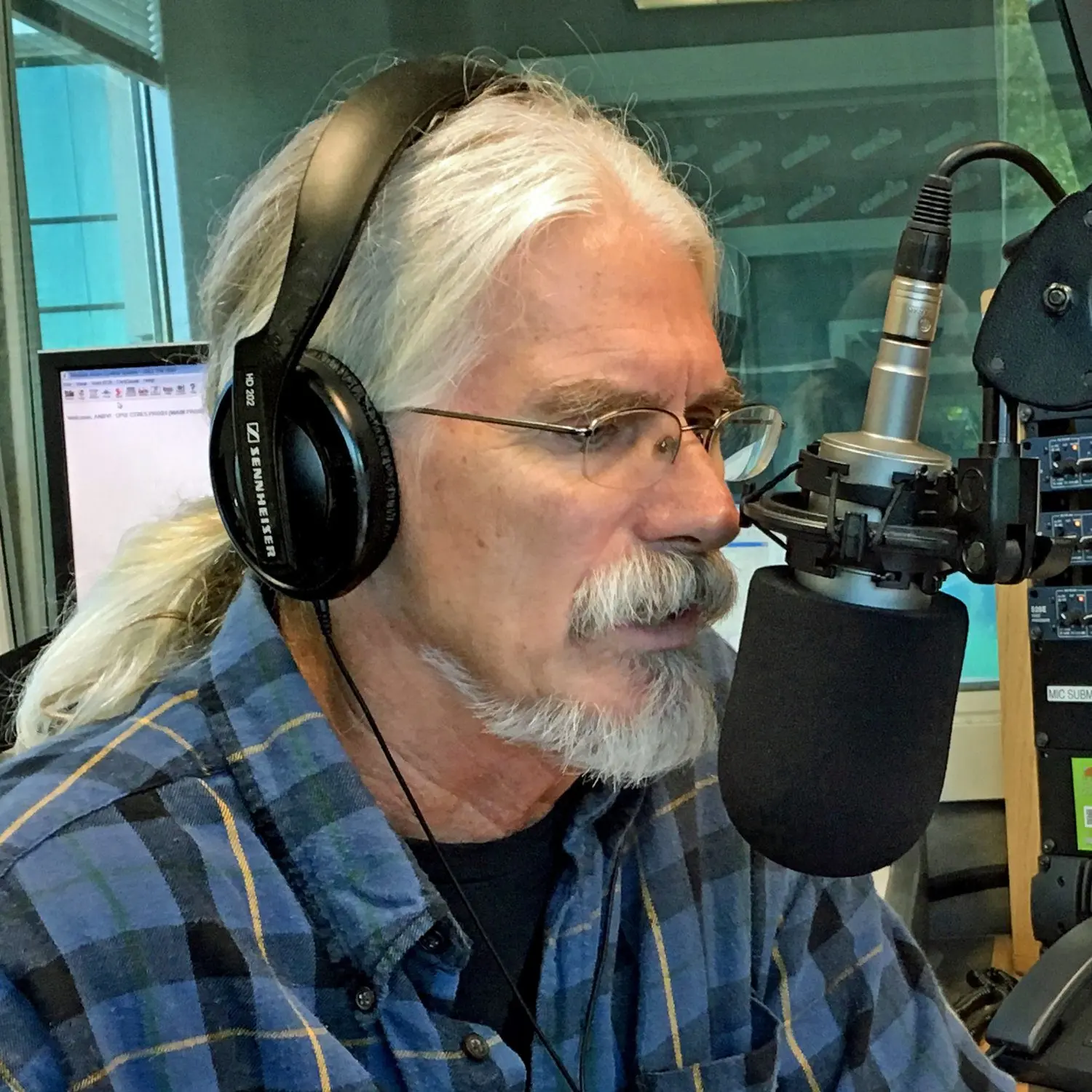
In this engaging episode, Steve Gregg welcomes Dr. Michael Brown for a lively follow-up discussion to their recent debates in Dallas on the topic of modern Israel. They collaboratively reflect on their debates, exploring their interpretations and the potential for future dialogues. With transparency and mutual respect, Steve and Dr. Brown delve into their differing approaches to biblical exegesis and theology, shedding light on how these debates inform their faith and engagement with challenging topics.
SPEAKER 02 :
Good afternoon and welcome to the Narrow Path radio broadcast. My name is Steve Gregg and we’re live for an hour each weekday afternoon. We’ve been doing this since 1997, so it’s been 28 years, been doing this daily. And the program is live so that we can have call-in involvement from listeners. And generally speaking, we give the whole hour to callers who call in with questions about the Bible or the Christian faith. We will be doing that in our second half hour today. We have something different, special, for the first half hour. And this is not a guest-driven show. I could probably count on one hand the time we’ve had a guest on the program in the last 28 years. But as many of you know, a week and a half ago, Dr. Michael Brown and I had a Well, three debates in Dallas, Texas on the subject of modern Israel, and both of us felt like we would like to follow up on the debate in more than one format, one of which would be his calling in here to talk, some follow-up ideas from the debate. There may be other live debates sometime in the future as well. Anyway, Dr. Brown is on the line. I’m going to introduce him right now. In the second half hour, I’ll be taking calls according to our usual format. So I wouldn’t urge you to call in during the first half hour. I mean, you can. You can wait on hold for a half hour if you want to. But this half hour is going to be devoted to this conversation with Dr. Brown. And, Dr. Brown, welcome to The Narrow Path. Thanks for joining us for the first time. Oh, thanks for having me on, Steve. I really appreciate it. Great. Well, I mentioned to you in our texting, I’m going to let you kind of recall the place as far as what you’d like to discuss here. We’ll have some back and forth, but I want to give you as much time as necessary to make whatever points you’d like to make. How would you like to proceed?
SPEAKER 08 :
Well, first, if you don’t mind, I just want your listeners to know what I shared at the beginning of the debate, that of all the debates I’ve ever done, no one has ever been more accommodating or more easy to get along with, more relaxed with formats. I’ve had many fine debating partners, but I’ve been a model of grace, humility, integrity in all of our dealing. Your listeners know who you are. I want them to hear that from me in a debate setting. And the seem-to-be camaraderie we had during the debate was genuine. That was the reflection of what was going on behind the scenes. I think it’s important that I, you know, credit you where credit is due and let your hearers hear that.
SPEAKER 02 :
I appreciate that. And I have, you know, heard other people say that both – both parties in the debate they felt were Christian-like and respectful. So I think it probably is a mutual thing. So thank you for the comments. Yeah.
SPEAKER 08 :
Yeah, well, from the heart. All right, so let me throw out a few things. I obviously want this to be constructive for everyone listening. And, you know, when you do a debate, you obviously are committed to what you’re saying. and you want to reach people that differ with you as well as strengthen your own base and impact people in the middle. So I will, after debate, and see what people say who differed with me to try to see why and to try to find better ways of reaching people. Do you ever do that with a debate, just try to sharpen yourself through it or see, okay, you gave your best presentation and some people don’t agree with you and try to find out? We’ve done that.
SPEAKER 02 :
Oh, yeah. Whenever I have the opportunity, I like to hear what critics have said about what I say, either in debates or in my lectures and so forth. Yeah, there’s no sense being in an echo chamber with the people that agree with you. I’ve often mentioned that I actually, when I read books on controversial subjects, I literally spend more time reading books by the people who disagree with me than I read with those who agree for the simple reason I don’t need to read those who agree. I know what I think. I already know what I think. I don’t know what they think or why sometimes. So I do like to hear the pushback.
SPEAKER 08 :
Yeah, same with me. I’m into a new area of apologetics. I read the other side continually to try to understand it and get in the heart of it. So I just want to self-reflect And maybe you may want to do the same. But you know how passionately I’ve written about church history and anti-Semitism in the church. And it ties in as a brand-new Jewish believer meeting the local rabbi, and he gives me a book on anti-Semitism in church history. And you’re just out of the gate talking to Jewish people, and they can’t believe in this Jesus in light of church history. So, you know, I repudiate it. dual covenant theology, the idea that Jews have their own way to God outside of Jesus. But then I called on others to repudiate a replacement theology and saying, hey, Steve’s not an anti-Semite. Plenty of people are not anti-Semites that hold to it, but it opens the door to anti-Semitism. So in retrospect, of course I believe that, but it’s either better that I make the case for it or just state it briefly. So I felt that I hammered that a number of times, and I think that was off-putting to some. It’s like, okay, I’m just I’m making my point without necessarily demonstrating it adequately in that context, except for the free church history. Dr. Rand, let me interrupt for a minute.
SPEAKER 02 :
Your phone is cutting out a bit. Are you in a bad – are you on your cell phone?
SPEAKER 08 :
Yeah, but I’m in a – Yeah, so sorry about that. I’m in a perfectly good location.
SPEAKER 02 :
Okay, well, maybe it’s my connection, but to me, your phone is cutting in and out, but I’m able to follow you. Oh, I’m so sorry.
SPEAKER 08 :
Now, I did live radio for 16 years, not as long as you, but that’s the worst thing. Is this any better?
SPEAKER 02 :
I think it is. I think it is so far.
SPEAKER 08 :
Okay, well, my apologies to your listeners. If it keeps coming up, I’ll have to. call for another location a different day. But my apologies.
SPEAKER 02 :
Go ahead. Go ahead.
SPEAKER 08 :
Yeah. The other thing, two things I just wanted to say. At one point between debates, you said to me, hey, I can, I don’t have to be so apologetic, apologizing if I differ with you on a point like, Steve, I hate to say this, but there were a couple of points you made. I was just surprised. We both did our best to make sure the we were each prepared for where we came from. You know, you sent me everything relevant you had written and gave me links to listen. You had all my books, et cetera, that were relevant. But a couple of times I said, wow, I was genuinely surprised. I said it with a smile and people felt it was condescending and didn’t marry your humility. So, I mean, you know, though, from the heart, I was, it wasn’t meant in that way. It was just, I was surprised, you know, I was not offended.
SPEAKER 02 :
I was not offended by that at all. Yeah.
SPEAKER 08 :
But, you know, I hear that. It’s like, okay, what can I do to not sound condescending? The other thing was, because you have persistently referred to dispensationalists to hold XYZ, that’s one reason that I went out of my way to quote other Christian leaders through history, hundreds of years before dispensationalism, or church fathers, or other exegetes. And I think it’s important to do it, but I just wanted to underscore my reasons were that very thing to say, hey, don’t just say this is dispensation. This is quite a different thing because that’s often the straw man that people use. You’re not using it. You’ll say that’s dispensation and others. But it’s for that reason. And I found that if I’m going to reach your audience better, then it’s just, okay, take out the Bible and read it, you know, because obviously people love that you do that and it has that appeal. So those were just some self-reflections about if I was doing it again to reach your audience, how I could better reach them, you know.
SPEAKER 02 :
I don’t know if you had any self-reflections. Well, my thought was, and I heard this from a few comments from people, that they didn’t feel that your presentation was exegetical. In other words, they felt like you quoted a lot of verses. But I think the important thing is that both sides have a lot of verses we can quote, but We need to show why it is that the way we’re taking those verses is the correct way rather than the way our opponent takes them. So that’s the thing. I mean, whenever we quote, you know, verses for our position, we should be aware that the other side also knows those verses and also has a way of understanding them and accommodating them. So to my mind, The most effective way to reach the kind of people that listen to me is to do something like what I try to do myself. I try to point out that this verse I’m using to support my position actually does support my position as opposed to alternate views of it. And I often will point out what the alternate views say and then point out why I believe what I do. I don’t say everyone has to teach in the same way, but my audience is, I think, more familiar with that approach because I’ve been doing that on the air so much. So in other words, Uh, you know, you gave a lot of verses, uh, which I also, you know, I also have taught through those verses many, many times. And, uh, and I see their context and I see their meaning differently, but, um, I think that would be the main thing to be concerned about. Like, uh, And to reach, you know, like you say, my audience, it would be best if you, when you take a verse and say, now this is why from context and from the way it’s used in the New Testament, from, you know, from the special language and so forth, why it means what I’m saying as opposed to what my opponent would be saying about it.
SPEAKER 08 :
Oh, yeah. And what I find interesting was there are other, I saw other comments. Again, this is to learn.
SPEAKER 02 :
You’re cut out again, I’m afraid. That’s not good. Michael, you’ve cut out for several seconds. I don’t know if you’ve been cut off completely. If you can hear me, it’d be great if you could call back on a landline. I don’t know why we’re having trouble with your line. Or even if you just call back on your cell phone, we might get a better connection. But now it’s been like 20 seconds that we’re getting silence from you. It makes sense. Okay. Dr. Brown, your phone just cut out for about 20 seconds, and we missed most of what you said. Can you call back on a landline, perhaps, or maybe just call back on your cell phone? Maybe it’ll get a better connection.
SPEAKER 08 :
Well, tell you what, I actually still have a landline in my house. I so apologize. I haven’t had a problem with this in ages, but I will switch and call back momentarily.
SPEAKER 02 :
Okay, great, great. I appreciate that. All right. Matthew in Jersey Shore, New Jersey, do you have a question that’s going to take a long time because I’m just waiting for Dr. Brown to call back?
SPEAKER 07 :
Yeah, I was just listening. I’m interested to hear when he calls back as well. I may need a second, Steve.
SPEAKER 02 :
Okay, I’m going to put you on hold then. I’ll put you on hold and get back to you. Thank you. Okay, after this part. Yep. Okay. Don’t like that air, but I especially don’t like it in the middle of the conversation. I don’t know. That’s interesting. I don’t know that we usually have that kind of problem with our connections. So we’ll be getting another call from him. Let me just say that I may have mentioned earlier, but in the second week of December, I’m going to be doing a speaking itinerary in the Seattle area, or in Washington in general. And so those of you who are up there may want to look at our announcements on our webpage at thenarrowpath.com under announcements, and you’ll see where I’m going to be speaking. Also, another Hebrew Christian wants to debate me about these same issues. His name is Joel Richardson. And he’s talking about debating at a megachurch in Wisconsin in March. So we don’t have those dates nailed down, but hopefully we’ll be able to do so before long. Dr. Brown is back with us, I think. Hello, Dr. Brown.
SPEAKER 08 :
Yeah, I so apologize. As a radio host all these years, I’ve done endless interviews on my cell phone, so of all days to have a problem.
SPEAKER 04 :
It’s strange.
SPEAKER 08 :
Yeah, you seem strong now. Yeah, so just in terms of – of reaching each other’s audience. So I did see that. In other words, what they’re used to with your approach. And for me, going through exegetically Romans 9 through 11, looking at usage, words, grammar, Greek, et cetera, was important. And then bringing in testimonies from others, again, to say, hey, this is not just a dispensationalist view. To me, it was important to give quote after quote after quote from the Old Testament that sent a certain message for people to feel the cumulative weight of it. But I get it for your audience to be like, well, that’s nothing plus nothing equals nothing. So it is interesting. Again, and I’m just saying, okay, who’s the audience? How can we best reach them and sharpen each other? So in your mind, what did you feel were your strongest points?
SPEAKER 02 :
Well, I think the strongest point we could all fall back on is that the New Testament reveals what the Old Testament was about. And that Jesus referred to the rabbis as blind guides. Paul said they had a veil over their heart until they turned to the Lord, then the veil was taken away. You know… Peter even said in 1 Peter chapter 1 that even the prophets didn’t understand their own words and that it was revealed to them that their message was for people to whom the gospel has been preached, Peter said. In other words, the prophets didn’t even know what the manner of fulfillment was they were talking about, though some of it may sound very logical. liberal and obvious, they didn’t understand it, and they were told it’s not going to be understood until your time. And Paul spoke of his message as something that had not been revealed to previous generations, but revealed to the apostles and prophets through the Holy Spirit. And, of course, Jesus opened, and you quoted this verse, too, from Luke 24, 45, that Jesus opened the understanding of the apostles so they could understand Scripture. So, in my opinion… if we can discover what the apostles believed about this subject, and especially from their citations of the very passages that you were using. It would it would trump what we might say is the common sense or plain meaning as we think we see it, because certainly the rabbis and Jewish rabbis are very intelligent people. And if it’s you know, if it’s just the if this meaning lies just on the surface, they would certainly see it. They wouldn’t be blind guides. They would see it. And so I think that the New Testament uncovers, unveils the meaning of the Old Testament. I think that’s the most important thing because, of course, the point I was trying to make is that many, well, the restoration prophecies in the Old Testament that speak of Israel being restored to their land, those are fulfilled essentially and primarily in the return of the exiles from Babylon. But you and I both believe there’s a secondary meaning to them. And it seems to me, I don’t want to misrepresent you, but I think you said this too, but that you believe that many of those prophecies about the return from Babylon, they morph into a prophecy about a similar return in the end times, such as you believe is being observed today. I believe that there’s a secondary meaning, too, and that the return from Babylon is a type and a shadow, just like the exodus from Egypt was of what Christ has accomplished. And it’s a spiritual deliverance, a spiritual gathering. And I believe there’s many New Testament passages that would inform us of that. So that’s I think seeing the Old Testament through New Testament eyes is the most important point. I don’t know if it’s the strongest one I made, but to my mind, it’s very central.
SPEAKER 08 :
Right, and you use the word that the New Testament gives us the code breaker for breaking the code.
SPEAKER 02 :
Right.
SPEAKER 08 :
And the challenge that I’ve had with – so we both agree that the New Testament rightly understands the Old in terms of its ultimate meaning and application, that Jesus is the central subject, that he is the ultimate theme of Scripture, that redemption in him is the ultimate theme of Scripture, that no one comes to God – except through him. So we 100% affirm that. That’s why I wanted to repudiate dual covenant theology out of the gate, as I have for 54 years, just to reiterate that, because sometimes people mishear. But for me, the challenge is, so I’m sitting with a rabbi, and we’re going through the text, and he’s saying, Jesus can’t be the Messiah, because this verse doesn’t mean this, and this verse doesn’t mean this. And if you say, well, the New Testament says it does, obviously that’s Not an argument, well, Jesus rose from the devil. They don’t believe that. So I’m saying, no, I can show you exegetically. I can open up the Hebrew scriptures and show you why Jesus really is the Messiah and these things are true. But now when it comes to the ultimate future of Israel, I’m going to use a different hermeneutic. In your mind, you’re using the same hermeneutic. So one of my arguments was that prophecies having to do with the first coming were literally fulfilled. It’ll be the same with the second coming. And you said that in your calculation was one-third of the Messianic prophecies were literal and the other two-thirds, would you say, what, metaphorical or figurative?
SPEAKER 02 :
They were various types, typological, figurative, spiritual, things like that.
SPEAKER 08 :
That’s what happened to Israel, so it happened to the Messiah. That’s what happened to David, so it happened to the Messiah, et cetera, like that. So my question is, okay, even if we use the one-third, I ask you, which are the one-third prophecies? of Old Testament prophecies about the future that would be literally fulfilled, and you didn’t see that there were future prophecies. I know you addressed Isaiah 65, 17 on the air. I did listen to that part. You sent me the link. But I guess it’s my constant interaction with the Jewish community all these decades that have led me to it. a different understanding of what the New Testament is doing. You know what I’m saying? Yes, certain times there is a literal understanding, but other times the New Testament is making a spiritual point. So just to pursue this, I think this is worthwhile for you to clarify something for me. I did listen to it in your teaching that’s online from Romans 9, 10, and 11. But if you could just recap for me, when Paul is quoting from Deuteronomy, And he’s saying that you don’t have to go to heaven to bring Christ down or go to the depths to bring him up. Do you think that he was saying Moses actually meant that or is he making a homiletical application? How would you describe that?
SPEAKER 02 :
I believe he’s making a homiletical point. I don’t think that Moses was saying to the Jews that Christ had come down from heaven or that he came up from the grave. That’s what Paul says from that passage. But obviously Moses was saying that Israel had no excuse for not keeping the law because unlike other nations, they wouldn’t have to cross the ocean to encounter them. that God had brought the law right to them, to their doorstep. And so they wouldn’t have to ascend into heaven to get God to bring it down. He brought it down himself. They don’t have to cross the sea because they live in the place that God brought it. Other nations would have to cross the sea, but they wouldn’t have. So he’s saying you have zero excuse. And I think Paul is saying the same principle applies with the gospel that, you know, Christ came to Israel. You know, he came down on his own. You didn’t have to go to heaven to bring him down. Even when he died, you didn’t have to go down to Hades and bring him back up. You know, God did that. So I think he’s saying that the Israelites are in a privileged position in terms of access to the gospel, just as they were in terms of access to the law.
SPEAKER 08 :
Right, so for sure, and that type of homiletical interpretation was common in early Jewish interpretation, what would be called midrashic homiletical. So I would see that in other passages where you would see it as they’re breaking the code, and this is how we should understand the Old Testament passage, not what would seem to be a common sense literal reading, but the spiritual insight of the New Testament. I would say, no, they’re making a homiletical point from that as well. That’s a valid point without robbing the text of its actual meaning. So that could be something we could explore one day in greater depth, looking at application and how it works. Because like I said, I see many things that you think is breaking the code. It’s like, well, there is no code. That’s just the spiritual insight that the New Testament writer was given or a spiritual application they’re making without robbing the text of its original meaning. Does that make sense in terms of where we might differ there?
SPEAKER 02 :
Well, I don’t know if we differ there at all. I mean, because I would say that sometimes is the case. You have to take it case by case. Case by case, got it. Yeah, because there’s more than 300 cases where New Testament writers have quoted the Old Testament, and they’re not always doing exactly the same thing. I mean, the way that Matthew quotes Hosea 11.1 obviously is a typological thing. Whereas when he quotes Jeremiah 31, 15 about Rachel weeping, well, that’s not typological. It’s weird. I mean, it’s kind of a strange thing, but it’s got a vague similarity because she was buried near Bethlehem and now the place of Bethlehem. So it’s kind of an impression.
SPEAKER 08 :
Jeremiah didn’t hear her literally weeping in the first place. It was a poetic application from day one. Right, exactly. Yeah, so, I mean, that is something. Is there a pattern that comes out? I mean, that would be something to really look at. Obviously, painstaking, you know, like book-like kind of. But enjoyable. Yeah, yeah, and beneficial. And to me, you know, the other thing we really wanted, we prayed beforehand, was that it would edify the body, right? And that hopefully a non-contentious spirit would edify. Because, look, we feel passionately about it, and we each think, you think the Christian Zionist dispensationalist view can lead to lots of error. And we talked about some of it can’t, we’re not going to mention names now, but, you know, behind closed doors, concerns you have with positions people have taken. And I, I share those concerns. And then, you know, my concerns with where this leads in terms of antisemitism and so on. So we’re passionate about it, but we understand these are not salvation issues.
SPEAKER 04 :
Yeah.
SPEAKER 08 :
And that our unity in Jesus and honor for him is more important. Amen. So what, I’m sorry, last thing, and thanks for being so gracious with your show. Sure. So you had initially suggested we spend the first session discussing replacement theology, and then, you know, we came up, you suggested topics for the other session. So you had suggested the long format, which was wonderful. I’m so glad you did. And even that, we felt there’s so much more to say. And I thought, well, what are we just going to do, debate replacement theology the whole first time? But you’re right. Definition is helpful. What would you think would be a helpful step that we could take to discuss the term, the use, the misuse? What do you think?
SPEAKER 02 :
Well, I wouldn’t mind having another discussion or debate about it. possibly online so we don’t have to get a plane ticket for it. But not that I mind doing it live. But, yeah, if that can be set up, I’d be glad to have a total separate discussion just on that. So what is it and is it – first, what is it and then – Does it naturally lead to anti-Semitism?
SPEAKER 08 :
Got it. Yeah, I mean, I would love to explore that.
SPEAKER 02 :
I would, too. And, Dr. Ron, I don’t know why time goes by so fast here. My music is playing. That means I’m at the half hour point. I know.
SPEAKER 08 :
I’ve been looking at the clock. Yes, sir.
SPEAKER 02 :
Listen, let’s continue discussing these things.
SPEAKER 08 :
Yes. Thank you for your time. I honor you, my friend.
SPEAKER 02 :
Thank you for joining us. I appreciate it very much. Bye-bye. God bless. Bye now. All right. You’re listening to the Narrow Path Radio Broadcast. And after the break here, we’re going to resume with our normal format where you can call in with questions from the Bible if you have them or disagree with the host if you want to. The number to call is 844-484-5737. That’s 844-484-5737. The Narrow Path is listener supported. If you’d like to help us out, you might want to visit our website, thenarrowpath.com. It’s got thousands of resources. They’re all free, but you can donate if you wish at thenarrowpath.com. I’ll be back in 30 seconds. We have another half hour coming. Don’t go away.
SPEAKER 01 :
Take the Narrow Path with you everywhere on your phone or other device by downloading our app from the App Store or from Google Play. You can listen to the radio broadcasts live or later from the app, as well as many other lectures posted at our website. Search for the app by typing the same name as the website, the Narrow Path, and enjoy the learning experience. It’s rare to get such good stuff for free these days.
SPEAKER 02 :
Welcome back to the Narrow Path radio broadcast. My name is Steve Gregg, and we have another half hour to take your calls. If you have any questions about the Bible, the Christian faith, any disagreements with the host, feel free to give me a call. We have several lines open, and if you call right now, you’ll be able to get through. The number is 844- 844-484-5737. That’s 844-484-5737. Our next caller is Matthew from Jersey Shore, New Jersey. Thanks for waiting, Matthew. Welcome.
SPEAKER 07 :
Thanks, Steve, for getting back. I love listening to you and Dr. Brown, and I have spent hours listening. I’m going to ask to switch gears here, so I do apologize. No, that’s fine. Especially for the callers that are really into the current debate, which I’m one of them. So, Steve, in terms of, I guess, like God’s love, like an example would be Romans 8, Chapter 37, kind of to the end of the chapter. Yeah. Just in instances, just talking about God’s love for us. I’m in a point in my life where I’m really wrestling. I’ve lost my father. very recently and I heard you talk about loss and grief and you know that there’s like no pain like it and what I find myself asking is if God’s love is as described anyone I love that way I couldn’t let go through something like this so I guess I’m just I don’t know exactly what I’m asking but I guess I’m asking if you could kind of like help me like walk me through that
SPEAKER 02 :
Are you saying that your father not only died, but he died somewhat more miserably than you feel like would be necessary? I mean, you’re wondering.
SPEAKER 07 :
Yeah, that’s one way to put it.
SPEAKER 02 :
Okay. Well, I’ll tell you that obviously I had a wife who was killed in an accident many years ago. And when people asked me if that made me doubt the love of God, I thought, how could it? I knew she was going to die when I married her. She’s a human being. All human beings die. I didn’t know when she would. But my relationship with God is such that I kind of trust him with those decisions. So I figure he knows a lot better than I do what is best. And she died at age 25, six months after we got married. That’s pretty unexpected. But at the same time, I thought, well, you know, she and I were both ready to meet the Lord. And we both expect to die someday. And we didn’t. We don’t have any real opinions about when we will or when we should. But if God has an opinion about when we should, that’s fine. Now, was your father young when he died?
SPEAKER 07 :
No, but it was tragic the way it went down. You know, it was pretty brutal.
SPEAKER 02 :
I’m sorry. I’m sorry. Yeah, some people die very miserably and some die rather painlessly. And I don’t know why one happens in one case and not in another. I mean, all I can say is that the Christian’s response to grief is to trust God. As Job, when he lost family members, he said, well, the Lord gives and the Lord takes away. Blessed be the name of the Lord. Now, the news he received was that he lost ten children in one day. I’ve never lost one child, but to me it seems like that would be the greatest of all losses imaginable. I mean, after all, my dad died at 95 a few years ago. I miss him. You know, I’m sad that he’s gone, but he’s 95 years old. You’re not too surprised. You know, you’re going to get that phone call at some point. And, you know, he was definitely ready to go, and he didn’t die miserably. So, I mean, it was there were a lot of you miss him, but you realize, well, it was his time. But sometimes you wonder why it was their time. I mean, they’re not that old or or why did they have to die so painfully? The answer is, of course, not known to us. But one thing that is known to us is that grief is part of the human process. And I believe it’s part of the. maturing and sanctifying process. We have to deal with loss. We have to deal with broken hearts. It’s just part of the real world. And the Bible doesn’t say that Christians are exempt from anything like that kind of loss or grief. But it does say that we don’t grieve as others who have no hope. You know, when my wife died, God gave me a tremendous amount of grace. So the people around me thought, oh, you’re just in the first stage of grieving. You’re in denial, but just be ready because it’s going to hit you like a ton of bricks in a few days or weeks. Well, it never did because I never was in denial. In denial means you’re not willing to accept the fact that it happened. You’re not admitting it to yourself. I admitted it to myself. And in fact, when my wife died, I actually said out loud, the Lord gives and the Lord takes away. I was not happy that he took her away. But that’s my belief system. And I really do believe that. And I never denied that she was dead. And I never did get hit with a ton of bricks. And when people say you’re going through those five stages of grieving, well, those five stages have been identified by, no doubt, counselors and psychologists who have dealt with people who come to them, and usually people come to counselors and psychologists because they’re not coping well. But Paul said, was living at a time when there were no counselors or psychologists to go to, and yet lots of people died. In fact, everyone did. Paul said, we don’t grieve as others who have no hope. We grieve, but it’s not the same experience for us because we do have hope. We have hope in God. Now, why God lets someone suffer before they die, I don’t know. But I will say this. At the point they die, their suffering is over, unless, of course, they’re not a believer. I don’t know if your dad was or not. But even if I had relatives that died as unbelievers, and I do have some who have died that were unbelievers, I can still trust to the mercy of God because God is the one absolute God. God’s love, well, he is love. And therefore, you know, his concern for the well-being of my loved ones, even unbelieving ones, is greater than my concern is because I’m not love. He is. I love him, but I’m not love. God is love. So you just have to deal with the fact that God is good, wise, and loving, and things happen in ways that we don’t get an explanation. But once someone has died… you release them. You release them to the hands of God. And that’s really the only thing you can do because nothing else is going to bring them back. So, I mean, you can, whenever you suffer a loss, you can either say, I’m not going to be okay with this. And God owes me an explanation. Or I’m going to be angry at God. I’m going to be angry at, you know, reality or the universe or whatever. Well, why? I mean, you don’t have to be. And God doesn’t owe us any explanations. And they were going to die some way or another. And some people died much more miserably than anyone we know. You know, there’s people who were tortured to death in prison for Christ’s sake. or burned at the stake or fed to lions and hacked up by gladiators. This happened to hundreds or thousands of Christians. And they weren’t saying, well, why did this have to happen? God, if you’re a God of love, why did you let this happen? Well, Jesus said, in the world you’ll have tribulation, but in me you have peace. So as Christians, we have a different worldview. We have a different focus. That is that God, we know, is good. And we know that he is loving and we know that he is sovereign over what affects us. So, you know, we can either trust God or not. But what is the not? You know, what do we do if we don’t trust God? We get grumpy at God or whatever. Now, if you say, but I’m just really, really sad. Well, that’s a reasonable position to take. There’s nothing wrong with being really sad. In our society, we forgot that being sad is a normal part of life. We’re so insulated from, I mean, just with our modern society, from poverty, from ill health, from most disappointments we can get around. But through most of history, People died. They were poor. They suffered. They had horrible, ruthless wars. And people just had to deal with it. That’s what a fallen world does. But God will remake the world. And there will be no more death, no more crying, no more pain, the Bible says. And so, I mean, that’s what we know that others do not. And that’s why we do not grieve in the same way that others do, though we do grieve. And grief… is a good thing. Grief is a wholesome thing. It awakens our sensitivities to things that we don’t think about when we’re not grieving. So I might recommend to you my lecture series. It’s only four lectures long, but it’s because a lot of my lectures are real long. It’s called Making Sense Out of Suffering. Have you heard that series by any chance?
SPEAKER 07 :
I have not, Steve, actually. I’ll I will look into that, actually, yes.
SPEAKER 02 :
Yeah, please do. Go to TheNarrowPath.com and look under Topical Lectures, the series Making Sense Out of Suffering.
SPEAKER 07 :
It might be helpful to you. Right, right. I will. I’ve heard a couple of your lectures. They’re all fantastic. That was a beautiful answer. Answered similarly in a way I would expect my father to answer, so thank you for that. God bless you, brother.
SPEAKER 02 :
Well, God bless you, Matthew. I’m sorry for your loss.
SPEAKER 07 :
Thank you.
SPEAKER 02 :
Good night. Well, let’s talk to Dwight from Denver, Colorado next. Dwight, welcome.
SPEAKER 05 :
Hi, Steve. My question is, I’m wondering if Jesus had faith, and I guess I question whether he even needed faith, whether he was the object of faith. But if he had faith, why is he not mentioned in Hebrews 11 as having faith?
SPEAKER 02 :
Well, actually, no New Testament person is mentioned in Hebrews 11. What Hebrews 11 is intended to do is to go through the Old Testament and show how virtually every hero in the Old Testament, though many of them did remarkable things, they did them through faith, and it’s by faith that they received the good report. That is to say, I think that’s another way of saying by faith they were justified. God has counted righteous to them. He counted them good and gave them good report because of their faith. Now, the reason for not going into the New Testament examples, possibly, is because the writer is writing to Hebrew Christians, some of which were on the verge of leaving their Christian faith and going back to the Jewish religion. So he’s trying to point out from the perspective of the Jewish religion how that justification by faith which is of course taught in the Christian faith, is consistent with the Old Testament, that all these people, starting with Abel and You know, Enoch and Noah and all that, everything they did was by faith. And so, you know, mentioning Jesus would not be an issue. Did Jesus have faith? Of course. You know, when he said, Father, into your hands I commit my spirit, he’s saying, I’m trusting you with this. In fact, the writer of, I mean, 1 Peter chapter 4 says we should do the same thing. In 1 Peter 4.19, he says, therefore, let those who suffer according to the knowledge of God, the will of God. If you suffer according to the will of God, it says, commit the keeping of your soul to him in well-doing as unto a faithful creator. You commit your case into God’s hands because he’s faithful, and that means you entrust it to him. That’s faith. Jesus did that, too, on the cross. Into your hands I commit or entrust my spirit. If I commit a job to be done by a mechanic or a plumber or something, I entrust them with the job. I commit it into their hands. I don’t try to do it myself. And so, you know, that’s, you know, Jesus’ whole life, I think, was trusting his Father, trusting the Word of God. Remember when he was tempted, he quoted Scripture in order to bolster his, you know, resistance to Satan. And that means he was trusting in Scripture. He believed in Scripture. And… Yeah, so, I mean, Jesus had faith. The whole life of the whole relationship with God is based on faith. Now, we might say, well, Jesus was different because he had seen God. And, you know, faith is believing what is not seen. Yeah, well, you know, the apostles also believed in Jesus’ resurrection after they saw it, not before. but that doesn’t mean they didn’t believe it. Jesus said, blessed are those who have not seen and yet believe. But if you do see something, you can certainly believe it as a result of that too. So, I mean, Jesus having seen the Father before he came to earth does not make it impossible for him as a man to live trusting the Father for everything. That’s what faith is. Okay. Okay, Dwight, good talking to you, man. Let’s talk to, let’s see, who’s next here? It’s going to be Walter in Tampa, Florida. Walter, welcome.
SPEAKER 03 :
Hey. Yeah, you know, you have that gentleman on, and I miss Moses about it, about the Old Testament and New Testament for Jews. But, you know, Paul and it says in the New Testament that both Paul and Jesus proved beyond a doubt to the Jewish nonbelievers at the time that Christ was the Messiah. So I think if you don’t need the gospel, they can have the Old Testament and still become saved Jews. My other question is, I have so many people, you know, they say act like Christ is coming tomorrow in your life, but they really don’t believe it. The verse that God shines on the evil and the good, messes up and they all believe it’s a thousand years or two thousand years away but i believe we’re closer to the end times is there any scripture that says once israel became a nation again that we are closer well uh there’s no scripture that i understand that way there there is a scripture that i once took that way
SPEAKER 02 :
And that is, of course, in Matthew 24, when Jesus said, consider the fig tree, you know, when it puts forth new twigs and grows leaves and so forth, you know that summer is near. He said, so also when you see all these things begin to come to pass, know that it is near, even at the doors. And then he said, this generation will not pass before all these things are fulfilled. Now, the teachers I sat under when I was younger connected things. the budding of the fig tree with the generation that will see Jesus come back. And so they said, well, the budding of the fig tree represents the nation of Israel becoming a nation again in the end times, which they identified with 1948. And then they said, now the generation that saw that will not pass until all these things are fulfilled. This would be, I think, the only scripture that was used to specifically suggest that the coming of Israel together as a nation in the end times would specifically herald the near coming of Christ. I mean, you know, many of the scriptures taken a certain way might speak of Israel becoming a nation in the end times. But most of them don’t have anything to say about, and therefore, when that happens, the second coming of Christ is near. So, I mean, I don’t think there’s anything in the Old Testament that suggests that that I know of. But that New Testament statement seems to be the only one. So, in my opinion, we have nothing. Because that particular statement that I cited for you does not say that the generation that sees the fig tree bud and revive… It does not say that generation will see all these other things come to pass. No, he says when you see a fig tree having this revival take place, you know that summer is near. This is not much different than when Jesus said to the Pharisees, when you see that the sky is red at night, you know it’s going to be nice weather tomorrow. But if you see it red in the morning, you know it’s going to be foul weather. He said, you hypocrites, you can interpret the face of the sky, but you can’t recognize it. the signs of the times, meaning the times they were living in. That is to say, you should be able, just as you can predict things from looking at the sky, you can predict the weather, you should be able to put two and two together here and see that the signs of the times are telling you that the Messiah has come. And Paul is saying the same thing when he says, just like you can tell that summer is nearby certain phenomena in the biosphere, So also, he says, when you see these things, know that it is near, meaning the destruction of the temple that he predicted a few verses earlier. Now, when he says this generation will not pass, he’s not coming back to the subject of the fig tree again. He’s simply saying this generation won’t pass until all these happen. You see, they had asked him two questions. They asked him when will it be when he predicted the destruction of the temple. He said not one stone will be left on another. They asked when will it be and what sign will there be that it’s about to take place. Now, I’m not quoting Matthew 24.3 because they use Hebrew idioms there that are a little more difficult. But Luke and Mark both said, represent the disciples as asking these two questions. When will it be? What sign will there be when it’s about to take place? And when Jesus said this generation will not pass, he’s answering the first question. You want to know when it’ll be? It’ll happen in this generation. And then, you know, as far as what sign will there be, he actually said when you see the abomination of desolation, standing where it ought not to be, then know that it’s near. Luke paraphrases that because abomination of destination is a Hebraism that his Greek reader would not know. And he says, when you see Jerusalem surrounded by armies, know that its desolation is near. So that’s the sign that it was about to take place. And so… You know, the generation that he spoke of was his own generation. And by the way, I think there’s about five other places in Matthew that say this generation. And all of them seem to be talking about his own. He talks about the generation that rejected John the Baptist and rejected him. That’s the generation that were like children playing in the marketplace saying, you know, we played the flute and you didn’t dance. We played the dirge and you didn’t mourn. He said this generation is like that. They rejected John’s message and they rejected mine. Essentially, every time Jesus used the term this generation in Matthew, he was talking about his own and not some future one. Besides, if he was talking about a future generation, he should have said that generation will not pass because he’d be referring to some other generation, and that’s the normal way of speaking it. That generation won’t pass until these things are done. So Jesus is talking about the destruction of the temple in that generation, which did happen. He’s not talking about the second coming of Christ, and therefore that very passage that is used most often to place the restoration of Israel near to the second coming. Well, that passage isn’t really talking about that subject at all, in my opinion. All right. I appreciate your call, Walter. Let’s see here. Peyton in Seattle, Washington. Welcome to The Narrow Path.
SPEAKER 06 :
Yes. Hi, Steve. Enjoy your program. Thanks for taking my call. I hear a lot of Christians talking about God living outside time. I’d like your comments on that. And I’d have some follow-up questions if you don’t mind.
SPEAKER 02 :
All right. Yeah, well, the Bible does not say that God lives outside of time. That’s a philosophical notion. As near as I can tell, it comes from Greek philosophy mostly. The Bible does not say that God does or does not live outside of time. He could live inside of time or outside of time. And we would have equal amount of scripture to answer that for us. Usually the suggestion that God lives outside of time is the way that Arminian people, like myself, answer the question, how does God know the future if he did not foreordain it? You see, the Calvinist believes that God foreordained all things future, and therefore he knows what they will be because he’s going to make them happen. Arminians don’t believe that God foreordained all things future, but he knows them anyway. And so if someone says, how does he know them? Well, one of the answers, perhaps the main answer that modern Christians give is like that which C.S. Lewis gave in his book Near Christianity. was that God lives in a different realm outside of time. Now, some have appealed to Einstein’s theories where, you know, time is relative and space is relative. And even the Big Bang idea, which is popular now among most scientists, is the idea that time and space and matter all began suddenly. in a big bang, and before that, they didn’t exist. Now, when Christians accept the big bang theory, as many of them do, they would say, well, that’s God did that. That was the moment when God said, let there be light, and boom, there was light and everything. And if that is true, they say, then time began, and time is a created thing, just like space is, and God is outside and above and transcendent to his creation, and Therefore, God’s outside of time. Now, this could be true. I mean, frankly, I think it’s above my pay grade. I don’t even understand the big thing. I don’t understand Einstein’s theories, and I don’t have scriptural statements telling me that he’s outside of time. I do believe that God knows all things future. Now, there’s other Christians that take the open theology view who don’t believe that God knows all things future, and therefore they don’t need this God is outside of time kind of theory, but… Most Armenians, because we do believe God knows all things future. We’ll buy into that. Now, it’s possibly not the correct answer. I mean, if we say, how does God know the future if he doesn’t determine it? It’s possible that God outside of time is not the only answer that is available. It’s just perhaps the easiest one to articulate, I suppose, that makes any sense to some people. And possibly, I mean, I’m not rejecting it myself. I just say the Bible doesn’t tell us this. It’s a philosophical point. one could believe it or not, and still have all their theology, you know, unsullied.
SPEAKER 06 :
He quoted the scripture from, or the chapter from C.S. Lewis’ book, Mere Christianity. He does dedicate a chapter to his view that God lives outside time, but he concludes the chapter by saying this is not taught in the Bible. Yes, and I think he says at the beginning. And also, in that chapter, he gives the worst explanation of the Trinity, I think, that the world has ever heard.
SPEAKER 02 :
Well, I don’t know if his is the worst. I don’t necessarily follow his. I’m not sure what the best explanation of the Trinity would be, since the Bible never gives any explanation of the Trinity. I’m not saying the Bible is not Trinitarian. It is. I believe Trinity is biblical, but it’s not that you could find some statement in the Bible that explains the Trinity.
SPEAKER 06 :
No, I wasn’t appealing to the Bible for a definition of it, but his definition, if you recall, his logic was… About the two books on the table? …surprising and lack of insight, but… My view is, you know, God didn’t have to create time. It’s a default when he created matter. You know, they always say space-time and matter is a continuum. So they’re all codependent on one another.
SPEAKER 02 :
Well, I will say this, that this idea that God doesn’t experience time does not seem to be correct, simply because, you know, if he created everything… At a certain point, we would say a point in time, before which everything didn’t exist. It did after, but it did not before. And yet, before and after are time statements. They have to do with chronology. There was a time before God, when God existed, but the universe did not, which seems to mean there’s time. You know, if someone says, well, there couldn’t be time before there’s space, because I don’t know why they’d say that. To me, time simply means one thing happening after another thing and not everything happening simultaneously. So, you know, I’m not sure what it would mean to be outside of time. But, you know, God exists in a realm that we are not in, in many respects. And therefore, I’ll leave it to him to understand that stuff. Right. I’ve never really felt it necessary to understand that. And even Lewis in his chapter on that, I think he says not all chapters of a book need to be read. They’re not all important. This is maybe one of them you want to skip over because it’s not essential. And I agree with him on that. Hey, I appreciate your call, but I’m out of time. All of you, thank you for joining us. You’ve been listening to The Narrow Path. We are listener-supported. You can write to us at The Narrow Path, PO Box 1730, Temecula, California, 92593. Or go to our website, thenarrowpath.com. Thanks for joining us.
