



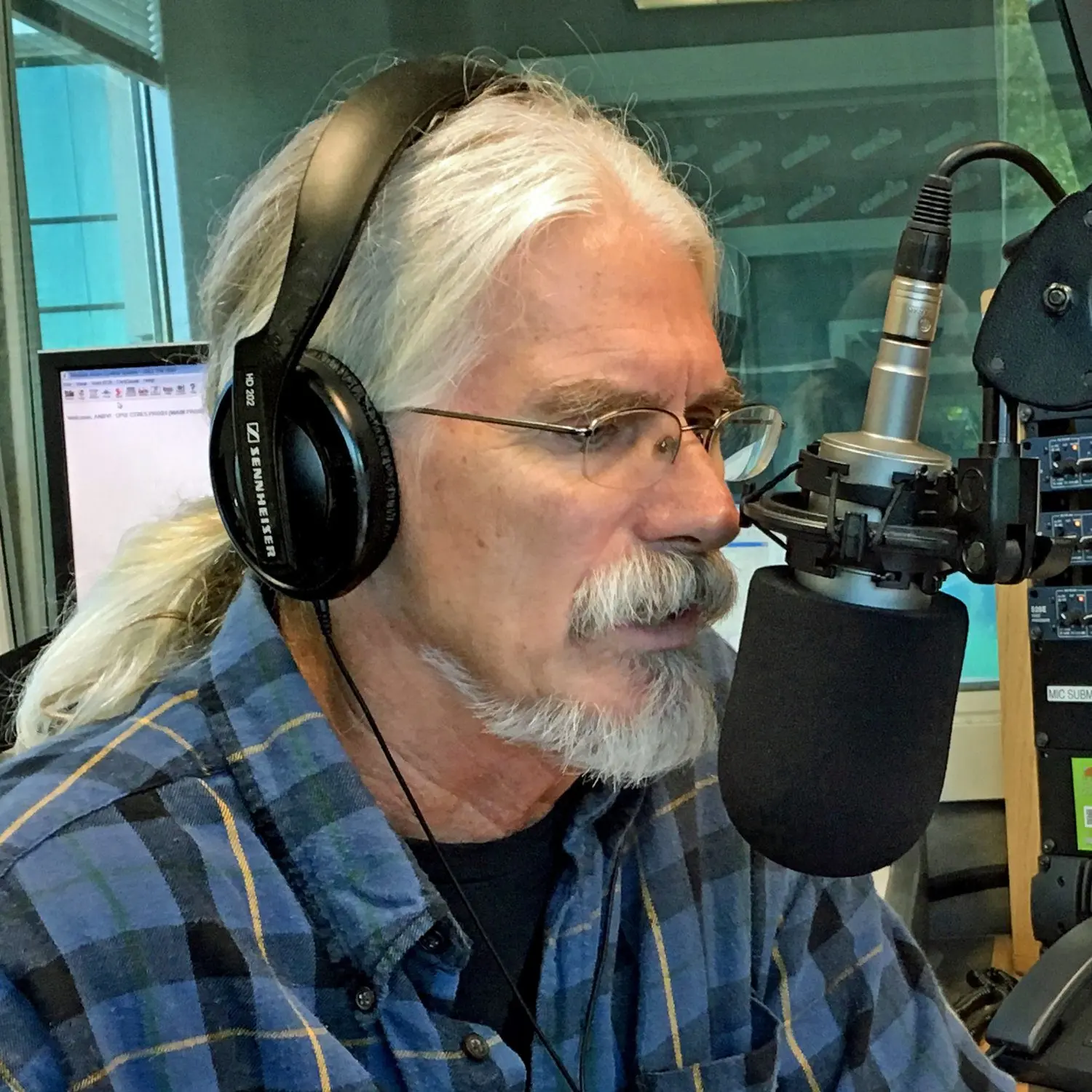
Join Steve Gregg on the Narrow Path as he delves into the contrasting theologies of historic premillennialism and dispensationalism. This episode unpacks complex theological transitions and examines the transformative journey individuals face within these beliefs. Listeners may find clarity in the historical context of premillennialism and its divergence from dispensationalism that arose in the 1800s.
SPEAKER 1 :
Thank you.
SPEAKER 02 :
Good afternoon and welcome to the Narrow Path radio broadcast. My name is Steve Gregg and we’re live for an hour each weekday afternoon so that you can call in and we can talk about things that are on your mind, particularly questions about the Bible or the Christian faith that you’d like to discuss on the air. You might even have a difference of opinion with the host on some issue. We want to talk about that. You’re welcome to do that. The number to call is 844-484-5737. I want to remind you that I will be speaking in the Seattle area for about a week, the second week of December. There will be certain places I’m speaking that may be near you if you’re interested in speaking. attending, you may go to our website, thenarrowpath.com, and see where I will be speaking there. That’s in the second week of December. All right, let’s go to the phones and talk to Jason in Salem, Oregon. Hi, Jason. Welcome to The Narrow Path.
SPEAKER 03 :
Hey, Steve. It’s great to talk to you again. Thanks for taking the call. I I was recently listening to an old call you had on YouTube about you were talking to a guy who was calling himself a historic premillennialist. And you mentioned during that call that after you left dispensationalism, you kind of landed there for a while on your way to amillennialism. Yeah. And I was wondering if you could just maybe give a definition of historic premillennialism and kind of compare and contrast that a little bit. and then kind of maybe just describe your kind of thought process on that transformation and how and what verses you kind of used to, and if there was any other stops along the way, it sounded really interesting.
SPEAKER 02 :
Well, yeah, I mean, if you want a thorough discussion of my journey, I do talk about that in my lecture series, When Shall These Things Be? So, I mean, if you want to listen to that series, you’ll see more detail than I can give you right here. Dispensational premillennialism is just another word for dispensationalism. And dispensationalism holds that there is a future millennium. And but there are people who hold this view that there is a future millennium who are not dispensational. And those were like people in the early church. They were about for the first three centuries, quite a few church fathers who were premillennial. They didn’t call it that back then, but they believed in a future millennium after Jesus returns. but they were not dispensationalists. So dispensationalism then arose in the 1800s, and it had its own features that it added to the millennium and to eschatology in general, which were not part of the earlier form of premillennialism of the early church. And that’s why the early church of premillennialism is called historic premillennialism, because it was the original form. And then in the 1800s, another form of premillennialism arose called dispensationalism. Now, there’s a number of things about dispensationalism that differ from historic premillennialism. One is that dispensationalism added the idea that there are some promises God made to Israel that have not been fulfilled and that they will be fulfilled in the millennium when Jesus comes back. They believe that in the millennium, the temple will be restored and that there will be animal sacrifices again offered by Levites, by the Levitical priesthood, as in the Old Testament times. And this is the main feature of dispensationalism that does not agree with earlier forms of, well, frankly, any form of theology prior to it. The idea that God has to fulfill promises to Israel that have not been fulfilled is a pretty distinctly dispensational idea. Now, I was dispensational, and another aspect of dispensationalism is the pre-tribulation rapture. Before dispensationalism, it was not part of any normative theological system. And historic premillennialism back in the early centuries did not teach a pre-tribulation rapture. So many times when people cease to be dispensationalists or cease to identify as dispensationalists, what they’re really changing is their view of the rapture. Because dispensationalists really emphasize the pre-tribulation rapture. Now, if somebody gives up their view of the pre-tribulation rapture, says, you know, I can’t find that in the Bible, but they remain a believer in a future millennium, they often assume they now have become historic premillennialists because, of course, historic premillennialists did believe in a future millennium but did not believe in a pre-true rapture. So this is one step that a dispensationalist may take away from dispensationalism and yet retaining a premillennial view. For those who don’t know what premillennialism is, it’s the idea that Jesus will come back before us. The millennium, that the millennium, which is mentioned only once in the Bible, which is in Revelation 20, will occur after Jesus comes back. So they believe in a premillennial return of Christ. So many people would call themselves historic premillennialists. only because they’ve abandoned the pre-trib rapture. And, you know, they might have also abandoned some other aspects of, you know, the Jewish temple and sacrifices in the millennium, things like that. But many of them have not really taken the whole step to historic premillennialism because historic premillennialism was supersessionist. Now, for those who don’t know the word supersessionist, it’s what some people – used as a pejorative label for it. They call it replacement theology. Now, you’ll hear a lot of dispensationalists, especially, talking against replacement theology. And this is the view that was held by the early church, and it was held throughout history. Even the premillennialists in the first three centuries believed in it. And that was the view that God’s promises to Israel have been fulfilled in Christ, that Christ is the fulfillment, that those who are in Christ are heirs of the promises, just like Paul said, where he said in Galatians 3.29, if you are Christ’s, then you are Abraham’s seed and you are heirs according to the promise. So if you belong to Christ, he said, you are the heirs of the promises made to Abraham. And that’s what the church always believed, that the church is essentially the continuation of the faithful remnant of Israel. And that being merely natural Israelite, that is simply having Jewish blood, doesn’t really put you in a special category in God’s sight. And so some people say, oh, then you’re saying the church has replaced Israel. That’s why they call it replacement theology. That’s not really what we’re not saying the church replaced Israel. We’re saying that Christ fulfilled the promises to Israel, which is somewhat more positive thing to say. Also, we do believe that the old covenant has been replaced by a new covenant. But that shouldn’t be controversial at all because the Bible says that in no uncertain terms, in Hebrews especially. But so anyway, the idea that the nation of Israel, is God has fulfilled his promises through Christ. It’s called supersessionism because those who are in Christ supersede those who are simply ethnic Jews in terms of the receiving of covenant promises. And that’s because the new covenant is made with those who are in Christ. It’s a simple, simple thing.
SPEAKER 03 :
So the historic premillennialists are supersessionists?
SPEAKER 02 :
Yes. In fact, virtually the whole church was supersessionists for the first 1800 years, and that included the early Christian fathers who were premillennial. Now, after premillennialism died out in about the 4th century, most of the church was amillennial and was also supersessionist. So The medieval church, the Catholic church, the reformers, the Reformation church were all amillennial. And many, many modern Christian groups are amillennial today. But in the 1800s, dispensationalism arose and restored premillennialism in a different form. And so most of us, let’s say, who were Christians raised in the evangelical churches in the 20th century, let us say, were taught dispensationalism, which was the leading form of premillennialism at that time. But also many have abandoned dispensationalism, or they think they have, because they’ve realized there’s no place in the Bible that speaks of a pre-trib rapture. And that’s a distinctive of dispensationalism. So they say, well, I don’t believe in that, so I’m not dispensationalist anymore. And they don’t realize that they may not be dispensationalists in that sense. But the thing that most definitely defines dispensationalism is not the pre-tribulation rapture, but the idea that God has not yet fulfilled his promises to Israel. Because the church has always believed that Jesus is the fulfillment. He is the hope of Israel. But the dispensational idea is that Jesus is not himself the hope of Israel, but he’s going to bring about the hope of Israel, which is a restored nation in the Middle East. In the millennium? Well, yeah, before or in the millennium, yeah. And so here’s the thing, that when people are dispensational, they sometimes study the Bible enough to realize, wait a minute, I don’t have any biblical basis at all for believing a pre-tribulation rapture. So they take that out, but they still believe in the future millennium. So they regard themselves in many cases to be historic premillennial now. Though, in fact, they don’t realize that as long as they’re still holding out for unfulfilled promises to Israel, that’s not really historic premillennialism. It’s just a modified form of dispensationalism. Because really the essence of dispensationalism is that God has two chosen peoples, the church and Israel. And as long as you’re making a distinction between Israel and the church, basically you’re standing on the foundation of dispensationalism.
SPEAKER 03 :
Awesome. What was the name of that series that you mentioned at the beginning?
SPEAKER 02 :
When Shall These Things Be? It’s at our website, thenarrowpath.com. Awesome.
SPEAKER 03 :
I’ll check that out.
SPEAKER 02 :
Yeah, one of the tabs says Topical Lectures, and there’s a lot of series, but one of the series is called When Shall These Things Be? And that’s where you’ll find a more thorough treatment.
SPEAKER 03 :
Awesome. Thank you so much.
SPEAKER 02 :
Okay, Jason, thanks for your call. God bless. David from Houston, Texas. Welcome to The Narrow Path. Thanks for calling.
SPEAKER 07 :
Good afternoon. I’m a Christian. I have a good friend who’s not a Christian. I think he’s pretty like a New Ager, but a good friend. Every morning he sends me these little motivational memes on my phone, and a lot of these little sayings from Eckhart Tolle. I’ve heard that name but didn’t really know much. If I do a basic Google search and, you know, I found interesting that he claims, and I believe it, this profound spiritual awakening when he was younger where his self, you know, collapsed and dissolved. And then he wakes up and has this peace that, you know, lasts him to this day, I suppose. But it got me to thinking this, okay? I remember back in my campus crusade days, The Four Spiritual Laws by Bill Bright and the diagram of the self-directed life with self on the throne, Christ on the outside. And then they contrasted with the Christ-directed life. It’s kind of opposite of that. My question to you is this. What is the biblical perspective of self? And is the self supposed to be killed, crucified, annihilated in order for one to, let’s say, authentically walk with Jesus and experience peace?
SPEAKER 02 :
Well, you know, the Bible doesn’t use the word self as a noun like we do. You know, we’re often talking about, you know, the self needs to be nurtured. The self has to be respected. The self has to be protected and so forth. The self has to be honored, you know, and so we have ideas like self-esteem, you know, self-worth, and those kinds of things have come. Those are all part of the therapeutic society that arose in America probably in the or at least really with a vengeance in the 70s. And so we think of the self as a thing, and it’s almost like a pet. You have to feed your pets. You have to feed yourself. You need to keep your pet healthy. You need to keep yourself healthy. But yourself just means you. I mean, self really is more like a suffix. Myself, yourself, itself, their selves. It’s it’s not really a noun itself separately. It’s it simply is saying it’s sort of a reflexive pronoun kind of a thing, you know. When I talk about me, then I do something to myself as opposed to somebody else. It just means I do it to me. The idea of the self is simply not in the Bible. Because it is assumed, and it was assumed until very recent history, that self is not some separate thing that needs to be nurtured. It’s just who you are. You are yourself. You’re not somebody else. And so the Bible doesn’t talk about death to self. The Bible talks about deny yourself, which means instead of nurturing yourself or who you, instead of paying attention to yourself all the time, to you, how about be more outwardly concerned, and especially toward God. Now, if we change the word myself for simply me, then that’s fine. We’re using language the way language usually is used. And so this Campus Crusade illustration from the four spiritual laws where self is on the throne and then self has to get off the throne and Jesus has to be on the throne is simply another way of saying, I need to stop serving me. and start serving Jesus. Now, if we say, I need to stop serving myself, that’s fine, as long as we recognize myself is one word and not two. You know, if I’m serving myself, it means I’m serving me. If we make myself two words instead of one, then we’re talking about the self as if it’s some kind of entity that needs my attention, especially, separately. And the Bible doesn’t talk about self that way.
SPEAKER 07 :
That’s an awesome answer. I listened to you very carefully. Can I ask one quick little related question to that?
SPEAKER 02 :
Sure.
SPEAKER 07 :
Okay. So when, let’s say, I don’t know, an Eastern mystic or even someone like Eckhart Tolle says, you know, my self is gone, you know, I no longer have a self, what are they talking about?
SPEAKER 02 :
Well, they’re talking about the self as if it’s something other than Who it is. You know, if I say myself is gone, first of all, that’s a crazy statement. That’s using myself as if it’s two words instead of one. My space self would be like saying my arm or my liver or my hair. I mean, as if it’s something that is other than me, but something I have. Myself. Well, no, my self isn’t gone unless I’m gone because I am myself. And nothing else is myself. Only I am myself. So, of course, your self is not gone.
SPEAKER 07 :
Now, if he’s saying… If they’re still alive, living, and they said their self is dead and gone, then that’s a contradiction, right?
SPEAKER 02 :
Of course. Absolutely. Absolutely. Because my self simply means me. If I say I am gone… then I’ve said I myself am gone. I mean, that’s what it means. But if I’m here talking about it, then I’m not gone. Myself is not gone. Myself is saying these things. But you see, what he’s thinking is self is an aspect of your personality, which you have to be rid of in order to be selfless. Now, again, words have been used in a tricky way here. You cannot be selfless in the sense of you don’t have a self. You can act selflessly in the sense that you’re not coddling yourself. You’re not choosing your own preferences. You’re being sacrificial. Then you’re being selfless. But it doesn’t mean you don’t have a self. What it means is that you’re not allowing your self-interest to be dominating your choices. So, yeah, it’s funny because ever since at least the 70s, I remember when people said you need to learn to love yourself. You need to esteem yourself and so forth. That was kind of evolving the word self from the ordinary way. Like, do I need to think well of myself? That is, do I need to think well of me? Well, maybe I do, maybe I don’t. I don’t think the Bible says I do. But if someone’s saying, hey, you need to respect yourself, I think what the original meaning of that was, you need to realize that you are a person worthy of respect and treat yourself with respect. But, of course, after that kind of self, self, self, self cult began to dominate in the modern therapeutic psychological talk, then suddenly, I mean, then we had Self Magazine come out. I remember the first time I saw the first issue of Self on the shelf. I can’t believe it, you know. I mean, because, of course, all this self-talk is simply self-centered, right? It’s simply selfish. It’s all that civilized people in the West from Christian backgrounds have realized is being selfish is being immature and sinful, you know. And so I thought no one would ever really admit that this is what they’re being. And then out comes Self magazine, which happened to be a woman’s magazine, I guess. I didn’t realize it because I didn’t look at it until years later. But I guess it’s a woman’s magazine, Self. But it’s all about selfishness or self, you know, self-focus, self-centeredness, which is an unhealthy thing. Because, of course, you do the best for yourself when you serve others and you deny yourself. You don’t die. You don’t disappear. You just deny self’s dominance and interest. You know, you have self-interests. Of course, everyone does. And other people have interests. And when you lay down your own interests for other people’s, you’re being unselfish. You’re being selfless. You’re not being self-centered. Unless, of course, you’re doing it in order to get something for yourself. We can’t really delve the depths of all this right now, partly because it’s a very deeply ingrained cultural thing in modern America today. And it’s even hard to think clearly about the word self anymore. But suffice it to say, when the Bible says, when Jesus said, if anyone come after me, let him deny himself and take up his cross, it means let the person choose not to allow himself to be the most important thing. Rather, God is the most important thing. And, you know, by nature, you think of yourself differently. more than anything else. You’re more concerned about your own interests more than anything else. And this is what you have to reorient. Stop being about that. Stop being about you. Start being about God and others. And then you’ll find, you know, that you fall into the proper slot in the whole social and spiritual order.
SPEAKER 07 :
Well, I thank you so much for that really good explanation.
SPEAKER 02 :
Okay, David. God bless you. Good talking to you. Bye-bye.
SPEAKER 07 :
Bye now.
SPEAKER 02 :
Oh, by the way, for those, I believe I have a lecture or two on this. It’s been a long time since I taught it, but there’s a series at our website called Biblical Counsel for a Change. It’s called Biblical Counsel for a Change. If you go to thenarrowpath.com. under Topical Lectures, look for Biblical Counsel. And you’ll find there’s some lectures on the self, but you’ll want to listen to the earlier lectures. I think there’s eight lectures in that series. Everything at our website is free, by the way. I’m not selling you anything. Just go and click on it and listen to it. It’s free. Anyway, John in Detroit, Michigan. Welcome. Hello, Steve.
SPEAKER 05 :
Before I ask my question, I want to make a remark. I very much appreciate how self-deprecating and humble you are when you make remarks such as, understanding so-and-so is above my pay grade. That’s just being honest. Yeah, you make yourself very vulnerable to people who feel intellectually that they understand all the things that you mentioned to be above your pay grade. So I want to say I appreciate when you say that. Thank you. Now, as far as pay grades, I ultimately think that just about everything in life is above my pay grade as far as understanding. And I don’t think my pay grade really envelops or encompasses just about any understanding of anything.
SPEAKER 02 :
Sometimes we need to realize that it’s okay to deal with things on a need-to-know basis. We want to know everything. We’re addicted to certainty about things. We feel like we cannot survive in the Christian world if we don’t understand every theological point or every scripture. that’s just not true. You can. You can. I think God reveals things on a need-to-know basis, which is one reason he’s never told us about whether there’s aliens on other planets or not. I mean, why do we need to know that? And many other things. But even things that he has revealed are not always things we have to know. The things we need to know are pretty clear in the Bible, which are blessedly few. But what would your question be, brother? Okay, my question is,
SPEAKER 05 :
Considering that Jesus would have supposedly understood his mission in the world, why he came and why he needed to die and then rise from the dead, why would he on the cross make the statement, my God, my God, why have you forsaken me? Why?
SPEAKER 02 :
Yeah, I understand that question. I don’t think he was asking for information. Just like David, who actually originally said those words. Jesus was quoting Psalm 22, 1, and David said, My God, my God, why have you forsaken me? And I don’t think he was looking for an answer. I think he was just expressing his angst. Sometimes you ask rhetorical questions. just to express something strongly. And I don’t think that Jesus was wondering why this was happening to him. I think he understood that better than we do, even now, in retrospect. I think what he is expressing is the sense of abandonment at that moment, just like David was. On the other hand, of course, you read Psalm 22 all the way through, and you find out David realized that God won’t abandon him, he said. And Jesus knew that, too. that God was not going to abandon Christ in Hades. He’s going to resurrect him. But I think it was just an expression of strong emotion, honestly. I don’t think it was that he was really wondering. Hey, I need to take a break. Our website is thenarrowpath.com. I’ve got another half hour, so don’t go away.
SPEAKER 01 :
Steve Gregg has written a number of highly favorably reviewed books, which you can find at your online booksellers, including Amazon and Barnes & Noble. His books are Revelation, Four Views, Hell, Three Christian Views, and the two-volume work on the kingdom of God called Empire of the Risen Son. Find them by searching the name Steve Gregg at Amazon or other booksellers.
SPEAKER 02 :
Welcome back to the Narrow Path radio broadcast. My name is Steve Gregg, and we’ve got another half hour coming. We’re live. If you want to call in with your questions, that’s what we’re here for. You can call in to disagree with the host if you want to or to simply ask questions. your questions about the Bible or the Christian faith. The number is 844-484-5737. That’s 844-484-5737. 484-5737. We’ve got some calls. We have a couple lines open. If you want to call now, we’ll get you through. Before I say more about that, I just was listening during the break, and I heard the plug for my books, and especially… my two-volume work, Empire of the Risen Sun. I just want to say I’m not into selling books. You can buy my books at Amazon. You can’t buy them from me. I don’t sell books. I don’t sell anything. But the audio books of these books are free at our website. This is done by Audible, you know, and you can buy it. You can buy it from Audible. If you have an Audible account, you can buy these books online. Or you can just listen for free because I don’t charge anything for them at our website. I strongly urge you to read or listen to both volumes of Empire of the Risen Son. Unfortunately, the title, I think, sounds to some people as if it’s like a Christian novel or something. It’s not a novel. The subtitle is A Treatise on the Kingdom of God, What It Is and Why It Matters. It’s not a It’s not a novel. It’s not a story. It’s a survey of the whole Bible, essentially, drawing all the elements of what the Bible says about the kingdom of God. And, of course, that was the only subject Jesus ever talked about. All his parables were about the kingdom of God. His sending his disciples out two by two was to preach the kingdom of God. He spent his time talking about the kingdom of God even to his disciples after he rose from the dead. And the apostles preached it too. The gospel in the Bible is the gospel of the kingdom of God. And yet many people do not even know what that term means, which is a tragic thing because I think a lot of the people who don’t are Christians and pastors and things like that. So I would strongly urge you to go to thenarrowpath.com. Look under books. And we won’t try to sell you any books, but you can listen free to the audiobooks. Now, if you want the physical book, you can buy that somewhere. You can’t buy it from us, but you can go to Amazon. And I would suggest, and this is the closest I come to trying to sell a book, that there are pastors you know or maybe other Christians you know who would definitely benefit from having that book. And I guess with Christmas coming up, you could. consider giving such books to those people. But on the other hand, you could also give them the link to the website, and they can listen to it for free at thenarrowpath.com under books. Okay, let’s talk next to JC in Chandler, Arizona. JC, welcome.
SPEAKER 06 :
Hi, good afternoon, Steve.
SPEAKER 02 :
Yes.
SPEAKER 06 :
I love springtime in Arizona, and this is in no order. One, because of springtime, spring training baseball. But second is your visit out here.
SPEAKER 02 :
I don’t always come in the spring, but I did last spring, yeah.
SPEAKER 06 :
It’s been two springs in a row, but that’s okay. Well, I’m looking forward. So my question is, I have a young friend who is new to the Bible and new to Christianity. And he started with the Gospel of John, and now he’s on Genesis. And he asked me, why the two different creation accounts? And second, God said that he created Eve so that Adam wouldn’t have to be alone. But then he tells Adam and Eve to be fruitful and multiply. So why wouldn’t his reason have been, so they could be fruitful and multiply and I didn’t know what to tell this young man. Can you help me out?
SPEAKER 02 :
Sure. The first account of creation of course occupies Genesis chapter 1 and the first three verses of chapter 2. In chapter 1 we have six successive days of creation which are gone over in rapid succession and in chapter 2 verses 1 through 3 we have the seventh day which was the Sabbath rest that God rested from his creation because it was completed. Then at chapter 2, verse 4, and then on through chapter 3, you’ve got a much more detailed treatment, especially of the creation of man and woman, which was passed over rather abruptly, briefly, In chapter 1, in fact, chapter 1, verse 26 and 27, just says that God said, Let’s make man our image, and we’ll give him dominion over the fish of the sea, and so forth. And it says, So God made man his own image, and male and female he created him. Now, it doesn’t go into small details there. It just kind of gives the big picture of God making man and giving him an assignment. And it even mentions him mentioning man and woman, which he did on that day. Now, chapter 2 says, I think is informed by the fact that the creation of man and woman was the most important thing in God’s purposes that he created in that whole week of creation. And so it goes back to look at details that were left out. It’s what we might call a sidebar. Back in the days when there were actually these things called magazines, like when Time Magazine, I think, was an actual magazine, they used to have stories, news stories, let us say, and then there’d be some aspect of the story that there’d be a sidebar. where it would be a box on the side of the page that kind of said, let’s talk about this little aspect in more detail. They had it as a sidebar because they didn’t want to interrupt the flow of the story generally. But they thought, you know, this one detail that we passed over rather rapidly in our story, has details about it that many people might wish to know and are worth knowing. So they would have this kind of an amplification of one point that’s given a whole, you know, several paragraphs in a sidebar. And I think that’s what Chapter 2 of Genesis essentially is. You’ve got the overview of the seven days. And then it goes back to day number six, and not only just day number six, but the second part of day number six, when man was created and he named the animals, then the woman was created, and so forth. And so I believe, now some people think these are conflicting accounts. If they think they are, I’d recommend my lectures on Genesis because I deal with those parts that some people think are contradictory. I don’t think they are contradictory, but I just see the second account is simply amplifying a very small part of the first account, which is the creation of man and woman, which is the most important small part.
SPEAKER 06 :
Kind of like Meanwhile Back at the Ranch.
SPEAKER 02 :
Yeah, yeah, I mean, yeah. So let’s revisit this one point a little more, because it’s the most important point. Now, God told Adam and Eve to be fruitful and multiply from the earth, and yet you mentioned that in chapter 2 it says God saw that man was alone and said it’s not good for man to be alone. Let’s make a helper comparable to him. And so he made Eve. Now, why was it not good for man to be alone? Many people, many preachers say, well, God doesn’t want people to be lonely. It’s not good to be alone. Loneliness, solitude is a bad thing. So God had to make a companion. Well, solitude is not in every sense a bad thing. Solitude can be very helpful, very spiritually enriching. And I doubt that Adam had become lonely. I mean, Eve was made the same day he was, just a little later the same day, and he’d spent the day naming the animals and been in the company of God and conversed with God. I doubt that Adam, only a few hours old himself, had begun to think, you know, I feel pretty lonely here. I wonder where I can find some friends. I don’t think he was lonely yet. I think he could have become lonely, but God didn’t make the woman so that he wouldn’t be lonely yet. He made the woman because it wasn’t good for Adam to be alone given the task he was supposed to do. It’s like saying, you know, if a person’s task is to play the piano, it’s not good if his hands are amputated. He’s going to need those. Now, I mean, I’m sure that having no hands also inhibits a lot of other things, but the point is having hands is necessary for playing the piano. And so it’s not good for a man who’s supposed to play the piano to have no hands or to have his hands paralyzed or to lose the use of his hands. And so also man’s purpose on the earth, one of them, was to be fruitful and fill the earth. Now, if that’s your task, it’s not good for you to be alone because you can’t do that alone. That’s something a man cannot do himself. And so he made a helper for him who was suitable for him so that he could be fruitful and multiply and fill the earth. Now, by the way, if it was only that man was lonely, then God could have given him another male friend, you know. I mean, if this had nothing to do with reproduction… he could have given a bunch of male friends, or for that matter, a good dog. They were already around. So, I mean, there’s things besides women that can solve the problem of loneliness in some measure, maybe completely, but there’s nothing besides a woman that can help a man be fruitful and multiply and fill the earth, which was his task. So I think that’s why it was not good for him to be alone.
SPEAKER 06 :
Well, I’ll definitely revisit your verse-by-verse Genesis to get for clarity on that. Because I think his question, somebody had asked him and kind of proposed that they were conflicting accounts.
SPEAKER 02 :
Oh, people always like to say that. Yeah, unbelievers are always looking for ways to conflict the accounts. Believers are looking for ways to harmonize them. And when they can be easily harmonized, there’s no reason to be looking for ways to find trouble. Unless you want to find trouble.
SPEAKER 06 :
And bless you, Steve. I love your ministry. Thank you, sir.
SPEAKER 02 :
Thanks, JC. God bless you, man. Good talking to you. Bye now. John in Temecula, California. Welcome to The Narrow Path.
SPEAKER 04 :
Hey, Steve. How are you? Good. I’ve been going through your study in Zechariah. And in Zechariah, you made a reference to Revelation 12, 11. And it’s kind of been stuck in my mind. On the surface, it seems like a simple verse. But I’m wondering if you could unpack it a little more. And I’ll go ahead and read it. And they overcame him by the blood of the Lamb and by the word of their testimony. And they did not love their lives to the death. I guess there’s a few things I’m curious about. First off, who is they? And then it says they overcame. came him by the blood of the Lamb and by the word of their testimony. I want to know, does the and make that an equal statement? And also the word of their testimony, is there meaning a corporate testimony or individual testimony?
SPEAKER 02 :
Okay. Sure. Now, of course, who they are refers to the brethren, because the previous verse says that the accuser of the brethren, who had accused them day and night before God, has been cast out. And they, that is the brethren, overcame him, the accuser of the brethren, by the blood of the lamb and the word of their testimony, and they did not love their life unto death. Now, this is talking about the different aspects of spiritual warfare. Satan came down and, you know, made war. A few verses later, it describes as he made war. against the woman and her seed and the remainder of her seed, which is, of course, the church. We know it’s the church because he says they had the testimony of Jesus and keep the commandments of God. Well, that’s a description of Christians. And they have the testimony of Jesus. That’s the word of their testimony. Now, why does it say they overcame him, that is Satan, by the blood of lamb? Well, this is the only place in the Bible that Satan is actually referred to as the accuser of the brethren. And so I think it’s significant that of all the times Satan is mentioned, he is never called the accuser of the brethren except here. And it’s when he is called that, the accuser of the brethren is cast down, and they, the brethren, overcame him, the accuser. by the blood of the Lamb. Now, we may have to overcome Satan in other ways, too, in spiritual warfare, but this is referring specifically to his accusations. Satan comes and he seeks to bring condemnation and accusation against us, and we overcome those accusations by the blood of the Lamb. You’ve, of course, heard of people talking about pleading the blood, probably. The Bible doesn’t actually talk about pleading the blood, but it’s a very common among certain types, especially, I guess, Pentecostals, but maybe others too. But the Bible doesn’t talk about pleading the blood, but it’s based on this passage because the idea is this is a courthouse scene. Satan is the accuser standing before God. bringing his prosecution against the brethren, and Christ, the male child, in verse 6, who’s caught up into heaven, is now in heaven on the throne of God, and the accuser, his case is thrown out of court. He’s thrown out of heaven, and God won’t listen to him anymore because who can bring anything, who can bring any charge against God’s elect? It’s Christ who justifies, you know, it says in Romans 8. So Satan’s case against us will not be heard by God because of Jesus, right? But Satan has cast doubt on us. He’s hoping we’ll hear his case. God won’t condemn us. There’s no condemnation to those who are in Christ. But we might condemn ourselves if we listen to his accusations. But his accusations have got to be countered. And many Christians do live in false condemnation because, you know, the devil is continually accusing their conscience about all the things they do wrong. And even things they’ve already repented of, just to try to make them feel condemned and lose their confidence toward God. As 1 John talks about, if a heart does not condemn us, we have confidence toward God. And so that’s the idea. Satan wants to destroy our confidence toward God, so he accuses us. But we overcome those accusations by appeal to the blood of the Lamb. That is… This verse is actually the verse from which that song, Just As I Am, is taken. Just as I am without one plea, but that thy blood was shed for me. The idea is, I don’t have any recourse. I don’t have any defense against the accusations of the accuser, except that the blood of Christ was shed for me. I plead the blood. You know, when you’re in court, The judge says, you have been accused of such and such crimes. How do you plead? And the defendant usually says, I plead guilty or I plead not guilty. That’s the plea that’s sought. Are you going to plead guilty or not guilty? And you say, well, I’ll tell you what. I plead the blood of Jesus. In other words, I’m not saying I’m not guilty. In fact, in many ways, I am guilty. On the other hand, The blood of Christ cleanses from all sin, so there’s no record of my guilt, so I could plead not guilty. But instead of saying I’m not guilty, I’d just say I’m pleading Jesus’ blood. I’m pleading the blood of the Lamb. And that’s how, in the spiritual warfare, the saints defend themselves against the accusations of Satan. Now, that is a defensive aspect of warfare. Satan comes against me with accusations, and I repel them. by appeal to the blood of the Lamb. But what about the offensive aspects of spiritual warfare? The main object of spiritual warfare is to take territory from the enemy. And Satan has governed the world through ignorance and lies for 6,000 years, and we are sent forth to take that territory from him by bringing people around, tearing down strongholds, casting down arguments, and bringing every thought into captivity to the obedience of Christ. And this is done by our testimony. Now, in Revelation, you’ll find that the word witness and testimony, which are pretty much the same word, is used lots of times, a very common expression in Revelation. In fact, in Revelation 1, John says, I, John, your brother, was on the island of Patmos for the testimony of Jesus Christ. Which probably means because I was preaching the gospel, I got sent here for the testimony I was bearing of Christ. The two witnesses in Revelation 11, it says when they have finished their testimony, the beast kills them and so forth. They testify. What are they testifying to? They’re testifying to the gospel. They’re preaching the gospel. The testimony of Jesus Christ is in Revelation a reference to gospel preaching. So the… The saints who are accused by Satan defeat him. His offense against them, they defend themselves against by the blood of the Lamb because they will not accept his condemnation. But then they turn the tables on him and go after his territory. How? By preaching the gospel throughout the world. The word of their testimony… deprives Satan of his territory. Because there’s parts of the world where nobody knows the gospel, and Satan fully rules over them without opposition. Then we go there, the missionaries go there, or even if it’s just in our neighborhood, there’s people who don’t know the gospel, they’re in bondage to Satan. And we set them free by the truth. The truth will make you free. We preach the gospel to them, and they are liberated. And then the fact that they didn’t love their lives unto death simply means they were heroic about it. Their lives didn’t matter to them as much in this world as their mission, just like real soldiers. Real soldiers who go to battle for their country, they want to come home alive. But if they want to stay alive, they don’t go to war. They go to war with the mind that I might get killed, and I guess that’s okay as long as I am playing my part in advancing the cause. And so those who are making war with Satan, going out into his territory to take captives from him for God, through the gospel preaching they’ve got to have the attitude of a real soldier Paul said to Timothy endure hardship as a good soldier of Jesus Christ and that’s what they do they go out they’re in enemy territory they win That is, their side wins, but some of them die. And, you know, the blood of martyrs is seed of the church. So even when Christians die in faithfulness to Christ, they still are winning territory. And so that’s what I believe that verse is saying in a nutshell.
SPEAKER 04 :
Well, I know there was a lot to unpack there, and you did a great job. I appreciate it. Thank you, Steve.
SPEAKER 02 :
Thanks, John. Always good to hear from you. See you soon. Bye now. Okay, another John in Gainesville, Florida. Welcome to The Narrow Path. Thanks for calling. Oh, he hung up just as I was about to put him on. Okay, Don in Mailea, Hawaii. Hi, Don. Welcome.
SPEAKER 09 :
Hi, it’s Mililani, Hawaii.
SPEAKER 02 :
The call screener did his best.
SPEAKER 09 :
No problem, no problem. So my – well, it was actually a follow-up to an earlier caller about, my God, my God, why have you forsaken me? And I wanted to give you another view on it. It was when my church – a sermon that I heard, and I thought it more – More perfectly explained, or I shouldn’t say perfectly, but it… So what I heard, what it explained to me, was that at the moment that Jesus said, why have you forsaken me, was during the time… So basically, Jesus is taking on the sins of the world. It’s past, present, and future sins. So because of sin… separates us from God at that very moment Jesus was separated from God now it was for a brief moment now did he believe he was you know God had forsaken him no of course but he was he because he took on all the sins of the world which is such an unbelievably difficult concept for all of us to feel knowing, you know, you’re feeling every sin of the world on your shoulders that he was briefly separated from God, and that’s why he cried out. And when I heard that, I thought, wow.
SPEAKER 02 :
Well, that’s the explanation I’ve heard all my life. I think most Christians have heard that explanation instead of some other ones. There are other ones, but that’s, to my mind, the most familiar, that Jesus actually was forsaken by God briefly because he took the sins of the world on him. He who knew no sin became sin for us, that we might become the righteousness of God in him, it says in 2 Corinthians. So, yeah, that is a possibility. There are other theories about what was going on there. Some say he was just quoting Psalm 22.1 in order to call to the attention of those around him that Psalm 22 was being fulfilled before their eyes. And if you read further into Psalm 22, it actually describes the crucifixion more graphically than any place else in Scripture. It’s a prediction of the Messiah’s crucifixion. So that his quotation of the first verse says, would call to mind in the minds of Jews who had learned that psalm that this was the time that that psalm was talking about. You know, just as David had cried out in the sense of God having forsaken him, it goes on to talk about him, you know, they pierced my hands and my feet, they gambled for my clothing. I mean, these are the things that it actually says later in the psalm. So, I mean, some people think God didn’t really forsake him at that moment, but that he was simply calling to mind that psalm. There are other suggestions that have been made, and I’m not saying yours is right or wrong. I’m just saying it’s probably the most common one I’ve ever heard. But the questioner earlier was not asking, you know, why did Jesus say that or what was going on at the time he said it. The questioner had asked, if Jesus knew the whole plan already, why would he ask that question? In other words, was Jesus really looking for an explanation? And if so, why would he need one if he knew it? So it’s a slightly different angle on the passage that the questioner was asking. Yeah, I could have gotten into the other aspects like what you’re talking about if the question had been of a different sort. But his question was really, if Jesus really knew about the plan, he knew he had to die. He knew he was going to rise again. He knew that this was the eternal purpose of God and so forth. Then why would he ask? God, why is this happening to me? So my position is that I don’t think he was unaware. I don’t think he was asking the question in order to get more information about the subject. I think he was asking the question more as an outcry of agony. And that’s what it was for David, too, by the way. When David said in Psalm 22, my God, my God, why have you forsaken me? He was not speaking of God having literally forsaken him because God hadn’t. And he realized that as he, you know, you go through the psalm, you realize he says that, you know, God will stand by me when no one else does. So anyway, I mean, like verse 24, David said, For he has not despised nor abhorred the affliction of the afflicted, meaning of David himself, nor has he hidden his face from him. But when he cried to him, he heard. So David recognizes that God does hear him when he cries. God has not hidden his face from him. He has not despised or abhorred his cry. So in the opening verse, why have you forsaken me? He’s speaking not so much rationally as emotionally, because when he goes on through the song, he says, yeah, well, God really hasn’t hidden his face. He won’t abandon me. So anyway, yeah, I mean, my answer was to a different question, but I appreciate your input. We’re out of time for today’s program. You’ve been listening to The Narrow Path. We are listener supported. You can go to our website, thenarrowpath.com, if you want to help us stay on the air. That’s thenarrowpath.com. Let’s talk tomorrow.
