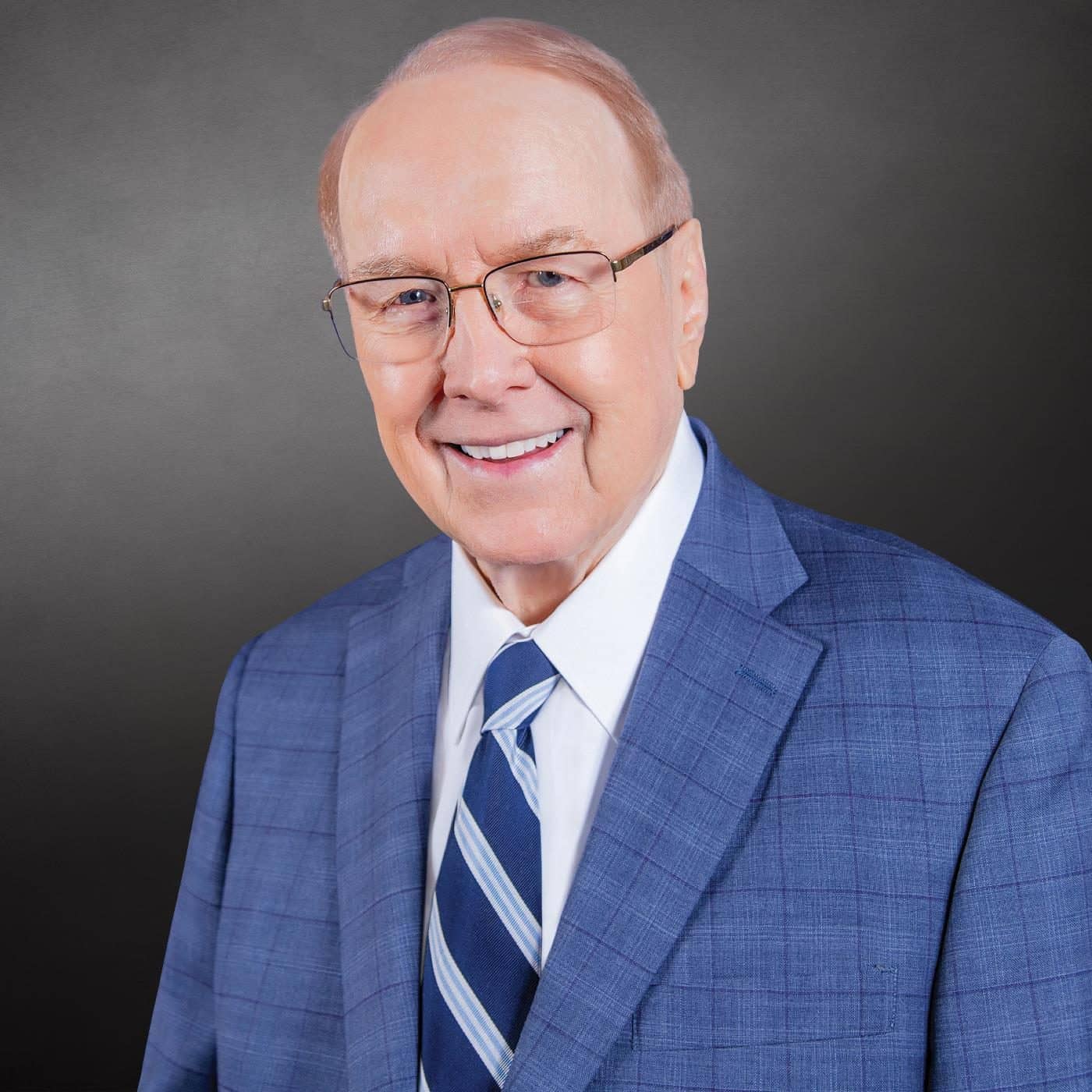


Join us on Family Talk as Dr. James Dobson and guest Laura Petherbridge delve into the intricate dynamics of step-parenting. Laura, an experienced stepmom and author of The Smart Stepmom, sheds light on why blending families is often more complex than anticipated. With personal anecdotes and professional insights, this episode is a must-listen for anyone navigating the journey of step-parenting, offering compassion and wisdom for the road ahead.
SPEAKER 04 :
Well, hello everyone. I’m James Dobson and you’re listening to Family Talk, a listener-supported ministry. In fact, thank you so much for being part of that support for James Dobson Family Institute.
SPEAKER 01 :
Well, welcome to Family Talk, the broadcast division of the Dr. James Dobson Family Institute. I’m Roger Marsh, and today we’re addressing the complex dynamics of step-parenting using a classic Family Talk broadcast featuring our own Dr. James Dobson and his guest, Laura Petherbridge, author of the book, The Smart Stepmom. With divorce and remarriage increasingly common, many families face the challenges of blending households. As Laura will share from her unique perspective, this journey is often much more difficult than expected. And I can speak from experience on that, too. Laura brings exceptional insight to this conversation. Not only has she been a stepmom for several decades, but she also experienced life with two different stepmothers growing up. She’s an international speaker, the author of four books, including When I Do Becomes I Don’t, and a featured expert on the Divorce Care DVD series used by thousands of churches worldwide. On today’s Family Talk broadcast, Laura will unpack several critical aspects of step-parenting, why children often resist accepting a new parental figure, how unrealistic expectations can set families up for disappointment, and why the often used term blended family might actually be a bit misleading. Whether you’re a stepmom yourself, considering remarriage, or you simply want to better understand the issues facing stepfamilies today, the conversation you’re about to hear will offer valuable wisdom and compassion. Here now is Dr. James Dobson to introduce this enlightening discussion here on Family Talk.
SPEAKER 04 :
My heart goes out to stepmoms, and we’re going to be talking about some of the reasons why. And we’re going to do that with the help of Laura Petherbridge, who’s with us. She’s a national speaker on this subject and a featured expert on the Divorce Care DVD series, which is used by more than 12,000 churches around the world. So Laura knows what she’s talking about, and she’s lived it. She’s the author of a book called When I Do Becomes I Don’t, Practical Steps for Healing During Separation and Divorce. Another book, and the one we’re going to talk about today, is titled The Smart Stepmom. She co-authored that book with Ron Deal, who is also an authority on this subject. And Laura is a stepmom herself, and she’s been married to her husband, Steve, since 1985. Laura, you and I met an hour ago, and I’m so glad you’re here. Thank you. I’m glad you’re here because the subject includes so much pain. In fact, it was not easy for you to write this book because it comes out of your own experience.
SPEAKER 02 :
That’s correct. That’s correct. I not only have been a stepmom for 27 years, but I had two stepmoms growing up. My dad remarried twice. So I had a stepmom since probably about 11 years old. And then his marriage to that stepmom ended when I was actually going through my own divorce right in my mid-20s, late 20s. And then my dad remarried again. So I’ve lived on almost every seat on the bus.
SPEAKER 04 :
Your husband abandoned you. Your family, right? That’s correct. My first husband, yes. Now, most people refer to a second family after a divorce as a blended family, but you do not.
SPEAKER 02 :
Yes, I really don’t like the phrase blended family. I know it sounds nicer than stepfamily. I know that’s why a lot of people use it because that phrase sort of the Disney thing with the wicked stepmom can have a negative connotation with it. I actually have a chapter in the book called The Wicked Stepmom. Did Disney have me in mind? Yeah. So I played off of that. But the phrase blend means that everybody’s getting thrown into a blender together and getting all chopped up together. And stepfamilies really don’t blend. They grow together over time with a bondedness. Over the years. So that whole thought of all of a sudden we’re going to be the Brady Bunch and everybody’s going to love each other instantly just is not realistic. And unfortunately, that sets the relationship up for some conflict and failure if they’ve got that idea.
SPEAKER 04 :
You know, I’ve done a lot of counseling through the years. I’ve only seen one step family that didn’t have serious problems to deal with.
SPEAKER 02 :
That doesn’t surprise me.
SPEAKER 04 :
I mean, it just is fraught with all kinds of difficulties, isn’t it?
SPEAKER 02 :
Yes.
SPEAKER 04 :
In fact, did you think because you had had two stepmoms that you were going to have it easier? Did you think that was going to help you?
SPEAKER 02 :
Absolutely. I thought, this is going to be a breeze because I know what my stepmoms did wrong, so I’ll just do the opposite of what they did, and this will be great. Okay. So I really went in with an extreme naive attitude, thinking this would be very easy and that I would just – and because I was a Christian, I thought, oh, you know, God will just give me all the wisdom I need to handle this and the boys will love me. And they were 11 and 13 when my husband and I got married. They had had their dad all to themselves for seven to eight years because he had been divorced that long. And so when we got married, they had no need or desire for another woman in their life, in their home. They have a mom. They didn’t want another mom. And so it was just so much more complicated than I thought it was going to be.
SPEAKER 04 :
Is that the major problem that you run into, what you just described?
SPEAKER 02 :
Well, I think what people don’t recognize is the most common question I get is, why are stepfamilies so complicated? And there’s a very easy answer to that. The reason stepfamilies are complicated is because all stepfamilies are birthed out of loss. There is not one stepfamily that occurs. Either a death or a divorce has happened, which has caused the stepfamily to form. So you have people coming in, children, even adult children, mom and dad, coming into this relationship with this grief or loss in the past. And so that’s why they’re complicated is because you’re building a new relationship after a grief, death or divorce has occurred. And that’s really the simple version of why it’s complicated.
SPEAKER 04 :
Is it also complicated because the wife is committed to her own children? And the husband is committed to his own. And no matter how hard you try, there’s a bias there that is felt by the other partner. Is that part of it?
SPEAKER 02 :
That’s correct.
SPEAKER 04 :
And the kids feel it, too.
SPEAKER 02 :
Absolutely they do. And when I do step family events, I actually do a little drama where I show them in the car and I move the child after the divorce. You know, I have mom and dad sit in the front seat. I move the mom out of the front seat. I have the child come and sit in the front seat because you see when the death or divorce occurs, the child moves into the front seat when that parent remarries. Where does the child go?
SPEAKER 04 :
Downgraded. They’re in the back seat.
SPEAKER 02 :
See, but they think, the single parent thinks, they can keep the child in the front seat and put their new spouse in the front seat, and they think they can keep both of them in the front seat. Now, we’re not saying you put the kid in the trunk. We’re not saying to throw the child under the car. But there does have to be this shift in thinking that my spouse now has to become… The first priority. And boy, is that hard to do with your own child. And now that doesn’t mean you ignore if the step parent is being difficult or nasty or mean or cruel. I get that question a lot. You know, my my husband is treating my children very badly. How do I, if I’m going to put him first, what do I do with my children? They have such a hard time figuring out which place is the dividing line there, where I’m standing beside my spouse or standing beside my child. And this is why it’s so complicated, because it’s just out of the natural order. for the marriage to survive. I wish they’d all come and hear this before they get remarried because it makes it easier that they’re not ambushed then by all of these problems and emotions. And, you know, when a husband and wife get, a couple get married in a first-time marriage and they have a child and they disagree about what to do with this child, you know, say it’s a disciplinary issue or something like that, you don’t ever hear that couple, one parent say to the other parent, you don’t really love this child. See, it may be that you don’t agree in your parenting style because of how you were raised or a number of different reasons, but you don’t question whether that other parent loves the child. And you see, in a stepfamily, in a remarriage, there is the loyalty to the children has not had time to grow yet. The step-parent does not have a level of authority yet with the child. That takes time. That takes growth. And so there is this sense of, you don’t really view my child the way I do. And what I love to tell step-parents, and this is going to be shocking for some people to hear, but boy, I can see the relief in the room. Anybody who’s listening that’s not a step-parent is going to think I’m crazy and maybe even a little cruel. But the stepfamilies will get this right away. I tell this in particular stepmoms, you will not love your stepchildren in exactly the same way you do your own biological children. Now, that sounds cruel. That sounds harsh.
SPEAKER 04 :
It’s a certainty. I mean, that’s the way biology works. You gave birth to those children.
SPEAKER 02 :
That’s right. Now, that doesn’t mean you won’t love them. That doesn’t mean you can’t grow to love a stepchild. And it’s a chosen love. See, when you have a baby, you don’t, oh, I’m going to decide whether I love this child or not. You just instantly fall in love. Where with a stepchild, it has to be a chosen love, a journey, a step-by-step process of getting to know this child. And that’s why it’s different.
SPEAKER 04 :
The stepchild has to decide whether he’s going to love you.
SPEAKER 02 :
Absolutely the key. The person that determines how strong of a relationship a stepchild and a stepparent will have is the child. And until you’ve taken the time to grieve all of that, divorce is a death. And until you do that, you’re bringing the corpse of that marriage into your next marriage. In most cases, you know, stepfamilies aren’t cookie cutter. You know, I know you’ll get an email saying that didn’t work for me. You know, my situation was different. But in general, the child does not view the remarriage as a benefit. They don’t view it as, oh, isn’t this wonderful? I got a new step parent. They view it as the loss of one more loss, now I have lost the one biological parent that I thought was going to be stable and my own. And so they view it as this step-parent came in and took my parent away. Now, you and I as adults, we don’t think of it that way. We see this, well, this is one more person to love you. But a child’s mind They’re fearful, especially if it’s been a divorce, that they’ve lost their biological family. They now view the new parent as someone taking their parent away from them. And so that’s why through a child’s mind, it’s different.
SPEAKER 01 :
Some fascinating insights into what a child is thinking when one or both of his parents get remarried. I’m Roger Marsh and you are listening to Dr. James Dobson’s conversation with Laura Petherbridge here on Family Talk. Now at this point in the original broadcast, the production team played a recorded story from a remarried mother. Let’s listen to what this mom had to say and then we’ll hear the conclusion of this broadcast.
SPEAKER 03 :
One of the most disconcerting memories of the experience of telling the girls we were getting married was the 12-year-old burst into tears. And I thought, you know, I thought we were buddies. And the 18-year-old said, what are you thinking? So I honestly think it’s because every child dreams and hopes of their parents getting back together. And us getting married expelled the illusion of that. She says that’s not the case. She knows her parents would never make it because they just were oil and water. But she says that it’s because she knew she would lose her daddy’s attention.
SPEAKER 02 :
This stepmom is completely accurate. And she even alludes to the fact that these children appeared to really like her. She said, I thought we were buddies. And see, what happens is the kids often get along with, and this, again, I want to clarify, this is adult children too, not just young children, not just teenagers, but even adult children. They will get along fine with this person, with this new person in their mother or father’s life. But the wedding changes everything. For some reason in their mind, they’re able to make that shift that, oh, you were OK in my life before you were fun. We go went to the park together or whatever. But now you’re permanently in my life. You’re permanently in my home. And I don’t like this.
SPEAKER 04 :
And you are not my mom. That’s right. And you will never be my mom. I want my mom back. And I can’t accept you as a mom. Tell me, Laura, isn’t it true that if you have a little girl and the mother is no longer in the family for one reason or another, doesn’t that little girl often take the role of the wife of her father? Absolutely. So when the stepmom comes in, she’s getting replaced again.
SPEAKER 02 :
Absolutely right. And she views that, see, she stepped up and became daddy’s housekeeper or, you know, and this is even when they’re little, little. They see dad alone and he needs help with the laundry or I’ll help him with dinner. Look what a big helper I am. Look at what the role is I’m filling. You know, my dad and I have this very unique bond. I even have adult women who say to me, you know, my mother died and I was always closer to my mom than I was to my dad. My mother died. And then all of a sudden, my dad and I had this really great close relationship because my mother was gone. And it’s just sort of this blossoming in my relationship with my dad. Then he got remarried, and that took away this wonderful bond that my father and I had built. So it’s important to understand that it’s not just little children that deal with this. And, you know, if I had a dollar for every stepmom that writes me and says his children were audibly weeping during the wedding ceremony – My own little nephew, or my sister-in-law’s son, when my brother got remarried, he has two children. He married a woman with two children. And they dated for two years, so the kids were very familiar with my brother being in their life. They loved him. But the day of the wedding, the little boy, he was six at the time, and I’ll never forget him holding on to his mother’s wedding gown with his face buried in her dress, crying, Stay plain, Mommy, stay plain. And that was his little six-year-old way of saying, I’m losing my mom today. Now, again, as adults, you and I know he didn’t lose his mother. She still loves him as much. She still is there. She still is just what she always was. But children don’t see it that way. To them, it’s a loss.
SPEAKER 04 :
Laura, as you talk. It’s clear that there is pain for everybody in this kind of situation, isn’t it? There is. The stepmom is hurting. Each of the kids is hurting. Maybe the dad hurts the least, but he’s got his share of pain out there, too. Yes. And so what you’re really doing is trying to – in fact, you said it before we went on the air. You said that you want to bring healing to wounded hearts. Is that the way you put it?
SPEAKER 02 :
Yes. Yes. God has called me to bind up the brokenhearted. That’s it. And those are Jesus’ words, certainly not mine. But it really is – One of those issues, to be honest with you, I wish God would give me something easier and more fun. This is very, very complicated.
SPEAKER 04 :
People cry through your presentation.
SPEAKER 02 :
Absolutely. You know, if I don’t stay very, very close to the Lord, it can feel so overwhelming. Their pain, their sense of loss is so overwhelming. Now, I always have to tell them there’s hope. Because they’ll look at me and say, all right, you survived this 27 years. How did you survive? And there was a pivotal moment for me in surviving this. There were a lot of moments, but the pivotal moment was when I recognized that Steve’s two sons. view me i will always be their father’s wife i am not related to them i am their father’s wife i still pray for them i still love on them i still try to be a servant like to them as i can But I took away the expectation that I was going to be something more in their life than they will want or allow me to be. They have a mother. It’s funny because now that we’ve grown this much older together, now I have grandchildren. And isn’t that funny? They don’t call me step-nana. See, they’ve only known me as Nana. And as I love on my stepson’s children, that is what bonds us. This is one of the benefits, the perks that God gives when you dig your heels in and say, I’m hanging in here.
SPEAKER 04 :
Larry, you said in your book that you learn not to change too many things. Yes. That as a stepmom to come in and say, we’re going to eat differently and we’re going to sleep differently. Our lives are going to all have to change. The less of that you can do, the easier it is for the family.
SPEAKER 02 :
Yes, absolutely. I made so many mistakes. You have to determine what is a hill to die on. And I made things a hill to die on that I should not have. I was raised by a very strict single parent mom. You know, you just looked at her sideways and you got in trouble. So I was used to this very strict kind of parenting. And when Steve’s sons were raised differently and being raised to act and respond and just act differently as children, it was very hard for me to accept that. I kept trying to mold them into how I was raised. And that was just so foolish. I tried to get them to embrace the Italian traditions I had in my family. They have no desire to have that. I’m their stepmother. Why do they want that? And so it was a little bit crushing for me to think, oh, they don’t want my Christmas traditions, you know, or they don’t want the things that were special to me. No, they have a mom. They’re embracing her traditions.
SPEAKER 04 :
Laura, I knew when we started this discussion and even before you got here that this is going to be a frustrating discussion because there’s so much here. There’s so much here. Your book is jammed with good advice, good insight. But our time is gone. So if it’s all right with you, we will just continue next time. You really do have a wealth of information that stepmoms out there are hanging on every word. Thank you. And there are millions of stepmoms out there who have no resources or they’re not aware of any. You didn’t have many. Yeah, when you became a stepmom.
SPEAKER 02 :
That’s for sure.
SPEAKER 04 :
There wasn’t even much, certainly not from a Christian perspective. But we’re going to pick it up next time. Thanks for being with us.
SPEAKER 02 :
I appreciate the opportunity.
SPEAKER 01 :
Well, you’ve been listening to a special edition of Dr. James Dobson’s Family Talk, featuring an insightful conversation about the complex dynamics of step families with our guest, Laura Petherbridge. Laura’s candid sharing reminds us that true family bonds don’t just happen overnight, but are built through patience, understanding, and chosen love, even when the journey is difficult. Now, if you missed any portion of today’s broadcast, or if you’d like to share it with a friend who’s navigating the challenges of step-parenting, visit drjamesdobson.org forward slash Family Talk, or you can also find this audio on the Family Talk app. Once you’re there, you’ll find complete program information, along with information about Laura’s book called The Smart Stepmom. Again, use the Family Talk app or go to drjamesdobson.org forward slash Family Talk. Thank you for having me. Thank you for having me. This devotional is filled with heartwarming stories and spiritual insights from the Dobsons’ many decades of family ministry experience. Now this daily devotional has guided parents around the world through the challenges and joys of raising healthy, happy children. And we would love to send you a copy of Nightlight for Parents as our way of thanking you for your gift of any amount in support of the ministry of the Dr. James Dobson Family Institute. So you can request your copy by making a secure donation online when you go to drjamesdobson.org. That’s drjamesdobson.org. You can also make your donation over the phone when you call our constituent care team. That number is 877-732-6825. That’s 877-732-6825. And thanks for remembering that these daily broadcasts and resources are made possible through the generous support of friends just like you who believe in strengthening families through biblical truth as presented by Dr. Dobson every day here on Family Talk. Your gift of any amount helps us continue broadcasting messages of hope and practical wisdom to families all across the country, including many stepfamilies who are working to build loving, stable homes. To make a secure donation online, go to drjamesdobson.org, or you can send your tax-deductible donation through the U.S. Postal Service. Our ministry mailing address is Dr. James Dobson’s Family Talk, Post Office Box 39000, Colorado Springs, Colorado, the zip code 80949. Once again, our ministry mailing address is Family Talk, Post Office Box 39000, Colorado Springs, Colorado, the zip code 80949. I’m Roger Marsh, and from all of us here at the Dr. James Dobson Family Institute, thanks so much for listening today. Be sure to join us again tomorrow for part two of this important conversation featuring Dr. James Dobson and Laura Petherbridge, as she will share more insights about the unique role of stepmoms and practical ways to build healthy relationships in blended families. That’s coming up right here on the next edition of Dr. James Dobson’s Family Talk, the voice you trust for the family you love. This has been a presentation of the Dr. James Dobson Family Institute.
SPEAKER 04 :
Well, thank you, everyone, for tuning into our program today. You may know that Family Talk is a listener-supported program, and we remain on the air by your generosity, literally. If you can help us financially, we would certainly appreciate it. God’s blessings to you all.