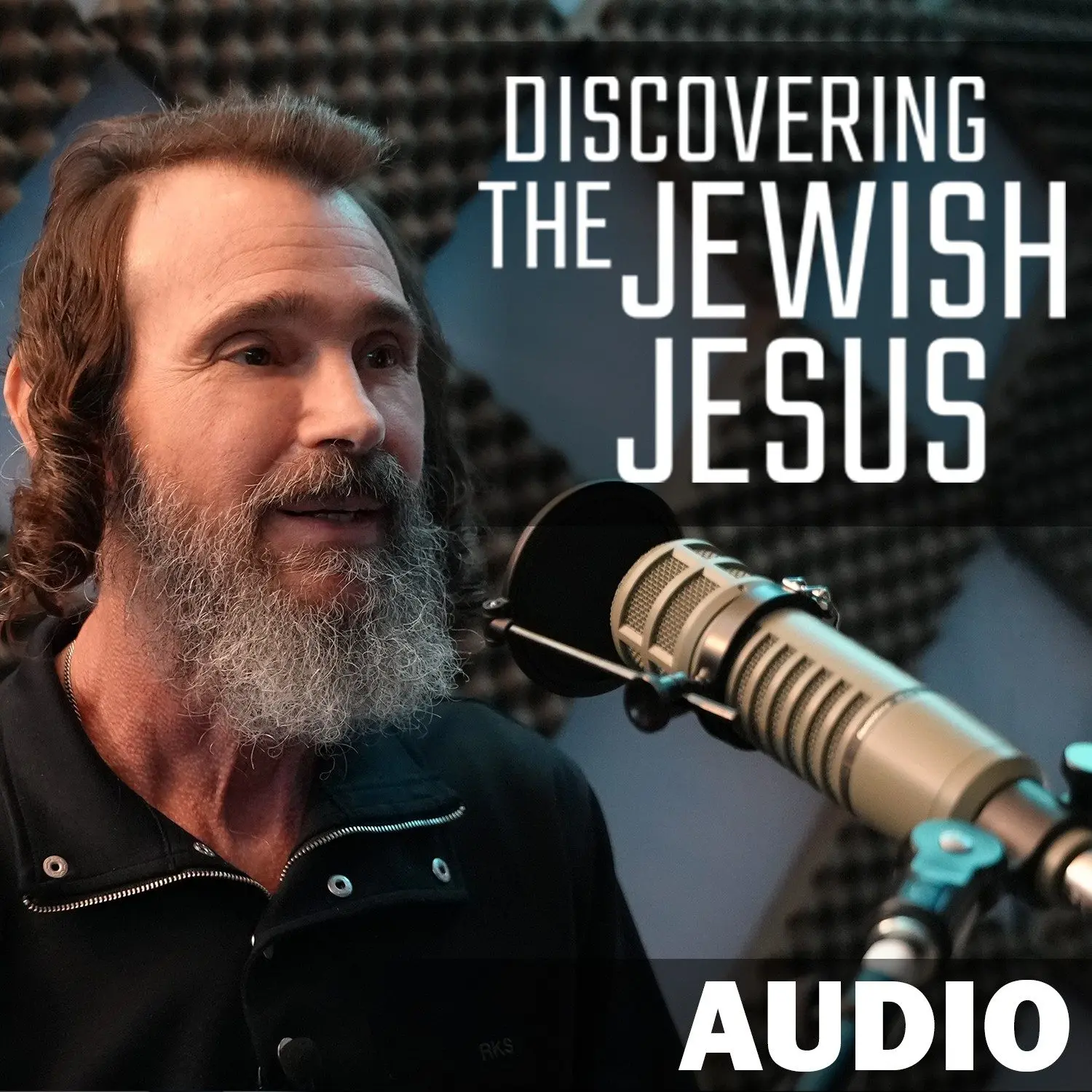

Explore the profound significance of Christmas beyond its commercialized facade. Rabbi Schneider leads a compelling discussion on viewing the holiday through a Jewish lens, reconnecting with its biblical themes of redemption and divine prophecy. Hear about the incarnation of Messiah Yeshua, how it transforms our understanding of God, and the deep spiritual implications for followers across the globe. Learn how celebrating Christmas can be a pathway to deeper oneness with God, moving beyond sentimentality to embrace spiritual truths.
SPEAKER 02 :
What do pagan holidays, a Jewish Messiah, and December 25th all have in common? In today’s episode, we’re gonna go into all those things. Shalom, beloved, and God bless you, my friends. Welcome today to Discovering the Jewish Jesus. I’ll be with my executive producer, Dustin Roberts. We’re going to be talking about the true origin of Christmas, how it’s the fulfillment of Messianic prophecy. It’s much more… that about the birth of a baby in a manger, it’s more than that. The incarnation of Messiah Yeshua, of God himself clothed in humanity, means so much for you and I this very second. He’s Emmanuel. He’s God with you. Let’s enter in now to God’s presence. I’m going to try to navigate our conversation today about the birth of Messiah, not so much around the term Christmas, but about the celebration of Messianic prophecy, that God did what He said He was going to do in the Hebrew Bible. He was going to give us His Son. The truth of the reality is the Scriptures nowhere talk about Christmas. In fact, in Scripture, what we find is the celebration of the death of Jesus. And we celebrate the resurrection of Yeshua. We celebrate his death and resurrection, but nowhere in scripture do we see anything commanding or leading us to celebrate his birth. Now, this doesn’t mean that we shouldn’t celebrate the birth of Messiah. I think we should celebrate the fact that God gave us his son. I think it’s an awesome thing to celebrate the birth of Messiah, but I’m just wanting to put things in proper order. Another thing that probably is worth pointing out just for historical accuracy, it’s very, it’s highly unlikely that Yeshua, that Jesus was born on December 25th. In fact, he probably wasn’t born during the winter at all. Now, why do I say this? A number of different reasons. Luke records for us that Mary and Joseph were on their way to Bethlehem for the census. Taxes. Yeah, for taxes. But it was very unlikely there would have been a census during this time of year because the way that the census took place during this time period in history was it would have happened during more favorable months because it got very cold in Judea during the winter. Very, very cold. Luke also records that the shepherds were out all night watching their flocks. So the fact that the census was taking place at the time of Yeshua and the shepherds were out watching their flocks at night tells us that it probably wasn’t during the winter months. It wasn’t in December, almost certainly. No one can say with 100 degrees certainty because the Lord doesn’t name the date, but all scholarship would agree with this. It’s also interesting, as we just point out, friends, the reason, of course, the church celebrates on this day is because there were pagan holidays that were being celebrated. There was the celebration of Saturn, which was the god of wealth. And there was also, which is more commonly known, on December 25th, the celebration of the physical birth of the Son. Oh, wow. And so in the 4th century, early Christian leaders wanted to redeem these holidays that people were already celebrating and wanted to redeem them for Christ. And so they just took away the pagan meaning and they said rather than celebrating, for example, the birth of the physical Son, we’re gonna celebrate the birth of the Son of God.
SPEAKER 03 :
They did the same thing with Easter and Passover, which we’ve talked about so many times on the show before that Rome substituted, instead of celebrating Passover, they substitute it with Easter. And you’ve shared so many times the King James Version of the Bible actually substitutes that word, Rabbi.
SPEAKER 02 :
That’s true. We celebrate 100% the resurrection of Yeshua, but as you said, you see this, for example, in the original King James, that they actually took the Greek word Passover and they actually changed the word to Easter. So it’s just good for our audience today. You wouldn’t be watching Discovering the Jewish Jesus unless you were interested in these things. However… We’re not poo-pooing the celebration of the birth of the Son of God into the world. I love Christmas.
SPEAKER 03 :
And I mean, I celebrated it my whole life, but it’s true. There were times where it was about Santa and presents, but ultimately Christmas, Christ, we’re talking about a Jewish holiday and a Jewish Messiah coming into the world. What was Israel expecting when God incarnated? What were they looking for in a Jewish Messiah, Rabbi?
SPEAKER 02 :
Well, many, many people were looking for deliverance in terms of them being oppressed in a political situation. That Rome was ruling in Judea, that the Jewish people that lived there, they were not truly free in many senses of the word. And we even see this in the Gospels, that they were looking for Jesus to come and liberate Israel from Roman occupation. And so when they thought of a Messiah, many were looking for a military leader, a political leader, someone that would deliver them out of Roman occupation and from being under the Roman Empire. And of course, Yeshua rejected their desire. They wanted to make him king. Right. And he knew that what they were expecting was not what he came for. So let’s talk a little bit about, first of all, going back to the Hebrew roots, Yeshua’s birth into the world. Let’s talk a little bit as we begin today, Dustin, about how awesome this is that Messiah’s coming was a fulfillment of Messianic prophecies that were all through the Old Testament or Tanakh. I mean, some of them are so powerful. For example, Isaiah 7, 14, where Isaiah says, “‘A virgin shall conceive.'” and bear a son. And of course, Matthew really places a lot of emphasis on this in his gospel, that Yeshua was the fulfillment of Isaiah’s prophecy here, that Mary was the virgin, and the son that was given to us was Jesus of Nazareth.
SPEAKER 03 :
Yeah, the New Testament starts off showing the fulfillment of this prophecy, making it so clear that Jesus’s birth is the fulfillment of God’s prophecy for a Messiah.
SPEAKER 02 :
Yeah, when you start talking like this and thinking like this, all of a sudden, Christmas, you can see it’s a Jewish celebration. It’s the fulfillment of all these prophecies that the Lord had given his people, Israel. Micah 5.2, out of Bethlehem, one will come forth. and that this one that would come forth would have origins from eternity, from of old, that someone was gonna be born in Bethlehem, that was gonna be ruler of the nations, whose going forth was from long ago, from the days of eternity.
SPEAKER 03 :
Yeah, you know what that makes me think of? in the book of John when he said, in the beginning was the Word, and the Word was God, and the Word was with God, and nothing was made without Him. His goings, His origins are from old. It’s so amazing how God is fulfilling Old Testament prophecy in the New Testament.
SPEAKER 02 :
Yeah, yeah. We’re gonna talk more about what you’re sharing theologically, that the Word became flesh. I mean, this is what Christmas is about, right? It’s God clothing himself in humanity. You know, it’s interesting, Dustin, in the book of Bereshit, or Genesis 3, verse 15, we have a very primitive glimpse of the gospel here, where we find recorded that through a woman, One was going to be born that was going to crush Satan’s head, that he was going to crush the devil under him, a clash of good and evil and light and darkness. So many people cite Genesis 3.15 as the first revealing of the gospel.
SPEAKER 03 :
That’s so amazing to me that all the way back in Genesis, God was prophesying that through humanity’s seed, there would be a crushing of the enemy. Why are these prophecies so important for us to understand as Christians today?
SPEAKER 02 :
Well, the first thing I want to pick up on, Dustin, was all the way back in the very beginning, God prophesied this, and it shows us that God exists outside of time. Wow. That is hard to conceive of. Think of this. It’s like we can only see things, generally speaking, through the lens of time. So what is it like to be able to see things outside of time? Consider this illustration. Let’s say that you and your family— You go to your downtown area where you live. Let’s say it’s the 4th of July or whatever it is. There’s a parade, let’s say. It’s a big festival and, you know, the streets are blocked off and you’ve got the mayor driving through in his car and you’ve got the different businesses. They’ve got their floats and they’ve got, you know, the different marching bands and people are throwing out candy. And it’s this mile and a half long procession and everybody’s on the streets just watching all the different, the floats. the parades or the balloons. The floats go by. And as you’re observing it with your family, you only see one float at a time. And it goes past you and then you see the next float. And then you see the next float. That’s comparable to being locked into time. But imagine if you got on a hot air balloon And you rose up and you’re looking down from the sky at that parade. You can see it all at once. You’re no longer limited to just seeing this little dot of it. That’s how God is. He’s outside of time. So when he began to prophesy to us back in the early pages of scripture, going back to the very beginning, the book of Bereshit or origin, Genesis, he saw the Messiah coming and it was outside of time. It was all together for him in the present moment.
SPEAKER 03 :
So we’re like people in the Old Testament, I remember they were like people wishing they could see the moment that Messiah would come into the world. And here God is seeing it at this moment, already talking about it.
SPEAKER 02 :
Yeah, there’s a mysterious verse that says that Messiah was actually slain before the foundation of the world. But back to this concept here about messianic prophecy being fulfilled, God prophesying to us that a son would be given, that the virgin would conceive. What’s the relevancy of that for us today? Well, obviously, it’s relevant because the holy God gave it to us. But God… He’s very, very specific and detailed about how we would be able to recognize and verify and certify that this person that claimed to be the Messiah was the Messiah. So we have the place that he’d be born, the line that he’d come through, the tribe that he’d come through, the family, the family of David that he’d come through. So God was very, very precise with this is going to be the lineage, the place that he’d be born, the way that he would die in the Psalms, the purpose of his death, Isaiah 53. So we had a very specific, colorful portrayal of what the Messiah would look like and where he would come from. And that was done in many respects that the Jewish people would be able to certify that this man really is the Messiah. Of course, most Jewish people rejected him.
SPEAKER 03 :
Yeah, I’m thinking about the book you wrote, Messianic Prophecy Revealed. And I’m thinking about when I read that and you go through so many messianic prophecies and show how Jesus is the Messiah and the confidence that rises up in you when you read those to be like, yeah, I am not confused at all. Like there’s no question in my mind, Jesus is the Messiah. And when we understand these messianic prophecies, we know and can have a surety that Jesus is the only way.
SPEAKER 02 :
Yeah, yeah. And you think about the fact that even though the Jewish people had all these Messianic prophecies, by and large, most Jewish people missed them. Why do you think that is? Well, I think it had to do with the predetermined plan of God. The Bible says that a temporary hardening came upon Israel until the fullness of the Gentiles had come in. But we shouldn’t make the mistake of thinking that all the Jewish people rejected him because the first church in Jerusalem was all Jewish. You know, Jesus’ disciples were all Jewish. Many Jewish people turned to him, but the majority did not understand that it was the fulfillment of all these messianic prophecies. There’s a small remnant. There’s a small remnant. And in fact, Isaiah prophesied this in Isaiah 53, that Jewish people wouldn’t recognize him. They’d be despised. They’d be despised. And of course, this is solidified in this gospel. He came unto his own. but his own received him not. When we celebrate the birth of Jesus, back to the point of celebrating today, many people around the world are celebrating Christmas. We’re really trying to put it back in its context, help people understand that we really need to look at this through a Jewish lens. And one of the things, Dustin, that I think both you and I would like to impart to our audience today is we need to get beyond the sentimental aspect of Christmas. It’s a beautiful concept. time of year to feel close to family and close to loved ones, but we need to get beyond just the sentimentality of it all to really understand the truth of it and this real historical narrative of it and to put Jesus back in the center of it.
SPEAKER 03 :
How do we do that, Rabbi? What does it really look like for us to celebrate Christmas in a way that really makes sense for what you’re saying?
SPEAKER 02 :
Well, I think that when we think of the purpose for which God sent His Son, which was to bring us to Himself, right? Yeshua came into the world to die on the cross for our sins, to redeem us by His blood, by His perfect obedience being imparted to us, to think about the purpose that the Son was born into the world. So for those of you that are celebrating Christmas, let’s just think for a moment about what it really is that we should be celebrating. The Father sent His Son into the world to bring us to Himself. God so loved the world that He gave His only begotten Son. And when Yeshua came into the world, of course, it began as Him coming into the world through Miriam, we say in Hebrew, Mary, right, as an infant, but it wasn’t just the celebration of a little baby, right, and a major, it’s the celebration of what He actually did as an adult. You know, He lived a perfect life, died on the cross for our sin, imparted His blood and righteousness to us, and then purchased us for the Father so that we could forever be with both the Father and the Son. And that’s what we’re celebrating today, first of all.
SPEAKER 03 :
So at Christmas time, for a family that’s celebrating Christmas and says, you know, I, yeah, I appreciate all the traditions and so forth around Christmas, but I wanna make it more about what you’re sharing. What would you recommend that they would do to spend Christmas this year? What could look different?
SPEAKER 02 :
Well, I want to go to kind of a deeper place than just something that we could do on the surface, because to me, this is kind of the essence. Yeshua, Jesus, Messiah of Nazareth, he came to bring us in to oneness with God. I’ll let that term sink in for a second. Jesus came to make us one with God. In fact, Jesus’ high priestly prayer speaks about the fact of Him being one with the Father and that as a result of our being in Him, we would be one with Him and one with the Father. Now, what does this look like? First of all, think about how God feels. Think about the victory that God has. Think about His everlasting power and glory and light and splendor and beauty and awesomeness. He has purchased us through the blood of His Son, through this One that came into the world, on Christmas, quote, okay, he brought us and is bringing us in to oneness with him so that we could experience who God is. That this is what our destiny is. to experience God’s glory. Wow.
SPEAKER 03 :
I’m thinking about right now, I don’t know if I’ve ever thought about it this way, but I’m thinking about celebrating Christmas. And I’m just thinking about this moment. It’s not just about His birth. It’s about the revealing of God to man. And I’m just thinking about Jesus’ whole life and how I have the opportunity to celebrate understanding God in a way that without the incarnation, I could have never understood Jesus. He came to reveal the Father.
SPEAKER 02 :
Yeah. You know, here’s a really interesting thought. When we speak about Christmas theologically, we’re speaking about what is known as the incarnation. Many of you have heard that term incarnation. What does this mean, the incarnation? It goes back to the scripture in the book of John that the Word, became flesh and dwelt among us. So when we speak of incarnation, we’re talking about God clothing himself in humanity. But think about this. God did not just clothe himself in humanity through Jesus. God is being incarnate through us. God lives through us. And I think this is something to really think about every day that God wants us to so get in touch with him. that he becomes closer to us in our own consciousness than our own breath. A lot of times we think we have to pray, you know, that God’s out here somewhere. And we should always pray, but prayer is just a reaching out to God, whether it’s in your heart, in your impulse, in your thought, in your words, but God is right here right now. And Jesus knew that. In fact, before he raised Lazarus from the dead, he said, “‘Father, I thank you that you hear me. “‘I know that you hear me always.'” So when you think about the celebration of Christmas this year, I want you to think about the fact that God is closer to you than your next heartbeat. And what we need to do is we need to strip off being religious, thinking we need to act a certain way, speak a certain way, do these Christian things. I’m not saying that we’re not— walking a holy life before the Lord, but I’m talking about stripping off the religious externals that are actually keeping us from understanding the reality that God is in us.
SPEAKER 03 :
That’s like when we pray, you know, this is something that’s changed in my life through sitting under your ministry. is, you know, you have a book, The Key to Answer Prayer. I remember you doing a series on it, talking so much when we pray, how we just begin to talk about what we need and we begin to ask. And we also pray for others, the people that are listening, sometimes teach a lesson during our prayers. But really what we need to be doing is asking ourselves, what is God thinking about right now? And that’s kind of what I’m hearing today. And it’s a good reminder during this Christmas season, as we’re celebrating Christmas this year, to think differently and to ask ourselves, what is God thinking about? What is His heart saying on the inside of us? And how can we be in tune with that?
SPEAKER 02 :
I just pray for an immersion of your spirit, soul, mind, and body under the presence of God, that as we participate in the celebration of Messiah’s birth into the world this year, there will be a supernatural awareness, my beloved friends, that will come over us, that we will more fully understand and appreciate how close our Creator is to us and how deeply We are loved and accepted in Him. Behold what manner of love the Father has given unto us, you and me, Dustin, that we should be called the children of God. Are there a few times in your life that really stand out where the Lord marked you? One experience that I had years ago when I was ministering in the center of Africa was during my sleep one night, I heard heavenly music and the Lord actually was speaking to me through the music. I heard the music and I heard his voice. And one of the things he said was, take out the decimal point. And I knew that he was telling me, give big. during this time of year, beloved, where we’re celebrating generosity. Of course, this is a season of gift giving as we celebrate God’s gift to the world of His only Son. I want to ask you, if the Lord is using Discovering the Jewish Jesus in a marked way in your life, if you’re receiving teaching that’s truly nourishing you and helping you in your relationship with God, would you present a special gift to the Lord during this time of year? Beloved, the Lord will be blessed with your love and it will help us to continue to reach the world and to bless you. Thank you very much for your support.
SPEAKER 03 :
Thank you, Rabbi. And friends, if the Lord is leading you to give a financial gift to this ministry, Discovering the Jewish Jesus, would you please give online at discoveringthejewishjesus.com or give us a call at 800-777-7000. That’s 800-777-7835. And like Rabbi and I discussed today, we’re celebrating what Jesus did. He died so we could be one with God. And part of that is knowing Him. So if you wanna expand your understanding, we have messianic resources. From teachings on the Hebrew roots of the faith to the Holy Feast days and the Hebrew names of God, these resources are made to be helpful tools for you. And you can explore them now for free at discoveringthejewishjesus.com. And today, as we honor the gift that God gave us through His Son, would you prayerfully consider giving a Christmas offering to support this ministry? Your generosity, it helps us to continue to share the gospel with people who don’t know Jesus. So for those that give, thank you, thank you for standing with us and for helping others encounter the true meaning of Christmas. Emmanuel, God with us, Jesus saving us, showing us the way to the Father. Once again, you can donate at discoveringthejewishjesus.com. And finally, from all of us at Discovering the Jewish Jesus, Merry Christmas and have a wonderful day with your family. Now here’s Rabbi to speak God’s sacred blessing over your life today.
SPEAKER 02 :
In the book of Numbers, chapter six, we find a personal blessing from God our Father. This blessing should touch our hearts because it’s so personal. Father God wants to intimately bless you, so receive his blessing into your life today with gladness and an open heart.
SPEAKER 01 :
Yeah. Yeah. Yeah. Yeah. Yeah. Yeah. Yeah. Yeah. Yissa Yahweh, P’navei Lecha Ve’asem Lecha
SPEAKER 02 :
The Lord bless you and keep you. The Lord make his face shine on you and be gracious to you. The Lord lift you up with his countenance. And the Lord give you, beloved one, his peace. God bless you and shalom.
SPEAKER 03 :
I’m your host, Dustin Roberts, and this program is produced and sponsored by Discovering the Jewish Jesus. Join us again tomorrow when Rabbi Schneider returns to his study on the Holy Land from Israel. That’s Friday on Discovering the Jewish Jesus.