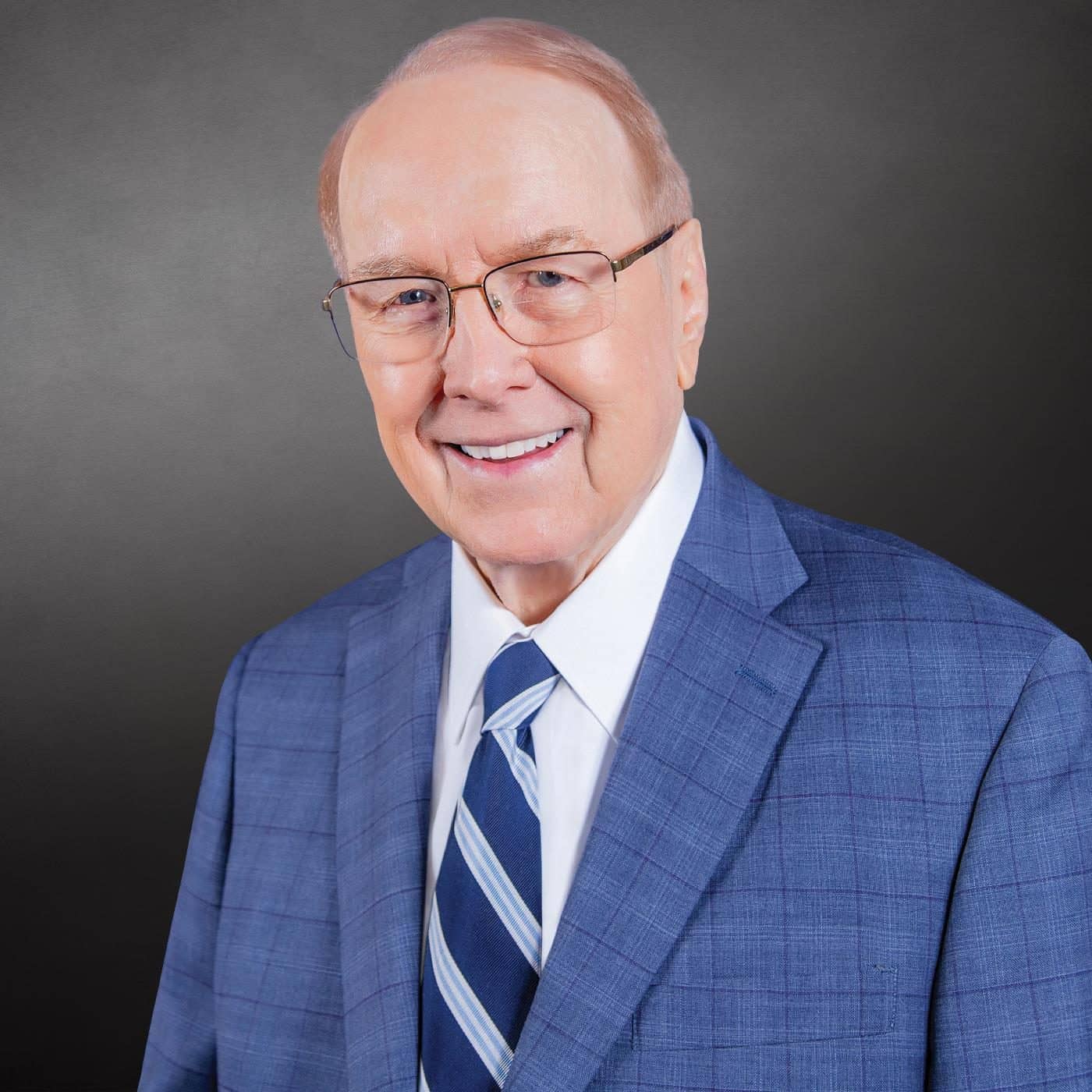

In the latest episode of Family Talk, Dr. James Dobson and co-host Roger Marsh dive into the all-too-common experience of stress and explore how faith can guide us through life’s most challenging moments. Joining them is Pastor Charles Stone, an expert on stress resilience, who shares his own journey through cancer, heart problems, and more, explaining how these personal challenges led him to pen his insightful book ‘Stress Less’. Discover how biblical principles alongside scientific discoveries can equip us to bounce back from life’s stresses and emerge stronger and wiser.
SPEAKER 02 :
Welcome everyone to Family Talk. It’s a ministry of the James Dobson Family Institute supported by listeners just like you. I’m Dr. James Dobson and I’m thrilled that you’ve joined us.
SPEAKER 01 :
Well, welcome to another edition of Dr. James Dobson’s Family Talk. I’m Roger Marsh sitting in the co-host seat today. And today we’re going to get into a topic of conversation that is a reality for most people. And yet very few of us in the church actually know what to do about it. It’s no secret that we live in a stressed out world. A new poll from the American Psychological Association says that More than one quarter of U.S. adults are literally to the point, this is one out of every four, where they can’t function because the stress has gotten so bad. Now we know that the life of Christ gives us eternal peace and rest, but ultimately, too, that we have to live in this world and we’re not promised a quote-unquote carefree life. So how can we manage and recover from the stresses of what we are facing in everyday life and become a bit more resilient? Our guest today here on Family Talk is Pastor Charles Stone. Dr. Stone is reflecting on his responses to stressful personal life experiences, including a cancer diagnosis, heart problems, prediabetes, and depression. And these events prompted Pastor Stone to reevaluate his education on stress resilience. And not just as a researcher, but as someone who has personally grappled with these challenges. And he’s written a brand new book. It’s out from Moody Publishers. It’s simply titled Stress Less, Nine Habits from the Bible and Brain Science. to build resilience and reduce anxiety. We have a link for the book up at drjamesdobson.org. Dr. Charles Stone, welcome to Dr. James Dobson’s Family Talk. We have been trying to get this conversation together for months and we’re so very grateful that we found a little quiet place where we can actually do the recording. Charles, it’s good to have you on the program today.
SPEAKER 02 :
Roger, it’s great to be with you.
SPEAKER 01 :
You know, it’s wonderful to have this type of conversation because as you and I were talking about previously, the idea that a lot of people will say, okay, well, I’m a Christian, so I shouldn’t be stressing so much. I shouldn’t be depressed. My problems should all be solved. And a lot of times it causes people to take a step back even from their faith. And yet you do talk about the fact that there is a biblical response to stress, even though the word stress really isn’t in scripture per se. That’s probably why a lot of us have a hard time dealing with that. Talk about why this is so important for us to kind of get our arms around from a spiritual standpoint?
SPEAKER 02 :
Well, sure. Well, stress is real. I think stress has been accentuated post COVID across the board. I think stress is increasing as we kind of lose our moral footings. Of course, there are some good data coming out that maybe there is a little bit of revival stirring. But if a person really wants to experience, I believe, the joy that we have in Christ, Even though we face stressful circumstances, we’ve got to understand what stress is. We’ve got to understand what Scripture says about stress. And I think we can also lean in to what really smart people, scientists and medical doctors, have discovered over the years about how to best deal with stress. So it’s huge.
SPEAKER 01 :
It’s really, really important. Well, anyone who understands stress, it’s Dr. Charles Stone because he has spent 43 years in vocational ministry and 30 of those as a senior pastor, which I think that’s the number one requirement is if you’re going to be a senior pastor, how well do you deal with stress? He’s the author of eight books and now serves as a coach consultant to pastors and leaders. Over 300 of his articles have appeared in magazines and online publications, and did doctoral research for Stress Less involving consulting more than 500 research studies and articles and books on stress resilience. Now, this is very interesting, I think, because of the fact that we can talk about this, you know, here are 10 Bible verses that will help you in stressful times. But you really wanted to get kind of down and dirty, if you will, on the science of this too. What was that rock bottom moment for you where you said, okay, now I need to do something about this because it’s more than just saying, hey, it becomes a pastor, physician, heal thyself.
SPEAKER 02 :
Well, I would say my life is more like multiple rock bottoms. But the most recent one that prompted the writing of this book, my wife and I were on a vacation. We had saved some money in one of these fancy vacations that had buffets open all the time. Nice. But it also had Wi-Fi everywhere. And I remember following this thing called COVID. I was telling my wife, I said, you know, they’re going to close this down. I was serving outside Toronto, south of Toronto at the time. Sure as hell. for sure we came back, good draconian shutdown. And in addition to all these medical things that I was learning about during that time span, I realized I had to lead a church of a thousand through a little tiny pinhole on my computer, pinhole camera. And the irony was that’s when I was doing my PhD work. So that was really the time when I stepped back and realized, you know, God, you’re a sovereign. And seems to be that I may be one of the lab rats for this. journey into understanding stress, not only from the science and biblical, but personal standpoint. So all that kind of merged together as COVID hit and that’s, that’s where I am today. And hopefully a lot smarter, hopefully.
SPEAKER 01 :
Well, it’s a lot wiser, let’s say. The last thing anybody wants to happen is to say, Lord, lead me into ministry. And then you’re Johnny Erickson Tata and you break your neck and you realize, Hey, that’s not the ministry I wanted, you know? But this is the ministry God called you to. And for you and Cheryl, too, to be in a season where, I mean, you’ve been married, what, 43 plus years? 45, yeah. 45 now. Three grown children. Five grandchildren. Five grandkids, yep. And a grand dog. And a grand dog. See, I always say a growing number because we never know. You know what I mean? Our kids are… You know, they’re, oh, by the way, we’re, okay, great. So, you know, that messed up my press release, but the growing number and the grand dog is huge too. But the fact that not only are you feeling that kind of stress, but now you’re in this 45 year marriage, Cheryl’s been feeling it. You know, she’s been a pastor’s wife for all this time. And you’re looking at this now saying, oh, and I’m doing research on it. God, do I have to be one of my own experiments, one of my own subjects? But he literally put you through that. What was maybe one of the surprises that you learned about just stress on the whole? Because I’m sure there are a lot of people who are saying, well, if stress isn’t really listed in the Bible, how do we as Christians define it?
SPEAKER 02 :
What was interesting in my research, when I looked at surveys of pastors pre-COVID, when they were asked, like, what are the most difficult things you face? Stress hardly appeared in the top 10. Yet, post-COVID, some of those same surveys updated. It was always number one, number two, or number three. So I think there’s a much greater awareness and freedom to speak out loud. Hey, guys, I’m stressed. I’m struggling. So that was a positive thing that came out. And, Roger, I think it’s helpful for your listener to understand kind of a definition of stress by thinking of a coin. Just imagine a coin, two sides of a coin. Yeah. One side of that coin would represent the stress event out there. You know, some health issue, work issue, money issue, or even what we’re doing just in our mind making up some stress. So that’s the event. The other side of the coin is how we respond to it. We don’t have choices over that one side of that coin. What happens? Stuff happens. Life happens. However, we do, by the power of the spirit, by biblical principles and scientific research, have the ability to not let that stress pull us down and affect our spiritual lives and our bodies and our relationships. So I found that to be really helpful for a lot of people to understand the two sides of the stress.
SPEAKER 01 :
Dr. Charles Stone is our guest today here on Dr. James Dobson’s Family Talk. The book is called Stress Less, Nine Habits from the Bible and Brain Science to Build Resilience and Reduce Anxiety. And we’ve got a link for this new book up at drjamesdobson.org. In the book, you have a definition where you talk about NPE, neuroscience pain education. And I would love for you to kind of walk us through that because I realize that’s a 35,000 foot And there’s a really great quote about that, about how we understand how the brain processes pain. People do it differently. But it can help us understand what the stressor is because you mentioned that. I’ve heard Chuck Swindoll give that quote many times. 10% of life is what happens to you. 90% is how you respond to it. And I think that as Christians, we should be better capable of doing so. But help us understand just the raw science. If there’s a painful experience that someone goes through, we’re not always going to process it the same way somebody does.
SPEAKER 02 :
Right, right. Well, that’s very interesting. You mentioned neuroscience, pain education. What they’re finding out, these recent people, neuroscientists and scientists are finding out that as we understand how pain happens and how stress happens, that it actually becomes a tool for us to be able to deal with it. It’s very interesting the way God wired our brains. Part of our brain responds to physical pain. You know, we feel it and neurons send signals up to our brain. But it’s interesting, the same place where the brain processes physical pain, some of these frontal areas, is the same place that it processes emotional pain. And much of our stress is emotional pain. So there’s an overlap of those same brain areas from physical pain as the same as emotional pain. And of course, stress is A major part of stress is when our nervous system gets really out of whack, the neurotransmitters, the hormones get out of whack. And simply understanding that allows us to step back and say, oh, okay, I think I understand this a little better. And that actually decreases the stress response a bit.
SPEAKER 01 :
Mm-hmm. It’s interesting when you think about the emotional and how that happens chronically versus maybe a physical situation that happened in the moment. I still think, and I’ll call myself out here, make yourself a bad example when you can, especially in front of your kids. We were hurrying somewhere and I used to drive a Ford F-150 pickup truck and I’d gone out to the front of the house in the driveway to get something and bring it back in the house. And as I was closing the door, my index finger got stuck in between the door jamb and whatever. And so I effectively landed on there. And I just immediately, pain goes shooting through your body, right? And I went charging in the house because I had to bring this thing in. And I was holding my finger to numb the pain. My son was sitting there and I went… I was trying really hard not to say something that would be very inappropriate in front of my 13-year-old son. And finally, he looked at me and goes, Dad, it’s okay. I understand. You’re in pain. And we laugh about it now because, I mean, that pain went away, though. I mean, I didn’t lose a fingernail. I didn’t break my finger or anything like that. But emotional pain, though, that keeps going. And that can build up. And like you mentioned, the pain that people were experiencing, the stress that they were experiencing that was pandemic-related in many cases really didn’t manifest itself until after the restrictions were lifted. After the masks were gone and we could actually go to church again and hug people and that type of thing. The brain processes that way and then the body feels that chronic stress. Are people more chronically stressed, Dr. Charles Stone, now than they were 10 years ago?
SPEAKER 02 :
Well, all the research and the surveys say yes, absolutely. And you mentioned chronic stress. It’s helpful also to understand that chronic stress is that kind of stress that goes on and on and on and on. And when we respond in an unhealthy way. The acute stress, like when you smash your finger, that was acute stress, but it healed. And we were going to experience acute stress. I mean, like when I was getting ready for this broadcast, and so nervousness rose a little bit, but it really helped me focus and think. And we originally couldn’t hear each other. I said, okay, I’ll do this. So the acute stress is good. Because it helps us focus and it wakes us up with more and helps us get motivated. But it’s a chronic stress that just stays with us for what seems like an unending period of time. And how we respond to that, that’s when it does the bad stuff to the body, to our relationships, to our walk with God.
SPEAKER 01 :
There’s a distinction that you make, and I’ve heard several researchers and even pastors talk about the fact too, that one of the things that they’re noticing, especially among younger people, is that when something, you know, they’re having more mental health issues, more mental health challenges. But a lot of it has to do with the fact that, I mean, the world is more complex. There’s no question about it. I mean, I was just watching two of my grandsons the other day and looking at all the things that they have to process and thinking, man, when I was eight, was my life this complicated? And it really wasn’t. Especially as I was getting whooped on Mario Kart by my second grader. It was fun, but then he’s just going through the machine. I’m like, I couldn’t process this. I can’t do it now, let alone when I was eight. But at the same time, you talk about the importance of resilience. And I’d love to give you a moment here just to kind of stretch out on that because we oftentimes as parents, as grandparents are trying so hard to give our kids the best advantages they can have. But we don’t realize that there’s a certain, I mean, how do you define resilience in God’s economy?
SPEAKER 02 :
Yes, yes. Well, it’s a great, great question. And really, resilience, developing resilience is another word for developing character. Romans 5, 3, and 4 says, we also rejoice in suffering because we know that suffering produces perseverance, perseverance, character, and character, hope. And here’s how I define resilience, and I want to illustrate it. Resilience is simply this. It’s the ability to bounce back from stressful circumstances and adapt and learn from those circumstances. Let me illustrate this way. Let’s say I was doing a talk. I did one just three or four weeks ago in Oregon, and I used this illustration. I said, okay, folks, pretend like there’s a table in front of me, an end table with a glass top, and I have three items in my hand. I have a tennis ball, I have a large rock, and I have an egg. So I asked them, I said, okay, let’s say if I held this rock up six feet above the glass table and dropped it, what’s going to happen? Well, what’s going to happen? It’s going to break the glass, going to shatter the glass. I said, okay, now if I drop an egg on it, what’s going to happen? Well, the egg is going to break and make a mess. And I say, okay, some people are like that. They have no resilience when it comes to stressful situations and they break stuff. They break relationships. They break companies.
SPEAKER 01 :
They break churches, small groups.
SPEAKER 02 :
And some people are like an egg. They have no resilience. When stress comes, they make a mess of themselves and mess of other things, other people as well. However, Pull out the tennis ball. If I hold this tennis ball up six feet above the table and drop it, what’s going to happen? They said, well, we know it’s going to bounce up. So that’s a beautiful picture of resilience. It’s not denying the fact that the table top is hard. It’s not denying that there’s going to be a little bit of change because if you look at slow motion of a tennis ball hitting a table, it squishes a little bit. but it resumes its circular shape or spherical shape. So resilience is this God-given ability to bounce back from these stressful circumstances, adapt, and learn from it. And I think that illustration is a very powerful way for us to kind of evaluate ourselves. To what degree do I have resilience? And then in the book, I outline these nine particular specific ways where we can develop resilience.
SPEAKER 01 :
Well, I want to go through those in just a moment, but Dr. Charles Stone, please note, Dr. Dobson would have loved that analogy. Right. For several reasons, because it’s so descriptive, it’s so visual, but also because the winning entry was a tennis ball and he was a huge tennis player. That’s great. He would say, of course, Charles, that’s right. That’s the way it’s bounced back like a good tennis player. Dr. Charles Stone is our guest today here on Dr. James Dobson’s Family Talk. His new book is called Stress Less, Nine Habits from the Bible and Brain Science to Build Resilience and Reduce Anxiety. And we have a link for the book up at drjamesdobson.org. One of the things that resilience does is it does strengthen the ability to, for lack of better things, help us to think healthier. You know, when a stressful situation comes in, you know, if you’re processing life as a two- or three-year-old, something that seems traumatic can be horribly traumatic because, you know, you’re still learning object permanence, right? Peek-a-boo is a lot of fun. So if you don’t see mom or dad in the room, you might think they disappeared forever, you know what I mean? And we have to learn how to do that. But as we get older, we kind of take some of that infantile, juvenile thinking into our adult years and processing emotions, do we not?
SPEAKER 02 :
Oh, absolutely. Part of growing in Christ is that it’s not a line that’s a perfect line. It’s kind of like this. It’s kind of like ups and downs, ups and downs. But if we’re really growing in Christ, we should be able to look back five years ago like, okay, I have grown in this area. Unfortunately, when we look at this whole thing of – dealing with stress, some folks, they deal with it the same way they do now as they did five years, 10 years ago, and they never really have grown in that. So hopefully tools like mine and others will help people think about it and like, okay, you know, I do not need to let this stressful event destroy my life, get me down. I can prevail by Christ’s power.
SPEAKER 01 :
There’s something that happens when a thousand people or even a hundred people or 50 people singing songs of praise to the Lord and responsive readings and even laughing at the pastor’s jokes every now and again, which I know is important. I got it. I hear you. You know, that type of thing. Talk about why worshiping together really is so beneficial, not only for our spiritual health, but our emotional health as well.
SPEAKER 02 :
Well, the obvious things, you’ve got hopefully a well-trained preacher that’s teaching God’s Word. Certainly that’s obvious. You’ve got worship where we are collectively worshiping God. But there’s a component about the church, the body of Christ. It’s what I call actually practice eight. I call it safeguard safety. And the image I use is imagine a group of trees close together and their roots are deeply intertwined. Well, if a storm comes, they’re going to stand up stronger. When I say safeguard safety, I think of the illustration in Ecclesiastes. It says a core of three strands is not quickly broken. And kind of the neuroscience insight here is this. Safe relationships that we ought to have at church, in our small groups, Sunday school classes, safe relationships. Actually do something to the brain. Those relationships, the interaction increases something called oxytocin, which is the bonding molecule, the trust molecule. It lowers cortisol. And I encourage people in this particular chapter is to find those kind of people. And hang around with them. Those safe relationships. Because in the body of Christ, there should be safety. Now, there’s also accountability. I’m not disregarding that. But a safe relationship in the body of Christ is so healing and so powerful in the face of stress.
SPEAKER 01 :
You have a quote in your book, Pastor Stone, that I want to share with you and get your reaction to it because it’s one of those things where I think more often we’re seeing in the culture. There are a lot of people who profess faith in Christ, who claim to be Christians, and George Barnum would tell us that the percentage of those who actually are and do hold a biblical worldview is exponentially smaller than the people who profess. But this is the quote when you talk about reflective, mindful, spiritual practices and can enhance moral reasoning and decision-making. Weak theological beliefs make us more susceptible to stress because we lack a strong spiritual foundation that provides wisdom for moral decision-making. Can you expand upon that a little bit? I mean, you kind of hinted at it with the reference to a pastor who’s well-trained and delivering the right message, but it’s more than just what’s happening in the pulpit. It’s what’s happening around us in our spiritual lives.
SPEAKER 02 :
Well, I think going back to that word again, resilience, if our goal is to be more like Jesus, to become Christ-like, develop more resilience. In the face of resilience, as we lean in on Christ, as we understand some of these tools that I believe we’ve learned from science, and we practice these kinds of things, it creates somewhat, you might say, an upward spiral. I dealt with that in one of these chapters. When we make right choices and we think right thoughts, those lead to even more right choices. And and more right thinking. And by the way, the opposite is true as well. Unhealthy sinful behavior, wrong thinking also leads to a spiral in the other direction. So it really, again, comes back down to this resilience, that tennis ball. This is life. We can deal with it with the power of the Holy Spirit and some of the applications of some of these biblical principles and science insight.
SPEAKER 01 :
You know, I think about the people who are the ones that I definitely want to be, you know, have a part of my life, you know, the fact that I want to be around them. And I think about how much I learned from them, not when they’re necessarily teaching me, but just being with them, just being in their presence. Talk about why we’re trying to find people who are stress erasers or eliminators. I think one man’s name was Bob Howard. He just went home to be with the Lord a couple of months ago. Bob was 92, and he was the kind of guy where I always knew whenever I came in contact with Bob, he had dealt with cancer. His wife had had some major health challenges. They went through massive financial ruin in his later years. He worked every day up until he was 92. And yet every time you met him, there was this countenance. You knew you were going to get a hug, a smile, a handshake, and there wasn’t any stress on this guy. I mean, you just couldn’t tell. What was he getting right just based on that assessment? that I shared with you now.
SPEAKER 02 :
Well, obviously, his depth in Christ was clear. I mean, that’s from the spiritual perspective. But there’s something called mirror neurons. And these are neurons that God created in us that we actually, in our mind, we run scenarios when we watch someone doing something and we kind of put ourselves in that same story or that same activity. So when we’re watching someone who’s responding with such grace, such power, such… incredible character, we are actually replaying that in our minds. And it actually becomes one of the formative tools of restructuring our brain circuits so that it actually helps us when we’re in those difficult situations, even though we may not recall exactly what that was, it helps us respond in a more healthy, biblically-oriented way. Just personal example. And even in stories, when someone tells a story about someone who exemplifies such great character, it moves us. And it begins and it changes those brain circuits. An amazing way God created our brain to learn.
SPEAKER 01 :
It’s fascinating to think about how moldable our brain is. I mean, especially for those of us who are in Christ. And you begin to realize, too, that sometimes the most stressful people in your lives are the ones who either lack the ability to change or they’ve just kind of put up a guard and says, no, this is working for me. I mean, I get it. My parents are both 92 and they… They like having a chocolate milkshake from Chick-fil-A every night before they go to bed. Well, six nights a week anyway. And no one gets on them about it because that’s where they are in the season of life. They’re waiting to Lord. But a lot of people get to that point a lot earlier where they’re just like, this is the way it is. This is the way it’s going to be. And talk about what the difference between… Having a relationship with those people or managing that, because I can imagine that could be a huge source of stress for people if they’ve got someone at the job or someone in their family that’s kind of stuck in that cycle. Oh, yeah.
SPEAKER 02 :
So we’re actually dealing with that right now in this situation. And it’s so frustrating. From our perspective, we can see, like, these are some choices that you can make. Ultimately, every person has to make their own choices. However, we have to face the fact that some people are genetically wired to be able to handle stress better than others. That doesn’t make that person who is not wired like that person who handles stress well any less of a problem. a beloved child of God. But I think it’s helpful for us to understand that, you know, I am just not wired to be able to handle stress like this person can. And I’ve got to be okay with that, which means I may need to protect myself a little bit more, the situation that I put in, but not obviously become envious of this other person. Some people, I mean, like, they can deal with conflict and like… How do I conflict as a pastor? Oh, I hated that. So some people are just endowed with the ability to handle it better than others.
SPEAKER 01 :
And we have to be okay with that. That’s good wisdom from Pastor Charles Stone. And today here on Dr. James Dobson’s Family Talk, we’re talking about his powerful new book that’s called Stress Less, Nine Habits from the Bible and Brain Science to Build Resilience and Reduce Anxiety. We’ve got a link for it up at drjamesdobson.org. Charles, the time is flying right by and we’re kind of scratching the surface on your book, but I think we’re going to need another program to hash this out. Can you join us again next time to continue the conversation?
SPEAKER 02 :
Absolutely. We’d love to.
SPEAKER 01 :
Well, it’s no secret that stress is real. And as Pastor Charles Stone has reminded us today here on Dr. James Dobson’s Family Talk, understanding how God wired our brains can actually help us to respond to stress in healthier ways. You’re listening to Family Talk featuring a practical conversation with pastor and author Charles Stone about building resilience in the face of stress. Be sure you join us again next time for part two of this discussion when Pastor Stone will share even more biblical and scientific insights for managing anxiety. will not want to miss it. Now, to listen to today’s broadcast again or to share it with someone who could use some encouragement, go to drjamesdobson.org or visit us online at jdfi.net. Either way, there you’ll find a link to Pastor Stone’s new book called Stress Less, Nine Habits from the Bible and Brain Science to Build Resilience and Reduce Anxiety. Find more about Charles Stone’s audio and printed resources when you go to drjamesdobson.org. That’s also jdfi.net. Well, it is no secret that we are living in an anxious age right now. Families are under pressure like never before, and they need a trusted source of biblical wisdom to help them navigate these challenges. That’s exactly what the Dr. James Dobson Family Institute provides through broadcasts like the one you heard today. We are committed to strengthening marriages, equipping parents, and pointing people toward the hope found only in Jesus Christ. And when you donate to the JDFI, you play a critical role in reaching millions of listeners with real biblical hope and practical help. To partner with us by making a financial contribution, visit JDFI.net. That’s JDFI for James Dobson Family Institute dot net. Or if you’d prefer to send your donation by mail, you can write to us at Dr. James Dobson’s Family Talk, P.O. Box 39000, Colorado Springs, Colorado, the zip code 80949. Once again, our ministry mailing address is P.O. Box 39000, Colorado Springs, Colorado, 80949. Well, I’m Roger Marsh, and on behalf of all of us here at Family Talk and the JDFI, thanks so much for listening today. Be sure to join us again next time right here for more of this important conversation on habits from the Bible and brain science to reduce anxiety. Pastor and Dr. Charles Stone will join us again for more of this conversation on the next edition of Dr. James Dobson’s Family Talk, the voice you trust for the family you love. This has been a presentation of the Dr. James Dobson Family Institute.