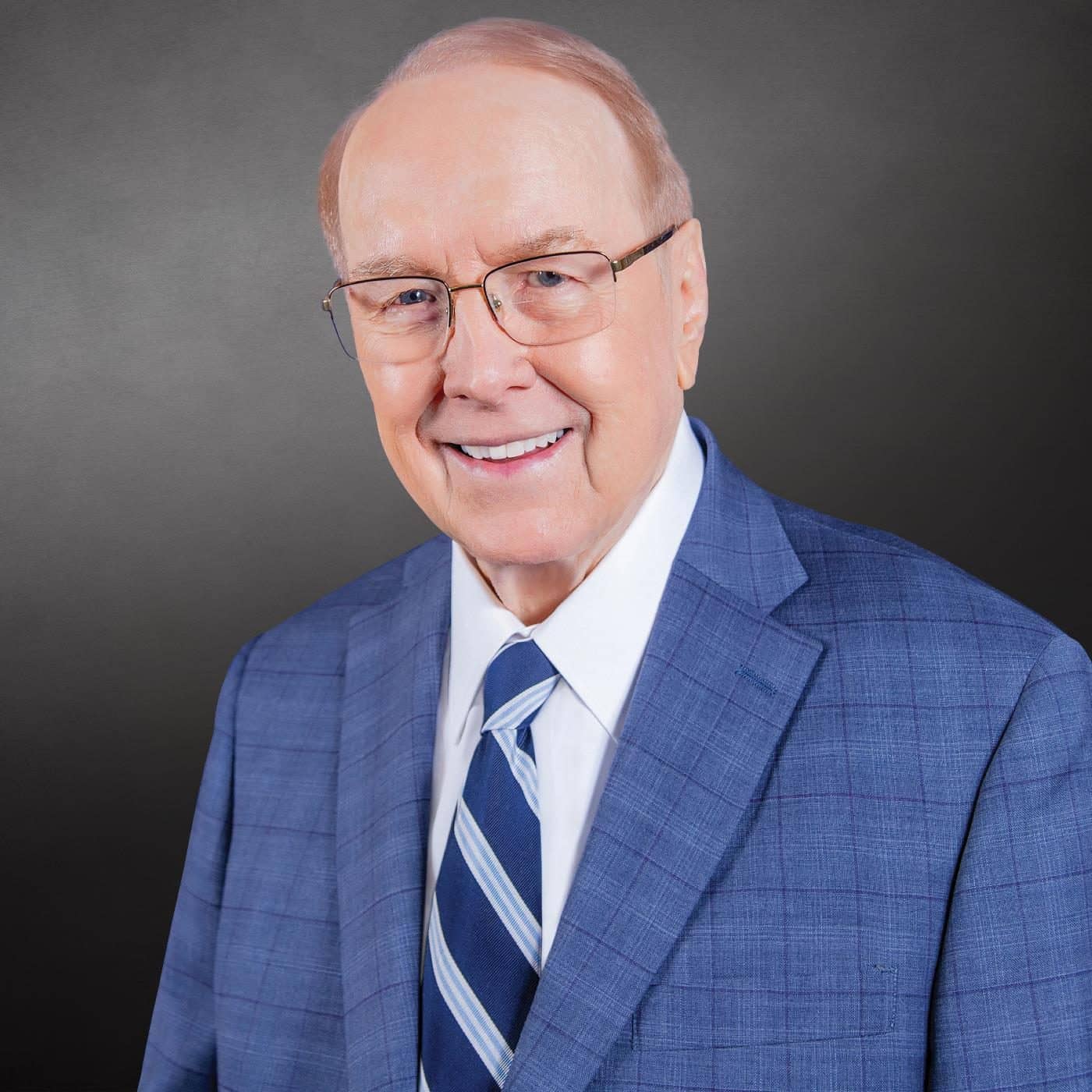

In this episode of Family Talk, we delve into the intricacies of managing stress and anxiety with Pastor Charles Stone. As the author of ‘Stress Less,’ Pastor Stone offers insights from his extensive experience in ministry, alongside scientific principles for building resilience. Discover how biblical teachings combined with neuroscience can guide you towards a less stressful life, even in challenging times.
SPEAKER 02 :
Welcome everyone to Family Talk.
SPEAKER 01 :
It’s a ministry of the James Dobson Family Institute supported by listeners just like you. I’m Dr. James Dobson and I’m thrilled that you’ve joined us. Well, welcome back to another edition of Dr. James Dobson’s Family Talk, the voice you can still trust for the family you love. I’m Roger Marsh sitting in the co-host seat today and continuing conversation on today’s broadcast with Pastor Charles Stone. Pastor Stone is the author of a brand new book that we’ve been having a great conversation about and we’re going to keep getting into about dealing with stress and anxiety. The book is called Stress Less, Nine Habits from the Bible and Brain Science to Build Resiliency. and reduce anxiety. Pastor Charles Stone, more than 40 years experience in the ministry, whether it be a pastor, associate pastor, church planter, has served in the United States and in Canada. He and his wife, Cheryl, have 45 years of marriage. And I’m sure, would Cheryl describe those as 30 of the happiest years of her life, at least? I mean, hopefully every couple of years have been good ones. Most of them. Most of them. Okay, good. A significant amount. Now, I love the fact with this new book, Pastor Stone, that you are approaching it not only from pastoral ministry, as we discussed on the last program, but also from the scientific standpoint. And you have that rare trifecta of a master’s in divinity, a doctor’s in ministry, and a PhD. So, I mean, you really are kind of a book nerd. I have a daughter with a PhD, and she calls herself a research geek. I love it, love it. Yeah, constantly doing that. Your study was way more interesting than hers, and I won’t get into that on air because it involves the digestive system. Oh, okay. But nonetheless. You know, it’s wonderful to have this type of conversation because as you and I were talking about previously, the idea that a lot of people will say, okay, well, I’m a Christian, so I shouldn’t be stressing so much. I shouldn’t be depressed. My problems should all be solved. And a lot of times it causes people to take a step back even from their faith. And yet you do talk about the fact that there is a biblical response to stress, even though the word stress really isn’t in scripture per se. That’s probably why a lot of us have a hard time dealing with that. Talk about why this is so important for us to kind of get our arms around from a spiritual standpoint?
SPEAKER 02 :
Well, sure. Well, stress is real. I think stress has been accentuated post-COVID across the board. I think stress is increasing as we kind of lose our moral footings. Of course, there are some good data coming out that maybe there is a little bit of revival stirring. But if a person really wants to experience, I believe, the joy that we have in Christ, Even though we face stressful circumstances, we got to understand what stress is. We got to understand what scripture says about stress. And I think we can also lean in to what really smart people, scientists and medical doctors have discovered over the years about how to best deal with stress. So it’s huge.
SPEAKER 01 :
It’s really, really important. Well, anyone who understands stress, it’s Dr. Charleston, because he has spent 43 years in vocational ministry and 30 of those as a senior pastor, which I think that’s the Number one requirement is if you’re going to be a senior pastor, how well do you deal with stress? He’s the author of eight books and now serves as a coach consultant to pastors and leaders. Over 300 of his articles have appeared in magazines and online publications and did doctoral research for Stress Less involving consulting more than 500 research studies and articles and books. on stress resilience. You’re helping us process things that come into our mind, come into our heart, come into our soul. And you’re seeing more and more Christians who are stressed out. And you’ve come up with these nine principles that I think are going to be hugely helpful. Just to review from where we were on our last program, the groundwork for all this is just identifying stress, figuring out what it does. And then talking about resilience, kind of give us a 60 second overview for those who may not have heard the first part of our conversation.
SPEAKER 02 :
You bet. Stress is, stress is like a coin with two sides. One side is the event out there causing the stress. The other side is how we respond to it. We don’t have control over the events necessarily. We do have control on how we respond to it. And what we want to develop to be able to respond in a healthy way is something called resilience, the ability to bounce back from a stressful situation, but not just bounce back, but to be able to adapt and learn from it. So that’s probably it in 58 seconds.
SPEAKER 01 :
I love it. That’s great. I mean, because it’s kind of an elevator talk in the sense that if you can’t explain it in a minute or less, then it means that we don’t properly understand it. But identifying what it is, what it does, and then the role that resilience plays and the image that you used last time, the illustration of having a glass table with a rock, a tennis ball and an egg and figuring out how each one is going to process. And the goal is the tennis ball, which would make Dr. Dobson very happy because that’s the world’s perfect sport in his mind. Let’s talk about these practices. And I don’t want to get too lost in the weeds on these. But first and foremost, I mean, if you’re trying to deal with stress, your first practice is called cease and breathe. Talk about why. Pump the brakes. Take a step back. Help us understand what that involves.
SPEAKER 02 :
You bet. Well, first of all, biblically, breath is all throughout the scriptures. We see it in Genesis. When God breathes into Adam, he became a living being. We see it in the Gospels when Jesus died. I breathed on some of the early church, maybe it was Acts, I think, and the Holy Spirit came, everything in between. But here’s one of the neuroscience insights that is probably the easiest thing to apply if we remember it, and it’s very portable. Here it is. Deep breathing actually activates what’s called the vagus nerve. The vagus nerve is one of the nerves that comes directly out of our noggin, doesn’t go through our spinal cord. And it wanders around. There are two of them. They’re pairs. It wanders through our hollow organs, like our heart, like our stomach, like our lungs. That’s how we kind of feel these butterflies. That’s the vagus nerve actually working. But deep breathing activates this nerve so that it slows the heart rates a little bit and dampens the stress response. And here’s a little application that I use called STOP. S-T-O-P-P. It’s misspelled, but there’s an extra P. So in the face of a stressful situation, the first thing to do, the first S is stop. Just if you need to pull off the side of the road, step away from a meeting, step away from a conversation, just stop. S-T-O-P, stop. The next one is take a breath. Now, here’s where the breathing comes in. It’s called the physiological sigh. Let me illustrate it. You know, we breathe in, we breathe out. We breathe in, we breathe out. But the physiological sigh works like this. Breathing in through your nose as much as you can get. Then get a little extra breath. Hold it for a second or two. Then slowly exhale through your mouth. And make the exhale longer. So breathe in. Then a sniff breath. Hold it for a second and breathe out. Make that exhale longer than the inhale. In labs all across the country, that dampens the stress response. Just two or three or four of those, very, very powerful. The Navy SEALs and all those guys do that very thing. So stop, take a breath, always observe. Just step back and say, okay, Lord, help me understand what’s going on in my mind in this situation. P is pray, Lord, give me your wisdom or whatever fits in the moment. And the final P is proceed, move on with your day. Stop, take a breath, observe, pray, and proceed. So that’s probably one of the fundamental ones that anybody can do anytime.
SPEAKER 01 :
And I wonder how many people, Dr. Charles Stone, get to that first P and say, all right, I’m good. And they forget that they have to re-engage again. You know, it’s, I’m going to retreat. I’m going to, I’m doing everything Dr. Stone said I should do. And then, but that proceed part, it’s like, well, wait a minute. The last time I proceeded, I was stressed out. You know, I’m a parent and I’m getting into it with my teenager or my spouse and I are, you know, rubbing foreheads, you know, what the heck, you know. What kind of encouragement do you have for someone who gets stuck on that first beat?
SPEAKER 02 :
Well, realize that You’re the one, let’s say I’m the one doing the application stop. It’s not necessarily true for the other person. It’s probably not smart to say, go back to them and say, hey, let me give you this acronym that you need to do. That probably won’t work. You could do that too. You could, but it just brings more stress. Well, I think the very fact that you went through this is going to give you more resilience and more patience and greater awareness to be able to step back into this situation in a much healthier way. So that you actually may dial down the tension. If it’s something with somebody else, you may dial that down simply by your more measured response. So there are benefits in the other direction, not just for you.
SPEAKER 01 :
Dr. Charles Stone is my guest today here on Dr. James Dobson’s Family Talk. I’m Roger Marsh. His brand new book is called Stress Less, Nine Habits from the Bible and Brain Science to Build Resilience and Reduce Anxiety. There’s a link for it up at drjamesdobson.org. And part of the reason we were drawn to this project and to your work, Dr. Stone, is because, you know, Dr. Dobson, people forget started out you know clinical psychology i mean people think of him as a theologian or a politician or whatever but this began with dealing with these issues that drive relationships and one of the practices that you have identified in your book stress less the simple act of revealing how you feel can be a huge step i know as a man one of the questions i dread the most and lisa will hear this program later my wife when she says how are you feeling right now because either i don’t know or i don’t want to share it you know yes I don’t want to hurt someone’s feelings by the way I’m feeling. But talk about why revealing how you feel. What’s that process look like?
SPEAKER 02 :
Well, I use an image of a toy or a favor that oftentimes parents will bring to the kid’s birthday party. Remember the Chinese finger trap? Yeah. You put your finger in one, put your finger in the other. And if you try to get out of that thing trap by pulling both sides, it’s just going to tighten around you. But reveal how you feel is kind of parallel to how you get out of the Chinese finger trap. You have to actually lean into it, push it in, and then you get your fingers out of the finger trap. Now, the biblical insight is if you look at the Psalms, you can’t read a page or a chapter without seeing David’s honest expression of his emotions. He models transparency. The neuroscience insight is this. When we name our difficult emotions, I’m not talking about ruminate and staying there for hours, but when we name them, the fancy phrase is affect labeling. Affect is a general term for emotions. When we name those difficult emotions, it turns down their intensity. It’s kind of like this. Name it to tame it. Name it to tame it. Now, there’s a little practice set up. It’s very helpful. When we acknowledge those emotions, we label them. We actually create space between ourselves and them. And here’s a little way to do that. My next door neighbor’s name is Kevin. Real great guy. And we’re good friends. Let’s say he did something. And it just really made me mad. And so I’m stewing. I’m thinking, man, I am so angry at Kevin. That’s not going to solve the issue.
SPEAKER 01 :
Right, yeah.
SPEAKER 02 :
But I don’t know if you do this, Roger, but now’s the time to talk to yourself. You ever talk to yourself sometimes? No. Oh, on occasion. I do, in private, you know, in private. Is have a conversation with yourself. So here is me. I’m the one that had the experience, but there’s also me out there. So here’s how the way to, the best way to respond to like this issue like with Kevin. Hey, Charles. So I’m talking to myself, third person perspective. Charles, I see that you’re really ticked off at what Kevin did. You know, it may have been right, may have been wrong. Maybe it’s you, maybe it’s all him. But let’s think about this. What is the appropriate way for you to respond in this moment? That distancing, that little bit of distancing is a powerful way to decrease the power of those emotions. Here’s another way. When we’re in some stressful situation, it’s caused some of these painful, difficult emotions. Instead of seeing that situation as a threat, see it as a challenge. So let’s say with Kevin next door. Well, so I guess what I need to do is see this not as a threat to my well-being, not as a threat to my safety in my house, but rather I’m going to see it as a challenge to be able to deepen my relationship with Kevin so that I can be an encourager to him. So those are two simple ways when we notice name and distance that powerfully helps us deal with these difficult and painful and powerful emotions.
SPEAKER 01 :
Well, that’s a great example. And especially when you think of when you’re trying to be neighborly and, you know, there’s someone who they’re doing their thing and they figure you’re a great guy because you never give them any guff. And then all of a sudden it sets them off. One of the other practices that you have here, and I love the fact that you encourage us to do this. We’re talking about stressors and emotions and the way we all react to certain things. But you, the fourth practice of your practices to, you know, stress less is to audit your thoughts. Yes. And I’m thinking, oh, my goodness, there’s probably an adult-child-parent relationship that’s strained right now. And the parents are sitting there saying, well, I just don’t understand the idea that you say, hey, wait, let’s not make this just an emotional issue. Let’s talk about what’s happening in your thought process. Talk about why auditing your thoughts is so crucial for eliminating or at least reducing stress, building resilience.
SPEAKER 02 :
The way I illustrate it is imagine I’m holding in one hand a BB. So some issue in my family or at work has created this little thorn in my flesh, so to speak. So I’m kind of irritated about that. But if I am not monitoring my thoughts, because part of the effects of the fall was just negativity. We tend to go negative naturally without the power of the Spirit. So imagine that BB. But then I began to add narrative to it. I began to add layers to it. And before long, that thing has become the size of a basketball. Now the issue is what I’ve wrapped around, the basketball, not the BB. So that’s why it’s so important to audit your thoughts. Philippians 4.8, Paul says, If anything is excellent or praiseworthy, what does he say? Think about those things. We can’t think about those things unless we think about our thinking. And when we reframe our negative perceptions, we step back and we’re very thoughtful. We’re examining what’s going on in our mind. We can actually reduce any kind of feelings of threat. We can enhance our thinking. We will engage the kind of the calming part of our nervous system and promote the production of these positive neurochemicals. Also have a little acronym. In fact, the word for this, all right, your thoughts? It’s a big word, but a good word. Everybody ought to know it. It’s called metacognition. Metacognition. It’s thinking about your thinking. And we need to stop long enough to do that. So here’s my little application. It’s called Start. I had to stop. Stop. Now this is Start. Start is S, is stop, like the previous one. T is take a breath. And A is when we step back and we audit our thoughts and ask questions like this. Who’s sponsoring these thoughts? Is the evil one? Are my negative emotions? Or is clear thinking the Holy Spirit sponsoring those thoughts? So stop, take a breath, audit your thoughts. R is reappraise your thoughts. Put some of those thoughts on trial. Like, well, this is not true. This is not true. This is not true. And the final one, T, S-T-A-R-T, is transition your attention. Shift your attention from… Whatever was this issue to something else, something more pleasant that would just kind of get your focus off of that. And by shifting attention, again, it dials down that stress response, dials down the intensity of how those negative thoughts can negatively influence it.
SPEAKER 01 :
So that’s audit your thoughts. It’s amazing when you think about this, Dr. Charleston, how many of us, we kind of live in a hyper-focused world where we see a specialist for everything, right? You don’t just go to the family doctor anymore. You’ve got to go to an optometrist or a cardiologist or whatever. And I wonder how many people, when it comes to stress, aren’t realizing that if they’re We are dealing with this type of stuff, whether emotionally or it’s going to have a physical manifestation because our bodies are designed to be interconnected. I mean, we’ve interconnected systems. Physically, we’re interconnected in the body of Christ. Talk about how we can, some of the ways we can move forward because, you know, there’s that proceed and your stop across, you know, that second P. And a lot of times people are a little bit hesitant because they’re thinking, I’m trying to get onto this freeway of emotions and everybody else has a big, fast car and I’m driving a little Volkswagen bug. I don’t have that. I don’t have the bandwidth, you know, the horsepower to get out there. I’m sure safe people certainly help, but where do we find them? How do we know where we can get those relationships?
SPEAKER 02 :
Well, that’s the million-dollar question because probably all of us have been betrayed by somebody we thought was a good friend. However, because, like Judas, okay, there was one in that bunch of 12 that was rotten. But there were 11, even though they failed, they messed up, they left Jesus when they needed him at the most important time, they became the ones that continued on the faith in those early years, and we build on the foundation of the prophets. So I think it’s important to realize that not everybody is gonna understand from our perspective, not everybody is gonna get it. Yet we have to remember, one of the principles I talk about, I use a mountain. recognize that no matter how difficult we face issues, Christ is our rock. And the brain loves certainty. We live in an uncertain world. The only thing truly certain, Roger, is God is and the Bible is true. And if we can remember those twin truths, that cultivates certainty and helps dial down the stress response. So none of these answers are really easy, easy answers, but it takes perspective, trust, and recognition. Like some stuff I’m never going to have an answer to this side of heaven.
SPEAKER 01 :
Yeah. It’s important to understand, you know, God is God and we are not. That’s a big helpful place because sometimes we look at what’s in front of us and we have all these gadgets and devices and think, well, I can solve this. I can handle this. I don’t want to bother God with this little problem, but it becomes big. And cultivating certainty is certainly one of the nine habits from scripture and brain science that helps build resilience and helps you stress less. Dr. Charles Stone is our guest today here on Dr. James Dobson’s Family Talk. one of the practices that you talk about for reducing your stress and really managing it more, because stress isn’t going to go away. I mean, as long as we live in a sinful world, there are going to be stressors. I mean, I think that’s fairly common knowledge. But you talk about the importance of gratitude when it comes to dealing with this. And My wife and I always marvel whenever we see a young person being grateful for something or something like that, we go out of our way to just, you know, overindulge them because it’s so rare in this culture, isn’t it? I mean, they’re gracious. Let’s talk about why growing gratitude is a great practice to keep your stress and anxiety down.
SPEAKER 02 :
Well, Paul wrote in 1 Thessalonians, rejoice always, pray continuously, give thanks in all circumstances. So, and we find just the whole thing of gratefulness is a real huge quality, big quality of really the spirit of ill life. Again, neuroscience informs us. It’s interesting how neuroscience is kind of catching up with these biblical principles that we’ve known for over centuries. But here’s what gratitude does. It releases these positive brain chemicals like serotonin, which is a general mood stabilizer, dopamine, which is related to wanting and pleasure. And it helps mitigate by releasing these neurotransmitters. When we’re grateful, it mitigates negative thoughts and promotes overall mental well-being. And here’s a simple practice. I do this almost every morning. But before you even get up and you wake up, think of three good things, things you’re grateful to the Lord for. They could be large, could be small. It could be, Lord, thank you for a warm bed. Thank you for a good sleep tonight. Thank you for salvation. You cannot exhaust the things you can be thankful for. And what that does, that sets your frame of thinking for the day. Because I mentioned this a while ago, part of the result of the fall was a propensity for negativity. We tend to do that. But gratefulness counters this. And going beyond that, if someone like in their quiet time, they use a diary, write those things down or write other things down. And throughout the day, just think of things you can think of, like brushing teeth. Lord, thank you for teeth. Thank you for toothbrushes. And it actually reorients your thinking for the day. And it’s huge. Science shows it.
SPEAKER 01 :
The Bible supports it. That’s wonderful and practical advice from Dr. Charles Stone. Because as we think about that, you mentioned the toothbrush example. It’s so interesting you did. You would know that I have a friend who she and her husband, they met later in life. They’re in late 40s and both just retired from the military, got married, had a dream honeymoon, came home. Three months later, he died. Just tragically and unexpectedly. And she said the depression was so crippling. There were days where she would write in her diary, got up, brushed my teeth. went back to bed. That was literally all she had at that point. Before God broke out of it, she’s now happily remarried. And it’s a wonderful story. But I remember just that point where the stress level can be so great for some people that we often, those of us who are type A, got to get it done. I overslept and it’s 5.30 a.m. I’ve got to get moving. People are interacting with folks in the body of Christ or in our families or just neighbor’s that are dealing with stress that is just crippling for whatever reason. As we begin to wrap up our conversation here with Dr. Charles Stone, the book is called Stress Less, and we’ve got a link for it at drjamesdobson.org. Charles, give us a couple of practical examples from the vantage point of a parent with a child. Or maybe someone who’s that sandwich generation where you’ve got older parents. You’re trying to do all these things together. You’re feeling the stress. Everyone’s feeling the stress. What are some of the ways that we can kind of adjust the thermostat in our home, so to speak, for de-stressing? Yep.
SPEAKER 02 :
Well, I recall when we had trouble with our oldest and we went to a counselor and his name is Dr. Reasoner. I remember his name. He says, because we’re really struggling with our oldest, he says, in these stressful times, see your daughter is like the kid across the street. So the kid across the street is doing crazy things. That’s going to affect you much less emotionally than when your daughter does crazy things. And simply changing that perspective, like, huh, you did this? Well, that’s kind of crazy. What was behind that? Versus, I can’t believe you did this. You’re driving me crazy. Yeah. So that is one clear thing about parenting. Secondly, you mentioned thermostat. There’s something called emotional contagion. Now we know what contagions are. We get other people’s colds or flu or whatever. Emotions are catchy. We catch people’s emotions too. And when a parent brings calmness into the home, even in the midst of stress, what that does indirectly, it helps dial down the emotions of that child. So think of emotional contagion, that whatever emotion I’m… Conveying positive calm, that child’s probably going to reflect them. If I’m stressed, I’m angry, that child’s probably going to reflect that. So there’s just a couple of little neuroscience, psychological insights that are very helpful, I found.
SPEAKER 01 :
Well, we are loving this conversation. And unfortunately, we’ve run out of time for the day. But I’m so grateful, Dr. Charleston, not only for the research you’ve put into this process, but also this new book, To Stress Less. We’ve got the link up at drjamesdobson.org, and we also have a link for charlestone.com up there as well, if you’d like to learn more about the ministry that the, I won’t say retired pastor, because you just move from one thing to the next. What do you have lined up here for the new year? I mean, Charles Stone, it sounds like your plate is, your dance card is perpetually full.
SPEAKER 02 :
Yes, I’m going to work on another book on sleep and the Christians. So that’s my next one.
SPEAKER 01 :
Okay, good. Well, we will go ahead and book that appointment now so we can have that conversation when that book does come out. But again, Dr. Charles Stone, the book, Stress Less, Nine Habits from the Bible and Brain Science to Build Resilience. And it’s up at the drjamesdobson.org. Dr. Charles Stone, thank you so much for being with us today here on Dr. James Dobson’s Family Talk.
SPEAKER 02 :
Oh, Roger, been great being with you. Thanks so much.
SPEAKER 01 :
Life is indeed stressful and there’s no getting around it. But as we heard today on Dr. James Dobson’s Family Talk, God has equipped us with both scripture as well as a brain that is built for resilience. And that wraps up our conversation with Pastor Charles Stone here on Dr. James Dobson’s Family Talk. If you missed part one of this conversation or if you’d like to hear today’s program again, visit jdfi.net. And while you’re online with us, be sure you also check out information about Pastor Charles Stone’s new book. It’s called Stress Less, Nine Habits from the Bible and Brain Science to Build Resilience and Reduce Anxiety. Again, you’ll find the link on our website at jdfi.net. Every day we hear from listeners just like you who tell us how a Family Talk broadcast gave them hope during a difficult season, or it helped them reconnect with the wayward child, or possibly even saved their marriage when they were ready to give up. That is the heartbeat of what we do here at the Dr. James Dobson Family Institute. preserving and strengthening families through the timeless truths of Scripture. But this ministry depends entirely on the generosity of friends like you who share our heart for families. Your gift of any amount makes a real difference in the lives of families. It ensures that the next struggling parent or hurting spouse can find the help they need. And you can give securely online when you go to jdfi.net. That’s jdfi.net. Now, if you prefer to write, our ministry mailing address is Dr. James Dobson’s Family Talk, P.O. Box 39000, Colorado Springs, Colorado, the zip code 80949. One more time, our ministry mailing address is Dr. James Dobson’s Family Talk, or just use those initials, JDFI for short, PO Box 39000, Colorado Springs, Colorado, 80949. Well, I’m Roger Marsh, and on behalf of all of us here at Family Talk and the James Dobson Family Institute, thank you so much for listening today. Be sure to join us again next time right here for another edition of Dr. James Dobson’s Family Talk, the voice you trust for the family you love. This has been a presentation of the Dr. James Dobson Family Institute.