



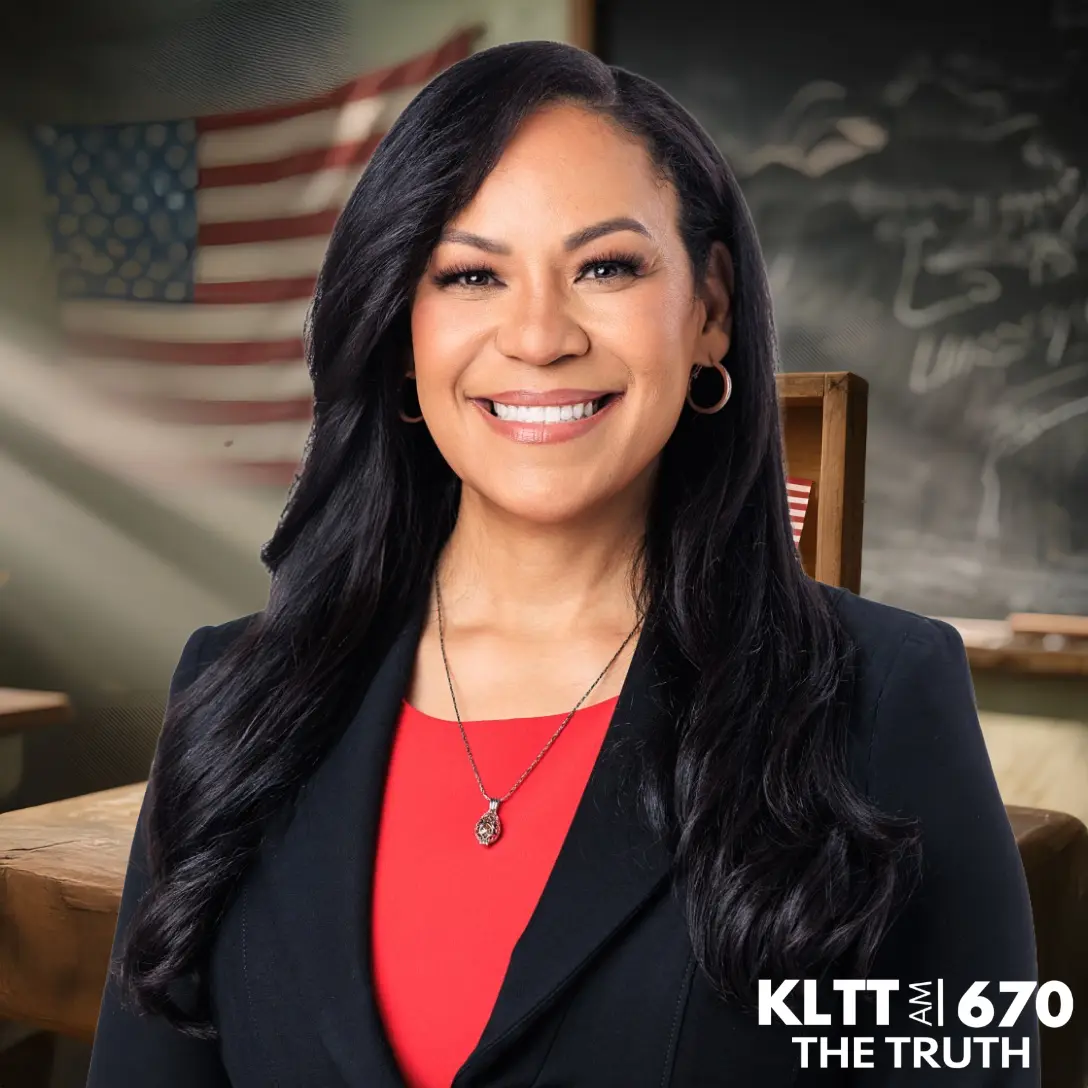
In this episode of Restoring Education in America, host Priscilla Rahn delves into the power of choice in education with the introduction of Excalibur Classical Academy, a new private school focused on instilling freedom and virtue in young learners. Join Priscilla as she chats with BJ Joyce, a notable entrepreneur and mentor, who brings a wealth of experience and insight on empowering communities through education.
SPEAKER 02 :
Welcome to Restoring Education in America with Priscilla Rahn. She’s a master educator and author leading the conversation to restore the American mind through wisdom, virtue, and truth.
SPEAKER 01 :
Well, hello, everybody. Welcome to Restoring Education in America. I’m your host, Priscilla Rahn, and I am so thrilled you’ve decided to join the conversation today. We are in school choice time right now. Parents are looking for great options for their children. And there’s a new private classical school that’s opening this fall in the Centennial, Colorado area. It’s called Excalibur Classical Academy, and their mission and vision is restoring America’s heritage by developing servant leaders who are keepers and defenders of the principles of freedom for which our founding fathers pledged their lives, fortunes, and sacred honor. And I can’t think of anything more important than to raise children in this concept of God and country, to love our nation, to understand the origins of our rights, to identify the threats to our rights, and to be able to defend those rights. So if you have a young child that’s starting kindergarten through third grade this fall, please go to their website to learn more. Their website is ExcaliburClassicalAcademy.org. Well, we have a lot of amazing people out in the community who are doing wonderful things in the education system. And my next guest is someone that I really want to have a conversation with about what’s going on in our schools. And I’m going to bring him to the stage. Welcome, Mr. BJ Joyce. How are you doing today?
SPEAKER 03 :
I’m doing well, Priscilla. Thank you. How are you doing?
SPEAKER 01 :
I’m doing great. I am so looking forward to having this conversation with you. But before we get into the conversation, I’m going to share a little bit of your bio with our listeners. So BJ Joyce is a Denver native entrepreneur, podcast host and small business consultant committed to advancing economic mobility and empowering communities. A graduate of Lincoln University where he studied marketing, BJ gained early professional experience through internships with organizations like the Federal Reserve and First Data Corporation, experiences that helped shape his entrepreneurial path. He now serves as program director for En-ROADS College Links, mentoring high school students and preparing them for college and career success, while also serving on the board of the Black Economic Success Trust to support long-term community advancement. After becoming completely debt-free and paying off his home in just four and a half years, he now shares his journey to inspire others toward financial freedom. He’s a man of faith, but his most important job is husband to Miss Brittany and dad to one. So welcome. We honor you as a father and head of your home and as a man of faith. I’m so excited to have this conversation.
SPEAKER 03 :
Yes, yes, definitely. And real quick, I just wanted to know, I love the intro that you have for your show. I need to get one of those for my podcast as well. So thank you for inspiring me for that.
SPEAKER 01 :
Absolutely. You know, I was thinking long and hard when I was approached to do this show, like, what is my theme? What’s going to be the thread? And I thought, you know, I love the classical model so much. Let’s get us back to this fundamental approach to education. Yes. But for my listeners, so this is actually the first time you and I are actually having a conversation. I don’t know how we became Facebook friends, but the algorithm.
SPEAKER 03 :
The algorithm. Yeah.
SPEAKER 01 :
The algorithm connected us and I’m like, who’s this guy? And then I’ve just started watching some of your posts and I’m like, okay, he’s making sense. He’s like posting things that I agree on. And I post some things that you would like. And finally it clicked. It’s like, okay, this guy is in the education space and I really appreciate the work that you’ve done. And so one of the things that you, you used to do is you worked in Cherry Creek schools and, in their transitions program. Talk a little bit about the work you did with Cherry Creek School District.
SPEAKER 03 :
Yeah, and I’m actually going to back up for you for just a second and say probably the primary way that we got connected was through the deodorant.
SPEAKER 01 :
wow yep my uh my rodell organics my exactly exactly your rodell organics and i love the deodorant and i’ve bought some and so um yeah you sell that at my chiropractor that i go to and so okay yeah yes he’s the one um business that i keep my product okay so that’s the connection very cool so you used to work in cherry creek school district in their transitions program tell us what that was like and what your work was
SPEAKER 03 :
Yeah, so it was it was actually really fun, really rewarding and working with these students. And so they’re students with developmental disabilities that are on the higher end of being able to use their mind, their body, that kind of thing, but still have those disabilities. And so working with them from 18 to 21 when they would age out of our program. And they have actually graduated from the school district at that time. And so this is a program that’s in existence all across the country. So it’s like there’s a federal law or something like that that makes it possible, which is great. And so helping those students from a personal perspective, as well as professional standpoint, so that they can get these skills, resources, knowledge, training to be productive members in society that they wouldn’t have otherwise gained from like a traditional, just educational institution, right? So this is working on resume skills, interview techniques, how to work out in the community and how to get transportation out in the community are you able to drive or do you need to get a bus or some of the other disability services like the accessor rides and those kinds of things to get you to work and then how can you endure on a job site so we would take them out into the community have them volunteer in certain capacities at different locations around the city And then also help train them on on those work skills, on taking breaks, showing up on time, checking in with the supervisor, checking out with the supervisor, asking questions about their job duties and if something changed. Right. And then working through their disability through the entire process. And then we would build those students up to ultimately. try and get a job their own their first job maybe right and then work with them while they’re on their job help coach them guide them um work with the employer as well to let them know that we’re helping them and that we’re a resource for them should things change or should things come up we can help advocate help uh help them with their job and so on and so forth And then they would graduate out of our program at 21 and we would see them off. And hopefully, you know, we did a good enough job that they are now stand up citizens and can be productive on their own or with some sort of help from their family and the rest of the public service community.
SPEAKER 01 :
Well, I’m sure that a lot of parents are so grateful for a program like this, especially if their children are special needs or need extra assistance. Is this program still in existence in Cherry Creek School District?
SPEAKER 03 :
Yes, it is. It’s in existence actually in Aurora, Denver. All the school districts have a program that’s similar. It might be called something different, but every school district should have this program.
SPEAKER 01 :
And when did you leave Cherry Creek?
SPEAKER 03 :
So it was October of 2020. So the pandemic had just happened and subsequently our program was more or less being rolled out of the Cherry Creek School District at that time. the world was changing as we knew it in 2020, right? And so being a community-based program, a program that is supposed to go out, it was very difficult to be able to take students out if we can go anywhere. And so they were rolling back. I saw signs on the wall that they were going to start eliminating positions. And so I pivoted and got out of Cherry Creek School District at that time, October of 2020. so talk about that journey now to inroads and being the program director and talk a little bit about what the program is and what you do yeah definitely so inroads is a program that started in 1969 by a man named frank c carr he went to the martin luther king i have a dream speech and got invigorated and said i want to do something i want to help you know this is powerful what can i do so he goes back to his hometown of chicago And he starts contacting people and businesses all across the city and is able to secure 25 paid internships for black college students at that time and thus En-ROADS was born. And so it existed and still exists as a collegiate internship program. But fast forward to early 2000s is when I actually went through that program. as an intern and my wife went through that program. Many people that you all might not be aware of in politics here locally have gone through that, and business leaders and such also went through that program with us at the time, who you’ll now see in leadership positions all across the state and the city. And then in 2017, they piloted a new program called En-ROADS College Links, which is purely for high school students. And it doesn’t have the internship component, but it focuses on college and career readiness. And so we take a group of high school students, freshmen through senior year. They can start as early as a freshman, but we get them at different points, of course. But if they start as a freshman, they can go all four years with us and then immediately be able to get pipelined into the collegiate program for internships later on. And so we’re just going through a bunch of different things and preparing them with soft skills within business and industry, doing college prep and exploration, job shadowing, STEM related exploration, and really trying to help these students identify what it is that they’re going to do for the rest of their lives, or at least the first part of their lives after they graduate high school.
SPEAKER 01 :
Yeah, that is so beautiful. Now, when I think about I used to teach at a high school and, you know, the conversation with juniors and especially seniors was often about what is it that you see yourself doing? Where do you want to go to college? And you hope that they get plugged in to a mentor that’s going to help them. navigate a lot of these things that you have to learn in order to be successful, you decided that you wanted to attend an HBCU. What were some of the lessons that you learned and experiences that really helped propel you into this business world? And we’re going to get into some of the specifics, but I’m just curious what that journey was like for you.
SPEAKER 03 :
Yeah, so I initially in high school, I will say I wasn’t guided very well from either the school or my parents. My parents, they were very hands off and not to throw them under the bus or talk bad about them, but they were just like, you’re just going to go to college and all the things will be right. And that was it. That was their focus is just get me to college. It wasn’t anything more than that. my parents didn’t really have a steady hand in guiding me on what i may or may not want to do and so at the time throughout high school i was thinking you know i want to be a business owner right and there’s a lot of a lot of kids out there like oh i want to be an entrepreneur until you get into the life and then it’s a whole another story but i said hey i want to be a business owner one day i didn’t know what that entailed didn’t know any business owners Never met anybody who owned a business specifically outside of my barber. He owned the barbershop and that was it. Never had any business conversations, not even thought to have business conversations with him at all either. And that’s just kind of where I was in high school and my school wasn’t really guiding me. And I was just kind of a free flowing spirit at the time. Then I said, all right, well, what am I going to do for college? I’m going to be a business major. So I went started off as a business major, got into an accounting class, was like, oh, man, I like accounting. I might make accounting my my minor. Then I got into the second accounting class. I said, I hate accounting. I want to get out of this. And then I looked and said, dang, I have to take a third accounting class as a business administration major. And then I looked at marketing. And I only had to do two accounting classes. I said, well, I only have two already taken care of. I’m switching to marketing. Right. So I switched my major early, switched it over to marketing and loved it. Fell in love with it. Love the concept of how to sell and how to brand and how all the creative creative aspects of marketing that there was. Problem was when I graduated, I graduated in May of 08. And we were in the middle of a recession that just started, and that was good for no one. And there were not any jobs. So I needless to say, I didn’t actually get started in marketing. My career started in sales and I have an extensive sales background and variety of different industries and businesses that I’ve sold in. But. I still have this entrepreneurial knack. I started a business during the pandemic, actually, right after or during that summer, I wound up starting the foundations of the business. And then when I left Cherry Creek in October is actually when I started my business. It was called Black Biz Colorado, and it was a website to a website directory for black businesses here in the state of Colorado to be listed and found. And prior to shutting that down, I had over 1,200 Black-owned businesses in the state of Colorado listed. I started that, learned a whole lot about business, and I have transitioned, I will say, my entrepreneurial aspects into a consulting firm as well. So in addition to my duties as a program director for En-ROADS, I do small business consulting as well.
SPEAKER 01 :
You know, BJ, when I think about America’s 250th birthday coming up this year, I’m so excited. Yeah. But there’s so much we have to learn about our history where, you know, our dark start coming here. And then I’m a descendant of enslaved Africans. And so I see that part of our history. But then I see this beautiful growth, right, starting with our heroes like Frederick Douglass or Booker T. Washington, these greats. who taught us about entrepreneurship. And then you look at Tulsa, Oklahoma, Black Wall Street, where business people were very independent. They weren’t dependent on the government for handouts. They said, you know what, we’re smart enough. We can open our own banks and hospitals and be realtors and all of those wonderful things. And then, you know, the 60s came and then we could see the slow decline, decline of the families, economic decline. mental, educational decline, all of these declines. Did that part of our history and learning that inspire you to start your business? Was that a part of your journey? Because when I look at this generation of young people, they didn’t really have to struggle, right? My father grew up during segregation. That generation really went through it. But today it just seems like life is so much easier. We have access to all of these opportunities, but it doesn’t seem like young people are taking advantage of that. What inspired you and what are you seeing in this generation as you’re coaching other young people and other business people?
SPEAKER 03 :
yeah um i mean first thing i just want to touch on you talk about your father being a part of segregation i mean my father is a witness to an unreported lynching by the police department in hot springs arkansas back in the early 50s and one of these days i’m going to get him to hopefully before it’s too late to get that story told and hopefully have some investigation go on about that and But that was a time. Right. And that not long ago, I’m one generation removed from that. And because of the atrocities of, I’ll say, the extreme Jim Crow era, because of those things, you have so many people that today will say, Well, every time we go to start something or every time we try to do something as black people in America, they either kill us, you know, and destroy our businesses, keep us from this or, you know, all these different things. And I say, yeah, OK, I got that. I understand we have a history of that. But conversely, I will push back and say, well, what are you going to do anyway? Are you just going to sit and wallow and say, oh, well, they did that to us and they’re doing this to us and we’re just going to sit around and allow it to continue to happen? What are you going to do differently? And too many Black Americans don’t want to have that conversation. They want to be mad. I get it. Be mad. I get it. I used to be an angry Black man. And I was on that train as well. And I wanted to, you know, fight and be angry and go against, you know, white America as it will, right? And then I started thinking. Oh, wait. You started thinking, period. Right? I started thinking. And I started seeing, okay, well, Latinos… have no issue. They’re coming here. The Latino culture, right? And again, there are differences. Black Americans are the only ones in this country that were specifically enslaved the way that they were for centuries and then faced certain atrocities. Now, Latinos, Asians, Arabs, Africans today, Every other ethnic group that’s out there seems to come over here and do just fine. And I started thinking, well, why is that? What’s different about them other than their culture, their ethnicity, their group of people were not property in this country? Well, what they have is they have strong family ties. They have a worldview. They have ideologies that are not of slavery. Right. They have all these different things. And then I said, well, that’s great. That’s how they can thrive. But then we even still from 1865 as black Americans until 1965, there’s a pretty clear delineation, 100 years. We didn’t have that same culture, that background, because our people were coming out of slavery. And we still were able to achieve great things like Black Wall Street. And obviously, we talk about Black Wall Street because that was the biggest event of bombing on a neighborhood and so on and so forth. But there are numerous Black Wall Streets all across the country. And so we had those things. We had Black people coming together and helping and building and growing. I mean, there’s numerous statistics out there of the illiteracy rate. It was illegal for us to read. to being the most literate ethnic group in America, actually. And I think it was like a 30-year time period after slavery had ended. So like by 1895, we’re the most literate per capita, so to speak, right? And so we did all these things during that 100 years with the extreme Jim Crow tyranny and oppression, right, that was going on. And then something happened in 1965 that people don’t want to point to. And they say, well, 1965 Civil Rights Act was passed and that was a great thing for black people. No, it was a great thing for everyone else. What it did is it destroyed Black America, unfortunately, right? Now, did it open up opportunities to say, hey, you can now not technically discriminate and do all these other things because of the person’s skin color or their ethnicity or whatever? Yes, it did that. but what it did to black americans is you take i work at it let’s just let’s just use a professor at an hbcu right and i went to university or lincoln university in jefferson city missouri right up the road literally 30 30 minutes probably the same distance as denver to castle rock um in columbia missouri is the university of missouri the big state school that’s where the cronkies and everybody and the wall walton’s all went is mizzou okay so if i’m teaching in 1965 at little old Lincoln University as a black professor, and I get paid, I’m just going to make up some numbers, $10,000 a year in 1965. Professors that teach at the University of Missouri get paid $25,000 a year. They’re not gonna pay me what a white professor makes at $25,000 a year, but they’ll pay me 15 or 16,000 and I can now go and teach at that university. Guess what I’m doing? I’m moving from Lincoln to go teach at the University of Missouri. Am I gonna face all the racism and the meanness that has happened and is still happening during that time period? Yes, but guess what? It’s economic mobility is resources. Now I have an opportunity to take care of my family a little bit better than what I could over here. And I’m going to take that opportunity. And so that’s what started happening in every single sector across America, whether it’s for employment or like education. Right. So same thing. I’m a kid who’s trying to go to Lincoln university. I’m black kid before I could only go there. Now I have the opportunity to go to the university of Missouri. And when I’m trying to get a job and if they see Lincoln versus the university of Missouri, I’m more likely to at least get an interview and then they see me and then I still have to compete, you know, that kind of thing. But my resume and my credentials are going to carry a lot more. I’m going to have access to better funded labs, classrooms, so on and so forth. And so you extrapolate that across the entire country and what, what, black america did was say yippee i’m going for that and i’m going to abandon the communal aspect of i’ll say the tribe right the ethnic group of black americans and in hopes to individually gain economically but the long-term view has destroyed us um as a collective economically right And so with this downtrodden then mindset that happened is we gave up collective power for individual ascension and then we didn’t have the ability to circulate that money to continue to help support us.
SPEAKER 01 :
Well, talk about this. Okay. So in your bio, you went from owning a home to paying it off in 4.5 years. Tell us the secret.
SPEAKER 03 :
So it’s not really a secret. It’s really just living below your means. And so going back to the economics is my wife and I, we graduated, like I said, in May of 08. And everything was financially a mess during that time. And she worked for an organization that was laying off people left and right. Didn’t matter. Your story, I mean, I remember there was a story she told me. There was a lady who went on vacation with her husband and family, and they come back. The day after they’re back, he blows his brains out in front of the entire family in the kitchen. And a couple days later, she gets a pink slip from that company just because they’re down. No heart, no nothing, right? No care. Numerous situations like that. So we said, look, We want to at least have a place that we can live in. And I’ll go work at McDonald’s if I have to, should we ever get laid off from a company because everybody was getting laid off and the economy was just tanking, right? So what we did is we lived on one salary. We bought our first home in March of 2009. So you think about this. May of 08, I’m graduating as a high school student in the worst economic space since the Great Depression. March of 09, I’m buying a house though, right? So we saved, we bought a house, we put 20% down on it so we didn’t have any mortgage interest or mortgage insurance rather. And we had the full equity in there. And then by, what was it, May and June of 09, paid off my car loan that I had and my student loans that I had. and then fully focused on paying off our home by living on one salary by, I mean, we had a fund budget at one point of $100 a month. And by fund budget, what that means, you’re gonna laugh, at the time, Redbox was a thing. So that meant Redbox rentals, that meant if we were gonna eat out, even if it was for lunch or anything like that, if we were going anywhere, and then we would structure our, our trips to like the grocery store and to visit people and we would literally sit down and plan so that we can maximize the mileage so we weren’t using gas and then we wouldn’t go out because gas was high during that time and uh you know it was really high especially like after katrina and that things were still high in the economy again And so we would plan all these different things. We would turn the heat down in the winter and we would just throw on extra layers. We would turn the air down in the summer and we would just take off clothes as much as we possibly could. And we would cook at home and we’d find sales and we’d clip coupons. And we would just take all of one other person’s salary and throw it on the mortgage and throw it on the mortgage until shortly after. October of 2013 is when we made the final payment.
SPEAKER 01 :
That is amazing and a great lesson on not owing and being in debt and enslaved to that. So good job. You know, my husband and I are debt free as well, other than our mortgage. I mean, we’re almost done, but pay cash for everything, save. And if you want something, you just have to sacrifice. And I can’t tell you how much freedom there is in, you know, everything that we do, we just pay cash for, you know, because we save up for it. And here’s another tip I have for young people, especially if you’re just getting married. put aside enough for a car payment until you have enough for a car, you know, and pay cash for your car and negotiate. And it’s just so much better to do it that way if you can. But BJ, I’m looking at the time. We have to land our plane. All right, let’s do it. We’ll have to do a part two sometime and talk more about what’s going on in the school districts.
SPEAKER 03 :
Yeah, we didn’t even get into the school district stuff. So yeah, let’s do it. Yeah, we’ll talk about it.
SPEAKER 01 :
Yeah, but we’ll have to watch what’s going on because there’s some scary stuff happening in our schools. But thanks again for your time today. And to my listeners, thanks for tuning in. Catch me next time. And remember, educating the mind without the heart is no education. So seek wisdom, cultivate virtue, and speak truth.
SPEAKER 02 :
Thanks for tuning in to Restoring Education in America with Priscilla Rahn. Visit PriscillaRahn.com to connect or learn how you can sponsor future episodes to keep this message of faith, freedom, and education on the air.
