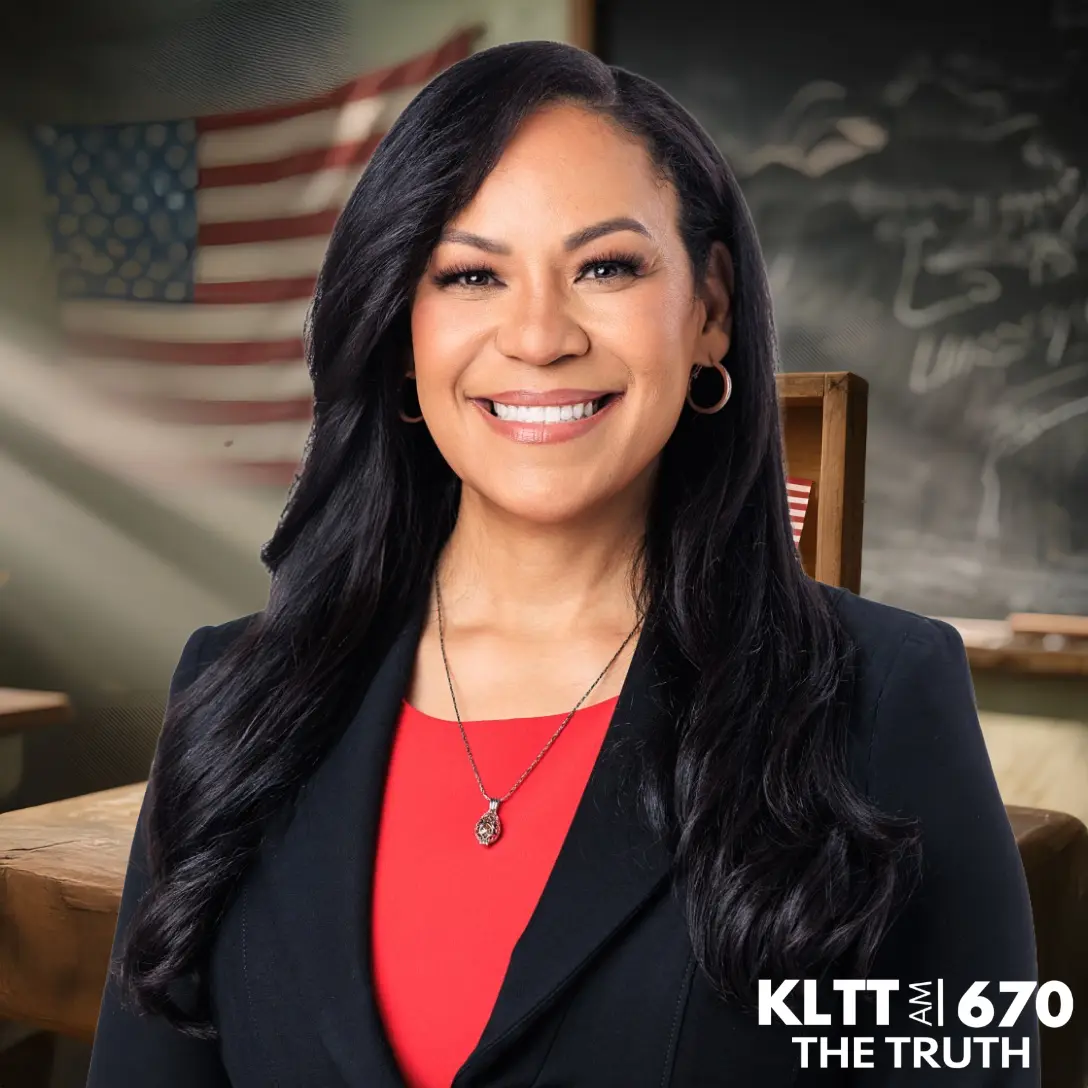
Join host Priscilla Rahn as she delves into the world of classical education with Congressman Bob Schaefer. On the landmark occasion of America’s 250th birthday, discover the mission behind Excalibur Classical Academy and the resurgence of classical education that nurtures servant leaders grounded in the principles of freedom.
SPEAKER 02 :
Welcome to Restoring Education in America with Priscilla Rahn. She’s a master educator and author leading the conversation to restore the American mind through wisdom, virtue, and truth.
SPEAKER 01 :
Well, hello, everybody. Welcome to Restoring Education in America. I’m your host, Priscilla Rahn, and I’m so thrilled you’ve decided to join the conversation today. It’s America’s 250th birthday, and I can’t think of anything more exciting than starting a private classical school. in the Centennial area this fall. It’s called Excalibur Classical Academy, and their mission and vision is restoring America’s heritage by developing servant leaders who are keepers and defenders of the principles of freedom. Please go to their website, ExcaliburClassicalAcademy.org. They’re doing information sessions and tours of the school, and we would love to meet you. Also, if you are a young teacher who would love to teach in a classical school, you can submit your resume to the website as well. But talking about classical education and America’s 250th birthday, I am so excited to bring someone who I highly respect, who knows all about civics and classical education, and I’m going to welcome him to the stage right now. Welcome, Congressman Bob Schaefer. Hello.
SPEAKER 03 :
Hi, Priscilla. How are you today?
SPEAKER 01 :
I am great. I’m so excited to have you on. You’re one of my most favorite people on the planet. And just to have this little bit of time with you is such a great honor. And I look up to you so much. But before we get too far into the conversation, I’m going to share a little bit of your bio with our listeners. Congressman Bob Schaefer is an American educator, businessman, and of course, former congressman from Colorado. A Republican, he represented Colorado’s fourth congressional district in the U.S. House of Representatives from 1997 to 2003, where he was known for his conservative views and work on international human rights issues, including serving as co-chair of the Congressional Ukrainian Caucus. After leaving Congress, Schaefer remained active in public life and education policy, and in recent years, he has focused on education reform and leadership. Schaefer currently serves as headmaster of Liberty Common School in Fort Collins, Colorado, where he has been credited with fostering a rigorous academic environment and strong student performance. His work reflects a continued commitment to school choice, classical education, and academic excellence. We’re not worthy. I always say this, not worthy of this. But where I first met you was through Leadership Program of the Rockies, and I had no idea what I was getting into. I mean, I kind of heard other people talk about this entity, but there’s no substitute for going through it. So for our listeners, can you talk a little bit about Leadership Program of the Rockies and your role there?
SPEAKER 03 :
Sure. Well, LPR is a leadership development organization. It is kind of academic in its emphasis, nonpartisan, and it is geared toward adults, people who are already leaders in the public square somewhere. And I don’t mean government. Public square, I mean… in business, it could be in academia, it could be in media, it could be in ministry. Wherever that happens to be, we try to find about 65 to 70 high-profile leaders throughout the state every year, and we’ve been doing this since around 2003. And we meet for nine months for day-long classes, different areas in the metro area, and form a bond and a team of each class that goes through the program that stays in touch. And I’m sure you’re in touch and have great relationships with those who are in your class. And we go through… all the elements of citizenship and civic leadership from capitalism, why capitalism is the American ideal for and is a moral system of economic engagement and voluntary exchange. And free markets and also about we go through the not just the a review and a refresher of the founding of the country and the philosophy of the Declaration of Independence. But we we go into the philosophers who informed America’s founders and try to understand them a little more deeply. philosophical components that set America apart and the design and the vision of the United States of America from other countries in Europe and throughout the rest of the world, at least in the mind of America’s founders. The mind of the founders, that’s a good phrase. We try to put ourselves in the mind of the founders to the greatest extent that we can through reading them and reading their own statements and remarks. But as I say, reading and learning more and more about the principles that informed them and brought them together there in Philadelphia in 1776, in the months leading up to July 4th, July 2nd, really, when they signed that declaration. And we tried to bring those ideas forward to today so that we discuss strategies to try how to implement these principles of freedom into today’s modern society and recover the country that our founders envisioned.
SPEAKER 01 :
So yeah, when we think about the LPR experience and all of the things that we’ve learned, at the time that I was invited to join LPR, I was still in the teacher’s union. I was still very active in that organization, but I’ve always been a conservative and a Republican, but I didn’t have the words to articulate a lot of the concepts. I wasn’t making decisions based on principles. So I was stumbling around the things that I believed and it would just shift based on how I felt. But LPR really helped me to understand the Constitution, the proper role of government. But let’s shift that into education and the things that you taught us with all of your wealth and education. Can you expand a little bit more on what you think the proper role of government is when it comes to the space of education and parents?
SPEAKER 03 :
Sure. Well, government has a role in the education marketplace. It is, however, not the federal government that has a proper role in the marketplace. And I think that is where many Americans these days maybe miss the intention of what an American education system was intended to be and what it ought to be. It’s hard for many people, youngsters your age, let’s say, I say that as relative because I do remember I was a youngster at the time in the, let’s see, would have been 70, 1977, when the U.S. Department of Education was created. Prior to that… There was no U.S. Department of Education. All education authority rested with the states or with the people or local governments as the Constitution envisions and has envisioned over the majority span of America’s history. This idea of federal management, federal meddling, federal laws, in the place of public education is a relatively new concept in the American experience. And so that’s why I say for those who are a little younger than me, it is hard to imagine for some a country without a U.S. Department of Education. Again, even though that is the predominance of the American experience. All right. Having said that. The debates that are taking place in Washington right now under the Trump administration to abolish the Department of Education seem radical. And in reality, the creation of the Department of Education in 1970 was radical. A particular senator from New York, William Proxmire, in voting in favor of the establishment of the department, promised that it would never get out of hand, that we would never see the U.S. Department of Education intruding into things like curriculum or standards or teaching practices or funding and so on, that it was just superficial that there would be research on a national scale, for example, that would be conducted by the department. But actual impacts on what is taught, how it is taught, would never be contemplated by… by the federal government. Well, Proxmire was wrong in voting, yes, but his speeches in doing so are a real clear indication that even way back then, they knew, those members of Congress knew that they were embarking on a radical plan of ignoring Article 1, Section 8 of the U.S. Constitution. And Article 1, Section 8 is that section which defines the authority that Congress has. Education is not in it. It is not a federal jurisdiction from a lawmaking or administrative side. So the radical element is not what Trump is proposing to abolish the department. The radical thing is what he’s wanting to do is go back to the pre radical days. of the congressional understanding and executive branch understanding that Article 1, Section 8 actually means something. And so with that, that is the proper role of government and education at the federal level. Well, the 10th Amendment is the amendment that that secures education as one of those duties that properly resides with the states or with the people. And so states to varying degrees have had education systems ever since the founding of the country, when the first 13 states did embark on different kinds of educational models at the state level. Virginia probably gets the greatest credit under Thomas Jefferson’s view of what public education should be, but Benjamin Franklin also had a very definite view on what education should be for the masses. And over time, that was perfected and elevated at the state level. But that’s the key phrase there, at the state level. It wasn’t really until the 1970s. that under the president carter administration that the country began to experience a federal role in the management of schools and different states have different approaches colorado is what is called a local control state now this is under our state constitution the state constitution gives all teaching authority to the districts and there are 178 school districts in colorado under our state constitution Local school districts have the authority to determine what is taught, what the curriculum should be. And the state distinctly has no authority over what should be taught in or what is to be taught in public schools. The hiring and firing of employees is an authority that is controlled locally and so many other things of that sort. The state role under the state constitution is intended to be very, very small. And in fact, when I got into the state legislature back in the late 80s, the big debate we had in those days was, is it appropriate for the level of state funding to ever exceed 50 percent of what ends up in the classroom? And we had these wonderful philosophical discussions about how awful it would be. If the state funding exceeded 50% because that would empower the golden rule, he who spends the money, controls the authority, the golden rule of politics, let’s say. And we had great debates about deliberately keeping that threshold, having the state stay under that threshold. That threshold has been exceeded to the point where there are some districts where the vast majority of funding in a local district comes from other taxpayers in Colorado and is redistributed through the states. And so sure enough, it has the negative effect of diffusing the authority of local decision makers, local school board members and local neighborhoods, or even local school administrators and teachers. and diminishing their authority to do what they know to be best locally. And let’s face it, Colorado is a big state. It is enormous in terms of its square mileage from border to border, north, south, and east and west. My school district, I am in Fort Collins, Colorado, is very, very different than Denver, where you have taught. It is even more different than schools way out in the eastern plains or over in the western slope or some far flung remote part of the state of Colorado. The values in each of these towns and districts and and communities can vary rather dramatically. And our state constitution clearly acknowledged that when it suggested that the authority to manage schools should be local, not isolated to Denver, Colorado, where the state capital is. So you asked a simple question, but it’s an elaborate answer. The proper role of the federal government in education is zero. Let me qualify that. Possibly with the exception of… of navigating, negotiating certain legal questions about one’s rights in a school. Those can be properly meted out under federal law when it comes to federal rights. But that’s a different statement, a different commentary than curriculum, management, expenditures, and so on. And at the state level, when we’re talking about Colorado, Let me also qualify that. There are other states where the state government does play the predominant role by design. Colorado is just not one of those and never has been. And so the proper role of government at the state level Should be minimal. Establishing a school finance act, for example. Establishing certain laws with respect to due process in employment and student rights. Accountability measures would be appropriate. But when it comes to deciding what textbook should be purchased, deciding what curriculum is going to be followed, I would submit even deciding what kinds of assessments our best for the curriculum that is taught. Our state constitution envisions that authority residing with local school boards. And so the proper role of government at the local level should be the majority of authority.
SPEAKER 01 :
Well, Congressman, I want to make sure we leave a little bit of time to brag on your school, Liberty Common. A couple of years ago when I was a baby in LPR, it was the first time I was introduced to this concept of classical schools. Fast forward this fall, I am now the headmaster of a new private classical school that’s starting. You were a big part of this journey for me. You power sneezed and you’re like, we need more. Private classical education, exposing children to wonderful options and choices. And you are a proponent of choice, whether it be public school, charter school, private school, homeschool. And we know, depending on who you talk to, people have very different ways of explaining what a classical education is. But you have beautiful traditions at Liberty Common. I came and I spent the day at your school for a festival of ideas. And you showed me the school and all of the wonderful symbolism. Can you talk a little bit about, for parents who are listening who may not know what a classical education is, in your words, what is a classical education? And then brag a little bit about you being the number one school in Colorado.
SPEAKER 03 :
Sure. Well, classical education is a big definition, which we probably don’t have a lot of time to dive into. But let’s start off with saying it is old. And when I say old, I mean older than 250 years. It was the kind of education that America’s founders, the individuals, would have received in their day. The most educated Americans were educated in a classical tradition. But when I say old, I mean old world, ancient, going back to ancient Greece and ancient Rome. Here’s a good way to think about it. And that is, can we imagine that Socrates being a great teacher, remembered because of his wisdom and his philosophy and his role as an educator, was an educator of young students in ancient Greece. Can we imagine that as he taught those students, he might have been right about certain things. He might have had accurate, truthful, correct observations about certain things he would have observed in nature or about even human nature. And if he was right about those things, then other teachers should have and did grab onto those, hold onto those, preserve those lessons and perfect them over thousands of years. And to the extent Socrates and his student Plato and his student Aristotle refined certain approaches, certain methods, certain ideas perfectly to perfection. Are those lessons perfect today? And the answer is yes. If you perfect a certain set of ideals, if you perfect a certain philosophy and it endures, a classicist, somebody who is an advocate of classical education would say, the role of a modern teacher is to look for all of these perfected lessons over time and bring those forward for students today. To not reinvent a wheel that was perfectly invented 3000 or 2000 or 1000 years ago. And to to bring all the new ideas, there are new scientific discoveries all the time. But a human should come to understand these things within the context of a Western canon and a Western tradition. And so it’s how it is that The books on my shelf over here that you can’t see. You can see a few of them up there. The books on the shelves in our school, how we know that they are good, that they are the proper books for a classical school. And the reason the answer is, is because they follow a certain recognition that human nature never changes. that the human being in nature is a predictable being. We’re a natural being. And so given that certain emotions, certain virtues, we can actually make laws about these things. We can actually understand man’s reaction to certain circumstances. Fear a reaction is the same for you and me here today as it would have been to the students of Socrates. They would be afraid of the same things. Love is experienced in exactly the same way Socrates students would have experienced love. And so when we understand those things, we then see these patterns weaving through great literature, through great works, through great historical accounts. And that defines what goes into these books, the books that we bring forward to our students today, not the junk. that is outside the legitimate human experience, not the junk or the distractions that might be associated with how young people feel today or think they feel today, but to refine the best ideas, the best stories that make us part of a very broad education, not only broad by today’s standards, but broad and deep in that our experience is, as students and teachers, maybe 3,000 years old, that we have records. Education is older than that. But I’m talking about when education was thought of in a formalized context. actual schools and academies and Lyceum where a professional educator was employed to educate young people and transmit knowledge from one generation to the next. All right. I said I’d be brief about it. It’s impossible to. But that in a nutshell is the is what is being rediscovered in America today. There is a resurgence, a renaissance in classical education. People want to know they want their kids to be educated in the same rigorous and purposeful way. as even America’s founders were. And unfortunately that’s kind of scarce in America today, but becoming more and more common and prevalent as more and more parents discover that that classical method is better than the experimentation that has been taking place in our country. Going all the way back to the, let’s say the 1900s, early 1900s is when we saw an injection of a Rousseau, Jean-Jacques Rousseau philosophy, John Dewey philosophy that has become a progressive romantic. education system that defines most of public education today. Prudent parents want the old ways revived. And that’s what we’ve been doing here at Liberty for almost 30 years and why the school is the number one performing school in the state of Colorado year in and year out.
SPEAKER 01 :
It’s so wonderful. I would encourage anybody who’s interested in the classical model to call your school and request a tour and learn a little bit more about it. Because I think for someone like me who grew up in the public education system, when I initially heard of classical, you know, you think of people with bow ties and it’s very stuffy and it’s way too cranial and there’s too much reading and too much writing, but it is so enlightening and fun. Just, seeing your teachers and your guests speaking in the breakouts at Festival Ideas, and even asking the students questions. They were extremely articulate, and you could tell they had a passion, and they were talented. And it’s not just about mathematics and reading and latin you have musicians you have actors it’s a very very broad liberal arts education and when we talk about the trivium of grammar logic and rhetoric you think wow how fun when you start to dive into it You can’t stop learning about it and talking about it. And so like one of my favorite things now is to talk to different classical leaders and teachers from all over the nation to hear what they’re doing. And I’m catching my second wind after 32 years of teaching in public education. I am so excited. I wake up every day. I’m exhausted of trying to start a school and the amount of emails that I get. But just the vision of what could be and what’s happening. I have to tell you, more parents and more teachers need to get themselves immersed in this model. And I keep telling people I am going to spend the rest of my life in the classical model because I believe it so much. I say I got here as fast as I could. I mean, I wasn’t in it. But I got here as fast as I could. And what would you say to encourage people who have been in public education and they might want to make this transition, but they’re intimidated? What would you encourage them to do?
SPEAKER 03 :
Well, there are a handful of really good organizations throughout the country that exist to promote this renaissance in classical education. I would seek out any of them. But right here in Colorado, we get these kinds of inquiries from here in our part of the state and throughout Colorado and throughout the country all the time. So much so that our board of directors a few years ago asked me to spend considerable resources in creating a website That is useful for parents who send their kids here, but it accomplishes just what you asked, how to become more familiar. This is a school in real time teaching in a classically oriented strategy with phenomenal success. And so you can visit our website and many of the questions a parent would have are there. They can click. click throughout it and find examples of of what is taught in each grade how it is taught there’s lots of videos and things of that sort so you can hear and see teachers talking about what they how a classical approach is delivered in a mathematics classroom or in a latin classroom or in a history classroom whatever the case may be and so just that website alone Yet promotes the school, but it was intended and constructed for the visitor who wants to learn more about our school and what we try to accomplish. And then we don’t try to keep it all here. There’s also. There’s also a feature on that website that is intended for administrators and teachers who want to replicate all or part of what we accomplish here with lots of resources. So in terms of just getting comfortable and learning more, that’s a great place to start in Colorado is at the www.libertycommon.org. The next thing would be to come visit. We’re just in Fort Collins. We’re not far away. We do visits on all of our campuses. I’m headmaster of our K through 12 system, which is four campuses now, and we do tours on all of those campuses throughout the week. And if you just tell me you’re a friend of Priscilla, Rahn, we’ll do a custom tour whenever it’s more convenient for you and make sure we roll out the red carpet. But we do tours for people are just curious who are interested in enrolling their kids here, starting schools like ours. or just learning more. We do those kinds of things all the time, and the result is they do become more familiar, more comfortable, and get a firmer understanding of what classical education means once they’ve just walked through, and like you did, interacted with the students, and you can hear the results of this. You can hear the students reflecting back what classical education means for them and how it’s animating their lives today and pointing them into a direction of an optimistic future.
SPEAKER 01 :
Well, Congressman Bob Schaefer, we are out of time, unfortunately, and I could talk to you a lot longer, but I get to see you a lot. So we will continue this conversation. I’ll be seeing you soon with your luncheon. Thank you so much for that. Headmaster of Liberty Common. And to my listeners, thank you so much for tuning in and catch me next time. And remember, educating the mind without the heart is no education. So seek wisdom, cultivate virtue and speak truth.
SPEAKER 02 :
Thanks for tuning in to Restoring Education in America with Priscilla Rahn. Visit PriscillaRahn.com to connect or learn how you can sponsor future episodes to keep this message of faith, freedom, and education on the air.