

In this episode of Restoring Education in America, explore the potential impact of public speaking programs in schools, the role of civic organizations like the Optimist Club, and how they contribute to building robust communities. Bradley Beck delves into the significance of public speaking across various fields and shares practical advice for anyone looking to improve their oratory skills. Whether you’re an educator, a student, or simply someone interested in communication, this episode offers a wealth of knowledge and inspiration to harness the power of your voice.
SPEAKER 02 :
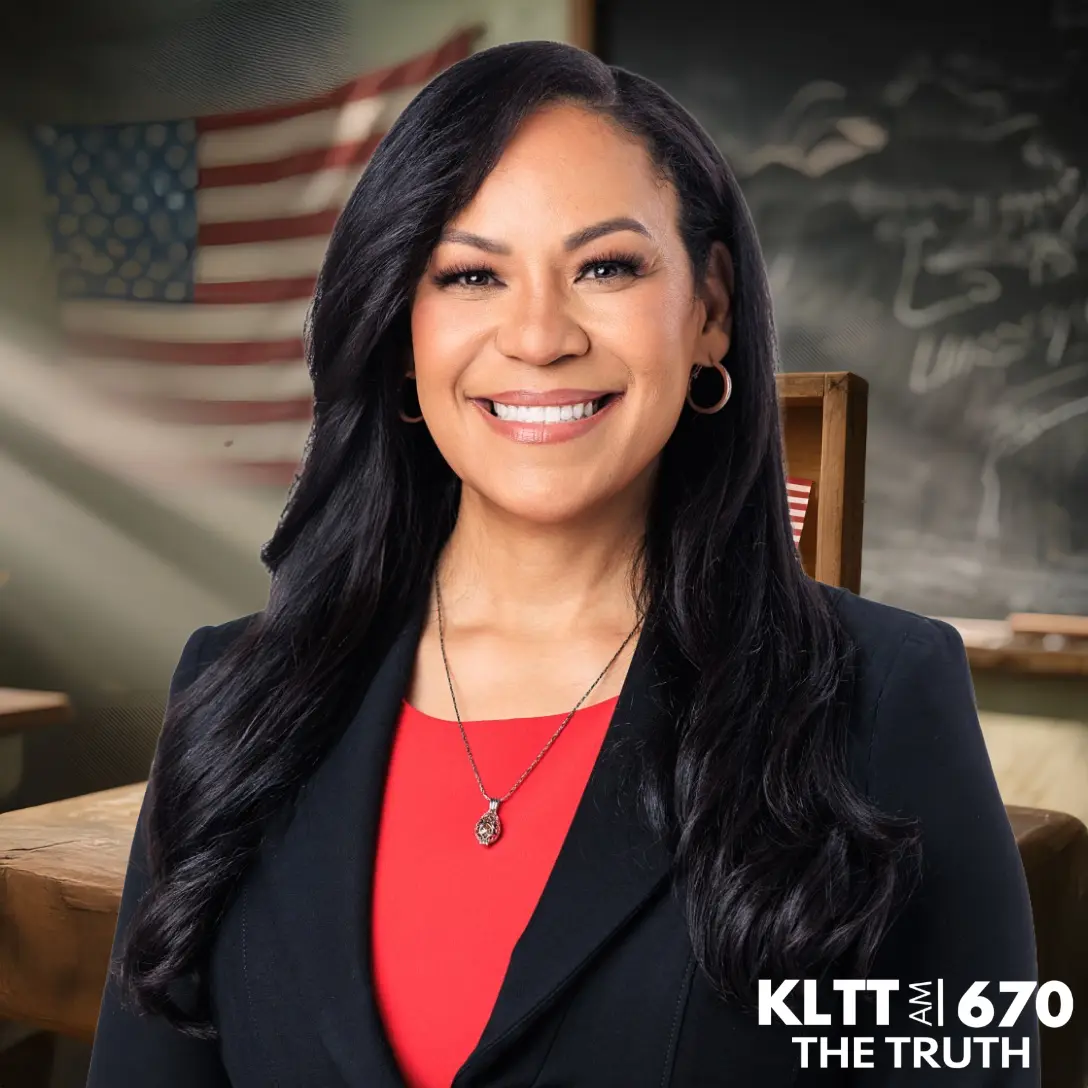
Welcome to Restoring Education in America with Priscilla Ron. She’s a master educator and author leading the conversation to restore the American mind through wisdom, virtue, and truth.
SPEAKER 01 :
Well, hello, everybody. Welcome back to Restoring Education in America. I’m your host, Priscilla Ron, and I’m so excited that you’ve decided to join the conversation today. You know, we talk about all things education, homeschool, charter school, public school, private, you know, micro school. We have all kinds of conversations with policy experts. But today I have a special guest, my very dear friend, Mr. Bradley Beck. Come on in, Bradley. How are you? I’m doing unbelievable.
SPEAKER 03 :
How are you doing, Priscilla?
SPEAKER 01 :
I’m great. Every time I get to talk to you, it’s so much fun. We are fellow LPR grads, but for those people who don’t know who you are, I’m going to share your bio, okay? Sure. So Brad is the zone manager for an international floral hard goods company. He has served his industry for 40 plus years and has volunteered on many flower and craft industry boards. In 2015, he was awarded the prestigious Leaders in Action Award from the Leadership Program of the Rockies, where he was a graduate of the program in 2009. From his experience in LPR, Bradley chartered four Liberty Toastmaster themed clubs focusing on individual rights, limited government, and to be an active and engaged citizen. Brad is a distinguished Toastmaster and has presented programs on effective communication, messaging, and business social media. Brad earned his Bachelor of Arts degree in Communication Arts from Loyola Marymount University in LA, and he is a lifetime member of the Optimist Club in Erie. Brad is married and has four children. and is known as Grand Brad to his three grandchildren. That is amazing. Okay, Brad, so I’ve known for a while. You’re Mr. Toastmaster, Mr. Communication. You have helped me a lot. And so I’m going to be very subconscious in this conversation.
SPEAKER 03 :
I will help your arms and your arms, so you’re good.
SPEAKER 01 :
Okay, and I’m going to sound perfect.
SPEAKER 03 :
You always do.
SPEAKER 01 :
So, okay, decades of leadership, communication training, and civic involvement. What do you believe is the purpose of education in a free market today, Brad?
SPEAKER 03 :
Well, it’s interesting. My understanding of it has morphed over the years. I grew up in Los Angeles, and I was a product of the LA City school system, where it appeared that every two, three years, the program changed. And I often felt like I was In fact, my parents held me back half a semester. I just was not getting it. And I remember I have a report card that said Bradley is loquacious. I had no idea what that meant, but I found out it was talkative. So it’s appropriate that I’m a toastmaster. But I think education is one of the key ingredients to having a robust civil society. And I’m fortunate in that I get asked to go to a variety of schools, both homeschooled and public schools, and to talk about a variety of issues, mainly on principles and communication. And if our young people don’t know what their role is as citizens, I think we’re doing them a disservice. I know until I went through the leadership program of the Rockies, I really didn’t have a good understanding of what my role is as a citizen. And so I think it’s important to relay that information to our young people.
SPEAKER 01 :
So now with the age of AI and AI is starting to take over communications, how do you see that impacting something that you advocate for, which is great public speaking? Do those things go hand in hand or are they in opposition to each other? What do you think?
SPEAKER 03 :
I think it’s a great question. And I think I’m excited about AI. I know A lot of people are concerned about what it may do. And of course, any new technology, it can be used for good or ill. But I’m excited because it’s going to make more people have to understand oral communication live. When a young person has a paper due and they go and do research, if they don’t cite their sources, and if they’re not aware of the subject matter when questioned, and can’t defend a position that they put in a written paper, they’re going to be in a world of hurt. So I encourage and look forward to people getting better at communication skills, whether it’s a Toastmasters or any other program on public speaking, where people have to get up and connect at the heart to get to the head. You know, most people just want facts and figures, and those are all wonderful. But unless you have a really clear, concise message, and this goes for a student or a teacher, if you can’t connect with that individual at the heart level, you’ll never get to the head. And so we need to make sure that we have good stories that make a point. And that is an important aspect of communication.
SPEAKER 01 :
You know, when I was in high school, my senior year, I joined debate club. And I don’t see that in a lot of schools anymore. But I actually went to state. I represented my high school. I know I went to state and they would give me a topic and I would have 10 minutes. to prepare what I was going to say and to be persuasive. Interestingly enough, I never really got a bunch of coaching. I just thought it would be fun to be a part of a club. And I joined the club, and I talked a lot. And so nothing’s changed.
SPEAKER 03 :
We have a lot in common.
SPEAKER 01 :
Nothing. Nothing. Well, now we still have I think some schools have mock trial. I think that’s the closest thing that I’ve seen that still exists in schools. But from your perspective, do you think a speech club or is Toastmasters in schools as well?
SPEAKER 03 :
Well, you have to be 18 years old to be in an official club. However, there are young people that we have trained. There’s a youth leadership program and a component that we do. Often it depends on what the club’s goals are, but that is a program. There’s a public speaking just in a couple sessions. We usually six to eight sessions open up to the public and young people are always welcome. And what I find is there are a lot of schools, especially homeschoolers, taking the opportunity to help their young people be able to get up and speak just in general, because that’s not something that’s usually thought about. And I think it’s an important aspect of any subject anybody does, whether they go in business or medicine or education, they’ve got to be able to communicate in a way that people are going to have a dialogue and understand and connect with each other. If they don’t do that, then they’re talking past each other like we have in our political world today. And nothing really gets accomplished. So I think it’s important for people to first listen, because we’ve got two ears, one mouth, right? And understand what people are saying. So it’s good to question when somebody asks you something, to repeat it. That just acknowledges the fact that you’ve heard it. And they can say, yeah, or correct you, and then move on. But we don’t often do it. Usually we’re waiting our turn to speak. And if you go to coffee with girlfriends or You know, teachers talking to each other during the day. They’re often waiting their turn to tell you how bad things are today or you can’t believe what happened. And really, they should be listening. Oh, that’s interesting. Tell me more. And you’re going to find out that that person will be really happy to get that oral communication, that oral feedback that normally they don’t get. It’s one person, then the next person. It’s like a tennis match back and forth. And we don’t actively engage in listening.
SPEAKER 01 :
If you’re just tuning in, my guest today is Bradley Beck. He’s the head of Toastmasters. He’s the Toastmaster Master Toastmaster.
SPEAKER 03 :
I’ll make a correction. I’m not the head of Toastmasters. I’m a member of Liberty Toastmasters in Denver, and I helped found that club as well as Liberty North in Longmont.
SPEAKER 01 :
Okay, so I falsely graduated you. Can I just think of you as the master toast master?
SPEAKER 03 :
Sure. Sure.
SPEAKER 01 :
You know, okay. So as you were talking, I was thinking about other places where I’ve noticed children being very good at speaking and it was, uh, being part of the Douglas County Fair and Rodeo where the students in 4-H were showing their animals and they had to get scholarship donations or someone to buy their animal. And so they had their little flyers and they walked around and shook people’s hands and looked them in the eye and said their name and they were asked questions and they were able to articulate what they wanted were doing and why they were doing it. And I’m thinking we should incorporate these things. It shouldn’t just be homeschool kids that get this. I’m thinking these are skills that are important for young people who are going to be graduating and looking for jobs and applying for scholarships and having interviews and learning, as you say, how to speak from the heart. Tell us, how can we expand this Toastmasters? Is there a way to get it from the adult arena into the minor children arena?
SPEAKER 03 :
Well, as I mentioned earlier, I get asked quite often to go to local public schools I’m in Boulder County, so I’ve gone to some of the Boulder County schools and homeschool groups. And they’re always curious to find out about subjects that they’re not experts or they don’t have an expert on or want to hear a different opinion about an idea. So I’m always happy to do that. It’s interesting that there are debate clubs out there in public schools. Usually, though, you need a faculty advisor. So if there is a parent or a group of students that want to start a debate club or want to start a Toastmaster-like club, I think it’s very accessible to get materials to do that. But you have to have somebody who’s going to lead it and support it and be a part of it. Toastmasters doesn’t have a youth program per se, but there are various organizations. Like I’m a lifetime member of the Optimist Club of Erie, and we’re known as the Friend of Youth. Well, we do an oratorical program. event every year where there’s a sentence, a title of something that people, the Optimist International will say is our topic of the year, and then they have to write and then give an oral presentation on what they wrote, and they can earn scholarship money. So there are activities like that out there. I think every school district should think about what their oratorical and rhetoric skill abilities are. I know we teach reading and writing and arithmetic. But if students can get up and talk about these issues, it helps them when they go into job interviews or if they go into trade schools or whatever avocation that they’re focusing on later in life. Oral communication is an important part of it. So I encourage it. And if there are people that are listening that want to know more about Toastmasters, I’m always available to talk about it. If there’s something in a local school, I can always find resources in that area that might help somebody get something started.
SPEAKER 01 :
Yeah, that’s a great message to educators to come and check out Toastmasters and learn how to become better speakers. Because of course, we’re teaching in front of students all the time. But to bring some of those ideas and skills back to our students is a great bridge. And so that students can then, when they become adults, can be a part of your organization. You mentioned the Optimist Club. They do amazing work. I know they’ve come in every semester at my middle school and we have what we call super citizen where we have the parents come and we dote on the student for being this student of moral character and great character and all of their contributions. And so I would also encourage people to take a look at the Optimist Club because it’s very outward facing and I love organizations that do community work. Can you talk a little bit more? I don’t know much about Optimist Club other than them coming into the schools, but what does the Optimist Club do?
SPEAKER 03 :
Well, in my local club, let me go back. I was a student back at Oliver Wendell Holmes Junior High School in Northridge, California. And I got called to the principal’s office, which wasn’t scary for me because I was student body president at the time. But I got invited to come to this room and I didn’t know, but I was awarded a Youth Appreciation Citation Award. So I was just flabbergasted. And these two guys in 1970s seersucker suits took a picture of me and my local council member was there. Fast forward to when I moved to Colorado some 25 years ago. And I was looking for an opportunity to get involved in the community. And the Alchemist Club was here in Erie. And it was funny because at the time I went to two or three meetings and I asked the then president, you know, I’d like to join, but where are all the guys? And she said, if you join, you’ll be it. So it was all female educators who focused on the local youth in the community and doing a variety of activities to build scholarship money and to do the academic decathlon that they do, Optimist, in this Colorado area. And it’s a great way for adults to engage with students. Our club focuses entirely on the kids of Erie. So we do a big run every year called the Erie Erie. It’s a 5 and 10K. It goes up by our historic cemetery up here in Erie. And we raise all the funds for the year that go right back into the community. Again, it’s scholarships. It’s the Brain Bowl, which is the academic decathlon. It’s various activities that the students are trying to get money for. So we have them and come in and give a presentation and we donate to after prom and Operation Santa and a variety of other activities. And then the kids come back and tell us how they succeeded and maybe even some things they didn’t succeed in and you know, how they look to remedy those things in the future. So it’s a great civic organization. And the reason I love civic organizations so much is that’s what we should be doing as citizens is getting involved, whether it’s Rotary or Kiwanis. And, you know, government seems to find a way to get into these things. And really, it’s not the role of our local government or even our national government to do those things that we as citizens should be doing. And I think it’s important whether you’re a parent or an empty nester or just wanting to get involved in your community, find a local service club to get involved. And I think it’s important to build that fabric of each community.
SPEAKER 01 :
Well, I love that you talk about the mind and developing the mind because we know an idle mind is the devil’s workplace. So keeping young people busy and then they get to build community and their friendships in those early years, they become their connections as they grow up and everybody’s doing wonderful things. I’m sure, you know, the students that you’ve worked with all of these years. So let’s talk about our favorite organization of many, Leadership Program of the Rockies and your involvement. How do you connect your advocacy for, you know, freedom and civic engagement and your work as a Toastmaster?
SPEAKER 03 :
Well, it’s a great question because when I went through the leadership program of the Rockies back in the dark ages, 2008 and 9, you go through for nine months and there’s a purpose for that nine months. Basically, you’re challenged to birth an idea. And the idea I came up with is that I saw my peers as not being able to articulate what they learned in those nine months. The ideas of individual rights, the proper role of a limited government, and how to be an active and engaged citizen, all based on the American founding. And it wasn’t a left or right thing. It was the American experiment. And so you learned about these things, and I learned about them for the first time. I mean, I had history in civics in school, but I didn’t have the depth of understanding of what like the Declaration and the Constitution and the Northwest Ordinance, all those primary documents. And then even going back to people like Montesquieu and John Locke and Algernon Sidney and all these folks who were the early thinkers of the ideas of liberty. So I was challenged and I said, well, I’ll start a liberty-themed Toastmaster that takes the classic structure of Toastmasters with the timeless principles of, what we did in LPR. And let’s see, we started our first club in 2009 in Denver. It’s still going strong. We meet the first and third Saturday of the month at the Independence Institute. And it’s a lot of fun. We have a wide variety of people. It’s just not people who are politically to the right or center. We invite all to come and we help everybody be better communicators. And what’s fun is after the meetings from 10 to 12, We go to lunch and then that’s when we have the arguments. But while we’re in Toastmasters, we’re trying to get better at oral communication, get better at messaging. So whoever the audience is, has a connection with what you’re trying to say. And so we’re an experiment. We’re a lab and people come and try things out. We encourage people to go to the edge and fail because there’s nothing wrong with failing. I think today’s educators are afraid to let students try things. And when you fail, you learn. You learn how not to do it. It’s a very good way of learning. And then when you get in the real world, maybe you’ll do less failure and more succeeding in the things that you’re really good at and then move on to having more success. But I loved going through the leadership program of the Rockies. I’ve loved starting six Toastmaster clubs around the state. And I enjoy going back, just like I go to the gym, to practice those skills to get better and better at connecting with people and having a good dialogue.
SPEAKER 01 :
Did I read that you also judge at the retreat? Are you one of the judges?
SPEAKER 03 :
Well, so I was one of the people who helped start an activity we call plug-in. And the idea was where alumni and current class members could plug in their idea or non-for-profit and give a three minute presentation, which is what we have to do in the program itself, and convince an audience of alumni and current members, class members, to participate and share their story. The only thing is they can’t ask for money. So it’s kind of like a shark tank for ideas. And it’s amazing the ideas that have come out of that. In fact, two years ago, Linda White, who you may know, she started a organization that’s just going gangbusters called Grandparents for Kids. And the funny little thing about that, Linda wouldn’t mind me telling it, but she told me she was going to do it originally. And then for two, three months, she kept saying, Brad, I can’t do it. I can’t do it. Up until the day of the event. And she got up there and rocked the room and won some prize money to start her organization. And it’s become a very successful not-for-profit, and it’s even gone out of our state into many other states. So that’s the kind of incubator we’ve created with this plug-in activity.
SPEAKER 01 :
Bradley Beck is my guest today. He is a master, toast master, master communicator. I love Linda White. I interviewed her for my show, and you’re right. The work she’s doing is amazing, and it speaks to what you said, speak from the heart. Where do you like to get your content from? I see you have a lot of books, or do you read the newspaper, social media, conversations with people? Where’s your favorite place to get content to speak about things?
SPEAKER 03 :
Well, as you can see, I’m a voracious reader, but I read things on the internet, sub stacks that friends write. I write an essay every month for our friend Kim Munson and go on her program that I’ve hosted there. I’ve been on radio because I have a face for radio. I don’t have a good face for acting, so… Unless there’s a lot of makeup, I don’t do that. But I love reading. And, you know, others are probably out shopping or watching a football game. I’m usually on my front porch and learning about things. Because as I’ve gotten older, I’m amazed at the amount of history that’s out there and ideas. And I love learning new things and then finding ways to connect them. I’m working with a friend of mine right now who’s a fellow graduate student. Alan Fuller on a project called the Henry Knox Institute. And if you don’t know, Henry Knox was the gentleman who got the cannons at Fort Ticonderoga and brought them back for George Washington and was instrumental in evacuating the British from Boston. And he was George Washington’s secretary of war. He was at the Boston massacre. He was at the, uh, Battle of Bunker Hill, and he was kind of the only other person that was always with George Washington besides Alexander Hamilton. So we developed this Henry Knox Institute that really helps people, gives them ideas, a guidepost to go out and do things and to learn things, not from the left, not from the right, but from the idea of here’s information, and you make a decision on how best to understand it. like Henry Knox was. He was a bookseller in Boston. And it’s interesting to note that so many people don’t know our history, and they’re always saying things like, well, there ought to be a law for that. And I always question and say, well, really, tell me why. Isn’t self-regulation part of what we should be doing as a good citizen? Isn’t our happiness based on what the Greek idea is of eudaimonia, which is that little spark, that good spark? which is really self-regulation so you can have more happiness. It’s not to get things, but it’s to be focused on those good things, the true, the good, and the beautiful. So I try to have a conversation with people to get them to think about those things.
SPEAKER 01 :
So in about a minute, what is some advice? If someone wants to get started to become a better speaker, what’s something they can do today that will make them a better communicator?
SPEAKER 03 :
Well, number one, join Toastmasters. That’s a great organization. There’s one near you. You can go to toastmasters.org or come to one of our meetings, Liberty Toastmasters. Two is you can look at a wide variety of speakers out there. And in fact, there’s a thing called the World Champion of Public Speakers. And it’s a great group of people that have won the best of the best being Toastmasters. And you can go online and watch their speeches, their number one speeches, and you’ll learn a lot. And just reading. There are so many great books out there. Go to the library, go to the bookstore and find them. Go online and find articles on better public speaking or oral communication. And I think you’ll have a world of things to choose from.
SPEAKER 01 :
Oh, real quickly, there were the three H’s. I remember this. Oh, yeah. Can you name those three H’s?
SPEAKER 03 :
So I got this from a world champion, Dana Lamont, and he taught me the idea of hook, hammer, and hinge. Hook, how do you grab people’s attention? You can do that with a question or a quote or something significant in terms of an audience. The hammer is to tell a story to make a point and then transition into the hinge and which is like a hinge of a gate. It’s your call to action. What do you want me to do after I’ve heard your presentation, whether it’s a three-minute stump speech or it’s a longer keynote? If you follow that simple structure, you’re able to get to the heart of the matter to connect to an audience.
SPEAKER 01 :
So Brad, I’m looking at the time and I have to land my plane, but I’m so excited that you were with us. One more time, go down the line, ways people can find you and how they can find Toastmasters.
SPEAKER 03 :
Well, Toastmasters is online, toastmasters.org. If somebody’s interested in anything I have to say today, I have a website, bradleycraigbeck.com. And I’m on all the socials. So you can find me on Facebook or LinkedIn or Twitter, you name it.
SPEAKER 01 :
Yes. And if you get to know Bradley, you’ll find his favorite way of reading a book. And I know how he likes to read a book and it’s pretty amazing. And so you can also become a part of his little tribe and reading books with some, with some, you know, class, you know, Anyway, to my listeners, thank you for listening in. Catch me next time. And remember, educating the mind without the heart is no education. So seek wisdom, cultivate virtue, and speak truth.
SPEAKER 02 :
Thanks for tuning in to Restoring Education in America with Priscilla Ron. Visit PriscillaRon.com to connect or learn how you can sponsor future episodes to keep this message of faith, freedom, and education on the air.
