



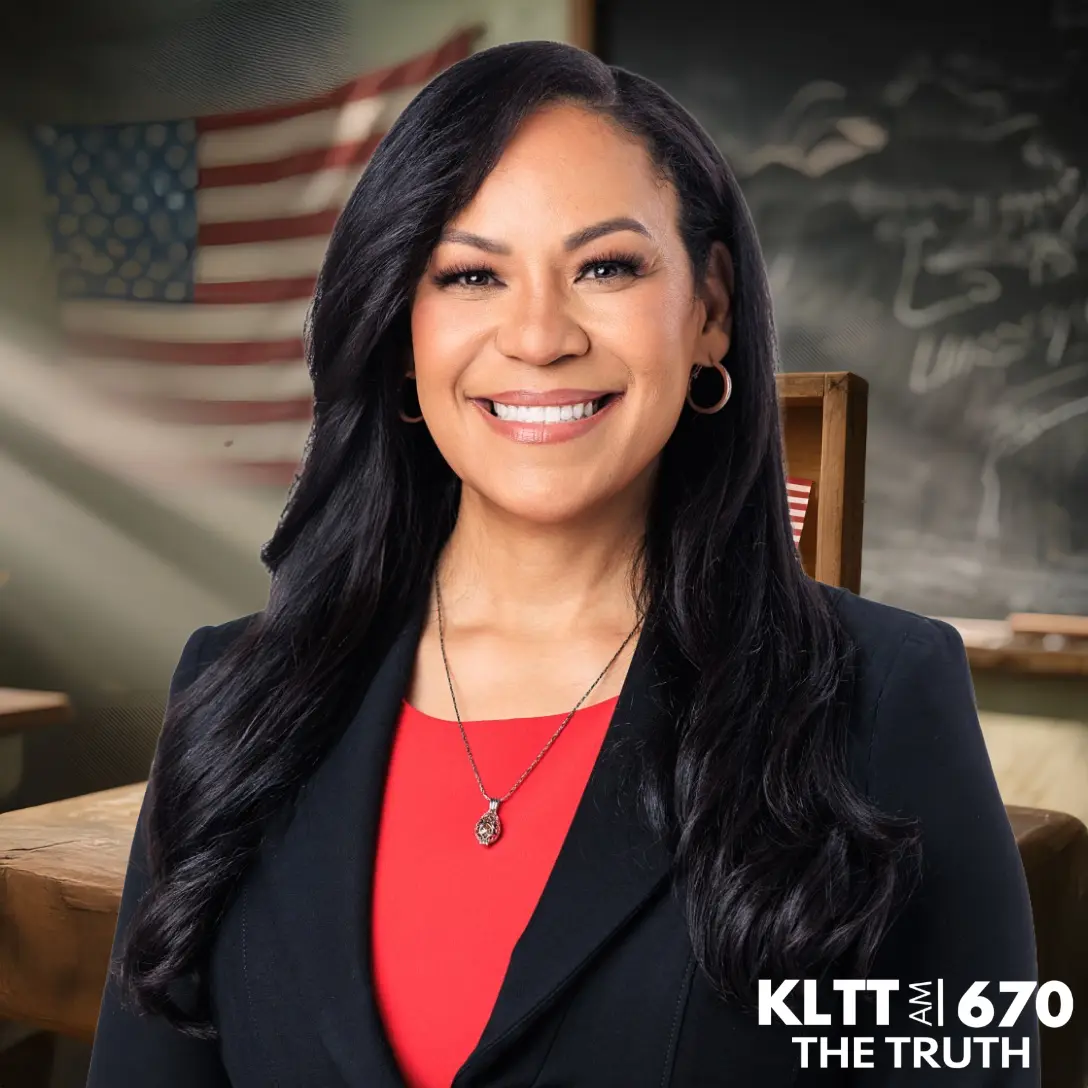
Join Priscilla Rahn in this invigorating episode of Restoring Education in America as she sits down with Colorado State Senator Barbara Kirkmeyer. Discover how Excalibur Classical Academy is paving the way for a new approach to education, and delve deep into the intricacies of Senate Bill 2623 which aims to redefine school funding concerning the reimbursement for inflation. Senator Kirkmeyer also shares her insights on the challenges faced in the state’s education funding and the ambitious legislative measures she supports to mitigate these issues.
SPEAKER 01 :
Welcome to Restoring Education in America with Priscilla Rahn. She’s a master educator and author leading the conversation to restore the American mind through wisdom, virtue, and truth.
SPEAKER 02 :
Well, hello, everybody. Welcome to another episode of Restoring Education in America. I’m your host, Priscilla Rahn, and I’m so excited that you’ve decided to join the conversation today. I always like to jump off my shows with talking about a brand new private school that’s starting this fall. It’s Excalibur Classical Academy. and their mission and vision is restoring America’s heritage by developing servant leaders who are keepers and defenders of the principles of freedom for which our founding fathers pledged their lives, fortunes, and sacred honor. They’re opening K-3 this fall and adding a grade every year after that. If you’d like more information, please go to their website, ExcaliburClassicalAcademy.org. They’re opening in the Centennial area in Colorado. off of I-25 and Dry Creek, so not far from Maggiano’s Little Italy. So please take a look at their website. And if you’re interested in teaching there, they are also open for applications. But you know our show is all about education, and I love having these amazing guests come on the show to talk about their expertise. And I’m going to bring to the stage our Colorado State Senator, Senator Kirkmeyer. Hi. Hi.
SPEAKER 03 :
Hi, how are you doing?
SPEAKER 02 :
I’m great. Thank you so much for joining me today and to talk about all of the wonderful bills and work that you’re doing at the state. But before we get into the conversation, I’m going to share a little bit of your bio with our listeners. Senator Barbara Kirkmeyer is a fourth generation Coloradan dairy farmer, small businesswoman and Colorado state senator now running for governor of Colorado. She grew up on a farm in Jefferson County, learning the value of hard work and perseverance, and has lived in Southern Weld County for more than 35 years. She earned a science degree in physical education from CU Boulder. She previously served as acting executive director of the Department of Local Affairs under Governor Bill Owens. Known for her proven legislative record and bipartisan leadership, Barbara has passed more measures than any Republican legislator and is a strong advocate for affordability, public safety, and academic excellence. So thank you again for taking some time out of your busy schedule.
SPEAKER 03 :
Yeah, thanks for having me. It’s great to be here.
SPEAKER 02 :
So, Barbara, I was so excited. I opened my Facebook and I saw my very first bill is an education bill. And so I had to do my research and say, what’s going on? So you have introduced a bill, Senate Bill 2623, concerning the financing of public schools. And real briefly, it increases the statewide base per pupil funding for the 2026-27 bill. Budget year by 217 dollars and 30 cents to account for inflation. Do you believe the statewide per pupil increase reflects the real cost of education? A child in different parts of Colorado needs.
SPEAKER 03 :
You know, honestly, Priscilla, I don’t know if it reflects the real cost, but it does reflect what we are required to fund the public school system under the Constitution. So because of some measures that I have done in the past, amendments that I were able to get on the School Finance Act, that’s the bill that I’m carrying. And it’s a bill that is carried every year. The School Finance Act is carried every year. There were things that I was able to get amendments along with Senator Lundeen, where we eliminated the budget stabilization factor, which was under funding schools for a period of about 15 years. And, you know, it started off, I think, as a bipartisan kind of measure, the negative factor, or the budget stabilization factor. But it really ended up being for the last, like, 10 years. A measure that was Democrats that they just wouldn’t budge on to where we would fully fund our education system as required on the Constitution. so able to get that eliminated which means we’re fully funding on the constitution that increasing by inflation and then last year in the school finance act i didn’t carry that bill but i did amend that bill to create the kids matter fund which is a essentially we have like an earmark in our constitution to fund education and that was voted on by the folks in way back in 2005 And last year, we put an earmark in statute, which increased education funding for this next budget year by 220 million. So trying to boost up the funding there. I know that I’m kind of going on long here. So if I get really nerdy, you should just stop.
SPEAKER 02 :
No, keep going. I enjoy this nerdy part.
SPEAKER 03 :
But so we increased education funding for the total program and the categoricals by $220 million. That was part of the School Finance Act last year when they changed the formula. My amendment made sure that we fully still continue to fund it. And it increased funding by $220 million. But over the course of my time being a state senator, I have carried bills to increase what are called the categoricals. So the funding for special education funding. needs and students, like hundreds of millions of dollars. Again, a promise that was made all the way back in 2005, 2006 to fund them at a certain level. We didn’t fully do that until about three years ago when myself and Senator Zenzinger carried bills to increase funding for special education.
SPEAKER 02 :
So that kind of helps demystify this conversation we always have as teachers as to FTEs in schools. And they say, oh, well, the special education educators are funded from a different pot. And sometimes the district is allowed to gift a special education teacher to a school that may not be in the general fund. And to go back to the term fully fund, that’s another one that’s confusing to us as teachers. Like, is there a dollar amount to that or is there an algorithm to what fully funding looks like?
SPEAKER 03 :
To me, with fully funding, and I say fully funding under the Constitution. So our Constitution, first of all, requires that we have a free public school system that is fair, uniform, and consistent throughout the state. Then our Constitution, back in 2005, put in place what I call an earmark, essentially, in the Constitution that said, and I’m going to narrow it down, but basically said that we will increase our funding year over year. So whatever we funded the year before, we will increase it by inflation. We stopped doing that in about 2009. And that’s when we created we not me. Other a different general assembly created what was called the budget stabilization factor, which didn’t fully funded as far as I’m concerned underneath what was required the Constitution. So. able to come back and say, so last year we funded, I don’t know, somewhere around $5 billion from the state and for a total of about $10 billion to education. And we had to increase that amount by inflation this year. And then next year, because of the Kids Matter Fund, we not only are increasing it by inflation, but we’re increasing the base amount by $220 million.
SPEAKER 02 :
If you’re just tuning in, my special guest today is Senator Kirk Meyer. She is a representative She is representing the area of Weld County. Is it just Weld County or?
SPEAKER 03 :
No, it’s parts of Weld and Larimer County. It’s the I-25 corridor. So I go from Topgolf on the south to Timnath on the north.
SPEAKER 02 :
I do know where Topgolf is. That’s pretty great. And we’re talking about education policy today. Senator Kirkmeyer is also running for Colorado governor. So I am a national board certified teacher, and I know years ago the state legislature allocated a small stipend to us, and every year we got an extra $1,800. And then during COVID and since COVID, that hasn’t been allocated to us, even though it’s in state statute. And some of us in who are national board certified teachers, it’s less than one percent or like, where’s our stipend? Is it ever going to be funded? How does that work? Even though something’s in state statute, it has to be allocated and budgeted for.
SPEAKER 03 :
Yeah, the dollars still have to be appropriated, budgeted. There’s always a sentence with any funding that says upon available appropriations.
SPEAKER 02 :
Okay. So is there a way that, I mean, that’s a value system. I think in general, you have so many things in the state you have to fund, and perhaps that may be something that the legislature says, you know, we don’t want to fund that. Or is there a way we could lobby as national board certified teachers? You know, this year’s already done, right? Perhaps for next year that we can access some of those funds for our best teachers.
SPEAKER 03 :
Well, I mean, you can always lobby, you can always talk to your legislators and talk to them about what your concerns are and what you believe your needs are. But the reality is for the last, um, well, since March of 2021. Our budget has been in a structural deficit last year. We were 1.2Billion dollars in the red starting off the budget year. This year, we’re already at 840Million, probably going to be close to a 1Billion by the time we start the 2627 budget figure setting at the joint budget committee. And so I do sit on the joint budget committee, you know, my goal has always been to ensure 1 that we do fully fund education under the constitution. And then, you know, the kids matter fund giving that earmark and statute. But our state education fund, we are depleting it at 2 greater rate and we’re doing that by not only funding. Total program and categorical programs, but also by funding other types of grants and things of that nature. We need to become recession proof. I don’t ever want to go back to. The budget stabilization factor, so we need to make sure that that state education fund. Has a fairly decent balance in it or a healthy balance in it so that. If we go into a recession or not, if when at some point we all know there’s going to be a recession, not in one now, thank goodness. So keep our fingers crossed. But, you know, when we go back into there and we want to make I want to make sure that we have a fund balance so that we never have to go back to a budget stabilization factor. So but you can always lobby. You can always talk and compare it and tell us, you know, what your priorities are. And then we have to figure out what are the greatest priorities.
SPEAKER 02 :
Definitely. So last year, Let me see. Senate Bill 25, 315, which modernizes Colorado education to workforce pipeline. I was really excited to see this one because it seems so practical to make sure that students graduate with real world preparation, such as college credit. industry-recognized credentials or hands-on work experience. As Colorado looks to fill workforce gaps, what kinds of jobs do you see in the next decade that students should be prepared for right now?
SPEAKER 03 :
I would go learn every computer skill that you can figure out because I think with AI coming on as fast as it’s coming on, it’s going to change the whole dynamic of our workforce and how we look at things and what kind of jobs are going to be available. So I have six grandsons. I tell them all, go learn your computer skills, go learn about the Internet, learn about artificial intelligence, how it works, where you can plug in and what job that you think that you can work with. Because I think that’s the future and I think that’s where we need to get going. So, you know, I think those are the jobs. I think in our school system, though, it’s not just teaching computer skills and learning computer. I mean, gosh, in my days, we learned how to do coding. So I just dated myself, but that’s how far things have come. So I’m not saying I know exactly what you should be doing, but I think anything with a computer, AI skills, those types of things, and learn your math skills, practical, logical thinking, that’s the important of math. You know, all of those. That’s why it’s so important that, you know, kids are able to do eighth grade math in the eighth grade kind of thing, because they teach you practical logic and practical thinking and how to deduce and those types of things. So I would say really buckle down on those types of classes in your education. And I think it will help prepare you for whatever jobs are going to be out there when you turn 18 or 20 or 25 or whatever it is that that will help prepare you.
SPEAKER 02 :
I mean, definitely. I know as a classroom teacher, we talk about this problem of we have all of these state standards and how are we going to actually teach the state standards at the grade level that students are supposed to be learning them in. And I know there’s so much autonomy all across the state that there’s no consistency. And I think one of the things that would be great for our state is to have some consistency around how students do access those state standards, because it seems like every year there’s more and more state standards that get approved. And we don’t have the time to teach the ones that are already there. But, you know, the critical ones, like you said, math, science, technology, I think those are really.
SPEAKER 03 :
Absolutely. And then reading. I mean, as you know, Priscilla, we’re having difficulty making sure that our kids can read by the third grade. And I think we need to have accountability there. And I think you’re right. Maybe there needs to be some content or standardization on ensuring that all of our children would be able to read by the third grade. You know, the mantra is learn to read by the third grade and then read to learn after that. And so if we’re failing them where they’re not learning how to read by the third grade, again, it will affect everything that they’re going to do in their life. okay that’s a great plug for my classical school because we’re going to be doing phonics we’re going back exactly that’s great i learned phonics and it’s um you know i try and teach it to my grandkids and um it’s good for them and we do a lot of reading so it’s important
SPEAKER 02 :
Awesome. So Senator Kirkmeyer, given that marijuana tax revenue is largely directed to school construction and specific grant programs, do you support any changes to how that money could be allocated? I know there’s a lot of debate about whether we want to use marijuana money, but it’s there. And this is another thing that we as teachers talk about, how do schools access that? I believe, you can correct me if I’m wrong, that school districts can apply for money for to build or repair buildings. But do you see any pathway for it to be used for things like teacher salaries, classroom resources, or statewide per pupil funding?
SPEAKER 03 :
I would say probably no, and, you know, not trying to burst any bubbles here, but our marijuana cash tax funds are marijuana taxes that have been coming in have been going down over the course of the last few years. They haven’t been increasing, you know, or even if they stay stable, it’s still an issue because we fund programs 1 for enforcement. So we fund programs in the Department of revenue to enforce things with, you know, regarding marijuana to enforce the laws regarding marijuana. Then we also find, like, substance abuse type programs in the Department of public health and environment and we also fund education. There are some other things that are getting funded out of there and I will tell you my last 3 years being on the joint budget committee. We have been working to weed those out because the funds have been going down.
SPEAKER 02 :
Okay, well, that’s a very honest answer. And I don’t think I was looking at anything in particular. I just was curious because it’s another revenue source that is a little mystifying for a lot of us in education, but I appreciate you clarifying that. And I think I’ve heard other people say the marijuana revenue is going down because other states have approved marijuana. And so a lot of that business has been leaving Colorado or maybe people have decided it’s really not good for you. I can look, I’m just going to take a second to say, I noticed a big uptick in the problems with young students where minor children, middle schoolers were coming to school with their parents pot because they weren’t locking up their stuff and they would come and they would share it with all their classmates and get high in the stairwells. And then we’d have to call the parents and they’d miss all of that learning. So it’s really something that even though I know intentionally, it was meant for people to be responsible in their homes and make a choice, but it has just gotten out of control. And so it wouldn’t hurt my feelings for there to be less pot users and keep it away from your children, please. So talking about Proposition HH, that was a big one. I know you were at the forefront of being opposed to, and for those who may not remember, Proposition HH combined property tax relief with changes to how state revenue is handled under TABOR. So can you break down why that combination was a problem in your view?
SPEAKER 03 :
Essentially, we were dismantling TABOR, Taxpayer Bill of Rights. And that’s something that we’re all paying in taxes, and there is a provision that’s in our Constitution about getting our refunds. So what HH was proposing to do was essentially say, look, give us your TABOR surplus, give us your TABOR refund check, and we’ll give you property tax relief. And my discussion was, well, I think I should get both. I don’t think table should be tied to property tax relief and I think we should be getting property tax relief. So, yes, I co, chaired the no on H. H. campaign and we prevailed, which I think was great. And I think that was the public saying, look, we do want property tax relief. But don’t touch our table refund check. And so what has happened since that time is, um, I was able to get a couple of bills passed to get property tax relief. I’m sure it’s not as much as people wanted it to be, but it’s what. You know, being in the minority, um, in a, you know, in a, at the Capitol where. Yeah, close to 2 thirds is, you know, Democrat majority. I was able to get through the largest property tax cuts in the state’s history, which I think is good. I would have loved for it to be more, but we were able to put some caps on things and really do some changes within it. Set some different rates gave. seniors property tax reduction you know ensured that they get their homestead senior exemption in place and then also gave relief to our businesses who are just being stifled right now with regulation and need tax relief and so we’re able to give them some tax relief on property taxes as well without infringing and hurting the funding that we get from school districts that is based on property taxes to fund education was able to ensure that was there
SPEAKER 02 :
You are a big deal. Yes. You started answering the question I was about to ask you about that. So how would you approach funding education while also keeping taxes and cost of living low in the state of Colorado?
SPEAKER 03 :
Yeah. So again, we did make some changes with our property tax structure and it’s pretty complicated. So I’m not going to get into it because then I really will sound like a nerd or a geek or something. But and I don’t know that I could explain it in a half hour anyways. I mean, I probably could. But anyways. So, we did make some changes to ensure that our education funding that comes from school districts and property taxes was somewhat preserved and and not, it didn’t go down as much as other types of property taxes. But still giving still being able to get property tax relief to folks with their homes, that type of thing. So, um, taper is not the issue. Tabor is important. Tabor is what keeps government in check and keeps it from growing out of control. So right now, I know there’s a provision out there, a measure coming forward. I believe it’s from Senator Bridges is one of the people on this, and he’s on the joint budget committee with me. He hates Tabor. He’s a Democrat, and they want to dismantle Tabor and get rid of Tabor. We cannot do that. Government will grow way out of control. They’re talking about increasing the taxpayer bill of rights cap by like. 4Billion dollars and the issue at our state is again, we’re not in a recession. We have revenues coming in the issue at our state is. Not the revenues, it’s the overspending and we have overspent. Year over year. In our state, and it’s caused a problem and my colleagues across the aisle have a crisis of priorities. They want to fund everything. I mean, for a long time, they wanted to fund everything and we are balancing the budget on the backs of students. We got rid of that now they’re attempting to balance the budget between governor polis. And again, the Democrats is 1 party control are attempting to balance the budget on access to health care. That’s dangerous. I mean, to me, those are 2 things that government should be providing. Those are core services of government, education and health care. Yet we’re working to balance the budget on those. And my colleagues, one party controlled Democrats, have said those aren’t necessarily their highest priorities. That is very disappointing to me and very concerning to me.
SPEAKER 02 :
Wow, okay, so we really need to pay attention, my listeners and viewers who are watching the encore, we definitely need to watch some of these bills, especially, I guess, if it’s around healthcare and education and everything, but especially those to see those dollar amounts that are allocated and what’s going on, because that’s really scary. We have a lot of seniors in Colorado, a lot of elderly folks that rely on common sense property tax relief. I know there’s some benefits for seniors. So, Senator, you’ve decided to jump into the governor’s race. Yeah. Tell us a little bit about your journey and some of your priorities.
SPEAKER 03 :
So, well, for the most part, it’s been pretty fun. I’m currently out getting petitions signed so I can get onto the ballot. One of my favorite parts, because you get to go out and just meet people and talk with them. And, you know, if someone will come to the door and answer the door, they want to talk to you. And it’s They usually have some great ideas or just a great conversation about what’s concerning them. So been decided to jump in. I think it’s important. That we have a balance in the state that we have common sense that, you know, we have a governor who actually knows how to govern and will lead our state out of this mess that we’re in because right now. We’re unaffordable, we’re unsafe. Quite frankly, we’re unraveling and our roads are a mess. I mean. We just need to fix the roads too on top of it all. So, you know, my priorities are going to be about how do we get our state back to being more affordable? How do we get back to and ensuring that we all feel safe in our neighborhoods and our communities? That should be, you know, our number one goal or a priority as well. And and then. Just really looking at our education system and what can we do? I mean, I made sure that we’re getting the funding. Now, how do we find the accountability? And I know teachers are saying, look, they need more pay and I don’t necessarily disagree. But that isn’t something that I, as a legislator have any control over, you know, that’s at your school board and. Go lobby them and go pound on them because, I mean, they’re the ones who can make that difference. But we’ve really got to be able to get our kids right now. As you know, Priscilla, about 60 percent of our kids are in the third grade are not reading at a third grade level. That’s sad to me. I mean, I love to read and I wish they all love to read and we’re learning how to read. So we’ve got to have some accountability with regard to ensuring that our kids can do third read at the third grade level when they’re in third grade. and do eighth grade math when they’re in the eighth grade. These are tools for success and they’re tools to help ensure that we don’t continue these cycles of poverty. So those are areas that I’ll be working on and talking about as I run for governor throughout the state.
SPEAKER 02 :
Thank you for that. So Senator Kirkmeyer, when you were commissioner of Weld County, you were able to get them to be debt free. What were some of the tools you used to get them there? And is there anything that you could apply if you become our next governor for the state of Colorado?
SPEAKER 03 :
Absolutely, and I apply some of those same principles, even as I’m on the joint budget committee. So, um, 1 of the tools that we did is really, we just work to get ourselves out of debt and we quit overspending. And not that we were doing a lot of overspending, but, you know, we, we really watched where our spending were and we looked at the level of service that we could provide with the revenues that we were bringing in. And then we work to start paying things, paying for stuff in cash or our capital needs in cash. So we were able to really under very strong conservative principles say, you know, here’s our priorities. And they’re not, they’re not that much difference in a county than they are at the state with the exception of education counties don’t fund education. But here are our priorities. This is what we’re going to focus on. We’re going to ensure we, we increase the level of service in where our priorities are with public safety, fixing our roads, ensuring that we have programs, you know, paying for our human services programs that we’re mandated to pay for. And then, you know, ensuring that that level of service is appropriate and ensuring that every level of service is appropriate. So we made some pretty harsh cuts. We went through recessions when I was a county commissioner where we had to cut our general fund pretty substantially. And so then we got back to when we, when good times came in, because we’re strong oil and gas. State county, excuse me, we’re strongly oil and gas county. We, instead of increasing the level of service and starting new programs, we did 1 time capital projects and funded those projects instead. So, I mean, so when we go back into another recession, we’re not cutting services. We were cutting capital projects and then we were able to lower our mill levy. And that’s what local government taxing enemies can do when we’re talking about property taxes. We lowered our mill levy. And did that for the people in our county and, you know, what that does. It brought in more economic development into our county, which still brings in more taxes, but it’s not to each individual. It’s spread out more the tax increases spread out more. So those principles are things that I use every day when I’m on the joint budget committee.
SPEAKER 02 :
Well, Senator Kirkmeyer, thank you so much for your time today. Can you share your contact information with our listeners?
SPEAKER 03 :
Yeah, so you can reach me if you want to get hold of me through my senatorial requirements and job. I am at senkirkmeyer, K-I-R-K-M-E-Y-E-R, at gmail.com. So that’s pretty easy, senkirkmeyer at gmail.com. Or if you’d like to volunteer or help out or learn more about my gubernatorial campaign, it’s kirkmeyerforcolorado.com.
SPEAKER 02 :
Well, to my listeners, please make sure that you find out what’s going on at the State Capitol. Be informed. Sign up to testify and stand up for the values that are important to us as a community. And thanks for listening today. Catch me next time. And remember, educating the mind without the heart is no education. So seek wisdom, cultivate virtue, and speak truth.
SPEAKER 01 :
Thanks for tuning in to Restoring Education in America with Priscilla Rahn. Visit PriscillaRahn.com to connect or learn how you can sponsor future episodes to keep this message of faith, freedom, and education on the air.
