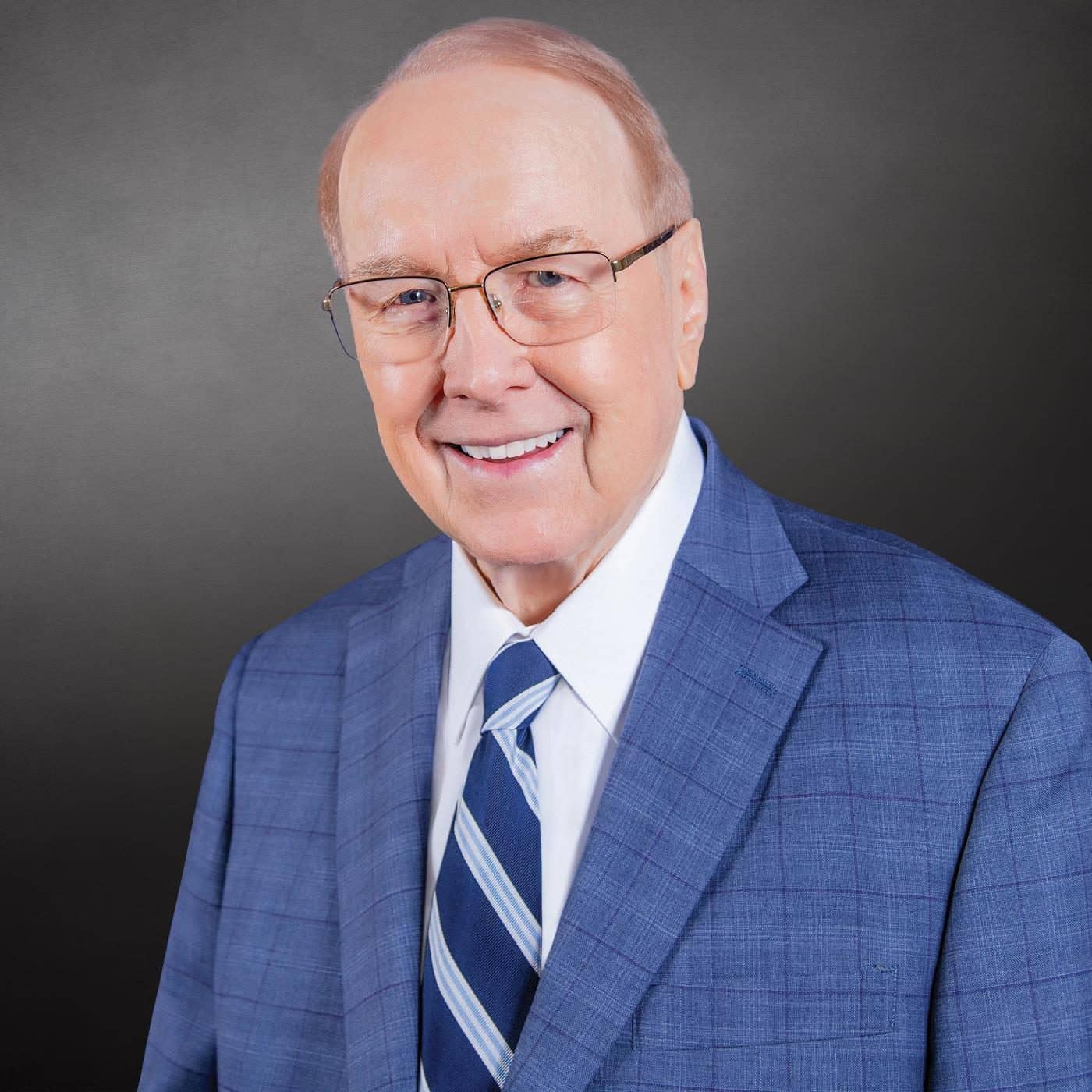

Join Dr. James Dobson and guest Dennis Rainey in this insightful episode as they explore the fundamental aspect of self-esteem in marriage. Learn how building your mate’s self-esteem can be more crucial than communication or intimacy. Discover practical tips and principles shared by Rainey, based on a comprehensive survey of over 17,000 couples, about enhancing your relationship by fostering love, support, and understanding.
SPEAKER 02 :
You’re listening to Family Talk, the radio broadcasting division of the James Dobson Family Institute. I am that James Dobson, and I’m so pleased that you’ve joined us today.
SPEAKER 01 :
Marriage is designed to be a lifelong partnership built on love, commitment, and mutual support. But after the wedding bells fade and everyday life takes over, many couples find themselves struggling to maintain that connection they once had. On today’s edition of Dr. James Dobson’s Family Talk, we’re going to revisit a classic conversation featuring your host, psychologist and bestselling author, Dr. James Dobson, and his guest, Dennis Rainey. Dennis Rainey was the leader of Family Life and is the bestselling author of more than two dozen books, including one titled Building Your Mate’s Self-Esteem. In a fascinating survey of over 17,000 married couples, Dennis Rainey discovered something surprising. Building a spouse’s self-esteem ranked as their number one need, even above communication, intimacy or parenting concerns. So today’s conversation will explore why this matters so much and how you can strengthen your marriage starting today. Here now is Dr. James Dobson to introduce our guest today here on Family Talk.
SPEAKER 02 :
When I say Dennis Rainey, I’m sure the lights go on all over the country because people have enjoyed your seminars. You are a graduate of Dallas Theological Seminary. For those who haven’t taken one of those seminars, which I strongly recommend, describe exactly what you do. You bring people together in a hotel very inexpensively and very good hotels, don’t you? Explain how you do that.
SPEAKER 03 :
Well, it’s called a Family Life Conference, and it’s subtitled A Weekend to Remember, and we really believe it is that for couples to attend. And what we do is we go into a city that requests that we go in there with enough backing in the area, and we get the very finest hotel we can get. And really, it’s organized all by layman. And basically, there’s two areas that we deal with in this Family Life Conference. One is marriage preparation. We spend 16 hours taking couples through the very blueprints for building a relationship. And it’s really cute to see these engaged people all cuddled up next to one another, practically using one seat. And right next to them will be a married couple who are there having been married 40 years, 50 years, who’ve got a good marriage just there to make it better. And then the second part of the marriage conference is for married couples. And we just teach the basics to them in these same meetings, dealing with five threats to oneness. What is the plan to make a marriage work today?
SPEAKER 02 :
And in the course of those seminars, you have done some research with, I understand, 17,000 people where you’ve asked them the question, what do you most need within the family? Give me a little more detail on that. Right.
SPEAKER 03 :
Well, you’re right, Dr. Dobson. We surveyed over 17,000 people at our Family Life Conference and ranked number one above communication, above sex, in-laws, parenting, was surprisingly building your mate’s self-esteem. And we began to find out through interaction with our guests at our conference that what couples are needing today is how to build up, how to strengthen relationships. how to edify in a true biblical sense to build up their mate in a life that is pretty perplexing at times.
SPEAKER 02 :
Dennis, again, the name of your book is Building Your Mate’s Self-Esteem, which grows out of those interviews with 17,000 people. The very title makes the assumption that that the lack of self-esteem is evident in many people, whether they admit it or not. You’re making that assumption, aren’t you? That’s correct.
SPEAKER 03 :
Many times the people who appear to be the most secure are the most insecure. In fact, they have some of the greatest needs to be built up. They are propping up their poor self-image on a facade or a veneer of performance or of activity, a flurry of busyness and doing things for other people. And indeed, what they really need is someone who will build into their life to create a security so that they can be risky and be real. And I think we’re seeing in our culture today more and more people who aren’t authentic because they’re afraid to be real. They’re afraid to be who they really are because they’re afraid they’ll be rejected if they are.
SPEAKER 02 :
So let’s suppose we’re talking to people who are in that situation. How can they recognize low self-esteem in their partner? Because often the husband or wife does not just come right out and say it. I mean, it’s embarrassing to say it. It reduces esteem further to say it. How can you begin to understand what they’re really experiencing?
SPEAKER 03 :
Well, we spent an entire chapter on that very question, just trying to detect the clues of a poor self-image. And we listed 10 that, if you don’t mind, I’ll share with the listening audience. One was a family background. Just what kind of family background does your mate come from? As you know, family background can have a tremendous impact.
SPEAKER 02 :
In other words, if you’re married to a woman whose father was an alcoholic, as is the case in our home, then you might begin to suspect that there’s still some residue from that early experience.
SPEAKER 03 :
That’s correct. Some excess baggage that they’re carrying forward out of that, not knowing who they are to relate to a man or to a woman. Another one is a fear of being vulnerable. A person who’s aloof, who’s distant, who always keeps another at an arm’s length. And we find people are insecure and they’re afraid to let someone else on the inside for fear of rejection. A pattern of discouragement. whether it be cyclical in nature or just frequent discouragement about their own performance, their lack of performance, a lack of confidence in decision-making, difficulty admitting wrong or unable to forgive another person. You know, the real stuff of a marriage relationship, as Barbara and I have experienced it, is two people who are secure enough to admit fault and to say, sweetheart, It may have taken me all evening, but I’m wrong, and I’m ready to admit it. Critical of others is another one. Always cutting others down to lift themselves up. A perfectionist, someone who always has to have everything perfectly ordered and in a row.
SPEAKER 02 :
Yeah, that’s a tip-off.
SPEAKER 03 :
That is. Self-depreciation, always cutting themselves down. Okay. Or another kind of person that is a clue and the last clue is escaping from the real issues of life, people who go to drugs, alcohol, pornography, other ways to escape from reality to live in a fantasy world where they do not have to come to grips with who they really are. and their responsibility before God.
SPEAKER 02 :
That list could almost be endless, couldn’t it? It really could. I think of the extremely volatile person, the one who explodes, who is on edge and it takes nothing to get this emotional explosion. There’s usually a reason for that. There’s some frustration down there. Or the clown, the kind of person that’s got to make everything into a joke. Every conversation turns into something frivolous. Or the person who spends money absolutely irresponsibly. Why does she feel like she has to have every new dress that comes out and all the fashions? It’s to support a weakness inside. Someone said we don’t build fortresses around strengths. You build them around weaknesses. So when you begin to see fortresses go up around which you can conceal an introverted personality or a number of these things that we’re talking about, then you begin to look for feelings of low self-esteem.
SPEAKER 03 :
You’re really right. Most of us dress and act like we’ve got it all together, don’t we?
SPEAKER 02 :
Yeah.
SPEAKER 03 :
But we really don’t. We all have our Achilles heels, the chinks and the dents in our armor where we feel inadequate. And that’s why we attempted to answer some of these questions by writing this book. everyone acts like they have life perfectly wired together and are living it at the utmost, but they aren’t. None of us do.
SPEAKER 02 :
Dennis, there have been a number of books written, including one of mine, which dealt with low self-esteem in women and the importance of men to remember the romantic side of marriage and to care for their wives and love them and to reserved time for that romantic relationship and how self-esteem in women is often a product of that relationship. But you’re making the point that it flows two ways and that a man may express it differently, but he also has low self-esteem and his wife also. needs to be aware of that. There’s been much less written about that side of the equation. But a man, in order to go out and compete in life, really does need the support and love and confidence that a woman can give him.
SPEAKER 03 :
Oh, he absolutely does. In fact, you wrote in your love letter on your 25th anniversary to Shirley saying, that one of the keys to your marriage was a woman who believed in you in the very early years of your marriage. And I think one of the great lies about marriage today is that we are being tempted to be independent, when indeed we need to be more transparent, We need to express more need of one another than ever before. And the exciting thing about the Christian marriage with Jesus Christ at the center of it and as Lord overall is two people who are giving to one another, sharing, and not waiting for the other person to give to them. But indeed, a husband giving to his wife, including her in on his life, making her a part of the decisions, a woman who’s giving, believing, encouraging, exhorting, and standing alongside her husband even when he falls flat on his face and fails.
SPEAKER 02 :
Mm-hmm. I said in one of my books that self-esteem was like a vitamin. A vitamin is a substance that the body needs that it cannot generate for itself. You have to take it in from the outside. And self-esteem, especially for vulnerable people, must come from other people and from their relationship with God. In other words, it has to be brought in from the outside. There is simply not enough evidence. There’s not enough security to generate that acceptance of oneself from our own resources. So we really do need each other.
SPEAKER 03 :
Dr. Paul Brand has written several books, and as you know, he’s the head of a leprosarium in Louisiana, tells of a story of how he was a London flight surgeon during World War II. Peter Foster was a Royal Air Force pilot during that time, and these Royal Air Force pilots were among Britain’s finest young men.
SPEAKER 02 :
Hmm.
SPEAKER 03 :
They were the most handsome, cream of the crop, the brightest, healthiest, most confident and dedicated of all of Britain’s young men. And when they walked the streets in their decorated uniforms, people just stood in awe of these people.
SPEAKER 02 :
Yeah, that’s the group Winston Churchill said, never have so many owed so much to so few or something like that. I believe that’s correct. He was referring to them.
SPEAKER 03 :
However, during the bombing of London, these bombers, German bombers would come into London and And some evenings, 250 in a wave would come in, five, six waves an evening. And what the Royal Air Force did was they sent up two small fighters that one of them was the Hurricane, the other the Spitfire to fight these huge German bombers. And Foster flew one of these, and it was said that they looked like mosquitoes pestering these huge German bombers. But the Hurricane, even though it was more agile and effective, had one design flaw. The single propeller engine was mounted in the front, and the engine had to have the fuel lines go by the cockpit. And so in a direct hit— The cockpit literally would turn into an inferno of flames in a second and an instant before that pilot could be ejected, having been hit by the enemy. Well, many of these RAF heroes many times would undergo a series of surgeries, 10, 20, 30. 30 times to begin to reconstruct what was virtually a scar on their face. Many of them were burned beyond recognition. And although the plastic surgeon worked miracles, sometimes they weren’t able to reconstruct that face. Peter Foster was one of those downed pilots, and his face was burned beyond recognition. And he was one of those groups who watched his friends leave the hospital to go out and to be rejected. in the community. And he watched man after man leave. And some of those men didn’t even leave the hospital. They stayed in there fearing the rejection of people who had once applauded them. But Peter Foster was in another group of people who experienced the love and acceptance of a family, and in his case, a girlfriend. She assured him that nothing had changed except a few millimeters thickness of skin. And two years later, they were married just before he left the hospital. Brand writes of the story of this couple, she became my mirror, Peter said of his wife. She gave me a new image of myself. Even now, regardless of how I feel, when I look at her, she gives me a warm, loving smile that tells me I am okay.
SPEAKER 02 :
Boy, isn’t that neat. Let’s put it in the feminine to the masculine first and then reverse it. How can a woman begin to meet the needs of her husband? He leaves in the morning at 630 and he’s gone for 10 hours and he comes home pretty tired. And the last thing he wants to talk about is his work when he gets home. In fact, he may not want to talk about anything. How can she get into his world? How can she start to build his esteem and let him know that she believes in him?
SPEAKER 03 :
Well, that’s a great question because Barbara and I struggled over that question as we wrote the book, wanting to put the cookies on the lower shelf where everybody lives. And what we attempted to do was really, around principle, list 10 building blocks of how you could build into your mate’s self-esteem. And for a wife, there’s a lot of these building blocks that will apply just right on target. But perhaps – None better than our first one, which is accepting your husband unconditionally or accepting your mate unconditionally and giving them freedom to be the person that God created them to be with their weaknesses, their strengths, their inadequacies, and their great abilities that they bring to the marriage relationship.
SPEAKER 02 :
What does that mean, Dennis? That opens a whole can of worms now. The guy comes in, and this is not most men, but it does happen, and he hasn’t shaved. And he sits down in front of the television set with a six-pack of beer, and he will end the night asleep with beer cans on their side around the chair. She accepts him unconditionally the way he is?
SPEAKER 03 :
Well, it doesn’t mean we don’t speak the truth in love, most certainly. And really, this book, I think, is complemented, or we complement your book on Love Must Be Tough. Sometimes our bitterness can control us and cause the esteem in our hearts to be lowered because we know inside we hate another person, especially if that person is our parent.
SPEAKER 02 :
You have eight more of those approaches there. Time won’t permit us to go into great detail. Just give us three or four of them very quickly to give the flavor of what you deal with in this book, Building Your Mate’s Self-Esteem.
SPEAKER 03 :
Well, the third building block is planting positive words. And I wish we had time to talk about this because we talk about… how words have the power to germinate in another person’s life powerfully to create belief and expectation. You and I have within our own mouths the power to either crucify or lacerate. contaminate another person and their own opinion of themselves, or we have the power within our mouth to build them up. Mark Twain said, I can live for two months on a good compliment.
SPEAKER 02 :
James, in his writings in the Bible, said that the tongue is like the rudder on a ship. The entire ship is turned by that tiny little rudder, and the tongue can set a whole forest on fire. It has incredible power, positively and negatively.
SPEAKER 03 :
It does, and we draw an analogy in this entire chapter that words are seeds. And what you plant is what you’re going to grow.
SPEAKER 02 :
Give me another one or two, and then we’ll talk about the support flowing in the opposite direction.
SPEAKER 03 :
Okay. Our fourth building block is constructing in difficult times. There’s a lot of studies out that show that marriages end in separation or divorce where there is a traumatic experience, the death of a child, the birth of a deformed child. something along that nature. People don’t handle storms well. We don’t tend to hold up in the storm and cling together. We tend to turn on each other and fight one another rather than cling to one another for hope for the future.
SPEAKER 02 :
In the interest of time, let’s do go on to the other half of the coin there and talk about how a man can build the self-esteem of his wife. Or is your list here universal? Obviously, many of those things apply to both sexes.
SPEAKER 03 :
I really think the list is universal and would apply to both. This next one, building block number five, is giving your mate the freedom to fail. I think really, as I think about it, Dr. Dobson relates more to wives encouraging their husbands than husbands to wives at this point. I don’t think a wife out there realizes how fragile a man’s ego really is. Do you? No, I don’t think men even admit that. They don’t. And because of that, they need a wife who is able to let her husband fail. To look at his failure objectively and to come alongside him and hug him in the midst of that traumatic experience and encourage him throughout that. We talk about failure being a tutor to lead us to the truth about ourself. Because frankly, some of my most important things I’ve learned about myself have been through my failures. Wouldn’t that be true of you? I don’t have any failures.
SPEAKER 02 :
No. I’ve got too many to enumerate. And Shirley has been so generous to me in that regard. As kind of a way to wrap up this discussion of building the self-esteem of your mate, would you agree, Dennis, that you can’t do that? It is absolutely impossible to contribute to the self-esteem of your marital partner if you don’t spend any time together. Or if during all of the time that you are together, you’re too worn out to reach out to one another. That overcommitment and fatigue and time pressure and all those things of the pace of living that we’ve talked about many times assassinate that effort to elevate and edify one another.
SPEAKER 03 :
You’re exactly right, Dr. Dobson. In fact, there’s a great illustration that comes from the Double Eagle II. I don’t know if you ever heard about that balloon crossing of the Atlantic. But these men failed their first try in the Atlantic off the coast of Nova Scotia. But on their second attempt, they rode an invisible corridor all the way across the Atlantic until they were just off the coast of Ireland. And the ice began to form on their balloon. They were caught in a cloud. And they began to sink, and their gondola moved beyond 20,000 feet, 15,000, 10,000. And then they started throwing over canned goods, food, a hang glider that they were going to land at the strip that Lindbergh had landed in 50 years prior, video cameras. And finally, at about 4,000 feet, they radioed their location and threw over the radio. Well, at 3,000 feet, they broke into the sunlight and through the cloud, and the ice just came off in sheets. And the balloon soared. They crossed the coast of Ireland, across the English Channel, moved on into France, and landed in a cornfield just a few miles from where Lindbergh had landed in his transatlantic flight years before. And I think that that illustration of Double Eagle II is one that is replicated far too many times over, unfortunately, in Christian homes today, where there’s ice forming on the balloon and the altimeter says we’re sinking. Mm-hmm. And we continue to add the activities, even good ones, even church activities. And I’m for the church. We’re very involved in our church. But we stretch ourselves out socially. You got to keep the balloon in the air, don’t you? That’s right. And we ask the question, which way is your balloon headed this morning, this afternoon, this evening? Which way is the altimeter saying your balloon is going up or going down? And we built a building block around that very principle, keeping life manageable. Because if you’re losing at life and your balloon is sinking, you certainly are not going to feel self-confident, nor is your mate. And here is where my wife has been an absolute anchor. I could probably be off running around the country speaking at this, doing this or whatever on weekend after weekend throughout the week. But we are determined to win where it matters most. And that first is in our relationship with Christ, with God. And secondly, we must win in our family because I have no ability to speak today or next week or next year if my own family isn’t. Now, that doesn’t mean I’ll raise perfect children. I’m not raising children to be robots. I’m raising children to become independently dependent upon Christ. Psalm 112 is a great verse here for me. It basically gives two conditions for leaving a great legacy. It says, if we will obey him and fear the Lord, he will make our legacy perfect. Mighty. Our descendants mighty in the land. And, you know, you and I both are going to pass off this scene far quicker than we care to admit. And we’re going to pass on a legacy through our children. And someone has said children are messengers we send to a time that we will never see. And it’s exciting for the Christian today to elevate who children are. and to elevate their impact on future generations because I believe it’s got to happen. And it must happen with the listeners of this radio program, Christians. Christians have got to leave a legacy that will outlive them, a legacy of Christ’s love to a world that’s dying and going to hell, literally, without the love of Christ.
SPEAKER 02 :
You have, during the course of this conversation, given us two aerodynamic examples. One is of hurricanes and spitfires that were all ablaze, the cockpit on fire. And I’m sure there’s some people listening to us right now who feel that that characterizes their marriages. But you’ve also given us the picture of a balloon soaring above the clouds in the sunshine, free and unencumbered by all of the things that would weigh it down. And I trust that your book will be helpful in helping people get their balloons off the ground, so to speak. The name of the book is Building Your Mate’s Self-Esteem. Thanks again for taking the time to be with us and for supporting those same principles that we believe in so strong here. Next time, however, bring Barbara with you, will you?
SPEAKER 03 :
You won’t want me to come back after you meet her. And your last words were especially important to me. That person out there who’s hurting in their marriage, let me just encourage that person to persevere. We have far too many Christians today who… are taking the advice of their Christian friends, unfortunately, and tossing the towel in. And to persevere and to continue to grow and to call out upon a God who is alive. The ice can be melted, Dennis. It can be melted.
SPEAKER 02 :
I mean, when it is totally iced over and on its way down.
SPEAKER 03 :
I think that’s the exciting thing about Christianity. If indeed the tomb is empty, then Jesus Christ right now, is in this studio. He’s in that listener’s car, kitchen, office. He’s alive, and he does stand ready to work, even on a mate that is hard of hearing. And the key, though, is prayerful perseverance and hanging in there, continuing to grow, and being faithful to do what God’s called you to do, because marriage is worth it. God bless you, Dennis.
SPEAKER 01 :
You’ve been listening to Dr. James Dobson’s Family Talk and a classic conversation Dr. Dobson had with Dr. Dennis Rainey about building your mate’s self-esteem. Now, if you’d like to hear today’s program again or share it with a friend, go to drjamesdobson.org forward slash family talk. That’s drjamesdobson.org forward slash family talk. You know, we all face seasons when life doesn’t make much sense, when it seems like God’s plan is hidden from us and our faith feels shaken, especially if you’re having trouble being on the same page, if you will, with your spouse. That’s why we’ve created a powerful new 10-day email series called When God Doesn’t Make Sense. Now, this is based on Dr. Dobson’s bestselling book with that same title, but it’s newly expanded and updated. These daily touch points will strengthen your faith and show you how life’s darkest valleys can bring your greatest blessing, and that is a closer walk with the Lord. Now, the email series is absolutely free. All you have to do is go online to our website and sign up for it. Go to drjamesdobson.org, click the icon, and follow the prompts. That’s drjamesdobson.org. Every day, the Dr. James Dobson Family Institute is working to preserve the institution of marriage, to protect the sanctity of human life, and to promote godly values in our culture. And your financial partnership makes it possible for us to strengthen families all across the country with biblical truth. To make a secure donation, go online to drjamesdobson.org. That’s drjamesdobson.org. You’re also welcome to call a member of our constituent care team at and make your tax-deductible donation over the phone. That number is 877-732-6825. Well, I’m Roger Marsh. Thanks so much for listening today. On behalf of all of us here at the JDFI, we appreciate your prayers and your ongoing support. Be sure to join us again next time right here for another edition of Dr. James Dobson’s Family Talk, the voice you can still trust for the family you love. This has been a presentation of the Dr. James Dobson Family Institute.