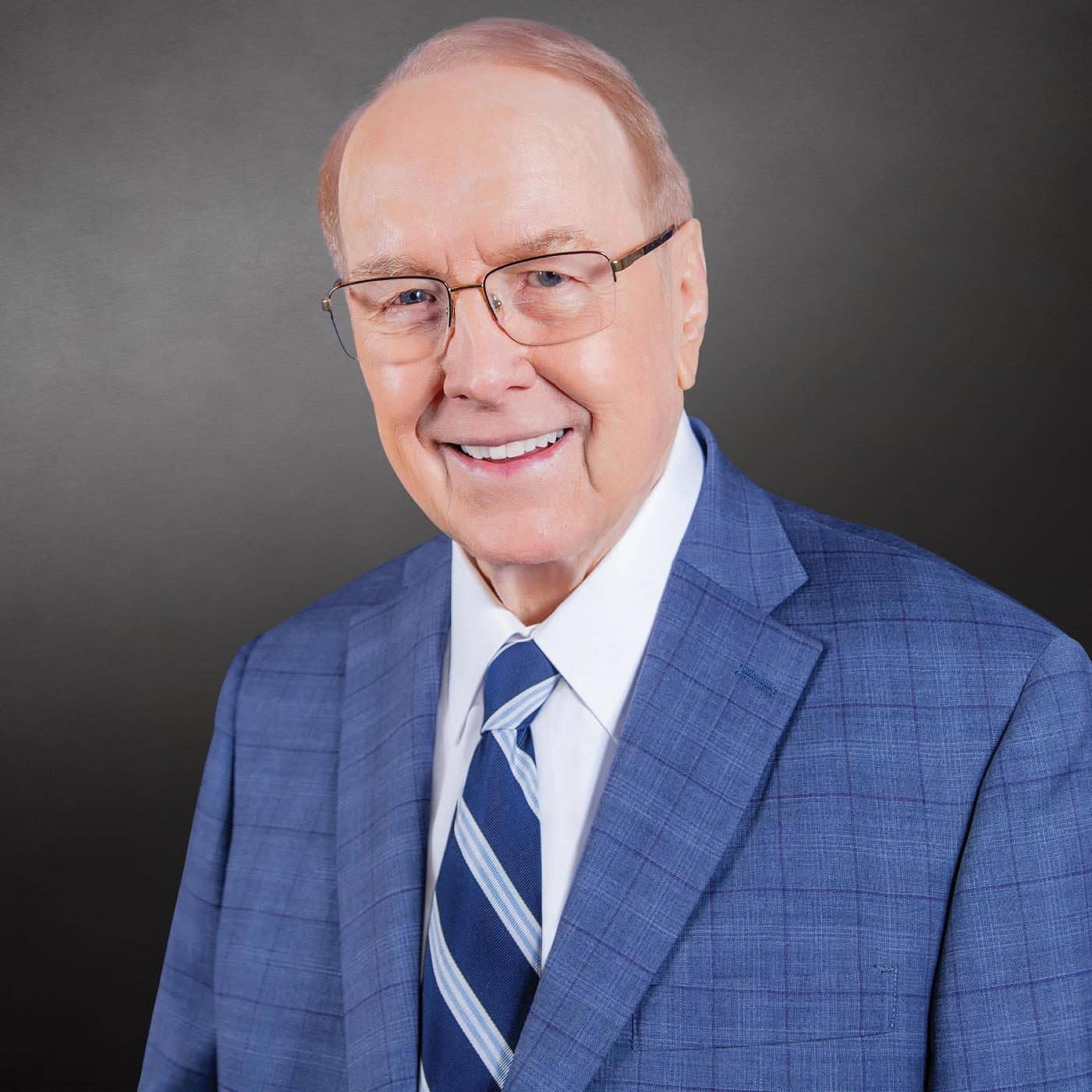
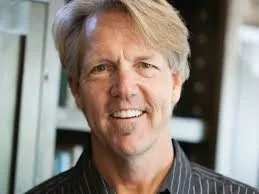

In this compelling episode of Family Talk, join Dr. James Dobson and his guest Gil Strickland, founder of Marketplace Ministries, as they discuss the innovative concept of workplace chaplaincy. Gil Strickland’s journey from a long-term Army chaplain to pioneering a ministry that caters not only to employees but also to their family members is inspiring. Hear how this initiative brings spiritual support to the professional realm, reaching millions who might not otherwise step into a church. Marketplace Ministries has placed chaplains in workplaces across America, celebrating over 40,000 changed lives. These workplace chaplains provide essential emotional and spiritual care,
SPEAKER 01 :
You’re listening to Family Talk, the radio broadcasting division of the James Dobson Family Institute. I am that James Dobson, and I’m so pleased that you’ve joined us today.
SPEAKER 03 :
Well, welcome to Family Talk. I’m Roger Marsh. And on today’s program, we’re bringing you a classic conversation that captures a truly innovative approach to ministry. And of course, that was the hallmark of Dr. James Dobson’s life and legacy that continues on to this day here through the James Dobson Family Institute. Our guest today here on Family Talk is Gil Strickland, founder of Marketplace Ministries. After serving 22 years as an Army chaplain, Gil pioneered a remarkable concept, the idea of bringing a chaplain to care directly to those in the workplace. What began in 1984 with just one company in Dallas, Texas, has now grown into the largest workplace chaplaincy program in America. To date, there are over 2,200 chaplains serving 1.4 million employees and their families all across the nation. And today, as we close out the broadcast year for 2025, we want to reflect upon this great conversation that Dr. Dobson had with his good friend Gil Strickland about the importance of chaplains in the workplace. Now, of course, Dr. Dobson went home to be with the Lord earlier this summer. Gil Strickland passed away in 2023, but both of their legacies continue through the ministries that reach people who might never walk through a church door, ours through broadcast and media, and Gil’s through a workplace chaplaincy. And by the way, today is the final day you can take advantage of a special opportunity to have your gift to support the James Dobson Family Institute doubled. I’ll have more on that at the close of today’s program. But right now, let’s listen in as Dr. James Dobson explores the concept of workplace chaplaincy and this great mission field with his friend Gil Strickland on today’s edition of Family Talk.
SPEAKER 01 :
We have as our guest, my good friend, Gil Strickland, who is the founder and the president and CEO of Marketplace Ministries. And it’s just a pleasure to have him come by and be with us today. We had dinner with him not too long ago. And he also was very kind to invite Shirley and me to Dallas, where their ministry is located, and to give me an award called the Integrity Award for Integrity in Family. That meant a lot to me, Gil. I’m really glad to have you here.
SPEAKER 02 :
Thank you, Dr. Dobson. It’s certainly nice to be with you. You’re one of my favorite people, and we admire you greatly, and we feel that we have a common mission to try to help families. You had been in the military for how long? Dr. Dobson, I was a commissioned officer for 37 years, but I was served in the Army as an Army chaplain for 22 of those years. And so really this was the idea of where the ministry came from was through the Army Chaplain’s Corps.
SPEAKER 01 :
All right. So you retired from the military and the Lord had a plan there. He laid it on your heart to start Marketplace Ministries. And I think many of our listeners may not know about it, even though it has touched millions of people to this point.
SPEAKER 02 :
Well, we’re a well-kept secret. That’s exactly right. And I did complete a career in the Army and then just moved the concept of military chaplaincy over to corporate America. And so today, of course, what we do is provide a chaplain service to secular businesses as their employee care program. And so we do what your minister would do for you or someone’s priest or their pastor. But we do it for the great percentage of the American workers today that do not go to church, that do not have a pastor. All right.
SPEAKER 01 :
Now, let me see if I get it straight. Now, you will contract with a person who has ministerial training or counseling training or some expertise. And then you make an arrangement with a business to place that chaplain in the business. And then that person does what?
SPEAKER 02 :
Well, really, the individual is our employee. So today we have 1,719 chaplains spread across 36 states in the United States. Those chaplains are represented in 452 cities. Those chaplains are our employees, but we’ve got 900 of them who are pastors. They’re actually serving a congregation today. And then on a part time basis as our employee, they’re going into companies and what they do for their parishioners at church. They do it for employees outside the church and people that don’t believe anything or maybe don’t know what they believe. And yet there’s still people that God loves and they’re valuable to God and God wants to have fellowship with them.
SPEAKER 01 :
Now, what would motivate a CEO to make an arrangement with you to put such a person in his or her organization? How would you pitch him?
SPEAKER 02 :
Well, you know, the Spirit’s got to pitch him to do this. But any man who is a Christian— Any man who’s a CEO and understands theology realizes that Ezekiel 34 tells him that he is to be a shepherd to his sheep. And so consequently, what we do is simply help a CEO fulfill his responsibilities. If he’s a believer, he has a theological responsibility simply to reach out to his employees, to care for them, to love them, to value them, to help them. And when life knocks them down, there’s somebody there to pick them up and encourage them and love them and help them along the way.
SPEAKER 01 :
Gil, where’d you get this idea? This is unique as far as I know. I don’t know anything else quite like it. Where’d it come from?
SPEAKER 02 :
Well, of course, it came from the Army. You know, the Army’s had chaplains for 236 years. The first chaplain in the Continental Army was a Baptist from New York City, a man by the name of John Gato. He was Washington’s chaplain. And so from that course of the beginning of our nation all the way through history, there’s been sporadic times where there have been chaplains in the workplace. even as far back as the 1800s in Charleston, South Carolina, and then early in the 40s with some of the companies over in that part of the country. But there’s been a new revival or a new emphasis, a new interest in chaplaincy today in America. And we’re adding about one new company every week. somewhere across the United States. And these are not all large companies. They’re privately owned companies, mothers and dads operations. Our smallest company has 10 employees. Our largest company has 42,000 employees. And right now we’ve got 300 chaplains assigned to that company. And we’ll soon have another 100 down in Mexico and Puerto Rico. So we’ll have 400 chaplains caring for their 42,000 employees, as well as their family members. How do you find the chaplains? Dr. Dobson, we get about 50 applications a week off our websites. But we also have personal relationships and built network relationships with every major evangelical denomination in the United States. Just all the major denominations. So we have 79 denominations on our staff. The best way we get people is really from our own staff referencing us to somebody else that they can be recommended to become aboard with us as a chaplain. You know, when we first started, I said we’d never hire anybody that didn’t have a master’s degree. Well, you know, that’s kind of dumb. But we look for people that have had business experience. It’s very important that they know what sweat is. They know what blisters are. They know… how people suffer out there in the workplace. And they know what people go through at work, both the leader of the company as a CEO and the integrity issues he faces, and then the workers out there at the bottom level, that what they all struggle with. We want people to know what work is. And then we want people to have had a ministry experience. We would not hire anybody that did not have at least two years of full-time ministry experience to come on our staff. And then on the average, our staff… They’ve known Christ for an average of 30 years and they’ve had experience of ministry experience for 22 years. So we’ve got a lot of good, wonderful people out there doing ministry and doing it without the concerns of legal issues or anything else.
SPEAKER 01 :
What a wonderful concept. That’s why I wanted to have you here today, because it just is a much needed function or role in today’s culture. As a matter of fact, I was thinking about that while you’re talking. One of the first things that happened in 1977 when we began on 34 stations once a week was this avalanche of mail. with every kind of pain in it that you can imagine. We were a two-person office at that time, and it had just begun. Having been a professor, and this was all new to me, and how do you meet all those needs? I started hiring people and training people for how you respond to these questions. I tried to provide prototype letters that could be sent because so many of the questions were similar. By the mid-’80s, we were getting 100,000 letters and phone calls per month. And the letters and the questions asked and the things said have changed over time. At that time, it was mostly how-to advice with regard to families. Then more recently, we see possible schizophrenia, manic depression. We see teenagers on drugs. We see their parents not knowing how to deal with them. We see a much higher incidence of divorce. We see just about everything you can think of that can go wrong. And so we think we can see evidence of the unraveling of the social order. You can see that the pressure on families is greater, that the problems that they deal with are greater. And it’s a lot more difficult to be able to provide what’s needed because you just can’t solve those kind of problems in a phone call or in a Quick answer. So you have to make a greater investment in people. Tell me what you have seen in that 20 years. You also see the problems getting greater?
SPEAKER 02 :
Oh, absolutely, Dr. Dobson. And the number one problem is family and marriage and child rearing. That’s number one. Recently, a man by the name of Tim Embry. Tim Emery owns the largest franchise of American lube fast oil changing centers in the southeast. He has nearly 700 employees. Tim and Kay are just wonderful, godly, good people. He’s a Catholic layman, went on a mission trip, came back and realized that he was in full time Christian ministry as a Christian businessman. And so he reached out and the Lord brought us together down in one of his facilities in outside of Atlanta. A chaplain went by to see his guys there. They usually have five to 10 employees in each of those centers. And when they’re changing oil and they’re busy, well, the chaplain steps into the front office there where the people are waiting for their cars and just introduces himself, gives everybody a card and says, we can ever help you. Let us know. We’re the we’re the chaplains for American Lube Fast with Tim Emery. And so he did that one day, and a chaplain by the name of Watson Swope. And Watson met this lady, handed her his card, said that. And the lady said, well, I’ve never heard anything like that in my life. And our chaplain said, well, that’s what we do with Mr. Emery’s company. We have 65 chaplains assigned to this company. And she said, well, does that mean you pray for people that have problems? And the chaplain said, absolutely, we sure do. And the lady looked at him and started weeping, said, well, I have a problem. She said, my son’s at home today. He’s dropped out of college. He’s on pot and on drugs. We don’t know what to do to help him. My husband is not interested in helping with the problem. And I need some help. And the chaplain said, well, what is your name and where do you live and what’s your son’s name? He wrote this down. He said, I’m going out to your house right now. I want to meet your son. He goes out and gets in his car while this lady is waiting in her car. And she says, I’ll be there in a few minutes. He goes out there, rings the doorbell. This kid comes to the door who he had never seen before. He introduced himself as a chaplain of American Lube Fast, where his mother’s getting their oil changed, and he just wanted to come out here to meet this young guy and ask him how I could help him. Long story short, our chaplain got him in a rehab facility. that was paid for by the county because they did not have any money to pay $150 to $300 to $500 a day to go to a center like that. So they got him into a center. This young boy has gotten off the drugs. The chaplains introduced him to Christ. He’s gotten into a church. His family’s gotten into a church. And he has gotten back into college. And that’s just one story of millions of stories like that.
SPEAKER 01 :
Gil, this being radio, people can’t see you and me and they can’t focus in on your eyes. And what happened while you were telling that story? You got big tears in your eyes. That obviously matters a great deal to you. This is the passion that drives your work after 20 years to reach out to people like that.
SPEAKER 02 :
Well, Dr. Dobson, you and I both know there’s a lot of hurt out there. There’s a lot of people out there that are just left to die. And I want to tell you something. If we don’t have people to go where they are, to minister to them, to care for them, to love them, they will never come to Christ and they’ll never have their needs met.
SPEAKER 01 :
That woman that you told us about who met the chaplain. probably would not the next Sunday morning gone to a church or sought out the help of a pastor or a counselor. Probably wouldn’t.
SPEAKER 02 :
Most people don’t. Why? Today, only 45 percent of Americans ever go to church on Sunday. And that’s the least it’s been except for maybe one or two years in the past. You know, I think that organized religion today is it does not appeal to everybody. You know, I’m involved in my church. I tithe in my church. I work in my church. We lead a nearly one seminar in our church. But a lot of people don’t go to church. But they’re not atheists. They’re not even agnostics. They’re not mad at God. They just don’t think they have a need or time to go to church. But there’s still an emptiness in their heart. They still have problems. They don’t leave those problems at home when they go to work. They take them to work with them. And that negatively impacts work. And so it’s a great business decision to have chaplains at work just for business decision, which I could list a half a dozen of those.
SPEAKER 01 :
Well, explain that. It is to the CEO’s advantage to have help for families.
SPEAKER 02 :
Absolutely. Absolutely. And, of course, we’re talking about having chaplains, but any kind of help because we take care of not only the employee, but we take their employees, family members. For instance, this gentleman I just mentioned, Tim Emery, he was speaking. We spoke at Yale Divinity School, and this man was up telling about it. He said, let me tell you the good reasons and what’s happened in my company since I put our chaplains program in place. He said, we are a very profitable company. It’s lowered our turnover rate. In the time that we’ve had our chaplains here, it’s gone from 185%. to 125%. He says, that saves me thousands and thousands of dollars. And in the months we’ve had our chaplains program, the stealing has gone from 2.5% to 1%. He said, that saves us nearly $300,000 a year of merchandise going out the back door that somebody’s stealing because we have chaplains coming into our organization. He said, what it’s really done for us, he said, I think a lot that’s happened goes back to the whole change in the heart and the soul of
SPEAKER 01 :
of my company. What is the arrangement between a CEO and your organization? Does he pay you?
SPEAKER 02 :
That’s correct. We contract the service to his employees, and we volunteer the service free at no charge to the family members. So consequently, we have a one-year contract with a 90-day out clause. We don’t have any long-term, lifetime, no-cut contracts. They can let us go if they want to, but we have kept 76% of our contracts since 1984. But they do pay you for it. They do. They They do pay us a fee for each of their employees. We pay the fee. We volunteer the free service for each of their family members. That’s correct. Our budget this year is about $9 million.
SPEAKER 01 :
And it’s a 501c3. That’s correct. It’s a nonprofit organization. That’s correct. Yeah. Are you able to meet the demand?
SPEAKER 02 :
Right now, we’ve got eight companies waiting for us to start. And we will not start those companies until we get the right people. We can find the right people anywhere God leads us to be. We found them in 452 cities. We believe that there’ll be more every place God opens the door.
SPEAKER 01 :
I’ll bet you there’s going to be some more today. I’m sure there’ll be some people out there. You know, I think of retired military chaplains, people who are out there who are saying, what’s next, Lord? We don’t hire anybody that wants to retire. We do hire people that want to look for a second career. I know what you mean. But retired means after 20 years sometimes. And some of them are only 38 years old by that time.
SPEAKER 02 :
And I’m just joking with the fact that we don’t hire retired people. We don’t hire anybody that wants to retire because that means you want to stay out and go fishing. We do hire people that look for a second career.
SPEAKER 01 :
Well, you don’t do anything but fish. You’ve got this so well organized, you just don’t have to sweat it anymore. Hey, speaking of that, you are still a CEO and a chairman and a president and all sorts of things.
SPEAKER 02 :
A lot of pressure on you, isn’t it? I laugh and say I keep somebody else from doing that. But, you know, this morning I was up awake at 530, excited about being with you today, and kind of like a kid at Christmastime. But it’s that way most mornings. I love to get out of bed. I love to, you know, before I get up, to pray and let the bed be an altar and dedicate my life to God that day and ask Him to let self die, just whatever He wants to do that day, and then put my feet in my house shoes, go shower, shave, and go see what God’s going to do. It’s really exciting.
SPEAKER 01 :
More than anything else, Gil, what pleases you about what’s happened the last 20 years?
SPEAKER 02 :
Well, Dr. Dobson, that’s very, very simple. First of all, that God has been glorified. And second of all, that there’s been more than 40,000 people that have come into the kingdom because of the witness of a chaplain. You know, there was a young man named Michael Fitz down in Montgomery, Alabama, that worked for Mr. Emery. He was 28 years old, and he didn’t come to work one day. And they called, no answer at the house. They let that day go. The next day, they called again. He didn’t show up. And so they called the chaplain and asked him if he’d go out to this man’s mobile home and see if they could find out if he was there, where he was. So the chaplain went out there and knocked on the door. Nobody came to the door. He called the police. The police came. They broke the door down and found this 28-year-old young man had died with aneurysm there in his mobile home, 28 years old and died. The eight guys at the American Loop Fast Place were devastated. Here their fellow worker, 28 years old. You don’t think a 28-year-old is going to die. And yet the one day he was there, the next day he was gone. That made a profound impact on those lives of those people. The chaplain went down there. They had a memorial service there. He met with those guys individually, one-on-one, visited with them, talked to them. And I want you to know that five of those men, young men, their average age in there is about 20 years of age. Five of those men came to know Christ because of the witness and the love and the kindness and seeking just to reach out and put your arm around somebody that’s got an empty heart. And a guy that’s 18 and his buddy’s 28 dies, you think, what’s going on? Maybe I’m going to die. So where am I going? Is there something after this life? Is there more than just a few years here? And so chaplains answer those questions, and they get a chance to help a lot of people.
SPEAKER 01 :
Now, who am I? Why am I here? Who put me here? Is there life after death? Am I going to be held accountable for the way I live? People don’t have answers to those questions today. They certainly don’t get it in the public schools where they’re told that we’re sort of a chemical accident that we resulted from mindless evolution. There’s no meaning in that. There’s no purpose. You don’t know why you’re here. And you guys are in a position to provide that. And the bottom line is Jesus Christ. It’s the same for our ministry. You know, we’re attempting to hold families together. We’re doing everything we can to strengthen marriage and parenting by the traditional understandings. We are reaching out to people. We’re caring for people much like you are. But ultimately, we want them to know the creator of families. We want them to know Jesus Christ. Amen. Yeah, we’re almost out of time. I’ve got to ask you this. Suppose that you come and you talk to me about the possibility of cooperating together. And I’m not a Christian, and I’m not even a person of faith. But I see the need for something for my employees because they’re going through divorces, and it’s really not good for my business to see what’s going on. And I just want to know a few things about you and your family. Your chaplain, I want to know, how are you going to handle it?
SPEAKER 02 :
Well, you know, Dr. Dobson, that was asked a lot. It’s still asked some today. But since we’ve been doing this for 22 years and has never had a legal problem about our program, you know, no company’s been sued because of us. And we’ve never been sued because of anything any of our chaplains did. So, you know, we have logged 1.6 million paid service hours to secular businesses without a problem and without a legal issue. We’ve been looked at by the EEOC, the ACLU. Legal law firms across the country have looked at it. It’s an all-volunteer program. They don’t have to use us. We don’t go in there and turn the church into a business. My faith is not to be used to religiously harass you. I’m not going to hurt you in any way. I’m going to help you. You know, bringing our favorite four-letter words to the workplace is what we do best. And those words are not words that you normally hear in the workplace, but they’re the words of care and help and hope and love. And that’s what it’s all about. Do you bring your chaplains together? for training we do by regions doctor uh we have continuous education every month we have staff meetings all the way down to groups of five to ten chaplains and then the united states broken into seven regions we have 40 divisions and their regional managers divisional managers team leaders and area coordinators over every chaplain so there’s always continuing education you’re still having a lot of fun with it well we certainly are and god’s still doing her great work
SPEAKER 01 :
Thanks for what you’re doing and give my love and regards to Ann, your wife, and to your entire staff. And I appreciate your sharing your ministry with our listeners. I know that there will be people who will want to participate or there will be CEOs who would like to have a chaplain in their organization. And how can they do that? Just very quickly give us the
SPEAKER 02 :
website www.marketplaceministries.com so we’d love to hear from you just love to send us some materials and even if they just want to pray for us we’d be deeply appreciative of that as well and you’ve been gracious to let us be here today and you have helped and encouraged a lot of other ministries and I believe God’s going to make your reward greater even for that come see us again Gil I’d love to thanks a lot okay all right
SPEAKER 03 :
You know, there are millions of Americans who will never set foot in a church over the next 12 months. But as Gil Strickland has reminded us on today’s edition of Dr. James Dobson’s Family Talk, we can meet people where they are, in the workplace, in the marketplace, right in the middle of their everyday lives. On today’s edition of Family Talk, we revisited a classic conversation featuring Dr. James Dobson and his friend Gil Strickland. If you’d like to hear this program again, of course, you can find the audio at drjamesdobson.org forward slash family talk. And keep in mind, today is December 31st. We are just hours away from the deadline of the Dr. James Dobson Memorial Matching Grant. This historic matching opportunity, up to $6 million, honors Dr. Dobson’s legacy and supports the only organization he entrusted to carry out his work and to expand it to new generations and geographies. Every donation you give today will be matched dollar for dollar, but only up until midnight tonight. Your support fuels the mission Dr. Dobson championed, strengthening marriages, protecting parental rights, Defending religious freedom, advocating for the sanctity of life, and most importantly, spreading the gospel of Jesus Christ. I know how many times Dr. Dobson shared with me that all of our media, all of our ministry had to first and foremost lead people to the Lord. So whatever amount God leads you to donate, remember it will be double in impact, but today is the deadline. So to make your year-end gift count twice, you can make a secure donation online at drjamesdobson.org or take advantage of our brand new website, jdfi.net. That’s James Dobson Family Institute, jdfi.net. You can also call a member of our constituent care team at 877-732-6825. That’s 877-732-6825. Or if you prefer to write to us, address your envelope and make sure it’s postmarked by midnight tonight. Dr. James Dobson’s Family Talk, P.O. Box 39000, Colorado Springs, Colorado. The zip code 80949. Well, I’m Roger Marconi. Marsh and from all of us here at Family Talk and the James Dobson Family Institute. Thanks so much for joining us today and Happy New Year. Be sure to join us again next time right here for another edition of Dr. James Dobson’s Family Talk, the voice you can still trust for the family you love. This has been a presentation of the Dr. James Dobson Family Institute. And Happy New Year.