


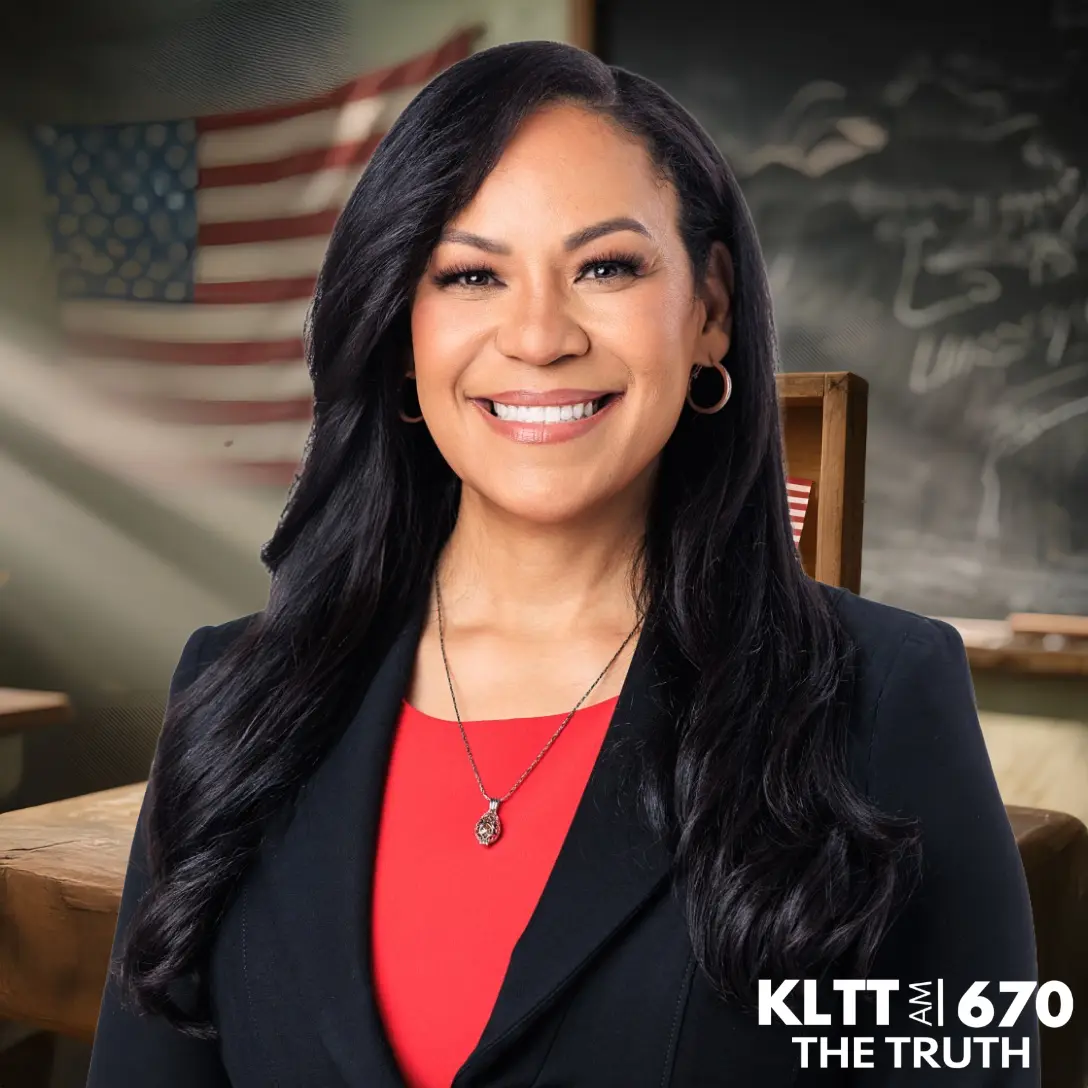
Join host Priscilla Rahn as she delves into a fascinating conversation with music educator Paul Everts. This special Christmas Day episode explores the challenges and triumphs of teaching Christmas music in schools and how the battle to keep religious music alive is being fought in California and beyond. Discover the core principles of classical music education and why it remains an essential part of understanding truth, virtue, and beauty in our world.
SPEAKER 01 :
Welcome to Restoring Education in America with Priscilla Rahn. She’s a master educator and author, leading the conversation to restore the American mind through wisdom, virtue, and truth.
SPEAKER 03 :
Well, Merry Christmas, everybody. Thanks for joining in. I’m your host, Priscilla Rahn of Restoring Education in America. And it’s like one of my favorite days of the year. It’s Christmas Day. Did you have a wonderful morning? I know I did. And listen, I am so excited to… to share this conversation with you because i love christmas music i am a music educator have been um for the past 32 years and who better to have a conversation with than a fellow music educator so let’s bring him on to the stage hello mr paul everts how are you i’m better now that i’m with you Hello, hello. We’ve got two of us at the same time having a conversation and I hope we can contain ourselves, but there’s no promises. Listen, Paul, before we go on into the conversation, I’m going to share your bio with our listeners. Okay, Paul. started teaching in 1989. He has taught music at public, private, and now a charter school that is centered on an American classical education. All of his years teaching have been in the state of California. Paul has conducted several middle school honor bands. His high school bands have performed at Carnegie Hall, Chicago Symphony Hall, and Bray Ireland, as well as many other places. Paul is also part of the John C. Maxwell team where he is hired to do leadership training. He has a book conducting my life. Paul is married to Diana, his bride. They have two children, three grandchildren and a fourth one on the way. Most importantly, Paul loves Jesus Christ with all his heart.
SPEAKER 02 :
Yes. Again, Merry Christmas.
SPEAKER 03 :
Yes. Merry Christmas. And that’s how we that’s right. OK, so let’s just talk about it, because as music educators, I have been told, oh, you can’t call the concert a Christmas concert. And I said, why? It’s a federal holiday. OK, it really I just don’t understand. Oh, we have to call it a holiday concert. But why? I’m not teaching holiday music. I’m teaching Christmas music. I mean, OK, anyway, has that been your experience?
SPEAKER 02 :
Unfortunately, remember, I live in California. Yes, it is my experience and it continues to be my experience. Even at the charter school I teach in, I purposely don’t say the name because I’m not representing that charter school today. So, yeah, it’s it’s the winter concert. It’s not even a holiday concert. It’s winter.
SPEAKER 03 :
So be secular.
SPEAKER 02 :
Yeah, let’s be extra secular because it’s extra crazy out here in California. But I do play the game because we do do Christmas carols and Hanukkah songs, by the way. And as I told dear Priscilla, at one of the school districts I taught at, the superintendent told me I was not allowed to perform Christmas carols. And the lawyer said, you better go talk to your lawyer. And he did. And he was wrong. So as long as we have an understanding that I don’t take the Bible out and I say this is where this Christmas carol is from, we’re all good because it’s part of our culture. And that’s the argument I have. But we have more and more teachers on Priscilla purposely not programming Christmas music.
SPEAKER 03 :
You know, when years ago in the federal music standards, that was part of the thing that we were supposed to teach was cultural, religious, even customs. Like we support that in our teaching of music. I remember when I was a high school choir teacher, my principal called me into his office and he said, I got a complaint from a parent that you’re teaching like these gospel songs and I want to hear what you have to say. And I said, well, sir… 80% of choral literature is sacred. And, you know, people buy it because it’s usually in Latin. If you sing it in Latin and it’s classical, people think, oh, it’s so beautiful. But do you realize we’re actually singing about God and Jesus and his holiness? It’s so profound, the music that we’re seeing, the lyrics. But if it’s in English and we’re saying the name of Jesus, everybody goes, oh, you know.
SPEAKER 02 :
They freak out. They don’t know what to do. Because, again, my Bible sits on my desk. And that’s another topic for another day. Because that got me in trouble, too. So I, as a music teacher, I’m not going to stop teaching religious music. Because it is part of our culture still. And we’re fighting that right now. Correct? We’re fighting that. So I’m all for… I’m so grateful that there are music teachers that are willing to take… A risk to do it. Right. But in California, it’s it’s real, though, Priscilla. And I know you’re not too far off in your state either.
SPEAKER 03 :
Oh, no. Colorado is trying to be just like California in every way, every way. That’s not good. Exactly. Paul, it takes courage. We as believers, it’s not like we have to go through our lives saying, I’m a Christian, I’m a Christian. It’s being salt and light and standing up for righteousness. And it takes a lot of courage and we are going to be persecuted for standing up for God. But you know what? Life is short. And one day we’re going to stand before our creator and hold an account. And I don’t want to be like, oh, I was too afraid to sing a Christmas song. OK, I have a fun little game that I want to do. But before we do this, OK, because I’m going to test your knowledge. But anyway, I know. No, I think I think you might. past with shining colors, but you know, I think it’s going to be fine. But you teach at a classical academy. So for those people who don’t understand what a classical education is and the difference, I see you brought your notes like a very good, good, a master teacher and your glasses. Yes. You’re looking very in grandpa. Like you’re wait, let’s use a Latin word. You’re looking very cranial.
SPEAKER 02 :
Oh, thanks. That’s because of the beautiful head.
SPEAKER 03 :
Okay.
SPEAKER 02 :
So what I wanted to do, what I want to do is I want to do core principles in classical music education. So I think that’s what I was brought on to do. And I want all the listeners to understand if there’s viewers too, I am learning this as we go, because I’m finding out that the University of the Pacific in Stockton, love you, my alma mater, we didn’t really talk about classical education. Okay, so I’m learning this as we go. And when we had a pre-show talk about it, it feels like an old shoe or sock. It’s very comfortable because I think when I graduated from high school, 1984, I think we were one of the last real parts of classical education. Because when I read what happened, I Googled and said, when did classical education leave public education? Classical education model was gradually phased out of American public education between the late 19th century and the mid 20th century, largely replaced by the rise of the progressive education movement. So I would encourage people to search what happened. Well, that’s what happened. So I think 1984 is probably at the end, right? At the end of the time, because what happens in 1962? Prayer’s taken out of school in 1962. So 63 years later, Priscilla, look at what we have right now. Massive confusion. So let’s go to what classical education is. So core principles in classical music education. Number one, part of the quadrivium. And quadrivium is arithmetic, geometry, music, and astronomy. Okay. Music is essential alongside arithmetic, geometry, and astronomy, representing mathematical order in the universe. And didn’t we hear that two plus two might not be four anymore? What is, no, seriously, okay. Soul formation, S-O-U-L, soul formation, aims to cultivate virtue, wonder, and beauty, training the soul, not just a skill. I love that. That’s what music is supposed to be doing. OK, and then two more. Connection to truth, capital T, seen as a vehicle to understand God’s beauty and truth, drawing students beyond themselves. And then the last bullet point for core principles in classical music education is integrated learning. teaches history, theory, composition, and performance. And it actually has, I won’t read it because reading is boring, but it’s got four bullet points, what music classes look like. You have early years, middle school years, high school years, and then the activities would be choir, band, orchestra, and so forth and so on. Now, the goals beyond performance, critical thinking. We’re not seeing much critical thinking right now. Critical thinking, analyzing music for virtue and meaning. Two more bullet points. Cultural connection, linking students to tradition and the greats. The greats being, I would think, Mozart, Beethoven, Bach, greats. But there’s even now greats really in band literature too. Frank DiCale, great. Love Frank DiCale. Okay, anyway. And then worship. Worship. Understanding music’s role in corporate worship and human flourishing. What’s it like for five, six, a hundred people to come together, take one breath and play together? Not much. It’s so amazing when everyone is so, because everyone’s in their own world. And we all come together. That’s why Jesus Christ works so well. Jesus Christ, because we all go to church. It’s for Jesus. It’s no identity, no gender. It’s Jesus. Well, same thing about music. And the perfection too, right? You play one wrong note, viewer or listener, you’re going to tell. It doesn’t sound right. And yeah, that’s virtue too with us as people. When we lie, we don’t feel right. When we do something wrong, we don’t feel right. So when we hear something wrong, we’re going, that’s not good. Yeah. So anyway, that’s it. That’s what I got for you. I did my research.
SPEAKER 03 :
Good job. If you’re just tuning in, my guest is Paul Everts. He’s a music teacher in California and Merry Christmas. And we’re talking about music because we’re both music educators. There was so much to unpack in what you were describing, you know, truth, how music and singing brings us together as people and how we’re, being spiritual and connected, even with sound waves. And when I think of like King David and what he was able to do with the music, how music touches us, I love that understanding and the purpose behind our voices. Because I know in classical music, there is more of an emphasis on singing over the instruments, but it’s still just as powerful as you said, you know, what is truth and what are we singing about? And when we sing about music, like when we start the day with the flag and the pledge, and then we sing a patriotic song or something that brings us together, that makes us proud to be American. It’s like, it just starts the whole day. We are unified with that song.
SPEAKER 02 :
That’s the thing, because music, again, brings everybody together. That’s what it’s meant to do. Have you seen, and again, viewers, go watch this. See the New York Philharmonic performing in North Korea. Have you seen that video, Priscilla?
SPEAKER 03 :
I have not yet.
SPEAKER 02 :
So this is like 12 or 15 years ago. So New York Philharmonic goes over to North Korea. They stand up to play. The audience stands up because they play the North Korean National Anthem. And then they go right into the Star Spangled Banner. And there’s North Korea having to stand up for the Star Spangled Banner. Go watch that, viewers. It is such a goosebump moment that North Korea is standing up for the United States national anthem.
SPEAKER 03 :
that’s amazing okay let’s play a game okay so i looked up the top 10 christmas song okay but no i’m good this isn’t gonna be i’m not gonna tell you to tell me what they are i’m gonna sing a couple of notes and you have to tell me which one it is okay listen i’m making myself vulnerable here and i’m not i did not know this was happening okay let’s do an easy one Which one is that? Okay, so that’s number one.
SPEAKER 02 :
Okay.
SPEAKER 04 :
Okay. Is that all Holy Night?
SPEAKER 03 :
Yes. Ding, ding, ding. I need a ding, ding, ding. I’m sweating. You’re two for two. You might be able to keep your job. OK, here we go. Number three. Do do do do do the world.
SPEAKER 02 :
Oh, yeah. Can I get in there for like five seconds?
SPEAKER 03 :
Yeah.
SPEAKER 02 :
So you saw that you were in my band room. I have a certain list of words on my white wall and the kids come in. I say, what word are you today? And they joy, peace. You all the believers will know the other. So this kid goes, I said, so what’s the difference between joy and happy? He says, well, joy is more important. We don’t sing happy to the world. We sing joy to the world, says the seventh grader. And I went, you’re right. I love that. That’s a seventh grader. We don’t sing happy to the world. We sing joy to the world.
SPEAKER 03 :
Because the joy of the Lord is our strength. Oh, man, we can tie all this stuff in, okay?
SPEAKER 02 :
But see, that was classical education right there.
SPEAKER 03 :
Yes, thank you. Okay, here we go. Do, do, do.
SPEAKER 02 :
Hark the Herald Angels Sing.
SPEAKER 03 :
Dude, you’re on a roll. Okay, here’s number five.
SPEAKER 02 :
Well, that’s because it’s Snoopy and Peanuts. But you have to make sure you just lift your head up and go, right? Okay.
SPEAKER 03 :
Here we go. Here we go. Number five. Do-do-do-do-do-do-do-do. Do-do-do-do-do-do-do.
SPEAKER 04 :
Do-do-do-do-do-do-do-do.
SPEAKER 02 :
Noel. Noel.
SPEAKER 03 :
Yes. The first Noel. Good job. Okay.
SPEAKER 02 :
Am I going to do all 10?
SPEAKER 03 :
Yes. Yes. Number six. Okay. It’ll come all you faithful.
SPEAKER 02 :
It’ll come all you faithful.
SPEAKER 03 :
These are easy. Okay. Number seven. We’re doing the top 10. Okay.
SPEAKER 02 :
Can we just hear the jingle bells?
SPEAKER 03 :
That’s not in the top 10.
SPEAKER 02 :
That’s not in the top 10?
SPEAKER 03 :
It’s not. No, it’s not. We’re going to get to the secular ones.
SPEAKER 04 :
These are the Christian ones.
SPEAKER 03 :
These are the Christian ones. Okay. I think we’re on number seven. away in a manger yeah okay i’m 59 i’m feeling old listen you better okay we’re gonna have a whole nother conversation about the songs that our students don’t know in this generation which makes me sad but let’s move on number eight Oh. Oh, yeah.
SPEAKER 02 :
Why do I not know the name? Gloria in excelsis Deo.
SPEAKER 03 :
It’s in Latin of all the songs you teach at a classical school. I’m going to tell everybody. All my listeners are going to know.
SPEAKER 02 :
In eggshells. We were taught to say in eggshells.
SPEAKER 03 :
Well, you’ve got, you’re singing the words, but. I know.
SPEAKER 02 :
Why am I not getting the title in my head? Do, do, do, do, do, do, do, do. Maybe singing or the playing. No. Do you need a lifeline?
SPEAKER 03 :
Do you need a lifeline?
SPEAKER 02 :
Yeah, give me a lifeline. Give me a word.
SPEAKER 03 :
Angels.
SPEAKER 02 :
Angels we have heard on high.
SPEAKER 03 :
Yes. Okay.
SPEAKER 02 :
Maybe singing.
SPEAKER 03 :
Yes. Sweetly singing or the plains. Okay. Number nine. Let’s go into the minor key. Okay. Let’s go into minor mode. That’s the hint I’m going to give you. Is this the Coventry Carol? No. Listen. Here’s the melody.
SPEAKER 02 :
What child is this? Yes. Written by what? King Henry VIII or something? Didn’t he do the melody for that? Anyway.
SPEAKER 03 :
Okay, let’s stay in the minor mode.
SPEAKER 02 :
Do your listeners even know what the minor mode is?
SPEAKER 03 :
Listen, listen, Linda. Okay, number 10.
SPEAKER 02 :
Yes.
SPEAKER 03 :
Do, do, do, do.
SPEAKER 04 :
okay i’m not really a singer but
SPEAKER 02 :
It’s Emmanuel. Yes.
SPEAKER 03 :
Emmanuel. Oh, come, oh, come, Emmanuel.
SPEAKER 1 :
Okay, fine.
SPEAKER 03 :
All right, so you made it through the top 10. Okay.
SPEAKER 02 :
I got eight and a half right, nine and a half.
SPEAKER 03 :
It’s a solid B plus.
SPEAKER 01 :
Okay. Okay.
SPEAKER 03 :
If we did equity for grading, it would be an A. Oh, wait, did I just… Okay. I know. Aplausa. Aplausa. Brava. Brava. Okay. That was fun. If you’re just now tuning in. Wait, wait, wait. If you’re just now tuning in, my special guest is Mr. Paul Everts. He’s a music teacher in California.
SPEAKER 02 :
I claim to be now. I forgot. I’m embarrassed like that.
SPEAKER 03 :
We’re having fun. We are.
SPEAKER 02 :
Wishing you a Merry Christmas.
SPEAKER 03 :
It’s Christmas Day. We got to have a little fun. I don’t know if you’ve eaten your turkey. Look, Paul’s wearing his Christmas tie. He’s in the spirit.
SPEAKER 04 :
I am.
SPEAKER 03 :
All right. Shall we have a little more fun? Okay. Let’s go into the secular ones. Okay. This is the top 10 Christmas songs, secular ones. I don’t want a lot for Christmas.
SPEAKER 02 :
Priscilla, I’m going to tell you right now, I’m going to be getting like five of these right. I’m telling you, the secular world and me, no. But I’ll tell you, you got Jingle Bells on that list.
SPEAKER 03 :
Wait, wait, wait. Okay, you don’t know that one. That one that I just did.
SPEAKER 02 :
No, no, no, no, no. Did Wham sing that song?
SPEAKER 03 :
Oh, no. Do I need to edit this out? Hold on.
SPEAKER 02 :
Whoa.
SPEAKER 03 :
Wait, wait, wait, wait.
SPEAKER 02 :
Goodness.
SPEAKER 03 :
Come on.
SPEAKER 02 :
No, I’m telling you. No, I do not know.
SPEAKER 03 :
All I want for Christmas is you.
SPEAKER 02 :
Oh, well, thank you. Okay, that was the beginning.
SPEAKER 03 :
Maybe people don’t know. Well, the point of the game is, like, I’m not supposed to give you all the notes. You’re supposed to. Okay, here we go.
SPEAKER 02 :
I’m going to go back. It’s name that tune. It’s name that tune. I know.
SPEAKER 03 :
You’re having a better job with me going do-do-do-do than if I were to do the words. So let me go back to the original. Okay.
SPEAKER 02 :
Are you ready? You have a lot of hope. Here we go.
SPEAKER 03 :
Here we go. see see i proved my point what is true it is true in the in the heart see this is how you teach classical education what is true okay that’s true that’s true okay okay
SPEAKER 02 :
Bing Crosby.
SPEAKER 03 :
Bing Crosby. Yeah. Okay. Number four.
SPEAKER 02 :
Okay.
SPEAKER 05 :
I know that song.
SPEAKER 02 :
I don’t know the title of the song. I don’t know the title.
SPEAKER 03 :
Okay. Rocking Around the Christmas Tree. Maybe I wasn’t singing it well.
SPEAKER 02 :
No, you did fine.
SPEAKER 03 :
But I’d rather blame you for not knowing it than my singing.
SPEAKER 02 :
I get blamed for a lot of stuff. It’s just one more thing. Go ahead.
SPEAKER 03 :
Oh, I think you’ll get this one. Number five.
SPEAKER 05 :
Is this the Grinch song?
SPEAKER 03 :
Oh, no, no. There’s no Grinchy. There’s no Grinchy here.
SPEAKER 02 :
What is that? It sounds like Adam’s family. Oh, no.
SPEAKER 03 :
Oh, no. What is it? It’s beginning to look a lot like Christmas. Okay, let’s see if you know this one. I’ll give you a hint because you mentioned Wham. Okay, this might be a Wham. Number six.
SPEAKER 02 :
Okay.
SPEAKER 05 :
i’ll give it to someone special what’s the song yeah what’s that’s good yeah i don’t know the name of the song but i know the song okay last christmas okay
SPEAKER 03 :
last christmas i gave you my heart okay yes i don’t know if youtube’s gonna let me upload this yeah yeah yeah i mean i i’m just i’m just hoping youtube doesn’t say oh it’s copyright you can’t oh okay oh okay spell w-a-m that’s the way i’m talking about sorry okay number seven mr paul Here we go. Do, do, do, do, do. Do, do, do, do. Do, do, do, do, do.
SPEAKER 02 :
Oh, flea snobby dog.
SPEAKER 03 :
I had to add that little diddy. Okay. Okay. Number eight. Look, we’re on the home stretch. See the, you know.
SPEAKER 02 :
Chilling me, Smalls.
SPEAKER 03 :
All right. Do, do, do, do, do, do, do, do.
SPEAKER 02 :
Let it snow.
SPEAKER 03 :
Oh, see? Okay. Bingo. Okay. Number nine.
SPEAKER 05 :
I don’t know that song.
SPEAKER 02 :
I don’t.
SPEAKER 03 :
Well, okay, because it’s tough because it’s a duet. And I’m trying to be two people.
SPEAKER 02 :
What is it?
SPEAKER 03 :
Not they, them. I am a she, her. But I’m trying to be two people right now.
SPEAKER 02 :
What is it?
SPEAKER 03 :
I really can’t stay. Baby, it’s cold outside.
SPEAKER 02 :
Cold outside, yeah.
SPEAKER 03 :
Yeah. Okay, sorry. That was a tough one.
SPEAKER 02 :
That was.
SPEAKER 03 :
Actually, here’s the last one.
SPEAKER 02 :
Okay. Santa Claus is coming to town. You survived. Apparently. Okay. Thank you. I did not know this was coming, people. No, but I mean. My male ego is okay right now. It’s really good. It’s good.
SPEAKER 03 :
But you know what? You know what is the number one Christmas song that’s not a Christmas song?
SPEAKER 02 :
No, I don’t actually. You’re right. It was actually written for Easter, right? The Handel Messiah?
SPEAKER 03 :
I don’t, well, maybe you’re, okay, maybe I’m actually learning something.
SPEAKER 02 :
It’s actually written for a small group too, everybody. It wasn’t written for like the Mormon Tabernacle Choir of a big, it was written for a small gathering. I do know that part of it.
SPEAKER 03 :
So, Paul, why do you think people stand for the Handel’s Messiah, for the Hallelujah Chorus, I should say? Why do you think people stand for it?
SPEAKER 02 :
It’s out of respect. For who? Pardon me?
SPEAKER 05 :
For who?
SPEAKER 02 :
It’s supposed to be out of respect for our Lord Jesus Christ. That’s what it’s supposed to be. So there’s my answer. And I respect him with my entire heart. I love our Lord.
SPEAKER 03 :
I think that’s really, really powerful. I think it’s really powerful. And people need to remember that in this day and age that we serve a savior, a loving God, and the greatest love that we’ll ever know is the love of Jesus. And I know a lot of people, you know, the holidays can be really tough for for some people, depending on where you are. You know, I lost my dad last year and I know I have some friends that this year they’ve they’ve lost people. And this might be their first Christmas without their loved ones. But what do you want your message to be to people today?
SPEAKER 02 :
So on this Christmas Day, my message to you is go to the Bible. Go to the Bible. I heard this the other day on a talk show that we should be looking at the Bible for Christianity, not the people. It’s the Bible. You go to the Bible. Don’t go to the glass of whatever you drink. Don’t take that pill. You go to the Bible. Jesus Christ is waiting for you. He loves you.
SPEAKER 03 :
Amen. And with that, thank you, Paul, for the interview. And to my listeners, thank you for tuning in. Catch me next time. Merry Christmas. And remember, educating the mind without the heart is no education. So seek wisdom, cultivate virtue, and speak truth.
SPEAKER 01 :
Thanks for tuning in to Restoring Education in America with Priscilla Rahn. Visit PriscillaRahn.com to connect or learn how you can sponsor future episodes to keep this message of faith, freedom, and education on the air.
