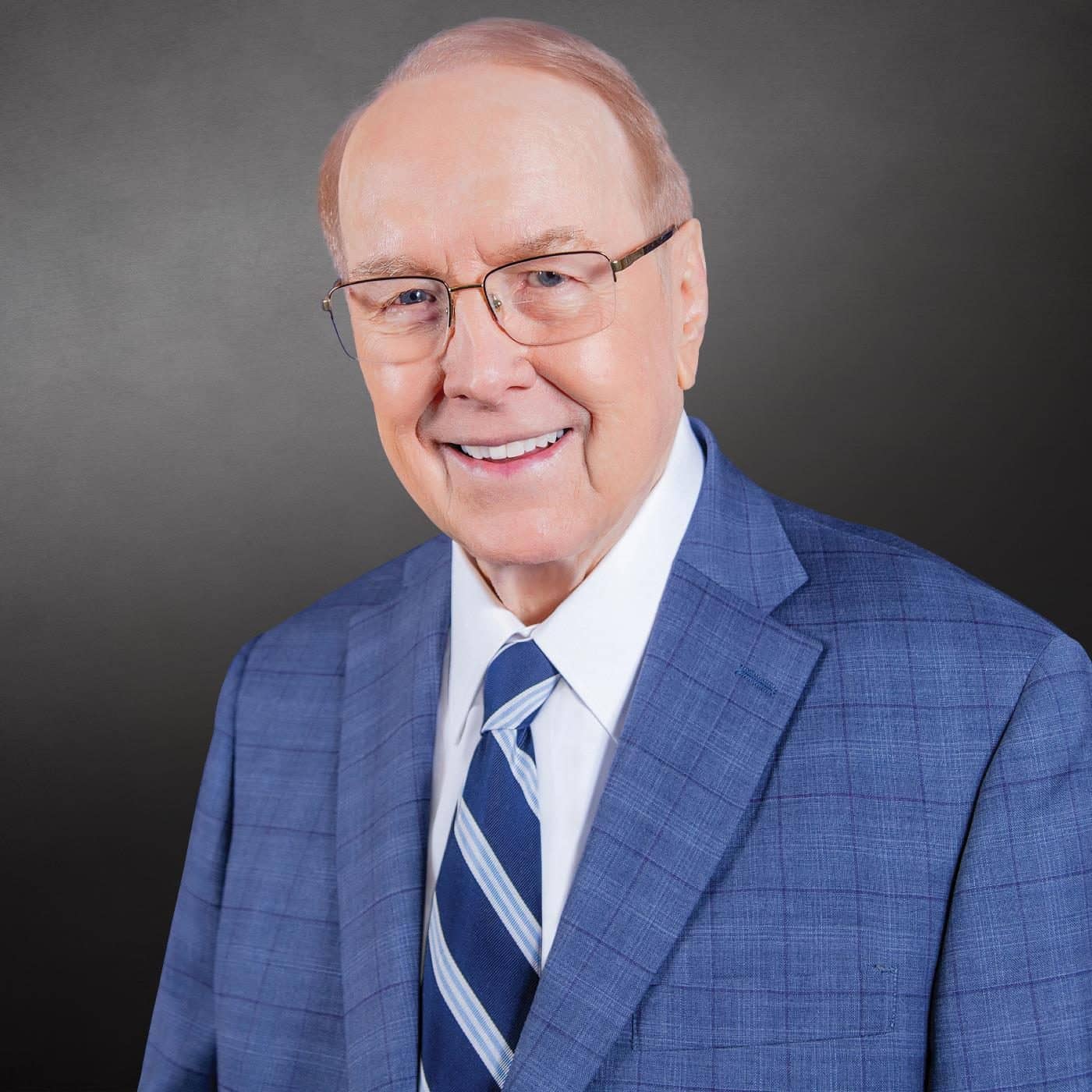


In this heartwarming episode of Family Talk, we explore the life and legacy of the legendary Coach John Wooden. Known for his unprecedented record in college basketball, Coach Wooden’s influence extends far beyond the court. Join Dr. James Dobson as he sits down with Wooden in a candid conversation about faith, family, and the guiding principles that shaped his coaching career. Discover the personal stories that reveal Wooden’s gentle yet profound wisdom, proving why his teachings remain relevant today.
SPEAKER 02 :
You’re listening to Family Talk, the radio broadcasting division of the James Dobson Family Institute. I am that James Dobson, and I’m so pleased that you’ve joined us today.
SPEAKER 01 :
Well, welcome to Family Talk, the broadcast division of the Dr. James Dobson Family Institute. I’m Roger Marsh, and you know, with March Madness in full swing, we’re going to bring you a conversation featuring one of basketball’s most legendary figures, Coach John Wooden. His record at UCLA is simply unmatched. Ten national championships, seven of them consecutive, and an impressive 88-game winning streak that still stands today. But Coach Wooden’s legacy extends far beyond the basketball court. He was a man of deep faith, unwavering principles, and timeless wisdom. Before his passing in 2010 at the age of 99, he sat down with Dr. James Dobson for a memorable conversation. Before we get into that interview, here now is Dr. Dobson to set the stage for today’s program.
SPEAKER 02 :
We have chosen a broadcast today, the classic broadcast, to coincide with March Madness. That gives us an opportunity to go back and talk to Coach John Wooden, maybe the finest basketball coach in the history of the game. I knew him. I had an opportunity to talk to him. We became good friends. He has gone on to be with the Lord. He died in his 90s, but before he passed, he came to do a broadcast with me. In fact, three of them. We’re going to let our listeners hear two of those three broadcasts. We had an audience for those interviews. There were About 150 people in the audience. We kind of made a makeshift studio. And I’m telling you, that was a wonderful time with a good, good man. He loved the Lord, and he’s going to tell us about that today.
SPEAKER 01 :
Well, what a treat we have in store for you today. So now let’s join Dr. James Dobson and his guest, Coach John Wooden, for this classic edition of Family Talk.
SPEAKER 02 :
Well, I am so personally honored to have Coach John Wooden as our guest here today. I’ve admired this man greatly for many, many years. Even though we’ve already met, we’ve met on several occasions, but this is the first time that he’s agreed to appear on our program. Welcome. Thank you very much. It’s nice to be here. And you’ve been in my office on several occasions before, and I have admired you not only up close but from a distance, except, except, when you were at UCLA and I was at USC as a student and then as a faculty member, I resented you greatly during those days because you beat us every year, every year. But I’ve learned to get over that. I want you to know that I love you anyway. Before we get into the meat of the program, I’m going to do something that I have never done, never done this, but there’s a reason why I want to do it. For the first time, I am going to read basically the entire biography of this man because I want our listeners to know who he is, what he’s accomplished. And the incredible record that he’s accumulated, not only in basketball, but in life. And so let me do that. We’ll start with an unequaled record as a college coach. His teams at UCLA over a 27-year period won a record 10 national championships. No one has even come close to that, including seven in a row. 38 consecutive NCAA tournament victories, four undefeated full seasons, an 88-game winning streak, and 19 Pac-10 championships. It’s a league championship. Coach Wooden retired in 1975 after achieving an unmatched 40-year career. winning percentage of over 800, making him one of the winningest coaches ever. But his basketball career started much, much younger, obviously. When he was in high school, he led the high school team to the Indiana State Championship in 1927. It’s been a long time, Coach. Two other years, his team was runner-up, and three times Wooden was named on the All-State team. Then he went to Purdue University. And he played on two national championship teams, 1930, 1932. He was a three-time All-American there. 1932, he received the Helms Athletic Foundation College Basketball Player of the Year. In 2003, he received the Presidential Medal of Freedom. President George Bush presented Wooden with his highest civilian honor in the United States. In the year 2000, the NCAA and ESPN named him Coach Wooden. of the century. In 1999, Sports Illustrated named him the century’s best college basketball coach, and he was named the NCAA Coach of the Year six times. Coach, when you look back on all those accomplishments, You know, you’ve heard interviewers go through that litany before, but it is an incredible list of accomplishments. What comes to mind when you think back on a career that reached such heights?
SPEAKER 03 :
I think I’ve been very blessed about being able to be with a number of great people. I would have never had those basketball accomplishments. unless I’d had great players under my supervision. Certainly, individually as a player, I had some great teammates, and it’s a good thing I had some great coaches. I’m more proud of something like the Academic Award. I feel that I earned the other things somebody else earned them for me.
SPEAKER 02 :
Did you maintain a standard of discipline even through that anti-establishment era at UCLA?
SPEAKER 03 :
Yes, I don’t think so. That it was out of line at all, but I required certain things and I expect them to adhere to them. And I believe youngsters, if you do, they’re within reason. They don’t have no problem. They may test you, which is all right, but I think they’ll go along with you. Little things that some they would laugh about. So it’s not too bad.
SPEAKER 02 :
Hey, let’s go back to your childhood because you’ve written a lot about the way you were raised. You were raised on a farm, a poor farm, during the Depression. Things were very tough. You all eventually lost the farm, didn’t you? Yes, we did. And you did without a lot of things that today people feel like they have to have?
SPEAKER 03 :
We didn’t know what we were doing without things. Just accept things as they were. I mean, you look back on it, it seemed like it must have been very difficult. It was difficult for my mother. It was difficult for her with all the boys, washing with no electricity, no running water, and things of that sort. It was difficult for my mother. We always had plenty to eat. Overalls were always well-patched, and so everything was all right.
SPEAKER 02 :
The crops did not prosper. The animals died, and you had to move to the city, right?
SPEAKER 03 :
Well, the city was 4,800 people, but the gymnasium seated 5,200, and it was always full. They were a little crazy there. But yes, the animals had been vaccinated and had some falls back there, but my father never blamed anybody. It was his fault that he had it done, and I never heard my father ever blame anybody for anything.
SPEAKER 02 :
Well, talk about him, because as I hear the things you’ve said about him, he reminds me somewhat of my father and what he meant to me. He had a great impact on you, didn’t he? Oh, yes, he did.
SPEAKER 03 :
He was a gentle man in many ways, physically strong. He tried to get across the idea to us that you should never try to be better than somebody else, because anything you’ll ever know, you’ll learn from somebody else in one way or another, and so you’d always be learning from him. I never heard him speak an ill word of another person. My father was an admirable person. He taught you to love two things, the Bible and poetry. Yes, he read to us every night. And I remember he read a lot of poetry. I can still close my eyes and hear him reading, And so on and so on. About my graduation from grade school, you may have heard that he gave me two things. One was a poem, a verse by Reverend Henry Van Dyke. It said, four things a man must learn to do if he would make his life more true. To think without confusion clearly, to love his fellow man sincerely, to act from honest motives purely, to trust in God and heaven securely. And the other side was a seven-point creed that he said, son, try to live up to this. And it was be true to yourself, help others, make friendship of fine art, drink deeply from good books, especially the Bible, make each day your masterpiece, build a shelter against a rainy day and give thanks for your blessings. And I’d forgotten to give that little card when I graduated from grade school in 1924. And I’ve carried that until it wore out or something like that.
SPEAKER 02 :
Coach, I don’t think you would mind me telling people, because you’ve been very open with your age, but you’re 93 years of age. And your father— Only. Beg your pardon? Only. Only. Your father gave you that card and that poem, and you memorized it when you graduated from— Grade school. Grade school. And it’s with you today. Surely. Tell me that a parent does not have an impact on a child.
SPEAKER 03 :
Well, parenting is the most important profession in the world. I believe that very, very definitely.
SPEAKER 02 :
That’s what we live for here is talking about marriage and parenthood and the family. How long did he live? He lived until he was 69. Do you remember his loss? Very well. Was that a very difficult experience for you?
SPEAKER 03 :
Of course. Yes, it is. When you lose anyone dear to you, of course it is. I remember. Yeah.
SPEAKER 02 :
Yeah. Well, you had $908 in the bank. And a nickel. And a nickel. And the bank folded. And this was when you were just getting ready to get married to Nellie, is that right?
SPEAKER 03 :
We were going to be married the next day. We were going to go to Indianapolis, three miles north of where we lived. That was your life savings. Yes, I managed after my basketball season was over at Purdue. I played a little, barnstormed a little, and saved up a little money to get married. And we planned on this, and I didn’t know what I was going to do. And one of Nellie’s dearest friends called me and pushed an envelope and said, pay me back when you can. He gave me $200. That was very, very nice. So we… Drove to Indianapolis, was married. And the youngsters might get a kick out of this. We were married. My brother and his girlfriend, she had a car. They drove us up there. Afterwards, we went to the theater, and we saw the Mills brothers make their first appearance in Indianapolis. And I thought they were going to sing all night because Nellie and I were tired, and we wanted to leave. But they’re just…
SPEAKER 02 :
I think I get it. She was the absolute love of your life, wasn’t she? Yes, she’s the only girl I ever went with. The only one you ever dated. And you were married to her for 53 years? Correct. 53 years. And you lost her in 1985. I did. How did she die? She had leukemia. And some other problems, too. I asked you how difficult it was for you to lose your father, and you said it was difficult. But I understand that you grieved for years over Nellie’s loss.
SPEAKER 03 :
Never got over it, of course. I still remember. But my daughter and son and ex-players and minister and friends, they help you.
SPEAKER 02 :
Would it be too personal if I mentioned what I read, that every year… Now, all these years later, on your anniversary, you write her a love letter?
SPEAKER 03 :
Well, I write a note on the 21st of each month. Of each month? Of each month. Because I lost her on the 21st of March in 1985. That happened to be our daughter’s birthday, too. And I write her a note on the 21st of each month.
SPEAKER 02 :
And you’ve done that? Since I lost her. Since you lost her. Where are all those notes today? Hidden. Did you blame God when you lost Nellie?
SPEAKER 03 :
No. No. You accept things. What’s best, she was out of pain. She didn’t suffer no pain. She was at peace. She had suffered a long time. No, I didn’t blame God.
SPEAKER 02 :
Tell us how you met Nellie. I think there’s a story there, isn’t there?
SPEAKER 03 :
Yeah, there’s a bit of a story, but… My freshman year in high school, I lived on this farm eight miles north of this town and commuted back and forth on an interurban, and I saw her. I thought she was kind of cute, but I didn’t think she saw me at all. You’re a fox is what you are. That summer before we lost the farm, I was plowing corn in a field that was close to the little dirt road by me, and I was resting the mules that I was using, and a car drove up. and stopped on the side of the road, and she got out, and her best friend, and somebody over there motioned me over, and I wouldn’t go, and I kept checking, and they kept going. Well, finally, they drove away. Well, when school started the next year, now we had moved into this little town, and first day of class, I had to go to an algebra class, and she’s going, too, and her friend, and she stopped me and said, why didn’t you come over and talk to her? And I said… I was shy. I was, you know, sweaty and dirty, and you’d made fun of me. And she said, I would never make fun of you. And I knew right then, this is one for me.
SPEAKER 02 :
How old were you at that time?
SPEAKER 03 :
14 or 15, 15, I guess.
SPEAKER 02 :
And you fell in love and said, that’s the one for me. Was there ever in 53 years, any regret for having married her? Was there ever a moment when you wish you hadn’t? Never. Never. Can that kind of marriage still work, Coach? Of course. Of course. What’s required to make it work like that?
SPEAKER 03 :
Listen, and don’t be disagreeable when you disagree, but the greatest and most important word of all is love. Love is the most important word, and if it’s there, it’ll overcome all things.
SPEAKER 02 :
So you began life with almost nothing, no money. You were in debt when you married. Shortly after that, World War II came along, and you felt that you ought to join the Navy. What’s the story there?
SPEAKER 03 :
Well, I made a mistake in a way. I’m not talking with her. I enlisted without her knowing, and that’s probably the worst disagreement we ever had. She didn’t think I should because I had the two children and was a teacher, and I might not have been drafted, but I just felt it was the thing to do, and I enlisted, and we got over that.
SPEAKER 02 :
You were on what ship? Were you on any of the ships we would recognize?
SPEAKER 03 :
No, I was blessed in many ways. I had orders to go to the USS Franklin, and on my way, I got terribly sick, and my appendix had burst. So they canceled my orders, and the fellow that replaced me on the Franklin was hit by a kamikaze and killed. Then I was sent for a training carrier, USS Sable for training on Lake Michigan for training where pilots made their first landing. One of the basketball players who played for me at South Bend made his first landing on a carrier when I was serving as the captain at that particular time. And then near the end of the war, I got orders to go to the Belleau Wood. which was in the—Japan had surrendered. It was the South Pacific, and I wanted to get out. I didn’t want to go to Japan. The war was over. I didn’t want to go to Tokyo. And the captain of the Sable, the USS Sable, he managed to get connections to Washington, and I got out the next day. I went to the Glenview Naval Base out of Chicago and got out.
SPEAKER 02 :
I understand you had another near-death experience, or at least one that could have taken your life.
SPEAKER 03 :
Well, I suppose you think of the time when I was headed to our chemical college at Boise Creek, North Carolina.
SPEAKER 01 :
That’s correct.
SPEAKER 03 :
Where I went there for a basketball camp for several years in a row. That’s where Pete Beravitz was coming when he was a youngster.
SPEAKER 01 :
Yes.
SPEAKER 03 :
Somebody came up at UCLA that I couldn’t go on Saturday. I normally went on Saturday, be there on Sunday, because I usually spoke at the chapel for all the youngsters who were there. And I couldn’t go. And so I had my ticket changed the next day. And the plane that I had the ticket for on Saturday crashed. Everybody was killed. So I don’t know whether that’s close or not.
SPEAKER 02 :
The Lord was obviously looking out for you. He had something he wanted you to do, Coach. Apparently so. And you have felt that divine ordination on your life, haven’t you?
SPEAKER 03 :
I think so. I think so. I think there’s more than just what we see. There’s something deeper than that. And I don’t know what it is, but I hope it’s pleasing to me.
SPEAKER 02 :
You mentioned Pete Maravich. The day that he died, I don’t know if you know that he died in my arms. I knew that. The day that he died, I set up that little pickup game, just a bunch of duffers. And then here comes this superstar of all times, Pete Maravich. And I knew that we had to get somebody to guard him because I sure wasn’t going to do it. And Ralph Drollinger came to play with us that day. So he and I wound up giving CPR to Pete. Ralph played with you. Yes, he did. He was a center for you during one of those games.
SPEAKER 03 :
The last championship game in 1975. He played wonderful for us in that game.
SPEAKER 02 :
Well, you had that wonderful basketball career that ended in 1975. I would think that it would have been pretty difficult to walk away from something that intense and that rewarding and that successful. How hard was it to retire and move on?
SPEAKER 03 :
It wasn’t difficult at all. Really? For some reason, it was the time. I decided on the spur of the moment. I thought if anybody had asked me even 10 minutes before, I would have said, oh, I’ll teach for two more years, maybe three, but certainly not over three. And then suddenly, just like that, I decided it’s time. And I’ve never regretted it. I’ve missed practices. I love to teach. I love to plan my daily practices. I love to conduct them. But I don’t miss the games. I don’t miss the tournaments. I don’t miss the follow-alls. I don’t miss trying to explain to the media what happened and so on. The only thing I miss at all is the practices. That’s where you get to learn your players, learn about them, where you establish rapport and relationships that last forever.
SPEAKER 02 :
Coach, thank you for being our guest. Thank you for the man you are. Thank you for the influence that you’ve had on several generations of Americans. Thank you for your impact on athletics. And thank you for your love for Jesus Christ. And thank you for being my friend. It’s been a pleasure having you here.
SPEAKER 03 :
I’ve enjoyed it.
SPEAKER 01 :
10 national championships, an 88-game winning streak, countless awards and honors, and yet Coach John Wooden’s greatest legacy was the way he lived his faith and loved his family. You’re listening to Dr. James Dobson’s Family Talk, and a program featuring a conversation with Dr. James Dobson and the late Coach John Wooden. Now, if you missed any portion of today’s broadcast, or if you’d like to share Coach Wooden’s timeless wisdom with a friend, visit jdfi.net, and you’ll find the complete broadcast there. And be sure to join us again next time to hear part two of this memorable interview when Coach Wooden shares more about his faith, his famous pyramid of success, and the principles that guided his legendary career. Yes, even a diehard Trojan like Dr. James Dobson benefited from the wisdom of Coach Wooden through that pyramid of success. You know, it’s interesting as we think about the world that we’re living in right now and the example that a good coach or a teacher can actually set for the children in our world. Parenting requires all the intelligence, wisdom, and determination you can muster from day to day. If your family includes one or more boys, though, the greatest challenge might just be keeping them alive through childhood and adolescence. If you’re raising boys, you know how difficult it can be. They are usually, but not always, tougher to raise than their sisters. Girls can be difficult to handle too, but there is something especially challenging about raising boys. But here’s the good news. Here at the Dr. James Dobson Family Institute, we’ve developed a new 10-day email series based on Dr. Dobson’s best-selling book, Bringing Up Boys. It’s designed to inform and equip you in wisely leading your boys through even the toughest trials. When you go to drjamesdobson.org forward slash 10-Day Bringing Up Boys series, you can download and start benefiting from this free 10-Day Email series. Again, you’ll find all the information that you’re looking for when you go to drjamesdobson.org and search for that title, Bringing Up Boys, the 10-Day Email series. Highly recommend that you do. You know, for over the past 15 years now, the Dr. James Dobson Family Institute has been bringing you trusted voices and timeless wisdom to help strengthen your family. We are committed to preserving the institution of the family and the biblical principles upon which it is based. We want to introduce as many people as possible to the gospel of Jesus Christ. And therefore, we are dedicated to promoting the sanctity of human life and righteousness in the culture, among other key family issues. But we can’t do any of this without friends like you. Your faithful prayers and generous financial support keeps these broadcasts on the air and allows us to place these resources in the hands of families who desperately need them. Now, if today’s program has been an encouragement to you, we invite you to partner with us. Every dollar you donate makes a difference. You can give securely when you go to drjamesdobson.org or if it’s easier, just type in jdfi.net. Remember, you can also send your donation through the U.S. Postal Service. Our ministry mailing address is Dr. James Dobson’s Family Talk, Post Office Box 39000, Colorado Springs, Colorado, the zip code 80949. Once again, our ministry mailing address is Dr. James Dobson’s Family Talk, or just use those initials, JDFI for short, P.O. Box 39000, Colorado Springs, Colorado, 80949. If you’d like to speak with a member of our constituent care team, that number to call is 877-732-6825. That’s 877-732-6825. Well, I’m Roger Marsh, and from all of us here at Family Talk and the Dr. James Dobson Family Institute, thanks so much for listening today. Be sure to join us again next time right here for part two of a powerful conversation featuring Dr. Dobson and Coach John Wooden discussing timeless wisdom from God’s Word. That’s coming up here on the next edition of Dr. James Dobson’s Family Talk, the voice you trust for the family you love.
SPEAKER 1 :
Thank you.
SPEAKER 01 :
This has been a presentation of the Dr. James Dobson Family Institute. Here’s today’s Dr. Dobson Minute with Dr. James Dobson.
SPEAKER 02 :
What’s the most common error made by parents in disciplining their children? I believe it’s the inappropriate use of anger in attempting to manage boys and girls. Unfortunately most adults rely primarily on their own irritation to make children cooperate. Disciplinary action influences behavior. Anger does not. I’m convinced, in fact, that adult irritation actually creates disrespect in the minds of kids. They can see that our frustration is caused by our inability to control a situation. Now, I’m not recommending that parents and teachers conceal their legitimate emotions from their children. My point merely is that anger often becomes a tool used for the purpose of controlling children. It’s ineffective and it can be damaging to the relationship between generations. Instead, try taking a little corrective discipline that your children will care about.
SPEAKER 01 :
For more information, visit drdobsonminute.org.