

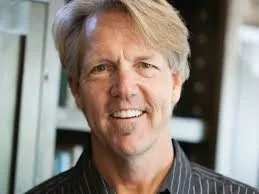

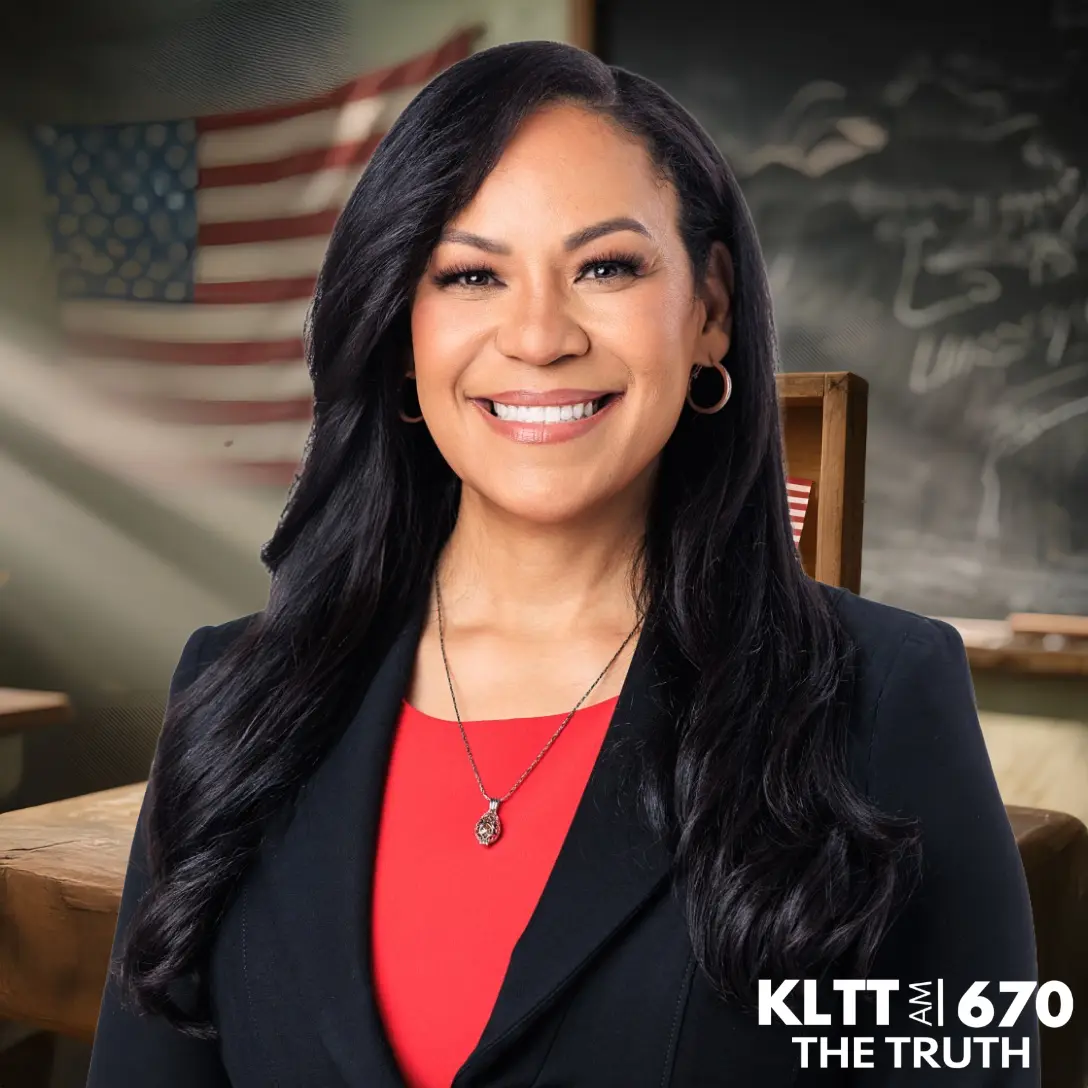
Join Priscilla Rahn as she hosts Dr. Alveda King for an enlightening conversation on the importance of restoring education through wisdom, virtue, and truth. Dr. King, a renowned public figure known for her work on civil rights and education freedom, shares her experiences in both segregated and integrated schools. Listen to her insights on how education remains a critical pillar in achieving the American dream, as well as her advocacy for parental choice in education.
SPEAKER 01 :
Welcome to Restoring Education in America with Priscilla Rahn. She’s a master educator and author, leading the conversation to restore the American mind through wisdom, virtue, and truth.
SPEAKER 02 :
Well, hello. Hello, everybody. Welcome. Come on in. I’m Priscilla Rahn, your host of Restoring Education in America. And I’m so excited that you decided to join the conversation today. It’s a very special day today because I have a guest who I have admired for most of my life. And today I have her to talk to us. And it’s Dr. Alveda King. Hello, Dr. King.
SPEAKER 03 :
Hello, Priscilla, and thank you. And please call me Alveda. I’m so honored to be with you. Thank you for thinking of me. And hello to you and your audience.
SPEAKER 02 :
Well, let me share a little bit of your bio because we know who you are, but you’ve done some amazing things. Dr. Alveda King is from Atlanta, Georgia, and serves as the Senior Advisor to the Faith Office at the U.S. Department of Agriculture and the Chair of the Center for the American Dream at America First Policy Institute. She is the daughter of the late slain civil rights activist, Reverend A.D. King, and the niece of Reverend Dr. Martin Luther King, Jr., King studied journalism and sociology as an undergraduate and received a master of arts degree in business management from Central Michigan University. She also received an honorary doctorate from St. Anselm College. Dr. Alveda King is the founder of Speak for Life, fighting for the sanctity and dignity of all life from the womb to the tomb. She currently serves as a Fox News contributor and host of the Fox Nation show, Alveda King’s House. Dr. King is a former college professor, served in the Georgia State House of Representatives, is a former presidential appointee and a 2021 recipient of the Presidential Lifetime Achievement Award. And we have you today and you’re busy in the car and you’re going from here to there like a jet setter. And it’s amazing because all the things you’ve accomplished, we have to get you like this because you don’t let the grass grow under your feet, do you?
SPEAKER 03 :
Well, you know, I’m 75 years old and I actually have a PhD, which I earned from Aiden University during COVID as well. So just I’ve been living a very good and beautiful life and living for the Lord since 1983. So yeah.
SPEAKER 02 :
Amen. Well, I think you’re going to be a centurion at the rate you’re going because you have been working to inspire so many people. But let’s get into it, Alveda, because I’m a full-time public school teacher. This is my new show. Okay. We talk about all things education, and I know you’ve been passionately leading the conversation. You’ve been a college professor. Can you share why you see education freedom directly tied to the American dream?
SPEAKER 03 :
I am pro choice for education and I’m pro life for the birth of children from the womb to the tomb and beyond. Parents and families and children should have opportunities to have the best education possible. And in order to do that, the family needs to be involved, the parents do, and to not to leave that decision totally up to the government. So I was very easily remembered, I hope, from some at least, in our previous century, in the late 1990s. I remarked that President Clinton was on public assistance, that he was getting a check from the United States government, and yet his daughter could go to any school. and they were able to afford to educate her as they saw fit. And should not every American have that opportunity to educate their children? And I still believe that. Of course, now I’m working at the USDA, and farming and the land are very important. Life in the womb is very important and beyond. And so education remains right at the top of all of my concerns.
SPEAKER 02 :
You know, I was born in the early 70s, and my father was born in 1946, and he grew up in King Street, South Carolina. I recently learned about Rosenwald schools. My father went to a Rosenwald school, and I’ve been doing some research about that. And so when I look at the time where you and my dad were growing up during some of that same era in the 50s and 60s, Things were different. I remember talking to my dad and asking him how it was during segregation. What was it like going to a school where your principal was Black, your teachers were Black, all the business owners were Black? And he’s like, we didn’t know any different. And then I talked to folks who… went to school during the time after the civil rights era where there was busing and they were forcing integration and what’s changed. And then now my generation of going through school during the 70s and 80s as a student, it’s very different in those eras. So I’m doing a little bit of research. And so my question to you is, Alveda, what was it like going to school, before integration, before the Civil Rights Act.
SPEAKER 03 :
Interestingly enough, and I remember my elementary school teacher, Mrs. Ernestine Mann, she passed away not so very long ago, unfortunately, of COVID. And she was in one of the senior citizens facilities. And her daughters remembered her as a school teacher, her family did, and made a beautiful documentary about her life. So Mrs. Mann was one of the best teachers that anyone could ever have. And even though I was educated in a school in Georgia, elementary school, where all the teachers, the principal, the community was Black, almost everybody at church was Black, we lived in that environment. I had a very good education. She caused me to want to know more and to learn more. She was a great teacher. However, I do remember in some of the schools, the books were old, the books that the kids that went to the white schools were finished with, and some of the pages were missing, and they were really shabby books and that kind of things. I do remember that experience. And in the 1960s, I went to my dad, Reverend A.D. King, Brother Martin Luther King Jr., went to pastor church in Louisville, Kentucky, and that school was integrated. And so we had blacks and whites and probably Native Americans and other ethnicities there. So I’ve had the experience in a fully segregated school and culturally and ethnically blended school. So the experiences were different, but we still learned. Actually, interestingly enough, it was about reading, writing and arithmetic when I was in school. And so many other things are taught now that is unbelievable, really. And so our students don’t perform as well in America as some students do in other countries because we’ve let so many other special interest things enter into our curriculum. And I think that’s a problem.
SPEAKER 02 :
Well, yeah, let’s talk about that because my students right now, they don’t know how to write in cursive. They don’t know how to read a clock. Tell time that they need to have it digital instead of an actual clock. I keep telling them if the apocalypse happens, y’all don’t know how to tell what time it is. We used to learn how to look. We used to look out in the, in the sky at night and look for the, for the big dipper and the little dipper. And we knew what direction we were in North, South, East, West. Yeah. Our students aren’t learning that, but you mentioned some of the civil issues that have come up, like BLM and all of these things, DEI, that have come and taken over our time in the public education system. But we don’t have really anything to show for it academically because in the Black community, we still have an education gap. We still have an economic gap. And I wrote my book. I just self-published this summer, Restoring Education in America. And I talk about what we need to do to go back to reclaiming our own independence and our ability as a Black community to really achieve and create and become leaders and become self-sufficient leaders. What are your thoughts about where we are as a community and some of the things you think we need to do to restore education?
SPEAKER 03 :
Interestingly enough, and as I say, I’m 75 years old now. I have a full ministry. I have business. I am a consultant. I’m working and I’m very busy. But I remember one of my interns several years ago was working with me in my office and I gave her a manuscript. It was a cursive. It was written in cursive. And I said, could you take this and transcribe it and get it in? Microsoft Word was pretty new. I said, and put it in a Word document. And she picked it up and she says, I can’t read this. I said, what do you mean you can’t read it? She could not read or write cursive. And I was totally, thoroughly shocked. I had not realized, because even my children, who are all adults now, and I have grandchildren who are adults, But they could all read cursive, they could all tell time on an analog clock, everything that you mentioned. I realized the world was changing. Then all the various special interest things on the gender issues or the issue of DEI and skin color and racism and etc. The children were being taught causes. rather than how to read and think critically and read for themselves and to write and to explore and i i was very disturbed when art was taken out of the curriculum uh 4-h club just all types of things were taken out of the schools and we replaced now there are are things that are happening now there is movement even in i guess around 2008 10 around there some of the parents of america woke up And it wasn’t the woke movement. They were awakened to the fact that things were happening to their children. And they went out and they ran for office and they called them mama bears and daddy bears. And so these folks have gotten back in there. And there is a reversal now bringing some of these issues back. I’m so delighted to hear that you are an educator, a schoolteacher. And I’m assuming that you support the idea that children should be able to read and write and do mathematics and to study science and to understand the earth and the world that we live in. I believe that as you do that now, we don’t need to erase history. We should tell history fully and accurately. We should keep everything that happened that was good. And we should make a note or a record of things that were not good, and why we should not do those again, and why we can do things in a better way. And to me, I was a college professor for 19 years. I taught in public school systems. I was a principal of a private school, along with many other things that I’ve done. So I still support education. And I believe that parents should be able to choose between public school, private school, parochial school, religious schools, maybe, and even homeschooling. But the parents should definitely be involved.
SPEAKER 02 :
My guest today is Dr. Alveda King. And we are so delighted to have this conversation and for me to learn a little bit of history from you and to be inspired. I know there are a lot of teachers and parents who listen to the show who, as you have said, have pulled their children out of public education and are looking for alternatives. And you have been front and center in the faith conversation. And we can even talk about the direct attacks on the Black community when it comes to the abortion issue. I didn’t realize until years ago when I started looking at the data how many millions of children our Black mothers have. murder in the womb, their own children. In fact, I think there was one year in New York City, there were more babies aborted than were born in the Black community. We’ve got to change this conversation because now we’re working really hard to have two parents in the home, a mom and a dad in the home at the time of their child’s birth. That is really critical to uplift our men and support our fathers to be in the rightful role that God has created them to be in, but to also encourage our Black mothers to carry their children the full term. But there’s also that other conversation that of making sure Black mothers have the proper health care because we know more Black women die in childbirth still at a higher rate than other women. There’s like all of these social issues. So how do you use your faith in the role that you are at policy-wise in the Department of Agriculture and in a lot of the work that you do?
SPEAKER 03 :
Well, I’d like to remind people, it’s good to know what is not right or what shouldn’t be done, but we should explain and support fully what we do stand for, what we do believe. People say, well, I stand for marriage. I says, well, I stand for holy matrimony. So some people, I stand for marriage. I believe in marriage. Well, marriage has many, many definitions, as we know. But holy matrimony, and what you’ve just explained with the nuclear family, with the father, the mother, and the child there being born and growing up and being raised now. When that cannot happen, we want to still support life period. I had to raise children after my divorce and I did okay with it. I would have been better if they had remained in a nuclear marriage situation. I’ll be very honest about that. But we still want to support good education. We want to support opportunities for children to be healthy and balanced and happy. and given the opportunity to learn and to think and to grow. And it is still very possible to do that. So how do we do that? We have to consider ourselves many, many factors. The church, if you’re a Christian, if you’re not, that’s okay. But in the Christian community, the church needs to step up and to support opportunities for good education. We should elect folks to office who will care for the children to understand that children are a gift from God and that we have a responsibility to nurture and grow each generation for the success of the whole human race. We’re one blood, one human race. We’re not separate races. We’re ethnically designated. You see, so when we understand these factors is from every generation, every decade on every platform and in every genre. So if the government is doing its part, if the church is doing its part, if the family is doing its part, then that is when you can begin to come together and get some solutions.
SPEAKER 02 :
Alveda, you are a chief head advisor in the faith community in the government. I’ve noticed recently more and more elected officials are becoming more bold about their Christian faith. And, you know, for me, I’m loving it because I was raised in a Christian home. And I think that Even me being a teacher, a public school teacher and a Christian, those two things are embedded. It’s not that I have to go to school and tell everybody that I’m a Christian. It’s how I live my life through salt and light and love others and try to be a better human being according to the way Christ was our example. Is that how you approach your role in the government? Because I’m not even sure what a faith advisor does in the Department of Agriculture. Can you educate me a little bit on what you do?
SPEAKER 03 :
I would like to take some time and really explain that. The White House has a faith office, and the senior advisor there is Pastor Paula White, and she works with her director, Jennifer Corn. And together, they ensure that there is religious liberty. And so that does not only support the Christian faith, but all of the various faiths. And if someone has no faith, they should not be forced to have a religion. So now that is another point. Now, over at the USDA, certainly we take a look. Has there been any discrimination against Christians? Are you not able to apply for grants or get information and et cetera? Are you being told that you can’t have a Bible or on your farm or you can’t have a Bible in your office or something like that. If you do, you’re not going to be able to get any help from USDA. We have been looking at discriminatory practices for religious purposes. And we have actually found some that were told that in their business or in their farm or whatever, they’re not going to be able to get any help from USDA because of that. So we are making those corrections because there is no genuine separation between church and state. Just meant that the state cannot deny the community the opportunity to pray and to worship. So that is my primary, one of my primary responsibilities. And to meet with faithful leaders of all types. And someone asked the other day, we had the Christmas tree lighting. And I mentioned, I said, aren’t we glad that Mary, the mother of Jesus, said yes? And aren’t we glad that Jesus’ stepfather Joseph said yes? And I said, there’s something good to be said about adoption. So I was able to say that. But we also, when we had the display tables out in the hall, I saw something from Hanukkah, from Kwanzaa. I saw the beautiful nativity scene. And so everyone in America should be able to worship responsibly, responsibly, regardless of their denomination or what aspect of faith. So that’s what I do. Along with that, mental health matters. is very important at usda the highest numbers of suicides are committed by farmers in america many people did not know that i didn’t know we’re dealing with the land and healing that heart that mind that holistic person and so we have community uh parks or community gardens and we have various, you know, the issue about SNAP. I really hope you give me the time to explain this. When the government was shut down, I was very, very concerned. I honestly was. And SNAP is up, and we’re looking at all the fraud in SNAP because we found out that hundreds of dead people are still getting SNAP checks. Money is being mailed to homes for dead people to get food service, you see. So those are things that we are examining. But during the shutdown, I said, God, We do have to care. People do need to eat. And in prayer, I felt it in my heart. I was reminded that the government is actually on the shoulders of Jesus Christ. But what was I personally going to do as a Christian to help others? And so I put those messages out. Yes, the government has a responsibility, but we as Christians. And now that we’re having this interview, we have Christmas coming. Same thing. Should we look totally to the government to meet people’s needs for Christmas? Or since we say we are Christians and we are celebrating our Lord and Savior Jesus Christ, is there not something we can do? The same things in our schools, whether they’re public or home or parochial. Now, those who are able to take their children out of public schools, get them into the private schools or the other opportunities, homeschool, good. but don’t forget or don’t forsake the children who are still in public schools they have needs as well so that’s over at usda we do care about agriculture the land the food and food stability food security food safety however we are addressing the whole person
SPEAKER 02 :
Dr. Alveda King is my guest today. And my tiny little connection to agriculture, Alveda, is I am a member of the Douglas County Farm Bureau. And we have such a great little community here. And I make soaps and candles and body butters. So my little farm is my lavender in the backyard farm. And I was talking to the head of our Douglas County Farm Bureau because we have farms and ranches all over Colorado, but in the county where I live in, the properties are really tiny. So we have some people who… Our beekeepers, we can have bees, we can have chickens. We can grow, like you talked about, the community gardens. Those are great. But I remember the first time I went to a 4-H auction, and I saw these kids learning about raising animals. But it wasn’t just that education. They learned how to… articulate what they wanted to do when they graduated from high school. They learned how to shake someone’s hand, look them in the eye and talk about their animal. And there were so many things that they were learning to be self-sufficient. And I thought, this is powerful. Why don’t we have this everywhere? And so I said to the folks in our county, Farm Bureau. I know we don’t have big farms here, but the way we can recruit more people into the organization is to encourage people to have small gardens. There are a lot of things that we can do to support 4-H and go to the auctions and the county fairs and things like that. It’s just, it’s so much fun.
SPEAKER 03 :
Let me mention this to you. It was so, as you say that, I have farmland in Georgia and in Alabama. And in Georgia, we do pollination. We do little hydroponics and various things in the herbs and all that. In Alabama, we have the greens and the tomatoes and the peppers and all of that. But interestingly, in Alabama, our food is grown in something called a high tunnel house. And so it’s a structure and we plant within that and it produces such wonderful food rapidly. And we have this own irrigation system. The bugs and things don’t eat the food up as quickly or as fast. So the high tunnel house and all of these, as you talk about FSA, NRCS, those are agencies within USDA. And you can go to those offices no matter what state you live in. And you can begin to get education on being an urban or a rural farmer. And you could be a small farmer. You don’t have to be a large farmer. That information is available. And it’s available through my office as well in the Faith Center for the USDA.
SPEAKER 02 :
Well, that reminds me of when I was in middle school, we had home ec. And I learned how to do all of these things. We need to bring these types of classes back. And my dad grew up on a farm. They grew up. Because where he grew up in South Carolina, there were a lot of tobacco farms. And, you know, unfortunately, a lot of my family, they’re morbidly obese. I mean, they were eating a lot of really not healthy food. So now we’re having to re-educate our own community. Thankfully, Mr. Kennedy is taking out some of the toxic things out of the food store. Children have an opportunity to, they’re so innocent, you know, and parents will buy, sometimes if they’re poor, the cheapest thing that they can buy. And then a lot of times it’s not the healthiest thing that they can buy. And so now we have this whole generation, fortunately, of people waking up to saying, you know, we’re going to eat cleaner food. We’re going to raise money. healthy food in our gardens. And, you know, we can go to the grocery store soon and not have to worry about all the toxic things. And then our community, our women can be more healthy, our children can be more healthy. And I’m, I’m so encouraged by that. And You know, the faith aspect. I agree with you, Alveda, that as Christians, there’s so much we can do that we’re called to do when the government may not do it. That’s OK. We can step up as Christians in the community to help support where where we may not have the resources in the government. Because we can talk about that whole tax conversation. There’s a lot of layers.
SPEAKER 03 :
There’s a lot of… But what we have discovered with that, better nutrition, we, when I say we, I have king legacy farms that those of me and I work with another group called Joyful Farms. And my farming coach, when I started farming… officially through USDA, began to teach me and instruct me. And so if we could, one of the activities that we did early on, we grow collard greens and we have chickens. So we went to the schools and we took the eggs from the chickens and we took the collard greens and we made green eggs and ham. But the green eggs were made with the collard greens stir fried into the eggs. And do you know the children were asking for second helpings? They enjoyed that, the nutritious food, they enjoyed it so much. And so, and when I first went to USDA, I said, you know, we need to get all these sodas out in the candy and give the kids something that’s gonna be healthy and nutritious. And we found out that the children were actually enjoying it.
SPEAKER 02 :
Amen to that. But Miss Alveda, I’m looking at the time and we have to land our plane. I am. Well, listen, hopefully we can have more conversations in the future. I just so appreciate your time. And to my listeners, thank you so much for tuning in. Miss Alveda, how can people find you?
SPEAKER 03 :
AlvedaKing.com is my website. I’m on Facebook, Twitter, X, a little bit on TikTok, and I just say overcome evil with good. I put scripture out there on some of those myself. So I am on social media. I’m on YouTube, too, my official Alveda King. I’ve got some of my… albums on YouTube, the music and the playlist.
SPEAKER 02 :
All right. And with that, my listeners, thank you so much. Catch me next time. And remember, educating the mind without the heart is no education. So seek wisdom, cultivate virtue and speak truth.
SPEAKER 01 :
Thanks for tuning in to Restoring Education in America with Priscilla Rahn. Visit PriscillaRahn.com to connect or learn how you can sponsor future episodes to keep this message of faith, freedom, and education on the air.
