
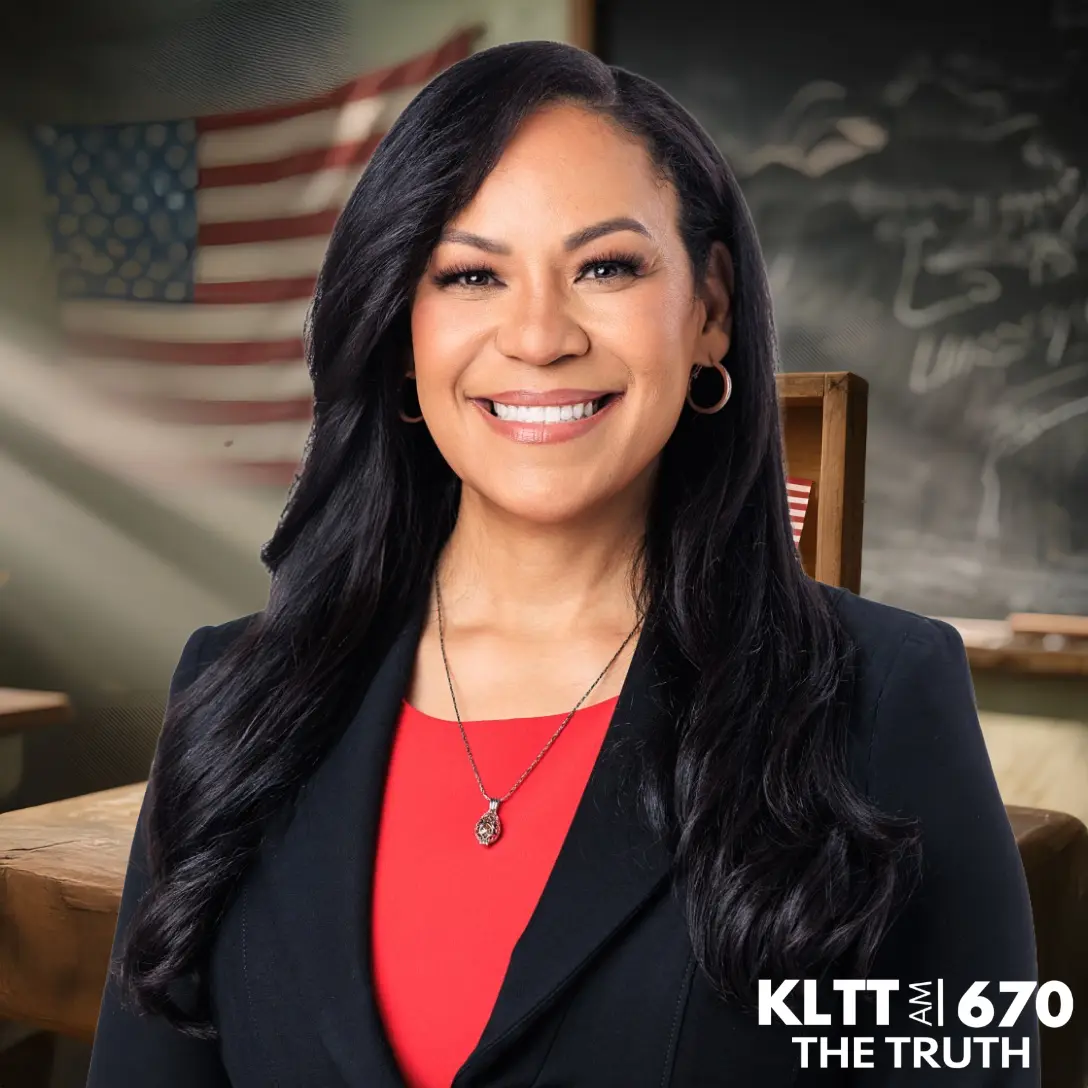
Join Priscilla Rahn as she delves into a rich conversation with Dr. Dean Foreman, the pioneering founder of John Adams Academy. In this episode, they explore the transformative power of classical education and its role in shaping virtuous, thoughtful young citizens. Emphasizing the core values and educational philosophy that underpins John Adams Academy, Dr. Foreman describes how these principles can reignite a passion for learning and civic responsibility among students.
SPEAKER 02 :
Welcome to Restoring Education in America with Priscilla Rahn. She’s a master educator and author, leading the conversation to restore the American mind through wisdom, virtue, and truth.
SPEAKER 01 :
Well, hello, everybody. Welcome to Restoring Education in America. I’m your host, Priscilla Rahn. And I’m so excited that you’ve decided to join the conversation today. You know, I love to talk about all things education. And every now and again, I meet someone who’s leading in this conversation. to restore education in America. And I’m pleased to bring my special guest to the stage today, someone who has founded a charter school, a classical school. And this is my new friend, Dr. Dean Foreman. Hi.
SPEAKER 03 :
Hi, Priscilla. It’s great to be with you. Love what you do.
SPEAKER 01 :
well i love what you’re doing and um it is such an honor to have a little bit of your time today because you are doing incredible work and you have inspired me from afar and i would love to share a little bit of your bio with the listeners So Dr. Foreman has a degree in family financial planning and counseling from Brigham Young University, a master’s degree in retirement and estate planning from the College for Financial Planning, and earned his Ph.D. from George White University in Florida. in philosophy and constitutional law. Dr. Forman served and was chair of the Roseville Joint Union High School District Governing Board. He served as board member and president for CORE Academy, and he is the founder and board chairman of John Adams Academies Incorporated. He is also the author of John Adams Academy Leading a Revolution in Education. When Dr. Foreman isn’t working at his profession or volunteering at the academy, he’s dedicated to sharing the principles of an American classical leadership education on his personal blog, Leading a Revolution in Education. The Freedoms Foundation recognized Dr. Foreman for his efforts in founding John Adams Academy, with the George Washington Honor Medal in 2012. In 2013, he was honored with the Distinguished Service Award from the Brigham Young University Alumni Association.
SPEAKER 03 :
Thank you. It’s been quite a journey. And the beauty of the journey is that it’s about children, right? It’s about American heritage and what’s happening and why we need to do that.
SPEAKER 01 :
Well, absolutely. Dr. Foreman, you’ve spent decades in education and finance and civic leadership. From your perspective, what does restoring education in America mean to you?
SPEAKER 03 :
I think restoring education comes down to going back to what I would call the classics. And what I mean by that is that We actually want our scholars to read books, old books even. And people say, why would they do that in this type of a world? Well, we believe that the great philosophers in these books shed light on all of our basic problems today. And that as we study and look at these books and read them and discuss them with others, that the origins of these difficulties can be uncovered. We’re not doing something new. We think we are, but the problems have always been the same. And they’re solved with people that have vision and virtue that know how these problems came about and how to deal with them and solve them. And so we’re creating great liberal artists, if you will.
SPEAKER 01 :
In your book, by the way, everybody needs to go to Amazon and pick up a copy of your book, Leading a Revolution in Education. It’s amazing. And you’re very transparent about your journey to having this wonderful idea, this epiphany, and actually putting action behind it. is incredibly inspiring. And I want to start with your core values chapter. It’s on page 65. And you say, when you step onto the campus of John Adams Academy, the culture we’re striving for should be felt immediately. It should feel like a place of intense focus and intellect. We want our scholars to define themselves by their knowledge, wisdom, and the ability to articulate these in written and oral argument with deep vocabularies because this is who they are becoming. And beyond academics, there are other values that we want to make part of the everyday experience. Establishment of the core values was foundational to building what would govern behavior for our community members. And I had the blessing of visiting two of your campuses. and seeing your core values and seeing them in action. And I was so inspired. Dr. Foreman, talk to me about this journey to deciding. I mean, there’s 10, there’s a lot of values, but you’ve decided on 10. And how did you grapple with them? And how did you decide which 10 you were going to focus on?
SPEAKER 03 :
Well, we started out with a mission. And the mission is to restore America’s heritage by developing servant leaders who are keepers and defenders of the principles of freedom for which our founding fathers pledged their lives, fortunes, and sacred honor. So once you know the outcome of where you wanna go, then we decided well if we’re going to restore america’s heritage and develop servant leaders then naturally the first core value would be you know appreciation of our national heritage and then if you’re going to try to reinstate those virtues you would say that public and private virtue would have to be right up there at the top and that becomes the second one and public virtue as we understand it is different from from what the founders knew it to be the founders knew it to be that i would become successful with my gifts and as i use my gifts i take it out into the community to bless others that’s public virtue so we’re we’re setting aside our maybe our self interest and making it subservient to doing something bigger for the community and the private virtue is that we have integrity of heart and soul so that we’ll do the right thing based upon the virtues of of integrity so that you know that’s just kind of how it unfolds from there but the outcome of this in number 10 is a self-government or self-governed individual that is responsible and accountable to themselves and to others they make and keep promises to self and others so they become trustworthy and reliable they’re great citizens and great souls
SPEAKER 01 :
I love the abundance mentality just because of my heritage. And it’s more to me than just money. It’s believing that you can have all that God has designed for you. And if you fulfill these 10 core values, you can live an abundant life. And I don’t want people to misconstrue that to be wealth necessarily, although that would be great, but it’s just knowing that you can have love in your life
SPEAKER 03 :
and family and that you can use your mind freely i mean how would you interpret the abundance mentality i’m glad you asked about that one that’s one of my favorite ones even though it’s number eight in the in the lineup it’s because in our culture today there seems to be this idea that if if someone wins then all the rest are losers Or if there’s only so much pie and I don’t get a piece of that pie, then I lost out. And the abundance mentality says, actually, we create, there’s an unlimited amount we can create and share with each other. And that’s because we have that virtue that I talked about, which is, and my son taught me this years ago, he said, I love knives, dad. He said, if that knife isn’t sharp, it doesn’t have virtue because it doesn’t do what it was meant to do. And so the outcome of this education is to ask people the great question or enter the great conversation. Why am I here? What are my gifts? What was I meant to do? And let’s go do it together. Let’s find the mentors and read the great classics that help us do that.
SPEAKER 01 :
If you’re just tuning in, my guest today is Dr. Dean Foreman. He’s the founder of John Adams Academies, and he is what we call power sneezing all over the U.S. with his wonderful idea, and he’s inspiring so many educators. Let’s talk about leadership and you use the word mentors. I love that. We’re not just teachers, we’re mentors and we’re supposed to be inspiring the next generation and helping them, like you said, discover themselves and to use their mind. That’s such a critical thing. But when you speak about leadership, you use it in the term of servant leadership. Can you expand a little bit more on what that looks like to you and some of the qualities of a servant leader?
SPEAKER 03 :
A great servant leader, I’ll describe it. We have a crest at our school. You probably saw that, Priscilla. Two concentric circles. And at the bottom of those circles in Latin is which means we serve, we lead, we excel in that order. A servant leader, you know, typically we see this a lot in politics. Someone, you know, pick me, pick me. I want to lead. I’m good at this. And so they immediately step up. And what this is saying, and I think what servant leadership, the core of it is, I use my gifts to bless others. When others notice my gifts, they naturally come to me and say, would you help us do this? Because you’re really good at this. And then you step forward and you help. And they may recognize you as a leader. They may not, too. But usually they will. And that’s how you excel. So you first serve them. then you’re asked to lead, and then you excel. In other words, it isn’t a self-appointment thing. I think I wanna be president today. I’m gonna appoint myself as that. And that’s kind of like, I don’t think so. I think we need to see what you do and then we’ll call you out to serve others. Does that make sense?
SPEAKER 01 :
Absolutely. One of the beautiful things that your students do every single morning is they have a flag ceremony. And I remember growing up, I was born in New York City. And believe it or not, at that time, we actually did the pledge every morning. And I remember singing two songs, two patriotic songs. And I learned all of the traditional songs. We don’t do that in public school anymore. I’ve been in education 32 years. I can’t tell you the last time. I heard the principal come on the intercom and say, OK, kids, we’re going to stand up and say the pledge. In fact, if you come to my middle school where I teach. you’d be hard pressed to find an American flag in a classroom. I know there’s one classroom that has an American flag and it’s mine, but you’ll find other kinds of flags in the building. So why was that important to you when you were creating your school to have the students, they don’t just do it once a week or once a month. They do it every single morning with a quote and with a song or two. Why was that important for you?
SPEAKER 03 :
The importance of it is to help them once again focus. And we want them to become patriots. People say, what do you teach at that school? Well, we actually teach them to like America for crying out loud. because our birth certificate of the Declaration of Independence lays down something that all men are created equal, that they are endowed equally with the attributes and with the inalienable rights of life, liberty, and the pursuit of happiness. Those are profound truths, and we want them to reflect on those every day. What that does is that When you first learn about something, you kind of, if you love an idea, you kind of pilgrim it a little bit. You try it on. And then you maybe pioneer it a little bit by seeing where it goes and how it fits. And you try it out a little bit more. And then by building something around that idea with your virtues or your gifts, then you create something that is worthy to protect as a hero. So you go from a a pilgrim to a pioneer to a hero to a patriot and that word patriot if you think about it is it’s a father a potter and a father is a protector of his family and of his country and that’s designed uh purposefully so when we get them together we want them to Recite a core value, why it means so much, a quote. And music has a great ability to resonate in the soul. In other words, my wife says it this way. She says, the virtue of the… Arts, she says, is to tame mankind. And it’s kind of like the, if you will, the cement that brings everything together. And that’s what that morning is meant to do, is to start the morning going back to our roots and saying, this is why we’re here.
SPEAKER 01 :
I want my listeners to catch what you said when you use the word pater, the Latin, and about fatherhood. And that’s who I learned how to be patriotic from was my father. My father served our great nation in the army for 30 years. And, you know, when I think about how we have about, what, 50 percent of marriages end in divorce and we have a lot of fatherless homes. And when I look at my students, especially for me, who teaches in a city school, a lot of in the black and brown communities, we have more fatherless homes. And it’s no wonder when I say, OK, guys, we’re going to stand and say the pledge. And sometimes they’ll say, I’m not I don’t want to stand because they hear things on the news and they’re learning, as you said, not to really love our country. And I think it goes back to the fact that we’re missing our fathers. If we had our fathers in the home who were in their rightful place, that God has ordained them to be the head of the home, to really bring their families together, then a lot of those other things. things will come into place to bring those traits of loving our country and being patriotic. Because who doesn’t love watching the Olympics? When I watch the Olympics and I see these other countries who get the gold and they’re standing with so much pride and they don’t have a reputation of, burning their country flags and hating their country. And I just, it just blows my mind that we live in a country where that’s okay. And that’s kind of become the normal. We sit down for the national anthem and we, we just think we take it for granted. In other words.
SPEAKER 03 :
Yeah. I mean, that’s so profound. If you want to heal America. Yeah. Go heal the home. And again, empower the fathers to take responsibility where they should be at. And that’s in the home as the protector. And I think a lot of things have contributed in our culture to taking that away. This probably won’t cover that at this time. That’s for another conversation. But if you want to fix homes, yeah, start with dad.
SPEAKER 01 :
Now, Dr. Foreman, you have three campuses in California, but you weren’t satisfied. You said, let’s expand this. You are expanding your borders, which I think is amazing. Here in Colorado and Douglas County, where I live, there’s a new John Adams Academy starting in the fall, and you have created a Lyceum for other schools to learn and take on your curriculum. which I’m particularly excited about. There are people who have misconceptions about classical schools. So first, can you describe in your own words, what’s a classical education and why John Adams?
SPEAKER 03 :
Yes. Classical education is hearkening back to the philosophers of Greece and Rome and so that we can learn from their great philosophers and others, whether it’s Plato, Socrates, and Aristotle. And how that relates to John Adams is that when we sit down with our scholars, we do read books, as I mentioned at the outset, but we also discuss them and write about those great ideas. And that’s in Socratic fashion, as we call it. In other words, you want to come to class with a great question or two as a teacher or a mentor and to have them wrestle with it a little bit. You know, like, who is sovereign in our government today? Why are we here? Why are you here? As you start to do this, that’s what classical education is meant to do, is to solve those bigger questions that we need to wrestle with. Ideas matter. For instance, my mentor came to me early in my PhD program and he said, what have you done today for your grandchildren? I didn’t have any grandchildren. I thought, what kind of question is that? and he said you need to start thinking generationally if you want something to endure and that’s what the founding fathers laid down was something that would endure they identified the principles that i we talked about in the declaration and then they implemented it with the constitution to put a fence around those principles to execute them and so classical education just simply as taking the principles of virtue that you find in this great literature and using them today to solve problems.
SPEAKER 01 :
Well, we definitely need nicer people in the world who are more virtuous and kinder, you know, looking at the lay of the land. There’s so many discipline issues. And I think that’s a misconception that people might have about a public charter school, that all the kids are perfect and they’re all scoring at the highest, highest percentile. You know, kids are kids. And especially when you’re trying to change a culture. When you’re competing with the social culture and then they’re coming to school and you’re creating a different environment where you’re growing them. Now, you know, for people who don’t know, the frontal lobe doesn’t fully develop until you’re 27 or 28. So when you’re teaching middle schoolers and high schoolers, no matter if they’re in a private school, regular public school or charter classical school. they’re still struggling with a lot of those biological issues, those relationship issues, and they’re coming with all of this baggage that you’re trying to teach them. And I’ve, I know that there’s this misconception as someone who was formerly active in the teacher’s union, you know, we were told charters are bad, you know, and, you know, they’re doing all of these things are making millions of dollars off the backs of kids, which is such a misconception and not true. Quite, quite frankly. Um, When people come to you and they say, well, your kids at your school are performing at the same academic rate as kids at a public school, you know, what’s different? How do you respond to that type of question for your school?
SPEAKER 03 :
You know, when you think about it, public charter schools and what they are doing, it’s actually the legalization of freedom for crying out loud. I know it seems crazy, but we live in a society that’s supposed to be free. Why wouldn’t we let people be able to get their education where they can find freedom that will help them execute their mission or their virtues and how to do it? And I remember there was a Democratic legislator in California about 20 years ago. And I went to a conference and she was there and she said that charter schools and education is the greatest civil rights issue of our time. And I remember hearing that and I thought, wow. And as I let it sink in, it was an epiphany of sorts. And I thought, I believe that’s true. And the reason I believe it’s true, it’s because we don’t have the choice around the country yet that we should have to empower parents to take their kids where they want to. And by doing that, giving them vouchers and things, they can then use those vouchers to go to the education that will fulfill their what they believe education should be. It’s kind of like a declaration of independence that we had with our country, except it’s a declaration of educational independence. I’m thinking that’s what we need. We need to declare independence educationally so that when this long train of abuses that Jefferson used in his, you know, message of the declaration becomes so widespread, insurmountable or, you know, you just can’t put up with it any longer. Parents need to get together and do this. That’s why I wrote the book. I thought I need to empower parents to do what I did. I’m not about I’m not going to try to hide it. I’m going to try to empower them. I’m not going to own the school. We did this philanthropically. I’m just going to try to help them get their communities and education where it needs to be.
SPEAKER 01 :
Well, Dr. Foreman, you’re definitely walking the walk. And when we look at standardized tests, right, and we see what is the government telling us that kids are supposed to know, it’s not the things that you’re teaching at John Adams Academy. how to love our country, how to be virtuous, how to think, how to be servant leaders. Those things, surprisingly, are not on the standardized test. So it’s not comparing apples to apples when we’re looking at your model versus the public school model. And then when we look at the federal government’s audit I mean, they’re doing a very dismal job. And I don’t think that education coming from D.C. is helping our students locally. You’ve been on a school board. You understand the power of local governance and decision making. The decisions closest to the children and to the parents are the best decisions ever. And I know that with your model, you’re elevating parents and parents are accountable and parents need to read with their kids and parents are expected to build a library. I’ve been building my library, Dr. Foreman. You should be proud of me.
SPEAKER 03 :
I’ve been reading those. I can see those in the background. I especially like the picture of Frederick Douglass there. He’s a hero.
SPEAKER 01 :
Yeah, he’s such a hero. And you know what? These are individuals like Booker T. Washington, Frederick Douglass that we really weren’t taught when I was growing up. These are individuals I started studying as an adult. And as I’ve been grappling with what’s going on with our public education system, why can’t we get it right? But, you know, let’s talk about the faith element in these last few minutes that we have together and why that’s so important, because some people will say, is it classical? Is it Christian? Or how do you fuse the two? Where does the Bible and our founding fathers come into this conversation when you’re talking about classical, if you’re a Christian as well?
SPEAKER 03 :
Well, I think it came together, Aristotle is probably one of the greatest educators of all time. And he wrote a book, several books on science and politics and ethics and so forth. But those ideas that he laid down and probably the greatest ideas, what is happiness and what does it take to be happy? And so when I walk around the campus, I ask the kids, are you happy? Why? But those ideas then were, if you will, put down and collected over the millennia and brought together, quite frankly, by a lot of schools that followed this idea archetype, if you will, of Aristotle. And those were traditionally Christian, great Christian fathers of the Catholic Church that protected that type of learning and brought it forward. But at times that church also didn’t allow for the freedom to learn. In other words, up until the 15th century, it was illegal to have a Bible in English that you could read in the United Kingdom. And there were great people that came forward To sacrifice their lives to do that. And so those struggles brought together this type of education and pushed it forward. And it’s been the type of education, quite frankly, that educated the aristocracy of the UK and Europe. and so forth. And Jefferson said this, and I think it was one of the most profound things. He said, in America, we would have a natural aristocracy, not one on birth or wealth, but one based on learning and education. And I thought that’s the beauty of this. You see how America took all the best of these traditions and then brought out the opportunity for everyone to get education. That’s the primary virtue of democracy is education.
SPEAKER 01 :
Well, Dr. Foreman, thank you so much. I’m looking at the time and we have to land our plane and I appreciate the time with you. To my listeners, thanks for tuning in and catch me next time. And remember, educating the mind without the heart is no education. So seek wisdom, cultivate virtue and speak truth.
SPEAKER 02 :
Thanks for tuning in to Restoring Education in America with Priscilla Rahn. Visit PriscillaRahn.com to connect or learn how you can sponsor future episodes to keep this message of faith, freedom, and education on the air.


