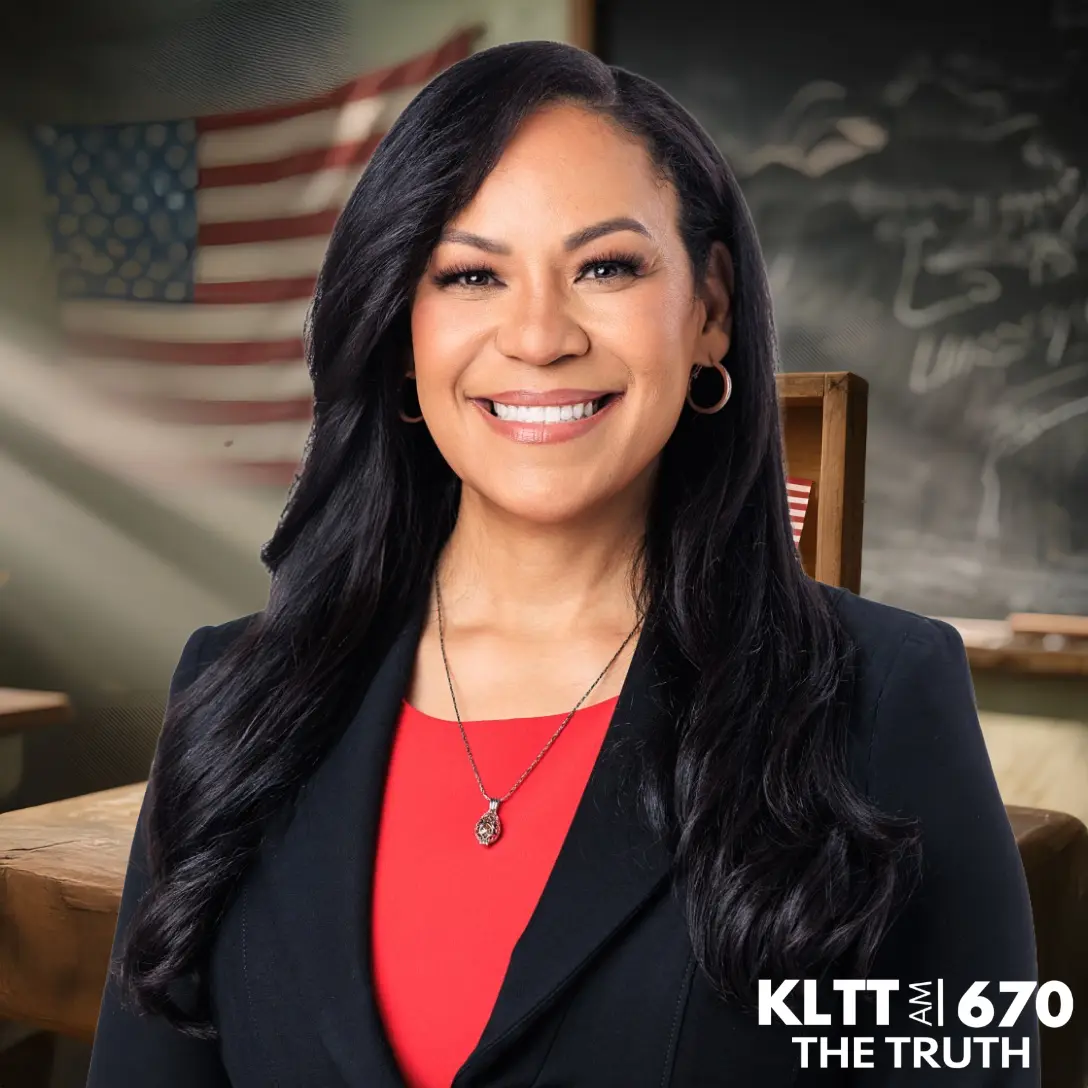

Join Priscilla Rahn in this enlightening episode of Restoring Education in America as she welcomes Dr. Thomas Tucker, Deputy Commissioner of the Kentucky Department of Education. They discuss the timely subject of school choice and introduce Excalibur Classical Academy as a new option for parents in Colorado. Dr. Tucker shares his passion and insights from his extensive 36-year career in education, reflecting on his personal journey and the impact of dedicated teachers and administrators in shaping students’ futures.
SPEAKER 01 :
Welcome to Restoring Education in America with Priscilla Rahn. She’s a master educator and author leading the conversation to restore the American mind through wisdom, virtue, and truth.
SPEAKER 02 :
Well, hello, everybody. Welcome to Restoring Education in America. I’m your host, Priscilla Rahn, and I am so thrilled that you’ve decided to join the conversation today. We are right in the middle of school choice time. Parents are looking for great options for their children. And one of the options I’d love for you to take a look at is my new private classical school that is opening this fall in the Centennial Colorado area. It’s called Excalibur Classical Academy, and their mission and vision is restoring America’s heritage by developing servant leaders who are keepers and defenders of the principles of freedom for which our founding fathers pledged their lives, fortunes, and sacred honor. So if you have a young child that’s starting kindergarten through third grade, please go to their website to learn more. It’s Excalibur classical academy.org. And I would love to tell you a little bit more about the curriculum and give you a tour of the school. Well, you know, I believe in choice, whether it’s public school, private charter, homeschool, classical, whatever school choice options there are out there. I believe that parents are the first educators of their children. And I love having conversations with people in the education space and And I am so excited to bring my special guest to the stage today. Welcome, Dr. Thomas Tucker. Hello.
SPEAKER 03 :
Hello. Hello. How are you? Such an honor to be on your show, your podcast today, Restoring Education in America. And congratulations to you on your upcoming retirement and your new appointment. I know you’re going to do a phenomenal job at your classical school.
SPEAKER 02 :
Well, Dr. Tucker, thank you so much for that warm welcome. And I am looking forward to our conversation today. But before we get going, I’m going to share a little bit of your bio with our listeners. So Dr. Thomas Tucker serves as Deputy Commissioner and Chief Equity Officer for the Kentucky Department of Education. With more than 36 years in public education, he has served as a teacher, assistant principal, principal director of secondary curriculum, and superintendent. Dr. Tucker is a two-time national superintendent of the year in 2013 and 2016, and is recognized for his leadership in advancing educational equity, school finance, and community partnerships. He holds a doctorate and a master’s degree from the Ohio State University and a bachelor’s degree from Philander Smith College. And thank you again for carving out a few minutes of your day. But we know your most important job is husband and father. I always like to acknowledge you have all these hats, but your most important hat is a family man. So how is the family doing these days?
SPEAKER 03 :
My family is doing great. My three older kids have either graduated, finished grad school. One has finished his bachelor’s degree from The Ohio State University, one of my alma maters. And my youngest daughter will be graduating from the University of Kentucky next month. And my baby boy, my baby boy. will be graduating from high school and heading to Capital University locally in Columbus. So just extremely excited. My wife has retired and looking forward to getting back in the profession.
SPEAKER 02 :
Well, congratulations on that. And that speaks a lot about you as the head of your home, which we definitely honor. I love to honor dads who are so committed to their families. And how we met is because you were the amazing superintendent when my stepson was going to school in Douglas County. And he received a wonderful education and he is now in college and you were part of his journey. And I will say like every time I reached out to you, you were so responsive and very, very helpful. And as a parent, I can say that was valuable to have such a great response and relationship with my superintendent. So thank you for everything that you did for my stepson.
SPEAKER 03 :
Absolutely. Enjoyed the students, the parents and community immensely in Douglas County. Certainly one of the most memorable places I’ve had to serve and just a great opportunity. And I always look forward to getting back to Colorado. I’m generally in Colorado, Colorado about three times a year.
SPEAKER 02 :
So, Dr. Tucker, take us all the way back. What propelled you into the education field and what did you teach when you were a teacher?
SPEAKER 03 :
Well, I always knew from a very young age that I wanted to teach. Being the youngest of 11 kids, one would think the older kids played school with me. I actually pulled them in, or my parents in, to play school with me. So I knew I was going to teach something. Didn’t know what. I think I got the love of teaching from my grandparents. My grandparents were really brave, brave teachers in terms of living in the Deep South, not having access to formal education. But having the commitment to be self-taught and to teach others both the ability to count numeracy and to read. I mean, the two most important things one needed to know. But also being small entrepreneurs, many of the folks down south were either farmers or sharecroppers. And so my grandparents taught people how to read. not only just farm, but also how to sell their cotton and their beans and so forth. So I think it really started with that. And that really built my love of learning. In August 15th, 1989, I began my year as a professional educator in Topeka, Kansas. And it was the greatest experience I ever had. I was really conflicted. As an undergrad, I had a full-ride pre-med scholarship. And I teased people. I said, I had a higher GPA as a pre-med student than I did as an English student. And so after a lot of soul searching, I really had to ask myself, how could I make the biggest impact on the most people? And how could I pay homage to the people who really improved and saved my life. And so I decided to become a classroom teacher, an English teacher at that. And so I have not looked back. No regrets.
SPEAKER 02 :
That is so awesome. So, you know, a lot of teachers, they come to that point where they decide I’m going to stay in the classroom and be an English teacher my entire career. But you decided you wanted to branch out into administration. What was that journey like for you?
SPEAKER 03 :
Well, that was not my original intent. Someone came and tapped me on my shoulder. My principal tapped me on my shoulder and said, hey, Thomas, I think you would be a phenomenal teacher. Although you are a young teacher, I think you have some qualities that can really help to improve a school system. Said, you know, you’ve only been a teacher for three years now. We have veteran teachers really looking up to you and looking up to your leadership. Families follow you. You know, you’re a wonderful communicator. And so it really started again back in Topeka, Kansas, in my third year of teaching when my principal, Ralph Clark, said to me, Thomas, you really should consider a career in administration. My most heartfelt job is being a classroom teacher. Make no mistake about it. When people ask me what I do, I don’t say that, you know, I didn’t say I was a superintendent. I didn’t say I was a principal. Didn’t say I was an assistant principal. Director of curriculum, or even now as deputy commissioner of education and number 2 person in Kentucky. I don’t say that. I always say, and I always start out that I’m a teacher. Then eventually I talk about some specific opportunities. I have specific roles.
SPEAKER 02 :
Yeah, I think there’s a sense of pride in saying we’re educators. There’s something really special about that. And I know when I stepped out of the classroom for a while to be a principal, and now I’m stepping back into that headmaster role this fall. It’s like, I’m still an educator. I want people to know that I understand what it takes to be in the classroom and that day-to-day, the grind. It’s so different. It’s a different job. So what are some things you’ve learned as an administrator today Give me some advice. With all your wisdom going forward in this day and age, what advice would you give me?
SPEAKER 03 :
Well, Priscilla, after reading your book till the pages started falling apart, wow, what an inspiring book. It is an inspiring book for educators at different levels and in different roles. I don’t know how much more I can give you because probably some of the things I’ll give you, you’ll see that you really talked about them in your book. I think the two most important things. One, know why you entered this wonderful, noble profession. And that was simple for me to improve and save lives. And every day as an educator, I want to say I help to improve and help to save lives of students and staff. Many times we forget the importance of our staff, our teachers, our support staff, you know, our classified staff. Those are the folks who stir the drink. Make no mistake, that’s where the action happens. And that’s probably why being in the classroom with you being able to take on administrative roles are seamless for you because you’ve been in the trenches and you know the importance of that you know the impact that you make each day in the lives of students and then the second thing is what is it i stand for what are some of those things that okay i can i’m willing to negotiate and what are some of those things i am not willing to negotiate even to the point i’m willing to get fired It’s my integrity. You know, people can say a lot of great things about me. I’m sure there are a few that will say, I don’t know. But I’ll tell you one thing. They all every person will say this man lives and he walks with integrity. I will not do any harm to students and staff. I’ve never done any harm to students and staff. Just one of it means walking away from a job. I’m willing to do that. And I think you give that challenge. I think there’s a clarion call as well in your book, Restoring Education. In America, you know what you stand for. And so I’m just really proud that you were able to highlight that in your book. And so that’s how I walk in this profession. You know, I know my why and my integrity is not my great integrity is not for sale.
SPEAKER 02 :
That is beautiful. I agree 100% that we need to understand our why. That’s something we talk about a lot in education. It’s like, why are you here? Because if you don’t understand your why, you can get caught up in so many different things and get discouraged and get burned out. And I know for me, that’s the thing that gets me up every day are my students. because of, like you said, we have children that come from all different life situations, especially in public education. We just love whoever comes to the door and they come in and you have this big responsibility to make them better, better humans, better thinkers, better learners, better citizens, better at everything that they can become and to pursue, in my mind, the American dream. Like, what is it…
SPEAKER 03 :
that you’re passionate about and how can i mentor you to obtaining that dream and that is so true regardless of their background regardless of their ethnic background regardless of the religious background and regardless of the socioeconomic social economic status something again that you did a wonderful masterful job of pointing out in your your wonderful book
SPEAKER 02 :
Well, thank you. Now, I know we’ve talked online and you had some comments that you want to share. Listen, I have so much respect for you, Dr. Tucker, you know, and you have accomplished so many amazing things. And so I would love your feedback, you know, anything you want to say. Absolutely.
SPEAKER 03 :
I am a voracious reader. I’m well-read and I don’t say that to pat myself on the back because I wanna know and learn as much as I can. I think each day is an opportunity to learn. When I look at your highly effective book, I mean, it really touches my heart and warms my heart. Not all because I know you, but the content of it and the lenses for which you’re able to write. I mean, I can hear your passion. So let’s get back to the lenses. One can look at your book as an educator, at any level, as an ethnic diverse person, as a devout Christian, as a conservative, as a liberal, regardless of your political persuasion. And it’s the first time I’ve read a book from an author who is an unapologetic Christian and conservative who works in the public space and that’s able to articulate some fundamental and core values. that all students, again, regardless of their ethnicity, regardless of their socioeconomic status, regardless of the religion, whatever status, can take and learn. And that’s not just for students, that’s for staff. So a wonderful piece. Several chapters, several of the 18 chapters, as I said, the book is falling apart. I’ll point real quickly to chapter one. You talk about father figures, the foundation of every classroom. I 100% agree with it, in addition to mothers as well. But being a man, being someone who identifies as an African-American male, you nailed it. And I know you’re also articulating your experiences of being the daughter of an African-American male. I mean, again, that’s another lens that you wrote this book. So many, just so many ways that this book really touched me personally and professionally. One, as a father, I 100% agree that children have to have their fathers involved. And I’m going to be biased, especially in the Black community. We have to be involved in our children. But I also want to point out that in a CDC study and other studies, it shows that Black fathers are highly involved in their children’s lives, whether they’re residents or non-residents, meaning they live in a home or not, regardless again, of their residential status, they’re more involved than any other male ethnic group. So I definitely want to point that out, and I want to thank you for bringing that to the forefront, but also an opportunity to celebrate the involvement of Black men in their children’s lives, not so much because it demystifies this false narrative out there, but what it also does, it talks about the importance of Black men being in their homes. Then also, and lastly, chapter 15, meritocracy. Thank you for giving teachers strategies to help kids understand meritocracy. Things should not be given to kids. They should be involved in collective struggle. Make no mistake about it. And we need to, as you talk about the hidden curriculum, I think meritocracy is part of that hidden curriculum. But given our current political climate, we have to help kids understand whether they’re wealthy or they come from backgrounds that are challenged financially, what meritocracy really means. And sometimes, and not be afraid to say, sometimes the educated and the wealthy have a leg up and that children from tough backgrounds, from certain ethnicities need to understand meritocracy. And we as educators need to understand it’s not just for them to go out and understand it. It is our job to teach them and teach them about the challenges to it as well.
SPEAKER 02 :
Very good. Dr. Tucker. See, I knew having you on, I was going to get educated and encouraged today. And I am.
SPEAKER 03 :
You’re educating me. Again, I’m blown away. The best education piece I’ve read in the last 10 years.
SPEAKER 02 :
Well, thank you. And I have to say, because I’m a music educator, I am not a literacy English teacher, although I did love my English teachers. And I was sitting on these concepts because after three decades, right, I’m thinking, why can’t we figure this out in education? Why do we still have this education gap? Why do we still have an economic gap? What aren’t we figuring out? And I just felt like there were some little things that we had gotten away from in public education that I felt like if we could get back to some of these practices, we could help turn this Titanic. And I hesitated on whether or not to write the book at all because I thought I’d be judged. I don’t have a PhD. I’m not associated with some big education company. And so that was going through my mind. And then I thought, no, Priscilla, what would you say to one of your students who had an idea and a thought? You would say, you should go for it. Like, do it. If it’s in you to write and you have this concept, yeah. You should go for it. And I thought, well, people write books all the time. You go on Amazon and people self-publish. Priscilla, you can figure it out. And I did pitch my book to a publisher. And I don’t know if I’ve told anybody this publicly, but they’re a great publisher, but they wanted to charge me like $60,000 to publish. And it would take eight to 12 months. And I thought, first of all, I don’t have that money tree in the backyard. Second of all, I don’t want to wait eight to 12 months to get this product out. My goal was to have it out by the time the 2025-26 school year started. So I did what I do best. I said, be resourceful, go figure it out. So I went online and Googled, like, how to self-publish a book online. how to edit, how to do all of these, how to create a book cover. I had to go to AI. I had this concept to help design because I’m not a designer. So, you know, I had to also then figure out how to upload it to Amazon KDP. So there was like all of these steps. And then I thought, you know what? It’s not perfect. Don’t let the perfect be the enemy of the good. get it out. And if people judge you, I’ll say, well, where’s your book? Did you write a book? You can judge my book, but at least I wrote a book. So this is my heart and soul. 18 chapters meant to be read one chapter a week in a semester. So a teacher could in their lunch break, spend 15, 20 minutes, get an idea, do the reflective questions at the end and then change their practice that day. So that’s how I designed it.
SPEAKER 03 :
You nailed it. I mean, I’m just, again, I’m impressed.
SPEAKER 02 :
Well, thank you. So Dr. Tucker, going to that whole conversation of the education gap, when we look at history, I had someone on my show earlier talking about Rosenwald schools, and I had never learned about Rosenwald schools until like this past year. I did a little more research, found out my dad went to a Rosenwald school in King Street, South Carolina. And for my listeners, you don’t know what a Rosenwald school is. There’s a gentleman named Mr. Rosenwald, who was the CEO and president of Sears Roebuck, got together with Booker T. Washington. And they together they built about 5000 Rosenwald schools across the South where black children can go to after slaves were emancipated. The beautiful thing about the Rosenwald schools was even though Rosenwald wanted to pay for 100 percent of the schools, Booker T. Washington said, oh, no, I think that’s a bad idea. I think you should let us have some skin in the game. Let the communities put some money into it and we will build physically build the schools. And there was so much buy in and so many children were successful. And then we look at what was intended to be a good thing in the 60s. and integration of Black children into white schools. And then we started seeing a decline. A lot of the Black folks I know in education who were in that cusp where they were going to a neighborhood school and then they were forced or bused into a different school where they stopped loving the school. They said they had bad experiences. There were kids and teachers who didn’t want them there. And so we started seeing this decline. But I want this show to be hopeful in your mind. What do you think it will take for us to get back to where kids in the black community love going to school? They’re learning, they’re achieving. What can we do?
SPEAKER 03 :
Well, first and foremost, I will say that all educators, especially our teachers, are better trained now than they’ve ever been in the history of public education. Our folks are working extremely hard. Our teachers and principals like you, you’re working extremely hard. You’re giving your all each day. You’re coming home tired. You’re not leaving anything at home. And although our public school population is dropping across the country for various reasons, like lower birth rates and so on and so forth, parents are not keeping their best kids at home and putting them in closets and sitting out there, least desirable kids. Parents are sending each child that they have to our public schools. And our folks are working extremely hard. Are there challenges? Absolutely. The challenges, Priscilla, and to your listeners that we’re facing, they happen. Before COVID, I had the pleasure of being in Douglas County right at the very start of COVID. And because we had a singular focus in 2019, we had just come off, crossed the line in passing an operating levy and a bond, which had not been done, I think, for 14 years. We were unified. All of our differences came to supporting that. And so when COVID hit initially, we were on the same page. We were able to pivot. In fact, the National Magazine highlighted how quickly Douglas County School District was able to make that adjustment. So I start first and foremost with what needs to happen. We need to have a unified focus and that focus has to be on children. What I’ve seen, especially the last 20 years that I’ve been in administration, administrators have had to really fight these true warriors, true administrator warriors had to fight to keep the focus on children. So what can we do as a nation to keep the focus on children? Certainly teachers matter. Next to parents, teachers, highly effective teachers have the biggest influence on the outcomes of students. But how can we get back to our focus on students and really focus on what’s really needed? We’re looking at vibrant learning experiences. You talk about those things. How do we engage? How do we increase curiosity? They’re not going to learn and participate in things that they’re not interested in. So more vibrant learning opportunities, opening up opportunities for all. Also ensuring we rethink innovation. I know you talked a little bit about, you know, career technical education. That’s important.
SPEAKER 02 :
This is why I’ve become more of a proponent of school choice for parents and really just removing as many barriers from parents. If they love their neighborhood school, great. If they’re like, this school is not meeting the needs of my child, then… We should be able to offer children when you say children first and helping kids that like our why. I think for me, I became so attached to one model of teaching for so long that I was missing the whole point, which was the kids and meeting their specific needs. And it’s not an easy problem to solve, but we need to make sure parents know that they’re empowered to make that choice.
SPEAKER 03 :
And what you just talked about, you have to be fearless and you have to be almost willing to lose your job to fight for choice for children. Thousands upon thousands of children I’ve helped to lead as a teacher and as administrator, they deserve the best education. And if my school, my public school, neighborhood school or what have you is not delivering that they need to, they need to be somewhere where they can be successful. But we’ve come to a point now, again, a whole nother episode that you got to fight for that. And you have to be willing to lose your job because when we make all these decisions about adults, it becomes us against them. And the principal and the superintendent has to make a choice. And that’s what I’m seeing so much. It really bothers me deeply that I’m seeing so much at the district level, at the local level, that you have to make a choice. And I’m always going to choose my students and my staff, always.
SPEAKER 02 :
Well, and I know you did that. I watched you firsthand prioritize kids. Well, we are so beyond our time. We’ve got to land our plane, Dr. Tucker, but I have thoroughly enjoyed talking with you and- Learning from you. We’ll have to have you back on again.
SPEAKER 03 :
I look forward to it. Look forward to it and continue. Priscilla, I say to you, good luck in your next your next calling. As you said, this is a calling. I know you’re going to do wonderful and keep a good balance in your life. It is so difficult. And remember your why. Keep God first as you do. You know, we just wrapped up Lenten season and just celebrated Easter. And I’m so renewed about my about keeping balance in my life. You know, you think about your family, but also your religion and then give back. Another thing, see, I’m telling you whole books or folks haven’t read the book. I’ve given you the all 18 chapters, keeping balance in your life and giving back. You know, I want to lastly thank you for your support as I am working to pay it forward. I shouldn’t say give back, pay it forward. back in my small hamlet in Arkansas, the birthplace of Sister Rosetta Tharpe and the initiative we have there to erect a statue and plaza in her honor. And again, thanks for your support. Being a musician as well as your husband, thank you all for your support.
SPEAKER 02 :
Dr. Thomas Tucker. He is the deputy commissioner in Kentucky Department of Education. Thanks again. And to my listeners, thank you so much for tuning in and catch me next time. And remember, educating the mind without the heart is no education. So seek wisdom, cultivate virtue and speak truth.
SPEAKER 01 :
Thanks for tuning in to Restoring Education in America with Priscilla Rahn. Visit PriscillaRahn.com to connect or learn how you can sponsor future episodes to keep this message of faith, freedom, and education on the air.