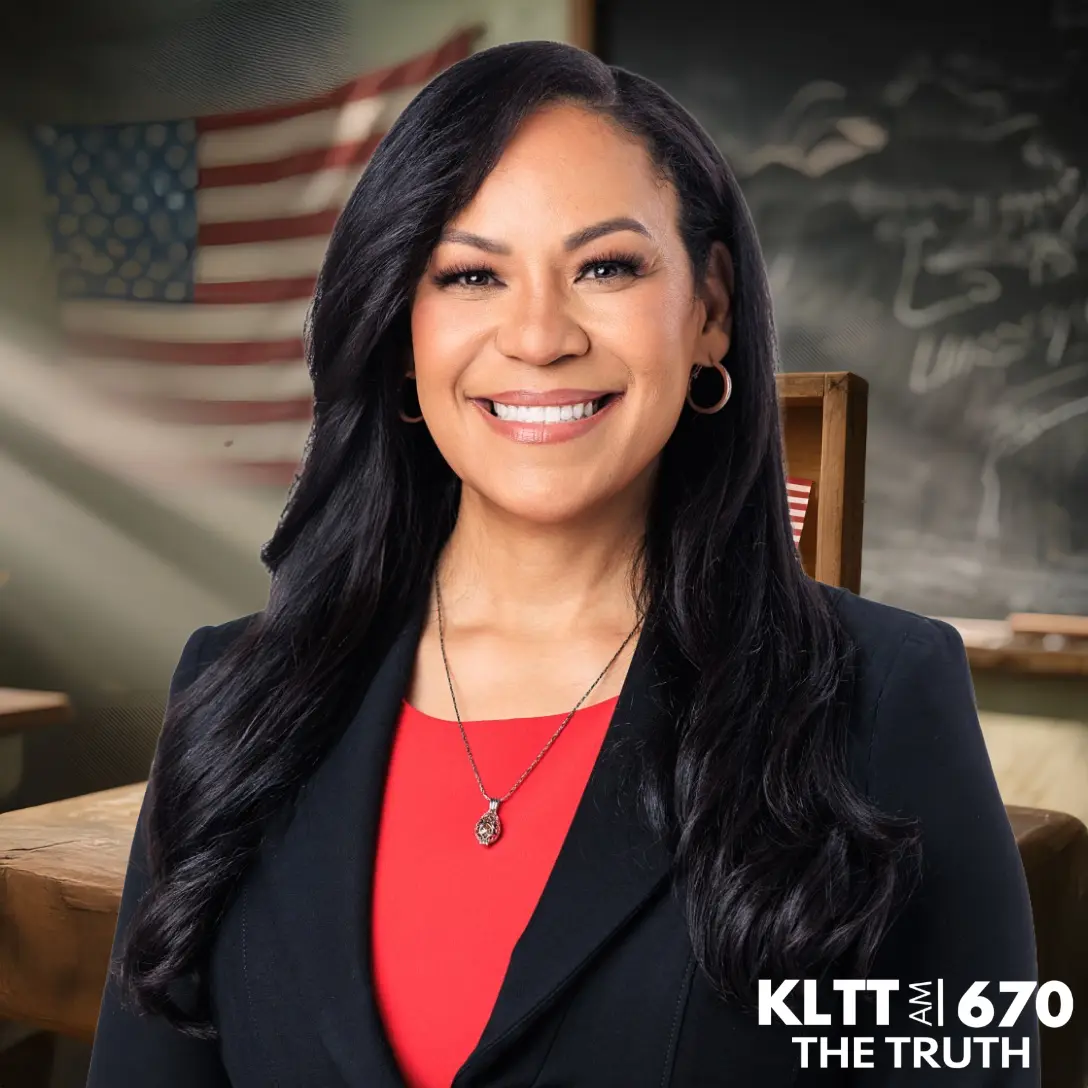
In this enlightening episode, Priscilla Ron sits down with Senator Mark Baisley to discuss pivotal issues in American education. Together, they explore the dynamic topic of school choice, advocating for a system that champions freedom and localized control. Senator Baisley shares his insights on the role of the free market and how it can revolutionize education to benefit students, parents, and communities alike.
SPEAKER 02 :
Welcome to Restoring Education in America with Priscilla Ron. She’s a master educator and author leading the conversation to restore the American mind through wisdom, virtue, and truth.
SPEAKER 01 :
Well, hello, everybody. Welcome to Restoring Education in America. I’m your host, Priscilla Ron, and I am so thrilled that you’ve decided to listen in on today’s show. It’s a wonderful year. It’s starting out great. And, you know, right now is springtime. School choice time. Parents across Colorado are taking a look at where they’re going to send their children to school in the fall. And I’m pleased to announce that there’s a new school that’s opening this fall. It’s called Excalibur Classical Academy. And they are a private school that’s opening in the Centennial area. And their mission and vision is to restore America’s heritage by developing servant leaders who are keepers and defenders of the principles of freedom for which our founding fathers pledged their lives, fortunes and sacred honor. So if you’d like to learn more about Excalibur Classical Academy, please go to their website at Excalibur Classical Academy dot org. Now, I’m excited to have a conversation with my next guest because he is no stranger to education in Colorado. I’m going to bring my friend to the stage, Senator Mark Baisley. Hi, Senator.
SPEAKER 03 :
Hi, Priscilla. One of my favorite people in the whole wide world.
SPEAKER 01 :
Oh, well, ditto. We’ve had many, many conversations and I met you when I was the vice chair of the state party and you were my state rep.
SPEAKER 03 :
How about that?
SPEAKER 01 :
I was so pleased to be able to stand on the street and hold signs for you and vote for you. And, um, You are now a state senator, but we’ve had many conversations about education. But before we get into that conversation, I’m going to share a little bit of your bio with the listeners. Mark Baisley is president of Slipglass Incorporated, a Colorado software company. The Slipped Glass Interactive Systems Visualization Technology is the culmination of Baisley’s long career as an aerospace engineer with Martin Marietta, Hughes, Raytheon, and NASA’s Jet Propulsion Laboratory. Baisley received a commendation from Ambassador Cooper for his work on the Ballistic Missile Defense Initiative and was awarded the Professional Achievement Award from his alma mater, Columbia College, where he served for 12 years on the board of trustees after earning his bachelor’s degree with majors in computer information systems and business administration. Baisley served as chairman of the Colorado Space Business Roundtable. In 2018, Mark Baisley was elected to the Colorado State House of Representatives. And in 2022, he was elected to the Colorado State Senate, where he serves today. Baisley has received 31 conservative awards and is rated as the most conservative state senator by Liberty Scorecard. and the Colorado Union of Taxpayers. He’s now running for U.S. Senate, but his most important job is husband to the amazing Marianne, dad and grandpa. Mm-hmm. So, Senator, I always love to ask grandparents this question. What do your grandkids call you?
SPEAKER 03 :
Papa or Papa Mark. And so there was a designation Papa Mark as opposed to Marianne’s dad, who was always Papa George. And so when I Marianne and I started having grandkids, then they started calling me Papa Mark. It’s my because our kids would call her dad Papa George. So. Yep. Papa Mark.
SPEAKER 01 :
Well, I love it. And it’s one of my favorite things to ask grandparents because they’re so unique. So Senator Baisley, in addition to your background in aerospace and technology, you served on the Colorado Education Committee. What did that experience show you about the real challenges facing our schools?
SPEAKER 03 :
You know, you spark a memory that I’ll never never ever forget. It was my very 1st committee hearing as a state legislator. So, this is January of 2019. I just gotten sworn in as a state representative. I walk into the committee room is the 1st time that I got to sit up on the big people seats, you know, from the dice. And so I’m picking a seat, hoping I’m not choosing somebody else’s favorite seat that have been there longer than me. The union guy who kind of hovered around the capital all the time, he comes up to me and hands me an envelope, has my name printed nicely on the front. And I go, what’s this Nate? And he goes, he says, well, this is an invitation to come across the street to the headquarters for CEA. And we just want to have a meet and greet for the new legislators. And I saw him, he hands out a couple more envelopes to my fellow freshmen. I said, thank you, and set it down. Well, so the first bill that we heard was a bill to train principals or trained teachers who got promoted into principals and to train them for management skills and how to run a school. And I liked the bill. It was a Democrat named Barb McLaughlin who was carrying that bill. So Representative McLaughlin, who was carrying the bill, as soon as she comes in, has a chair at the witness table there, I walked over to her and I go, hey, Barb, listen, I really love your bill, except you have one clause in there that I don’t like, and that is it says that the only people who can provide the training would be a nonprofit. I said, what if the best person to provide the training is the outgoing principal and to train the incoming principal? This would eliminate that person from being able to give that training. And she goes, well, that’s a good point. If we were to take that out, then would you vote for my bill? And I said, I absolutely would. She goes, deal. So we shake hands on that. And then when the voting came up, She tells everyone, she says, I’m going to vote for Representative Beasley’s amendment because I like it. I receive it as a friendly amendment. And then she holds up her phone and goes, oh, wait a minute. The CEA just texted me. They don’t like Representative Beasley’s amendment. So I’m going to vote against it. So I watched in real time. the teachers union controlling the behavior of the legislature and legislators. And I just, I was aghast. And of course I complained loudly about it and I still voted for that bill, but that was, that, My first loud introduction to the dark side, I guess. But that continues to be the case where the teachers union, whose headquarters remains to this day right across the street from the Capitol, just looms large. And I’m always concerned that the legislature is voting according to what is in the interest of the union and not in the interest of the students and the customers directly who are the parents.
SPEAKER 01 :
Well, Senator, you bring up a really good question for me. When you’re making decisions, you’ve sat through hundreds of bills. What’s your process for deciding when to vote yes, when to vote no, or when to suggest an amendment?
SPEAKER 03 :
It’s a great question. As an engineer, I realized early on I was going to be looking at hundreds of bills and I was going to not be an expert on hardly any of them. You know, 1% maybe that I would know quite a bit about because the topics are varied. So I came up with a process. As an engineer, I said, I need a process. My process is to ask five questions of every bill. And those questions are, would this bill create an unconstitutional law? Because that’s our oath of office to support the Constitution, both the Constitution of the United States and the Constitution of the state of Colorado. Second, would this bill support or be in conflict with the American founding principles, life, liberty, pursuit of happiness, in God we trust, e pluribus unum, and so on? Third, should this even be a law? So there are a lot of ideas that are good ideas and they’re kicked around and turned into law, but not every idea should come with the force of government. Fourth, how does wisdom inform a conflict of rights? Sometimes a bill is proposed to advance someone’s rights, but it’ll be at the expense of somebody else’s rights. And this happens every now and then. And so we just need wisdom to judge what right might be superior to the other. And then lastly, what do my constituents want? I rarely get there, but actually one of the times that I did get there had to do with funding all day kindergarten. And I voted for it because my constituents said, yeah, let’s pay for that. So that’s my process.
SPEAKER 01 :
Well, you mentioned constituents. And so my question with the climate of education today and you know, during COVID, we know a lot of parents started waking up and paying attention to what was going on in schools, and then they were called domestic terrorists. I mean, did you see an increase of parents coming to the Capitol to testify? Like, how much interaction did you see from parents specifically?
SPEAKER 03 :
Yeah, you know what? Parents show up when they feel that their parental authority is being interrupted. So that’s when they show up. It’s when there’s going to be boys and girls locker rooms. It’s when there’s going to be some counseling of students where they do not inform the parents, where the parents are left out of that conversation. When there’s even some medical issues like vaccinations and so on that are enacted, kind of put upon the student without the parent even knowing about it or being included in the decision. That’s when they show up and they show up in droves and they will be there till 4 a.m. keeping us up with all of their testimony. Yeah, that’s what really draws them out. And rightfully so. They are there to protect their children. And I’m surprised how many of those parents keep their kids in public schools when they find this public school to be a threat. We just really need to turn around the responsiveness to the customer. The school districts just really need to see the parents as they are the ultimate customer because that customer has choices and can go away. And they also pay for that school. They deserve that respect.
SPEAKER 01 :
If you’re just now tuning in, my guest today is Senator Mark Baisley. He was a candidate for governor and he recently decided to run for U.S. Senate. And I joke, like, you don’t have to change your business card if you become our next senator. We’ll just keep calling you senator. But from your experience in government, what do you think is the government’s role in education?
SPEAKER 03 :
this is a controversial statement but i i said it from the floor and i’ll continue to say it i think that the government’s appropriate role is the funding of education but not the delivery of the instruction so i would like to see all schools to be private schools And the reason for that is we benefit so greatly by the free market. The free market gives us cars that are so reliable now and so safe, like they’ve never been, of course, and mountains safer and mountains more reliable and more economic and efficient than they were 20, 25 years ago, because the market demands improvement all the time. And we have choices. And Same with so many other things, smartphones and so on, all the great things that come from the free market. We don’t let our students have the advantage of the free market and their parents have the advantage of the free market and all the great things that would come from that. So I do think that it’s right and proper for us to tax ourselves to fund K-12 education because education is the great equalizer. But I think it was a mistake that we made. I understand why we kind of eased into that solution of having government, local governments provide the schooling, the education. But I think we’d be much better off if we funded it, but allowed the free market to provide the instruction.
SPEAKER 01 :
So, Senator, a lot of that funding right now with our structure is going to D.C. We’re losing a lot of money in the states. And when President Trump signed his executive order to end the Department of Education, we know that takes an act of Congress to actually end it. I know he has… moved around some departments and shrunk the size of the government. I mean, billions of dollars goes to D.C. What are your thoughts around bringing education back to the states, dismantling the Federal Department of Education?
SPEAKER 03 :
Yeah, well, my druthers will probably never be realized within my lifetime of having free market education only. But I do like the idea of making it as local as possible. So, you know, in our state constitution, it gives the state legislature The authority to define school districts, to define the boundaries, for instance, Jefferson County and Douglas County and Denver County, they all have one school district that covers the entire county. El Paso County has multiple school districts and so on. But those are defined, those geographical outlines are defined differently. By the, the state legislature, and from that point on the people who live within that school district, elect a local school board and that school board has the sole authority to decide things like curricula. So, even though the state legislature violates that constitutional principle state constitutional principle all the time, we don’t have the authority to direct instruction within that. So I just, I think that’s healthy that if we’re going to have public schools, let’s make it as local as possible. I don’t see any good role for that national federal Department of Education. It’s something that was put together. I think that was a Jimmy Carter development. So that was within my lifetime. Jimmy Carter was president when Marianne and I got married. So this has happened within my memory, within my adulthood memory. There’s no good reason why we can’t go back and take that apart and just put it back to how things took place in the mid-70s up to that point. So, yeah, I think that’s proper to stop wasting the money on a bunch of bureaucrats who are far away from us in Colorado and can’t relate to how money ought to be spent on education in the state. Let’s just leave it in the state.
SPEAKER 01 :
So Senator, when you think about the future of our nation with jobs, and then you pair that with looking at the quality of education that we have happening in the state of Colorado specifically, What do we need to do in order to change the product that we have? Because we know across Colorado, we have rural school districts, we have urban school districts. It’s so different as you talk about local control, but we still have this issue of job readiness. So what are the skills that we need to see from graduates in order for them to be prepared for the workforce? Yeah.
SPEAKER 03 :
The skills that we need are what prepares them for the workforce. I know that’s a terrible answer, but what I have emphasized for many years is what I call relevance in education. It’s that understanding of why do I got to learn this stuff? And students ask that, as you know, as a professional yourself, students will ask, you know, oh, this is hard on my brain. Why do I have to go through this? So something that I’ve endeavored to do over the years is build the relationships between the educators, teachers especially, and the local industry. So, of course, that varies from the front range to out on the plains and to the farming areas, ranchers and tourist areas in the mountains and Western Slope and even the excuse me, all the farming that happens in Western Slope. But if we build those relationships, then those teachers see the direct application of the science that they’re teaching. And so they can give that answer to the student. You know, the reason that you need to understand geography is because when you go to work for United Launch Alliance, or Lockheed Martin, they’re going to expect you to understand how orbits relate in geography. And you’ll need to understand why do we launch rockets from Cape Canaveral? There’s a geography reason for that. And also, why do we launch rockets from Point Conception in California at Vandenberg Air Force Base. There’s a geography reason for that. So get to know geography within the context of aerospace, and it’s very meaningful. And the student who’s striving to be an aerospace engineer will want to understand that. So that’s true for… Aerospace, something that I understand, but I’m certain that it is also the case for someone in agriculture who is learning same principles and how they might apply in agriculture as well.
SPEAKER 01 :
Well, school choice, we know, is really critical for parents to have options. It’s a necessity right now. And in President Trump’s big, beautiful bill, there’s an opportunity for people to donate seventeen hundred dollars. that can go towards scholarships and they’ll get a tax break with that. It sounds like a win-win. What is your thought around that idea of people donating to a 501c3 where parents can actually use that money for private schools if they choose to?
SPEAKER 03 :
You know, I had a college professor named Clay Spees, Professor Spees, who would tell us people, and this was a math class, and he said, people who understand compounding interest collect it, and those who do not understand compounding interest pay it. So if we can put in $1,700 as an investment in a student and watch that grow over compounding interest, It will fund that student’s education in a magnificent way. I applaud Governor Polis for filling out that form and signing it. I’ve seen the form itself that he submitted, and that was a very smart move, a good move for Colorado. And I love the idea. In fact, I’d like to see that extended for things like retirement. Social Security is in trouble. If we just continue down the same path that we’ve been going on, then it will run out of money before it runs out of people. If we took the same approach that this scholarship fund is, and we invested in children at an early age towards their retirement when they’re 65, that money will be there. And we wouldn’t have to put in any more for that student, for that child that becomes the adult one day. So just taking advantage of compounding interest over time is a brilliant move.
SPEAKER 01 :
So tell us, Senator, about your decision to run for U.S. Senate. What was that process like for you to make that shift?
SPEAKER 03 :
You know, you and I talked about that wonderful person in my life, Marianne Baisley, my high school sweetheart, who you know very well. And when I approached her 18, 20 months ago and said, listen, Senator, the tech industry is pressuring me very hard to go run for governor. They said, hey, listen, you talked us into moving to Colorado, provide all these jobs that you’re after. We’ve done that. We love being in Colorado, but it is not a friendly business climate. We need you to step up and become governor and straighten it out. I explained that to Marianne and she said, I think, no, you’re supposed to be running for U.S. Senate. And I said, well, That would be for me. I would love to serve in the United States Senate doing the same job I’m doing in the State Senate, but on the much bigger stage, of course. But out of a sense of duty, I was pursuing the role of governor of Colorado. But of course, everybody else and his brother-in-law decided that that was a call of duty for them as well. And after a while, you’re seeing all these people and there’s some really great choices in there. And we had no choice. I shouldn’t say we had no choice. We did not have what was considered a viable candidate for United States Senate. I was hearing that from the Republican Party locally and from Washington, and there were just. New voices coming up and I, and I, I actually spoke with industry and said, well, you would do us a lot of good in having a voice for us in Washington as well. And that made a lot of sense to a lot of us. Um, I’ll tell you that since making the decision and making the announcement. I have felt a lot more comfortable in my skin. It was an awkward race for me. It just never been an aspiration for me to be governor. I think I would have done pretty well at it. However, I feel I’m much better suited as US Senate and the The support of response has just been overwhelming. So I think we’re going to do this. I think we’ll be successful in giving Colorado more balance and a strong voice for jobs and for sanity in Washington, D.C.
SPEAKER 01 :
Well, I thank you for stepping up to run because when I think of the ideal elected official. It’s someone who has great experience, someone who represents my faith. I like that. Someone who has great ideas and is approachable and is kind. And you have always been, every time I call you, you pick up the phone, you know, and I, I’m so amazed because I, that’s because it says Priscilla Ron right on it. I always anticipate it’s going to go to voicemail. But every time you pick up the phone and I’m like, I like this. I like that my representative and my senator picks up the phone and I can talk to you. And you’re so now I know I know it’s not that easy for for people in your position to always answer the phone. So I appreciate that accessibility. But it’s it really makes me appreciate the process because we look at the lay of the land and we see all of these elected officials. who have forgotten who they are and they’ve forgotten the proper role of government. And you can’t really talk to them about the things that are important to you. And they get disconnected to what the real issues are on the ground. And you have always just been very open to hearing the issues and being very principled. I never have to worry about how you’re going to vote. I’m like, I don’t need it. I don’t need to email Mark. I know exactly how he’s going to vote.
SPEAKER 03 :
You know, I’m pretty predictable.
SPEAKER 01 :
Yeah. Yeah. So I I have a lot of comfort knowing that when you become the next senator of Colorado, that you are going to listen to everybody. It’s not just going to be. people on one side of the aisle but you’re going to always listen to provide a rationale for the decisions that you make and the votes that you cast but you’re also going to be someone who brings an amendment and says you know here’s a better way of looking at something or think about this and so you’re a problem solver and I really like that about you as a candidate and so can you share your website with the listeners so they know where to go to find out more about you
SPEAKER 03 :
Of course, markbaisley.com, pretty straightforward, M-A-R-K-B-A-I-S-L-E-Y.com. And thank you for those kind comments, Priscilla. Let me share really fast that in listening to others, I just really enjoy that. I love moving around the state and talking with folks during this campaign season. You see some perspectives and, you know, Folks that live on the front range get very frustrated with Interstate 70. It is not built to capacity. It’s not built to adequately handle the demand for the traffic going through that. We need to widen that. As I was in Delta taking about eight people out to breakfast to hear their concerns, two ranchers were among those eight people. And boy, they gave me an earful about how the traffic, the heavy traffic on I-70 affects their ranches. So when they – there was one, a bison rancher, who says that he no longer delivers – when he sells bison, he no longer delivers them by truck like he used to because he spends so much of his time parked on I-70, even off to the west like that. So he now makes his customers come pick them up. Anyway, just hearing that it’s not just a ski season that clogs it up and causes inconvenience for people. It causes real impact to industry and to ag industry and to local business operators as well. So we need to step it up. And that’s a big area for me as a, operating at the national level for infrastructure build-out, which is an appropriate role for government to build out adequate interstates. So I’ll be working on that as a really high priority.
SPEAKER 01 :
Well, we appreciate you, Mark. And to the listeners, please go see Mark’s website, markbaisley.com. Support him. Ask a question if you want to know more. But we need to support great servant leaders who want to serve the community. And so, Mark, Mark, thank you for your generous time. Please tell your lovely wife, Marianne, I said hello. And to my listeners, thank you for tuning in and catch me next time. And remember, educating the mind without the heart is no education. So seek wisdom, cultivate virtue and speak truth.
SPEAKER 02 :
Thanks for tuning in to Restoring Education in America with Priscilla Ron. Visit PriscillaRon.com to connect or learn how you can sponsor future episodes to keep this message of faith, freedom, and education on the air.