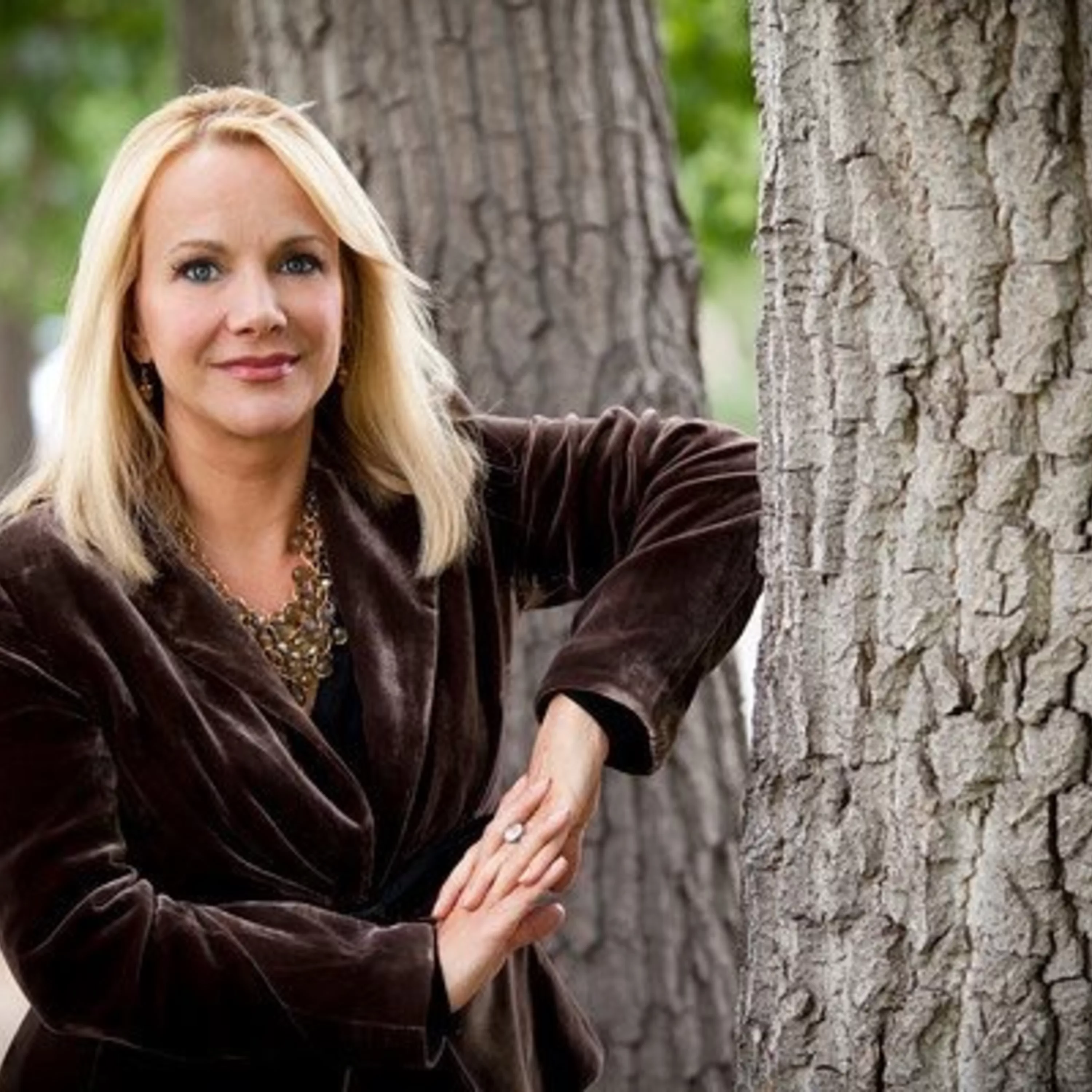

Join Angie Austin as she welcomes George Shamblin back to discuss his inspiring missions work around the world, including Cuba and Honduras. Experience firsthand accounts of how George and his team approach evangelism and support for local churches, while leading others in transformative journeys of faith. George also shares personal insights into his book, The Four Faces of Christ, offering a unique glimpse into the different perspectives of the Gospels.
SPEAKER 02 :
Welcome to The Good News with Angie Austin. Now, with The Good News, here’s Angie.
SPEAKER 04 :
Hello there, friend. Angie Austin here with the Good News, and we are welcoming back George Shamblin. His book is The Four Faces of Christ, and I really wanted him back as well to talk about his missions work, some of it in Cuba, and I was very curious about that. Welcome back, George. Thank you, Angie. Glad to be back. So before we get back into your book, tell us a little about you and how you got involved in this work, this missions work outside of the country.
SPEAKER 03 :
You know, it’s one of those things that people can relate to that for whatever reason, God puts a certain people group or a certain area of the world on your heart. And my wife and I have done a bunch of missions. And before we ever went to Cuba, I heard a sermon and I looked over at her and I said, I think we’re supposed to do something in Cuba. And later on, she was like, you know, I think we’re supposed to do something in Cuba. The Lord has been all over it. Angie, it’s been tough. It’s been very difficult. They are under dire circumstances, but there’s never been a question, almost like a call to ministry. Or even when somebody gets married, you just know that you know that you know that God’s called us to do a lot of work down there.
SPEAKER 04 :
Now, when you’ve gone down there, so you get started, you start going down there, what happens? What do you do when you get there? What’s the experience like?
SPEAKER 03 :
Sure. We do door-to-door evangelism. Wow. And, you know, it’s one of those things that this is our philosophy of ministry. We want the Cuban Christians and churches to be self-sufficient, self-sustaining, and self-sending, meaning we don’t go down there with a bunch of things to give away. We do help. But we give things to the church and any kind of provision we give to them and say, would you all please hold this for a month so that we’re out of the picture? And then it’s a gift we’ve given to your church. And when you give it out in the community, you can say this is a gift from First Baptist because that’s true. It belongs to them. And that church becomes the beacon, not the Americans. So we do door to door evangelism. We will help with provision. But we always tie it back into the local church. We want to make them the pillars in the community, not the Americans.
SPEAKER 04 :
Are there other places you’ve gone as well or predominantly Cuba?
SPEAKER 03 :
You know, a lot of places, India, Dominican Republic, Puerto Rico. We spend a lot of time in Honduras. In fact, I don’t mind saying that Auburn University is my alma mater. They’re ranked number one in basketball, at least for now. And half of the basketball team went with us to an orphanage down in Honduras, and again, we do door-to-door real evangelism. Do you know Jesus? Can we share the gospel? We’ll see people pray to receive Christ, and for college kids to take the lead, much less basketball stars, it’s been a real treat to be involved with.
SPEAKER 04 :
Wow, that’s quite a few locations for your work with missions. I take it you’ve been doing this for decades. I mean, that’s a pretty big undertaking.
SPEAKER 03 :
It is, and here’s the thing. I had these two guys that work with my ministry. They’re just businessmen. That’s my main ministry. They said, George, we’re taking a men’s trip to Honduras. We want you to kind of lead the team. And Angie, I said, I’ll pray for y’all. The Lord bless you and keep you. I’m not going. I’m just not called to mission. They really started leaning on me. And I’d say, well, I don’t have a passport. George will pay for the passport. You know, I don’t have the plane ticket and all this. I have to tell you, 12 years ago, when I took my first mission trip, I absolutely fell in love with it. So we’ve been involved ever since.
SPEAKER 04 :
All right. And if people are interested in ever getting involved with your trips, I know that they kind of ebb and flow with the conditions of the countries you’re going to visit as well and how welcome you’ll be at the time or how safe it will be at the time of these trips. So where do they go to get more info?
SPEAKER 03 :
That’s right. We set up a nonprofit website. It’s called the overseasinitiative.org, the overseasinitiative.org. This may not matter to other people. It matters to me to say I don’t receive any compensation. We only have one administrative assistant. We want as much of the resources and much of the emphasis to go to Cuba. And so we have a light overhead there. And we do a lot of things predominantly in Cuba. We’d love for people to get involved, maybe go on a trip in the future. It is a communist country. And so there are a lot of hurdles. We also just don’t let anybody go. We have to make sure that people buy into our philosophy, that we’re not going there to say Americans first. We want to support the work down there. And sure, we’d love for people to take a look at what we’re about.
SPEAKER 04 :
And then, George, do they fundraise in order to fund their mission trip?
SPEAKER 03 :
That’s right. So when we take college kids, they will talk to family, friends, do fundraisers, things like that when they want to go. With the adults, if somebody is unable to come up with the resources, we try our best to help them out. We usually can’t cover all of it, but I can talk to some different supporters and in certain circumstances say, hey, we’ve got somebody. They can come up with a portion of it. And can we help them out? And we want to do everything we can for somebody to go.
SPEAKER 04 :
Well, excellent. All right. So George Shamblin talking about mission trips. And now we are going to get back to his book, The Four Faces of Christ. So we didn’t get as much time to talk about it last time either because we got carried away talking about other things. So give us an overview of The Four Faces of Christ.
SPEAKER 03 :
Sure. You know, if we think about an intersection between And let’s say somebody sees a collision take place in Manhattan, for instance. You have different people on different street corners that witness the same event, but they have different angles. So they all see the same thing, but it depends on where they’re standing, their vantage point. And so I kind of took that analogy and ran with it with Matthew, Mark, Luke, and John. Matthew is coming from a very Jewish perspective. He wants to show that Jesus was the Jewish Messiah. Mark is actually, his audience are Gentiles, and he wants to show that Jesus is the Son of God. Luke has a real heart for people that are down and out, people who feel like they’ve been on the outside looking in. And then John, of course, is going to present Jesus not so much as the Jewish Messiah, the Son of God, even the Son of Man. He’s going to say, Right off the bat, Jesus is fully man and fully God, beginning in chapter 1, verse 1.
SPEAKER 04 :
You know, George, a lot of people in their books, they don’t sometimes get into the personal aspects of their own story. And I know that in the book you get personal about your relationship with your own dad, your own father, and how healing took place when you came to Christ. And that was important for you to include in the book. Would you talk a little bit about that?
SPEAKER 03 :
Sure. My father was a pastor. unbelievably gifted general surgeon. He was Mayo Clinic trained. He was on staff at Mayo. Sometimes his personal life was a little rocky, to say the least. And once I became a Christian, my wife said to me, she said, George, what are you going to do about your dad? Meaning the bitterness, the anger, the resentment. And I can tell you where I was sitting at a It’s kind of misty and rainy. The cars are driving by. And I thought two things. I thought, number one, I don’t want my dad to have control over me. And if I’m, you know, hanging on to this bitterness, I’m allowing him to control me. And the other one, I get chill bumps right now talking about it. The parable of one person was forgiven an insurmountable debt. They could never pay. And then that individual goes to another person that owed them a little pittance. And they were beating the other person, saying, you have to pay me back. And the point is, I was forgiven such a huge debt that I thought, how could I not forgive my father? And I promise you, as much as any miracle, that bitterness and anger was left on the floor. It was gone. It was gone. I actually went and spoke to my dad the next day, and I said, Dad, I want you to know I’ve forgiven you. And he said, forgiven me for what? What have I ever done? It didn’t make me mad. It didn’t upset me. All I had was love and compassion for my father. We had a great relationship from that point forward, but he didn’t change. God changed me.
SPEAKER 04 :
Do you think he, at some point in time, noticed the change in you and noticed the change in your relationship, your dad?
SPEAKER 03 :
He really did. And we do believe that he prayed to receive Christ. He got pancreatic cancer. And even though we had a great relationship, he said he wasn’t ready to accept Christ. And I love the honesty of my dad. He said, George, I realize if I accept Christ, I have to change. And I like me the way I am. And I said, Dad, thank you so much just for being honest. I get it. And towards the end, he said, yes, he trusted Jesus and he received him and he gave him his life. So I look forward to seeing my father again.
SPEAKER 04 :
Well, that must have been pretty satisfying to, you know, work alongside him to get to that point.
SPEAKER 03 :
It really was. And, you know, the Lord did have to, I think my dad had certain things he was kind of putting his trust in. And those all had to be taken away. And at the end of the day, I think when a lot of things had been taken away, he realized, okay, now it’s time kind of, I would call it an empty palm prayer. I think my dad just so many things kind of slipped through his hands. And towards the very end, his palms were empty. And that’s a great place for somebody to be to say yes, Jesus, and receive him.
SPEAKER 04 :
You know, I had a similar situation, I think, occur with my dad, and I think he accepted Christ in the end, too, but he was not very empathetic or open, I should say, to my situation and why we’d been estranged for maybe 35 years. He was also very brilliant, but completely out of our lives. He had his Ph.D. attended some law school and gotten straight A’s while he was attending there. And, you know, real bright, a professor, but, you know, definitely lacking in the parenting and human department. But I think he did as well. So at the end. All right. So I want to ask you about when people read the four faces of Christ, what do you want them to get out of it? What do you want them to walk away with? If it was like your dream come true, this is what I want people to learn.
SPEAKER 03 :
If I had to just pull out one little nugget and say, I’d love for people to see this, it’d probably be on the chapters with Luke. Luke was the only Gentile writer in Scripture. He was somebody who saw himself on the outside kind of looking in. And then when he became a believer, he had a special— eyesight towards people that felt overlooked, people who felt abandoned or ostracized, just real people who were hurting. And not surprising that Luke, the physician, was able to quote Jesus when Jesus said, I didn’t come for those who are well, but for those who need a physician. And Luke just really had a heart for down and outers. I think even with me personally, I find myself sometimes maybe waiting in line to get coffee, and I’m just in a huge hurry, and I’m not thinking about the people around me. And sometimes now I’ll stop and say, no, Jesus stopped. He paused. He listened to people. He touched people, you know, embraced people. And so now I kind of look around me in the immediate situation and say, Lord, give me somebody just to encourage and be a friend to and really listen to right here where I am now. That’s changed. And I trust that People will be changed as well, hopefully, by reading some of these chapters.
SPEAKER 04 :
Well, I sure get a kick out of having you on the show. I’m looking forward to having you on again. If people want to get involved, go to Cuba, be on one of your mission trips, read your book, The Four Faces of Christ. What’s the best place for them to find you?
SPEAKER 03 :
GeorgeShamblin.com. It’s GeorgeShamblin, S-H-A-M-B-L-I-N.com. And we’ve got a lot of resources on there. There’s going to be a link to the missions ministry. And we’d just love to hear from people if they go to that website.
SPEAKER 04 :
Excellent. Thank you so much, George. Okay, Angie, thank you.
SPEAKER 01 :
It’s that time of year to start cleaning out your closets, basement, and garage by donating to ARC Thrift. With 34 thrift stores and 15 donation centers across the Front Range, you have almost 50 different locations to donate your gently used clothing and items you don’t need anymore or are taking up space in your home. ARC will also take large furniture off your hands by scheduling a pickup through the ARC website. Any soft goods you choose to donate, you can just put in bags, while hard goods need to go into boxes. This helps ARC turn their 5,000 weekly donations per store into resellable items immediately. With spring around the corner, donate the spring and Easter clothing that is too small or just sitting in a closet to help out another family. And while you’re there, get your Easter decorations and clothing. To schedule your large furniture pickup or to find the nearest ARC Thrift Donation Center or store location near you, go to arcthrift.com.
SPEAKER 04 :
Hey there friend, Angie Austin and Grace Fox on the Good News. Grace, one of my frequent guests, she’s really hung in there with me for quite a while now and always honors our weekly meetings, which I so appreciate. And today we’re talking about fresh hope for today, devotions for joy on the journey. And today we’re talking about hardships happen, which doesn’t sound like good news, but the good news is that the Lord is there to help you through these hardships. Welcome back, Grace.
SPEAKER 05 :
Thanks so much for having me again, Angie.
SPEAKER 04 :
You are welcome. So let’s talk about this devotion, hardship happens. What do you focus on here?
SPEAKER 05 :
Right. So this one, I recalled, my experience from when I lived in Nepal. So some people, my husband actually thought when he first got assigned to Nepal by this nonprofit organization, he thought it was Naples, Italy. He had it all mixed up.
SPEAKER 04 :
Oh my goodness, I love that because now you guys are such world travelers. It just cracks me up that he was like, oh, Naples, Italy. No, very different Nepal.
SPEAKER 05 :
So we ended up between India and China, way out there. And back then it was one of the world, it was the fifth poorest country in the world. And so we traveled often on the public buses. And we discovered right out of the gate that every bus travels with a mechanic on board. And at first we thought, oh, that’s interesting. That’s different from back home. And then we discovered why. And it’s because on every trip we went on, the bus broke down. It was a given that there was going to be an issue. Yeah. And so every bus came with a mechanic. And And so we thought, well, that’s handy. But, you know, they went prepared because they knew something was going to happen. And I liken that in this devotional to our anticipating times of suffering along our life’s journey. So not that we wring our hands and wake up in the morning going, oh, no, I wonder if it’s going to happen today. It’s not like that at all. It’s that Scripture says, don’t be surprised. Don’t be surprised at the fiery ordeal that has come on you to test you as though something strange were happening to you. That’s in 1 Peter 4.12. We need to expect it and don’t be surprised when it happens, but not live in fear and dread of it happening. So because we know it’s going to happen, we need to be prepared for it just like The buses in Nepal went prepared by having a mechanic travel on board.
SPEAKER 04 :
Wow. I just, that blows my mind. Like when you said it, I’m like, what? Like every day, what? And so they’re that old, they’re that clunky that they literally have to have a mechanic on board because they’re preemptively striking or preparing for the fact that this bus is going to break down.
SPEAKER 05 :
That’s exactly right. And the roads are rough. I mean, the terrain is really hard on vehicles. So they just know. And there aren’t gas stations along the way, frequently along the way to stop and check things out. So they just know stuff’s going to happen. So they go prepared.
SPEAKER 04 :
Wow. I’m just, I just, yeah, I’m shocked. But I love the way that you intertwine the idea of, you know, our lives, just we should know that these hardships are going to happen and not be surprised when they happen, but be prepared with, you know, Scripture, with our devotions, with, you know, our faith, and be prepared for when these times, you know, occur.
SPEAKER 05 :
That’s right, because I find… from my life experience, that if I wait until I’m in the middle of a hard time and expect to be strong at that time, but I’ve done nothing to prepare, it’s not going to go well for me. That’s when I wring my hands, and that’s when I panic, and that’s when my blood pressure goes up, and all the rest of it. But it’s a matter of knowing something will happen at some point. And like I say, not living in fear or dread of that, because that just isn’t right either. Because… We just need to be prepared in advance, know the Word of God in advance, be working on strengthening that relationship with the Lord by prayer and by being in the Word and by memorizing His promises and, you know, having good friends that we know that we can talk with and pray with when stuff happens, being prepared in that way. And then when it’s our turn, we know that we can face it with courage and with strength
SPEAKER 04 :
I like it when you said, that said, we don’t want to spend our days wringing our hands, as you mentioned, staring at the horizon, waiting for the next storm cloud to appear. Rather, we prepare ourselves by studying God’s word and spending time in his presence. We meet with other believers, like you said, to learn and grow spiritually. We get involved wherever God leads us. We prepare ourselves for the inevitable so we can face it victoriously when it comes. I like that. I like the whole idea of just relaxing in life and relaxing in our journey, knowing that we are preparing for that time when the hardships arrive.
SPEAKER 05 :
That’s exactly right. I have a friend, I think I may have mentioned this before with you on our shows, but a friend whose mother taught her to wake in the morning and say, Good morning, Lord. What good things do you have in store for us today? And that’s what I did this morning. I got out of bed and I thought, Monday morning here. Good morning, Lord. What good things do you have in store for us today? I just said it out loud. And just by speaking those words out loud, it was like the sense of anticipation in my heart, not a dread of, oh, it’s the beginning of a week. I wonder what this week’s going to hold. It wasn’t like that at all. It’s a sense of anticipation of something good. And so to face our days like that, but preparing ourselves at the same time. And so, yeah, I spend time in the Word and I do journal and I do make that quiet time with God before the day begins my priority because I know that’s what makes me strong. So in some case, I’m going to wake up one morning and I’m going to say, what good things do you have in store for us today? And then I might get a phone call. that’s going to flip my life upside down. And it’s going to be word of a friend who’s going through a life-threatening situation. Or one of my kids is all of a sudden facing a huge problem. Or I’m going to be facing a huge problem or a diagnosis that I wasn’t expecting. Something’s going to happen. And if I have prepared my heart, I will know in my heart. Yep, fear might be the first response, but ultimately I will know that it’s going to be okay because I know who God is and I know I’m in his hands and I know he’s bigger and I know he cares for me. And all of that preparation of the soul will have happened in advance if I’m doing it now.
SPEAKER 04 :
I love that, the preparation of the soul. And, you know, some of these, I just, I look at your books and you have so many stories that relate to each of these devotionals. And we talked about once how you had very little time, your deadline to write a book and that, you know, you just kind of, in prayer, you know, you feel like God leads you in all of these stories. Do you keep notes about stories that you might want to use in a devotional? Do you kind of sit down and go, what are some great stories from my past? Because some of them are from when, you know, your kids were, now you have grandkids, but when your kids were growing up and how do you come up with all these ideas?
SPEAKER 05 :
I do journal a lot. I haven’t been as faithful in the last four years, but I do look back into my journals and then I am always amazed, Angie, at how God gives me what I need when I need it. And so there are times when I sit down and I say, okay, God, I think it was with this book where I said, wow, I just finished writing two, and now I have two weeks before I have to write the third one, and there’s 90 stories like this in every book. So how can I come up with something fresh? I felt dry. I felt like I drained a well dry. But I remember going literally on my face before the Lord and saying, you know what I need to do this assignment you’ve given me? And so what are you going to do? And into my head popped the story of the woman in the Old Testament who was going to lose her sons. Her husband had died and left her with a great big debt, and she was going to lose her sons over this if she didn’t pay that debt off. And so she got direction from the Lord to say, take the oil that she had and go and collect jars from all of her neighbors and then start pouring oil into those jars. And I thought, okay, I need 90 jars. 90 jars is all I need. And so, Lord, I’m trusting you to fill these 90 jars. Give me 90 fresh ideas for this book. And he did. Like every day, I’d say, okay, I need three jars. I need three devotions today. God, what are those ideas? And every time I needed that fresh idea, he brought something to mind. And it just blows me away how he does that, but he does.
SPEAKER 04 :
Yeah, I’m kind of blown away, too, when I read the devotions and just everything that you put into them. Like on Hardship Happens, you’ve got your story, and you have scripture that you start off with, and then what we should ponder. Like, what’s your first response when you encounter a hardship? I think for many of us, it’s feeling sorry for ourselves. And then you’ve got the prayer, God, thank you for the heads up about hardships. Prepare my heart for what you know lies ahead. And then you usually take an excerpt from a book as well. I mean, it’s really pretty in-depth, you know, what you do for each one of your devotions.
SPEAKER 05 :
You know, what boggles my mind is that it can be in-depth and still be 225 words because that’s about what these are. But I was thinking of people who are in that really hard time place of life and they need the encouragement from the word of god but their minds are in such a scattered place uh because of the hardship that they’re in or a crisis that they’re in that that they can’t focus and so to sit down and say okay i’m on this read through the bible in a year program and now i have this whole old testament and new testament and psalms and proverbs to read I can’t wrap my head around it right now. Or they’re so busy doing the things that need to be done, the tasks that need to be done at hand for this emergency that they’re in, that they just don’t have that time to sit down and spend 20 minutes reading. But they still need the encouragement from God’s Word. And so these are short and to the point, but they’re in-depth enough to give them the hope that they need for that day.
SPEAKER 04 :
I love that. And that hope, I mean, that’s what your books are about. That’s what I named my daughters. It’s one of my favorite words. Fresh Hope for Today, Devotions for Joy on a Journey, and then your other book that we talk a lot about, Fresh Hope in Crisis, Devotions for Calm in the Chaos. And that’s one that I’m going to bring my girlfriend, actually, that you wrote about going through crises and And she was just diagnosed with glioblastoma brain cancer. And her kids are friends with my daughters. She’s got five kids, but the two teens are friends with my two teenage daughters and have been for, boy, I mean, it’s many years now. So she’s one of the strongest Christians I know and homeschools her kids. And she’s writing, you know, a lot on her Facebook to her friends about how fearful she is and how she’s staying up at night. And I can’t think of many people like you and like my friend dealing with this brain cancer who are stronger Christians. You know, you both have really devoted your lives to this. So. to hear her fears right now and everything when she’s someone that many people look up to in terms of the strength of her faith. It is scary to those of us who don’t feel our faith maybe holds a candle to theirs just because the way she’s really devoted her whole life to her children, to her Christian faith, to raising her family, homeschooling them. I mean, really, it’s her life, you know?
SPEAKER 05 :
yeah my heart goes out to her I have a friend too who’s just recovering from brain surgery and then I found out from one of my friends who lives just a few minutes away from me here that her sister was diagnosed with a brain tumor she just came back from sitting with her and caring for her for a few days and it’s just amazing how many people are really in crisis out there and to be able to share hope with them is that’s my desire that’s the reason I wrote these books was to share hope with people who are facing really tough situations and to let them know that they’re not alone. We are with them as friends, standing with them, but Jesus is with them too. And that’s where the hope comes from.
SPEAKER 04 :
Yeah, Jesus is the CEO of hope and you’re the vice president of hope. You’re his ambassador. You’re his hope ambassador. I love that. Well, I’m going to take your book over to her today, Finding Hope in Crisis. And I guess the thing you see is her faith in action with all of the friends. They’ve already signed up for like a month of meals and the GoFundMe and all the people coming out because her faith is so strong and so many people love her that they’re coming out of the woodwork to help her. So that’s a strong testimony to her faith. Finding Hope in Crisis, Devotions for Calm in the Chaos, and also Fresh Hope for Today, GraceFox.com. Thank you, Grace.
SPEAKER 05 :
Thank you, Angie. Talk to you again.
SPEAKER 02 :
Thank you for listening to The Good News with Angie Austin on AM670 KLTT.