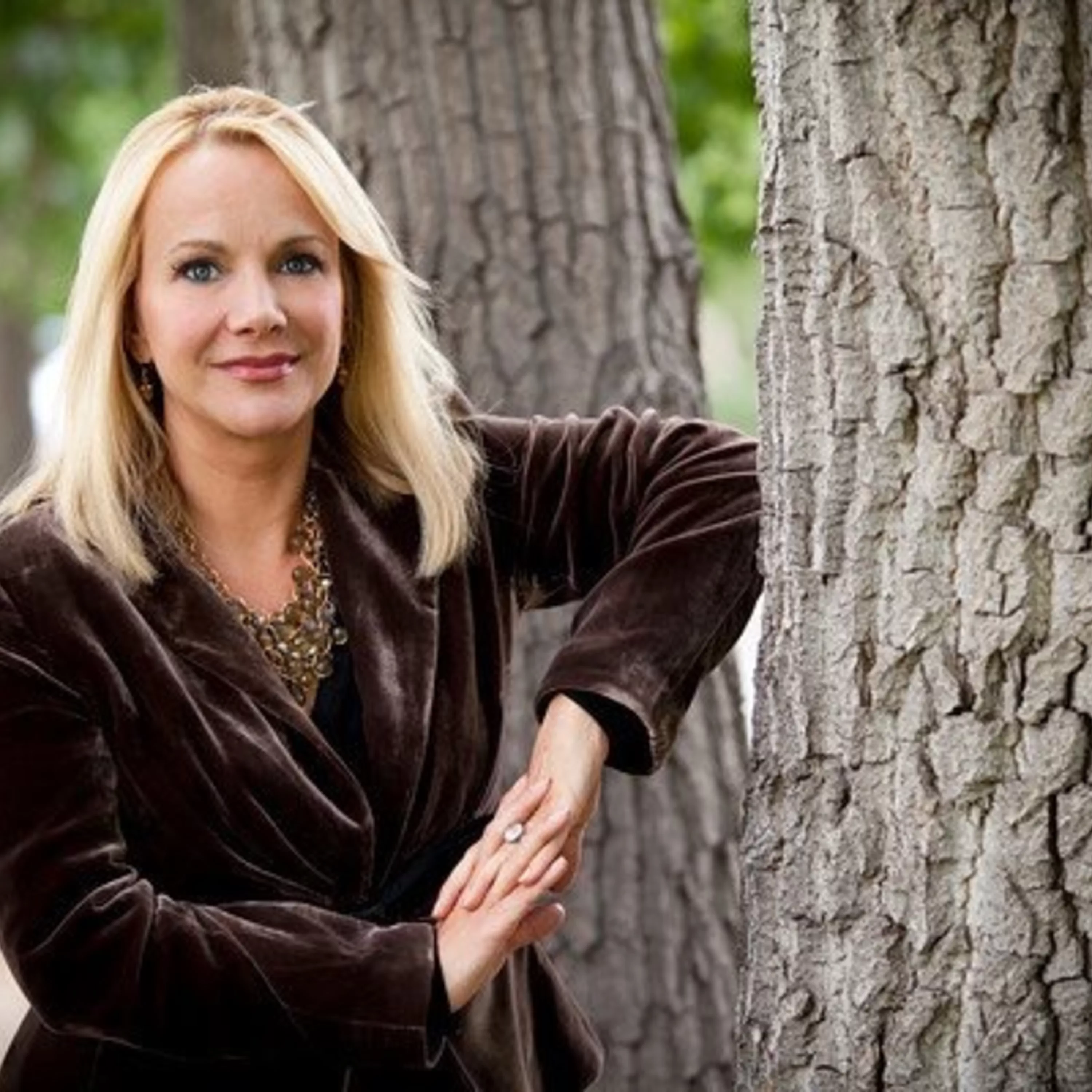


Listen in as Angie and Athena discuss the challenges faced when blending families and congregations in times of change. Through their conversation, they highlight the importance of understanding one’s purpose within a marriage and how this unity in mission can guide couples through even the toughest challenges. Also in this episode, author Grace Fox joins Angie to delve into the theme of joy and gratitude, underscoring the transformative power of choosing positivity and thankfulness in our daily lives. Whether you’re facing dark times or simply seeking inspiration, this episode offers valuable insights into embracing love and mission both individually
SPEAKER 05 :
Welcome to The Good News with Angie Austin. Now, with The Good News, here’s Angie.
SPEAKER 02 :
Hey there, friend. Angie Austin here with the good news. We are talking to the author, one of the authors of Together for a Purpose, Love and Mission in Marriage and Ministry. This is written by Dr. Ross and Athena Dean-Holtz. And joining us is Athena Dean-Holtz. Welcome, Athena. Hey, thanks for having me on, Angie. You are welcome. So let’s talk about how you and Dr. Ross came together for this, you know,
SPEAKER 03 :
Well, it’s an interesting story because his late wife of 49 years, when I first met her, she was not sick or she didn’t know she was sick. None of that was on the horizon at all. And she pulled me aside one day and said, you know, I told Ross if anything ever happens to me, he needs to marry you.
SPEAKER 02 :
Wow.
SPEAKER 03 :
And I was like, okay. Yeah. What she didn’t know was that I would sit in the back of the church and go, God, can you give me somebody like that? He loves his family. He’s not a flirt. He is humble. He’s transparent. Can you give me someone like that? Not can you give me him, right?
SPEAKER 02 :
Right. Yeah.
SPEAKER 03 :
When she said that to me, it just, I mean, I had all sorts of weird, like, does he know that I know that she, you know, I mean, the whole self-talk thing. And it just kind of took me by surprise. And then pretty soon I was like, you know, my brother asked me to come down to San Antonio to help with our mom. And I was happy to just kind of get out of there because I didn’t like the head games that I was, you know, feelings. So, um, While I was there, about a year after I went, I saw something on Facebook that she had been diagnosed with cancer and three months and she was gone.
SPEAKER 02 :
Oh, my goodness. And were you married at the time? I understand you were coming out of a situation.
SPEAKER 03 :
I actually was divorced due to a 13 year detour into a very toxic. I mean, it was a cult. It was a Christian cult. that completely used scripture out of context to deceive me. And I fell for it. And they got me when my husband said, I don’t believe this is not scriptural. They turned it around and got me to divorce him in the name of Jesus. Let the bully unbeliever leave. I mean, I still am appalled that I listened to them, but this, quote unquote pastor and his wife basically arranged me to divorce my husband. And long and short, they wanted to get my publishing company and everything that I, um, had at that time, the influence that I had. So he has already remarried actually twice. So it wasn’t an option to, you know, get that restored. And so I was 14 years, hadn’t been on a date in 14 years.
SPEAKER 02 :
Oh, my goodness.
SPEAKER 03 :
And then you’re praying to God.
SPEAKER 02 :
And you’re praying to God to get someone like Dr. Ross Holtz, who’s your co-author and now husband. And Athena Dean Holtz is telling her story about… how she was led to divorce her husband coming out of a Christian cult. She meets Dr. Ross Holtz and his wife. His wife gets sick, but had told you, I told Ross if anything happens to me, then he should marry you. And then after she passed away, did you get in touch with him? What happened?
SPEAKER 03 :
Well, it was interesting. Um, I had been doing, I was on the radio in San Antonio. I was in Texas. I was never going to go back to Washington. And while I was actually recuperating in the hospital for gallbladder surgery, I got a text. that the people who had robbed me of my publishing company, Wine Press Publishing, the couple that got me to divorce Chuck, they basically, the landlord locked him out of the office, said, you’re done. And so I got this text, will you come back to Washington and help all these authors? Wow. And so it was that invitation that I was actually under a ministry, a missionary ministry, and they said, well, we have to call whoever your pastor is. If you’re going to go under our covering, we need to get in touch. Well, I mean, the last church that I was at was Ross’s church. So he gets this phone call, Athena’s coming back. Would you be her overseer for her radio ministry? And little did I know, when Kathy was on her deathbed, she made a list of five women that he had permission to consider as a wife. And I was number one on the list, and all the kids had already been prepared. Just don’t give your dad a hard time. He needs to get remarried. So it was like all set up without me even knowing it.
SPEAKER 02 :
That is so wild. So you go back, and the two of you start dating, and then obviously the kids have been prepared to accept it. And then when did you end up getting married?
SPEAKER 03 :
So I went back in January. We ended up getting married in June.
SPEAKER 02 :
Wow.
SPEAKER 03 :
Which some people thought was too soon, but at 67 years old, my husband’s like, I don’t know how much time I have left. So we wanted to put it off until October just to be more – like there’s something in the Bible that says you have to do that. No, there’s not.
SPEAKER 02 :
Well, considering you were first on the list, I don’t think – I mean that’s part of the story, so I don’t think she was saying she’s first on the list and you have to wait a certain amount of months. So again, we’re talking to Athena Dean Holtz. The book is Together for a Purpose, Love and Mission in Marriage and Ministry. I was interested in something in your book that I thought I could really relate to, and it had to do with – You’re right. We honor each other by compromising. Let’s talk about how that looks like in your marriage because I’m a big fan of that as well because my husband is a big-time debater. He really likes to win an argument. He’s very strong in his beliefs about certain things, and he loves a good debate. And so I often reach some kind of compromise in our discussions, shall I say.
SPEAKER 03 :
Right, right. Well, and I think the word compromise has such a kind of negative connotation, like you’re being unspiritual if you compromise, like you’re compromising the gospel. I mean, that’s kind of got that feeling to it. And we just realized that we need to give and take. And there are times when my husband wants to do something and I do not want to do. I don’t want to go spend time with those people, or I don’t want to, you know, I just don’t want to do it, but I have to be willing to be pliable and say, okay, Lord, I’m going to do, I’m going to compromise what I want and be more sensitive to what he is asking. And he does the same for me. I mean, there are times where he does not want to Go do something for me that I need done because I’m busy with an author or doing something. And so it’s just one of those give and take where you bend and you just defer. To the other person.
SPEAKER 02 :
Let’s talk about some of the challenges. You obviously had some, you know, marrying someone who’d been, you know, such a close family friend and you’ve been friends with his late wife and, you know, throw kids into the mix, etc. Let’s talk about some of the hurdles that you had to overcome.
SPEAKER 03 :
Well, one was with the church, which we had no idea is very common when a pastor remarries. oftentimes there are church splits and people just are up in arms. And we didn’t know that before we got married. And I don’t know whether it would have changed anything about timing, but we had like about a third of the congregation left. They couldn’t state, you know, it was scriptural, it’s a sin issue, it’s nothing like that. And what I came to find out later is that it really was wives who were offended that Ross could replace Kathy so easily. And he didn’t replace her. You know, it’s not even a matter of that. But that’s what the enemy loves to stir up in people in situations like that. One gal told me that I just… like thought to myself, how dare she or how dare he marry her so quickly that that doesn’t honor Kathy. And but as she prayed about it, she realized what she was worried about is that her husband would do the same thing to her. Oh, isn’t that interesting?
SPEAKER 02 :
Yes.
SPEAKER 03 :
And she just said, as soon as I saw that, I repented and totally the desire to leave and be mad went totally went away.
SPEAKER 02 :
I think a lot of pastors are meant to be married. You know, it’s teamwork and it’s a difficult job. What are some of the other things that we will learn that you think are important for us to know about in the book Together for a Purpose, Love and Mission in Marriage and Ministry?
SPEAKER 03 :
Well, I just think that one of the big things is, you know, our scripture is Romans 8, 28, that God will use all things together for good. for those who love him and are, you know, called according to his purposes. But then the next verse, verse 29 says, so that we can be conformed to the likeness of Christ. And, you know, he wants to take every, I mean, every challenge. We have adult kids, mental health issues. I mean, we got all sorts of messy issues. And it’s just by looking at everything through the lens of Romans 8, 28, he is going to use this. He is aware of our pain and our struggles, and he’s going to use it for his good to sanctify us and make us more like his son.
SPEAKER 02 :
Yeah, I think I was reading about – you were talking about bringing people together in marriage is highly problematic. I thought that was a funny quote because it is problematic. It is meant to be difficult and make us more like Christ.
SPEAKER 03 :
Yeah. So it’s, it’s just been so many different things. I mean, I brought my baggage in my, you know, all my trauma from the whole spiritual abuse thing, you know, he brought his luggage in and baggage in and we, we open it together and we re react to it together. And hopefully we grow in emotional maturity and spiritual maturity so that we can really, um, work best together in a way that is healthy and not toxic.
SPEAKER 02 :
So we only have about a minute left. How does understanding your purpose as a couple help us plan our actions? So you want couples to have a purpose together?
SPEAKER 03 :
Absolutely. When we understand together what God is calling us to do together, not as individuals, we are able to make intentional decisions and goals together. So that we stay focused on that as God continues to sanctify us and work with us and grow us as individuals, but also as couples.
SPEAKER 02 :
Well, and obviously you as a couple, one of your big purposes is ministry.
SPEAKER 03 :
Yes. Yes. And that is so, I mean, you just, whether you’re in full-time ministry, quote unquote, and that’s your job or not, you’re in ministry. And to understand that we are Jesus with skin on, and we’re the ones that are going to make a statement with our lives and with the things we do and the things we decide and the things we say yes to and the things we say no to. We are speaking to all the people that are watching us, including our family members and everyone else.
SPEAKER 02 :
All right. Athena Dean Holtz, give us a website where people can find you.
SPEAKER 03 :
AthenaDeanHoltz.com or TogetherForAPurpose.com.
SPEAKER 02 :
Thank you so much, Athena. What a blessing to have you on the good news.
SPEAKER 03 :
You bet, Angie. Thanks for having me.
SPEAKER 01 :
It’s that time of year to start cleaning out your closets, basement, and garage by donating to ARC Thrift. With 34 thrift stores and 15 donation centers across the Front Range, you have almost 50 different locations to donate your gently used clothing and items you don’t need anymore or are taking up space in your home. ARC will also take large furniture off your hands by scheduling a pickup through the ARC website. Any soft goods you choose to donate, you can just put in bags, while hard goods need to go into boxes. This helps ARC turn their 5,000 weekly donations per store into resellable items immediately. With spring around the corner, donate the spring and Easter clothing that is too small or just sitting in a closet to help out another family. And while you’re there, get your Easter decorations and clothing. To schedule your large furniture pickup or to find the nearest ARC Thrift Donation Center or store location near you, go to arcthrift.com.
SPEAKER 03 :
Boulder is tuned to the mighty 670 KLT Denver.
SPEAKER 02 :
Angie Austin here with the good news, along with Grace Fox. Grace has written several books, and we’ve been talking about getting over your fear, but today we’re focusing on joy. Is that right, Grace?
SPEAKER 04 :
That’s right. Yep, let’s switch it up a little bit today.
SPEAKER 02 :
And the book, Choosing Joy on the Journey?
SPEAKER 04 :
Yeah, threshold for today, devotions for joy on the journey. Because we’re all on a journey, and sometimes that journey takes unexpected turns. and puts us on what we think is a detour. And that’s not always easy, is it? But joy is a choice.
SPEAKER 02 :
Yeah, so she’s going to say that. They talk about how joy is a choice. I mean, that’s biblical. We hear a lot about, you know, how God wants us to feel that joy, to choose that joy. And so how do we do it when we’re on the journey and it’s bumpy?
SPEAKER 04 :
Yeah, and so a lot of that has to do with where we let our thoughts camp. And if we… If we think this is a ride that I wasn’t anticipating and I resent being on this one, we’re not going to go very far in the joy department. But we have to be able to look at our circumstances through a different frame or a different lens, if you would. And one of those things, I think, is to understand that in the darkness, there are treasures, treasures hidden in the darkness. Right. So when we’re in that journey, we go to a dark space. You know, we often think there’s no light at the end of the tunnel. I can’t see my way out. But in that space, what is it that’s hidden there that is a treasure? I think if we start looking at our dark places along our journey with that perspective, everything changes.
SPEAKER 02 :
Yeah, I think sometimes we have to focus outside of ourselves in order to do that rather than focusing on our own situation, you know, whether it be helping others or with me, you know, focusing on my kids and what’s going on with them and trying not to ruin their day. I remember once some difficult situation on a weekend and I was telling the kids that the true sign of a leader is to turn it around, like when they’re going to like ruin a day over some disappointment or they didn’t get the ice cream they wanted or their balloon popped in the back seat. I mean, they’re obviously older now, but I said, you know, the true sign of a leader is the ability to turn it around. And then I showed them how to do it when their dad was just real snappy about something and I could have let it like kind of ruin our weekend away at some great lake up in the mountains in Colorado. But I said, watch kids, mom’s going to turn it around. And then somehow I change the conversation or the situation to not focus on that argument or whatever it was and to choose to have a great weekend for everyone else, which meant not focusing on me and my selfish desire to, well, I’m going to show him.
SPEAKER 04 :
That’s really true. Good point. It is focusing on other people and realizing that we’re not the only ones with needs that we perceive are the greatest.
SPEAKER 02 :
Right.
SPEAKER 04 :
It’s our perception. Yeah. You know, when we lived on Vancouver Island, there were some caves that we went to see, my husband and I and our daughter. And I… I would not consider myself a super brave person when it comes to descending down into a cave, into a very small space. I think I might have a tendency towards claustrophobia, but I did it with them. And I was very glad later that I did, even though it wasn’t comfortable. And that’s like on our journey. We ended up in these uncomfortable places. But, wow, once we got down inside, we weren’t on our own, thank goodness. We had a tour guide that was leading us, and he knew where to go, and he knew how to maneuver the narrow spaces. And he coached us through it. But when we got down to this one place, way down, it was damp, you know, the rocks were wet and all. But there were, like, crystals. He turned a little bit of a headlamp on, and we saw… sparkles all over the walls on the inside of this cave. It was absolutely beautiful, beautiful. I remember thinking, I am so thankful that I worked up the courage to do this because I would have missed it otherwise. And as we think about those dark places, not only can we choose joy by getting our sights off ourselves, but setting our sights on those Places where we might experience the goodness of God in an unexpected way or somebody else’s kindness in an unexpected way. And unless we were in that dark place, we wouldn’t have that experience.
SPEAKER 02 :
Yeah, I think so many times when the focus is on the negative, the joy is lost because you never have the opportunity to see it because your eyesight is so on the negative aspect of something. And I was telling my mom once, because I’m a lot more positive than my mom, I like to think, or my kids say so at least, that I told my mom once, I said, you know, Always focusing on the negative. I actually think it’s a really selfish mindset because you think you’re being wronged or you’re the victim or something happened to your life and poor you. And really, you’re the one that’s being hurt or harmed or neglected or overlooked. But really, you’re doing that to others. You’re doing that to the grandkids because you’re being selfish, staying in your, I’ll I’m feeling sorry for yourself, and you’re robbing not only yourself of joy, but me and the kids and my husband, the family you live with, because you’re so bound and determined to have that mindset. And it was the first time I ever saw it as a really selfish point of view to live your life like that. I’d always kind of like, oh, my poor mom, she’s had a bad life. Oh, poor her. Oh, that’s just the way she is. And I thought… It was the first time I ever saw it as being selfish to rob others around you of joy as well because you’re so bound and determined to stay in your unforgiveness or your kind of little mud puddle, you know? I mean, I know it’s really blunt, but that’s the way – I mean, you guys – My mom has lived with me off and on for probably 30 years, but most of 30 years and with pretty much my entire married life. And so she has the ability, if we let her, to have a profound impact on our family. But having recognized that she wanted to stay in this little mud puddle, we’ve kind of used it as a way to not ourselves end up in the mud puddle with her.
SPEAKER 04 :
And that’s a choice you make, too. So, yeah, when we have other people in our lives that are putting their negativity onto us, that can be pretty toxic and that will have a negative effect on us if we let it. Right. But I think you brought up a really good point that how we respond to those around us who are in that negative space is a choice, too. Yeah, we can either let it take us down or we can. choose to not go with them. They might be on a journey of their own, but we don’t have to go with them on that journey.
SPEAKER 02 :
Okay, so we’re talking a lot about choice. And, you know, for me, you know, since my mom needs my help, I’ve had to try, I’ve tried to make that choice, you know, or I’ll put a limit, you know, like, okay, you can complain about the kids just, you know, just for a minute, and then we’re going to move on. Like, this isn’t something I want to talk about. about like all afternoon or all morning or whatever, like whatever your complaint is, I’ll see if I can take care of it, make them bring their laundry up or whatever it may be. But how do we, some of the steps you use to choose joy, obviously it’s what we want to focus on. And I believe it’s selfish to focus on, to want to focus on the negative and not focus on finding a way to choose joy. So what else do we do?
SPEAKER 04 :
I think expressing gratitude is the biggest thing. So if we want to talk about choosing joy, then we need to take that intentional action of expressing gratitude. And even in that place where we don’t feel thankful at all because it’s a really lousy situation, humanly speaking, still we can choose to express gratitude. And that initiates like a chemical reaction in our body where serotonin and dopamine are released. And even if we don’t feel grateful in the middle of that hard place, there will be that reaction. Science and the Bible agree on this. That’s why God says, be thankful in all things. Always give thanks because he knows it’s good for us. And there’s a positive response in our body. And so in a place where somebody else is maybe putting their negativity onto us or wishing they could, you know, because they’re in their little mud puddle. They wish that we were in there with them. We can choose not to do that by saying, I’m just so thankful that the sun is shining today, or I’m so thankful that any problems we have are often solved. often, comparatively speaking, first world problems. So the things that are keeping us in a little mud puddle might be nothing compared to what other people in other countries are facing. And, you know, thankful that we have two good legs that can move or thankful that we’ve got food in the fridge and we don’t have to worry about where it’s coming from for the next meal. All of those things that we take for granted, that’s where we can start with giving thanks and it will change our perspective and help us to to be joyful on the inside.
SPEAKER 02 :
So in terms of, you know, that gratitude, do you have, you know, like a normal practice or, you know, I have a friend, I think I’ve told you about him, Jim Stovall, and he does his golden list every day. And he does like, you know, the 10 things he’s thankful for. And when my kids were younger, I narrowed it down to five, I think. And interestingly enough, I don’t know if I’ve told you this, but I used to have them do it in the car. My mom was driving them to school. I would say, you know, when grandma starts getting angry, ask her to do, you know, your golden list with her and go over the things you’re thankful for because that almost immediately changes her mood. So do you have a practice like he does it every day? I’m not good with keeping, I don’t know, like routines. I’m not a very good routine person. Do you have a gratitude routine or do you just pull, you know, pull that up when you’re feeling like you need it?
SPEAKER 04 :
A couple of things I’ve done. One is when I’ve gone through a hard place, I have often begun my day with a thought. This is the day that you have made, Lord, I will return. Rejoice and be glad in it because whatever you bring, I know that you’re here with me. And I will say that before I get out of bed. So before I put my feet on the floor, I set my heart in that place, and that helps a lot. And another thing that I’ve done is keep a gratitude journal. And so in the morning, I can sit down when I do quiet time and write in my journal at least three things that I’m thankful for. And that sets my day right, too. I do that in the evening sometimes as well, just saying, what am I thankful for today? What happened today that I can be grateful for? And then write those down in the evening. But at least three things a day, and that helps me be mindful of all the things for which I can count my blessings. Even when the journey is tough, I can count my blessings.
SPEAKER 02 :
I love that. I mean, that’s the routine. So you’ve got your gratitude journal and you do that. I think to myself, the best place for me to do a lot of these things is right here in my studio because I’m sitting here in between interviews and I’m taking notes during interviews. And so why not just put a little journal down here to make it a habit since my habit is to do interviews every morning during the week that I might as well put it down here. I I’ve just never been a good person to keep a routine. But you know, to me, that kind of is maybe laziness too. I mean, you can set, I always tell my kids for important things, we set alarms or I do on my phone. So I have alarms for every one of their practices and their doctor’s appointments. Not only is it in a calendar, but like you may have just heard, my alarm just went off because, you know, I talked to Jim Stovall at a certain time every week. So that always goes off. So maybe I need to set myself as a priority and set an alarm for some of the things I need to do for myself, not just for everyone else.
SPEAKER 04 :
That’s a great idea to be able to establish a habit to set an alarm. You might set it for 8.30 at night or 9 o’clock at night and say, okay, that’s my alarm, just to write down three things for which I’m grateful, just to get into that habit.
SPEAKER 02 :
Yeah.
SPEAKER 04 :
Another thing I do, and I, yeah.
SPEAKER 02 :
Go ahead. No, you go ahead. We only have like a minute left.
SPEAKER 04 :
Okay. Okay, I was going to say, one other thing I do to help be mindful of choosing joy is if I feel myself going into a negative space, I will take a walk. I will get outside, take a walk, enjoy the fresh air, but I will play praise and worship music as I go. And that helps to put me back into that place of choosing joy.
SPEAKER 02 :
Oh, I like that. I think that’s really effective. Grace, give us your website.
SPEAKER 04 :
GraceFox.com.
SPEAKER 02 :
Excellent. It’s just such a pleasure having you on the show every week. Fresh hope for today. Devotions for joy on the journey, Grace Fox. Thanks, Grace.
SPEAKER 04 :
You bet. Have a great day.
SPEAKER 05 :
Thank you for listening to The Good News with Angie Austin on AM670 KLTT.