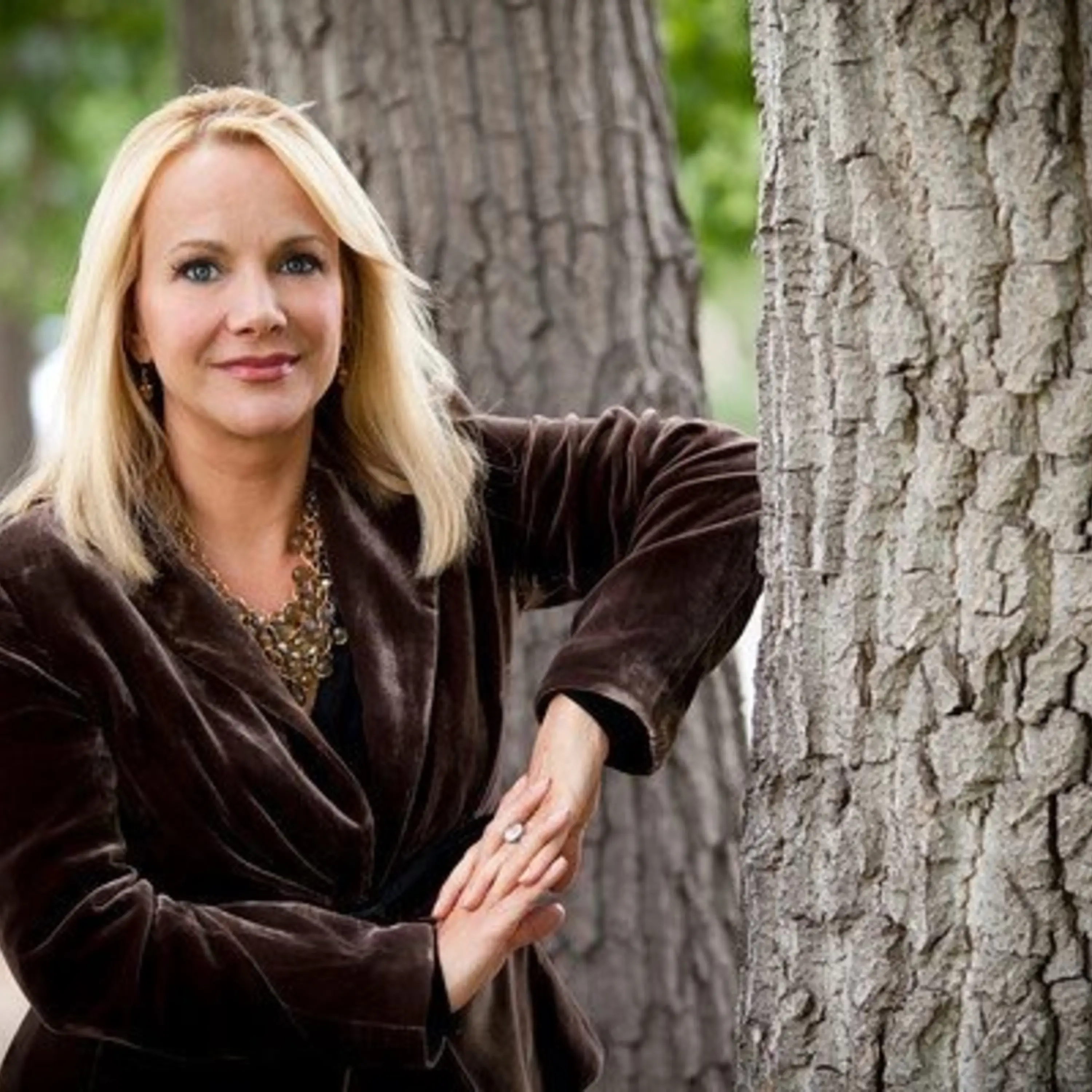
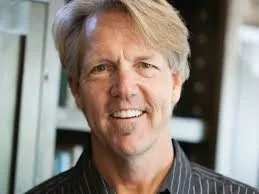

In this thoughtful episode, Angie Austin and Dave Bowden discuss the power of forgiveness and the importance of Christians taking ownership to reach out to young people. With engaging stories and personal testimony, Dave illustrates how walking beside young people, especially in a post-Christian society, can lead to transformative encounters with faith. Listen as they share insights on adjusting our approach to faith conversations in a society increasingly distanced from church traditions.
SPEAKER 02 :
Welcome to The Good News with Angie Austin. Now, with The Good News, here’s Angie.
SPEAKER 05 :
Hey there, friend. Angie Austin here with the good news. Really good news today. We have Dave Bowden back. We’ve interviewed Dave before, but he was so excellent that we wanted him to come back. His book is titled Parallel Faith. And it has to do with, you know, do we come alongside people when they accept Christ? We walk alongside them. Or do we just say, that’s great. You accepted Christ. Now go on your way. So Parallel Faith, Walking Alongside Others on Their Journey to Christ by Dave Bowden. Welcome back, Dave.
SPEAKER 04 :
Thanks so much for having me back again. I loved it last time, so I’m excited about today.
SPEAKER 05 :
Oh, yeah, we had a blast. So, yeah, great, great. You’re such great topics. You’re a great conversationalist. And I know I wanted you back to talk more about young people. So first, tell us a little about the book and give us your background, and then we’ll get into the whole young people topic.
SPEAKER 04 :
Yeah, so my background, I’ve actually worked in education for the last, 17, 18 years. I’ve also been a church leader as well. So I know what it’s like to sort of straddle, in many ways, two different worlds, the world of the church which can sometimes feel a little bit like a bubble, can’t it? That religious world. And then also the world of education, where you’ve got people who are not thinking the same as Christians, they’re not believing the same things. And it can often feel like the gap between what’s going on in the world and what’s going on in the church are two vastly different things. It’s a gap as grand as the canyon, as you guys would say over there in the States. And For me as a Christian, I believe that that gap has to be crossed by one side or the other. And actually, when we think about this whole idea that Jesus came down from heaven, he left where he was and came to where people were. He left the comfort zone of heaven, came to us. Maybe that’s a little indication to us that we should go and do the same. And if one of us is going to go, it’s got to be the Christians, because Jesus came and he said, I want you guys to go into all the world and make a difference, make disciples. And in a way, that’s sort of the heart of Parallel Faith. It’s about how do we walk alongside other people on their journey to Christ from any starting point. This is not just expecting people to come ready into a church building, all prepackaged, set and ready to go, understanding all the jargon, understanding all the behaviors. But actually, we’re willing to step beyond our church walls and go to where people are.
SPEAKER 05 :
So do you think is that your calling? Like in my faith, you know, doing the good news, obviously I speak to people about Christ and left TV news to do the good news of the Bible and of the world, I guess, the good news stories. But with that said, I think forgiveness for me is something that I kind of preach on or speak about because of my background and being estranged from my dad for 35 years or thereabouts and just having that forgiveness with him, but also my brothers and just in general, being able to let all of that childhood junk go and be able to have relationships with them, you know, decades later as an adult and allow my dad to then establish the relationships with my kids. And my husband had said to me a couple of times, like, I don’t know how you do it. Like I would have written him off. Like I have no idea how he did. And then later on, he said, wow, I have to hand it to you and your dad because he really rose to the occasion. Like he really became a great grandpa, a great grandpa and, And he was very well educated. He’s just a genius into martial arts and just a character in his 80s doing Tai Chi every day. And we might be traveling somewhere and he’d be stressed and he’d do Tai Chi in a 7-Eleven parking lot or the side of the highway or on a cruise ship while everybody’s eating and staring at him. So my kids just thought he was a riot because he was so different with long hair and long beard. He looked like Willie Nelson. So they just thought… He was amazing. And so he’s my husband. Pardon me. He came to understand or admire us for our ability to forgive. And so that’s what I so I guess my question to you is, is this your calling to walk along people and maybe in particular young people with parallel faith?
SPEAKER 04 :
Yeah, I feel like it’s become that somebody was talking to one the other day and they were saying that you don’t. You can’t always recognize your destiny, but you can trace it back. And I thought that was a really interesting thing that often you look ahead and think, who am I going to be? But sometimes you look back on your life and there’s key moments and key things that happen that make you who you are today. And I can vividly remember being 14 years old in a church meeting and the guy at the front on the stage said, He said it was the end of the week. We’d had an amazing encounter with God. We’d been in prayer, been in worship. And he said, I want you guys to come back here next year. I don’t just want to see this room full of the same old faces. I want to see this room full of the lost and the broken, people who don’t know Jesus. And I actually didn’t know up until that point that people didn’t know Jesus. I just thought everybody did. And I never really understood that there was a world beyond the church that I was so fond of and a part of. And I think that set off a bit of a niggle in me of realizing, oh, yes, there’s a world out there that needs Jesus. So I think in many ways, my primary calling, I would say, has become by default. I’m very purpose driven. I’m very passionate about what I do. It’s probably come true when I’m talking. But in terms of the passion I have, first of all, for God’s mission and out of that, God has seemed to use me time after time after time in the realm of working with young people ever since I was with myself. So at the age of 16, I began reaching out onto a street in a rough urban estate, began to share the gospel with young people who were almost the same age as me. And that led to 18 leading a summer camp of 200 teenagers. And then later on, when we were married, my wife and I, we started a youth club in our local area. Just when we moved in the neighborhood, we ended up working with 80 young people from our neighborhood. Just one neighborhood, 80 young people. And it’s just been time after time after time, that opportunity to connect with young people, to build relationship with them, to walk parallel with them. on their journeys. And some of those young people have come to faith. Many of them haven’t. But the point is we don’t change who we are depending upon the outcome because we trust God. And the whole thing is driven by faith, hope, and love.
SPEAKER 05 :
You know, that’s interesting when you say you didn’t know that a lot of people didn’t know about Jesus. We were just sitting last night at a game at the high school, and one of the girls, she’s a senior, and my little one, Faith, she’s a freshman. But then I’ve got a senior boy and a junior boy. But this senior girl, will pick up my little freshman at like 6.45 or 7 in the morning to take her to Fellowship of Christian Athletes because they meet really early in the morning before school. And my kids all know her from Young Life, which is after school. And that’s like bowling and ice cream. And it’s to bring kids that don’t really know the Lord And maybe don’t feel comfortable yet getting in depth speaking about the Lord or the Bible. So it’s more fellowship at Young Life and not so much talking about the Bible or scripture. So Riley, my oldest, who he doesn’t go to the FCA, the girls do. And so the girl said, hey, are you going to FCA tomorrow morning? And he’s like, what is it exactly? And I’m like, you know, right. The girls go, you know, in the morning before school. And then the girl, Maddie, she said, well, what do you talk about? And she goes, oh, we talk about Jesus. And we were in the stands, you know, with lots of people around us. And I know some of the parents know we’re Christians and we’re looking at Christian universities and they don’t. know about that world and they’ve even said like if we have to fill out questions about because they ask for your testimony when you fill out your application for the Christian universities you have to give your testimony where do you go to church what Christian organizations are you and you do volunteer work you know all that so I saw I’m kind of looking at us and Riley goes oh different than young life then you talk about Jesus because young life is kind of like Jesus light where they’re just giving the kids a sip of the Kool-Aid per se to get them to come and bowl and whatever and and then they make friendships with other Christian kids. So I thought it was interesting that people’s ears kind of peaked because I don’t know if I mentioned to you last time when I worked at NBC in LA and I told my boss I was going to church, he said, oh, I didn’t even know people went to church anymore. I mean, it is sometimes out in the world, depending on the group you’re hanging out with, an anomaly or I don’t want to say an oddity, but it kind of sets you aside somewhat from other people.
SPEAKER 04 :
Yeah, and I think probably maybe even more so in the UK than it is out there in the States, because in many ways we are a post-Christian society, and particularly amongst young people. So what’s happened is we’ve got a generation now that would only recognize the name Jesus as a swear word. Oh, wow. And… You know, I always describe the spiritual climate as akin to like fresh snow with no footprints in it, is that when you’re talking about Jesus or church or faith, often with people, particularly under the age of 16, they just haven’t got any prior knowledge of it. So 95% of young people in Britain have got no connection to a Christian or church. So only 5% have. So one of my big passions, that’s why I love school so much, is that we want to go where the 95% are. We want to go where the people are who don’t have this experience, don’t have an understanding, who’ve never heard the good news. So when we share about Jesus with them, they’re hearing it often for the very first time.
SPEAKER 05 :
Yes.
SPEAKER 04 :
And that’s quite exciting as well. It can sometimes feel like, You know, we can feel like the world’s, excuse the pun, excuse the world’s gone to hell in the handbasket. But actually, when you get this big reset that’s happened, you almost get a generation who just don’t know. And one of the challenges is, is that when we try to reach them with the things that worked 20, 30 years ago, using the language that worked 20, 30 years ago, We are like that on mute person who’s desperately trying to get across on that Zoom call over COVID, you know, they’re shouting, they’re talking, but nobody’s listening. Why? Because they’re on mute. And I think there’s so much that’s happening out there in the world where the church is speaking, but the world, particularly young people, There’s no relevance for them whatsoever in listening. You know, when they face problems, when they face difficulties, when they face an identity crisis, a sense of purpose, who am I? Where do I belong? They’re asking these questions, but they’re not turning to the church for answers because what they see of the church is archaic. It’s institutionalized. It’s irrelevant. It’s something that’s for Christians and not for them. And I think that’s one of the huge journeys that we’ve got to go on when we’re choosing to go where people are, walk with them. Half the time we’re dealing with stereotypes, half the time we’re busting myths, half the time we’re actually overcoming barriers for somebody to even hear the gospel before we can even share it.
SPEAKER 05 :
You know, it’s interesting. After hearing you speak about, you know, U.S. versus U.K. where you are, I do feel blessed that the kids, I can think of four things they have in a week. And that’s excluding just plain old church. Four things they have in a week with the Young Life, with the FCA, with a Bible study that they have in the morning that is affiliated with Young Life. And then Sunday at church, they do have like a youth group. And so those are their choices. And I would say, you know, Young Life, they go to, I would say, 95% of the time. And FCA, because it’s 645, they have to wake up. I would say that’s probably like 50-50, maybe 65% of the time, you know, that the girls go. And so just the fact that they have that many options, I think, is such a blessing here. But it sounds like that is what you are trying to create more of in Britain. Yeah.
SPEAKER 04 :
I think it’s this whole idea that everybody’s on a journey and that some people have to take little steps towards Jesus before they can take big steps with him. So when it comes to what we do with young people, very often we’re having to go right back to that blank slate and say, how do we move somebody from being not interested in faith to becoming spiritually curious and that curiosity being pointed towards Christ? So a lot of what we do is help kind of move the discipleship dial that way. So we’re trying to say, how do we move from being not connected at all to stirring some curiosity, stoking some interest? And then how do we communicate the gospel in a way that this generation will understand? Because if we say to them, you know, hey, brothers and sisters, you’re washed in the blood of the lamb, they’re not going to understand that, are they? Yes. They’re not going to get it. Right, right. It’s going to fall on complete deaf ears. And we might be very excited about singing songs about lions and lambs. And I do that. And that’s great for me. Think about translating that into a world where young people are not considering these matters at all. So we’ve got to go to where people are. We’ve got to change our approach. And, you know, the message never changes ever, does it? No, it never changes. And the good news is the same. It’s been the same for 2000 years and it will be the same forevermore.
SPEAKER 05 :
Okay, hold it right there. Let’s take a break because we’ve got to take a break here. If you’re just joining us, we’re talking to Dave Bowden about his book Parallel Faith. And we’re talking about, in particular today, bringing young people to Christ and how we walk alongside them. We’ll be right back with the good news.
SPEAKER 03 :
Walking into ARK Thrift in October is truly spooky, in a good way. ARK Thrift is your one-stop shop for all of your Halloween costumes and decorations. All of the costumes at ARK are new or generally used, meaning they’re perfect for all children and adults. Children grow out of clothes so quickly, so why spend $50 every year on a new costume when Ark has the same costumes for a fraction of the price? You can even create your own costume from scratch at Ark Thrift. Ark Thrift has costumes for all ages, toddlers all the way to adults. and there are plenty more amazing treasures to find at ARK. They also always have fresh, new products out on the floor, and they work hard to put new items into circulation every day. With ARK Thrift, you get to see the ARK Ambassadors, individuals with developmental and intellectual disabilities, who work in all of the ARK Thrift stores. Go to ARKThrift.com for all of their 35-plus locations today.
SPEAKER 01 :
Brimfield is listening to the Mighty 670, KLT, Denver.
SPEAKER 05 :
Hey, welcome back to The Good News with Angie Austin and Dave Bowden. We’re talking about his book, Parallel Faith, and we’re talking about walking along people, along with people on their journey to Christ. It’s Parallel Faith, walking alongside others on their journey to Christ. In particular, Dave, I took a break right when you were talking about walking along with these young people. So pick up there.
SPEAKER 04 :
Yeah, I think what I was saying was that the message stays the same, but the way that we communicate that message has to resonate. in the culture that these young people are growing up in um so there’s certain things that they just believe you know about themselves about the world because of the culture they’ve grown up in that we’ve got to either affirm or challenge through the conversations that we’re talking with them about so for example many young people to them their church is consumerism isn’t it you know the shopping malls or the internet malls they are their cathedrals um to them uh sin is debt you know and reward and bliss is fashion and feeling like you fit in because of what you wear and what you do and that sense of belonging so we’ve got to look at where young people are at and we’ve got to begin to ask ask questions of them and begin to listen to them about where they’re at and then say, how can we hook the gospel into that kind of place where they begin? So it’s almost like, you know, you take what are the problems and the challenges that this world are facing right now, this young generation, and you, as Tim Keller used to say, you say, you give them an answer in Jesus. You know, the plot line, the plot twist is Jesus. So it’s like in many ways, power, sex, money, they offer us something, but Jesus offers something more lasting. And that’s for every generation. But we’ve got to find out what it is that this generation believe and how can we actually communicate good news in the midst of that. Does that make sense?
SPEAKER 05 :
Yeah, it does. So talk about some of the work that you’re doing in Britain that you obviously you’re an author, but talk about some of the things that you do and how you gather kids together.
SPEAKER 04 :
Yeah, so I’ve done many things over the years, but right now I’m leading a Christian ethos organization that actually puts Christians into secular school environments. And we work with the school. So we almost act as salt and light in that school community to help young people develop character and values. to help young people understand how to build healthier relationships and also to understand what Christianity says to them. So we’ve got a tremendous opportunity for putting this team of Christians into a secular secondary school who are there every day. They’re embedded there incarnational. You know, theologically, we’d be looking at incarnational mission to be alongside young people where they are. And they build relationships. They help them meet them where they’re at. They help improve their well-being. And we’ve got young people who’ve got behavior problems who work with our team and overcome those behavior problems. We’ve got family support workers who maybe that child isn’t engaging very well into lessons. And what happens is they’ll go home and speak to the family and realize that the child is not sleeping on a bed. The child is in poverty. The mom and dad don’t have a job. So what our team will do is, first of all, they’ll buy the child a bed. They will get food from the food bank. They will do whatever it takes to help re-engage that child, look after the whole person. So we’re not just walking with people to say, you know, get back into lessons and academically achieve. We’re looking at developing the whole person from that deep sense of love for young people, from that sense that every child is made in the image of God, and from that belief that Jesus cared not just about our spiritual needs, but our physical and emotional ones as well.
SPEAKER 05 :
Now, how do you come into contact? I missed that part. How would you find the kid that isn’t doing well in school and then find out that he’s living in poverty? Is it someone who’s already approached you and your group?
SPEAKER 04 :
Yeah. So because the team are there every day. So you imagine like a team of pastoral supporters who are there supporting the school. The school will just say to our team, can you work with this child? Can you work with this family? So one of the things that we say with Grace Foundation, the charity I work for, is everything we do is done with grace. our schools not to the schools and that’s a bit of a lesson there for churches sometimes isn’t it so we do things in partnership and synergy so we will align ourselves with um their goals as long as they fit us and our goals are about the transformation of young people and that gets us so much trust and it gets us so much um influence and impact in the schools So we are seeing young people come to faith. But beyond that as well, we’re seeing young people who are self-harming, no longer self-harming, young people who are in difficult family situations, getting out of those family situations, young people who’ve got rock bottom well-being, suddenly finding and understanding that they’ve got an identity and purpose and young people who are. may be struggling because of loss they’re getting comfort young people who are trapped in that kind of like feeling weak and overwhelmed become resilient because of the work of our team so it’s pretty amazing to be honest well and that’s an advantage i think that you have over what we have because you are allowed to come alongside them at the schools now
SPEAKER 05 :
There’s strict laws, you know, regarding Christians and schools that you can’t necessarily come in and say, hey, I’m going to have a Bible study. It has to be, I think, generated by the kids or I just know because my kids do go there and they are that young life isn’t there. But a fellowship of Christian athletes is. But it can’t be something that the kids feel is forced upon them by the school.
SPEAKER 01 :
Yeah.
SPEAKER 04 :
And we would still be in that situation here in the UK, actually. So even though there’s probably greater freedom than there is over there in the States. Yeah, absolutely. We would describe ourselves as educators, not evangelists. But if you think about it, when we’re educating young people about the good news, I mean, so just take, for example, Easter that was earlier in the year. We did 35,000 engagements with the Easter story.
SPEAKER 01 :
Wow.
SPEAKER 04 :
Through the young people that we work with. 35,000 different opportunities for young people to engage with that story of hope. That’s way more than most churches are getting. So we’re able to do that, but we’re doing it through the right means. Sometimes we’re doing it through religious education. Young people have to opt in to certain activities that we do. If we’re doing activities with the families beyond, they get to choose whether or not they come. And I think the principles of the type of work I’m talking about Ultimately, what we’re saying, and it goes back to parallel faith, doesn’t it, is that we’re choosing to walk alongside people and meet them where they’re at. And I genuinely believe that there’s a whole generation of young people out there who feel misunderstood. They feel judged. And it needs people like you and me who are willing to walk alongside them and actually listen to where they’re at. answer questions that they’re asking, love them and be in relationship and community with them. And I think whether you’re running a Christian ethos charity in the UK or whatever you’re doing, wherever you are, right where you are, in your neighborhood, we can suddenly notice young people more, not judge them for who they are, and actually choose to walk alongside them. And that is massively back to that heart of Parallel Faith.
SPEAKER 05 :
You know, it’s such a gift that you’re spreading because, you know, so many of these kids that are, you mentioned the self-harm or the poverty or the difficult background. And I became a Christian at 13 when I was living in a different home. I wasn’t with my parents. And then I went to church with my foster family, who I just was in touch with still. They’re in another state, but I kind of found them again through social media. Anyway, that’s where I came into contact with faith outside of my own home when I was 12 and 13 and then 15. And so that really, I think, helped provide a foundation for me to get through the rest of my childhood, but then to carry on into my adulthood. So what are you seeing these kids struggle with? You’ve mentioned self-harm, the poverty. We all know there’s drugs, the teen pregnancy. What types of things are you really seeing that these kids need help with that may have never even walked inside of a church before?
SPEAKER 04 :
Yeah, so one of the big key fundamental differences is the impact of social media on young people. So all the things that you just mentioned there around, you know, some of your classic issues around relationships, the kind of sex, drugs and rock and roll type stuff from the past, it’s all still there. But what’s happened is now is that these young people are growing up in an environment where their lives are displayed online 24-7. Mm-hmm. And they have to edit and present themselves in the best light, which causes tremendous pressure so that they’re living on their scrolling comparison night after night, night after night. And the average young person is spending between seven and nine hours a day, no matter what the stats tell you, seven to nine hours a day on their phones, uh, on that device. And they’re getting locked into that. Um, they’re dealing with the post pandemic in terms of, uh, particularly in the UK. There’s a lot of lockdown. And depending where you were in the States, I know you had the same. But in terms of the sense of loss, the sense of uncertainty, there’s a worldwide crisis that are happening. So we’re now more aware than ever before of these issues that are going on in the world. They’re happening in real time. So all of this is hitting these young people left, right and center. At the same time, they’ve been told they can be whoever they want to be, do whatever they want to do. And the reality of those factors are just not true for so many young people. There are so many limiting factors based on their background. And unfortunately, their zip code, you know, where they live often is a limitation for them. So what we’re finding is that young people are coming almost, they’re reaching overload at a very early age. So it’s stressful thinking about what I’m talking about now. And as an adult, I found the pandemic hard. As an adult, I find social media challenging at times. But you imagine that that is the thing that frames your world and you’re getting bombarded with it and you don’t have the resilience and the skills to be able to navigate through some of those issues. And this is why we’re seeing such an increase, even in suicide rates, unfortunately, amongst young people, particularly young boys. And this is a terrible, terrible situation. pandemic of mental health you know alongside all the other challenges that we have so how do we overcome that it starts with actually i believe us as christians being a non-anxious presence and actually stepping into that mess and isn’t this what jesus did anyway he got involved met people right where they are the chaos 2 000 years ago he still stepped in and there’s so many issues that you know, even my own children are facing on hyperdrive now that, yeah, we may have dealt with exam stress. Yeah, we may have dealt with puberty and hormones and changes in relationships. But it feels like today is playing out on a vast scale. And so many adults have abandoned young people and judged them for who they are and what they’re doing because they don’t like the way that they act on TikTok. Well, the reality is, is most young people are copying the adults that they’ve seen. Because young people will either rebel or they will replicate what they’re seeing from the adults. And I believe that there’s a whole responsibility for us as a different generation to look at the millennials, look at Gen Z, look at Gen Alpha that’s coming through. We could have a whole conversation about Gen Alpha. So that’s all the young people born from 2010 onwards. What’s happening in that generation is they’re anxiety-minded. They’ve got the huge potential for influence because they want to influence the world. They’ve been impacted by the pandemic in a great way, but they’re coming out of it. And this is now the generation that is going to be shaped and formed by AI in a way that the likes of which we’ve never seen before.
SPEAKER 05 :
I just am learning about that. So, yes, the likes of which have never been seen before. We have about about a minute left, Dave. So kind of give us what you want people to take away from this and maybe your challenge to us.
SPEAKER 04 :
think my challenge to everybody today you know just has come out in this conversation would be that let’s not ignore the young people that are around us in our lives let’s choose to actually listen to them even sometimes our own kids we’ve got to stop what we’re doing and listen and enter their world because jesus entered ours and we’re not going to see the impact that we need to see in that generation unless we’re willing to be people that are trusted adults and people that will love and be loved by them and i believe there’s so much we can uh lead in the next generation we can love them but we can learn from them too so that’s my message in that and i think in terms of parallel faith you know with the book even since the last time we spoke everybody who’s reading it is telling me he’s changing their perspective on mission and we’re seeing some amazing stories come out of it
SPEAKER 05 :
Well, you know, I know you’re busy, but I just get such a kick out of you and the work you’re doing and the similarities. You know, I’ve got three kids in high school right now. And so I’m kind of in the thick of it. And I see, you know, one of my daughter’s friends is really hurting and they have this hotline. It’s anonymous, safe to tell. And she’s like, if he tries anything again, I’m calling safe to tell. And I’m like, boy, we didn’t have that when I was a kid. Dave, we’re out of time. Give us your website and then we’ll have you back again.
SPEAKER 04 :
Yeah, so you can go on Dave Bowden, B-O-D, yeah, it’s Dave Bowden, .substack.com. You can read a little bit more work there and also Parallel Faith is available on Amazon. That’s easy to find there.
SPEAKER 05 :
Thanks, Dave. You’re a real blessing.
SPEAKER 02 :
Thank you. Thank you for listening to The Good News with Angie Austin on AM670 KLTT.