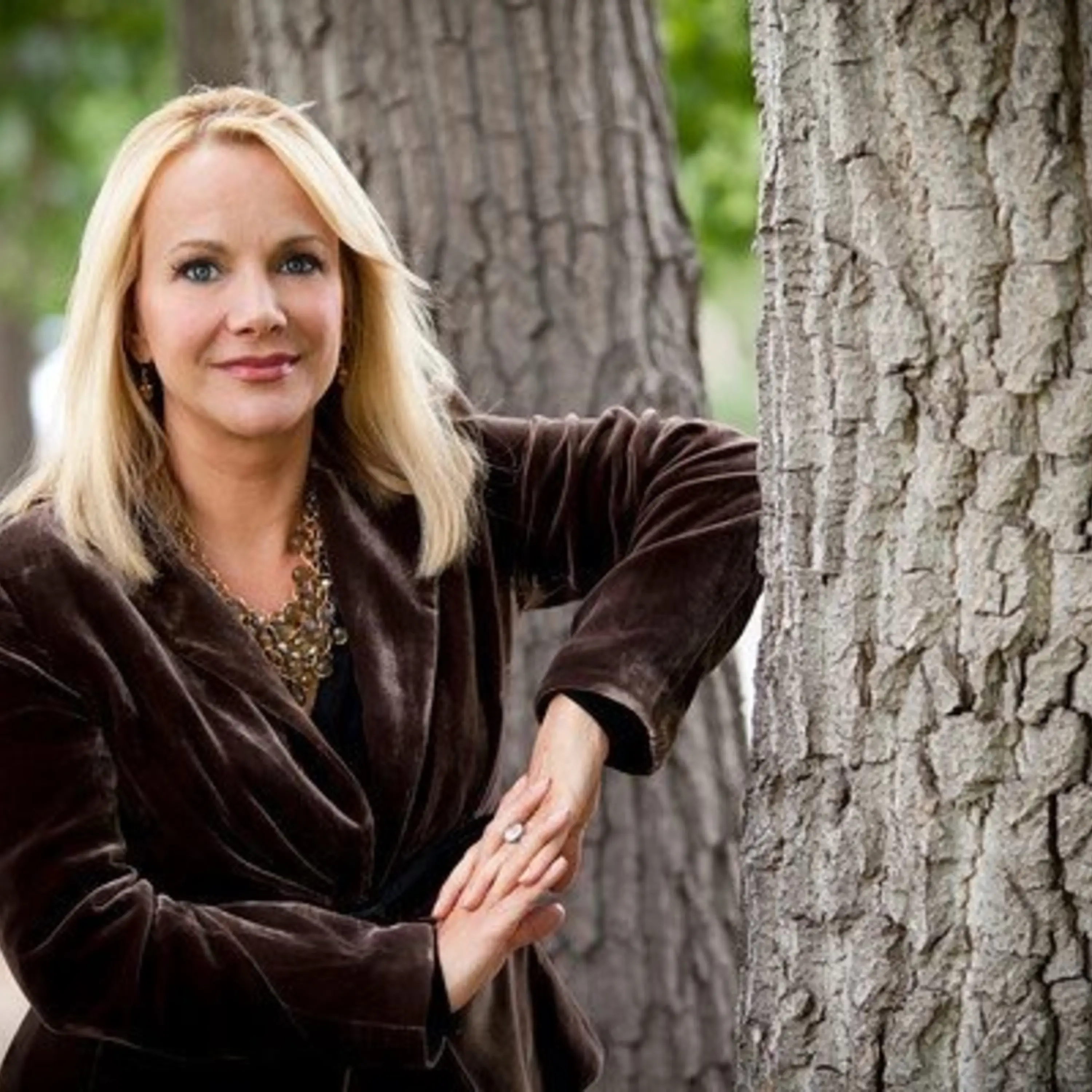


Join Angie Austin on The Good News as she dives deep into the impactful story of Mateen Miryagana, the Iranian author who shares her remarkable journey from a tumultuous childhood to building a life of resilience and hope. Mateen takes us through her experiences growing up in Iran, dealing with family challenges, and using education as a beacon of hope to navigate life’s adversities.
SPEAKER 02 :
Welcome to The Good News with Angie Austin. Now, with The Good News, here’s Angie.
SPEAKER 05 :
Hello there, friend. It’s Angie Austin with The Good News. I’m really excited about the next author joining us. And I love the fact that she’s from Iran. You’ve probably heard me talk about my stepmom, Bahia Habibi. When I was 12, my parents got together. And so she’s been in my life for a very long time. And I know a fair amount about her culture. I love her gormasabi. She cooks for me. And so I was really excited when I received the press information on the book, All Is Well, A Memoir of Loss, Survival, and Inner Strength. And I thought, well, that kind of rings a bell with me. The author is joining us, Mateen Miryagana. And she is joining us from Japan, even though she is Iranian. And your story is fascinating to me, Mateen. Welcome.
SPEAKER 04 :
Thank you so much. Thank you. I’m so glad to be here and be talking to you. Thank you for having me.
SPEAKER 05 :
So I love that after you wrote All Is Well, you said a memoir of lost survival and inner strength. So I really want you, if someone said, hey, what is your book about? Give us kind of like a nutshell of what your book is about, and then we’re going to get into specifics.
SPEAKER 03 :
So in a nutshell, I think I’m hoping that like the main message or the main connection of people with my book will be that no matter what you’ve been through, you’re not defined by your pain. Like life can can break you, but you. also have the power to rebuild yourself. And I want them to see that healing doesn’t mean erasing the past. It means learning to live fully despite of it. And I think my story is proof that you can move from silence and survival into not only to survive, but also to thrive and to grow and to be strong. I think the main message is just hope, resilience, and believe that your future is bigger than your pain, your current pain. And I’m also hoping that, I really hope that after reading stories like mine, people are reminded to be kinder to one another because we never really know what someone else is carrying inside. So I’m hoping all that will come up when people read my book.
SPEAKER 05 :
You know, you said you are not defined by your pain. It’s interesting because when I tell my story, I don’t feel the pain that I felt back then. And for me, I’m interested to know forgiveness is huge for me. I feel like I was given the gift of forgiveness so that I could forgive people who had harmed me in the past. One thing I feel in your book a lot is Even though the love between you and your father is very strong, and I can tell you, you said he really loved us, he loved us. But every time you talk about him in the book, I feel anxiety. I feel like there is this sense of not quite knowing how he’s going to react or what he’s going to do. So I feel a little bit of anxiety whenever you talk about him, even though… Like he was strict with your food. He was strict with where you went, your home, maybe not touching his cigarettes or whatever it may be. And so even though he loved you, I feel on edge whenever you tell the story about him. Is that how it was? What was it like with your father growing up?
SPEAKER 03 :
That’s exactly how it was. The uncertainty, like I never doubted, maybe I doubted a little bit sometimes, but in general, I never doubted that he loved me and he loved us. But at the same time, it was so stressful when he was at home. Yeah, the anxiety is the exact, exact word for his presence. Like even now, I mean, sadly, he passed away five years ago, but I still get anxious when I, like sometimes, some things triggers me, like some things that was associated with the time that I was at home. And I still get anxious because he was very unpredictable. He could just be super kind and nice to you at the moment, but then you do something to flip a switch in his brain and he suddenly could go off on you. And yeah, it was difficult, especially for a kid to grow up in that kind of uncertainty. It was difficult. But at the same time, he wasn’t a monster as you know.
SPEAKER 05 :
No, no. Yeah, no, I don’t get that. I don’t get that impression at all, especially when you talk about how restricted he was with food and how, you know, he didn’t want you to have candy. And then when you talk about the way the food is labeled, it’s different than I’m accustomed to. But I totally understood that. He wanted you to eat healthy foods. That’s obviously because he cares. But then as a kid, that makes you want the candy cane or that made you want the lollipop your mom got that was shaped like an airplane that he figured out she was up to something because she put it under your pillow when he came and grabbed him and threw him out. Like, it’s not because he doesn’t love you. But for a kid, that wasn’t obviously pleasant for you. It feels like you’re walking on eggshells. But then your mom, before she passed, she was like the antithesis of that. She was the flip side. She was like the one who would hug you, that would nurture you, that would give you love. And she was like the safe space.
SPEAKER 03 :
Yes, exactly. So my mom was more like a normal parent who understood like the balance between physical and emotional and mental safe space. But my dad never, I think, never understood that your mental health is as important as your physical health. Like he really cared. That’s so true. yeah so when we were sick i mean he cared so much that even uh so much as if we had a headache or we had a cold he couldn’t sleep at night he was just constantly checking on us to see if even as an adult when i was in uh living in dorm like off in college I remember when I had a cold, he used to call me like a million times a day just to check to see if I’m OK. And my friends were so amazed by it that, oh, my God, your father cares so much. And I never told them that you have no idea how stressful is living with him. Yes. Yeah, it’s just, and even if something happened that you were supposed to be sad, he just didn’t want us to show that sadness. Like it felt like he also fooled himself in believing that as long as we are not, like we are smiling and we are showing that we are happy, everything is okay. And he got really angry if for something that he did, I showed even an ounce of being sad. Even my face was like he was like, I am the dad and you should just know by default that I love you. So no matter what I say, you have no right to like get sad over it or complain or so. I don’t know. I was just it’s strange. I don’t think any dad is like the way my dad was.
SPEAKER 05 :
Well, it definitely sounds like, you know, he was the head of the household. Let’s talk a little bit about you’re living in Iran as a small child. There’s a lot of turmoil going around the war. And then your mom gets sick and then you lose your mom. Can you talk about some of the things that you survived in your childhood? And if you’re just joining us, Mateen’s talking about her book, All Is Well, A Memoir of Lost Survival and Inner Strength.
SPEAKER 03 :
Yeah, my mom got cancer. At that time, in the late 80s, cancer was not really as common as now. People really didn’t know how… It wasn’t as common. Also, it wasn’t as treatable as it is right now. It was a death sentence if someone was the cancer. Yes. Especially in Iran, like maybe the medication and other things weren’t as good as other places. But anyway, we didn’t know what cancer is. I just, as an eight-year-old, I just heard that my mom is sick. And I remember overhearing my grandma, my dad’s mom, telling some of the extended family members one day, they thought I’m sleeping, but they were speaking about how she is never going to recover from this and she’s going to die. And I remember as a kid, that was just such a shock for me. But the thing is, my mom was, her cancer came back three times. And my dad was such a good husband in a way of like just to take care of my mom in a physical way again. Yeah. And I think because of his really nursing her so like so well and so being so like just not letting her worry about anything. She recovered twice and her like the third time after seven years of being sick, she died. I mean, about seven years. She died when I was 14. But the problem is that for me was because as a child, I had gotten used to the pattern that, okay, my mom is sick. I never believed she’s going to die because I saw that she’s going to be sick for some time and then she’s going to recover and then have a normal life. And then even if the sickness comes back, then it’s going to be just for some time. And then she’s going to go through chemo and all that. And then she’s going to recover. So the third time, apparently everybody in our family knew that she’s going to die. Like the doctor had told them that it’s just it’s not treatable and it’s terminal. But nobody prepared me. Nobody sat me down and told me that she’s going to die. And my mind was still waiting for her to get better. But unfortunately, one day they just picked me up from school and they said, Mom is not feeling well. And it wasn’t the news to me. I was like, OK, I know she’s not feeling well, but. And then they took me to her body and that she was just, yeah, it was just, it’s still a shock. But after that, during, when she got sick, I suddenly got in charge of doing a lot of chores in our home. And in Iran, there was like big discrimination between boys and girls in some families. Oh, totally, totally.
SPEAKER 05 :
Yes. My stepmom always talks about how she was very close to her father, but she’s so independent and well-educated. She came to the United States to get an education that her mother very much frowned on that, that she was independent and behaved more like the boys because that was not supposed to be her role.
SPEAKER 03 :
Yeah. And also boys are not expected to do anything in the kitchen. Even though my brother was two years older than me and we were both kids, I was eight, he was 10, but he was in charge of nothing. And I was in charge of even cooking and helping. I mean, my dad also cooked a lot in the kitchen, but I was in charge of cleaning and helping. And that was a lot of stress for a child because it wasn’t only just to do it. It was also to do it right.
SPEAKER 05 :
My girlfriend, when we make that, I think Gorma Sabzi, when my friend and I make it, she said to me one day because we were chopping and chopping and cooking and cooking. She goes, no wonder the women in Iran stay home because it takes all day to make a meal.
SPEAKER 03 :
Yes, Iranian meal is just so time consuming. But after my mom died, my whole world just changed because I suddenly became extremely lonely. It’s not that my mom died. I was so close to my mom’s side of family. And then all of a sudden, first, my grandpa died, my mom’s father. And then eight months later, my mom died. A year after that, her mother died, my grandma. And a year after that, my aunt died. It was just a sequence of death. And at the same time, there was a big conflict between my mom’s side of family with my dad, which was very unfair on my dad on this situation. They blamed him of not taking care of my mom well enough, which is not true. I was there. But at the same time, that conflict caused, you know, when adults fight, they don’t, at least they didn’t care that, hey, I don’t care that this is the person who has a problem with my dad. I see them as my grandma, my aunt, but I wasn’t allowed to see them. During that, like suddenly I not only lost my mom and my grandpa, and I suddenly lost all that emotional connection and support that I had.
SPEAKER 05 :
And I sensed, I didn’t mean to interrupt you. We’re going to have to take a break in just a second. But I got such a strong sense from your father that because of that rift and that the help that he did not receive from your mother’s side of the family because of that rift, that he really stressed to you over and over again. how important it was to marry into a supportive family. And I, too, can really relate to that, having grown up with such dysfunction in my family that I was really intent on finding someone whose family would really be there for us and really support us because I didn’t feel I’d ever had that. I felt kind of like an island, like I was by myself and that everybody else was out there and that maybe they cared about me. But the only person that could take care of me, I always felt was me, that I was on that little island. All right, Mateen, we’re going to take a break, and we’ll be right back with the good news.
SPEAKER 01 :
Arc Thrift needs your large furniture donations. You can either drop off your large furniture at one of Arc Thrift’s 36 locations or schedule a pickup online. Arc Thrift is looking for your gently used couches, chairs, tables, recliners, dressers, entertainment centers, armoires, and desks. Give your furniture a second chance of life. As long as the furniture is in good condition, you can schedule for a large furniture pickup on Art Thrift’s website. Also, make sure to include at least five bags or boxes of gently used items when your furniture gets picked up. And if you have more stuff to donate, they can take up to 20 boxes or bags at a time, free of charge. And with the holidays approaching, find all of your ugly Christmas sweaters, white elephant gifts, holiday decorations, and gifts for a fraction of the retail store price. Find your nearest Arc Thrift by going to arcthrift.com today. So much more than a thrift store. Boulder is tuned to the mighty 670 KLT Denver.
SPEAKER 05 :
Welcome back to The Good News with Angie Austin. Angie here. We are continuing our conversation about the book All Is Well. All Is Well, a memoir of lost survival and inner strength. And joining us again is the author, Mateen Miryagana. And we are continuing our conversation. Your mom passed away. She was sick from the time you were about eight to 14. Her family kind of blamed your father wrongly for not taking good care of her, which you said he had taken good care of her. So not only did you lose your mom, but then there was a domino of deaths, losing four people within the span of a short period of time. And then you’re with your father, who was the much more strict, And one thing that you said, Mateen, that I mentioned to you at the beginning of the interview that really spoke to me because I felt that I – and I might have even mentioned this during the break because I felt that I educated myself out of poverty. And one of the lines that I read, you said, education – pursuing education, not just as a goal, but as a lifeline. So I kind of want to pick up, you’re in Iran, you’ve lost your mother, you’re 14 years old, and there’s a lot of trauma in your story. Where did you go next? What happened next?
SPEAKER 03 :
So next, I went to high school. So for the four year of high school, I was stuck at home with my dad and my brother. And they kind of, especially after my mom died, my dad’s bond with my brother became stronger and stronger because Because he kind of believed that for some reason a boy will be more affected than a girl when their mom died. For some reason, he always believed that the boy needs more support. And I had no problem with him supporting my brother emotionally, but it felt like he wasn’t capable of… paying attention to two kids at the same time. So he was just, he only came to me when he was mad at my brother. Like he only paid attention to me too.
SPEAKER 05 :
Oh, that’s so interesting.
SPEAKER 03 :
Yeah. To ramble about him. So I felt like they were, they even ganged up on me over things that I was such a good kid. The only thing I did was help at home, like with kitchen and stuff and study. Because as you said, studying was my own, my only way to to save myself, to become independent, to get out of the house and become… pursue my education. At the time, I don’t know how it is right now in Iran, but at the time, the only socially acceptable way to get out of your parents’ house is either to get married or to go off to college. Otherwise, you just live with them. And I always knew from a very young age, I assume it’s because of my really hardships at home, is that I always knew I don’t want to get married. I always said like, less people, less drama and people cause drama. I just wanted to be on my own. And the only way, the only other way to get out of the house was to become educated. And I had to really study so hard to get into the kind of college, the national universities that it was, you had to be on top 3% to get in. Otherwise, the other part, the other kind of universities, the one that you have to pay when you don’t need a really high score, but you don’t, you have to pay. But I didn’t want to, My dad, it’s hard to say, like, he wanted me to be educated, but at the same time, I’m sure if I had gotten into a university that he had to pay, he probably would have said it’s not really that important. Because when I was studying, he always told me, hey, not everybody goes to college. It’s not a big deal. Like, what’s the worst thing that’s going to happen? You just live here with me. So he didn’t… I didn’t want that life. So I had to just really study so hard. And I caught like my sleep. I still to this day, my body is so adapted to only sleeping like three to four hours a night. Yeah, I trained myself back then when I was 14, 15 to just now. And also I stopped eating dinner because I because lunch was already like I started helping out making lunch with my in the beginning when my mom died my dad was still helping out a little bit with making and then gradually it when I started helping it became my job to do it and it’s not only making lunch it’s also like cleaning before and after my dad was such a neat person he really got angry if The kitchen was not clean enough. If there was even a piece of food in the sink, he would really go off on me. So I had to make sure everything is so neat and clean. And that was already taking at least three hours of my day. So I said… if i also start making dinner that’s going to become my job too so i lied and i said my stomach get upset if i eat dinner so i’m not going to eat dinner and they weren’t that mean so they weren’t going to make me make dinner if i wasn’t eating it myself so they were like goodness we’ve got about 10 minutes left in the show tell me about what happened after high school and where you went because i know you’re in japan now and i know that you know
SPEAKER 05 :
You left and I mean that the courage even to move across the world, you know, a different country, a different language, like so much. And by the way, your English is outstanding.
SPEAKER 03 :
Thank you. Sorry, let me go back to your question that how what happened after high school. So I finally got into one of the top universities in Iran. By the way, when I said three percent, not three percent, top three percent of your class, you have to be top three percent in the country. Oh, wow. Yeah, to get into those national universities. At that time, in my generation, it was super hard because there were so many kids and so not that many universities available. And I got a bachelor degree after four years in plant biology. And after that, you have to, again, do another entrance exam just as hard if you want to go for a master. I wanted to continue my education because also the job, I couldn’t… It wasn’t possible to find a job just with a bachelor’s degree unless you wanted to just become a, I don’t know, a high school teacher. And I wanted to continue. So to continue in Iran, you have to have a master’s. You cannot go from bachelor’s to PhD. You have to also get a master’s. Master’s course is like a middle school. If you want to go to high school, you have to go to middle school. So I did. I remember during the time, like after that last summer of my bachelor degree, I matched bachelor course. I went back home to study for my master entrance exam. And I remember at that time, my dad and my brother just were so mean to me. And my dad used to get so angry when I was studying because he saw it as a very stressful thing. picture like he was like it’s so sad that you’re always like sitting there studying is depressing why are you studying like you’re just i remember one day he told me it’s the only explanation is that you’re crazy because only a crazy person study if if there is no exam tomorrow and you saw it as your escape like you your other it was a get married or study and get out it was your escape like you said it was your lifeline Yeah. And he wasn’t supporting me with any extra class or anything. All the parents like to get into that kind of university. Everybody that I knew was getting was going to a very good school with good teachers. I went to like a very crappy public school with like I was the only one who got into a national university in the whole school. Wow. to make up for and also everybody was hiring tutors for their kids and my dad didn’t do any of that and to make up I never also asked him I didn’t want to like bother him with anything but to make up for that I had to self study and self invest my time so I did all that at the same time I was I was just being treated really badly just being mocked by my own father and brother for studying but fortunately I got into another good, like a national university, top universities in Iran for a master’s degree. And luckily, in that university, I had an advisor. She told me, you are just too good to stay in Iran. You have to go somewhere that you can do real research and real science, and you have to just go abroad. And she told me about Japanese government have this scholarship that we could apply for. Wow. Yeah, it was very competitive. And I feel so fortunate and lucky that it was a very long process. And maybe I should just quickly tell you that during the time when I was applying for that, the process of applying for this Japanese government scholarship took about one year. I had to do a lot of so many steps, so many interviews and exam. I had to publish my paper and I had to like do get a TOEFL exam. I don’t know if you know, that’s just an English exam. evaluation exam. And to do all that, I knew if I go back home, it’s going to, even though I had graduated from my master, I had already defended my thesis. But if I had gone home, I knew that the environment at home is not going to allow me to really concentrate on doing this step and really get the scholarship. I knew my chance would be a lot lower if I go. So I had to stay. I was living in a dorm, so I had to stay in my dorm. But the universities in Iran are They don’t allow you to use the dorm if you’re not a student, if you already graduated.
SPEAKER 04 :
Yes.
SPEAKER 03 :
And they don’t, in the city that I was in, which was very conservative, I think in all the, yeah, even now my friends confirmed for me that in Iran, if you are a single woman, you are not allowed to go to a hotel or to go to rent a house by yourself. It’s just crazy. Yeah, I can’t.
SPEAKER 05 :
I can’t believe what you came up with and the courage and how creative it is, what you did and how you were so sneaky in order to sleep there, but have like no one really know except.
SPEAKER 03 :
Well, I was homeless, but yeah.
SPEAKER 05 :
Explain, explain how you kind of hid it.
SPEAKER 03 :
So I think I have always been lucky in a way that my personality is in a way that people just like me. I don’t have to do anything. And I don’t think I’m really that likable. But I’m lucky in a way that I don’t know the way I’ve been… been born or something it’s just something in me that people always help me without even knowing me or without I mean they of course know me but even strangers even when I go to a supermarket in Iran especially people just connect with me so I don’t know if that’s an honesty and like I don’t have a mask I always show exactly how I feel and maybe that makes people to trust me But there was this security guard in Iran. And in Iran, they kick everybody out from the building in the university. And you have to, like, nobody, like, I know that at least now in Japan, it’s like we can stay in the university even 24-7. Nobody cares. But in Iran, I think about 6 p.m. or 7 p.m., they just lock all the buildings door and you just have to go home or go to dorm or wherever. You are not allowed to stay in the university. And he, the security guard in our building, the Faculty of Science, really knew me and really liked me as her daughter. She had a daughter. He had a daughter my age. And he always told me you remind me of her sadly his daughter had passed away in a car accident so he the bond was even deeper and he allowed me to stay like he kind of helped me to stay in a storage room and just sleep there overnight and then really early in the morning i had to get up and get out and there was this the storage room and there was a really There was a shower in the back, very, very small. It felt like a gas station, the whole thing. But it was a very small, there was no bed or anything. I had to sleep on a very hard desk, a table. And there were cockroaches in the, like that they had, they were coming out at night when it was dark. So the first night I didn’t know, I turned off the light and then I woke up to the, like the carpet was like, the whole room was, had a cockroach carpet. It was that many cockroaches. So I got really scared that they’re going to climb up the table and just climb on me. So from that, the next night I left the light on. And I am a very sensitive light sleeper, so I couldn’t even sleep. I still prefer that situation over going home
SPEAKER 05 :
Yes, over going home. Oh, my goodness. All right. We’re going to have to have you come back on the show again to complete your story. But I want to get one more question out before we wrap up the interview. I feel that sense of you being kind of like trapped and having to get out. So if you were speaking to someone who is in a situation where they feel there’s no way out or they don’t have any hope, what would you say to them in terms of how you navigated that situation?
SPEAKER 03 :
First of all, I tell them that I understand that feeling. It can be crushing at times, but I also want them to remember that no situation stays the same. And even though it feels impossible right now, it’s still possible to walk out of this situation. Even if you can’t change everything right now, you can still take one step at a time. You can do the smallest thing that is in your control. And your current situation does not define your life, does not define your whole story. Your current pain is not your life, is not what defines you. And you’re bigger than that. And you just have to just remind yourself to do the smallest thing. Like for me, studying was something that was saving me to someone else. Yeah. Just something that just hope that I never lost hope that just remember that step by step, maybe you can’t change everything right now, but you can prepare for the day that you’re going to walk out of this situation.
SPEAKER 05 :
Well, thank you so much for joining us. Again, the book is All Is Well, A Memoir of Loss, Survival, and Inner Strength, Mateen Mirigana. And I would love to have you back. I want to continue the story because there was someone very interesting, Peter, in your story that I want to talk about in our future interview. Thank you so much, Mateen.
SPEAKER 04 :
Thank you. Thank you for having me. I really enjoyed talking to you. You’re welcome.
SPEAKER 02 :
You’re welcome. Thank you for listening to The Good News with Angie Austin on AM670 KLTT.