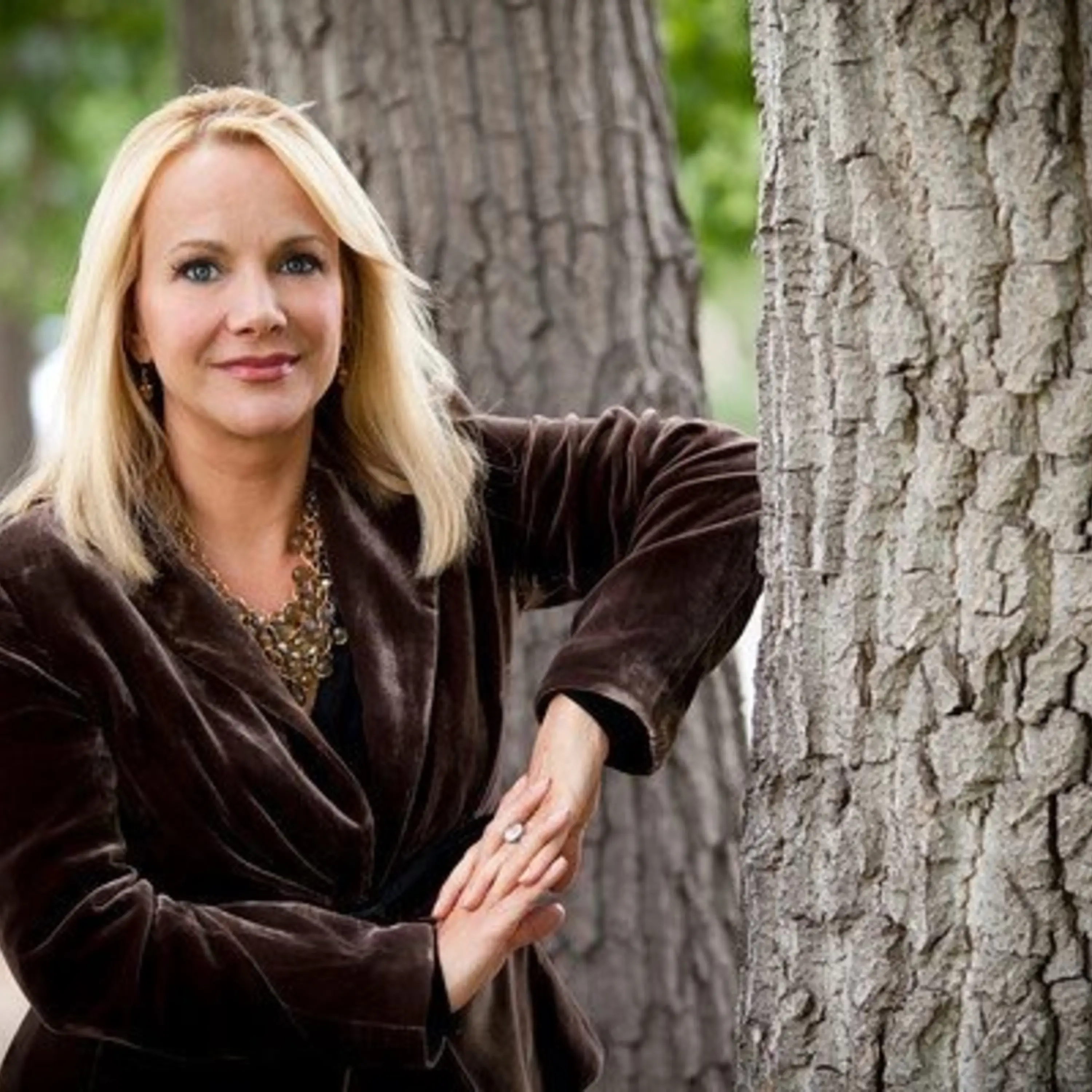
Join Angie Austin on a deeply moving episode as she welcomes back Mateen Miryagana, an extraordinary woman with a story of resilience and hope. In this powerful continuation, Mateen shares the traumas she faced growing up in Iran, overcoming familial and societal pressures, and her journey to pursue higher education in Japan. Despite the cultural and personal battles, Mateen’s unwavering spirit and belief in peace and education have defined her incredible path.
SPEAKER 02 :
Welcome to The Good News with Angie Austin. Now, with The Good News, here’s Angie.
SPEAKER 05 :
Hello, Angie Austin here with the good news. I have asked an author to come back. It was just on yesterday because we weren’t done with their story. And, you know, even though she grew up in Iran and I grew up here in the States, I still relate to her story because we have different trauma in our background. But, you know, she lost her mother. I was estranged from my father. She had four deaths in her family, like back to back, like dominoes. And I lost one of my brothers to murder, another one to homelessness, my dad being gone for so long, and I so relate to educating myself out of poverty. And in Mateen’s book, she is back, she was here yesterday, All Is Well, A Memoir of Lost Survival and Inner Strength, Mateen Miryagana. She is joining us again because we stopped after your childhood and just into your education, and I wanted to get a little bit more of your story. Welcome back, Mateen.
SPEAKER 03 :
Thank you. Thank you for having me back. So excited to continue telling my story.
SPEAKER 05 :
Yes, I just felt like we didn’t finish it. And all is well. We talked about you growing up in Iran. Your mom got cancer when you were eight and she died when you were 14. And in Iran, women really are responsible. You was the only daughter to do all the meals, all the cooking. But you had to get it being the top three percent of the country. In order to get to go to one of these international universities, not just at your school. You were the only one in your school who actually went to an international university. And the fact that you were female is another hurdle for you to get over. But your dad and your brother were not supportive of your education. And we were talking about how you had. Got your four-year degree, and then you wanted to get to further education, but you had to basically hide at your university and live in a storage room because you couldn’t go home because of the pressure and kind of almost like the verbal bullying your dad and your brother were putting you through. And I’m assuming your dad just really wanted you to stay home. He didn’t want you to go off somewhere else because you ended up going to Japan instead. So let’s pick up there. You’re living in the storage room. There’s cockroaches all over. You’re only sleeping a few hours at night and you’re studying to further your education. So that was a very stressful time.
SPEAKER 03 :
Yes, it was. And first, let me clear up the university situation. So it was an international university. It’s national. We have two types. National is you don’t have to pay, but you have to really get a really high score to get in. But there is also private type that the one that my brother went that you have to pay. So I knew that if I get into the paying kind of university, my dad probably would say, hey, you’re a girl. You don’t have to go to college. So I had to really study so hard to go into a national university. And yeah, we were at when I was homeless and I was applying for this Japanese government scholarship. And I remember there were like interviews that one of the steps was that they told me they’re going to send you randomly like for for. two weeks, they’re going to send you randomly questions, email you. And there were three different professors in the university that I was applying for, Chiba University in Japan. And they said, you have to reply to them, the answer of those questions as soon as you can. And imagine, I wasn’t living at home, so I didn’t have my own computer and my own internet or like And also, I hadn’t told them about time difference. And I was very nervous about how to handle all this. And I was living in that storage room. So I had access to the computer lab in the university, but that was also locked during the nighttime. So I had given my username and password to all my only, I have a cousin, Hamid. He is, he was and still is like my the only family member that was like my close friend. I’m the only friend with him. And I had given him my ID and password of my email and he was at home. He was going to a university in our hometown. So he was always home. He was checking my email constantly and then calling me and telling me, hey, this is the question that they asked. So I had to think about the answer. And then by the time it was like daytime, I could go out of the storage room and go to the computer lab and answer those.
SPEAKER 05 :
Oh, my goodness.
SPEAKER 03 :
And then I had to I had to go get a TOEFL exam, the English evaluation. And I had to study for that. It was all. But I don’t know if anybody can believe this. But even though this seems so hard, I was still so much happier than as if like the if I was home and I was studying and doing all of even though at home I had a perfect job. comfortable bed I probably would have had like warm meal I had the warm space no cockroaches and computer and internet but at the same time I preferred this because the pressure at home was just I because of that I always say peace peace of mind is my priority all the time I don’t care about anything physical it just as long as I have peace I’m happy
SPEAKER 05 :
Yes. And, you know, it was a different world for a woman in Iran. And when your mom passed, you were responsible for so much around the home, the cleaning and the cooking. And your father loved you. But there was a lot of like walking on eggshells with him because of the level of strictness that was within your home and the rules that you had to adhere to. So I know there was more trauma in your life. So feel free to whatever you feel comfortable sharing with us, you know, continuing in your story.
SPEAKER 03 :
Thanks. I mean, the first really big trauma was when I was in that university for my master’s degree, my supervisor assaulted me sexually. So he raped me. And at that time, it happened in a way that he used to take us, because I’m a plant biologist, he used to take us out for sampling plants. And he never, because of the Iranian culture and how, even though he was married and he had kids and everything, but still he always took us together. Like it was never one-on-one. So there were always like a few students and him because he was a male and like a few female students. So kind of, but that one day he told me I’m going to, because I was working on a plant that it was season for it to be sampled. He told me, I’m going to take you for sampling like the next month. Wednesday or whatever. And then I always was a very trusting person, even though the society just always showed me otherwise, like men couldn’t be mostly trusted. But I always assumed the base. For some reason, I always saw every man as if they were my uncles and every boy as if like they were my cousins. I never saw anybody like having any bad. And to be fair, beside him, nobody ever violated my trust. They always could see how pure I am. My brain never got matured as early as my other friends in that kind of sexual way. I was just very young in that way. But that day, my professor took me alone and I didn’t read into it. And he told me, hey, I forgot to bring a key. When we bring the samples back, we have to process them in the lab, and I forgot to bring the key to that lab, that room. So let me stop by at my home, and I grabbed the key. I said, okay. I still didn’t think anything. We stopped by. He parked the car in front of the building, and he said, hey, I don’t want the neighbors to see that there is this stranger girl sitting in my car, so why don’t you come up with me? I still didn’t think. I said, yeah, what’s the big deal? Let’s go. And I went and the moment I walked in, he locked the door and he just attacked me and raped me. And he even at that time, like I had, even though I was 25, six years old, I had never had sex. I was a virgin. And I was never even with a boy. And I remember he told me, I did you a favor. Do you know how bad it is that a 26-year-old woman had never had sex? I mean, you should be happy. He called that sex. And I could never tell anybody. I had to still work with him. Because in Iran, they always blame the woman. They probably would have said, hey, you should have known. Why did you go? Maybe you did something. Maybe you let him on. And I would have 100% become expelled from my university. So I just…
SPEAKER 05 :
you had to keep it a secret so you wouldn’t be expelled. If you’re just joining us, Mateen’s talking about her book, All Is Well, A Memoir of Lost Survival and Inner Strength. So you could tell no one
SPEAKER 03 :
No, I didn’t even tell my friends until a couple years ago. I posted it online. There is a website, Survival Trust, I found. And I wrote my story. And even there, I couldn’t really mention his name because of the legal stuff. But I wrote. And that, after like 15 years, it gave me some peace, peace of mind. Yes, yes. Finally.
SPEAKER 05 :
Yes, to be able to finally talk about that. And I think that your book is very strong. And like I always talk about not being a victim and not sitting in the victim chair in life. And because I feel like I started so far behind all of my friends who, you know, had families who were together and didn’t have the alcoholism and all the dysfunction and the drugs and the abandonment. I felt like they were at the starting line in life. And I was way, way like a mile from the starting line. But I was I never wanted to be a victim. And I can tell now. in your book that you never want, you are not a victim and you’re all about survival and peace and education and hope.
SPEAKER 03 :
Yes, yes. I don’t like victimhood mentality. Actually, I like, can I talk about that? So when I came to Japan, the way I learned, because when I was in Iran, even though I studied English, I only knew like reading and writing. My speaking and listening just was not good at all. So the way I tried to improve my English speaking and listening was to watch American TV shows, like family shows, mostly ABC and yeah. I watched so many American TV shows and that way I got accustomed with, at least familiar with some of the cultures. And one thing that really struck me still is that I feel like the media reinforce or even encourages the victim mentality, in my opinion, in a way that, for example, I can see if someone has had a hard childhood or really a tough time, They allow them to just, for example, they say, oh, my dad was an alcoholic or my mom died. And because of that, I didn’t do good in school. Yes, yes.
SPEAKER 05 :
Or I became a drug addict. Or, Mateen, the other one, I married someone just like the bad person in my life. I know so many people who came from backgrounds similar to mine where they choose a man that drinks or they choose a man that does drugs where I wanted someone who is the antithesis of that. I wanted someone who is educated. who didn’t drink, who didn’t curse, who didn’t use drugs, who did want to go to church with me, who was way different. And I’m always astounded when women that grew up like I did, when they choose someone just like the bad person in their childhood, it makes no sense to me.
SPEAKER 03 :
Exactly. So I just don’t or even like they act like a jerk and they say because I had a I had a tough life and it’s kind of send a message that is acceptable. And I always say it’s not you cannot go through life allowing your pain to dictate you. how to behave you just cannot do that if you are better than that I always knew I respect myself more always respected myself and my soul more than that just being someone who is reacting to a pain and I like that about myself also all these things Because the hardship started in my life from a very young age, I don’t see it all as a bad thing because it kind of created this strong bond between me and myself.
SPEAKER 05 :
Oh, that’s so interesting because I felt like I told you I felt like I was an island, that I was by myself. Okay, you are not going to believe this, but we have one more segment left in the show. And if you would like to continue your story, I would like to keep you over for the next segment if you have the time.
SPEAKER 04 :
Thank you.
SPEAKER 05 :
Wonderful. OK, if you’re just joining us, we are continuing our conversation with Mateen Miryagana. And we are talking about her book, All Is Well, a memoir of lost survival and inner strength. We’ll be right back.
SPEAKER 01 :
Arc Thrift needs your large furniture donations. You can either drop off your large furniture at one of Arc Thrift’s 36 locations or schedule a pickup online. Arc Thrift is looking for your gently used couches, chairs, tables, recliners, dressers, entertainment centers, armoires, and desks. Give your furniture a second chance of life. As long as the furniture is in good condition, you can schedule for a large furniture pickup on Arc Thrift’s website. Also, make sure to include at least five bags or boxes of gently used items when your furniture gets picked up. And if you have more stuff to donate, they can take up to 20 boxes or bags at a time, free of charge. And with the holidays approaching, find all of your ugly Christmas sweaters, white elephant gifts, holiday decorations, and gifts for a fraction of the retail store price. Find your nearest Arc Thrift by going to arcthrift.com today. So much more than a thrift store.
SPEAKER 04 :
Brimfield is listening to the Mighty 670. KLT, Denver.
SPEAKER 05 :
Hello there, friend. Angie Austin here with the good news. We are continuing our conversation with Mateen Miryagana. And her book is All Is Well, A Memoir of Lost Survival and Inner Strength. And Mateen, we are talking, you know, you’re giving people hope. And that you said your pain does not define you. You grew up in Iran. Women were not getting the same rights as men. And you were able to go to college. And it was very stressful at home with your dad and your brother. You lost your mom when you were 14. And you’re getting this great scholarship to go to school. in japan but you’re basically homeless and living in a storage room at your university but you’re happier there than you would be at home because things are so stressful at home you’d rather live with all the cockroaches in the storage room at school and only sleep a few hours at night and then you had the issue with your professor sexually assaulting you and that’s where we left off that you couldn’t tell anyone until just a few years ago what happened because you would have been kicked out of school you would have been kicked out of school
SPEAKER 03 :
Yes. I had to keep working with him and just forget. I try to block whatever happened. And I, as you said, I think you were saying, telling me before we start that you were such a forgiving person. I’m like that too. Like I all like, which I, I, At some level, I think it’s not healthy because we were taught, especially in Iran, we were taught that you have to be forgiving. You have to always assume that people didn’t mean it, whatever they did. And I was the extreme version of it. Like, okay, he made a mistake. I tried to block what he did and just kept working with him. And I also didn’t want to get expelled. Yeah, from school. Yeah. Yeah, that was like my future would have been completely ruined. So I didn’t tell anybody. Unfortunately, I got the scholarship to go to Japan, to come to Japan. And I came and coming to Japan had its own like it was a huge cultural change.
SPEAKER 05 :
Oh, I can’t even imagine from Iran to Japan how different it was.
SPEAKER 03 :
It was like in Iran, people, even strangers, even when you’re sitting in a bus, people just talk to you and it’s just so friendly. And it’s just everything in Japan is so different. And even though there are so many things that I love about Japan, just so many things, I really, whenever I travel for conferences, I am always so restless to come back to Japan. I love it. But at the same time, the social part was just such a shock because even in my own lab for four years, I felt like I was in solitary because nobody talked to me. It was just, and then the standards, like, because now I had to success in the international level, right? And then with my background, even though I was Very good student in Iran, but there’s a huge difference between education, someone who gets educated in Iran and in Japan. And in Japan, the professors don’t ever consider your background. They have this mindset that we treat everybody equally. They don’t know anything about equity. They think equality is the same as equity. So I had to just, I’m still honestly catching up with what my peers, because they had better education. They had, I mean, I was being compared with people who got their degree from top universities in the world. So I had to catch up and the whole thing, the expectation, the language, as I said, I couldn’t really speak that well in English. So it was a huge stressful situation for me. But I never doubt, I never regretted it. I still, to this day, I am so happy that I made that decision. Not only I made that happen, but also I believe in a higher power and in the universe, whatever you want to call it. That always had my back. I always, even though I…
SPEAKER 05 :
It’s so interesting you say that because we have a different take on it. But I think I’m just totally jumping in here because I tell my children, my faith saved me. Like my background, I had no one to count on. And I’m a Christian and my faith saved me. And my best friend who’s from Iran, she and I don’t agree on Christianity, but we love each other so much. And we think exactly the same. We value family. We are honest. We care for each other. We cook meals. Our families go on vacation together. Our families eat together. You know, like we once a week I’m at her house and we’re making food. It’s like she’s like my sister. And it’s so interesting that our faith does not align. And I don’t even know if our politics align, but our love is so pure for each other. But I tell my kids because we’re giving messages. Grandma and grandpa are visiting and we’re each giving three lessons that we want our children to learn together. And I, one of my daughters has a scholarship to Christian university where she plays a volleyball and all of my kids go to young life and all the meetings. But what I want to say to them is when you feel like you have no hope found the foundation for me was my faith. And I feel like it saved me because it gave me like a father figure or love or a feeling that kind of filled my heart with joy and love. And even though you have a different take on it, we both leaned on that for our peace and,
SPEAKER 03 :
Yeah, I don’t have a different take on it. In Iran, when you’re born, by default, government requires you to be Muslim, and you’re not supposed to say anything else. But when they ask me even now, they ask me, what religion are you following? I always say none. I don’t think there is a difference between any of the religions. I think I always say we all love and believe in the same God and the rest is just misunderstanding if there is anything. So I don’t care what they call it. I always believed, like if you read the last chapter of my book, I explained there that I think the title is In the Arms of Unseen Parent. Like, even at the darkest time, I always had this higher someone, God, not in a religious figure, but someone who had the power to save me and had my back. And I don’t believe Efforts help you like to get out of the hard situation, maybe hard work helps you, but it’s not enough. You need something else. You need love. Yes, yes, yes, yes.
SPEAKER 05 :
And I just I relate to your story, even though, you know, we have differences and we grew up across the end of the world from each other. We have very similar survival mechanisms. And when you talk about education being important. a lifeline. I mean that I educated, I always say I educated myself out of poverty. And so I want to make sure because we’ve got, um, only about six minutes left and we keep running out of time. I want to make sure we cover, you moved to Japan and you have like a whole new life. Like, I mean, you moved across the world, you know, uh, across and you have different language, different everything. And you’re there, you’ve, you’ve settled in there.
SPEAKER 03 :
Yeah, after my PhD, I went to Kyoto University for a postdoc, and after that, I continued. Now I am an independent senior research scientist. Yeah, I looked you up.
SPEAKER 05 :
You’re like a brainy mucky muck. I found something about you on Instagram, and then I friended you on Facebook, which you’re going to find some Angie Austin lady that requested your friend on Facebook. Thank you. Yeah, you are highly educated, like a molecular ecologist and principal investigator at the Okinawa Institute of Science and Technology, where she explores epigenetic mechanisms in mangroves and other tropical plants to understand their adaptability to environmental stress. I can barely say it.
SPEAKER 03 :
I’m sure I can barely say something that you know and I have no idea about.
SPEAKER 05 :
Wow, you should be so proud. Is your dad so proud of you now? Is your family so proud of you?
SPEAKER 03 :
My dad passed away. Oh, that’s right. That’s right. Five years ago. Yeah. But I’m sure he’s proud. I mean, he was proud. My dad was very complicated. And I am so proud to say that I never talked back to him or I never like he told me this. I really cherish this conversation with him that towards the end, even though he wasn’t really sick or anything, he died of a sudden heart attack. But and he didn’t, he was only in his early 60s. So we have no idea. Yeah, but just right. I don’t know if he had a feeling or something, because just a couple months before he passed away, and I always called him once a week, and we had a very long, like one or two hour conversation. And He, I mean, we never talked about anything deeply. I just let him vent about whatever he was going to vent. But I always made sure that I’m calling him. And one day he told me, Matin, every single person in my life, one way or another, has hurt my feeling at least one time. But you are the only person who has never done it. And I am so proud of that.
SPEAKER 05 :
That is huge that he was able to say that to you.
SPEAKER 03 :
yeah despite everything he i i never i always i always had the ability to remember the good things no matter what he was doing at the moment if no matter how bad it was or how hurt i felt i always remembered hey this is the same dad who stayed up all night when i had a fever this is the same that who really who really cared if even if I looked sad, he wanted me to fake happiness just so that he wouldn’t even though that’s not right. I’m not advertising like, of course, it’s okay not to feel happy all the time. And a parent shouldn’t force a child to always look happy. But the fact that he did that is not because he didn’t care. It just shows that he cared. He just didn’t know. Some people just don’t know how to be a parent. They just
SPEAKER 05 :
Yes, it doesn’t come naturally. I think my dad was too narcissistic to be a good parent because he couldn’t look very far without, you know, outside of himself. But, you know, in the end, he did try to rise to the occasion and he became a good grandfather. Like my kids really, you know, loved him. I want to make sure as we wrap up our conversation about all is well, what do you want people to take away from A Memoir of Lost Survival and Inner Strength, Mateen?
SPEAKER 03 :
I want people, so I also thank you for asking this because besides the things that I already said about like remembering that no matter how painful the situation and how impossible it feels right now, it’s not going to stay the same and you just have to take one step at a time and just hope and just take whatever that is in your control at this moment. And also remember that, as I said, life is not black and white. Even pain can be good. Like even, even like, as I said, both you and I, we found a strong bond between like, I found a strong bond between me and myself. Even now to this day, whenever I am facing anything hard, I remember I speak with my younger self and I tell her, Hey, Do you remember like back then when we were in that horrifying situation, when we were feeling that lonely? Do you remember how we together survived that? And I can really I can tell her, hey, I’ve got you. And I can hear her back to me. We’ve got this. And that just gives me strength. And people now, my friends tell like. tell me that like when something bad happens, now I’m so good at not freeze, just handle really hard situation very well to the point that some people even accuse me of lying about like if something really bad happened to me just because I don’t look as shocked or as like powerless, they assume, some bad people assume that I’m lying about something bad happening to me. But it’s simply because they cannot believe how someone can handle something that bad.
SPEAKER 05 :
To be that resilient.
SPEAKER 03 :
Yeah, the resilient was like the pain is not only the bad thing. So I want the readers to see the pain as something that trains you, just like physical training that makes you stronger. The life hardship also trains you. And people who have read my book also ask me, hey, how can you be this honest and open? I have written everything so openly and honestly. And they tell me, how did you get the courage or how did you get the strength? And I’m really hoping that my book just normalized that. I think there is a stigma between telling the truth, telling your story. People like to say, oh, everything is OK and I’m fine. And then they suffer alone. And if we all talk openly about, because everybody goes through difficulties in their life. And if we all try to talk about it and tell the truth and tell our stories, then other people can see that, hey, I’m not alone. And our stories can help others.
SPEAKER 05 :
And I’m not alone in that they can have hope. And you said you are not defined by your pain. Mateen, we’re out of time. The book is All Is Well, A Memoir of Lost Survival and Inner Strength. Mateen Miryagana. And I just can’t thank you enough. I really enjoyed our four segments, our two shows. Thank you.
SPEAKER 03 :
Thank you. Thank you for continuing with me. I really enjoyed sharing my story, and thank you for listening to me.
SPEAKER 05 :
Oh, you are so welcome.
SPEAKER 02 :
Thank you for listening to The Good News with Angie Austin on AM670 KLTT.