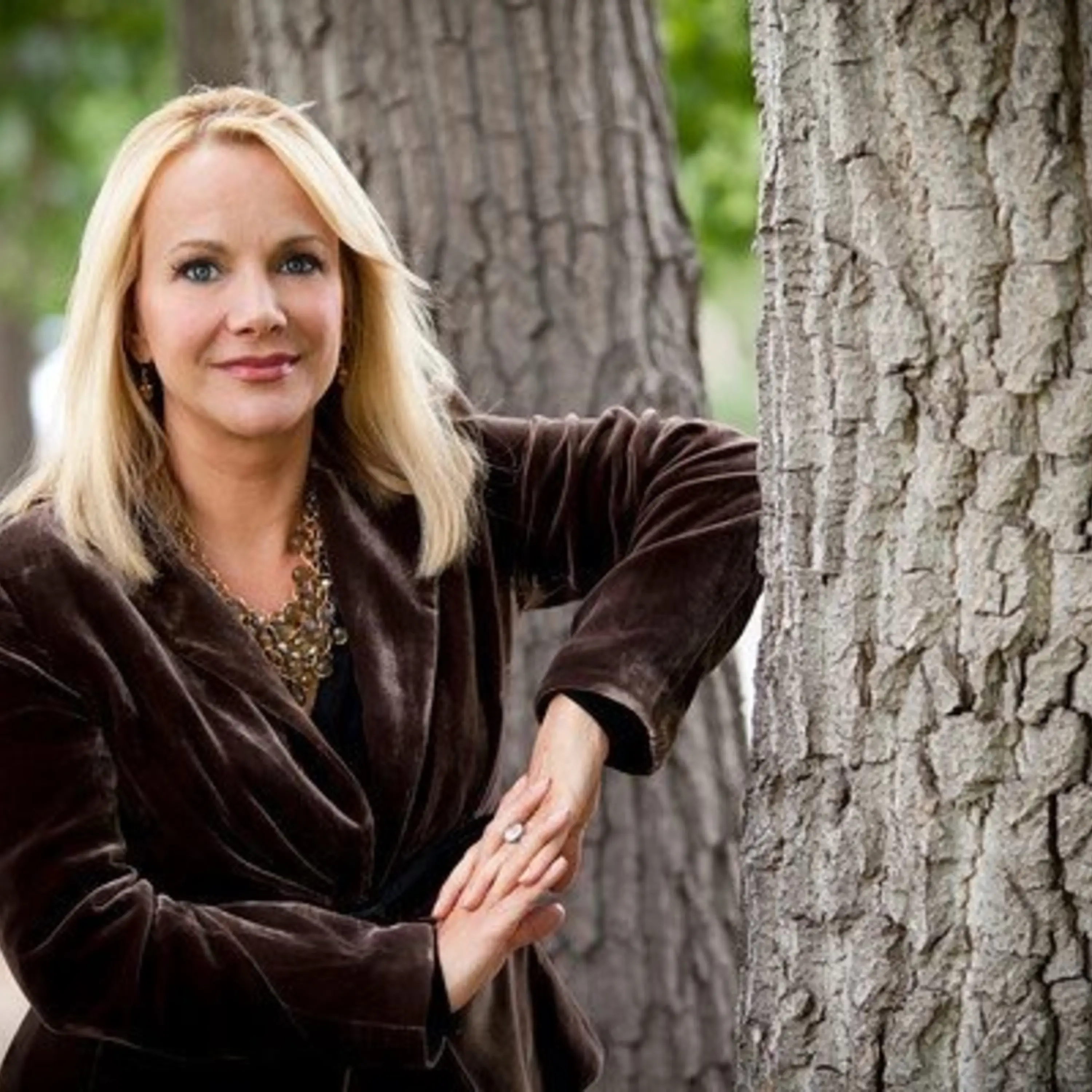

In this episode of The Good News, Angie Austin sits down with Dr. Lanisha T. Adams, the acclaimed author of Me Power. They explore the principles of personal empowerment and discuss how embracing one’s individual strengths and navigating barriers can lead to transformation. Dr. Adams shares insights into her five-step guide for achieving positive change, emphasizing the significance of self-reflection and choosing the right guides in life.
SPEAKER 02 :
Welcome to The Good News with Angie Austin. Now, with The Good News, here’s Angie.
SPEAKER 05 :
Hey there, friend. Welcome to the Good News with Angie Austin. Joining us is author Dr. Lanisha T. Adams discussing her seven-time award-winning book, Me Power. Welcome, Dr. Adams. Hi there. So happy to be here this morning. Me too. I’m looking forward to this. All right. So kind of give me a little overview of Me Power if you were giving your elevator speech on, hey, this book is all about this.
SPEAKER 06 :
Yeah. This book is all about how we think about empowerment differently. putting you as an individual at the center of it. And it has to do with defining who you are and knowing that that’s going to change over time and that I’m calling self-knowledge and combining that with principled action that we can take in five key ways to create change when the odds are stacked against us.
SPEAKER 05 :
And isn’t that the case oftentimes, like, in the world, like, as a woman sometimes? I mean, I know things have changed, but we still do face some different obstacles than others. So let’s talk about some of those. Can we go through the five things?
SPEAKER 06 :
Yeah.
SPEAKER 05 :
All right. Let’s do it.
SPEAKER 06 :
Okay. So I agree 1,000% with you. Like, it doesn’t matter who you are. I think for some people, we have more obstacles than others. But then each of us, it’s the human experience, right?
SPEAKER 05 :
Right.
SPEAKER 06 :
There’s no way… get through life without encountering them and so i think this is a good way to talk about how you can have these five principled actions to navigate a way through the first is embrace your barriers the second is focus on your strengths the third is speak for your life the fourth is choose your guide and the fifth is ritualize your reflection and um each of these you know they’re principled as a call to action, but then there are also practices that you do for each one of them. and we can talk a little bit about that.
SPEAKER 05 :
Yeah, let’s start with number one, embracing things. I think so. I don’t like victim mentality, and I hate to be this blunt, but my mom has it. I had a very difficult upbringing with a lot of alcoholism, murder, drug addiction, low-income housing, all of that jive, right? Okay, so then I get an education. I work full-time. I graduate with honors. I start working for NBC News. Then I have my mom move in with me, and I’m like, our new start. No, she’s still back in low-income housing. She’s still back in a bad marriage. She’s still back with drug addict kids. I’m like, no, no, no. We have this new life. We aren’t victims. We are victors. She can’t let it go. So what do you mean by embracing things that maybe cause us difficulty?
SPEAKER 06 :
Yeah, you know, it’s funny. We always think if something bad is happening, we want to get rid of it. We don’t want to deal with it. And it’s really a A shift in the thinking like, hey, maybe this thing is happening to teach you something. And maybe if I look at it differently, like I’m not trying to go around it, I got to go through it. And it’s that that is total difference between victim mentality, as you mentioned, because so many people are thinking the locus of control is on the outsides. I don’t have any control over this situation. I was born poor. I was born with a mom who was 16. This is my story. I was born with people in my family who didn’t go to college. So therefore, I cannot go outside of that because what do I know about it? What do they know about it? No one’s there to help me. No one’s there to hold my hand through the whole thing. And I think this kind of idea that the power and the idea of change is on the outside is It’s really within us. And there are things that happen to us we have no control over. There are terrible oppressions that occur for people. And I’m not discounting that. However, we can only control what we do. what we do in response to what happens to us.
SPEAKER 05 :
I love that you say that about you’re not discounting those things. You’re embracing. You’re not discounting them. So you’re not saying to somebody that had a similar circumstance maybe to ours, like, you’re not discounting it, saying, like, get over it, you know, just deal with it and move on and pull yourself up by the bootstraps. You’re saying embrace it to make yourself better. My mom started at 17 too having kids, so – they weren’t in a great position to empower us. Like they did the best that they could with the tools they had, at least in my mom’s case. I just don’t think she was capable of really empowering me in her state that she was left in after all of that stuff went down.
SPEAKER 06 :
No, but you’re not sitting waiting on the sidelines for her to do that.
SPEAKER 05 :
Right.
SPEAKER 06 :
No, you’re right. No, because you would still be waiting on the sidelines for it and it’ll never come. So I think there’s something to be said about This internal piece, which I’m calling me power, which is not waiting and looking because, I mean, sometimes nobody shows up.
SPEAKER 05 :
Right.
SPEAKER 06 :
And there is a piece here that is kind of ironic. So much of this personal agency is based on our internal compass, like what’s driving us, what’s motivating us. But we cannot do it alone. So we have to have people, but it might not be the people you think. It may not be the folks that you know. And we have to talk about that in our social world. It’s a very individual experience, and yet we show up in the world, and we have to relate to it somehow. I mean, this is so important.
SPEAKER 05 :
Well, and I think it’s interesting too, like if someone listened to you and listened to me, we didn’t, it doesn’t sound like to me, I’m jumping to conclusions, but we didn’t embrace like where we came from. Like if you hear us, we sound like highly educated women and we are very articulate, right? But if I think back to where I grew up, I wasn’t growing up around people like that. And I saw many of the girls in my circumstance gravitating towards men like the men that had already ruined their lives. And I’m like, I wanted the antithesis of that, you know, so I wasn’t gravitating towards anything that was in, you know, my world. And so I want to I want to make sure because I’m enjoying our conversation that I let you get through the more of the five principles of action. Do you want to do number two?
SPEAKER 06 :
Yeah. So I I’m going to you know, it’s funny. Focusing your strengths is probably my favorite one because I think it gets at this idea, right? Like we, so much of us as humans, and this is not specific to any group, it’s in our nature, like it’s in our DNA, where we’re looking for what’s wrong. Because if we focus on what’s wrong, then it can save us. You know, think cavemen, like think, you know, back to prehistoric times. We got to find out, we got to be looking on the lookout. What’s going to happen? And then prepare for it and take action. And so focus on your strengths is the flip side of that, where if you want to make change, we’re often thinking about what we don’t have, which is from a negative space, you know, like I’m lacking this or I have this weakness. I want to shift. And I think we’re often trying to accomplish things and go after something. And the best place to do that is from our strengths. So first you have to identify what those strengths are. And you can take a test. It’s called the Values in Action Survey. That’s probably my favorite one because it’s free. It’s research validated. And it will rank order your strengths on a list of 25 things. And then the top five strengths are what are called your signature strengths. And there are things that you may not think about, like humor and appreciation for beauty. And, you know, you just see yourself differently thinking, huh, these are my strengths and How can I use them to go after what I’m trying to get instead of I lack in these ways and I need to make change. I mean, we all have something to bear that is positive to bear to any situation, to bring to any situation. So why not start there? So focusing on your strengths is really about that.
SPEAKER 05 :
I like that as well. Okay, number three.
SPEAKER 06 :
Speak for your life. Another fun one has to do with just making sure you get to set the tone. You You know, we control the narrative. And in our mind, there’s a lot of chatter that may not be in our – what we think, you know, it’s unconscious or it’s just running in the backdrop. It may not be like we’re in control of it, but we do. And so Speak for Your Life is really calling out – I’m encouraging folks to call out into existence what they want and then go after it. And then you can do that not just by vocalizing but also expressing – who you are in the world. And the expression of who you are is in many ways, you know, what you wear, you can dance, you can have all kinds of forms of expression. And then my favorite practical way to bring this to life is to identify a weird thing about you, probably the weirdest thing about you, an unusual skill or talent that could also benefit somebody else, right? And then you share it in a way only you can. And so this is really interesting because we often think, well, what’s weird about me makes me different from the crowd and then that is why people ridicule me or that’s what it’s something that’s not good because i want to change it but that is like your i mean that uniqueness is something only you have so why not treat it in a way that is like a superpower yeah i like that
SPEAKER 05 :
I like that. My daughter has one of my kids, Hope, she has ADHD and it’s become this superpower in that she can hyper focus, but also she’s so exuberant and boisterous that like kids and parents love her on like her teams and they vote her captain. So this thing that was so annoying in elementary and middle school, now people like admire that she’s so over the top and excited to see you and hugging you. And so many people have boundaries that don’t allow them to be like so excited to see you but she doesn’t like stop so it’s made her like it’s become her superpower her friendliness and her energy I love that and when you talk about gifts I interviewed this comedian I love his name is Michael Jr. and he was doing comedy in like homeless shelters and he said Angie you have this gift right but it’s not a gift until you give it away that’s when it really becomes a gift it’s not a gift when you just keep it for yourself mmm
SPEAKER 06 :
100%. And I love that about your daughter. That’s beautiful. And I hope she hangs on to that and even amplifies it even more as she keeps going.
SPEAKER 05 :
Yeah, I do too. Because the siblings used to say, when everybody comes up to me and says, Hope’s annoying. And now the siblings are like, wow, Hope’s really popular now. I’m like, because she just embraced who she was. It’s like, take it or leave it, you know? All right, we have three minutes left. I want to get through the last two. We’re on four, right? Yes.
SPEAKER 06 :
So choose your guides. That really has to do with looking at who you can choose to guide you in some way. It could be a coach, a mentor, somebody you respect, someone you want to emulate. And just knowing that you’re not forced to just go with people that you know. Because oftentimes, sometimes depending on where you are, where you’re coming from, the people that you know aren’t going to help you get to your next level. And then the last one is ritualize your reflection. And that has to do with looking at points in your life at specific times, dedicated times, to see how you may have grown and changed over time. And one exercise I have for this is create a list of 10 defining moments in your life and include a picture of yourself at each of those moments. And then start asking, and a defining moment is like, you had a baby, someone died, you graduated, you moved to another country, you paid off debt, something like this, significant. And how did you feel at the time? What were your goals? How have they changed? In what ways have you changed? In what ways have you stayed the same? You’ll start looking at yourself and your life very differently.
SPEAKER 05 :
Oh, I love that. Okay, last but not least. No, that was the fifth one. Oh, that was last but not least. Oh my God, I want to have you back. I know we’re really about out of time. So I want to make sure people know how to get in touch with you. And I know you suffered a cardiac arrest and we were going to talk about that as well because I know you were in ICU two weeks. So I would say in one minute, how did that change your life?
SPEAKER 06 :
Oh, it changed everything. But the main change was that it really brought to life this idea that I have to have personal agency to get the hell out of that hospital. And then I also had to have help order to do it because I couldn’t do it alone. And that’s the main message of MePower is that there’s an individual component and it’s all inside. And then there’s a component that is about our social world. So we can make change together. And that’s what I’d say about that. And folks can find me on My website, Lanisha.com. They can read a free chapter of the book. And I also want to extend a special offer to your listeners to enjoy a 25% discount using the code audio because I’m coming out with an audio book. And ask the libraries to get the book. I mean, our taxpayer dollars pay for this public institution. So go after it. You can get free chapters, reading, and then also audio book on the website. Check it out. Thank you so much for having me here today.
SPEAKER 05 :
And Lanisha.com. And yes, I’d love to have you back. I feel like we fit about an hour interview into 15 minutes. So thank you so much. A real blessing to have you on the program.
SPEAKER 06 :
So honored to be with you. And I will come back. Take care. Thank you. Bye-bye.
SPEAKER 04 :
We’ll be right back. We’ll be right back. They always need donations, so why not start out the new year with downsizing the items you no longer need? You can find any Arc Thrift store or donation center on their website at arcthrift.com.
SPEAKER 01 :
Florence, thanks for tuning in to KLTT, the Mighty 670.
SPEAKER 05 :
Hey there, friend. Angie Austin here with the good news and very pleased to welcome one of my friends, my former producer, Steve Ebling, who not so long ago retired from our main station, KLTT, Colorado’s Christian Station. Welcome, Steve.
SPEAKER 03 :
Good morning. Nice to talk to you.
SPEAKER 05 :
So how is retirement treating you? Because you’re not really a retirement kind of guy, I don’t think.
SPEAKER 03 :
Well, I’ve learned a lot. It’s only been, what, six, maybe six months, and I’ve learned a lot about life and, you know, I guess myself. And let’s just put it this way. My learning curve has gotten very steep.
SPEAKER 05 :
All right. We’re going to talk about your testimony, you know, how you became a Christian, et cetera, and started working in Christian media. But what do you mean you’ve learned a lot since you retired? Like good things, bad things? Are you working? Are you staying home? Like what are you doing?
SPEAKER 03 :
Well, all of it’s been good. I mean, you’re bound to learn something about yourself. I guess I was in the workforce for 52 years, I guess, just short of 52 years. And as long as you’re doing the daily grind, five-day-a-week type thing, there’s probably some things that you’re not really too aware of about yourself. You’re too distracted. And, you know, once that responsibility kind of falls away, you start to see new things. And it’s been very interesting. And, you know, you’ve heard, certainly it was a big deal when I was still working at KLZ because Kim Munson would promote it that I was a volunteer at the Railroad Museum in Golden. And as expected, that does take, you know, a lot of my time, and it’s a good thing.
SPEAKER 05 :
So you’re still doing that. You’re still working. So you’re working volunteer-wise, but you’re at the Railroad Museum. And what’s your passion for that area of expertise?
SPEAKER 03 :
Well, it’s the mission of the museum is to keep railroading history out in front of people because it’s a thing that people don’t, you know, they might see the big trains passing through Denver, but otherwise they don’t really know much about it. And The railroads made the country, but no place is that more important and more evident than in Colorado. So just supporting that mission, keeping the railroad history of Colorado out in front of people, it’s a fun thing to do. It’s an important thing to do. I was just telling another individual back on the East Coast where I was born and raised that it wasn’t long when my lifetime was… you know, in the early stages that I became a certified train nut. So it’s just something that’s been with me for a long time.
SPEAKER 05 :
That’s pretty cool. That’s pretty cool. So, you know, when I first heard about you to potentially use you as my producer, like what was it around 10 years ago or so? 2014. Okay. Yeah. So about 10 years. And I’d heard that you’d done some work at a local church and, you know, helped out and that you might be a good candidate for me. So we made contact with each other because you knew some of the people at Crawford Broadcasting. And so you already were involved in like your Christian life then 10 years ago. So when did this start? When did you become a Christian? Tell me a little about your background.
SPEAKER 03 :
Well, let’s go back even before that started. Being raised on the East Coast, and I don’t want to get too seminary here on you, but on the East Coast back in the 60s and 70s, mainline denominationalism was alive and well. And all that says is that there were the big churches, the Methodist Church, the Lutheran Church, the Presbyterian Church, they were the main drivers back in the East Coast. Yes. Unfortunately, though, their evangelical nature and their priority on teaching the Bible was really not very high. But that’s how I came up through my earliest years up until, oh, about, what, 13 or 14, where a teenager really starts to drift away from that kind of stuff. So I went from say, um, you know, age 13 or 14 up to about age 26, 27 with no real, uh, spiritual influence. Now all that changed, you know, once I got to Colorado, you know, via the military and got established a little bit in life. And my, you know, wife at the time, she was a, uh, you know, belonged to a real small Southern Baptist church in Aurora. And, uh, after our first child was born, there was something pulling at me. And I didn’t know what it was then, but I know what it was now, looking back on it. Because once the Holy Spirit starts… Once you’ve been targeted by the Holy Spirit, you don’t usually escape. So that’s kind of the way it went down. And I started attending that church with her, and sitting in Sunday school… and hearing Scripture that I had been hearing all my life. But there was something different about it now, because there was something going on within me, and the Scripture that was, while it was very familiar, was having a totally different impact on me. And I kind of lived in that environment for about two to three years, And not long after my daughter was born, it really came on hard. And it was time to, you know, make a decision.
SPEAKER 05 :
All right. So in terms of you’re talking about the different denominations, my daughter just got baptized. And when we sent the video to Grandma and Grandpa, Grandma said, what church? Catholic? And my husband said, no, non-denominational. It’s a Christian church. And then she wrote, is this a cult church? And then I sent her the definition of a non-denominational church, and she’s like, oh, you know, sorry, you know, I didn’t. It was just funny that at, you know, 80, she thought that a non-denominational, and that’s what we’ve gone to the entire time my husband and I’ve been married. I mean, we did go to a Presbyterian church for a little while, but in general, non-denominational. And it just was crazy to me that she just thought it was a cult if it wasn’t. And then she’s like, well, who runs it if it’s not the Pope? You know, and we’re like, oh, gosh. Pope. Okay, here we go. So it’s just, you know, when you talk about the various denominations. So this isn’t something that really happened for you necessarily as a kid.
SPEAKER 03 :
Exactly. And I remember vividly, you know, when you’re watching your parents have their quote unquote discussions, sometimes, you know, loud discussions. My parents were debating. There was a A Bible church much closer to their home that my mom wanted to go to, but my dad was trying to hold back. He liked the comfort of that United Methodist Church. And I vividly remember, I’ll never forget it, her blurting out, but they don’t teach the Bible.
SPEAKER 05 :
Interesting.
SPEAKER 03 :
And I’m sitting in the backseat saying, well, then what are they doing? Right. And so that little snippet kind of stayed with me. And then once I got into my 20s and this situation was evolving here in Aurora – All of a sudden it hit me. Now I know what she meant by that. And I know also why he was so clueless as to why it was important.
SPEAKER 05 :
I that’s interesting, though, that she you know, that there was that debate, because I think a lot of parents, especially, you know, back in our parents day, had that debate about, you know, which church to attend, per se. So I know this is a foundation in your life for you and your wife. Your wife was on my show years ago because she basically donated her kidney to a stranger. I mean, I know he’s not a stranger now and he was in prison. choir, I believe, with your wife at church, but she really didn’t know him. So we talked about her faith. I know this is important to your family. Talk about that, the importance in your family and just in your life and what your faith has in your relationship with the Lord has brought to your life in terms of enriching it, etc.
SPEAKER 03 :
Well, one of the first things that comes to mind when this topic pops up is I look at events. I was on staff at a large Baptist church for 12 years before, you know, before you and I, I went to media school and then you and I started working together. And either in my own life or the lives of the members of that church, incredible things happen. I don’t mean incredible good. I mean, incredible bad.
SPEAKER 02 :
And I’m,
SPEAKER 03 :
time after time watching these different scenarios whether it was illness or car accidents you know that didn’t have a good outcome i thought to myself this i’m struggling with this situation how do people who have no faith how do they deal with things like this right because you always sort of said it rains on the just and the unjust alike and so that has always been out in front of me how do people who don’t know uh the lord and and the salvation experience how do they cope with these kind of things and i it just i could not comprehend the emptiness and the law and that feeling of you know just incredible darkness and emptiness how do how do they cope with it how do they move through and beyond these situations and then conversely then i said well think of my own situation when my When my mother unexpectedly passed away in 2005, I mean, it was a sad time, but we all, as a family, we all kind of walked through it with some amount of ease, and we all helped each other grieve to whatever extent was needed, because certainly a woman her age, she wasn’t going to have a whole lot of more years in her life, but now that we’re the situation had come and gone, we were all kind of walking in this realm of knowing, well, we know where she’s at. Her faith was strong. She certainly laid it out on us countless times. So that was the impact right there, just to say, hey, I know what this means to me, and I wonder how other people who don’t live in this particular mindset and had no faith of their own. It’s like, how do they cope with life?
SPEAKER 05 :
Yeah, I would totally agree with you. My friend lost her son. I think he was about 19 at the time in the Marines. And he lost three of his limbs. And they had him on the operating room table. And just the things that happened after that and that sense of peace that came over her because this was really her worst nightmare. She was so upset with him for joining the military. And so she said she had to write a book about it because she had to tell people that God is real. And just from that feeling she had when she went through finding out about her son being killed in the line of duty. So we have a couple of minutes left. Let’s talk about how you and your wife tried to instill this into your kids and if it worked, like if they eventually kind of followed you in terms of their faith.
SPEAKER 03 :
Well, okay, with two kids, the older is a male and the younger is a female. And not that that means diddly here, but Both of them were heavily immersed in the Southern Baptist Church that we belonged to at the time, and taking advantage of all the things that were offered to the kids. But sure enough, just like his father, my son kind of just started to wander away from it. And to this day, it still seems to be oblivious, I guess, to it. I almost said ambivalent, but that means that there must be a time where he… was embracing these things. I don’t know that was ever true. However, his sister, she definitely went the other direction, and she is very strong in her faith, and I can see her, the significance of making sure that they’re in not just any church, but the right church that meets their needs, and it’s going to make it not a slam dunk, nothing’s ever a slam dunk in this arena, but gives her a a better chance of getting her children on the right track early in life.
SPEAKER 05 :
You know, I remember when you became a grandpa, you know, and all that was going down in the last 10 years. And I think that, you know, when they talk about the mustard seed that, you know, when you bring your kids up, you know, in the church and his family, your son’s family, you know, mom, dad, sister are Christians. I think that when things come up in life that are challenging, that it does kind of like a magnet kind of draw you back, you know to your faith um that’s just my opinion but i just want to thank you steve ebling it was fun having you as my producer and i saw you a couple months back at the christmas party and thought wouldn’t that be you know fun to have you come on and give your testimony and we’ll have to have your wife on again as well so thank you real blessing to have you on the show steve you’re more than welcome i appreciate the opportunity you betcha
SPEAKER 02 :
Thank you for listening to The Good News with Angie Austin on AM670 KLTT.