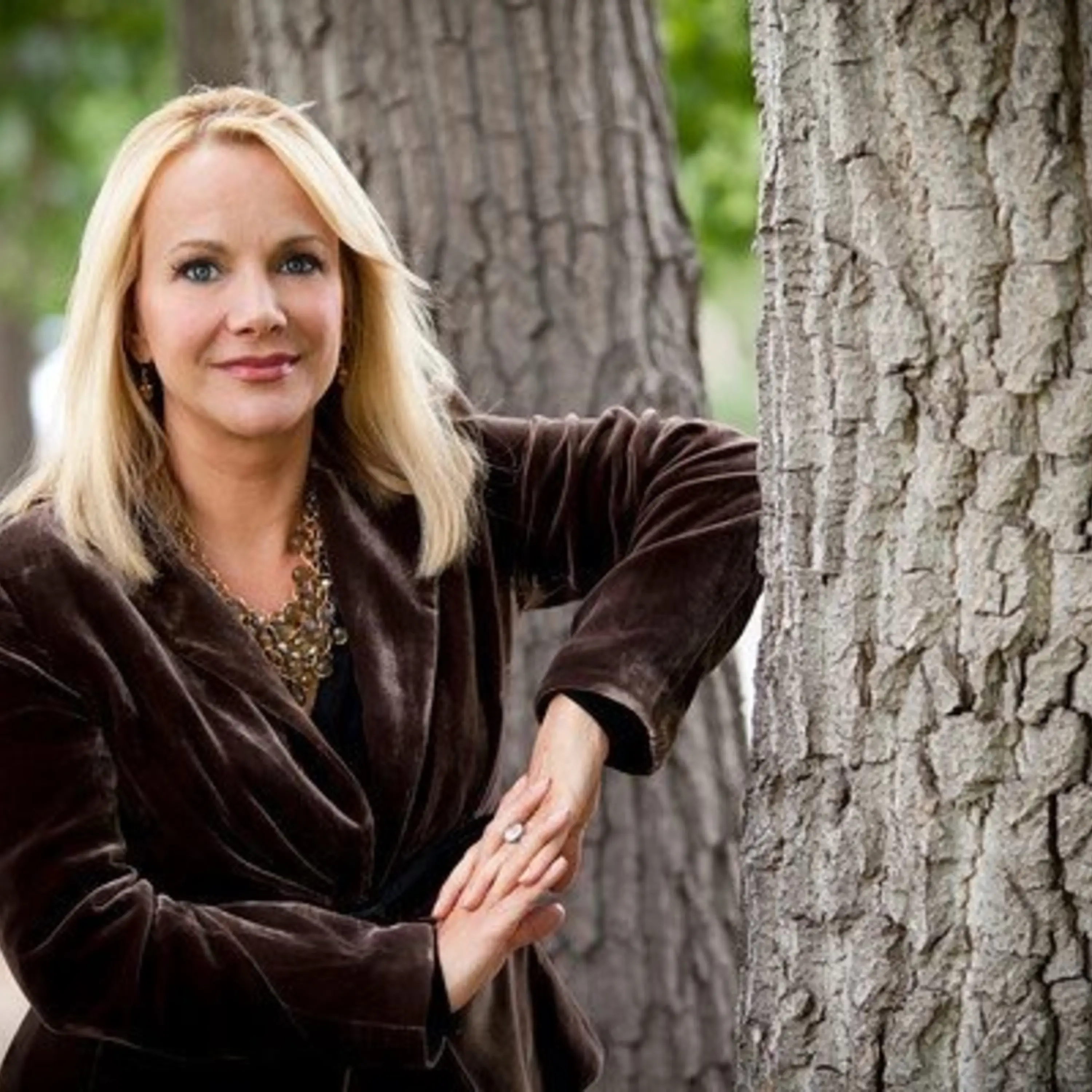


In this engaging episode of The Good News with Angie Austin, we are joined by Vonna Lau, author of Glad I Didn’t Know. Dive into the real-life experiences reflected in Vonna’s life, revealing how unexpected journeys and God’s orchestration create profound lessons. From personal family adversities to heartwarming miracles, Vonna unravels stories that remind us how essential it is to trust the unknown and embrace the challenges that mold us.
SPEAKER 02 :
welcome to the good news with angie austin now with the good news here’s angie
SPEAKER 03 :
Hey there, friend. Angie Austin here with the good news. Well, the good news is we are talking about the book titled, Glad I Didn’t Know, Lessons Learned Through Life’s Challenges and Unexpected Blessings. Vonna Lau is joining us. Welcome, Vonna. Thanks for having me. It’s great to be here today. So I understand you used to live in Colorado. Is that right?
SPEAKER 05 :
I did. We were in Colorado Springs for 12 years. So your name was familiar to me.
SPEAKER 03 :
Oh, that’s right, because our morning show did broadcast in the Springs. I forgot about that, because they have their own stations in Colorado Springs, but then the Denver station is broadcast on there, too. Oh, that’s really cool. All right. Well, welcome.
SPEAKER 05 :
Thanks. How fun.
SPEAKER 03 :
Well, give us an overview of Glad I Didn’t Know, lessons learned through life’s challenges and unexpected blessings.
SPEAKER 05 :
Well, one of the things that’s fun about this book is it’s 32 short chapters. But each chapter is a story about something that the person was glad they didn’t know. A lot of them are challenges that people have gone through, and some of them are just that. They’re an unexpected blessing. But if they’d known in advance, they probably would have either tried to orchestrate the outcome, or they’d have just tried to avoid the challenge, and they’d have really missed out on what God intended. So 32 uniquely different stories makes it a lot of fun and interesting read.
SPEAKER 03 :
I always love hearing stories, and a lot of times when I talk to people, they can’t say who it is per se, but to give you the general overview of the story, does your story play into this? And if so, tell us about how you were glad you didn’t know.
SPEAKER 05 :
actually half of the stories are mine. I initially wrote every chapter of the book and then realized thinking about it, praying about it, talking to a mentor realized it would be too easy for the readers to say, well, that’s great. That’s how God worked in that person’s life and kind of, you know, push it off as only being applicable to one person. And so because of that, I actually included 16 other people. And so these are stories from a variety of, of people and the neat thing is that i didn’t tell them what to write most of them i knew what story i had in mind when i invited them into the project but from the day they said yes to being part of it i just prayed for them every day until i got the story from them and it was with a little fear and trepidation because i thought lord you know i don’t need seven cancer stories or 12 stories about a difficult childhood. It was fun to see how that all came together and they’re unique.
SPEAKER 03 :
Well, with that said, you do talk about, you know, that families have dysfunction, the majority of them. So let’s talk about that. Did the dysfunction in your own family impact who you are today? And if so, how?
SPEAKER 05 :
Absolutely. So I am an only child and I like to tell people that used the birth order for personalities. I was an only child. And then within two years, from the time I was eight to the time I was 10, my parents divorced, both remarried, and I became a middle child in two families. So go figure me out. But that really is instrumental in who I am. And it’s also instrumental in how I came to Christ. My family were not believers when I was a kid. But by grace, they put me in a Christian school early. Because they had a good education in the local Christian school there. And so I got exposed to the gospel and exposed to believers. And then after my parents divorced and we moved and there just wasn’t money for Christian school, I didn’t get to go for several years. But my junior high and high school years, I was able to go back. And I had a teacher and his wife that were just modeled a godly home and family. And it was through… Friends and those individuals that I actually came to Christ and, you know, can’t go through everything, but fast forward years and my family are believers now. And part of that was the willingness to stand up for my faith. even in the face of my dad not being happy with my decision. And we didn’t speak for a year when I was 16. But that was part of his story of coming to faith was wondering what was so important to me that I would be willing to sacrifice that relationship. So there was definite dysfunction. And as I write in the book, as a child, I thought my family was the only family that had dysfunction. And then I realized over years that we all have it. It’s just taking different forms in each of our families, I believe.
SPEAKER 03 :
You know, I’ve got three teenagers, and I know how common divorce is. I just went to a signing ceremony of a lot of the schools, like 3,000. So early this morning, we had to get up to go to all these athletes signing, and it was probably only about 20%. 25 kids, I would say from a school of 3000 for the senior class signing to play sports for various universities, one was going to UCLA, University of Minnesota, there were some great athletes there. And anyway, so with my daughter, I noticed that a lot of the parents, you know, weren’t necessarily sitting together, you know, and so it just is another reminder to me of how many of my Kids, classmates, parents are divorced. And not to toot my own horn, but we’ve always told the kids that’s not even an option. That’s not even something that will ever happen because we just ride out any of the storms. That’s just the way it is. So you say, you talk about divorce following kids or molding them and that it follows them through the rest of their lives and that there’s that long-term effect. Can you talk about that a little bit or would you?
SPEAKER 05 :
Sure. So one of the other things that I touch on in the book is something that I’m hearing a lot of people talk about these days, and it’s probably age and stage of life, right? But many people are caring for aging parents, and there are needs and difficulties and challenges associated with that as well. And as I’ve walked through that over the last several years, I’ve realized, wow, I’ve kind of come full circle, and the difficulties of having parents that were divorced when I was a kid are the difficulties of being a kid of divorced parents when you’re an adult. Because now, you know, I had one in Virginia and one in South Dakota. And as an only child, trying to care for their needs was incredibly difficult. You know, by God’s grace, when you’ve got your spouse and, you know, the two of you can kind of help each other and the kids can supplement that. But when you don’t have that, then it falls on the kids and the responsibility is, twice as much, I think, as it was before. And so that’s why I think it follows them. It is a lifelong impact. And obviously, there are other moments in life, whether it’s holidays, those don’t get any easier than they were when you were a kid. For people that get married, and you’ve got to have parents that can behave at a wedding, and do you have your dad or your stepdad walk you down the aisle? All of those are things that follow the kids of divorce through their lives. And God is good and he’s in each of those moments, but they are challenges that we have to be able to face and know that he’s sovereign and we just need to be obedient. He’ll be faithful.
SPEAKER 03 :
Now, in terms of kids, I understand that you had a miracle baby. Can you talk about your miracle baby and the impact that having that child had on your faith and family, et cetera?
SPEAKER 05 :
Sure. So our miracle baby story is that we have a child that tried to come four months early. Fortunately, we were able to hold her off with me being in the hospital for a month, but she wasn’t going to wait any longer. Our youngest daughter was born three months early and was in the neonatal intensive care unit for three months. In there, really kind of back with the theme we were just talking about, one of the things that’s interesting is in the neonatal intensive care unit, there are a lot of young moms a lot of absent parents altogether, very few intact families. And so we had the opportunity to minister to the other parents that were in there, as well as the medical staff. But I’ll say that one of the things that was most faith building for us was that we had a network of people around the world that were praying for her.
SPEAKER 04 :
Oh, I love that.
SPEAKER 05 :
And there were times where, we were just too close to the situation. I couldn’t pray. You know, when you’re, when you hear the alarms go off and you know that she, she’s not breathing and her heart stopped and you see them over the bassinet tending to her. I was just too close to it, but I knew that that was okay because there were others that were praying for her. And so that was one thing that was incredibly faith building about that situation. And then I, There were stories, I won’t go into all of it, but fast forward five years, we moved from Colorado to California only to find out that her kindergarten teacher is best friends with the neonatal surgeon that saved her life.
SPEAKER 03 :
Oh, that’s so neat. Oh, I love that story. That is so cool.
SPEAKER 05 :
You get to see God’s hand in it. And, you know, if we had known that we were going to go through all those struggles, because the The medical staff said we have early babies in the NICU and we have sick babies and your baby is both. I don’t know. Would we have chosen to have another child? You know, if you knew well in advance, maybe we’d have just said one and done. But we didn’t. We didn’t know. And I’m so glad we didn’t know because there are so many things. that we learned as a result of that in ways that God stretched our faith. And now we have this amazing 22-year-old daughter who graduated university a year early. She should have a litany of issues, and she doesn’t. And I know that’s not everyone’s story, but I know that that’s our story in this particular situation, and we can see God’s hand in it.
SPEAKER 03 :
You know, you make a really good point about when life is in chaos, we often think we’re the only ones struggling. and that we feel very alone. And I know with my mom, I kind of tease her, but she doesn’t like me teasing her about it, that her life always is the worst if she compares it to anyone else’s. I had a friend who wrote a book about abuse that was unspeakable. And I’m like, Mom, you’ve got to read her book. I’m like, she went through so much, and I think you’ll relate to her, but it was daily for her, not once a month or three times a year, which I’m not minimizing what you went through, but I think that you’ll really, her healing is so profound and it’s all through her faith. She became a Christian in her healing. And I think, you know, you’ll just really get something out of it. So anyway, mom reads the book. She’s like, well, was it worse than my life? And I’m like, you know, my mom’s always got to be, she wants the trophy for the worst life. And she’s going to explain to you why she deserves the trophy for the worst life. And, you know, because this happened also. And, you know, so-and-so didn’t go through this. And I’m like, my, you don’t have to win the trophy for the worst life, you know, every time. So with that said… I think we isolate ourselves sometimes in our pain and think no one else can relate to what we’re going through. And we’re driving around and we see people at the mall and on the highway and we’re like, look at them smiling and they’re having a great day. They, they don’t know what I’m going through, you know? And so you talk about that in the book, how we tend to think that we’re in isolation in our pain. What do you have to say about that to help other people?
SPEAKER 05 :
Well, that concept actually came up when my brother-in-law was dying of cancer and we were young, um, We had a two-year-old. We lived in Colorado. He lived in California. He was divorced and had three kids. And so we wanted to give them as much normalcy as we could. So we were taking turns commuting back and forth, trying to keep our jobs. Our two-year-old actually thought that dad lived at the airport for a few months. That was the only time she saw him was when I would fly out there or he would fly back. So I would say, let’s go to the airport. And she’d say, see, daddy? But that was where we were in that season.
SPEAKER 02 :
And
SPEAKER 05 :
It was incredibly difficult to be with our brother-in-law as he declined and passed away. And I remember you’re talking about driving around, and that’s exactly what it was. I remember vividly one day sitting at a stoplight and looking around at other people that were there and thinking, it’s just a normal day for them. They have no idea what I’m going through, and they’re just having a normal day. Yeah. But what that’s caused me to do is realize that when I sit at a stoplight and I look around, that I don’t know the story of the people that are in those cars, but some of them are not having a normal day. Some of them are living that day in chaos, and they’re hurting as well. And so that’s one of the thoughts that has just really come to be personal to me in this journey.
SPEAKER 03 :
Well, Vonna’s book is Glad I Didn’t Know, Lessons Learned Through Life’s Challenges and Unexpected Blessings. Vonna, would you give us a website for you?
SPEAKER 05 :
Absolutely. It’s glad I didn’t know.com. Just don’t put the apostrophe in it. Glad I didn’t know.com.
SPEAKER 03 :
Awesome. Thanks, Vaughn. It was a real blessing to have you on the program. Thank you.
SPEAKER 05 :
Thank you.
SPEAKER 01 :
There’s a present you wanted and didn’t get, and Arc Thrift might have it. They have aisles and aisles of products from vintage clothing to furniture and knickknacks to entertainment items like unique records and classic books. Find the hidden gem you’ve been looking for. And after all the holiday shopping at Arc Thrift, they now need your donations. As long as your items are gently used, Arc Thrift will take them and give them a new home. You may have gotten some new clothes, and now you need to clear out some room in that dresser or closet. Just donate at one of Arc Thrift’s 38 locations or their 15 donation centers. They always need donations, so why not start out the new year with downsizing the items you no longer need? You can find any Art Thrift store or donation center on their website at artthrift.com.
SPEAKER 04 :
Lamar is listening to the My 670 KLT Denver.
SPEAKER 03 :
Hello there, friend, Angie Austin and Grace Fox. And today we are talking about real life struggles from her book, Fresh Hope for Today, Devotions for Joy on the Journey. Hey, Grace. Hi. Good to talk to you again. All right. So tell us about real life struggles.
SPEAKER 04 :
All right. So I wrote this one after interviewing a friend. Her name was Nancy. She lives in Oregon, actually. And she talked to me about how she and her husband had decided to take a hike. And so they trudged, as she described it, trudged four miles uphill through the forest. And they began second guessing their wisdom in choosing to do this hike. But she said that they persevered and they got to the top of a, when they got to the top, it was this meadow that was just filled with flowers and glacier fed streams. And she said it was just so beautiful. They sat down and had a picnic there and thoroughly enjoyed their time. It was that kind of a space where you work so hard to get somewhere. And when you find it alive, it’s just so beautiful. You don’t want to leave. And that was like their experience. And so when I heard her story, I thought, well, that is like real life in that sometimes we end up on a journey that is so arduous and it’s maybe not by choice but it’s just something that happens we end up on this path that is so hard and we we just don’t know that we’re ever going to reach whatever it is we’re trying to reach but finally the lord just brings us into a place of rest and it’s it’s a place that our soul is longing for after all of that maybe hardship that we’ve just come through but where we can sit down and we can rest and we know that he’s with us and we know that he’s got us and he’s holding us close. But wow, it’s, you know, the destination of getting there and experiencing that rest for our soul is good. But the pathway to getting there is sometimes really hard.
SPEAKER 03 :
Can you think of examples like in your own life where that really applied to you as well? And you’re like, Oh, I’m going to write this because I can really relate to this.
SPEAKER 04 :
Yeah. I think that, um, when my husband and I sensed the Lord nudging us to purge almost all of our earthly belongings to move aboard our sailboat home. And we didn’t have a boat. It’s not like we had this boat sitting around and we could just move into it. We had to find one that worked for living aboard and find a place to moor it. It was a journey that took a lot of energy mentally and emotionally as I had to part with all of these things that I counted precious, it was a path that was arduous and we didn’t have a long time to do it. Once we got on it, once we actually found a boat and bought it, we had like six weeks to get rid of our stuff. And it was a path that wore me out in some ways, just emotionally every day, getting up and sorting again and purging again and saying goodbye again to these things that we’d held dear. But, um, Once we completed that and arrived, you know, moved into the boat, settled in and realized that, wow, you know, like this, this was a time of really stretching our faith and growing our faith, but we saw God come through and it was a time of thanking him for that opportunity to walk that tough path, but to come to that place of, of, um, Knowing full well that we had obeyed him completely and there was peace in that. Even though I’d said goodbye to all these things that I’d once held dear, there was peace in my heart and there was joy in having obeyed. And it was something that, yeah, we walked that path and it was hard, but wow, it’s been worth every step.
SPEAKER 03 :
You know, it’s interesting you talk about, you know, peace of letting go of things you once held dear. It’s so hard sometimes to part with them. And there’s some organizer lady that, you know, basically says, if you feel, if that item brings you joy, you know, keep it. And of course, if it’s something you haven’t, you know, used or worn or whatever for many years, you know, even if you’re like, oh, I might wear that again. There’s really no sense in keeping it. But I wonder why we have such a hard time letting things go. My… Mother-in-law has, the family calls her an organized hoarder. And so she has a basement that’s probably 1,500 square feet. And it’s the most organized basement stuffed to the brim with like 200 purses, you know, 400 pairs of pants. And they’re those stretch pants that… you know, like senior citizen ladies wear that you can slide on and have Thanksgiving dinner and they still fit just fine in every color of the rainbow. And then I’m like, well, why are there like 20 yellow pairs? Well, she used to be super skinny. So there’s like, you know, three pairs and a size four, three pairs and a size six, three pairs and a nine. I’m like, oh my gosh. Like you could never, if you wore these pants every day, like you probably, she couldn’t even wear them like at the end of her life now and go through all those pants. You she won’t let us down there. Like my son really wants to go down there because he’s a thrifter and he’s been allowed down a couple of times, like with oversight, like she’ll be down there with him. And he might get like a hockey jersey that my, my, my husband had when he was little. Or this last time my son came home with a stack of photographs of like my husband, when he was you know, a kid and in college and then some from when we first got married, like probably 50 pictures. So that’s what he came home with. But usually he gets like a little thing. I even got down there. Oh, I couldn’t believe that was allowed down. But I needed one of those like shopping bags, kind of like to take on the plane that… you know, fooled up. And she had some nicer ones down there that were like designed or whatever. So I found a small one that you could maybe put like the size of like two bottles of wine, maybe. So that was perfect for like my snack on the plane. I go, ooh, look, there’s another one. There’s a matching one. I’m thinking, oh, I should take both, right? She goes, oh, no, no, no, no, no. Don’t get greedy, girl. And I’m looking around, right? Even three of the purses that I gave her, they’re just hanging down there collecting dust, right? Like coach bags. And I’m like, are you sure you’ve never used that coach bag? Are you sure you want to keep that? Like, I gave that to you 20 years ago. I would definitely use that. Oh, no, no, no, no. And I’m like, what? What is it? I don’t understand the psychology grace behind that kind of hoarding. You know what I mean? Like, and I know they say it can, you know, relate back to maybe losses like shit, her Her dad was a police officer and he was killed in the line of duty when she was like maybe 8, 9, 10. And I’ve heard that like losing, like if you lose a child or lose something big, like somehow hanging onto these things. And I know that that’s not like the Christian way to do it. We’re not supposed to get our like comfort and our like, you know, out of things. They’re not supposed to give us like that comfort, right? But it’s perplexing to me. Like I can’t wrap my head around it, but it’s got to have something to do with it giving you comfort or comfort. Security, something like that, you know, that we’re supposed to be secure through Christ, but apparently we’re secure through 200 pairs of pants and 200 purses.
SPEAKER 04 :
The word security came to my mind as you were talking, and I think that’s it, is that we look to things for our security. But if that house burned down, if that house were to burn down today, how would she respond, right? Like if she found her security in those things, that would be a significant loss for her. But the one thing about hanging on to the Lord and finding our security in him is he’s never going to leave us. Nothing’s ever going to take him away from us. The scripture says in Romans that nothing separates us from his love. And so no matter what happens, even on those tough walks that we take through life, sometimes doesn’t matter where he leads us or what he asks us to go through or what he allows in our life. still we can find hope and we can find peace and we can find joy if our security is in him and not in stuff that can be gone in a heartbeat.
SPEAKER 03 :
Yeah, and I think with so many of the people, I keep seeing these pictures because I’ve got so many friends in the news business in Los Angeles. And one of my girlfriends went out really early this morning. And, you know, I don’t think we can really wrap our heads around the loss that those people experienced, right? And I know everybody says, well, you know, you still have your life and things can be replaced, et cetera, et cetera. But it’s a whole change of, like, All those lives. Because it’s not like a house in your neighborhood burns down and you get rid of it and you rebuild. It’s so toxic up there. And now they’ll have problems with mudslides, right? But your grocery store is gone. Your library is gone. Your mechanic is gone. All your neighbor’s homes are gone. So then you go up there and you rebuild everything. In the midst of all this toxic, you know, material that’s up there and even working up there, you know, how how easy is it going to be to get workers that want to go through all this burnt, toxic, you know, you know, destruction that they need to throw into a big dumpster and, you know, start from the ground up and then the soil. And I don’t know, just that kind of loss happens. you know being secure in christ we’re supposed to find our security there but i can imagine when you return to your neighborhood and you don’t even know if there’s a possibility of you rebuilding like i’m very curious to see what it’ll be like in 20 years i’m assuming the oceanfront malibu homes where those people have money coming out of their ears and they’re like 10 million dollar houses those will get rebuilt because even if you don’t have insurance money you’re loaded and you can rebuild And the people in Pacific Palisades, you know, those are very expensive homes, too, in the millions. But some of them may have been in a different position of maybe owning it for 30 years. And they aren’t multimillionaires. They just became millionaires because the real estate values went up so much. But I’m just very curious to see what that will be like in 20 or so years if it is all rebuilt because it is such a prime spot. But sometimes I feel like – so the picture that I had when my friend sent all these pictures out today – was of just kind of despair and just kind of like a hopelessness that many of them feel about, you know, where do we go from here kind of feeling. And I think some of us have that feeling about other things in life, you know, where we end of a relationship, oh gosh, where do I go from here? Or the loss of someone, a loved one, you know, how do I work my way through this? How do I claw my way out of this. I just watched a documentary on Avicii, this DJ who was so talented, just, oh, so talented. And he committed suicide. And I just thought to myself, like, gosh, you were such a genius with creating music. If you didn’t want to do those concerts, couldn’t you just stop doing the concerts and just create with other, he was working with the top of the top of the top, you know, musicians. And couldn’t you just do that? Couldn’t you see your way out of it? And I know that that’s why we have faith. I know that’s why we have the Lord to turn to. But I just think people get lost in a sea of despair sometimes.
SPEAKER 04 :
I agree with you on that. I think depression and anxiety are on the rise. And I just want to encourage listeners today to not give up. to keep putting that one foot in front of the other, just like my friend and her husband, as they were going on that path. They didn’t know it was going to be four miles long. They didn’t know how long it was going to take or how arduous, how steep it got. They just heard it was a great path. So, you know, the path that we end up on, we don’t know where it’s going to lead to eventually. We don’t know sometimes. how steep it’s going to get. But like these poor people that have lost so much out in California, they don’t know how long this is going to take before they can return to their life or what their life is going to look like. What is their new normal going to be? Where is their workplace going to be? Where are their kids going to go to school? Where about their church family if they lost their church? So, you know, everything is disrupted in their lives. But to not give up hope, just every day put one foot in front of the other on that path and and persevere because eventually it will it will even out it will we don’t know what that will look like there are no guarantees but it’s going to be okay is what we want to say right it’s going to be okay
SPEAKER 03 :
Well, I always love your Fresh Hope for Today devotions. That’s the book, Fresh Hope for Today, Devotions for Joy on the Journey. If you want some hope, it’s a great book. Always enjoy talking to Grace Fox. And if you want to find her and her books, you can go to gracefox.com. Thank you, friend. Thank you.
SPEAKER 02 :
Thank you for listening to The Good News with Angie Austin on AM670 KLTT.