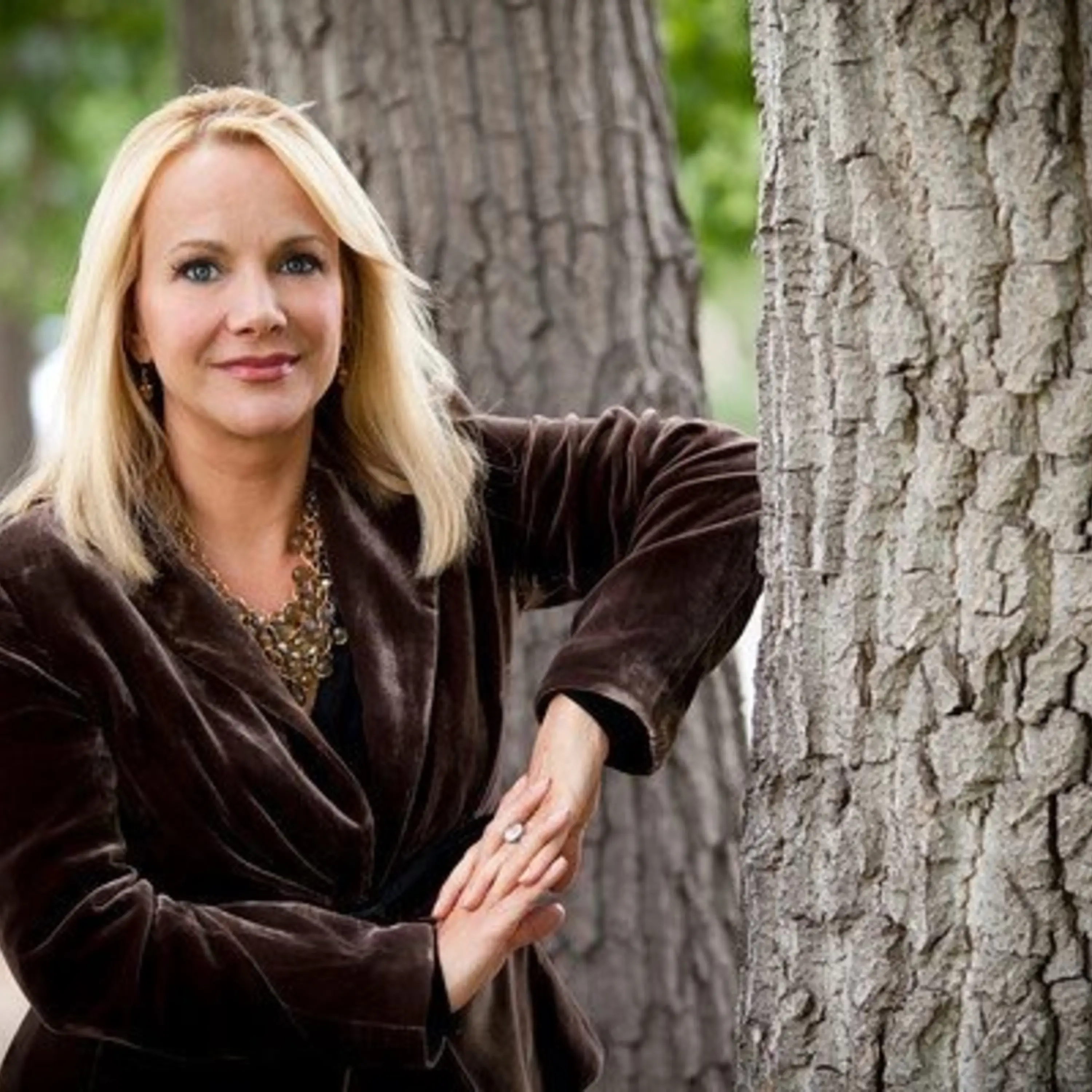

Join Angie Austin as she welcomes back Cindy McMenamin to discuss her new book, ‘The New Loneliness.’ They explore how the digital age has redefined loneliness, making people feel isolated even when seemingly connected online. Through engaging anecdotes, Cindy explains how social media often contributes to feelings of inadequacy rather than genuine connections, and emphasizes the importance of intentional in-person interactions.
SPEAKER 01 :
welcome to the good news with angie austin now with the good news here’s angie
SPEAKER 05 :
Hello there, friend. Angie Austin here with the good news. Pleased to have Cindy McMenamin back. We’re talking about her new book, The New Loneliness, Nurturing Meaningful Connections When You Feel Isolated. And so it’s The New Loneliness. Cindy, I’ve noticed on your social media since our interview last week that everything’s been officially released and there’s a lot of hype. You’re doing tons of interviews. So this is a pretty exciting time for you, isn’t it?
SPEAKER 07 :
It is because I’m seeing such an interest in this topic and so many people saying I’m I’m right there with you or I’ve seen the same thing or, yeah, let’s talk about this more because it’s so prevalent in society right now.
SPEAKER 05 :
Well, then to recap what we started last week, explain just in general what is the new loneliness that you talk about in the book?
SPEAKER 07 :
Well, that new loneliness is that deeper ache we feel from our reliance on technology, the diminishing element of human interaction and touch. All of that that’s happened as we continue with some of our post-COVID isolation habits. And the new loneliness is that emptiness that social media might bring on when we are supposed to feel connected in that way, but we instead feel inferior or inadequate or competitive after scrolling through everyone else’s highlight reels. And that new loneliness is just that emptiness. busyness where we find we are in front of a screen or our own electronic devices more than we’re with and among other people and it’s beginning to wear on us.
SPEAKER 05 :
You know, it’s interesting you say that because I was at my girlfriend’s five-year cancer survivor party this weekend, and she had a lot of people there. She had a disco in the basement. I mean, she has like a mega mansion, right? She had a disco in the basement. And then upstairs, we had a Frank Sinatra singer in this huge buffet that like, it took a while to get through the line. It was quite a spread. So as I’m running into her friends, and she’s like my mom’s age, so a lot of her friends older than I am and my husband and so as we’re going through the crowd they were all talking the ones that I knew oh hey Angie I love I saw your son moved up to his campus I oh it’s great your daughter got a scholarship for volleyball to Christian College and oh you got that puppy so here I am in my house all alone and they know all these things about me but we haven’t talked and Since the last party that I went to at Arlene’s, my girlfriend. So I’m like, wow, we’re connected, but we’re not connected. And it’s like you said, you could be all alone in your home, lonely, but really all these people are learning things about you, but not from you speaking with each other.
SPEAKER 07 :
That’s a great point because then we can feel like, oh, that’s right. That much time hasn’t gone by. I guess we are caught up, but you’re not. They know facts about your life. They know your highlight reels, the things you care to post. But yeah, have you really sat down and talked about what’s going on in the two of your lives and how you’re feeling and that extra layer of transparency that kind of happens one to one and in person?
SPEAKER 05 :
Yes. Yes. And so at that lunch, I there’s a couple of people that I’m connected with that I’m like, oh, and they’re connected with each other. Let’s do a little group lunch. And so that reminds me, I was like, oh, who did I tell her that I do lunch with? And then you kind of like intermingle your circles like they’re connected and I’m connected. So let’s all connect together. when we’ve really never all connected together in this group, you know, to kind of do new groupings of friendships. I see you and I kind of did that in an interesting way because speaker Arlene Pelican, who lives in the San Diego area like you, and then one of my girlfriends who was a weather woman with me and went to my same college in Colorado, she lives in San Diego. So I connected you with her. And then I found out that you and Arlene were connected. So we all kind of connected. And I do go to San Diego a lot. So we probably all will connect down there in person.
SPEAKER 07 :
Yes. So the technology can help us be aware of who’s out there. But I think we have to be intentional, as you just mentioned, to let’s set up times now to meet face to face. Let’s work on a friendship. Let’s move that acquaintance online further together. because that’s what we need in our lives are those friendships and those face-to-face relationships.
SPEAKER 05 :
And I love the idea of, you know, that connection. Okay, so there’s this new loneliness, and a lot of it is because we rely too much on social media and other things to make us feel connected, but we’re not really connecting. And when I do meet my friends, like in lunch, in person, the feeling you have when you’re done, it’s like exhilarating. You just feel so happy. to have had that new connection. So let’s talk about that. How can we get involved in our community and feel less lonely? What role, like, you know, as Christians, too, we’re intended to not be an island. We’re supposed to be connected to each other.
SPEAKER 07 :
Yes, I think the first step is to acknowledge that in many ways we have become spectators or observers of other people’s lives and even our own lives. By spending so much time with our devices and we need to start participating in life again. And many times that means leaving the house and getting out among people. It is very easy to just shop online. But something different happens when I go somewhere and I’m in a store and I make eye contact with an employee and I see their name and I can call them by name. There’s just a connectedness there.
SPEAKER 05 :
But you know what else happens when I shop in person? I spend a lot more.
SPEAKER 07 :
Do you? I think it’s too easy to spend online, too. You’re right, because we see more.
SPEAKER 05 :
When I go to Costco to pick up a few things, I spend $500. I’m like, $500? I was only going to get stuff for a few days.
SPEAKER 07 :
Well, my point, you know, was being out among people. Think about how happy those shop owners are when you’re spending that money instead of going online.
SPEAKER 05 :
Yes, yes. And they’re definitely, it is different. I remember I was in, you know, you’re an author of 17 books and you do, you know, a lot of speaking and events where you interact with people. I was at, oddly enough, it was Costco or Sam’s Club. And this lady was looking at a Christian book that I really liked. And then she put it back. And I was like, oh, that’s a really good book. And she’s like, yeah, I’m thinking about it. And so I went and checked out and got it and brought it back to her with the receipt. And I bought it for her. And she was just so thrilled, you know, and I’ve never seen her again. But I thought, you know, if she’s thinking about that book, and I know how great it is, I don’t know what’s holding her back. But she was definitely, you know, more my mom’s age. And I thought, well, I’m gonna just get it for her. Maybe she’s on a limited budget or something. So yeah, just those little interactions.
SPEAKER 07 :
Yeah. That was a way to really minister to her, to encourage her to be a friend when she didn’t even know who you were. Those are the kind of amazing opportunities we have. I call those the divine appointments God has for us as we get out of somewhat isolation and away from the screen. And meet up with people face to face.
SPEAKER 05 :
You know, it’s funny. My mom is so overly friendly to strangers that it actually drives me crazy when we’re out. But she will talk to anyone anywhere. And we were at the Air Museum a few weeks ago and she was parked by the entrance because she didn’t want to push her walker all around. And my daughter would jokingly say to me, oh, she got another one. She trapped another one. She hooked one. And I’d look over and she’d have somebody at the door she was talking to. And sometimes they’d be backing away as she was talking at them and showing that they were not interested in talking. But then others… seem to be engaged. When she catches one, some fall off the hook like a fish, but then some are like, oh, I want to be reeled in and chit-chat with you. It’s this amazing skill, if I want to call it that, that my mom has for just starting a conversation with anyone about anything.
SPEAKER 07 :
Yes. I love those opportunities now because I’m on the other end of that. I know what it’s like to be with an aging parent, to care for them, And I so wish I still had them back. And so when I see people about my age with maybe a parent who, and I can tell by the look on their eyes, they’re like, I hope she doesn’t bug them or something like that. That’s when I want to engage. I want to talk with that lady and then smile at that woman as if to say, I understand. I’ve been there and it’s okay. Again, another way of showing compassion of,
SPEAKER 05 :
being being human with somebody else the things that we get to do when we’re in person well you talk about in the book um you know that’s something i don’t really think i hear much about the loneliness of failed friendships and that you know losing a friendship um you know is that something you’ve experienced you know how do we deal with that i mean some i know it’s You’re supposed to let them go. And, you know, what’s that let them theory that Mel Robbins lady or whatever she says, let them like if they’re not treating you right, if they’re not returning your calls, they’re showing you who they are. You know, let them if they don’t if they stand you up, let them if they don’t return your call, let them like let them show you who let them show you who they are. But there are some that, you know, are really difficult when you’ve really thought when you’re really hurt, when you really thought it was a real genuine friendship.
SPEAKER 07 :
Yes, in that chapter I have the loneliness of friendship struggles. I think because there are so many differences among us, and I think because there’s that spiritual warfare that weeds through relationships among believers as well, that I think it’s inevitable that now and then we’re going to have a misunderstanding with somebody. I had a situation actually as I was writing the book, and then a few, you know, that happened a few years ago and things like that, that where a misunderstanding turned into kind of like an accusation. And our defenses can go up. And immediately, I was actually surprised at my response. My immediate response when I heard from this friend was, I’m done. I’m going to quit extending the people. I’m going to quit spending time with people. It’s just not worth it. I’m just going to hang out with God, and that’s it. And then I thought, Cindy, you’re writing this book on connections. And I became aware of that natural way that we can respond when we’ve been hurt. But the enemy wants us to isolate when we’re hurt, to get bitter, to get defensive, to not let anyone in. And I realized I needed to do the opposite. And during that struggle, I reached out to a couple other friends. And without even telling them what was going on, I was so encouraged in their presence. And they said certain things that kind of healed that hurt in me from what the other friend said. And as I was praying about the struggle with the one friend where there was an offense, I remember taking that to the Lord and saying, God, I don’t know what words to say to fix this. Because sometimes the more we say, the worse it gets. I said, God, help me. to just wait on you because I know my friend loves you too. And I know she’s one who prays. And I just trust that she will listen to you too. So show me what I need to do or not do and show her and somehow be our mediator. And you know, I had to step back and just trust that God would do what I couldn’t in that situation once I figured I couldn’t do anymore. And sure enough, she ended up texting me saying, hey, let’s talk. And Some prayer went in before we had that conversation. And you know, God did some healing in that. And the beautiful thing is that friend and I came out of that stronger than we were before, closer than we were before. And God can do that when we’re willing to trust him and do what we can to work through it instead of saying, I’m done. I’m dropping that person. No more. God never drops us. God continues to give us another chance. And sure, there are seasons of certain friendships. Sometimes we keep trying to make something go, keep going when the season of that friendship is kind of over and they’ve moved on, and that’s okay. But when we have an opportunity to bring it to God and say, help me to know what I can to fix this, or help me to wait upon you and trust you that this can be resolved, God can do some beautiful things there.
SPEAKER 05 :
Yeah, I think this epidemic of loneliness, I think you’ve really struck on something. You’re already seeing that you struck a chord, I should say. I think you’re seeing that when you’re getting such response to the new book. And I want to make sure people can find you and the book. It’s the new loneliness, nurturing meaningful connections when you feel isolated. Cindy McMenamin and Cindy is a speaker as well. This is your 17th book. Is that right?
SPEAKER 07 :
This is actually the 18th, and there’s going to be a devotional, the New Loneliness devotional that releases in September, so that’ll be number 19. All new material, but kind of a follow-up on this concept of shorter readings and a prayer to get women through the day.
SPEAKER 05 :
I love it. All right, and also your website, is that strengthforthesoul.com? That’s correct. Excellent. Cindy McMenamin, thank you so much. Looking forward to our next interview. You too.
SPEAKER 02 :
There’s a present you wanted and didn’t get, and Arc Thrift might have it. They have aisles and aisles of products, from vintage clothing to furniture and knickknacks to entertainment items like unique records and classic books. Find the hidden gem you’ve been looking for. And after all the holiday shopping at Arc Thrift, they now need your donations. As long as your items are gently used, Arc Thrift will take them and give them a new home. You may have gotten some new clothes, and now you need to clear out some room in that dresser or closet. Just donate at one of Arc Thrift’s 38 locations or their 15 donation centers. They always need donations, so why not start out the new year with downsizing the items you no longer need? You can find any Arc Thrift store or donation center on their website at arcthrift.com.
SPEAKER 06 :
Lyman is listening to the mighty 670. KLT, Denver.
SPEAKER 05 :
Hello there friend, Angie Austin, Jim Stovall with the good news. And today we are talking about your best life. Sounds like the best column. I love this Jim.
SPEAKER 03 :
Well, thank you. It’s a phrase we all kind of borrow from Oprah and, uh, she probably got it from somewhere else, but, uh, you know, and the premise is that, uh, we have a choice. We can live our best life. We can live our worst life. And, uh, You know, I’m well aware of the fact that bad things happen to good people. And, you know, it can either be something that defeats you or a springboard to greater success. And Walt Whitman said, I am not one person. I am many persons. You know, I’m a giant. I’m a dwarf. I’m wealthy. I’m poor. I’m, you know, successful. I’m a failure. All these things because he realized that inside of each of us, is the potential to be all of those things. And, you know, we all have those moments, those days, those periods of time that change that. I had a gentleman in my office last week who I met at a fundraiser event I was doing for a faith-based group that helps people getting out of prison. And he had… He had made a horrible series of decisions when he was 15 years old, and it ended up with him killing a guy, and he spent the next 35 years of his life in the penitentiary. So I met him at age 50 when he just got out, and he had been in prison every day since he was 15. And it’s just amazing… He recounted what happened to him that morning, and he made a couple of dumb decisions and put himself in a bad place, and there you go. I mean, it wasn’t some big conspiracy plan or something. It was a momentary thing, and his life is there. So he talked to me about the fact that, okay, that’s been your life up to now, but now you’re 50. For the next 35 years, you can decide… What do you want your life to be? And you have to have a double good life from here on out to make up for that first part. So you’ve got to come back. You’re like a team. You’re two touchdowns behind. You’ve got to make up for this. So, you know, and he’s making plans to do that. And we all have the ability to live a great life or a poor life. Unfortunately, most people live right in the middle. They live a mediocre existence. And in our country today, Angie, it It doesn’t take much to be mediocre. You can just kind of drift through life if you want to, and that’s where it is. Or you can change your life by changing your mind, and you can live a great life. It’s all about making a decision, and you can have one moment. right now today that changes that just like the guy I told I told you about when he was 15 years old he had one moment he did something really stupid and ruined his life well the contrary is true we we can all have one moment where we make our mind to change it I remember a moment like that for me and my life will never be the same I just I don’t want to live like this anymore I’m sick and tired of being sick and tired and that’s it and uh And, you know, many things go back to that. And I just decided that’s it. We’re not living like this anymore.
SPEAKER 05 :
Was that the loaf of bread?
SPEAKER 03 :
Yes, indeed. Yeah, we miscalculated our groceries as we were going through the grocery store. And Crystal had to go put back a loaf of bread. And it was embarrassing and frustrating. And I just said there is no reason I should ever live like this. I’m just not going to live like this anymore. And that changed my world.
SPEAKER 05 :
And you two, weren’t you first and second in your college class when you graduated?
SPEAKER 03 :
We were indeed. We were indeed. But we had gotten way in debt, and I was blind. And at that point, I thought disabilities means you couldn’t do stuff.
SPEAKER 05 :
Oh, interesting.
SPEAKER 03 :
Everything I knew about being blind, I learned from people that told me what that meant. And it’s no different than all of us going through life if we’re mediocre. Someone told us this is how you live. And people that live a pinnacle existence, a mountaintop existence, they either had somebody amazing tell them how they could live life, they read a book, or they just got a vision of who they could be, and they just decided, I’m not going to be that way anymore. And I read about once this bald eagle had fallen out of the nest and had been taken, and through a set of circumstances, it ends up with a bunch of ducks that have just hatched. And this eagle, you know, was raised by this mama duck and, you know, and took on the character. This eagle thought he was a duck. And he walked like a duck, talked like a duck, you know, even started quacking like a duck. I mean, and took on those characteristics. And, you know, we have a tendency to become like our environment or the people around us. And we can change that. And any time we don’t like it, we can change the channel. Sometimes we act like it’s a wired-in broadcast and we’re stuck with this. No, you’ve got 500 channels. You can do anything with your life you want. And you change your life when you change your mind. And that’s why every once in a while you need somebody to come along and think, what would your best life look like? I mean, what would you do if you could do anything you wanted to do? Because the reality is that’s where we all live.
SPEAKER 05 :
Now, what did you tell this guy? So he made a mistake, killed somebody when he was 15, didn’t plan it. And all these years later, he’s 50. What did you tell him to do in order to live his best life?
SPEAKER 03 :
Well, I told him, first, we’ve all got to decide what it is we want. What do we want the end to look like? And he’s working on that right now. We’re going to have another meeting next month. But I said, then you’ve got to look at what talents, abilities, and experiences do you have? And he said, well, I don’t have any. I said, that’s where you’re wrong. There are people going into prison, getting out of prison. There are people who need to make quality decisions to stay out of prison. And you have a unique life. You can speak to those people. And you know what it’s like on the inside. You know what it’s like out here. And more than anybody I know, you can speak to that issue. And, you know, we talked about him, you know, consulting with people, writing a book, helping young people in high schools. I mean, you know, when you have a guy walk in and say, I’m 50 years old. I mean, you know, I’m as old as your parents and almost your grandparents standing here. And when I was your age, the you are right now, I did something really stupid. And I ended up this way. And, you know, and maybe you could help a handful of kids from avoiding that. And that would be a good life. You would be living your best life when you use the talents and abilities and experiences you’ve had to help other people. So he and I talked about that. And, you know, and he’s got a job. He’s the place that I help raise money for. They help people get jobs, and it’s not a great job, but it’s a job. And he has an apartment, and it’s not a great apartment, but it’s a good place to start. And as he pointed out, it’s better than a jail cell, and the neighborhood’s better. So he’s feeling pretty good about it.
SPEAKER 05 :
Whenever I talk to interviewees that I find particularly interesting, I figure out where they got their passion for what they do. And one of the doctors that I’ve interviewed that is coming up again is Dr. Adzik, and he does fetal surgery. And he told me, I’ll never forget, of all the thousands of interviews, I’ll never forget. I said, what’s… What’s the most satisfying thing about your work or when have you felt like, wow, I’m really doing something that makes a difference? He goes, well, every year when I go to the big party for the kids that I’ve done fetal surgery on, so it might be heart surgery while the baby’s in the womb that saves its life. He goes, I see him throwing the football and having a great time together, enjoying the party, eating their hot dogs or whatever they’re having. And he said, and I think, wow, this is really great work that I do. This is this is really I’m making a difference. This is very satisfying. I thought, wow, what a cool thing, because he’s working on cleft palates and club feet, heart surgeries, spina bifida, you know, all these things that we never would have operated on a baby in the womb. Right. It’s just so fascinating to me. And so I started talking more recently about like finding your passion. Like you said, what are you interested in? What are your skills like? You know, what are your values? Where do you think you could add? Whether it’s, you know, a job where you’re going to get paid or whether it’s going to be volunteer work. Because I’ve been writing all this down myself trying to figure out, you know, what I’m going to do next as my kids are. Another one’s leaving this year. You know, Riley just moved up to campus just recently because he’s been commuting. And then the next one goes to Tennessee in about six months. And then I’ll have one left at home. So really just thinking about, you know, what’s next. So I like, you know, how you are kind of setting him on the right path to what he wants to do next after all those years in prison and knowing that he can still make a difference.
SPEAKER 03 :
Oh, absolutely. We all have the ability to do that. And then sometimes we forget, like you were talking about your doctor. I met a young lady the other day, a young lady, and she’s probably in her mid-40s, and I was speaking at a university. And she’s the dean of admissions and teaches at the university, and she came up and introduced herself. I said, it’s nice to meet you. And she said, you don’t know who I am, do you? And I said, well, you just told me who you are. And she said, no, no, no, no. 1988. I’m a college freshman. I ran out of money. I was getting ready to drop out of the university and go back to my job as a waitress. I went to the mailbox there on campus to turn in my key. I had one envelope left there, and it was a letter from you telling me I got a scholarship. I finished college and got a graduate degree, and now I’m dean of this university. She said it all started because you made that envelope happen.
SPEAKER 02 :
Wow.
SPEAKER 03 :
And I said, well, thank you, but no, you made all that happen. You did every bit of that. But I said, I will tell you, from time to time, it’s a hassle running a scholarship, and you just gave me plenty of motivation for the next 10 years. I’m good to go.
SPEAKER 05 :
Wow. That is, that’s, whew. Well, speaking of making an impact, there you did. But I want to tell you one other thing. You know, my friend, Dr. Cheryl Lynn, she’s a professor and just a really neat lady. And she writes books as well. And she wrote me a note the other day and she said, I’m reading Jim Stovall’s book, The Gift of a Day, 100 Doses of Winner’s Wisdom. And this quote from Chapter 7, Crystallize What I Do. Could we do a segment on this sometime? I’d really like to talk about it because Jim has such a way with words. And here’s what he said that brought me to tears. And the quote, I’ll start with the whole thing, but then I’ll highlight what you said that made her cry. Influence can be either good or bad, and it can be overt or subtle. We are all being influenced, and we are all influencing others every day. And here’s the part that got her. If we learn something, we change our world. If we teach something, we change another person’s world. But if we teach people to teach, we change the whole world. And she said that really encapsulates what she does as a professor, and that made her cry.
SPEAKER 03 :
Well, that is good. I think we ought to laugh some every day, cry some every day, have good memories. And, you know, that needs to be a regular part of our day. And it’s a good thing. And please tell her I am greatly honored.
SPEAKER 05 :
She’s a good one. All right. So in your best life, we’ve got about a minute left. What’s our takeaway here?
SPEAKER 03 :
Examine the life you’re living right now. We spend very little time. We spend our lives worrying about stuff that happened in the past we can’t do anything about or fretting about stuff in the future that may or may not even happen. And we never take a look at what am I doing right now and is this really what I want to do or did I just kind of end up here? You know, someone told me to get in that line and here I am. And really take it, do it on purpose and, you know, really start living your best life.
SPEAKER 05 :
And I love it. You always say, today’s the day. And it says, you and I are much the same, and our best lives await. As you go through your day today, trade your ordinary life for your best life, because today’s the day. And that’s jimstovall.com, jimstovall.com. Thank you, my friend. Thank you.
SPEAKER 01 :
Be well. Thank you for listening to The Good News with Angie Austin on AM670 KLTT.