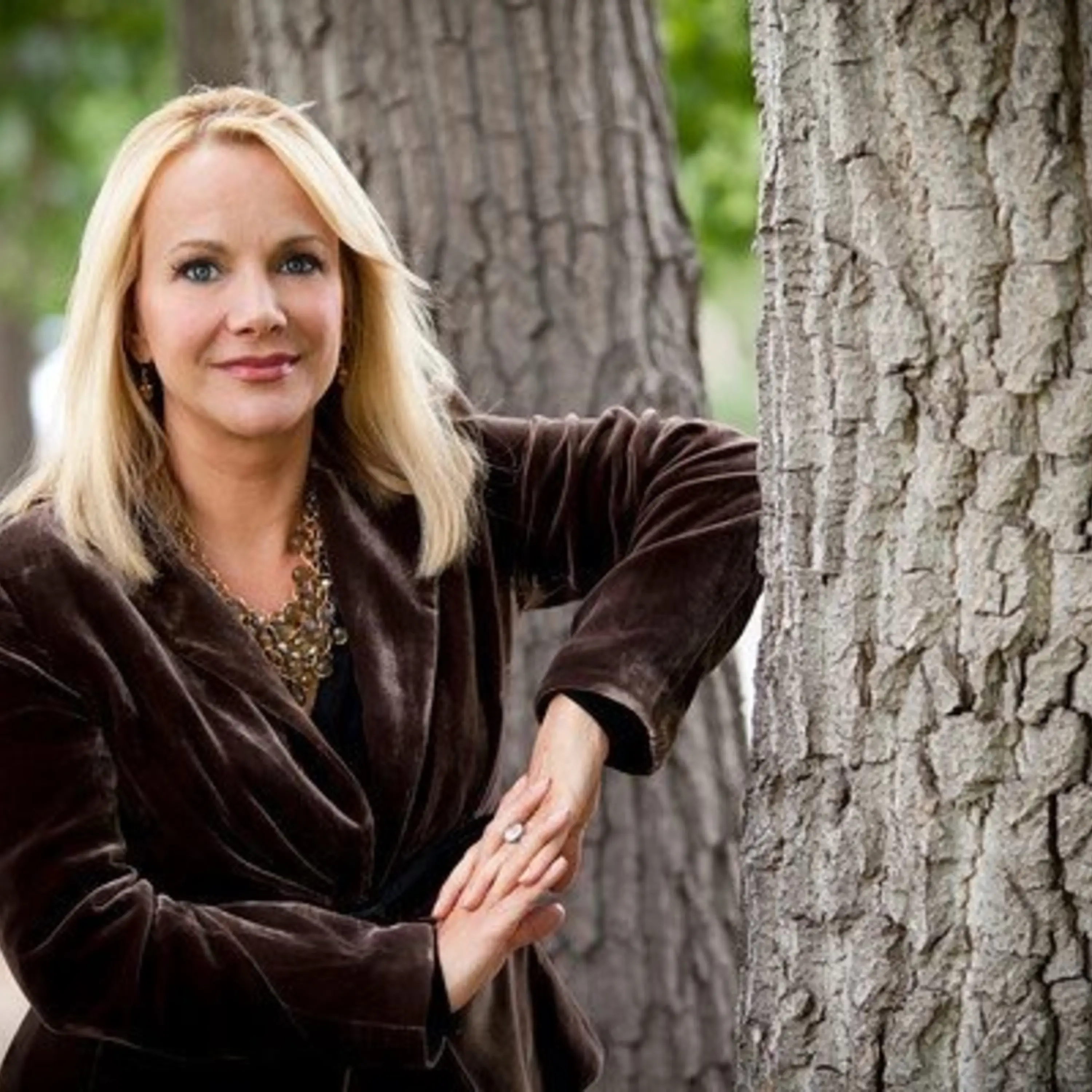

Join Angie Austin as she dives into the profound journey of Hannah Austin, a healthcare executive who faced crippling burnout during the COVID pandemic. Hannah shares her emotional burden and the pivotal moment that led her to write ‘Hello Head, Meet Heart,’ a guide to overcoming burnout and embracing an extraordinary life. Discover her six-step Burn Bright model and hear inspiring stories of transformation as Hannah discusses her work with She Shatters, a company dedicated to preventing burnout in organizations.
SPEAKER 02 :
Welcome to The Good News with Angie Austin. Now, with The Good News, here’s Angie.
SPEAKER 03 :
Hi, friend. Angie Austin here with the good news. I have been checking out a book lately that I want to share with you. The author is Hannah Austin, and she is joining us. And I really like the idea of learning how to live an extraordinary life, and that is what her book is all about. Learn how to live your extraordinary life. Welcome to the program, Hannah.
SPEAKER 06 :
Thank you, Angie, for having me.
SPEAKER 03 :
So it’s Hello Head, Meet Heart is the book. Give us a little nutshell description of the book.
SPEAKER 06 :
Yes. So this book is about rising from the ashes of burnout to leap towards your extraordinary life. And I wrote this book during COVID as I hit the darkest moment of my life. And frankly, Angie, I was contemplating suicide and ending it all. So I had nothing left. I was my tank was empty and I didn’t know what was wrong with me. So I started to research books, articles and podcasts, and there wasn’t a book for me to turn to. So I decided to write one.
SPEAKER 03 :
So in terms of what you were burnt out from, explain what went on that made you feel such despair.
SPEAKER 06 :
Yeah, so I’ve been in the healthcare industry for 20 years. I love my job. I started at the age of 20, and I worked myself up. And, Angie, it was working. I mean, the hustle behind the scenes, you know, being the first woman in the room in some meetings and instances. So during COVID, I was in charge with building mass hospitals and morgues for one of the largest health systems in the country. And I was working 50, 60 hours a week. I wasn’t taking care of myself, no breaks, no lunches. And frankly, I just started deteriorating from the inside out and I collapsed in the hospital I was managing.
SPEAKER 03 :
It doesn’t surprise me when I, you know, we all know what the circumstances were like then and that kind of pressure. People are like, lunch? You know, why would you need lunch? Like, come on. But then the people taking care of the system were falling apart.
SPEAKER 06 :
Right. And, you know, I didn’t tell anyone. I mean, that’s the reality. Like as a manager, you feel like you have to be strong and you need to take care of your team and at the cost of yourself. And I was one of those people and I take full responsibility for it. But it was really a dark time.
SPEAKER 03 :
So what is the biggest lesson that you learned from this burnout journey, this recovery journey from feeling, you know, so lost that you maybe didn’t even want to go on?
SPEAKER 06 :
Yeah, I mean, the biggest lesson has been that I’m human too, right? I’m a human first, a manager, a wife, a mom second, third. And so it’s really important that those people, Angie, and I know you probably get this, we are perfect on the outside. No one can see us sweat. We’re paddling frantically behind the scenes. But sometimes we feel like we can’t really be honest with ourselves and, frankly, the world about if we’re hurting or not. So I think it’s really around being authentic, letting people know you’re human, you’re hurting, you need help as well, and getting that help. And that’s what this book is about, a warm hug, a hand offering help at a time where people are having their darkest moments.
SPEAKER 03 :
All right, so let’s break down some of the things that you wrote about in the book, Hello Head, Meet Heart. Take us through some of the steps that if we’re feeling burnout or we want to make a change in careers or just come back from that brink of despair, what are some of the things you teach us?
SPEAKER 06 :
Yeah, so I created a six-step Burn Bright model. I’m a very operations mind, and so I married my mind and heart in this book. And so the first step is really – Take stop and stop and pause. So many of us are going through the motions. We’re moving on to the next guest or radio show or into the next meeting or Zoom meeting. We don’t stop and say, is this pace working for me? Is this a long-term viable solution? Then the next step is discovering the why. What are those patterns in your life that are showing up for you that are limiting you from going to the bathroom, sleeping well? Is technology too much a part of your life? And then the third step is really exploring your options. Is there ways to conserve your energy? What boundaries do you need to set in your life? And then who do you need to have in your team, right? Project manage a team of CEO professionals for your executive board, your executive personal board, to figure out how they can support you living your best life. And then lastly, it’s developing a plan. Angie, how many of us can develop plans at work and develop plans for our kids But we need to learn to develop a plan for ourselves and our life to conserve our energy for the most precious resources, frankly, ourselves.
SPEAKER 03 :
Yeah, and it takes a lot of determination to develop that plan and follow through, you know, to put that phone down at night or to set that boundary. Because I think as women in the workplace, we’ve been taught that maybe we do need to go the extra mile to be respected as much as a colleague. Like working as a news anchor, a weatherwoman, reporter, field producer at big networks when I – When I sat next to a male anchor, I did feel like if he left at nine that I still couldn’t leave until noon, even if we’d gotten up at 245 and gotten there because I had to work harder to get that same level of respect. So you do, I think, push yourself towards burnout and with your families as well. I don’t think it comes very easily to many of us.
SPEAKER 06 :
And I wanted to literally write a book that is a self-help book that actually helps. But I know that’s an oxymoron. But I remember, you know, being a young girl in my 20s, 30s, and now my 40s, looking for books to help me with the how-to. Like, it’s great to say, be mindful, be meditative, don’t listen to your phone, don’t look at your phone. But it’s another thing when you’re addicted to those things, right? And so my book is really… It asks you questions that actually make it you start to think about new ways. And it’s also exercises. I ask you to do exercises in the book that make you think about things from your head and your heart standpoint. And that’s when finally, Angie, the puzzle pieces lock into place and you realize, wow. I can move my priorities. And Hannah just gave me a literally a script to set a burnout prevention plan and created a boundary plan for my coworkers, my loved ones and my husband or wife. So this is a real tactical book. And you’re walking out of this book at the end of the book with hope, viability and a plan to move forward.
SPEAKER 03 :
Now, you know, understand we talked about your 20 years as an executive in the health care industry. And obviously, during COVID, you face so many pressures and that burnout you talked about. And I know you’re the CEO and co-founder, pardon me, of She Shatters. What is She Shatters?
SPEAKER 06 :
Yes. So we are an organizational wellness company specializing in the prevention of burnout. So we do individual coaching for women and men who are suffering from burnout or at a pivotal point in their life. And then on the second arm is our organizational wellness strategy team where we go into large scale organizations and teach the managers and leaders, frankly, how to care about. how to treat the person as a whole person, as an employee, how to keep staff, so we have retention packages, as well as burnout prevention packages. And I’m traveling around the country, Angie, speaking and sharing the Burn Bright formula and the message of Hello Head, Meet Heart, and lighting up organizations from the inside out, tapping into that joy in the organization again.
SPEAKER 03 :
So what’s next for you? Is this it? Is this what you’ll continue to do?
SPEAKER 06 :
You know, writing this book, Angie, was the easiest thing I’ve ever done. It was like breathing to me. I dumped all of my heart and soul, I don’t know if you’ve read it yet, into this book. It’s very, very deeply personal, and it’s resonating with so many people. My goal is just to start a wildfire within people’s hearts, whether it’s through my podcast, through organizational wellness. My next dream would be to write a second book, but I’m still enjoying this wild ride.
SPEAKER 03 :
Yeah, it sounds like you’re traveling around the country, helping other people, that you have a real passion for this now, but obviously that passion is springing from what you went through.
SPEAKER 06 :
Yeah, I mean, I do believe that, you know, this darkest moment that I had a year and a half ago, I’ve really used it as rocket fuel. And I always like to say that the deepest wounds in us allow for the greatest growth.
SPEAKER 03 :
Now, when you’re meeting people and you’re traveling around the country, what’s a common theme you’re hearing or what are some of the big mistakes people are making? What are they? Because I know that when you speak in an event like this, when it resonates with someone, I know they come up to you and start kind of baring their soul. So what are you hearing?
SPEAKER 06 :
They do. It’s really like going to church, Angie. I was presented at the Indiana Conference for Women, and we had 500 chairs in the audience, and they had to bring in more chairs because the women were just loving the session. And it’s a real compliment and true testament to the mission that I’m spreading, which is you know you have the puzzle pieces inside you all along right angie you just need to kind of shuffle them around and lock the pieces in place that you want to keep and no longer do you have to work the 10 hour days versus the eight hour days that you know guys around you work you need to do what’s best for you and chart your course towards your career in your own personal growth and so i love creating a plan with these women and men and as well to set the stage for what are they reaching for and create some accountability. And the Hello Head Meet Heart is just a tool, a vehicle for them to actually do the homework, right, do the exercises, head down, and then together we can create their extraordinary life, whatever that is, pivoting to a new job, getting a divorce. We’re really making, creating a movement, Angie, around growth and joy.
SPEAKER 03 :
Now, in all of this coaching and in writing the book, Hello Head, Meet Heart, what about success stories? Are you already hearing feedback from people who are saying like, you know, I know you can’t use names, but any stories of success already through working with you?
SPEAKER 06 :
Yes, one of my favorite story is actually from a 75-year-old woman who, you know, I never intended this book to be read by people who are retired. I thought, who’s retired and burned out? But this woman said, one of my friends referred your book and I read it and she said, I’ve been retired for 15 years. I’ve been feeling a sense of worthlessness and loneliness and for what’s next. And, you know, is it my turn to just triple up and die at, you know, 75 or is there something more out there for me? And so she said she did one of the exercises and she’s decided to take a dance class again. And she invited her husband to take a dance class, which is frankly unlocked some intimacy, which is good for them, but also an opportunity for her to reconnect with herself and her goals and get healthy again. So she’s now off her blood pressure medication and her marriage is stronger than ever. And it’s just I never intended for that type of audience to resonate with the book. And that’s been the greatest joy.
SPEAKER 03 :
That’s really cool because, I mean, a lot of seniors have so much to give and give back. I was just talking to a friend of mine who was really depressed, like you were just talking about. And I said, you know, one of my mentors, Jim Stovall, he’s written over 60 books. He said the best way to help when you’re feeling down, the best way to feel better is to help someone else. And so I suggested maybe she get out there and, you know, and get moving. And I was just doing an interview with Dr. Michael Royce from the Cleveland Clinic. He’s also written a lot of books with Dr. Oz about depression. You know, the mind, the body, health and longevity. That’s like his area of expertise, living longer and healthier. And he just said today, one of the biggest things we can do to stave off dementia in our older years. This is going to surprise you because I thought, oh, it’s going to be diet, exercise, omega-3s or some supplement. Having a tribe. Well, he actually said posse, which cracked me. up since he’s near 80 that he said posse but he said having a posse you know having a tribe having a group of people that care about you and then she’s getting out there with these dancers and reconnecting with her husband it’s so important to our vitality but I think when we get depressed when we feel low many of us tend to isolate and we do not have anything to do with our posse
SPEAKER 06 :
Right. And COVID, you know, maximized that, right? We were all lonely and we were all kind of displaced and in isolation. And I think now that people are kind of coming out of their cocoon and feeling like it’s reintegrating again, you know, we have to find that void for loneliness and connection. But the first thing, Angie, is connecting with yourself. And I think that’s what Hello Heart is a reminder of, is every time you feel a little bit lonely, just return to yourself first.
SPEAKER 03 :
Yeah, I like that. I like that. How is this making you feel? I mean, you know, going through what you went through, making such a U-turn in your life, I mean, or a right turn, doing something completely different than health care and high stress and setting up morgues. Now you’re doing joy-filled, you know, big speaking engagements and helping people find their self-worth again and purpose in life. How has this made you feel? It must feel pretty great. Yeah.
SPEAKER 06 :
I feel like for the first time in my life, I’m doing what I’m destined to do. And that is what fuels me every day to want this feeling for you, for someone else, whoever. Whatever I can do to unlock that joy, unlock that fire, I’m here, right? I’m a fire starter, right? I don’t want to be put out. I want to keep igniting these fires in people because we deserve to live an extraordinary life.
SPEAKER 03 :
I love it. All right, give us your website.
SPEAKER 06 :
Oh, sure. So you’re welcome to find me at SheShatters.com, www.SheShatters.com. And the book is on Amazon and we have a Kindle edition and a paperback.
SPEAKER 03 :
Well, I’m in the midst of reading it right now. Thank you so much. What a pleasure the interview is and congratulations for all you’re doing for others. What a blessing for you and for them.
SPEAKER 06 :
Thank you, Angie, for your time today.
SPEAKER 03 :
You’re welcome.
SPEAKER 01 :
We’ll be right back. We’ll be right back. donation centers they always need donations so why not start out the new year with downsizing the items you no longer need you can find any art thrift store or donation center on their website at artthrift.com holy oak is tuned to the mighty 670 klt
SPEAKER 03 :
Hey there, friend. Angie Austin here with the good news and pleased to have Marianne Howard with us. She is an author and she is talking to us about her book, Rest, Overcoming Spiritual Fatigue. Welcome, Marianne. Thank you for having me. Well, let’s just start with, you know, I was talking recently to somebody on focus on the family. And he was saying that busyness, he thinks is the biggest problem right now in like families and the world and particularly, you know, in ministry. But, you know, why in general do you think so many Americans are feeling just overwhelmed and stressed?
SPEAKER 04 :
I think we are overworked, under rested and over committed. And it’s compromised our soul, that place where God’s spirit is at work inside of us and our soul’s connection with God.
SPEAKER 03 :
Isn’t that the case? You know, I think our culture kind of like I don’t know, it’s like a claim to importance or like a badge of honor to say how busy you are.
SPEAKER 04 :
Absolutely. I think what’s happening today is our value and our worth are getting attached to being in demand. And we get addicted to the need to be needed rather than the need for God to move. And so we’ve become very consumed with strategy, skill and charisma today. And we’ve stopped emphasizing the soul side of leadership. And the best way I know how to look at this is kind of through the domino of efficiency, speed, productivity, achievement, self-sufficiency, convenience. They all can get in the way of staying close to God.
SPEAKER 03 :
Wow. It gives us like kind of a sense of maybe self-esteem to be so needed. I was just looking at my schedule and my husband always says, just tell me where to be. Like, I don’t need all the details. Tell me, like, give me a map location and the time and who I’m picking up. And we’ve got… Three practices tonight and then two tournaments this weekend. And we’ve traveled four times in the last two months for out of state tournaments for volleyball in New Orleans and Atlanta and at Salt Lake. And we went to spring break for Arizona to Arizona. So, you know, it’s been and then I got COVID and it’s just it’s been crazy. So, yeah. I think there’s some excitement in it, but there certainly is like exhaustion because we couldn’t go to church because of the COVID going through the family on Easter. And then my daughter, my youngest wrote to me and she said, when are we going to church? And I was just like, oh, when you’re little, you know, 13, 14 year old kids are asking you that. It’s just like, oh my goodness. It’s exactly what you’re saying we’re doing. Yeah.
SPEAKER 04 :
Absolutely. And I think, too, I mean, the demand for daily leading is draining, whether you’re a mom or a dad or you’re working in the marketplace. The demand to give, lead and serve people can deplete us. And, you know, ultimately, a depleted leader is not a healthy leader. And we need rest that restores. And that’s the source of that is Jesus. He’s the only one who can get it. Yeah.
SPEAKER 03 :
Oh, isn’t that the renewing of your mind, not just the taking a nap and feeling like you got hit by a truck when you wake up?
SPEAKER 04 :
That’s right. That’s exactly right.
SPEAKER 03 :
Well, Marianne, tell us about you. We’re going to continue talking about rest, overcoming spiritual fatigue, but who are you? What do you do? Tell us about you, Marianne.
SPEAKER 04 :
Well, I’ve been married for two decades to the love of my life. He is a ministry leader in the DFW area, and we’ve been ministering for years. over 20 years. And, uh, I am a mom to two boys, teenage boys and a doodle mom. I’m a golden doodle mom. I’m a ministry leader. I work for a publishing company out of Nashville and I’m a friend, I’m a disciple maker. So I am very busy. And so part of the heart behind this book is it comes from my own places of weariness and depletion. And, um, Overcommitment. And I think there’s a passage that I talk about in the book that has really shaped this work. And it’s Song of Solomon 1 verse 6. And it says, And it’s so true that we are so busy taking care of everybody else’s yard or vineyard that we look at our we take a minute and look at our own vineyard, our own soul in real life. Oh, my goodness. It’s overgrown with weeds. I haven’t been tending to it. And so that’s that’s kind of where the project that’s what it was birthed out of.
SPEAKER 03 :
You should see my vineyard right now. I’ve got, you know, oh my goodness, just put in hardwood floors. I’ve got clothes everywhere. My whole vineyard’s a mess. So I need the cleaning lady to come and help me with my vineyard. But I want to talk about this distraction issue. I took an… It’s an interesting take on distraction because you say it creates self-centeredness, and I just realized that’s me. I’m so busy. I’m so distracted. My life’s so important. I’ve got three teenagers. I’m a team mom. I have my radio show. My mother, who’s in her 80s, has lived with us for 20 years until recently. It’s all about my husband has a startup. It’s really busy, and it’s self-centered. It is.
SPEAKER 04 :
Absolutely. Absolutely. So I recently read a statistic that says right now we all have the attention spans of goldfish, which totally shocks me, but then doesn’t because that’s the operation of distraction. Distraction at its root is self-seeking, self-motivated, and self-centered. And each distraction, it’s not a one-size-fits-all enticement from the enemy. James 1.14, it says that it’s unique to you. We’re lured away. By our own desires. So what may possibly lead your heart away from the living God may look different than what’s leading my heart away from the living God. And so and often our distractions will reveal what we love most, what we fear most and what we trust most. And it’s always going to elevate you spiritually. over others and God to make up for those empty and unstable places in us.
SPEAKER 03 :
Okay, so what do we do to fight the distraction in our lives? I feel like it’s like an illness in my life. Have you ever seen Up, the movie Up? And that dog has the cone of shame on, you know, that cone that goes around your neck so they don’t like gnaw on their wound or whatever. And that particular dog, whenever there’s something serious going on or whatever, he’ll just go, squirrel, squirrel. And then he’ll look the other way. And that’s totally the way I feel about like, I’ve even had friends whose children are grown get irritated with me when they’re with my family because I’m so used to them kind of being pulling me away from whatever it is I should be focusing on. And my girlfriend said, that is rude. You know, I’m talking to you and you are like drifting off to something there, you know, grabbing your arm about. And she said, that is rude. So what do we do? What are the steps to get rid of distract to fight distraction?
SPEAKER 04 :
Great question. I think there’s a couple that will really help us. And just so you know, the great thing about Jesus is he’s not a shaming Lord. He says, come to me. He doesn’t say, come to me, all of you who are crushing it and living your best life. He says, come to me, all you. you who are weary and heavy laden and I will give you rest. So here are some steps that help me fight distraction and help me recenter my life on the giver of rest. Number one, we’ve got to slow down. It’s my teenage son. He’s learning how to drive and I’m having to say, whoa, whoa, whoa. So first and foremost, whoa, whoa, whoa, we’ve got to slow down because that helps us be intentional to reverse disordered priorities. So number one, we’ve got to slow down. Number two, we’ve got to examine our daily habits. We’ve got to look at what’s compromising life-giving habits with God, cultivating intimacy with him. So we’ve got to examine our habits. Number three, we’ve got to be attentive. You’ve got to pay attention to what you pay attention to. What you think about, you care about. What you care about is ultimately what you’re going to chase. So that question there is, what has your attention? So we’ve got to be attentive. Number four, we’ve got to practice listening. We’ve got to create time and space to listen. We’ve got to unplug the noise and plug into the presence of God. You know, Psalm 46, verse 10 says, be still and know that I am God. But when you look at that in context, holistically at all the surrounding passages around Psalm 46, verse 10, it really is saying, be still so that you can know that I am God. Very good. And then finally, we’ve got to be intentional. We’ve got the way you fight distraction is with attentions. And so we’ve got to be intentional with our attention.
SPEAKER 03 :
You know, you were talking about, you know, your son and learning how to drive. I’ve got two driving right now. Mine are all going to be in high school next year. When you say you cannot hurry and love well, it makes me think about this past weekend. I did travel with my son to watch one of my daughter’s. And I just remember looking in his eyes so much because it was just the two of us, the two of us at dinner, the two of us at lunch and just looking in his eyes so much and being like having time with him. And it was so wonderful. And I’m sure he felt loved because I was constantly looking at him and like smiling. And he’s like, what? I go, I’m just having fun with you. Like nothing. You know, I’m just smiling at you, looking in your eyes. You know, I mean, I didn’t say that because he’d be like, I’m your big weirdo. But you talk about your son driving on empty, which is something as a carpooling mom and a team mom that I’m often on. I know how far I can go when the light turns on on my SUV. And what did your son say to you? And what’s the spiritual connection? I was curious about that story.
SPEAKER 04 :
Oh, yes. So I live on empty and not only in reality, but actually. And we were driving and there was an appointment and I am constantly on empty. If you get in my car, probably right now, I’ll be teetering towards empty. It’s literally daily. And he said, Mom, how long have you been driving on empty? And so many times when you think about that question, how long? Have you been driving on? How long have you been living depleted? And we adapt to it, which is the dangerous thing. And oftentimes I just allow my soul to adapt to empty and I ignore the figurative fuel light to stop, rest and refuel up. I mean, I live in DFW where there’s a gas station like on every corner, if not on every half a second. So there’s no reason why I’m not stopping. And spiritually speaking, we’ve got access to God’s word and worship and ways to refuel. And so we’ve got to often pause so we can realize not to drive by life-giving habits that are going to refuel our tank.
SPEAKER 03 :
I love that. I love that. What do you want readers to learn or take away from reading your book if they pick up Rest, Overcoming Spiritual Fatigue by Marianne Howard?
SPEAKER 04 :
You. Thank you. Yes, I pray these pages would spark honest, helpful and helpful conversations about how to care for your soul and developing rhythms of rest and that there would be a new understanding of rest biblically and that we would learn how to practice it from a biblical perspective. I had a sweet, sweet woman yesterday send me an email and she said, I pray that God uses this book in an unusual way. And I love those words. That’s my hope and prayer is that it would just bring restoration and rest and restorative elements to your daily leading and living.
SPEAKER 03 :
And do you, Marianne, do you speak and you’re a minister’s wife, you’re in ministry. Do you travel and speak? And what’s been the feedback so far on your book?
SPEAKER 04 :
Absolutely. I actually finished a conference, a big conference last week in Orlando. I travel and speak all the time. And it’s been remarkable hearing ministry leaders and moms and dads. And just regardless of where you are in life and how you’re leading and what capacity you’re leading, it’s bringing life to them. I had a youth pastor come up to me last week and he just said, I want you to know you’re you’re. on burnout and walking us through a roadmap through burnout really changed my life. I was on the brink of quitting and this convinced me to stay.
SPEAKER 03 :
That’s wonderful. So what’s next for you? Working on any other books, getting those kids through high school? What’s next?
SPEAKER 04 :
Trying to be present every day, to be honest with you. That’s really what I’m working hard at is being present every day with my family, with my Lord, with my family, with my husband, and just… Being careful with my yeses. I see yeses and nos like a Jenga game. Every yes is going to cost you and it’s going to pull from something else.
SPEAKER 03 :
Oh, I love that. I love that visual.
SPEAKER 04 :
Yes. Every yes. When you think about the Jenga game, it stacks. Yeah. Every time you say yes, you’re taking from the stability of the bottom. And it costs you. And so that’s what I’m trying to live out right now is, you know, guarding through my yeses, praying through my yeses to make sure that that my yeses are worth it.
SPEAKER 03 :
I love it. All right. Give us your website, Marianne.
SPEAKER 04 :
It’s www.marianne-howard.com, and I’ve got a couple of blog articles up there, and that’s a great way to get to know me. Thank you so much for having me and having this conversation with me today. I appreciate it. You are welcome.
SPEAKER 03 :
What a blessing. Thanks, Marianne.
SPEAKER 02 :
Thank you. Thank you for listening to The Good News with Angie Austin on AM670 KLTT.