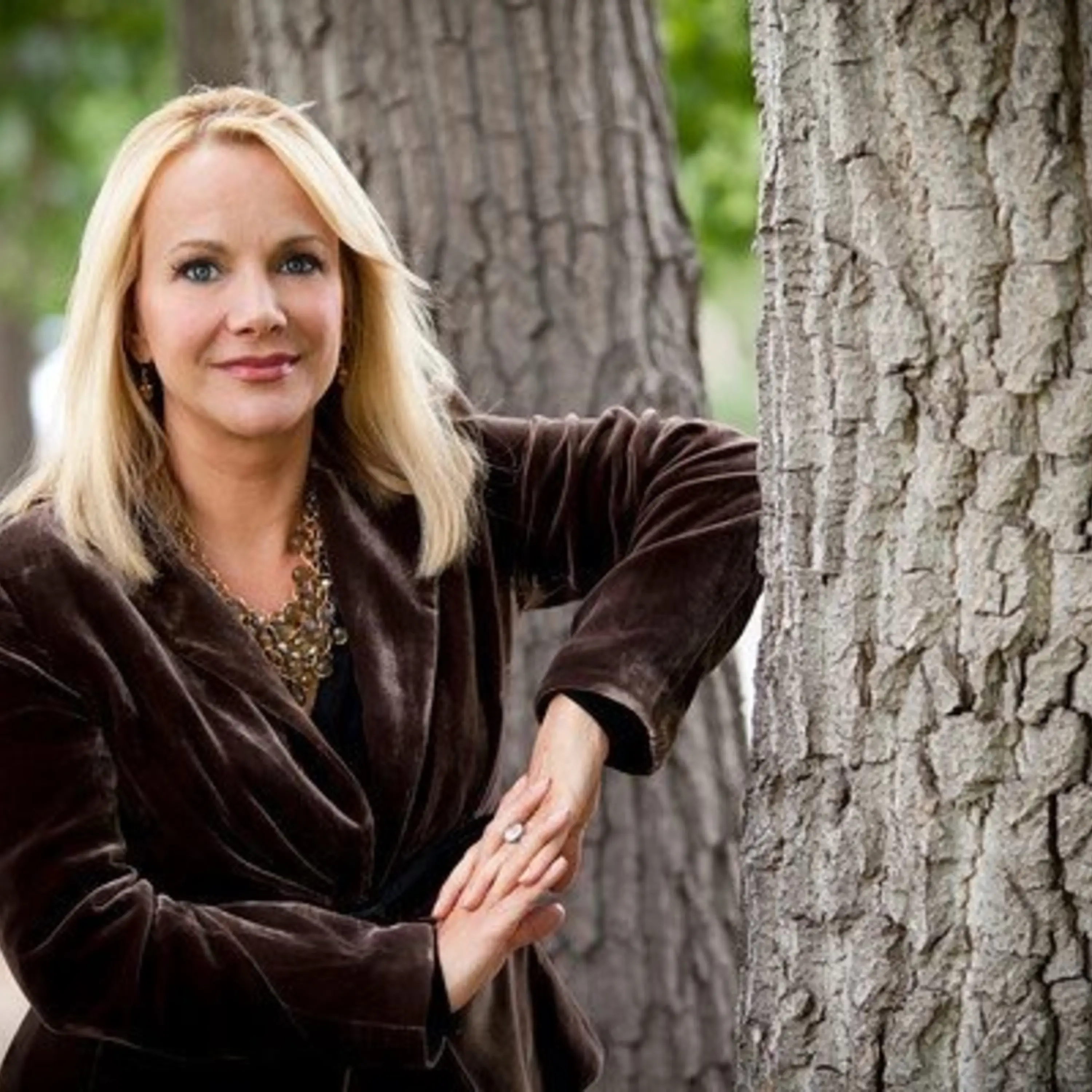
In this heartfelt episode, Angie Austin welcomes LaFawn Jantz to discuss the enduring legacy of her late husband, Dr. Gregory Jantz, and his posthumous book, ‘Healing After Loss.’ Together, they reflect on Dr. Jantz’s mission to instill hope and his philosophy of whole person care, which LaFawn continues to champion. Join them as they explore the power of hope, faith, and healing in the aftermath of loss and the importance of tending to one’s emotions during difficult times.
SPEAKER 02 :
welcome to the good news with angie austin now with the good news here’s angie
SPEAKER 05 :
Hello, friend. Angie Austin here. I am very pleased to welcome LaFawn Jantz to the show. I had the pleasure of interviewing LaFawn’s husband on many occasions. Their website is called A Place of Hope. You may be familiar with them. Her husband wrote, and he was so kind and so lovely and so charming to interview. And I had read about Dr. Jantz’s work. And I was just heartbroken. And then, LaVon, I read about you and about your work. And then when I received an email that you were following up on Dr. Greg Jantz’s work, your late husband, I’m just so touched. I just thought he was so wonderful. And we lost him such a short time ago. And it just touches me that you’re so quickly following up on his work and honoring him and speaking more of faith and what he was doing.
SPEAKER 04 :
Yes, you know, he would want that for not just for me, but for all in the listening range to know that there is still hope. And he knew he was not the only possessor of hope that it came from. from God himself. And that was his mission was to share hope. And so shortly after he passed away, suddenly, his book, Healing After Loss, Rebound from Hardship and Heartache was released. And we were just, you know, dumbfounded that this was sort of, you know, God’s plan, I guess, is that he would have written this book in such a way that it would be released after his own passing.
SPEAKER 03 :
It’s so wild.
SPEAKER 04 :
And becomes such a gift to me and my family and to so many.
SPEAKER 05 :
Yeah, it is wild. So, again, LaFawn talking about her late husband, that this book that he had written, Healing After Loss, was released. And here she was benefiting from his work but wanted to carry that on. Can you tell everybody, without going into too many deals, because it’s painful, he died in an accident. And it wasn’t very long ago.
SPEAKER 04 :
No, he died in July and it was an auto accident at our home and it was immediate and sudden. And so we know that he did not suffer, which is a gift in that whole terrible scenario. And that, you know, immediately in that instance, we knew our lives would never be the same. And yet we also, you know, have a savior. We had our faith. So my family was with me, my two sons and daughter-in-law, and we just clung to each other and held on to each other and agreed to do this together. And so that’s what we’ve been doing since then.
SPEAKER 05 :
You know, when your husband and I would talk about his folks in the past, And about a place of hope. He had the most calm manner and the way that he was never rushed in the way he would present information to you. He always had time to explain things and he did it in such a concise manner. And slow manner, but I mean, slow in that he was taking his time with you. He was never like in a hurry. Let’s just get on with this and let’s just hurry up and get this done. No, he was going to spend time with you. And he was going to know that you, when you left this interview, knew what a place of hope was and you understood hope and that you would have more of it.
SPEAKER 04 :
Yes, and that is what made him the most brilliant clinician. He was an amazing counselor and worked with many amazing people all across the country and internationally and well sought out for his clinical skills. And that is exactly the way he was at home as well with his kids and with everyone he came in contact with. Just very professional. balanced, very helpful, always never missing an opportunity to speak words that help and words that heal and just so very kind and gentle. Just a very, very safe place to bring whatever you’re struggling with.
SPEAKER 05 :
Yes. And not only helping to heal people outside of the home, but also behave that way at home with you and your kids as well. I love it. I love it. Yeah. So you were involved. You were involved. You’re the co-founder, really, of the center, A Place of Hope. Can you talk about I understand you met in Seattle and then school and then you started, you know, the center. Can you talk about that? And then I want to get into how he helped you and how he helped others after his passing through this book, Healing After Loss, that was published after he passed away. So let’s go back to the beginning of the two of you.
SPEAKER 04 :
Okay. All right. Well, I met him. We had our first date one year after my father had passed away. And I was a freshman in college at Seattle Pacific. And he was, you know, a senior and just the most wonderful man. And it was a wonderful initial meeting. just going out to have a little talk, chat together, and just absolutely fell head over heels with him. He was a psych major, and my degree was business. But my family, my childhood history was that of grief and loss. I’d lost my mother at 11 and my father at 17. But I was a very strong person. I had straight A’s in school, except for chemistry, I have to say. And in student government and athletics. And so I was, you know, that was my coping mechanism. And so together, though, we just had this vision for whole person care because we knew that, you know, there had to be more than just psychology to being well. So we were, I would say, pioneers in the whole person care movement where we were attending to what are we feeding our bodies? How are we sleeping? How are the other parts of our lives going besides just our thinking, thoughts, and emotions? Right.
SPEAKER 05 :
doing our job to pull all of that together in a in a unique way and we called that whole person care and whole person care i love that i love that and so yeah so many years 42 years yes i’m giving people whole person care place of hope and then um since your husband passed are you how are you continuing with what he was doing because he was the speaker and the writer
SPEAKER 04 :
He was, and in many ways he still is, I will have to say. He still speaks through our team, our staff. Everyone is still there. They all keep showing up, which I’m so grateful for. And we have as much work on our hands as we ever have had. And so I’m grateful to see his mission and ministry continue. In such a strong way. And so that’s really what I’m doing is to, as his new books are continuing to be released, he has two more on the way, believe it or not. And just to let people know his voice is still there for you. And he writes like he talked and he walks you through his books the way he would counsel people. And so I just think they’re incredibly valuable tools for walking through the issues that he’s writing about.
SPEAKER 05 :
I just think it’s beautiful. I so admire what you’re doing. And I think you’re underselling yourself when we consider him the writer and the speaker because you’re an excellent communicator. And I’m sure being with him so many years since you were 17 that his manner of communication and his patience rubbed off on you because I can definitely hear him in you because you can’t spend that amount of time with somebody and have a profound impact on you. Right.
SPEAKER 04 :
That’s so true. And really, you know, we were truly one. And so in some ways, I know that I impacted him and, you know, gave him a lot of material to write about, I’m sure. But he, again, he just really was the sweetest, kindest man you could ever want to No, just even as a friend, but as a colleague and as a people helper and as a husband and father.
SPEAKER 05 :
You know, it’s funny because everybody always says that when someone passes away, right? But since I talked to your husband so many times and then the man who books him, his friend Don, who is our point of contact, Don would always – you’ve got to talk to – it’s really hard to get Dr. Gregory Jantz, but you’ve got to talk to Dr. Gregory Jantz. Dr. Gregory Jantz has another book out, and he is one that if you’re patient, we can get him on the calendar. Now, it’s very difficult to schedule him, and he’s very busy, but you be patient because we need to get you Dr. Gregory Jantz.
SPEAKER 04 :
That’s so good. I love it. He really was that good. And like I said, he still is that good. You can find his podcast still on YouTube, and we have a YouTube channel at the center. And so if you dig a little bit, you can find his helpful videos that continue. Oh, yeah.
SPEAKER 05 :
People might want to do that. What is the YouTube channel? Is it a place of hope?
SPEAKER 04 :
It’s the center, a place of hope on YouTube. The center of a place of hope.
SPEAKER 05 :
The center of a place of hope. Perfect. Okay. The center of a place of hope. If you are listening right now, I think you’ll get a kick out of him. It’s just so calming to listen to. I could see why he was so successful in his work. Okay, so let’s go back to your husband’s book that’s published after he passed away in July after this tragic accident, Healing After Loss. So not only does this help others, it’s helped you, and you write the foreword in your husband’s final book, and you wrote it before he passed. What did you say when you wrote the foreword before he passed away?
SPEAKER 04 :
Well, actually, I wrote it right after he passed away because the publisher was getting ready to release the book. The book had been finished. And so they just were like, do you want to say something? You know, and I’m like, absolutely. And so what I did say was, you know, that this book was such a gift and it was just like the Lord, you know, God to arrange for a book. Like that’s not only for the readers that need it, you know, healing the rebound from hardship and heartache, but also for me as well. It came out right before the holidays. And one of the things that the book talked about is when you have a sudden loss or a loss of any kind, you feel like everything you invested into that relationship. It’s like a bucket that just gets tipped over all of a sudden. And for me, that was 43 years of my life with this awesome man and all of the things that we had been through and done together and our kids. And it just like somebody just took it and dumped it all in a second. And everything changed. And so he in his book, he talks about that and helped and that helped describe what I was feeling, you know, because when you have a sudden loss, a traumatic loss, there’s so many feelings, very disorienting. And you can be very disillusioned and not really kind of understand what’s quite happening. But that really helped me put a good picture in my mind of what just happened. Yeah. You know, and permission. Then he walked me through, walked me through in his book. It’s OK to do things differently. It’s OK not to be super cheerful all the time. You know, it’s OK to cry. It’s OK to feel your feelings. In fact, you must feel your feelings, even if they’re painful, though. As humans, we try to avoid anything that causes us pain. And so it makes us feel uncomfortable. Exactly. It’s definitely not what we want to do.
SPEAKER 05 :
Now, when we talk a little bit about the things that helped you in there, people will learn. The world’s so full of abuse and trauma and hurt. What are some ways that he teaches you in the book to navigate the painful seasons of loss in life?
SPEAKER 04 :
Well, he really cheerleads being courageous and tenacious and taking the first steps and walking through. And that may include finding a safe person to talk to because when you isolate, when you hide yourself, yourself away or avoid. We don’t get any new information in and we’re only stuck with what we think we know and that during a time of distress and disorientation can be quite dangerous actually. So one of the things that he really encourages is to pay attention to the emotional health, what you’re feeding your mind. to look at your relationships and turn to the safe and healthy relationships, to remember to nurture your spiritual life, to seek moments, looking for God in prayer and listening to, being careful what you listen to, worship music, teaching from people that you trust. And also, you know, just take the time to bolster your physical health, to do the exercise that, you know, you’ve heard a million times, 20 minutes, three times a week could be just to walk around the block. But just to really focus on those routines that hopefully you already have in place. And if you don’t, then, you know, this is the time to put that structure in place to help you recover.
SPEAKER 05 :
Okay, we need to take a break. I’d love to keep you around for the rest of the show. LaFawn Jantz is speaking to us about Dr. Gregory Jantz’s book that was published after he passed away in July, and the book is titled Healing After Loss. We’ll be right back with the good news.
SPEAKER 01 :
Arc Thrift loves your gently used clothing, furniture, and household items. But did you know they also accept non-perishable food donations year-round? Arc Thrift partners with Volunteers of America to help supply more than 70 food pantries across Colorado, from Pueblo to Northern Colorado and all the way to Grand Junction. So when you head to the store, be intentional. Grab a few high-protein items like peanut butter, canned beans, tuna, chicken, soups, or pasta, and bring them with you when you donate or shop. Instead of cleaning out your closet, clean out your pantry. When shopping at or donating to Arc Thrift, you’ll be helping families in need, supporting people with intellectual and developmental disabilities, and keeping good items out of landfills. Find locations, donation centers, and details at ARKthrift.com. ARKthrift, giving items a second life and giving people real hope.
SPEAKER 03 :
Castle Rock is locked in to the mighty 670 KLT Denver.
SPEAKER 05 :
Hello, it’s Angie Austin with the Good News, continuing our conversation about the book titled Healing After Loss, written by Dr. Gregory Jantz, who’s been on the Good News on many occasions over the years. His wife is joining us, LaFawn Jantz. If you heard the first segment, Dr. Gregory Jantz died in an accident at their home very suddenly in July. And then his book was published right after he passed. So Lafon, his wife, who’s been with him over 40 years, wrote the foreword then for his book. And we are talking about what he taught her and what he teaches us in the book, Healing After Loss. And you talked a lot, Lafon, about feelings and how to navigate those. What does it mean in the book when Dr. Jantz talks about, your late husband talks about letting our emotions do their work after we’ve suffered loss?
SPEAKER 04 :
Well, what he expounds upon and teaches is that tending to your hurting heart will bolster every aspect of your whole person wellness plan. So in other words, if you tend to those emotions, they will help guide you through the the stages of grief and recovery, which is essential to not allowing this loss to dictate the way you live the rest of your life or to alter your identity even, which, you know, for me, if I wasn’t careful, I could become, I could feel very anxious insecure and inferior as a widow, you know, suddenly widowed from a famous man. And so who am I now? Has that changed me? And in many ways, it has changed me. And in many ways, it hasn’t. I’m choosing to face everything that comes my way. It’s strengthening me. And it’s causing my identity to also be strengthened in who I am and also as his wife that I continue to be he’s just changed his address and left all the work for me to continue and with joy he’s keeping me busy even now and so what we look at as emotions are doing the work is that there is pain we want to avoid that pain and that’s natural to want to avoid the pain and the problem is that the pain is still there affecting how you handle your life and that’s where he in his many years of clinical work saw that so many people would get stuck in their pain and never move beyond it. And unfortunately, often there’s a negative attitude that ensues, burnout, exhaustion, physical problems. including if we avoid anger, sometimes that comes out by acting hostile towards others around you. And obviously that impacts your relationships and your mental well-being and how people see you. So you can see that it’s truly painful and hard to go through recovery, but essential for long-term health. And that’s what we’re striving to communicate and help people work through with this book.
SPEAKER 05 :
Now, in the book, Dr. Jantz talks about spiritual care during grief recovery, and obviously your book and your work, pardon me, the two of you, centers around the hope in our Christian faith. So talk about that spiritual care during grief recovery and why he says it’s so important.
SPEAKER 04 :
Absolutely. The spiritual peace is so important because it offers hope. His favorite verse was Jeremiah 29, 11, I know the plans I have for you, not to harm you, but to help you, to give you a future and a hope. And humans cannot last long without hope. So when you have that spiritual peace in place, it helps you understand that there is more to this life than what you see, what you feel, what you’re experiencing. And that there is still a God who cares for you, who loves you. In fact, he says that not even a hair can fall from your head that he doesn’t take notice. And they are more important than the birds and the flowers of the field. And so, you know, and you look up at the stars in the sky, you go, Lord, how is it that you even care about us or that you can even keep track of us? Aren’t you busy doing other things? But no, he cares for each and every one of us. And this is a moment in time to really turn towards him, to have conversations with him. to seek out his people, get clarity. They are there to help you, to remind you who you are, how precious you are, how important you are, and that there is still hope and that there is a way through it. And that even through that, you will find that there’s an unexpected purpose and plan, even in the trauma and even in the loss, because your testimony will not only be something that strengthens you, but will strengthen others as well, as you get healthy and well enough to share.
SPEAKER 05 :
You lost Greg such a short time ago in July, and you continued his work, which you worked with him. I was going to ask how you managed to work through your loss and keep doing this, but you’re really honoring him. You feel that this is your mission now to continue his work, so this has helped you through the loss in a way because you have such a purpose now.
SPEAKER 04 :
I do have a purpose and that purpose became immediate. And so I had to be careful to make sure that that didn’t override my own grief journey. And so I have so many good people in my life already because of that. you know, the investments that Greg and I made in a Bible study that I’m still attending. And so I’m in a group of people I know have a track record knowing and they’re safe people. So that’s a testimony. Get into, you know, a safe situation before you have a crisis. I had already had health routines that have been put in place for me. Every morning I get up and read my Bible and have a journal where I write gratitudes. In fact, just This week I hit 32,000 gratitudes. I number my blessings every single day. You number them? That is so cool. I number them. It is. It’s very much fun and it reminds me how awesome my God is. And can’t you know, I’m so glad that was already in place for me when he passed. Oh, I’m stealing that. I just got a notebook. I’m going to steal that. Get a notebook and start with number one. The first 100 are hard. Wow. Love it! How many do you have?
SPEAKER 1 :
32,000?
SPEAKER 04 :
32,000. I write probably three to five every single morning, just reflecting on the day before. You know, the awesome things that the Lord did every day is so unique and unusual, and often we don’t notice. So it’s fun to reflect and to notice what God actually did. So that’s number one. And my nighttime routine also has just been to turn on my little side lamp and turn my bed down so I can kind of get my mind towards it’s time to rest and set things aside. So your morning and your evening routines are very important. And then all the other, you know, connections, the relationships that are in place. I make my bed every morning. That was something very important to us. And it sets a place of order so that there’s not a mess, you know, every time you walk by. And so there are just routines, things, disciplines that you put in place. And then that feeds into the rest of your life. It really does. It’s amazing how you start your day.
SPEAKER 05 :
Well, I like that you had things in place already because we all experienced loss, so you were prepared, you know, as best you could be for such an unexpected loss of your husband. How are your boys doing?
SPEAKER 04 :
They are doing as well as I mean, they’re doing amazing. They love their dad. He was their hero. Benjamin said probably the best dad ever at his celebration of life. And he’s 23. The older one is 26 shared about chase the lion. And many of the football teams here have adopted that, that theme and are winning their games. It’s been really fun to see the influence that these young men have had in other people’s lives, just sharing their testimony of their losing their dad. And they just have so much support.
SPEAKER 05 :
Explain the Chase the Lion.
SPEAKER 04 :
The Chase the Lion is a book by Mark Batterson. And he was able to share the manifesto, the Chase the Lion manifesto from that book with everyone in the celebration of life service. And just so inspiring, just very inspiring to so many in the community.
SPEAKER 05 :
Well, I have to tell you, I’m going to just go out on a limb here and like right on the air say, you know, I have some regular guests that have been on my show for like, I think I’ve been doing this for 14 years. I have this one gentleman who I consider my mentor. He went blind when he was a teenager. He was going to play professional football. And as he was going blind, he’s like, my life’s over. Well, he thought, well, what can I do when I’m blind? He became an Olympic weightlifter. Now he’s written 67 books and he’s on his ninth movie. And he started the Narrative Television Network. His name’s Jim Stovall because he saw that people who were blind needed to be able to watch TV, but have more descriptions given to them so they can better understand what they’re watching. So, I interview him every week, and I would love to have you back on my show as a regular. I find you extremely inspiring. I named my daughter Hope. I feel like I’m the president of hope on this show. The only reason I do this show. When I left TV News, my husband’s like, you know, when you start this job, there’s no pay. You don’t make any money, and you’re turning down a six-figure television job. He’s like, are you crazy? And I said, well, I won’t have many Benjamins in my wallet for a while, but it’ll be full of hope.
SPEAKER 04 :
Oh, I love that. And that is so wonderful. I so agree. And the benefits are higher than what any monetary gain could be in any of this. Well, I’m starting my blessing.
SPEAKER 05 :
I’m thrilled that you’d love to because I’m starting my blessing book today, which I’d love to discuss with you on a regular basis. you’re going to be the number one in my, for today. Cause I told my son yesterday, he’s 20. I’ve got, um, uh, teenagers basically. And he’s the oldest. And, um, there’s three of them, hope, faith, and, uh, Riley and, uh, Riley wanted to come home for the weekend. He says he was kind of feeling low. And I told him that, um, you know, I reconnect with my faith when I’m feeling that way, when I’m feeling sad, you know, et cetera. And, um, I don’t even know where I was going with that. Oh, I know exactly where I was going with that. I said to him, hey, for me, my church is every day. My quiet time is different than others because I love to interview people. So I have the blessing of every day going to church for 30 minutes with people that I enjoy speaking with. I said, so I’m like spoon-fed faith because I speak with people like you, LaVon, and like your late husband, Gregory, and like I mentioned, Jim Stovall. So every day, they feed me and a way that works for me to take in information that helps better my life give me more hope and hopefully spread it to others because i get this blessing every day of getting to speak with christians who write their work speak their work do missions trip who are out there putting their faith into action and so i have a very unique way of getting my um soul fed So I was trying to explain to my son that he has to find his way because he’s feeling – he’s at school. He’s lonely. He hasn’t made a lot of friends yet. And he’s kind of sad, so he wanted to come home for the weekend. So he said he just feels disconnected from God right now. So I was trying to explain to him how he might be able to kickstart himself.
SPEAKER 04 :
Yes. Yes. And we do go through those dry times of searching time. And so that wouldn’t be unusual for his age to be going through that. And and so hope is key. And I agree with you. We do have to continue to be spoon fed, which is why, you know, being in a in a fellowship group and study group, but also in a church. And so many young people don’t want to be in structured, you know, structured religious. institutions anymore. And so how do we engage them in finding that fellowship that’s going to be healthy and wholesome and godly for them? And how can they find that? And that’s a search that they do have to go on. And we have to be the prayer warriors to get them there, to keep them encouraged and full of hope to not give up because it’s there for them. It’s a brave new world. It’s very different, their culture. And so being sent as You know, as parents, being sensitive to what they’re going through is so key and taking the time with them. Like you said, Greg took the time. He wasn’t rushed. And we live very rushed, full, busy lives. Young people, you know, feel it. And to have someone slow down for them is amazing to them.
SPEAKER 05 :
Yes, I totally agree. LaFawn Jantz, the book is Healing After Loss. Your late husband, Dr. Greg Jantz, your work at the center, A Place of Hope, is so important. And you’re continuing that after his tragic accident in July. And I’m just so, I don’t know, I think you’re wonderful. And I’m so thrilled that you’re going to be joining me on the show. I just think that people really benefit from your knowledge and his. So God bless you and thank you for continuing his work so soon after his passing.
SPEAKER 04 :
Absolutely. It’s my joy and my honor and my privilege. It really is. Thank you. And your website, my friend. Oh, yes. Our website is aplaceofhope.com. And there are many free resources on there, tests that can be taken to, you know, just to find out where you’re at on the spectrum of different issues, mental health issues. If you go all the way to the bottom of the page, you can subscribe to our newsletter, which is weekly and gives mental health tips and health tips, just very valuable. We can connect you with more resources that way too. So it’s more than just looking for therapy. It’s also just feeding you and giving you more information for life.
SPEAKER 05 :
Thank you so much. Have a wonderful day.
SPEAKER 04 :
Thank you. You too, Angie. Thanks for having me.
SPEAKER 02 :
Thank you for listening to The Good News with Angie Austin on AM670 KLTT.