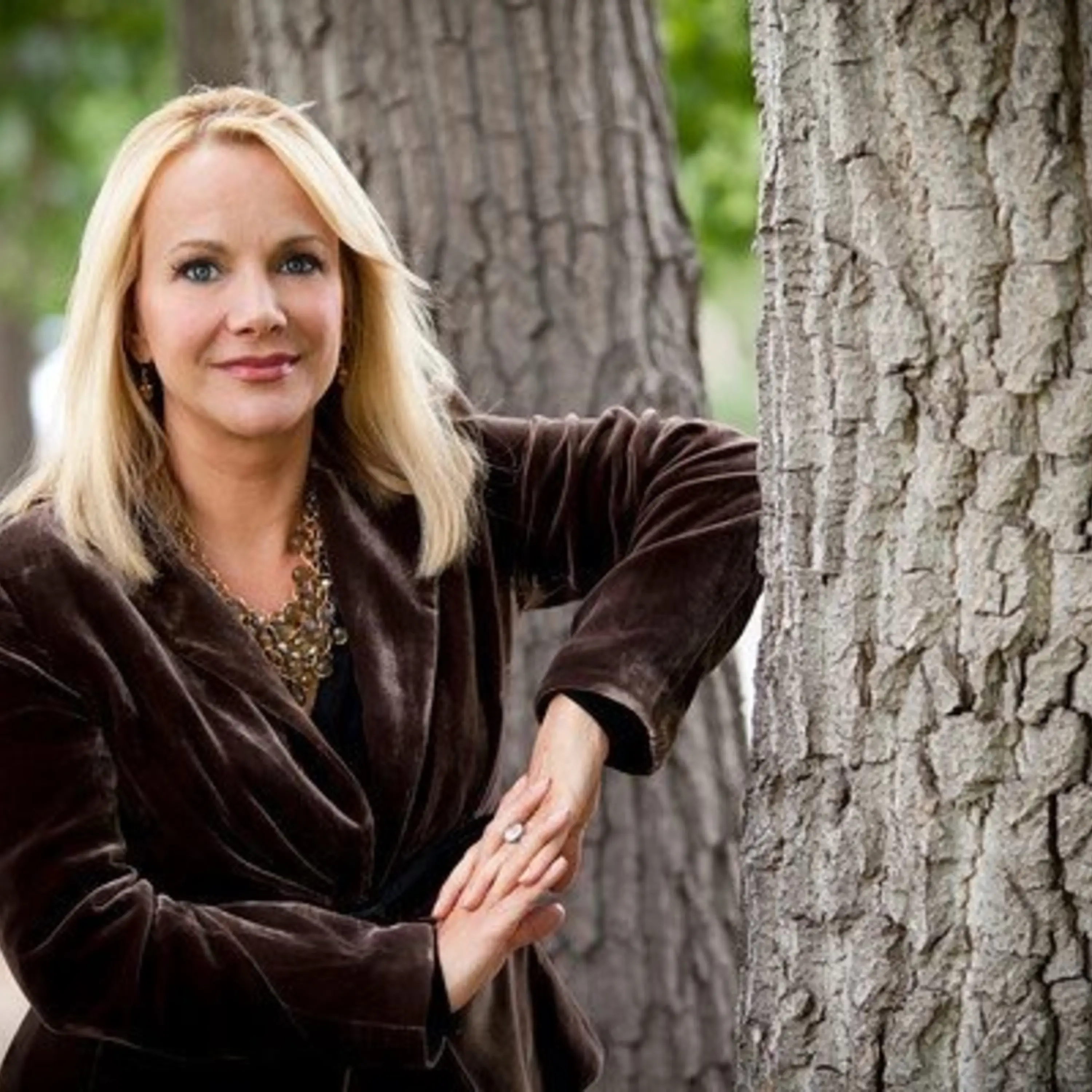

In this heartfelt episode, Angie Austin sits down with her dear friend Ed Novak, a former restaurateur with a wealth of life experiences. They delve into Ed’s personal history, focusing on the challenges he faced when losing his father at a young age and his journey towards opening his first restaurant. Ed shares touching stories about his mother’s resilience and how faith played a crucial role in mending their strained relationship. As the conversation unfolds, listeners will hear about Ed’s trials and triumphs and the significance of community support during difficult times. The discussion emphasizes themes of forgiveness and
SPEAKER 01 :
Welcome to The Good News with Angie Austin. Now, with The Good News, here’s Angie.
SPEAKER 05 :
Hello there. Angie Austin here with The Good News along with my friend Ed Nova. He is a restaurateur and good friend of mine for many, many years. And because I find him to be such a great storyteller and he’s been such a successful businessman, he owned the Broker Restaurants and many other restaurants over decades here in the Denver area. and is now enjoying a life of leisure he just has so many great stories and lessons he’s learned so i’m calling his uh segment life lesson life lessons with ed novak hey ed i love it i love it thank you angie all right so i met your mother and we’ve talked about her your father died when you were young and um you know just attending college am i right there
SPEAKER 07 :
What’s that again?
SPEAKER 05 :
You were attending college when your father passed away.
SPEAKER 07 :
I was a freshman. I’d been a freshman for just a couple months. That’s right.
SPEAKER 05 :
And his dad passed away on their farm, and your mom just, you know, really picked herself up by her bootstraps and kept on trucking. And things were different then. They didn’t have the same types of, you know, programs to help people. And you said that the community, tiny community, just really surrounded your mom, your family, and it was such a God thing.
SPEAKER 07 :
It was amazing. It was amazing. It was God at work, I can tell you that.
SPEAKER 05 :
yes yes yes definitely all right so you wanted to talk about your first restaurant and your mom and i’ll bet she was so proud of you because i remember being at one of the anniversaries at the broker and sitting by your mom and your stepdad and i could tell she was very proud of you yes thank you so tell us about that well i tell you as as we as we discussed my you know my father passed away up in unfortunately in a construction accident in sioux city iowa and uh
SPEAKER 07 :
We lived on a farm in Rosalie, a little town, you know, it’s a little town next to 119 people. And mom, you know, when dad passed away, I was a freshman in college and, you know, 18 years old. There were five kids. My daughter, my sister rather, was two years old. And so it was, you know, a difficult time, obviously, for my mom. And so what happened was that About four years after my dad’s passing, mom met a man in Pender, Nebraska, whose name was Everett, and he lived in an apartment there. And Pender is a town of about 1,000 people, and it’s about 10 miles west of Rosalie. Now, the thing about Pender that was very special was it had the only hospital among all those little towns around. It was the only hospital. And Everett worked there, and he handled the x-ray machine. He was a radiologist. And so he had worked at the hospital. Anyway, he and Mom then ended up getting married. Mom sold the farm. They moved, and then the two of them bought a house right next to the hospital. And so mom was brilliant at math, by the way, and a very smart lady. And so what she did is she got a job at the hospital as a bookkeeper. And so it was a really nice arrangement and a wonderful time for them. Then about… You know, I talked before about opening my very first restaurant, which was called Nero’s on East Colfax. And when I opened that, then, you know, Mom, of course, I talked to Mom about it and all my family. And so Mom called me about two weeks after I opened and said that she wanted to come out and see my new cafe. And a cafe in Nebraska is very low-key. You serve breakfast, lunch, or dinner or whatever, but great food, but just pretty reasonable surroundings, pretty easygoing operations. And so mom called my brother Delmer, who lived in Denver also, And so what they worked out was mom was going to come and stay at my house where my wife, Diane, and then my three kids. And we lived at 29th and Ames, which is a block west of 29th and Sheridan. And so she wanted to stay with us at our house, which I thought was wonderful. And then Dilmer was going to pick her up and then bring her to the restaurant, to Nero’s. And so I was there, and when they came in, they came in, and I put them at a booth that was the best booth in the restaurant that you could see everything from that booth. And so I was spending a lot of time in the kitchen for some reason that night, and then I came out of the kitchen, and the booth was empty. They were gone. And I thought, that’s really weird. And, you know, there’s no cell phones in those days. You know, I’m talking about the old days. And so what I did is I got home about midnight, and I was very, very quiet, so I didn’t wake up Mom and Everett. And I was very, very quiet. And about 1.30 in the morning, about an hour and a half later, I heard this noise in the house, and I got up, and I noticed out the window that Mom and Everett’s car, they were driving away from the house. And so the next morning, I talked to my brother Dilmer, and I said, what in the world, what’s going on here? And he said that that mom was there in the booth, and they were looking around at everything, and then all of a sudden she realized that I was serving beer and alcoholic drinks. And she told Dilmer, I’m going home. We’re going home. We’re leaving here. And so they left. And then I – so after that – Basically, what happened, that mom didn’t talk to me for two years.
SPEAKER 02 :
Wow.
SPEAKER 07 :
There was no Christmas. We didn’t do any Christmas presents. We didn’t do any birthday presents. We did no phone calls. We did no little letters. And if I called, she wouldn’t respond. And so for two years, then no response. no, no, nothing, no connection whatsoever, you know? And, um, so then how that changed was mom’s father, my grandfather, uh, Charlie, Charlie Pounce, who lived in Rosalie, Charles Pounce, um, uh, passed away. And so I went back to Rosalie for the funeral. And of course, mom was at the funeral too. And, um, And somehow we sort of started some kind of process of reconciliation, whatever that is. But it moved along, but I would call it a slow process. And then I want to say maybe like five years after that, five years after the funeral, if you will, we You know, I had opened a couple broker restaurants, and mom had started coming back out to, you know, my two brothers lived in, you know, he lived here in Denver. So she came to visit them and visit me, and then she started gradually the brothers or everything, whatever, we started going to the broker restaurant and the country broker. And the crazy sort of thing is that she ended up, actually being one of the best supporters of the broker restaurants after all that hellable, you know. And I just think that this is just such a great example of God answering prayer in the sense that when Mom left that time, you know, left my house, You know, I just wasn’t sure where to go and what to do. And I started praying to Christ so much about, you know, how to handle everything. And I was, you know, obviously not feeling pretty good about this whole situation and not knowing what to do, to be honest with you. And so over a period of time, I can tell you there came a time that I almost, I just felt, I felt so much comfort. I felt so comfortable. and I just felt that everything was going to actually turn out. All right. You know, you really trusted. It just got me, you know, Christ just got me over that, that bad hump, if you will.
SPEAKER 01 :
Yeah.
SPEAKER 07 :
And, and I really, really, I was so appreciative of that. And then, and it turned out to be exactly true. You know, what, what I was feeling is what really happened. And we were, we got together and as you know, you spent time with mom and ever at later years and, and, um, she was just a phenomenal woman. She was just, she was very, needless to say, she was very committed to her ideals.
SPEAKER 05 :
Yes, yes, yes. Um, you know, she, uh, She was definitely a tough cookie. She was no shrinking violet. No, she wasn’t. She was tough as nails. Yeah, and very proud of you. And I enjoyed – I got a kick sitting by her. It was funny because she definitely ran the show with your stepdad. I’m telling you that much. Right, right.
SPEAKER 07 :
She was actually in charge of everybody.
SPEAKER 05 :
She was in charge of everybody, including her husband. That’s hysterical. I love that you had the, you know, the whole thing about faith is, you know, believing and trusting for something to happen and not making it happen when the other person isn’t ready. But also forgiveness. I feel like one of the biggest gifts I’ve been given from above, you know, from the Lord is my ability to forgive. And I have a step, I mean, my mother-in-law is, is tough as nails as well. Italian mom who also runs everybody and everything. And it took a long time for us to kind of meet in the middle, but there were many occasions where I, I had to apologize where I 100% thought she was in the wrong and not kind to me, but I did it because I wanted peace in the family. You better believe it. And she’s not a person that apologizes, so I’m like, well, somebody’s going to have to, and it’s not going to be her, so it’s got to be me.
SPEAKER 07 :
Well, I’ll tell you what, you understand the situation.
SPEAKER 05 :
Yeah, yeah, yeah. And I think your pride, you know, it can really keep you from having good family relationships. And we have such a good relationship with them now with my in-laws and the kids. I love it. I knew that the kids wouldn’t have these grandparents if I couldn’t get her, you know, back. You know, there was at least two occasions where she didn’t speak to us for a year or And I knew that family.
SPEAKER 07 :
Yeah. Family is like the most and one of the most important things to me and my life. Yeah. My grandkids and my two new great grandkids. And I just I mean, I am all about family. I mean, family is my life. And I tell you that that’s the way it is. I mean, it’s just I love it. I love it. I love it.
SPEAKER 05 :
Well, I think that the message is a good one, though. You know, trusting in the Lord when you’re trying to get things to work out and you’re praying about it, that’s really hard to do. We want to control everything. I know it. And then forgiveness, even when the other person is maybe even 100% in the wrong, you know, and sometimes you just have to swallow your pride and get on that path to forgiveness. And you may never get an apology from them. And I remember once I said to her, I said, well, I apologize to you, but you didn’t apologize to me. And she goes, well, if that’s what it’s going to take. And then it was silence. It was silent. If that’s what it’s going to take, then okay. You bet. You bet. And I was like, is that it? Is the silence the apology? And I thought, okay, I’m not going to get that. Ed Novak, you are such a pleasure having the show. Thank you so much for joining me for these life lessons with Ed Novak. Thank you, friend.
SPEAKER 07 :
You bet. Thank you so much. All the best to you.
SPEAKER 03 :
Arc Thrift loves your gently used clothing, furniture, and household items. But did you know they also accept non-perishable food donations year-round? Arc Thrift partners with Volunteers of America to help supply more than 70 food pantries across Colorado, from Pueblo to Northern Colorado and all the way to Grand Junction. So when you head to the store, be intentional. Grab a few high-protein items like peanut butter, canned beans, tuna, chicken, soups, or pasta, and bring them with you when you donate or shop. Instead of cleaning out your closet, clean out your pantry. When shopping at or donating to Arc Thrift, you’ll be helping families in need, supporting people with intellectual and developmental disabilities, and keeping good items out of landfills. Find locations, donation centers, and details at arcthrift.com. Arc Thrift, giving items a second life and giving people real hope.
SPEAKER 02 :
Bomar is listening to the mighty 670 KLTT Denver.
SPEAKER 05 :
Angie Austin here with the good news along with Jim Stovall, and we’re speaking about his Winners of Wisdom column. This week it is listening and understanding. Welcome back, Jim.
SPEAKER 06 :
Always good to be with you.
SPEAKER 05 :
Okay, so you’ve been traveling and speaking. How is all of that speaking stuff going?
SPEAKER 06 :
It is going great. I spent my hour on stage yesterday, actually, for a credit union banking convention thing. And it is good to be back out in front of people and doing that. And I didn’t realize how much I missed it until the pandemic started. kind of took over everyone’s lives. So it’s great to be back out there.
SPEAKER 05 :
Yes. One of my friends, Ross Schaefer, is a speaker as well, and he traveled extensively prior to COVID. And boy, talk about an industry being completely shut off, like the water or electricity being turned off. I mean, it wasn’t just a drip. It was nothing during COVID. So that’s not a very easy work-from-home kind of thing, public speaking. You can still do Zoom meetings, et cetera, but it’s not the same as a full auditorium, I’m sure. Yeah.
SPEAKER 06 :
Absolutely. I mean, yeah, I did a number of those, but doing them from my conference room or my living room at home certainly leaves a lot to be desired.
SPEAKER 04 :
Right. Okay, so in listening and understanding, what are you teaching us this week?
SPEAKER 06 :
Well, we live in a world where it’s so easy to… converse with people or communicate with people but we need to realize just because we’re talking doesn’t mean anybody’s listening and even if they’re listening it doesn’t mean they’re understanding and you know and there are So many permutations of that. So many people think a conversation is I’m waiting until you take a breath so I can jump in and say what I want to say. Or, as contentious as the world has gotten, Angie, a lot of people are just waiting for you to say something that they can disagree with and dismiss you from that moment forward. And I have a good friend in Washington. We’ve worked together for 25 years through the Department of Education. And she knows I’m totally blind. And she sent me a photo. And it’s a photo, it’s almost 100 years old, of two gentlemen in tuxedos at a formal event. And, you know, it’s Albert Einstein. And, you know, and he’s there. And, you know, you think of Einstein and all his stuff. And, you know, and then you think, who would he be with? And then here’s this iconic figure, Charlie Chaplin. And, you know, it’s just wow. The two universes collide. You don’t expect to see Chaplin and Einstein together. But what’s amazing is under the photo are a quote from each of them. And Einstein says, you know, the whole world understands you and they can’t hear you at all because he was in silent films. Right. And Chaplin’s response was everybody hears you and respects you, even though they have no idea what you’re talking about. And that’s, you know, obviously most of us would relate to Einstein that way. And so, you know, I think we need to… I always go back to my late great friend and colleague, Dr. Stephen Covey, who said, in any encounter, seek first to understand and to be understood. And that is such a powerful thing, and it’s not easy to do. And Covey always said, unless or until I can understand your position and… say it back to you in a way that you approve. You agree that I now have articulated your position. I should do all that before I even tell you what my position is. But I have found that in that process, sometimes of just trying to understand, What both parties find out is we’re not that far apart. We’re really not that far apart. And I think particularly in the world we live in now, you should deliberate before you debate, and you should learn how to disagree without being disagreeable.
SPEAKER 05 :
Yeah, and I think that’s an art that many people aren’t interested in learning or practicing in their day-to-day lives. I don’t really like dissension, and so I kind of like to figure out a solution or if it’s something that’s really not that important to kind of, you know, the whole agree to disagree or, you know, kind of just let it go. Especially in a relationship or family, your goal really is to raise healthy kids who are well-adjusted, that people want to be around, that they want to employ, that don’t get fired for being jerks and being late and being inconsiderate and talking back. So my husband and I have the same goal. And so when we do have disagreements, I’m not really that intent on pursuing it, you know, till the death, you know, until let’s duel this one out. I kind of try to work out some amicable solution or whatever. And sometimes he does want to keep it going. And the other day, I remember we were trapped in the car going to some tournaments. We were going to be in the car for quite some time. And I said, well, we don’t have to beat a dead horse, do we? You know, because I obviously wanted to let it go. And he didn’t. It’s He said, I’m not beating a dead horse. I just want to find out why you said that in the first place. And I said, it doesn’t really matter because we don’t really agree on it. It was about mothers, my mother-in-law and my mother and comparing how we treat them. And we’re never going to agree on that. So I said, well, let’s just let this one go. But normally he can, but he just couldn’t find it himself to let it go. But after I said that, he kind of realized that, oh, my gosh, I’m arguing with myself at this point because she has no interest in this debate. Right.
SPEAKER 06 :
Well, and it’s impossible to argue with someone that won’t participate. Right. You just can’t. And, you know, I think your first goal in any discussion should be, at the end of this, regardless of what we both think at the end of this, the lines of communication should remain open. You know, if you win an argument but the lines of communication are forever shut down, you’ve lost. There is no winning that. And when we really understand, my first big interview on television, I used to do a political show out of Washington, The Washington Reporter, and the very first guest was Senator Ted Kennedy. And if Senator Kennedy and I ever agreed on anything, it was probably an accident. You know, we got to talking, and I realized, you know, he doesn’t want to ruin our country. He doesn’t want to destroy our children. You know, we just had a different method in how we thought we would get to this same place. In fact, our goals would not have been that far apart. It’s just our mission was the same. It’s our method that probably is what we disagreed on.
SPEAKER 05 :
Yeah, what’s interesting about that is you two being so far across the aisle from each other in terms of maybe your political beliefs, I find friends of mine that I’m so similar to that feel like family that I can just go to their house and hang out. One of my girlfriends, we cook together and we pick up each other’s kids. She’s like a sister to me. And, you know, we walk our dogs together. I mean, really, I mean, if you’re cooking together, helping take care of each other’s kids and walking dogs together, you are like family, you know, and I go to all of their family parties. Well, one day we started talking politics a little. And I found out we were polar opposites. And she started like yelling and crying. And I looked at her husband because my husband and I think, you know, we’re on the other side of the fence as well. And they are too. She’s a liberal and he’s conservative. And so we’re all four of us sitting there with these, you know, couples that are divided. And I just said, look, here’s the deal, like your family to me. And we obviously have the same goals and how we get there might be different. But you and I care about exactly the same things and we love each other. And so we just have to drop this. This can’t continue. But I think a lot of people get a charge or like adrenaline or like they’re like, oh, I can change this person or I can convince them. And what you’re doing is just driving a stake in the middle of your relationship and severing it further and further. And like you said, what we have the same goal. So why would you want to do that?
SPEAKER 06 :
Yes, and the world becomes a better place, and you become a better friend, relative, and companion when you give up the need to be right. You know, I’m going to convince everybody I’m right and I have to make them wrong. When you give that up and, you know, hey, it’s okay if we don’t agree on this. It’s okay. I mean, you know, I mean, somewhere there’s probably somebody that doesn’t like chocolate chip ice cream or the Dallas Cowboys. It’s hard for me to imagine that, but I’m sure there is.
SPEAKER 05 :
Yeah, that’s the chocolate chip ice cream. Are you kidding me? Yeah.
SPEAKER 06 :
Yeah, but there are all kinds of things, you know. And Crystal, my wife, and I were at a place the other day, and they’d remodeled this wonderful hotel near our home. And we went in, and here’s this three acres of carpet in the entry. And she said, this has got to be the ugliest carpet I’ve ever seen. What’s amazing is somewhere in a room, somewhere in the country, a group got together, looked at samples, and decided that’s the best one right there. I mean, obviously, that’s what makes a horse race is different opinions and two extremes and a million in-betweens. And that’s what makes it all go around.
SPEAKER 05 :
That is funny. All right. So in terms of Dr. Covey and his, you know, seeking to understand and then to be understood, I know you’ve learned a lot from him. What do you want us to learn, you know, from this article?
SPEAKER 06 :
Well, that, you know, every conversation is not a debate. It’s not a discussion. There’s no reason you have to make other people right or wrong. They’re entitled to their opinion. Differences is what makes us all great. And, you know, you hear so much today about diversity and all the things that make us the melting pot, and it’s the strength of our… And then we want everybody to agree with us, and we want to disagree with everybody that doesn’t already agree with us. And, you know, it’s OK. You know, it is really, really OK. And I remember back to 9-11 and people who were on both sides of the aisle, extreme. Well, my my senator, Jim Inhofe, who was selected as the most conservative senator at that time, he is standing on the steps of the House. holding hands with Hillary Clinton, singing God Bless America. And you think, okay, these people have never agreed on anything but on the important issues. When it comes right down to it, they’re together. And so I think that’s the takeaway here.
SPEAKER 05 :
All right. Now, in terms of these people, because you’ve had so many powerful, influential and well-respected friends, anything else you can think of that when you think about Dr. Covey that you think, wow, I really learned such and such from him?
SPEAKER 06 :
Well, you know, Covey was such a powerful guy. I mean, people, if you’re not getting the things done you want your life, I always tell people to read his book, First Things First. I mean, most people, if you’ve read any of his work, it’s Seven Habits of Highly Effective People. But First Things First is just such an amazing book. And I remember he used to do this thing on stage when we worked together. And he would call someone out of the audience, and he had this big glass tank there. And he’d say, put these rocks in there. Put as many as you can put in there. And they’d say, that’s completely full, right? And he’d say, yeah. Well, then someone would come up with gravel. Say, now, put as much gravel in it. Well, they could pour a lot of gravel in there. And he’d say, now, that’s completely full, right? Yeah. And then here comes a guy and said, now, you come up here and fill it with sand. And they could put more in, and then it’d sand all the way to the top. And he said, so that’s completely full. Can’t get anything else in there. And then he handed somebody a bucket of water. He said, pour that in there. And you could put gallons of water in there. It’d fit. And, you know, so he uses that as an example of how you should do things in your day. And you’ve got to do first things first. Because you start by putting the water in there, then the sand and the gravel. You’ll never get it all in. You know, that’s the power of… you know, prioritizing our day and taking control of our schedule instead of letting it control us.
SPEAKER 05 :
And so first things first, equally as good as seven habits of highly effective people does not as well known.
SPEAKER 06 :
Yeah, I think so. I really do. And of the seven habits, the sharpen the saw is the powerful one. Most people forget. You’re trying to saw down a tree, and you saw faster and harder and harder, and you think that’s the only way to get it done. And sometimes the very best thing you need to do is stop and sharpen your saw and take care of your tools, and then you’ll get done faster. And that goes with us. I mean, there’s so many people out there burning the candle at both ends. If you want to get more done, stop and get some sleep. I remember reading about a 14th century pope, and he said, before I was pope, I could not get through my day without two hours of prayer and meditation to face all my tasks. Then when I became pope, I got busier, and I had to change that to four hours a day.
SPEAKER 02 :
Wow.
SPEAKER 06 :
And that is so counterintuitive, but it’s true. I mean, if you do first things first…
SPEAKER 05 :
I love that, Sharpen the Saw. I’ve read that book, and I forgot about that one. I need to reread that. JimStoval.com. We’ll talk to you next week. Thank you.
SPEAKER 01 :
You will. Thank you for listening to The Good News with Angie Austin on AM670 KLTT.