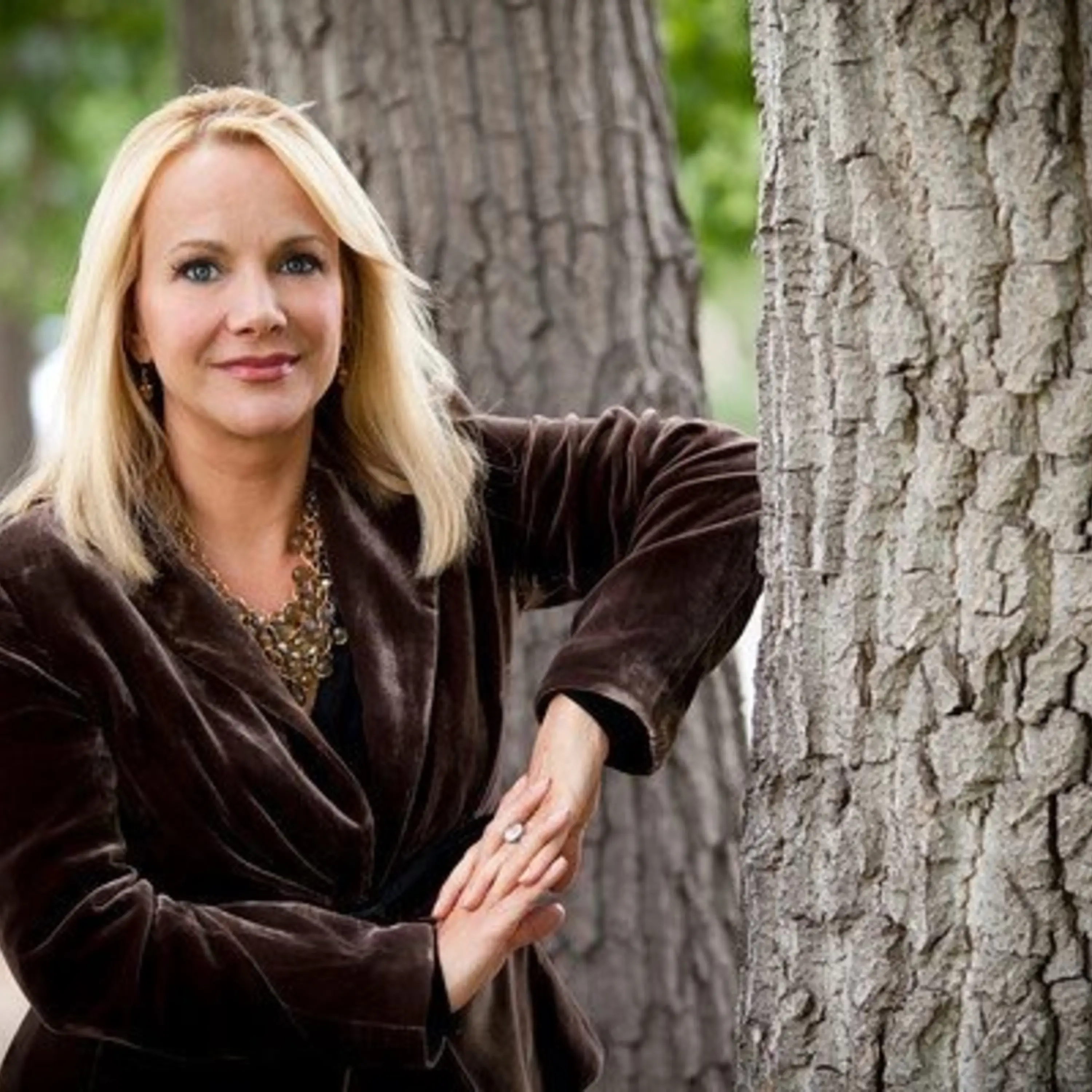
In this episode of ‘The Good News with Angie Austin,’ we delve into the powerful stories of businesses and initiatives making a difference in the lives of those with disabilities. Learn about ‘A Cheerful Giver,’ a family-owned candle company from New Jersey creating meaningful employment for adults with special needs. Discover how organizations like ARC are expanding their impact and providing purpose and pride to differently-abled individuals. We also address the evolving conversation around mental health, focusing on major depressive disorder (MDD) with insights from experts Dr. Sondra Jan and mental health advocate Kelly Uchima.
SPEAKER 02 :
Welcome to The Good News with Angie Austin. Now, with The Good News, here’s Angie.
SPEAKER 07 :
Hello there, friend. Angie Austin here with The Good News. I wanted to share a really cool good news story with you. And then I want to talk about a pretty important topic, I think, especially in this day and age. I think that a lot more people are talking about depression, and we are going to talk about new hope for major depressive disorder. So you’ll want to stick around for that. We’ve got a doctor joining us and also someone who’s personally dealt with overcoming depression herself. But let’s start off with our good news first. I absolutely love this story because, you know, I do a lot of work with ARC. And so people with cognitive deficits, Down syndrome, cerebral palsy, maybe they’re on the spectrum. ARC provides work for them and they have thrift stores all over Colorado. Now they’re expanding into other states as well. And that money, they use that money to advocate for people with cognitive deficits. I just love working with the ambassadors. There’s such a special love that so many of them have for each other and for their customers. And I’ve just really enjoyed my relationship that I’ve had with ARCA and the ambassadors over many, many years now. We’re probably going on probably 20 years or so, but I’ve been associated with them more than that. It’s more now, maybe towards 20 years. Three? That’s been a long time. Okay, so great work that they do, by the way. Okay, so this has to do with a candle company, and it’s a small New Jersey business that gives back to their community. in really life-changing ways, much the way ARC does. For over 20 years, the family-owned candle companies provided meaningful employment for adults with special needs, helping them to place the wicks inside their delicious-smelling candles. They started in 1991. A Cheerful Giver is the name of the candle company. A Cheerful Giver now sells to thousands of retail stores nationwide because a lot of people really appreciate their mission of helping people who are differently abled. So we now sell to thousands of retail stores nationwide, and they’ve built a loyal following on Amazon.com. And for decades, their commitment to inclusive employment has never wavered. And by the way, when my friend Lloyd Lewis started as the president and CEO of ARC, they only had a handful of ambassadors, you know, like. Five, six, under 10. And now they have over 500. So it’s amazing. All right. So in terms of the Shareful Giver Candle Company, it says these team members place the wicks in every candle we pour, said the owners, Tony and Susan Gross. They’re the heart of our operations. How much they work is entirely up to them. There’s no pressure. There’s no quotas, just purposeful employment and the pride that comes with being part of something real. The employees arrive through a partnership with this Career Opportunity Development Incorporated. It’s a New Jersey nonprofit founded by a group of loving parents. They started it 55 years ago. Because they were trying to find ways for young adults with disabilities to find work, vocational training, and housing. You know, 55 years ago, there weren’t a lot of opportunities for people who were differently abled. I mean, think about how right now it’s even difficult for some people to find work. So 55 years ago, this is a wonderful thing that these parents did create this Career Opportunity Development Incorporation. Okay, so they’re located outside of Atlantic City in Egg Harper, and the workers are employed in a number of different fields from this Career Opportunity Development Incorporated, and they get competitive wages, and that, of course, helps support their independence, and it gives the parents really… sense of peace and ease that they know that they’re differently abled child has meaningful work and will be you know hopefully you know in a better position once the parents pass to be able to take care of themselves or at least be in a position where they have a way to make a living so in terms of the candle company says all of our wickers bring home a paycheck and each day for all they’ve accomplished every single day, building a sense of pride and purpose. And then I’ve done some other stories on like a car wash that has an autistic staff. And actually what’s amazing is that A lot of people with autism are very detail-oriented, very focused, and so they actually have a knack for being, like, you know, so good at what they do, and it’s, like, one of the best car washers you could possibly go to. Now, when you give a cheerful giver candle, you’re supporting a workplace that has given differently-abled individuals the opportunity to contribute, earn, and belong. And you can go on to Amazon.com, and you can find – you can even just Google a cheerful giver candles and find those. And they said, at Cheerful Giver, we are more than just another candle. We are a proud American company that makes our own products and gives back to ensure we are making a difference in the lives of others. And I have to tell you, that is why my friend Lloyd Lewis said that he left the big corporate world because he went to Booth Business School, University of Chicago. Like he was a big time mucky muck in the finance world. And he left that world to work for ARK because his son has Down syndrome and And he said that he wanted to be part of creating an environment for people like his son to have a sense of purpose and to get up every day and have a reason to put their feet on the ground and to have camaraderie. And they have, you know, an educational system, ARC University, and they have all kinds of gatherings for all the ambassadors to get together who are differently abled. And I just personally love that organization. So I thought I’d share that good news story with you because it kind of relates to ARC as well and my work with them. All right, changing gears now. I told you we were going to talk about a very important topic, depression. This is Angie Austin here with The Good News. Did you know that depression affects around 21 million people in the U.S.? Yet many adults with major depressive disorders still struggle with symptoms, even with treatment, and some people are hesitant to reach out for help. We know that. We have two experts with us today, Dr. Sondra Jan, a licensed psychotherapist with more than 30 years of clinical experience, and Kelly Uchima. Kelly is a mental health advocate who has openly shared her own journey with depression. Her experience reflects what many adults with MDD face, persistent symptoms, emotional setbacks. difficulty maintaining daily routines welcome to both of you dr. Jan and Kelly now dr. Jan what is major depressive disorder MDD and how does it differ from everyday stress or even sadness such a great
SPEAKER 06 :
Great question. Major depressive disorder, what we commonly refer to as major depression, is a chronic and persistent condition that can persist for weeks, symptoms showing up like loss of interest in regular activities, a loss of motivation, drive, cognitive difficulties. And what’s important to realize about this condition is that it impacts a person really globally, their entire ecosystem, relationships at work, home, and school. And how it is different from what we would call daily stress, I’m going to turn to Kelly and invite you as a person with lived experience. You’re the expert. Tell us about that.
SPEAKER 04 :
Fortunately and unfortunately, when I was 19, I got diagnosed with depression. And that was the first time in my life where I actually felt very affirmed that there wasn’t something very, very uniquely wrong with me. And a lot of us who have depression truly feel like we are so different from others and our possibilities and our abilities are so different. small and there is a dark cloud over our head and that truly does feel like a reality but that is a big symptom of depression and I have learned throughout my journey that there are so many tools I can tap on like therapy, taking an antidepressant and other tools at my disposal that have helped me live a better quality of life which I’m really grateful for.
SPEAKER 07 :
Doctor, how many adults continue to experience depression symptoms even while in treatment? Now, from your perspective, what contributes to this and what gives you optimism about where care is headed?
SPEAKER 06 :
Yes. Well, standard of care is really what Kelly just described. Standard of care in the world of major depression is typically an antidepressant and or psychotherapy or a combination of the two. And in my clinical practice and what we know is that some patients do respond to the traditional treatment tools that are available. However, there are others where it is a partial response to treatment. And so something that is emerging in our world of treatment options, specifically for major depression, is a new emerging tool that is called a prescription digital therapeutic.
SPEAKER 07 :
Well, talk to us a little bit about how technology-supported tools fit into the depression treatment landscape and How might they change the experience of day-to-day care?
SPEAKER 06 :
Great question. So let me speak to you about one specifically. We’ll start with prescription digital therapeutics are FDA-authorized apps. But they are different than wellness apps in this way. They are based in evidence. They are studied within randomized control trials. So that’s quite different than a wellness app. And one in particular is called Rejoin. And Kelly and I are so excited to be together here on behalf of Rejoin. So let me tell you just a little bit about that. authorized prescription app for the treatment of the symptoms of major depressive disorder. The person has to be 22 years of age or older. It is not a standalone treatment. It is an augmentation to what we were talking about earlier, medication psychotherapy. And if you’re interested, if viewers are interested in safety profile, efficacy, I mean, we’d invite you. Go to the website, meetrejoin.com, and rejoin is spelled R-E-J-O-Y-N. And what’s exciting about this, I know you’d agree, Kelly, is that this is simply another tool that we have in our tool bag to be able to offer to the people that we’re working with.
SPEAKER 07 :
Now, Kelly, as someone who has shared her mental health journey openly, what are you most excited about when it comes to changing the conversation around mental health, whether that’s additional treatment options, reducing stigma, or helping people feel less alone?
SPEAKER 04 :
I love how open and normalized these conversations are because if I’m thinking about little old me as a kid, I grew up in an Asian household. I’m Asian American. And even though my parents were born and raised here, there was not a lot of space for emotions, hard conversations, and no such word as depression would ever hit that house. And I’m sure so many of us have felt that there are big generational differences, cultural differences. And knowing that there are tools and opportunities and conversations for us to vent and get advice and hear from other people’s journeys, I have found it to be so inspiring to continue to seek treatments and a better quality of life for myself. I don’t know if I didn’t have other people to talk to that I’d be as encouraged to do that for myself.
SPEAKER 07 :
Dr. Chan, from a clinical perspective, what excites you most about the growing understanding of mental health and the emergence of new technology-supported options for patients?
SPEAKER 06 :
It’s exactly what you said. These emerging new digital technologies are quite exciting. You know, in this space, we’re talking about neuroplasticity, which really is, simply put, the brain’s ability to change. And that offers patients a sense of So the two parts of the brain that in this space, the thinking part of the brain and the feeling part of the brain, so the prefrontal cortex and the amygdala, it’s believed that there is a problem with communication and that emotions feel overwhelming to people. particularly in the space of major depression. So Rejoin as an example, this pre-authorized or FDA-authorized prescription app is designed to target these two regions of the brain to improve communication and hopefully potentially treat and reduce the symptoms of MDD. And that is very exciting.
SPEAKER 07 :
Kelly, if you could help one person or maybe say something specific to someone who is experiencing depression, what would it be?
SPEAKER 04 :
You are not broken. It’s really hard to believe that your brain cannot change, but I want to encourage you to really feel that there are opportunities for your brain to change and for your life to possibly be of a much better quality. We both deserve that.
SPEAKER 07 :
Well, thank you both so much for joining me today. Where can we go to learn more?
SPEAKER 06 :
Yes, the website, meetrejoin.com. And again, Kelly and I are excited to tell you that there is a discount code available, REJOIN26.
SPEAKER 07 :
Dr. Sondra Jan and Kelly Uchima, thank you so much for the great information. I think you’ve helped a lot of people today. And I thank you for listening to The Good News with Angie Austin.
SPEAKER 06 :
So glad to be with you. Thank you so much.
SPEAKER 01 :
Arc Thrift loves your gently used clothing, furniture, and household items. But did you know they also accept non-perishable food donations year-round? Arc Thrift partners with Volunteers of America to help supply more than 70 food pantries across Colorado, from Pueblo to Northern Colorado and all the way to Grand Junction. So when you head to the store, be intentional. Grab a few high-protein items like peanut butter, canned beans, tuna, chicken, soups, or pasta, and bring them with you when you donate or shop. Instead of cleaning out your closet, clean out your pantry. When shopping at or donating to Arc Thrift, you’ll be helping families in need, supporting people with intellectual and developmental disabilities, and keeping good items out of landfills. Find locations, donation centers, and details at arcthrift.com. Arc Thrift, giving items a second life and giving people real hope.
SPEAKER 05 :
Bomar is listening to the mighty 670 KLTT Denver.
SPEAKER 07 :
Hello there, friend. Angie Austin and Jim Stovall here, ready for our weekly segment, sometimes a little more than each week. Hey, Jim, how are you?
SPEAKER 03 :
I am wonderful, and it’s always good to talk with you.
SPEAKER 07 :
I, uh, I, you and I were talking about one of my producers, uh, Steve Ebeling, who had written to you and to me, cause he really enjoys your segment and he gets, um, you know, your weekly email as well with your winner’s wisdom columns that we talk about every week.
SPEAKER 03 :
Yeah. Great guy. And he, of course he is a huge fan of yours and, uh, So that’s always good that you can work with somebody and they’re still a fan and a friend.
SPEAKER 07 :
Yes, yes. It’s been, boy, a long time since we worked together, but we’ve kept in touch. And I had this wife on my show because she was at church and she heard someone needed a kidney, a total stranger, and she just told Steve that. Yeah, I feel led to get tested to see if I can give my kidney to this stranger that needs a kidney. And he’s like, OK. And so she did it. And then the man came in as well that she gave her kidney to. And of course, now they’re the best. They’re friends. They’re like brother and sister. But at the time, you know, they didn’t even know each other. And she saved his life.
SPEAKER 03 :
Oh, it’s amazing. I’ve mentioned to you I had a guy in Alaska who had got a kidney, and it was anonymously given to him by a stranger because I had a plot in one of my books and movies about a guy giving another guy a kidney. So when he wanted to thank this person, the exchange said, well, he wants to remain anonymous, but he said, thank Jim Stovall for writing that. But the most amazing thing I found, I did a little research on it because I’m going to write about it, you know, like Steve’s wife said, Now she has one kidney. And I thought, what if she develops kidney problems in the future? Well, it’s interesting. The people at the organ exchange tell me that everybody in the world gets in line on the exchange, and it’s first come, first served for organs to get donated, except if you have donated a kidney… You are very first in the world for an available kidney if you need one. Wow. It gets you to the top of the list. And, you know, so that’s in. And I think that is more than fair. I mean, you earned your way to the top of the list.
SPEAKER 07 :
Wow. I think that’s really cool. I’d never even heard that before. That’s so cool. All right. So today we’re talking about your winner’s wisdom column titled Consumerism and Capitalism.
SPEAKER 03 :
Yeah, it is a fascinating thing because we seem to have become a society of people that when it comes to our money, we do one thing. We spend all we’ve got and, unfortunately, a little bit more. And our government is leading the way on that, spending more. And every dollar we have, there are only three things you can do. You can spend it. You can save or invest it, and you can give it away. And frankly, a portion of every dollar, you should do all three. You should save some, you should spend some, and you should give some away. And unfortunately, if you’re spending everything, you’re not saving anything for the future, and you’re not able to help anybody else. And, you know, being a consumer versus being a capitalist is a fascinating thing, and probably the prime example of when Apple first came out with the iPhone, let’s say you had bought every new iPhone when the new model came out, from that day to now. So every time Apple comes out with a new one, you bought it. You’ve spent about $20,000 on iPhones over all those years. Oh, my goodness. Buying every one of those, that’s a consumer.
SPEAKER 07 :
Yeah, and we’ve got six people in our family, so think about how much we’ve spent.
SPEAKER 03 :
Yeah. So if you bought every one, you spent $20,000. If you took that same $20,000 when the first iPhone came out and you’d invested it in Apple stock, you would have $20 million. You know, that’s the difference between being a consumer and being a capitalist. Now, I’m not saying you shouldn’t get a phone. We should all have a nice phone. But you don’t have to have the latest model of every phone every time it comes out. And, you know, you want to save and invest some of that because it’s amazing what it will do for you. And I just had a meeting with my investment guy after the first year, and I’m doing the annual convention for Merrill Lynch and Bank of America, and we were talking about it in the I started my portfolio with him 28 years ago, and now it’s a very nice eight-figure thing there. But the fascinating thing about it, five out of every six dollars in my portfolio, I didn’t put there. My money put it there. When you look at the amount of money I have, only one in six dollars did I put in. Five out of six, my money earned it. That’s the difference between being a consumer and spending all your money and being a capitalist. And once you’re a capitalist, you can spend… the return on your money, and you’ll never run out of money. Here in cattle country in Oklahoma where I live, I always tell people it’s like, you know, you can have steak once or milk forever, you know, and you don’t want to kill the cow that’s feeding you. And so I think, you know, people just need to think about it. And I’m not saying you go so far the other direction, but a balance will serve you extremely well.
SPEAKER 07 :
Yeah, I think about that because, you know, I was such a saver for so many years and I, too, make more money on my money than I make, you know, for a living. And not, you know, I’m not in your caliber by any means, but yeah. you know, yeah, it’s nice to actually, your money’s making more money for you than you’re making for yourself. It is a nice place to be. But because I was such a saver, I have to kind of use the scales in my head to like measure out, like I’m taking a trip to Puerto Rico with my youngest daughter. And, you know, of course she wants, you know, like the Virgin Pina Coladas and to stay on the ocean front. And, you know, I kind of, you know, debate, you know, who doesn’t want to stay in the nicest hotel, but yeah, At this point in my life, that’s not really a priority for me. Maybe as I get even older and my kids are through college, I will. But I try to find like a happy medium. And so rather than the top, top or the low, low, I’m probably, you know, right, probably right in the middle or maybe even slightly below the middle. But I’ll find like I’ll do a lot of research and find the safest, nicest option I can. And I actually found two places on the oceanfront that were a fraction of the neighboring, you know, condos and hotels and hotels. pick two different locations for us we could kind of you know uh you know really get more of a feel for the beach communities in san juan puerto rico but i wanted to spend more of my money on some of the tours like in old town san juan and going to the national park the rainforests And, you know, to do like that bioluminescent, you know, glowing in the dark swim or whatever in the bay. And so that’s kind of where I’m spending the money. But I do know that still some of these vacations that we take as we take so many, they do really add up. And sometimes I think, boy, maybe I should take a little halt on those and, you know, invest more of that money. But it’s that happy medium where, you know, what’s valuable to you. So I’m not buying the Chanel bags or the expensive jewelry and things like that. I’m really just spending money on college for kids and travel, and those are the only extravagant things I do. I do my own hair. I do my own nails. I don’t go for facials. I don’t go for massages. So I guess we just have to weigh things out as I put it on the scales in my brain of what’s important to me and what’s not and still enjoy life but be able to save for the future because I see – So many people being fiscally irresponsible, I don’t want to ever go down that avenue either, which, to be honest with you, I don’t think there’s a danger of that because I’m so conservative.
SPEAKER 03 :
Yeah, and it’s good. Angie, I don’t care how much money you have. You’ve still got choices. Money is always a choice. Would you rather have A or B? I mean, would you want this or that? And I always tell my clients I advise you can have anything, but you can’t have everything. I don’t care how much money you’ve got. You’ve still got to make choices. And I find the wealthiest people who have saved and invested the most, they’re still pretty conservative. Even though they have the money, they don’t want to get ripped off or feel like they wasted their money. And when you’re spending your money, and one of your and my favorite resources is the Harvard study on happiness, it tells us that people long-term are happier when they spend their money on experiences and memories. than stuff and things. I mean, you know, if you can, if you have that vacation, you know, and education is an experience. If you spend it on college, if you spend it on a trip, if you do that, you’re going to be happier long term than if you bought that bag or, you know, the leather sofa or whatever it is. that’s going to wear out and all that stuff. And, you know, the new comes off of a new car really quickly, and you really don’t enjoy it anymore. But the memories and the experiences is what really makes a difference.
SPEAKER 07 :
Yeah, and I have to say, I can’t tell you, like, what joy I get out of, like, looking at my 70,000 pictures on my phone. And I know that sounds insane. I just like to have them, like, at my fingertip because every day memories will pop up. And then if I need to search a memory or, oh, which trip were we on this month? Or if I, you know, even in Facebook, like, you know, especially like Christmas time and summer vacations and spring break and fall break, like all of these trips pop up and you’ll see where we went like year after year after year. But like seeing the kids, you know, like little and then building sandcastles. And I remember our sandcastle class we took in August. Padre Island in Texas. We’d never been there, but during the COVID era, the kids were homeschooled, so we went for around a month and then went to the turtle sanctuary and took the sandcastle class and went to the bird sanctuary. It was really cold. There were hardly any tourists there. It was really a chilly beach time around Christmas Eve. And I just have to say, looking at those memories, like nothing brings me more joy than looking at those travel pictures and remembering the fun that we had and the family bonding and, you know, all of that. And so that to me is priceless. And I agree with you that Harvard happiness study that we talked so much about. about the best indicator of happiness is connections family relationships and those family trips when you’re staying in the same like cruise cabin that’s you know 130 square feet or whatever it may be they’re they’re tiny little cabins um you know you’re really crammed in there and you know like my son’s literally sleeping on top of us on a bunk and we’re down below and the girls are next to us i mean it doesn’t get any closer than that for a 10-day you know cruise And it’s it’s wonderful. It really is. But I mean, of course, there’s disagreements and, you know, you know, the kids pick at each other or whatever. But it’s just it’s fun. And this is the laughter in the middle of the night and the noises. I remember one big, loud bang, you know, one night and our son had pretty much like halfway fallen off the bunk that was like up above us. And I was like, oh. Oh, my gosh, it’s dark. I’m like, what was that? The girls are laughing hysterically because apparently he and his dad had sampled because he’s old enough now on these cruise ships that they’d sampled like a margarita or something like that. And my son lost his balance on the bunk. But, you know, we’re like laughing hysterically because it’s so ridiculous, you know.
SPEAKER 03 :
Oh, but those are the memories you will always have. And, you know, that’s really what makes a difference. And I think if we can, you know, spend wisely, buy memories, and invest for the future, and give some money to help somebody else, I think we will really be happy.
SPEAKER 07 :
Yeah, and I think, you know, you and Crystal, you know, have really traveled the world and have explained to me some of the really cool memories. And I’m trying to branch out a little bit more now, like, you know, planning a month-long Europe trip next summer that I’m going to do, which obviously is a huge investment. But, you know, I’ve never been, and so you told me about, I think it was using the same tour guide as, oh, who was it, the famous singer?
SPEAKER 03 :
Oh, Elton John, yeah. Yes. Yeah, I felt so bad. I hired this guy to spend the week with us in Paris. And he takes you around and does everything. And he has a different client every week. And I said, so who did you have last week? And he said, the Sultan of Brunei. And I said, who do you got next week? He said, Elton John. I said, this must be a really disappointing week for you. Yeah. He just stuck with us. But we had a lot of fun. And he knows that. And I was talking to a friend the other day who’s a world traveler, really amazing. And he’s got someone coming here, a friend of his, to spend a week. And his friend got all the things you can do in Oklahoma that are really cool. And my friend said, you know, I’ve been going halfway around the world. To see stuff that’s not as cool as some of the stuff I’ve never done right here within 10 miles of my house. And so I would also encourage everybody, before you go to outer Mongolia to experience something, look at what other people are coming to your town to do. And there’s a lot of neat stuff there.
SPEAKER 07 :
Well, I can’t wait. I’m so excited. All right, Jim Stovall, give us your website.
SPEAKER 03 :
Jim Stovall, S-T-O-V-A-L-L, jimstovall.com.
SPEAKER 07 :
And I highly doubt that your tour guide thought it was a boring week to be with you, Jim.
SPEAKER 03 :
Well, we did have a fun time, I will say that.
SPEAKER 07 :
I’m sure you did. Thank you, Jim.
SPEAKER 03 :
You’re welcome.
SPEAKER 02 :
Thank you for listening to The Good News with Angie Austin on AM670 KLTT.