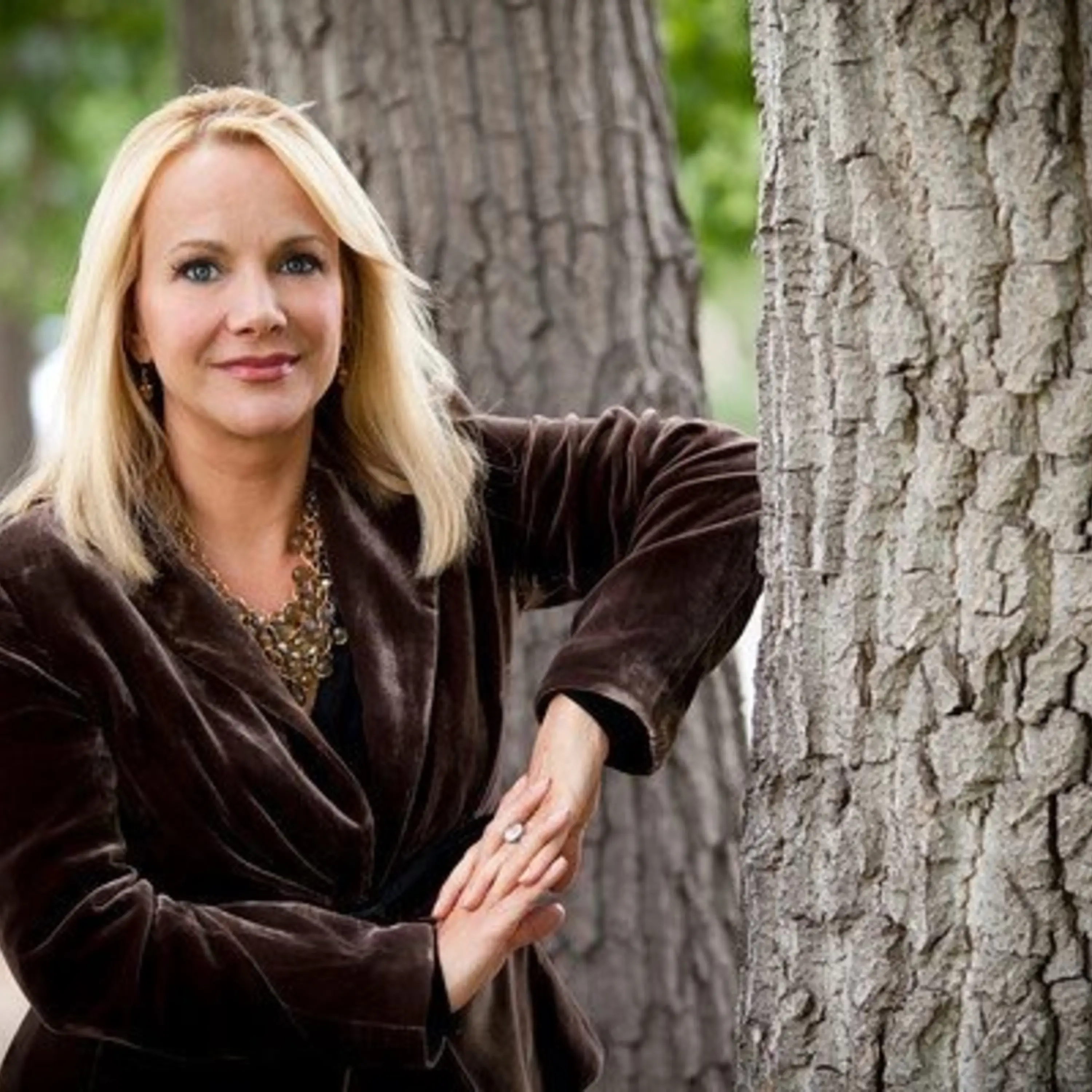

Join Angie Austin as she dives into the inspiring world of ARC thrift stores, where innovative marketing strategies meet a mission-driven cause. Maggie Sivick shares her journey, celebrating individuality, creativity, and a strong sense of community. Discover how Riley, Angie’s son, finds passion and purpose in ARC’s inclusive and engaging environment.
SPEAKER 01 :
Welcome to The Good News with Angie Austin. Now, with The Good News, here’s Angie.
SPEAKER 04 :
Hello there, friend. Angie Austin here with The Good News, joined by my friend from ARC. You know, I’ve done work with ARC now for 20-some-odd years, and they have been on my program for, I guess it’s been going now for 14 years. Wow. I can’t believe that. Maggie Sivick is joining us. And, Maggie, you are my son’s all-time favorite at ARC. He talks about you so much during the summer because he does a lot of his work with you in marketing. So tell us what you do and how great my son is. Ha, ha, ha, ha.
SPEAKER 05 :
That’s easy. He is one of a kind. I mean, we’ve been so lucky to have, you know, I do the marketing here and Riley came in as an intern and I know that his, you know, he’s definitely on the finance track, but this kid has such an eye for the cool stuff in our stores. He’s just such an entrepreneur. He’s so ambitious and I love, you know, how creative he is. So of course, when I get to hang out with him, I get really jazzed and I’m like, oh, can you do some videos for us? Can you, you know, be in the stores and do all the things? And he’s always up for a challenge. I’ve got this ongoing list. I call it my Riley list. And it’s like, what can I have Riley look into? Because he’s so passionate and excited about things, but he’s also willing to learn and explore and research, which, you know, college students are excellent at these days.
SPEAKER 04 :
Yeah, and he told me that the other day. He goes, yeah, Maggie’s got a list for me. And he was telling me they’re opening up stores in like one in another state. I think he said Texas and then in another city. And he’s like, I think I might get to go with Maggie and do some of this stuff. And so he gets just as excited as you do and maybe more so. But he really feels like included in ARC. So for people who aren’t familiar with what ARC does,
SPEAKER 05 :
um explain what you do what arc does and your podcast which you’ve been doing which is so cool yeah yeah and riley’s actually been a guest on our podcast as well um so essentially arc thrift stores is the fundraising arm of the 15 arc chapters here in colorado and now the arc of new mexico in new mexico and then the arc of texas as well when we open texas and and do that. That’ll be very exciting. But our goal is to make as much money as possible. So the chapters really provide services, right? They provide advocacy in school, help with housing, help with medical issues, legislative issues for the rights of people with disabilities all over the country. But the chapters really focus on those services and we focus on making money to help them staff and be able to have enough people to advocate for these families and individuals with IDD. The numbers are growing every year. These chapters are strapped to the limits. They hire as many people as they can. So it’s really my role is to get as many people shopping as possible, right? The more footsteps, the more people I can get into the store and shop and have a transaction, the better. That money goes directly to the chapters. And that’s really what I do here is try and keep it fun. Riley knows this. I’m always preaching this whole idea of it being an experience. Thrift store is an experience, right? You grab a local coffee, you grab your best friend, and you maybe walk around our stores for two, even three hours. Our dwell times in our stores are insane. People stay for a long time. As you know, firsthand, Angie, you’ve been shopping forever. You stay and you search every aisle. And it really is a lot of fun. I’m so lucky to get to do this every day. It blows my mind. I pinch myself every day because there’s something new and interesting all the time. To your point, our podcast, six years running. I asked Lloyd, hey, can I start a podcast? He’s like, what is that? Sure, go for it. And now he’s like, that’s kind of cool. So, you know, the freedom for us to, and I keep telling Riley that, find a job with a CEO who lets you really step out of the box and do the things you’re passionate and excited about. Everybody wins when you’re doing that.
SPEAKER 04 :
You know, and I agree with you about Lloyd and how he gives you that, you know, longitude, that latitude to do that. And thrifting has become so big, and so has the podcasting. And I’ve seen some of the thrifters you’ve had on the show, including Riley, my son, as you mentioned. And I go with him, Maggie, and it actually isn’t as fun to go with him because he knows exactly what he’s looking for. So he goes through those racks and I’m literally in the puzzle section looking for a puzzle for my mom. And every time he comes and gets me, he’s like, you ready? And I’m like, ready for what? He goes to go. And I’m like, mind blown.
SPEAKER 05 :
We just got here.
SPEAKER 04 :
or a certain brand or a certain something and he knows the brands, he knows the tags, he knows exactly what he’s looking for. I’ll find one thing that he might like and he might find 15 things that he will, you know, that he likes.
SPEAKER 05 :
And it’s so fascinating. I’m dying to know, is he self-taught or did you help him learn these brands?
SPEAKER 04 :
I did nothing because he started with shoes, Maggie, and he wanted to start selling, reselling like high end Nikes and they were expensive. And so I was like, no, I’m not at the time I was like 200, 300, $400 shoes. I’m like, we’re not buying that. So he had to save his own money. He would like, um, uh, you know, shovel people’s walkways or mow their lawn. And then he would take that money and buy a pair and then he’d sell that and he could buy two more pairs and he’d sell that and he could get three or four more. so then he built up his inventory so it was huge you know filled the whole room and he was shipping stuff all over the country and then he got into the vintage clothing as you know which has been highly successful for him he has his own store at his house where he um you know thrifts and stocks the store is like a trailer uh and he had a bronco come over last week he has professional athletes he has people coming from japan I mean, it’s unbelievable to me how good he’s gotten at it. But with that said, not just him, but in general, this whole repurpose, reuse surge in our country has become huge. Like, what’s the deal with that? Is it all these resale websites like Poshmark and Vinted and all that? Like, well, it’s maybe it’s there’s a huge following and it’s helping our mother earth.
SPEAKER 05 :
Absolutely. Yeah. I mean, I couldn’t be more delighted to watch young people really embrace secondhand in a whole different way than like when we were young, you know, we did it for our dorms or for like a sorority party or frat party or, you know, dress up for Halloween. And now these young people, you know, they want to be one of a kind. They don’t want to wear the same thing as everybody else. And they don’t want to be, some people will tell you, Riley, one of them, he wouldn’t be caught dead in fast fashion, you know? Yeah. And I think that’s so cool. They have a different set of values. What I love about Riley, too, and you instilled this in him is his love for our mission. You know, there are thrift stores that are for profit. We are not that. We are a nonprofit thrift store. And I think young people also have a heart for that mission that’s different. They get it. You know, it’s really hard to hate your job when you work next to someone with Down syndrome who thinks it’s the greatest place on earth. And, you know, I think Riley really took that to heart. And again, he learned that from you, your daughters, your husband, always making that a priority to give back to our IDD community. And, you know, yeah. You’ve got a special dude there. We’re lucky to have his insight and his knowledge because let me tell you, he gives knowledge to our store managers about brands, what to look for, and still is creating this place where a reseller feels welcomed and embraced and can really, you know, it’s a symbiotic relationship, right? Riley’s putting himself through college with finds that he finds at our thrift stores. It’s a win for both of us.
SPEAKER 04 :
Yes, yes, yes. You know, when we talk about his love for people with intellectual differences who are differently abled, your ambassadors, there’s so many, there’s hundreds of them now. And since I’ve worked with you guys over the last 20 some odd years, since I, in fact, I met Lloyd when Kennedy was born, his son who has Down syndrome, and that’s their president and CEO is Lloyd Lewis. And so with that said, I brought my kids to so many of your events because you have included us in so many of your events. So my kids have grown up I’ve known Lloyd since before Riley was born and Hope and Faith. So they’ve grown up around a lot of the ambassadors in the event. So in the summertime, sometimes I volunteer at some of the ambassador outings and Riley goes to them too because he’s working with you guys all summer long and actually all year long. He’s been there for a while. And I was stunned at how the ambassadors like really love him. And he’s not uncomfortable with anybody who’s different or like, sometimes they’re very loving, you know, and they want to hug him a lot. And there was this one girl, she’s so cute. She’s like, Riley, Riley.
SPEAKER 05 :
They love him. They love him.
SPEAKER 04 :
Riley, just one more hug. And Riley’s like, I’ll give you another, you know, and it’s just so cute because he’s, he’s so at ease with all of them and they like him so much. And it’s such a fun day because he’s like their cool brother, you know, that’s on the outing with them.
SPEAKER 05 :
Yep. And he’s tall and just into them. He gets in the weeds with them. And I think they really love that. Yes, he does. you know, that just goes to show. And, and how great is that the young people, you know, are getting it, they get it. And I think that that Gen Z, you know, young, young millennials, even they really have embraced thrift differently. And it’s, it’s a great feeling. It gives me hope that we have, we’re going to have a job here for many, many, many more moons. Thank goodness. You know?
SPEAKER 04 :
Yeah. Yeah. Um, uh, Adam came on my show on numerous occasions, so we knew him well and so did Riley working with him. And also the other one that really hit me is when you lost your ambassador, Robbie. I just lost Robbie and Mark changed his life. He told me a story once about how he didn’t have any friends in school. He looks different. And he made this little friend who was a girl and they came and started throwing rocks at them and made the girl like run away from him, his only friend. And he was so sharp, Robbie was. He fully understood when he was ostracized or bullied or mocked because he was so mentally sharp. He just, to me, like looked different, right? But he came out of his shell at ARC. Like I saw his sense of humor developed and he became one of the ambassadors of the year and was honored for that before he passed away. And I just felt like, And working for ARC was life changing for him because he finally had friends, a community, a place to flourish where his sense of humor could be could be celebrated.
SPEAKER 05 :
Yeah. And a purpose. Right. One of my favorite parts of my job is, you know, I get to design the windows and I do these great circles. And Robbie is one of those on our Littleton store site. And these ambassadors become famous. I mean, in our world, yeah, they’re just the most popular kids in school. We’re giving them the chance to have this like almost like college experience that many of them would never have the opportunity to do and get a paycheck. Everybody wants a paycheck, a purpose, a reason to get out of bed in the morning. And that alone is, it just makes every single, you know, up and down worth it and makes me go to sleep at night knowing that we’re doing the right thing around here. Selling some crazy t-shirts and making money for a really great cause right here in Colorado.
SPEAKER 04 :
Yeah, helping so many differently abled people. But, you know, the thrift stores, we, a couple times my husband was starting his company and I wasn’t in TV anymore, starting out in radio. I was really trying to be thrifty and we had two Christmases where we had ARC Christmases where the kids got a little bit of money and we could only shop for Christmas presents at ARC. I would get all of their sports stuff there, you know, because sports equipment is really expensive. You know, exercise equipment I’ve gotten there, you know, UGG boots. I mean, I know exactly what to look for them so they could be cool at school, but still, you know, save money on what I was buying. And it helped us so much those years where we were trying to save money and get his business off the ground. And I also want to say it’s so cool that you make my son feel so valuable. You know, a lot of places where kids intern, they’re getting coffee. And when I worked at Channel 4 as an intern, the TV station, The first thing they had me do was the guy told me to go get him coffee and not in the most like, you know, polite way. So with Riley, he always tells me like he gets to do presentations with all of your big mucky mucks. He gets included in your big manager like meetings and he’ll get to present or come up with projects just like you guys do. he can present his ideas. He’s come up with a couple of business ideas with Marty in your trucking. Oh yeah.
SPEAKER 05 :
He’s done business cases, Angie, like really strong, you know, economic business cases that we still use today.
SPEAKER 04 :
So it’s so funny. It’s really cool. What a great relationship I’ve had with ARC and how much you’ve helped my family over the years. I used to do like commercials with my kids when they were little. Sometimes I send them to you. It’s so funny when
SPEAKER 05 :
I love that. You were like one of our first influencers, Angie, literally. Seriously, before influencers became like my top priority, you were one of the first. So that’s pretty amazing.
SPEAKER 04 :
All right, Maggie, tell everybody where to go to find your podcast and also to find the stores and to donate.
SPEAKER 05 :
Yeah, yeah. We’ve got, you know, like you said, 38 stores, 15 donation stations all across the Front Range. Really easy to find. You can find our website at ARCthrift.com. You can find us on YouTube and Instagram at ARCthrift. On Facebook, we’re very popular as well. And even on TikTok at ARCthriftstores.com. And our podcast can be found anywhere you find podcasts, iTunes, Spotify, all the places. We are live on YouTube as well. And that’s Arc Thrift on YouTube. And it’s the Get Thrifty Podcast. Again, we’ve been doing it for six years. And we talk to some of the most interesting people. The goal of the podcast is to normalize shopping secondhand. And to your point about upcyclers, we talk to upcyclers, resellers, collectors, DIYers, you name it. We find them. If they’re into… shopping secondhand, we invite them to come on the show and we share their story.
SPEAKER 04 :
I love it. Thank you, Maggie. Oops.
SPEAKER 02 :
With Easter right around the corner, Art Thrift is the perfect place to find great deals on Easter grass, baskets, bonnets, and those cute little dresses for Sunday school. You can decorate for the whole family gathering on a budget, from deviled egg dishes to Easter baskets, and still find those special items that make the day memorable. And coming soon is Arc Thrift’s famous secret jean sale. Watch the Arc Thrift social channels for the secret Friday date because every pair of jeans in the store is just $2. That’s right. Rows and rows of jeans including great brands like Levi’s and 7 for All Mankind from 9 a.m. to 9 p.m. with new stock going out all day long. Spring also means gardening tools, sports equipment, and seasonal treasures hitting the floor. And remember, Arc Thrift stores are size-inclusive and even have fitting rooms open so you can find the perfect fit. Find a store near you at arcthrift.com and follow Arc Thrift on their socials so you don’t miss a secret jean sale. Arc Thrift, there’s a surprise on every aisle. Kimball, Nebraska is listening to the mighty 670 KLT Denver.
SPEAKER 04 :
Well, if you are just joining us, this is Angie Austin with the good news. Well, as the nation recognizes National Military Appreciation Month in May, the Library of Congress Veterans History Project marks 25 years of preserving the firsthand accounts of U.S. veterans. Joining us today again is Monica Mohindra, director of the Veterans History Project, with details on the importance of honoring veterans and preserving their stories. I just love this project. Welcome back, Monica.
SPEAKER 03 :
Angie, thanks for helping us put this spotlight on veterans.
SPEAKER 04 :
You are welcome. I’ve been reading a lot of the stories in the History Project and some of them really intriguing. So for people who aren’t familiar with it, what is the Veterans History Project?
SPEAKER 03 :
The Veterans History Project at the Library of Congress, your Library of Congress, is actually three things at once. First, it’s an opportunity to sit down with a veteran in your life, your community, and gather their first-person remembrance, that veteran who served from World War I through the more recent conflicts. Make sure that you… sit down, gather their story, contribute it to the Library of Congress. And because it’s been going on for 25 years, we’re now at 120,000-plus individual stories of veterans’ experience. So it is an existing archive that you can dive right into through the website. So that’s the third thing it is, which is your chance to get in there and be part of history and be informed by these important first-person historical accounts.
SPEAKER 04 :
Now, you and I have talked several times, so I’m quite familiar with the project. Can you kind of talk about how the Veterans History Project is commemorating Military Appreciation Month? Because I normally talk to you about once a year to really promote this.
SPEAKER 03 :
So we look at opportunities like Military Appreciation Month to expand our own mission, which is truly about veteran appreciation all day, every day. But this month is a national opportunity to sit down during a time when we’re headed out to special events like graduations and Mother’s Days and family picnics and really getting ready for that season of being with family across the summer. And in our communities, you’re going to events for proms and fundraisers for different things to look. Who is the veteran in your life? Join the Veterans History Project during this month. to help us reach deeper numbers, higher numbers of veterans in our 25th year to make sure you have that ringside seat to history and contribute it to your Library of Congress for posterity. This month gives you that opportunity to ask the question and set aside an appointment, a serious time to sit down with a veteran in your life.
SPEAKER 04 :
It’s such a good idea now because you’re right. People are coming together for weddings, but in particular, our family, we’ve had a lot of relatives visiting around this time of year for a lot of graduations of my teenagers over the last few years and still to come. So you have a lot of people coming into town for that. Generally, grandparents are in there. I’m really impressed by how easy you make it for people to contribute a collection to the Veterans History Project. I was kind of looking into it to see, like, you know, as a journalist, I was I’m curious about your sample questions because a lot of people that aren’t journalists are like, well, what do I ask them? Oh, my gosh. I didn’t go into the Gold Star family. I just went into the veteran questions. It is so in-depth about, I mean, where were you born? Who are your siblings? Why did you join? How did you feel? Who did you serve with? I mean, it’s just like on and on. It kind of like would pluck their memories out because you’re asking so many questions about their experience.
SPEAKER 03 :
Really appreciate you calling that out and what a wonderful compliment to the couple dozen people that work professionally in the project to make sure that our process is available and out there for everyone across the country and for the hundreds and thousands of participants across the country that have helped us over the 25 years to hone this process and make it really accessible for individuals. Yes, it’s as simple as going to that website, loc.gov forward slash vets. There’s a short video there that walks you through it. And you obviously are a professional, but we hope that the tools that we offer there really help anyone to be able to jump in and, with the seriousness of purpose, be able to ask these questions and feel that they’re ready and capable to do that. There’s sample questions, as you mentioned, and there’s also tips for how to turn the recording device that we’re all keeping in our pocket these days into a recording device for these purposes. So, thank you for pointing that out.
SPEAKER 04 :
Well, I love it, too, that you kind of get prepped, like you make sure they have water, make sure that there’s Kleenexes there, because the list of questions, the way that I see that this would really help is obviously for someone who is not a journalist to have a format to follow. But I also think it really helps because. There are times when you really don’t want to ask a question because it’s uncomfortable or they’re emotional or they’re crying and you’re like, oh, I don’t want to ask that. But if it’s on a list, I feel like you can go, well, let’s go on to the next question. And then you can say, like, how did, you know, serving affect you? How did losing your friends affect you? Did you keep in touch with people? You know, how many friends did you lose? Like things that. You might not ask on your own once it starts getting uncomfortable, but I feel like if it’s on the list, you just kind of go, oh, here’s the next question I need to ask you. One of the things so many of us, even with our own family members, don’t know a lot about some of the service, you know, the people in our family. My brother, he was killed when he was in his early 30s. You know, I didn’t know a lot about his service. I would have loved to preserve something like that, you know, about him. And I learned a little bit more about my father before he passed away. Do you have an example or examples of a veteran collection that you can share so people can kind of get an idea of the breadth of things that are shared?
SPEAKER 03 :
Today, I think Adolphus Stuart is a great one to consider. Stuart, S-T-U-A-R-T, you can see directly from him. He joined the Marine Corps. He was 17 years old in 1964. Wow. When he arrived in Vietnam in May of 1967, he served as part of a special landing force unit. You can learn all about this from his collection. He was stationed aboard a ship anchored in waters just below Da Nang. He went ashore on frequent combat missions so that you can imagine that as he’s talking, he’s sharing about how death and losing people was a really omnipresent part of his experience, including… losing one of his best buddies during just his first few weeks in country. He talks about learning to sort of shut down emotionally just to survive and keep moving and how important that was. He did depart from the Marines in 1971, and his transition to civilian life was difficult, as you might imagine. But after he was able to receive an official diagnosis of PTS, and he talks about this, he attended culinary school where he discovered a real passion for cooking, for caring for and cooking for others, particularly in support of charitable organizations. It’s just one example of the ways that, you know, we can think about everyday stories of everyday veterans, what’s important to them, and how we can… find ways to connect to them and ways to connect to our history through them.
SPEAKER 04 :
And I think it’s really good for, you know, you’ve decided to go on, you know, and like read every time I’ve talked to you. So I always do. And I follow your Facebook page as well, Veterans History Project at Library of Congress. And there were two that stood out to me recently. One, it’s just the picture just really hit me. David Flores, and he arrived in Vietnam in 1968. And he did those reconnaissance like missions where you’d go out and you’d kind of like, Try to hide and go deep in the bush and gather information about the location of the enemy. But you had to obviously be super quiet or you’d be killed. Right. So he took pictures that were like, oh, my gosh. So in this particular one that you have on Facebook, it’s six boots. So it’s six men that were killed. And then all six of their rifles are like stuck into the ground right next to the boot, their Marine boot. And then their hats are on top of the rifles. Like, if that doesn’t get you about the sacrifices that people made for our country. And regardless of how you feel about our country, I get very emotional when people take it for granted or say things about our country when I know how many people died to have what we have. Regardless of how you feel about whatever’s going on, people gave their lives. And I think we need reminders. Another guy that really hit me was this doctor. He’s right on the front page of your, he’s Staff Sergeant Stephen Collins, pardon me. He was a reservist and he was in medical school. Now, who better to try to get out of service than a medical student, right? And so other people at the medical school said, hey, you know, why don’t you try to get out of serving? You know, you’re a reservist. I’m sure because you’re in medical school, you can get out of it. But he felt like it was his duty to serve his country. And he didn’t even go in like in a medical capacity. He was a tank commander. And so he really touched me because when they asked about his service, he just said very straightforward, you know, quote, I did my job. I did the best I could and I made it back, period. You know, no like, oh, I made so many sacrifices. I was, you know, in medical school. I really didn’t have to go. It was just like did my job, did my best, made it back.
SPEAKER 03 :
Andy, it really touched me to know that you’re going in and experiencing our collections the way they’re meant to be experienced all across the country. I can’t tell you how much I appreciate that. And Mr. Collins is such a fantastic example of the truth about being around for 25 years and heading into this next milestone. Mr. Collins has actually come in multiple times. He’s contributed again to his story because the collections do remain open. And if you go and you check out that Facebook post, You’ll actually see he recently commented on that post, and he’s kept this relationship with his legacy collection. So a great example of that would be, you know, I know personally of a family, multi-generational family, that gave the story of sort of the patriarch, and then the adult children of that patriarch, the daughter, let’s call her Aunt Rosemary, Aunt Rosemary for many, many years was bringing in different nieces and nephews and the next generation, the next generation down, I don’t know what the personal significance was to them of a particular date. but they would come in and they would contribute more items to their collection on that date every year for several years so that they would literally visit with their veteran who was at that point deceased. But we have it where you see like Mr. Collins coming in and contributing more. And so it is a living legacy now, but a living legacy for posterity so that we do understand that how we are connected to each other, and how we are all then connected to that history that the veterans are motivating, are, you know, wing side to, are part of, but we are also part of that. And we’re part of making that move forward when we both sit down and gather more stories, but also share. be informed by what’s already there.
SPEAKER 04 :
Well, I noticed the same thing you did. I thought it was so cool that Stephen Collins, under his story on Facebook, people are thanking him for his service, and he’s saying, you’re welcome, and then he’s prompting other people to go and share their stories. So let’s touch on it. So I’m going to leave him a comment, too. But will you tell people how they can share their stories or family members, et cetera?
SPEAKER 03 :
Absolutely. Please join us at your Library of Congress, It’s loc.gov forward slash vets. There you will find everything you need, the forms so that your veteran, if you are the veteran, you retain your copyright. You’ll find a short seven-minute video to walk you through the process. You don’t have to be as professional as Angie. You just have to have seriousness of purpose and intent. The forms help us make sure the veteran retains copyright but also ensures that we know through Prosperity who they are and the bits of detail about their service. There you’ll also find sample questions on how to turn that recording device that you’re carrying around in your pocket appropriate for this Also, how to contribute things like original photographs, letters, materials that tell that first person’s story. Join us in our 25th year to reach over 120,000 collections now. We want to reach over 125,000 collections. for this milestone year. Please join us at your Library of Congress Veterans History Project.
SPEAKER 04 :
Well, Monica, I love what you do. I would always be willing to help if you ever had anything in my neck of the woods you guys wanted help with or whatever. I just think it’s such an important Veterans History Project, Library of Congress. You can find them on the Facebook page, too. Such an important thing you’re doing for our country’s history, so thank you.
SPEAKER 03 :
Thank you, Angie. We really appreciate the spotlight you put. You bet.
SPEAKER 01 :
Thank you for listening to The Good News with Angie Austin on AM670 KLTT.