
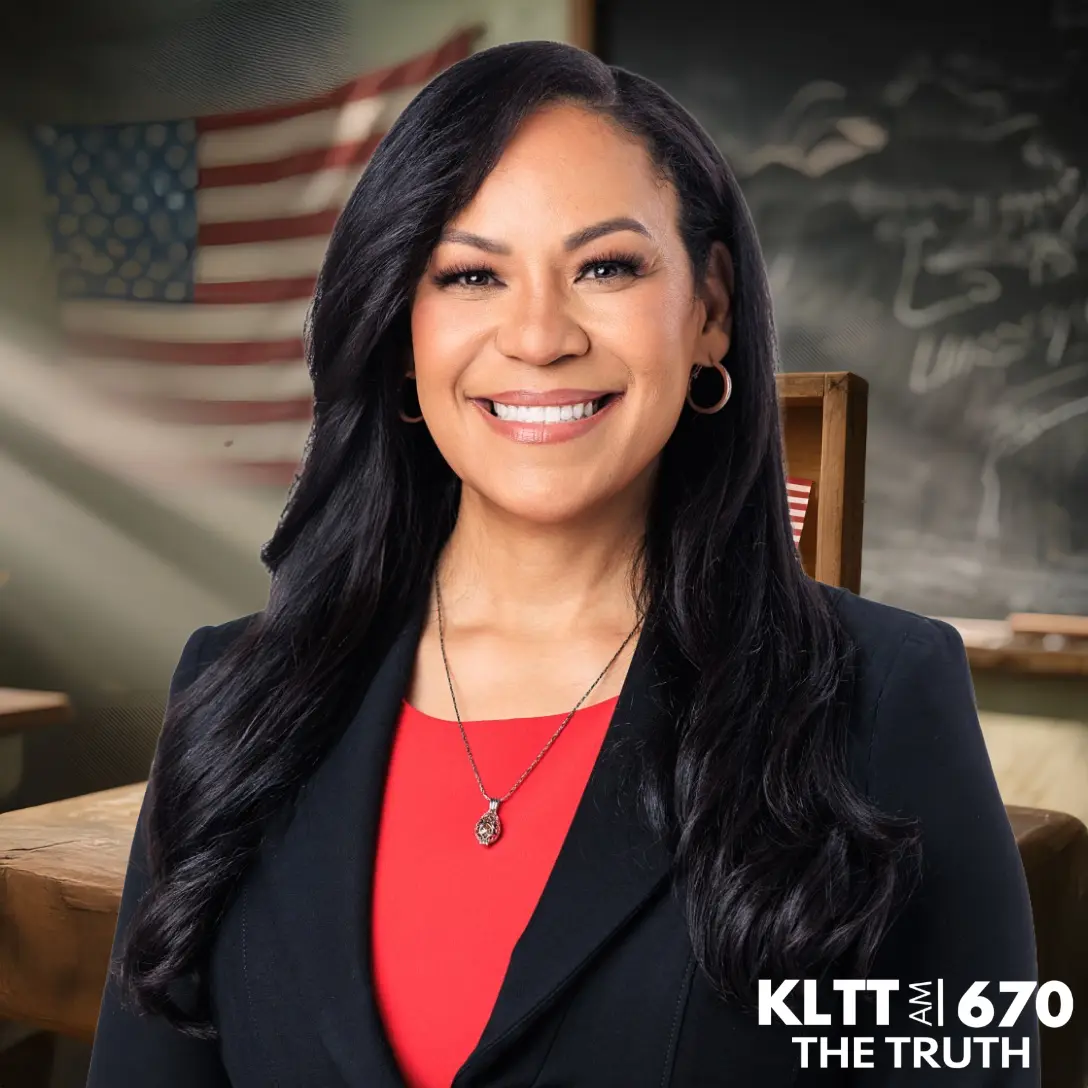
In this episode of Restoring Education in America, join host Priscilla Ron as she dives into the world of history and education with her brilliant niece, Faith Peterson. As America approaches its 250th birthday, Priscilla discusses the importance of classical education and introduces the Excalibur Classical Academy, a new institution aiming to develop servant leaders. Discover the passion and insight of Faith, a freshman in college and member of the Clio Club, as she shares her love for history and her impressive achievements in AP courses.
SPEAKER 01 :
Welcome to Restoring Education in America with Priscilla Ron. She’s a master educator and author leading the conversation to restore the American mind through wisdom, virtue, and truth.
SPEAKER 03 :
Well, hello, everybody. Welcome to Restoring Education in America. I’m your host, Priscilla Ron, and I’m so excited that you’ve decided to join the conversation today. We are celebrating a lot of history in 2026. It’s America’s 250th birthday. And one of the ways I’m celebrating is I’m opening a new private classical school called Excalibur Classical Academy. And their mission and vision is restoring America’s heritage by developing servant leaders who are keepers and defenders of the principles of freedom for which our founding fathers pledged their lives, fortunes and sacred honor. So if you have a young child that’s starting gifted kindergarten, which is four-year-olds, all the way up to third grade, please go to their website to learn more or to sign up for a tour. The website is ExcaliburClassicalAcademy.org. And if you are looking for a great place to teach, please send your resume through the website. Well, talking about history, which, you know, wasn’t necessarily my major, but I’ve fallen more and more in love with it. is someone who loves talking about history. And I am so excited to bring this young lady to the stage, my niece, Faith Peterson. Hi, Faith. Hey, Aunt Priscilla. I am so excited to have this conversation with you because you are so smart and you just wow me with your talent and the beauty that you are inside and out. And I know I’m embarrassing you, right?
SPEAKER 02 :
A little bit. Just a little bit.
SPEAKER 03 :
Well, this is the part of the show where I always give the bio of my guest. You are a freshman in college and loving life right now. There’s so many exciting things. Every time we talk to you, it’s like you still have this big smile on your face and everything. happy where you are and you’ve got a scholarship and you’re majoring in something that you’re really passionate about. But something that our listeners don’t know about you is that you are in the Clio Club, which is for us commoners, the history club. Okay. You are in choir and band. Are you still playing the clarinet?
SPEAKER 02 :
Yep.
SPEAKER 03 :
Still playing the clarinet. Okay. I would say musicians are the smartest people, right?
SPEAKER 02 :
I would say so.
SPEAKER 03 :
And I’m sure you love the fact that you’re working in the Mennonite Museum. That is so exciting. But really, the reason why I’m having you on the show is because, young lady, you’ve taken 10 AP tests. Okay, 10. AP World, AP Chem, AP Calculus, AP US History, AP Language and Composition, AP French, AP Literature, or should I say Literature, AP Government, AP Macroeconomics, and AP Physics. Okay, but wait, there’s more. You got fives on all of your AP tests, except one, which, you know, you got a three in AP French. Yes, which is passing. Which is passing, of course. Oh my goodness. Okay, so we’re not worthy. We’re not worthy. Faith, this is something we talked about when we were together during Thanksgiving was, you know, there was a little controversy and conversation around AP, African American history. I don’t want to talk specifically about the actual courses, but I want to talk more in general about Yes. Okay. So break down some of the components of, well, no, first let’s go back and talk about what is it like being in class for a full year and taking an AP history course?
SPEAKER 02 :
So AP history course is pretty intensive. There’s a lot of material that you have to cover. It’s definitely not a regular history class where you have presentations and classes. and projects, your entire year is learning the information and then preparing for the test. Lots of teachers do it a lot of really effective ways, but most of it is very lecture-based for most of the time and then taking specific days out of the year to practice the types of essays that you’re going to write during the test. I love lecture-based learning. Some people don’t, but I always had a ton of fun in my AP history classes.
SPEAKER 03 :
So is there a lot of Socratic method where you read, discuss, and write, or is it mostly lecture and write?
SPEAKER 02 :
It depends on the teacher. I think something that in my experiences, in most AP classes, homework was meant to be done collaboratively. You were supposed to do as much as you could, but then go to your peers and talk about, hey, do you remember this part? Do you remember that? How do you think these things come together? And so I think because you have to go so fast in these classes to get all the material, a lot of that happens outside of the classroom, just when you’re doing your regular homework, which allows the teacher in class to get through everything that you need to get through before the test in May.
SPEAKER 03 :
Okay, well, let’s demystify the test, Ms. Faith. Okay, so you’re sitting there, you’re sweating, you got your tissue paper, your water, your mouth’s feeling chalky. Well, back in the day, we opened up a paper test. Is it still a paper test?
SPEAKER 02 :
Depends on the test. Okay. They are moving towards online testing. My first history test was AP World. And that was all on paper, as was AP US history. But by the time I was taking AP government, some of that test was online. And I wouldn’t be surprised to see more of the tests going online.
SPEAKER 03 :
Well, so when you get a question or a prompt, what are they looking for in an answer?
SPEAKER 02 :
So in the short responses and the essay questions, we’re mostly talking about three main subjects. You’re either getting a question about comparison. So two things or maybe more. How are they similar? How are they different? You could be talking about causation, cause and effect. which is everywhere in history. And then the last one, my personal favorite, is continuity and change. So between two time periods, usually in the same place, talking about the same people, what continues through time and what changes. Almost every question that you have to write for in an AP history test is centered around those three ideas.
SPEAKER 03 :
So do you have to have all of this knowledge in your head when you come in, or do they give you excerpts that you can use in order to answer the prompt?
SPEAKER 02 :
So there’s two main essays for a history test in AP. There’s The DBQ, a document-based question, and you get usually seven documents ranging from a couple sentences to two or three paragraphs. You often get a picture as well to supplement your knowledge. It’s about a topic that you may have covered briefly during your classes, but you don’t know a lot about. You’re meant to take what you do know and take these documents and create a a cohesive essay about one of those three, the three C’s, three things that we pay attention to in AP history classes. The other essay is the FRQ, the free response question, and you get the prompt and you’re on your own. Because it doesn’t have any reading, history teachers recommend you take less time on this one. But everything has to come from your head. Everything is from what you’ve learned in lectures, what you remember, maybe from a DBQ that you did in class. Maybe you remember one of those documents and you’re able to reference it in some way. But everything for the FARQ is memorized.
SPEAKER 03 :
Wow. So what kind of strategy do you use? I mean, that’s a lot of months of information that you have to remember. Are there some strategies that you use to remember content?
SPEAKER 02 :
So lots of people have lots of different things. I think an important thing to know about these history classes is they’re not that interested in specific dates because it matters when it happened, like because that’s history. things that happened, but they don’t care about the specificity or you getting every single detail, right? They’re more interested in this wider concept. So if you’ve got an essay about the American Revolution, you’re not thinking who wrote Common Sense, you’re thinking what were the things that people were writing about the colonies, before, during, and after the American Revolution. So I think it lightens the memorization load because you don’t have to know specific names and dates. So the way I always thought about these tests was by region. So remembering what happened in this place in these specific time periods, because each unit that you learn is for a specific time period. Sometimes they overlap, but most of them are pretty. They have a topic and they have a time period that is going to be specifically referenced in your essay question. And so you can think that’s the unit we’re talking about. What do I remember about that unit? And so you can really compartmentalize what you memorize here. I know. I always loved FRQs because I find memorizing that way very easy. A lot of my friends really hated the FRQs because if your mind blanked, you’re kind of… You’re up a creek.
SPEAKER 03 :
Yeah. You’re up a creek. So Faith, the college board doesn’t necessarily reward if you have a skewed or biased viewpoint in your responses, right? Because I think sometimes parents are concerned that the AP is an opinion-based type of exam. Can you unpack what exactly is the college board looking for in responses?
SPEAKER 02 :
The college board is looking for college-level knowledge, right? For example, it’s actually more obvious in a test like the French test. There’s a culture section that you have to remember. There’s these French colonies, there’s different places that speak French, and you talk about what parts of that culture impact each other, and it’s part of the test. But AP French is taught in a lot of different ways and you can get a lot of different opinions on French culture depending on who your teacher is. So in a test like that, as long as you’re not wrong, like if you say something blatantly, lie. you can’t get the point, but if it sort of resembles the truth, they’ll consider giving you the point. The test is testing your knowledge of French in that case, but they’re very aware that teachers teach it differently. In history, it’s actually less so. The curriculum is very clear. There’s certain events that have very specific causes involved. And historians generally agree on the causes that we’re talking about in these classes. We’re not, most history AP history classes don’t go closer to the present than about 1960. Um, the curriculum technically does, but it’s the last unit. Some teachers don’t even get to it. It’s a small percentage of the test. And as a history major, I know that it is hardest to be objective about more recent events. It’s hard to know what the causes and effects and actual continuities and changes are without the benefit of distance. And so I think the College Board takes It takes being right very seriously, but it doesn’t try to be sticklers on controversial issues. It doesn’t… There’s definitely ways that history has been interpreted in the past that the College Board tries to work against, like… World War I did not start just because the Archduke Franz Ferdinand was killed. Like, that’s not the only cause, and that’s been cited as an only cause, but it’s not the whole story. And there’s an emphasis on, let’s consider all the angles, but not trying to be… pushy about a certain opinion. Just trying to make sure you understand that history is more complex than it may look at first glance.
SPEAKER 03 :
Well, Miss Clio Club member, if I were to be a fly on the wall and I’m, you know, listening to a bunch of young historians talking like, look, I was in a lot of clubs. I was in, you know, students against drunk driving. I know what that sounds like. You know, we’re not going to drink before we drive. Or or I was in the Bible club and we would we would pray and we would share scriptures and. I was in Speech and Debate Club, and we would practice speaking. But in History Club, what does it sound like when you go to History Club?
SPEAKER 02 :
Well, first of all, History Club is a lot quieter than some of those other things. We’re not the most talkative bunch before you get us going. We… The thing with historians is you’re going to end up with a broad speciality in most cases. One of my professors is very knowledgeable about European history. The other is very good at US history. And so they… They give us great amounts of knowledge, but even within that, they have their specialities. And even us as history majors who don’t know as much, we have our interests and we have these things that we latch on to. I always really love talking about the Ottoman Empire. It’s a really interesting example of the rise and fall of empire and how that works and how it’s weird with the Ottomans, which is a whole nother rant I could go on. But all of these history majors have something like that. And the favorite activity of history majors is looking at our world and thinking, What can we see right now that we’ve seen in books and we’ve seen in our classes and we’ve seen while studying? And how can we take what we’ve learned and how can we project that onto the present? And can that even tell us what’s going to happen next? It’s a casual form of, can we tell the future? Which is… fruitless pursuit.
SPEAKER 03 :
Don’t you think, Faith, you can almost predict human nature because history repeats itself, right?
SPEAKER 02 :
Yes, but I think what we as historians note, history does repeat itself, and that’s a lot of our job, noting where history repeats itself, what repeats most often. But we also know that whenever something repeats, it repeats differently. It’s not going to be the same every time. So when we’re doing it casually, when we’re doing it just, you know, sitting before class or in a club meeting, we’re not thinking… oh, this is definite, we’re thinking, wouldn’t it be funny if this happened again? Or wouldn’t it be terrible if we didn’t learn from that mistake again? Because history really does repeat itself, and it’s sometimes entertaining and sometimes sort of sad, but…
SPEAKER 03 :
Yeah, I would think that maybe you would sit around and say, we can’t change anything. Like, human nature is making us do these same things and make these same mistakes. But Faith, do you feel like the way historians track events, has that changed? I mean, I don’t necessarily mean we used to use scribe and quills and things like that, right? But… Who is keeping track of history? And is there a different methodology or is it the same methodology?
SPEAKER 02 :
Yeah. So I’m actually in a class for that right now. And we’ve been looking at different ways to approach history. We’ve looked at Marxist theory, taking the economic class struggle as the most important thing. And we’ve looked at quantitative history, which is looking at the numbers we can find and seeing what they tell us and we’ve looked at gender theory and how being a certain gender or being part of a specific group informs how you behave in history and all of these methodologies have their problems because history It’s so big. You can, I mean, I’m in a class that we’re just looking at European history and it’s a mile wide and three inches thick. We’re learning everything, but we’re not learning very much. And, but if you take just like Mennonites in Poland in the 80s, 1840s you can go so deep in that and not even reach half of the material that we can find did you kind of geek out in that section a little bit tell the truth a little bit a little bit
SPEAKER 03 :
We have to put a tack in it and say your grandmother, my favorite mother-in-law is a historian and she keeps history for like the entire, you know, Milky Way galaxy of Mennonites. Like you call her and she knows every Mennonite history. But like, I would think that what’s current events one day will become history. Right. So when you’re looking at what we call history at one point was current events.
SPEAKER 02 :
Yeah. So at the museum, that’s something that we think about. I help with collections. And we get so much stuff. There’s so much stuff behind the closed doors of the museum. And it’s just there. And most people are never going to see half of it. And we think when we get stuff, some of it is rather current. And we think, okay, it’s not history right now. But in a few years, this is stuff from maybe a centennial or a class reunion or something like that. That’s just like, it doesn’t really matter right now, but having it in the future is going to be really important. Because as a historian, I cannot recommend anyone throwing anything away ever. Because eventually, you know, someone’s going to be studying this portion of history. And they’re going to have some niche subject. And they’re going to be like, I can’t find the sources. Because maybe it’s, maybe they’re studying COVID. And maybe they’re studying masks. And we all throw away our masks. And now there’s no sources.
SPEAKER 03 :
You know, when I was growing up, when I was a freshman in college, we had to go to the library and go through the little card catalog and pull out the paper and then walk to, you know, walk through the book shelves and try to find our, now you have so much available online. And so I, But I’ve always known you, Faith, since you were in middle school. Like you always had a book and you’re a very avid reader. For someone who loves reading and history so much, what do you think about this new AI age and digital everything versus a hard book?
SPEAKER 02 :
So I have been doing a project in my music history class, and I am currently studying a musical piece and a art piece from the same time period in the Renaissance, and I’m trying to find stylistic similarities. Okay. Turns out that it’s a well-explored subject. The modern sources are limited and my school is really old. So for my research, I was like, I’ll just check the library. There’s this book in the catalog. I looked it up. It’s there. So I’ll just go check. And then I came out of the library with about 10 books and And then I went back to the catalog and I found this book that we didn’t have, but the larger university near us did have, and I was able to get an interlibrary loan and which is really helpful. And I’m really excited to have this book for my research and they’re not digitized. I, it would be more convenient if they were digitized. But there’s also, there’s something to, I have this book and it still has a library checkout card in it. And I’m part of this lineage of people who have looked for this information. And that’s something you can’t get on AI. Like, that’s not a thing. And I have other problems with AI as someone who likes to do creative writing. As a historian, I think there’s something to engaging with the… materials that you’re using. There’s something to maybe you’re studying something far in the past, but there’s something to engaging in the history of the materials that you’re using. Remembering that you are part of a long story of telling stories. And I think I love history because I get to tell these stories. And I think it’s really important that to see how you’re engaging and even look at some of these books and think, this is awful. This is absolutely wrong, outdated. I can’t use this in my essay, but even that is important to know. People before me have messed this up. And I have a responsibility to the material. I have a responsibility to the history to do it right. And by engaging in the physical materials and even digitized materials that have been recorded from somewhere to keep them safe, it’s important to engage with them directly. Because there’s three types of sources in history. There’s primary, there’s secondary sources that summarize those, and then tertiary sources, which are our textbooks and our references. And AI takes from all of that, but mostly from those secondary and tertiary sources that summarize it nicely. And you can’t understand history fully if you don’t engage with the primary sources. You need the secondary sources to know how it was told and know how to continue the tradition. But you need the primary sources.
SPEAKER 03 :
Well, Miss Faith Peterson, a freshman in college, but an old soul. Thank you so much for giving us your wisdom today and for sharing your heart and your love for history. And to my listeners, thank you so much for tuning in and catch me next time. And remember, educating the mind without the heart is no education. So seek wisdom, cultivate virtue and speak truth.
SPEAKER 01 :
Thanks for tuning in to Restoring Education in America with Priscilla Ron. Visit PriscillaRon.com to connect or learn how you can sponsor future episodes to keep this message of faith, freedom, and education on the air.


