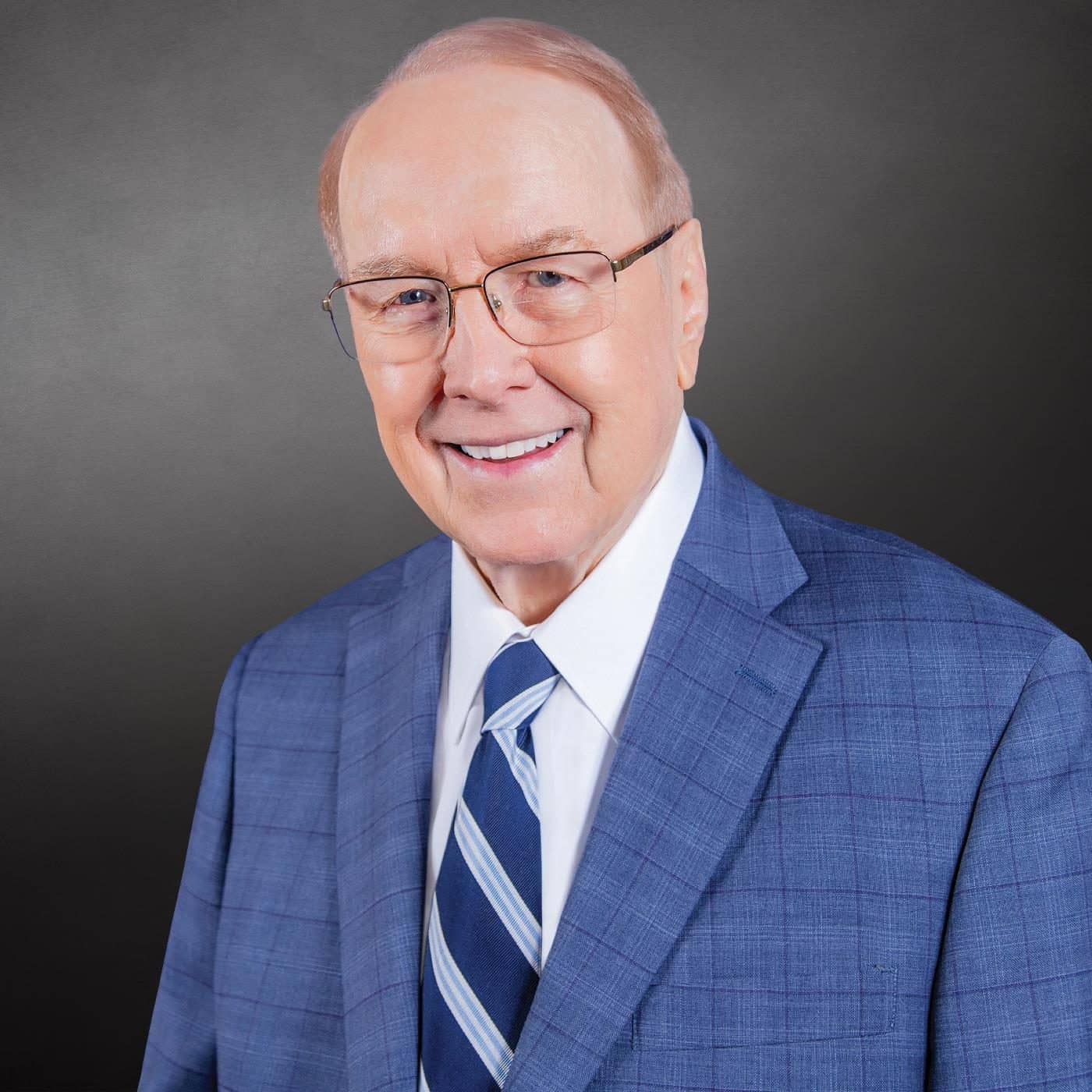
Join Dr. James Dobson and Senator Jim DeMint as they explore how America’s greatness can be reinvigorated through grassroots efforts and community life. Sharing insights from DeMint’s book, ‘Falling in Love with America Again’, the conversation offers hope and practical steps for rekindling American ideals of freedom and responsibility. Together, they challenge the overwhelming influence of big institutions while underscoring the power of individual initiative and collective action in local communities.
SPEAKER 04 :
Well, hello, everyone. I’m James Dobson, and you’re listening to Family Talk, a listener-supported ministry. In fact, thank you so much for being part of that support for James Dobson Family Institute.
SPEAKER 01 :
Well, welcome to Family Talk, the broadcast ministry of the Dr. James Dobson Family Institute. I’m Roger Marsh, and tomorrow, of course, is Independence Day. And with the Fourth of July just one day away, we’re setting aside both today’s program and tomorrow’s to honor the brave patriots who fought for our country’s independence. These United States were founded on the Christian ideals of life, liberty, and the pursuit of happiness. America is unique because of that spiritual and patriotic heritage. Sadly, over the past several decades, though, that legacy has been forgotten or just rejected out of hand. More and more Americans are troubled by our nation’s moral decline and the expanding reach of big government. Well, in just a moment, Dr. James Dobson will address the growing concerns about our nation’s future, and he’ll be joined for this conversation by the Honorable Jim DeMint. Mr. DeMint served for 15 years in federal government as both Senator and Congressman from South Carolina. He also served for five years as President of the Heritage Foundation. Today, Senator DeMint and Dr. Dobson will explore why many Americans have fallen out of love with our great country. They’ll discuss the federal government’s overreach into the lives of everyday citizens. And more importantly, they’ll offer hope for how we can rediscover what made America exceptional in the first place. Drawing from his book called Falling in Love with America Again, Senator DeMint will show how local communities and what he calls little platoons can help restore our nation’s founding principles. So let’s listen in now to this fascinating conversation on today’s edition of Dr. James Dobson’s Family Talk.
SPEAKER 04 :
Senator DeMatte, can I still call you Senator?
SPEAKER 03 :
Well, I’d prefer Jim, but if you need to, you can. I’m going to call you Dr. Dobson because I grew up raising children by your books and your videos. Well, let’s go Jim to Jim. How’s that? That’ll confuse everybody.
SPEAKER 04 :
Well, I said I like the title of the book as well as the content. Again, it’s Falling in Love with America Again. Has America fallen out of love with their country to a degree?
SPEAKER 03 :
Well, there’s certainly a lot of division in the country, but none of us have fallen out of love with the American dream and the American ideals that made this country great. But there is division, resentment increasingly as the federal government and maybe big business, big unions are pushing for One size fits all solutions down our throats. I think you see people getting increasingly upset and frustrated. And we need to change that. We’re so blessed to be Americans. And our country was so unique from the beginning. And I’m just afraid we’ve forgotten why we were so unique.
SPEAKER 04 :
Yeah, well, everywhere I go, people seem to be saying that they’re alarmed by what’s happening to America that they used to know. And that there are forces that want to change it fundamentally. And many people feel it’s being destroyed fundamentally. from the foundation up on the principles and issues that made it great. Do you agree with that? We’re going to talk about what the concept of big means, but give us an overall assessment of what’s going on in this country.
SPEAKER 03 :
We have forgotten, Dr. Dobson, that this country was built from the ground up, not the top down. No other country in the world came into being the same way we did, with so much individualism and these little platoons that I talk about in the book that Edmund Burke talked about over 200 years ago, that our families, our church groups, the small businesses we work for, the charities that we help, these small groups of people are what make America so strong. It’s almost counterintuitive, and generally leaders don’t understand it because what they seek is power. rather than to empower. But America is so strong and has been because of the thousands and thousands of little platoons that are solving problems and creating families, raising kids in a positive environment. But a lot of this little platoon work has been diminished significantly by federal programs that were supposed to help people, help the poor, help people get jobs. A But everything has discouraged family formation, has discouraged charity work, and done a lot of harm to our country. I don’t think it’s irretrievable at this point, but it is if we don’t remember what it is that really works in this country.
SPEAKER 04 :
Well, you know, I may be more pessimistic than you are. It feels to me like the people in the little platoons are discouraged themselves. I think many of them have lost hope. They look around. They see things happening they don’t even recognize, and a lot of them are angry.
SPEAKER 03 :
They are. But what I’m trying to do in the book is give example after example of just one or two people who might have been a drug addict themselves or an ex-con who helping others get out of poverty, get jobs, get clean from drugs. All over the country, this is still happening. And the things that are working are being done by little platoons, like more choices in schools. Charter schools are blooming everywhere as citizens come together and create schools that help everyone, especially the poor minority children. We’re seeing small groups of people and innovators coming develop energy in states where the federal government can’t stop them because it’s not on federal land. And you see states like North Dakota taking off that never had a chance to before. So it’s not out of reach. But if we keep looking to the federal government to fix our schools, our health care system, our energy system, We’re going to continue to have more and more trouble, and I think we’re going to be more and more divided as a nation.
SPEAKER 04 :
I sure agree with what you said, especially about charter schools and homeschools and those that began at a local initiative. Yes.
SPEAKER 03 :
If people will just wake up and see, and I think the good news here, Dr. Dobson, is the left was telling everyone that school choice is for the rich, it’s going to hurt the poor. But now we see… of minorities pulling together with folks from the left and the right to expand school choice at the state level. So this is actually a way to unite America if we look at what’s working at the state and local level.
SPEAKER 04 :
You say in this book that your perspectives here are obviously critical of the power brokers, especially Washington, D.C., but that this is not a partisan movement. It really is not a Republican book. It’s the need for change and getting back to traditional ideas and fundamental ideas that we took for granted a short time ago. This is not a political thing primarily, although it is rooted there.
SPEAKER 03 :
Well, you’re right. I think we can all take off the political labels, whether it be Republican, Democrat, conservative, liberal. and just start looking at those things that work, that really help people. If you look at the data, federal government has not helped the poor. It’s created more poverty, it’s broken up families, and when families break up, the opportunity to get ahead are greatly diminished. What’s helping the poor is happening at the local level, when individuals and churches get involved, and we just need to encourage more of that, big government doesn’t help the little guy. It helps the big, rich, and those who want more power. And if we realize that as Americans, we’ll stop voting for whatever party and just say, if you’re going to Washington to take more control of anything, I don’t want you there.
SPEAKER 04 :
You know, as the federal government has expanded its reach, it just seems to me that it’s created chaos everywhere. It’s chaos in health care, obviously. There’s chaos in the institution of the family. And I’ve spent years trying to preserve the family, and it’s coming apart. I mean, it is really in the process. I hope this is an overstatement and not right, but it feels like it’s disintegrating. There’s chaos in the military. There’s chaos in the workplace. There’s chaos in education. But most importantly— We’re in a moral and spiritual slide. At least that’s the way it seems to me. And that may be the most fundamental change that worries me.
SPEAKER 03 :
And it worries me, too. And one of the connections I’ve tried to make over the years is to help people see that the other side of big government is secularism, because it generally pushes out those faith-based ideas, those value-based ideas. And when we see the federal government trying to do things to help the poor, for instance, we find that those programs make it impossible, almost impossible, for a woman with a young baby to actually be married because a young man, an unskilled guy who’s just getting started cannot possibly provide her as much income as the federal government is offering her. And we’ve created a competitor to husbands and families. And if people see that, it’s not a partisan issue. We know that the biggest contributor to poverty is broken homes.
SPEAKER 04 :
Yes.
SPEAKER 03 :
And you can follow that to high school dropout, juvenile delinquency, drug use, and incarceration. And I was raised by a single mom, and so I’m certainly not going to be critical of them. But I know that it makes it much, much harder— And all the data just tells us if we can hold families together, if you’ve got a mom and a dad and a family, it is very unlikely the children will be in poverty no matter where they started. So it’s not about politics. It’s about what really works. And if we can just come to that agreement as Americans, we can turn this thing around.
SPEAKER 04 :
What did your mother, a single mother, do to instill these values and these beliefs in you? Did it come from your education or from your reading and the university work? Or did your mother play a major role in it?
SPEAKER 03 :
I think the only book I read before college was The Black Stallion Revolts. Don’t quote me on that.
SPEAKER 04 :
That was a classic.
SPEAKER 03 :
I was late coming to the academic party, really. No, we had to work. Four of us, from the time we woke up at 6 in the morning, there were tight duties on the refrigerator. They were different every day of the week. She had a ballroom dancing school and etiquette school in our home. that she taught children and students after school, and then at night she had adult classes. So all around me was work. And as much as I hated it as a kid, it taught me I could do almost anything I wanted to. And as I look back, I realize I had such an advantage over people who didn’t see that work was such a vital part of life. But it showed me that despite the bad circumstances, that you can, through work and strong work ethic, you can get out of that. And the guy who wrote my foreword, Dr. Ben Carson.
SPEAKER 04 :
I was about to ask you about that because his mother did a lot of the same things you’re talking about.
SPEAKER 03 :
Yeah. And he talks about despite the poverty, the racism and the crime in his community, he had some extended family, even though he just was raised by a single mom. He had church groups and friends. He had little platoons around him that created a little insulation, so he had the opportunity to escape that. So he’s a real advocate for this type of idea.
SPEAKER 04 :
Well, his mother just refused to accept the lowest common denominator. Do you still believe in American exceptionalism?
SPEAKER 03 :
I very much do, and the whole world is counting on American exceptionalism. I hear time and time again, unless America leads— unless we’re perceived as being strong, that the rest of the world is going to become unstable as we’re seeing all over the world. But we are exceptional. And Dr. Dobson, as you know, it’s not because we’re a unique people. We’re people from all over the world, not because we have geography, although it’s a wonderful garden God has given us called America, but our ideals of individualism, freedom. There’s a faith component that built this country. To hear people, as I’ve had a chance to do, like Henry Kissinger once said in a meeting that I was in, there would be no America without the Reformation. And you would wonder why someone would say something like that. But you can trace the roots of American freedom back to that spiritual freedom that occurred in the Reformation and the people who came here to practice their faith. And that pervasive morality that resulted created an incredible country where people could live free without all the power and the central power that needed to control them. They didn’t need to be controlled. And I’m not suggesting America was ever perfect, but there was always that pervasive climate of morality and values based on biblical values.
SPEAKER 04 :
Well, I agree with you. I love my country. I’ve grown up with that love for America. I was taught it in the public schools. My teachers taught me to revere what our founding fathers did for us and what the Constitution does to protect our liberties and so on. And this will be the last negative thing I’ll say. because you can tell I’ve got a whole lot of that inside of me right now. It just does look to me like those with the power are doing everything they can to destroy things that I believe in. But as a result, I think a lot of us have, as a nation, maybe not as individuals but as a nation, have lost our nerve. We’ve lost our confidence. We’ve lost our resiliency. And some people believe that we’ll never come back from it. As far as the country that we have believed in and loved and that’s done so much good and it’s the most generous nation on earth and it has come in with its military and rescued oppressed people, Basically, we were primarily responsible for winning World War II. And then what we do, we didn’t capture lands and take their money and subjugate people. We liberated them. We set them free and we had the Marshall Plan. We gave $50 million to Germany to rebuild after they had done the things that they did. That’s the nation I love. Tell me that it can thrive again. And those ideas that we believed in of liberty and equality and consent of the governed and private property and religious liberty and the rule of law, all those principles that our founding fathers based our nation and its foundational documents on seems to be eroding. Can we recapture them?
SPEAKER 03 :
Yes, we can. And we’re not going to recapture it from Washington. And I can promise you from being here, the Congress, the federal government will not solve our problems. If people rise up, as I point out in the book, all across the country at the state level and more and more states are pushing back, we’ve got people beginning to stand up. But good people everywhere have been very intimidated. Every time someone says something that suggests there’s a right and wrong, it’s like there’s a media hysteria. And I felt it. It becomes confusing and disorienting when, from all sides, something that you said that a few years ago would have been accepted as absolute truth now has got the whole country upset, it feels like. But I can tell you from being in probably 80 or 90 cities in the last year talking to thousands of people, our ideas are still in the majority. But we’ve got to get people of faith and good people, hardworking taxpayers to stand up. What we’re trying to do is take their voice to Washington and to push back against the Congress. They don’t like us. A political article said I was the most hated man in Washington. And, you know, after I got over the sting of that, I thought that’s probably a badge of honor not to be locked up here. You know, you have been the type of person over the years that would go against the grain and accept the criticism. And we’ve got to get more people. We’ve got to get pastors out from behind the pulpit, out around their communities. And a lot of them are doing it. But I believe that we can turn this around. And I think if we can just get the federal government to let go of things, they don’t have to do anything. They’ve got to let go of education and let more states compete for the best system. Let go of energy production so that we can create wealth and jobs and let go of this health care thing before they destroy our health care system. We need to elect people who are going to come up here and push for that original idea we call federalism. It’s not a good word because people don’t understand it. But it’s all about having 50 states competing for the best place to live and work. If we do that, we’ll have the America we all love.
SPEAKER 04 :
Well, I want to talk to you some more. Can you stay with me for another radio program? And let me take this a step further because I’m anxious to get your specifics about how we can fall in love with America again. Well, I sure can, and I’d love to talk about it a little more if you’ve got the time. Once again, the title of the book is Falling in Love with America Again, an outstanding book. If you’re a patriot, if you love this great nation and you’re worried about it and you’ve been praying about it and been saying something has to change something, that we’ve lost control of it. It’s no longer from the grassroots up. It’s coming from Washington down and from the federal courts. These institutions, these big, big institutions, which you refer to, Senator, as bigs. I think in the NBA they call it the bigs. These are the really tall guys that stand under the basket. You’re talking about the institutions that of this nation that have become too big to love.
SPEAKER 03 :
They’re too big to succeed, and they’re too big to solve our problems. All of us have those experiences in our life, and I give a lot of them myself as an individual in a family. Our kids were in a small school that was a part of our church. We were well connected with it. We worked for it. We were able to make changes for the good. But once our kids went on to a much larger school, we felt lost. We couldn’t do the same things or get as involved. And so that affection for that school was very different. And in this chapter, Too Big to Love, in the book, we use some data about what institutions American people actually trust. But what people do trust are the smaller institutions of churches and small businesses, local police forces, and even little platoons, part of a larger military. People trust these institutions for a number of reasons. Generally, they know them. They’re closer to them. They know the people. But these institutions also have to serve and provide value in order to exist. A lot of the larger institutions, particularly the government and those that are propped up by the government— no longer have to really provide a service that we like in order to continue to exist. And if you’ve tried to call your cable company or your cell phone company and work with someone over the phone, you know exactly what I mean. Yes.
SPEAKER 04 :
Well, we will pick this up on the other side. Sounds good. Okay.
SPEAKER 01 :
You’re listening to Dr. James Dobson’s Family Talk and an encouraging conversation featuring Dr. Dobson and the Honorable Jim DeMint about rediscovering what makes America exceptional. In just a moment, Dr. Dobson will return to share some closing thoughts about America’s founding. So do stay with us for those. Thank you. Thank you. Thank you. Thank you. Thank you. Thank you. When you support Family Talk, you’re investing in the next generation’s understanding of faith, family and freedom. And you can make a secure donation online at DrJamesDobson.org. You can also give a gift over the phone when you call 877-732-6825. That’s 877-732-6825. And keep in mind, you can also send your donation through the U.S. Postal Service. Our ministry mailing address is Dr. James Dobson’s Family Talk, P.O. Box 39000 Colorado Springs, Colorado, the zip code 80949. As we approach Independence Day tomorrow, I want to invite you to discover more about the faith that shaped our founding fathers. When you go to drjamesdobson.org, you can sign up for our free Faith of Our Founders email series. The secular left has tried to separate America from its Judeo-Christian roots. But the historical record tells a much different story. These inspiring emails will remind you that God’s hand was with us at our founding and has protected us throughout our history. For the free Faith of Our Founders email series, go to drjamesdobson.org. That’s drjamesdobson.org. And now, here once again to wrap up our program with some thoughts about America’s founding is our own Dr. James Dobson.
SPEAKER 04 :
Have you ever wondered what happened to the 56 patriots who signed the Declaration of Independence? The men who drafted and signed this amazing document knew full well the dangers they faced in doing so. They were men of means, well-educated, with a lot to lose. 42 had served in their colonial legislatures, 22 were lawyers and jurists, 24 had seminary degrees, 18 were wealthy merchants, and 14 were farmers and landowners. Carter Braxton of Virginia saw his ships swept away by the British Navy. He later died in rags. Thomas McKean lost his home to the British and fled into exile with his family. He, too, died with nothing. Thomas Nelson, Jr. served with General Washington and eventually lost everything he owned. Francis Lewis lost his home and property and watched helplessly as his wife was jailed and killed. John Hart also watched his wife die as his 13 children fled for their lives. He spent the last years of his life on the run, living in caves. Five of the signers were captured and killed as traitors. This Independence Day, let’s not forget the sacrifices that were made by so many to purchase our freedom. The Fourth of July is about much more than fireworks and picnics and baseball.
SPEAKER 01 :
Amen. Thank you, Dr. Dobson, for those powerful words. Well, I’m Roger Marsh, and on behalf of Dr. James Dobson and all of us here at the JDFI, thanks so much for listening today. Be sure to join us again next time for part two of our powerful conversation with the Honorable Jim DeMint, discussing why it’s important for every American to fall in love with America again. That’s coming up on the next edition of Dr. James Dobson’s Family Talk, the voice you trust for the family you love.
SPEAKER 02 :
This has been a presentation of the Dr. James Dobson Family Institute.
SPEAKER 04 :
Well, thank you, everyone, for tuning into our program today. You may know that Family Talk is a listener-supported program, and we remain on the air by your generosity, literally. If you can help us financially, we would certainly appreciate it. God’s blessings to you all.