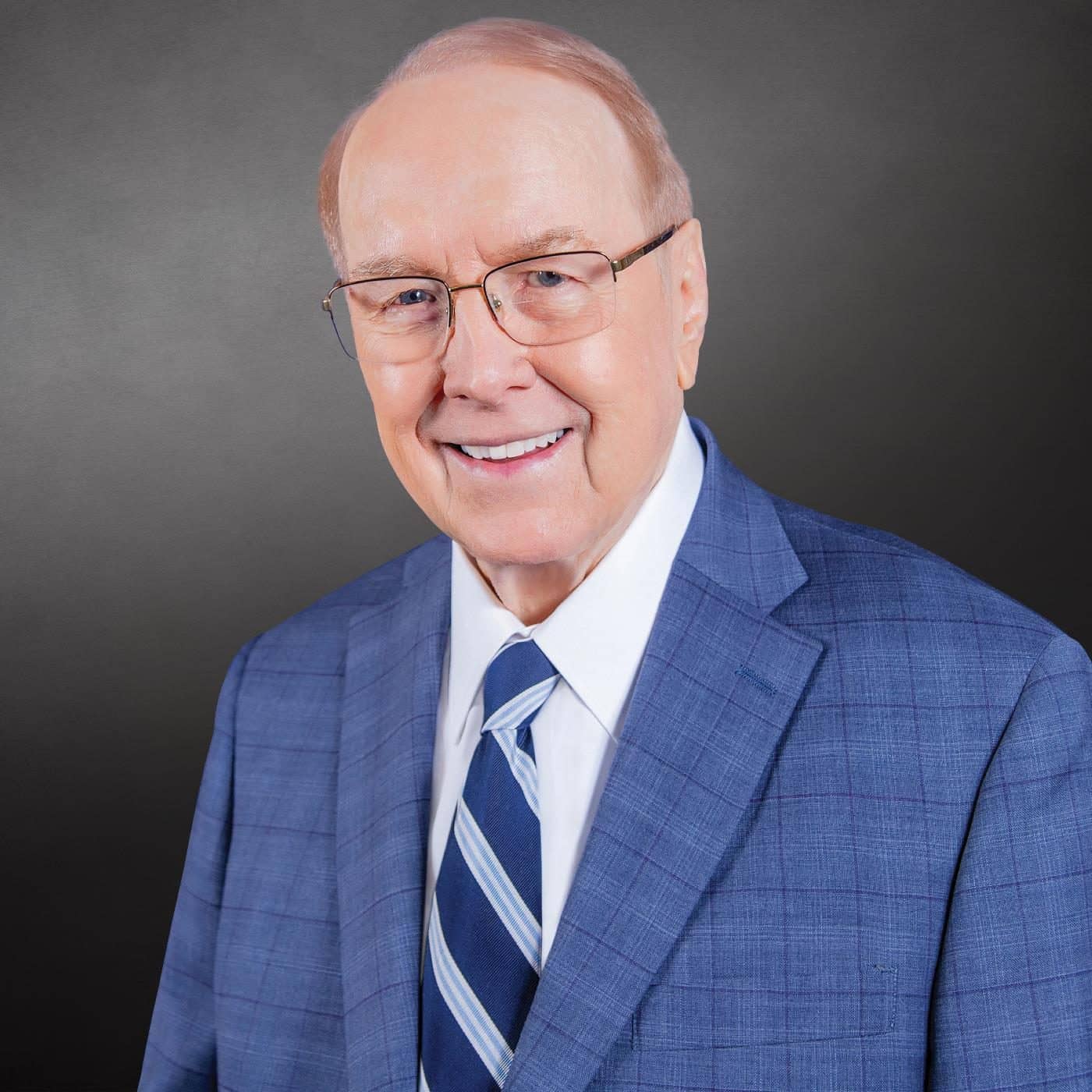
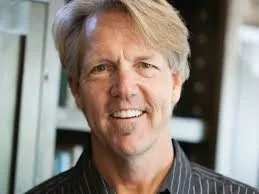

In this engaging episode of Family Talk, Dr. James Dobson converses with his longtime friend and health expert, Dr. Walt Larimore. Together, they explore the intersection of faith and physical wellness, drawing on decades of medical and personal experience. Discover the four health wheels—physical, emotional, relational, and spiritual—and learn how balancing these can lead to a more fulfilling and active life. Dr. Larimore’s practical advice, from monitoring your A1C to nurturing a spiritually rich life, highlights how you can actively participate in your long-term health journey.
SPEAKER 02 :
Well, hello everyone. I’m James Dobson and you’re listening to Family Talk, a listener-supported ministry. In fact, thank you so much for being part of that support for James Dobson Family Institute.
SPEAKER 01 :
Well, welcome to Family Talk, the broadcast division of the Dr. James Dobson Family Institute. I’m Roger Marsh, and today’s program addresses a topic that affects all of us, taking care of our physical health as we get older. In 1 Corinthians, the Apostle Paul reminds us that our bodies are temples of the Holy Spirit. But how seriously do we take that responsibility? Today on Family Talk, Dr. Dobson’s guest is Dr. Walt Larimore, an award-winning medical journalist, a best-selling author, and family physician who delivered, are you ready for this, over 1,500 babies during his 40-year medical career. Dr. Larimore is married to his childhood sweetheart, Barb, and together they have two grown children and two grandchildren. On today’s edition of Family Talk, we’ll explore Dr. Larimore’s book called Fit Over 50, which outlines simple choices that can dramatically improve your health and longevity. Whether you’re approaching 50 or you’re well beyond it like yours truly, these practical insights will help you honor God with your body. The conversation begins right now on today’s edition of Dr. James Dobson’s Family Talk.
SPEAKER 02 :
I want to start with this. The Apostle Paul challenged believers in Corinth to honor God by taking care of their bodies. In 1 Corinthians 6, verse 19, he said, Do you not know that your bodies are temples of the Holy Spirit who is in you? Did you get that, folks? I mean, that’s pretty straightforward, and it’s what we’re going to talk about today. And we’re going to address this concept through a conversation with my dear, dear friend, Dr. Walt Larimore. My goodness, we’ve been working together for a long time. Walt, you said as we were coming in here that you counted, you actually have records that we’ve done 80 radio programs together here, and it focused on the family. I don’t remember because our memories start to go as we age. But, Jim, it’s been a lot of them, hasn’t it? It has been, and it’s been a lot of fun. Dr. Larimore is a well-respected family doctor with over five decades of medical experience. Dr. Larimore also hosted over 800 videoed episodes of Ask the Family Doctor on Fox Health Network. He is an award-winning author, and he’s made many appearances on the Today Show, CBS Morning News, and CNN. What were you doing on CNN?
SPEAKER 03 :
Come on, brother. Well, you know, last time it was actually I was at Focus, and it was Anderson Cooper was doing a program on discipline. And parenting. And he had a psychiatrist saying that one parent could do as well as two, and that corporal punishment was damaging eternally for children. It was just a wonderful debate. And to his credit, Anderson Cooper, I think, leaned our way. He’s not my favorite person either. I understand.
SPEAKER 02 :
But, you know, the studies, I think, convinced him. Well, you’ve written a new book called Fit Over 50. I think I am over 50 now. I resemble that remark. I want to play a game with you, okay? Okay, I’m ready. Let’s suppose you and I walked into your examining room and you had a patient there. Mm-hmm. And you were trying to get acquainted with him. As it turns out, he’s 55 years old. He’s a man. He’s 40 pounds overweight. He has blood pressure about 160 over 90. He doesn’t exercise except when he’s getting out of bed in the morning. His LDL, bad cholesterol, is about 250, and his total cholesterol is 350. He’s a borderline diabetic. He eats hot dogs and pizza frequently. He works too hard, and his father died at 57. Have you ever met this man? Almost every day. With his wife who brought him.
SPEAKER 03 :
That’s the reason he’s there typically. And he didn’t want to come. No, somebody that loved him was concerned about where he was at and where he was going. What in the world do you do with a patient like that? I find out, first of all, where they are, and second of all, where they feel they’re being led to be. Because one of the baselines, at least for me, is I want to know where a person is not just physically. but relationally in the family, emotionally, and spiritually. And so a little assessment that we take includes a spiritual assessment.
SPEAKER 02 :
You don’t start with the fact that he’s got a bare belly and all of the indices say he’s in trouble and probably heading over a cliff.
SPEAKER 03 :
I want to know which of those wheels of health is the most likely to blow. We try through history and physical and testing to find out what are all the issues that are going on with a person, not just physically, but emotionally, relationally, spiritually. So there’s some reason he’s in the mess he’s in. Exactly. And then prioritize those based upon his needs and his desires. Because there may be something that’s a higher priority to take care of, but he’s more interested in taking care of something else. Jim, you’ve been a counselor for a long time. And you know that you need to find where someone’s willing to go to work with you, right?
SPEAKER 02 :
Yeah.
SPEAKER 03 :
To take those first steps. And then as they have fruit in that area and they see that they can change, then it’s a little easier to go to the second one. Don’t you find the same thing emotionally?
SPEAKER 02 :
Yeah. Yeah, I do. But it’s rare to see somebody in that kind of trouble who is willing to pay the price to get himself straightened out. Have you ever seen it happen?
SPEAKER 03 :
Changing? Absolutely. But one of my favorite questions, kind of at the end of the interview, is a question that Jesus asked the man at Bethesda, and that is, do you want to be healed? And people really look at you kind of funny, thinking, well, do I have to buy one of those handkerchiefs or something? I say, no. If you’re willing to improve your health, I’m here to help you. If you’re just looking for a pill, it may be better for you to see someone else. But I’m interested in helping people that are interested in helping themselves, who are willing to take positive steps. And I’ll hold you accountable to them. But I’ve got to be sure that’s the direction that you want to go. Yeah.
SPEAKER 02 :
You know, I’m going to brag a little bit, okay? I don’t do this very often, but I’m going to tell it like it is. I am a physician’s dream because I find out what I have to do to stay alive, and I do it. You know, I had a heart attack, a totally blocked LAD, the main artery. You remember those days. Well, you remember our friend Pete Maravich.
SPEAKER 03 :
Died in my arm. Who only had that. Died in your arms and had that one artery clogged up. And then here you go not too many years after that.
SPEAKER 02 :
Two years later on the same floor. Yeah. But I found out what I needed to do, and that was to exercise. I changed my diet, which is very hard for me to do. A little over a year ago, Walt, I went in for a routine physical and found that my A1C was up. That’s an indication of a pre-diabetic condition. It was 71, which is the beginning of diabetes. And diabetes is a bad disease. You don’t mess around with that. And I said, okay, tell me what I have to do. And my A1C, which was 71, dropped to 66, 65, 61, 56, and it’s now in the normal range of 55. Well, even 5.6 would be normal.
SPEAKER 03 :
But Jim Dobson, after your heart attack, you decided to take care of yourself physically. And I’m convinced that… that one of the reasons you did so well with that stroke, you remember the stroke where you couldn’t speak, and yeah, there was medical intervention, but Jim, you were in pretty good shape when you had the stroke. And you remember when you had prostate cancer? Yeah. I’ve had it all, really. And I’m convinced that your ability to have done so well with those is that you were in better shape because of the heart attack. that God was able to use those opportunities to convict you to begin to care for yourself. And I’m convinced there’s people listening today that God’s brought to this program because he wants to convince them that he’s got something in store for them that involves not just spiritual.
SPEAKER 02 :
This is not just a suggestion. Let me read the 1 Corinthians 6, 19 to 20. Do you not know that your bodies are temples of the Holy Spirit, who is in you, whom you have received from God? You are not your own. You were bought with a price. Therefore, honor God with your bodies. Let’s ask that question of all the people out there who are listening to us. Are you living up to that scripture? Are you honoring God with your bodies?
SPEAKER 03 :
And you know, Jesus did. The physician, the only physician who wrote scripture, wrote two books, Dr. Luke. He wrote that Jesus grew in wisdom and stature, in relationship with God, in relationship with men. And so I kind of interpret that to say Jesus grew in wisdom. He grew emotionally and his mind and intellectually. He grew in stature. He grew physically, healthy physically. He grew in relationship with God, spiritual relationship with his Father. And then he grew in relationship with men, socially, with family and friends. And what the medical research shows is that if those four areas are in balance, and if those wheels – we’ve talked about these in the past, those health wheels – are inflated, your life will be a lot smoother and will actually run longer and more efficiently and more effectively. But just like your car, if one of those wheels starts to go flat or starts to get out of alignment or starts to wobble, it affects the whole car. And what medical science shows – You can be in great shape spiritually, emotionally, and relationally, but if you’re not physically, it will affect those other three, and any combination that you think of. This book isn’t just about being physically fit, it’s about how can you be fit with your family, How can you be fit emotionally? How can you be fit spiritually?
SPEAKER 02 :
Well, you’re talking about the wheels. Let’s talk specifically about the four wheels. And in your book, Fit Over 50 is based on those four wheels. The first one, this is a surprise to me. I would have thought you would have put the physical body being top, most important of it. You said it is spiritual rightness with God. Yeah. that that is the first thing you do in getting in shape.
SPEAKER 03 :
To me, if you’re using the car analogy with the four wheels of health being physical, emotional, relational, and spiritual, the spiritual is what’s connected to the power steering. That’s connected to the motor. It’s connected to the drive. If you don’t have it right spiritually, it negatively affects every single area. And so that’s why there’s several chapters emphasizing the spiritual relationship. I love the chapter that we have on the gospel. Reduce the entire gospel down to 32 words. Because my belief is that people over 50 are going to look at this, they’re beginning to think about their health. And I want them to realize that there’s that spiritual health that’s the most important, that relationship with God that will not only affect the rest of this life, but eternity itself. And so there is hidden in this an opportunity. I think we have listeners today that… are under 50, but they know people over 50, coaches, parents, friends, neighbors, and maybe they want to have an impact upon them spiritually. This may be a book that can do that. Because yes, it talks about the physical, it talks about four things you can do to live 10 years longer, and five numbers you need to concentrate on, and all of those important physical facts. But Jim, you’re right. Without the spiritual, everything else is going to end. But with the spiritual, everything will go on forever and ever and ever.
SPEAKER 02 :
And how can you not want that? What a promise that is. Can you imagine it? You know, in my life, I have a lot of friends who are dying, a lot of them who are really going through difficulties. And that promise of eternal life becomes the pearl of great price. I mean, you hold that more tightly as the years go on. And Jesus defined eternal life.
SPEAKER 03 :
Our friend Dale Tackett asked us once, what is eternal life? And I was thinking, well, you know, I’m I guess it’s pie in the sky when you die by and by. Remember Dale said – Marks beat you to that one. And Dale said, no, Jesus defined eternal life in the great high priestly prayer of John 17. John 17, 3, Jesus said, and this is eternal life. You would think that would be pretty clear, right? Jesus said, this is eternal life, that they might know thee, O my Father, and your Son, Jesus Christ. So eternal life begins the moment we know Jesus, the moment we confess him as Lord, the moment we trust him, the moment we turn our life over to him. That’s when eternal life begins. It’s not later. So we can infuse that into our relational, physical, emotional, and spiritual health now. But Jim, as you said, the benefit is that that will be forever and ever and ever life. And I’ve just not met anybody that doesn’t want that. I’ve not met anyone sick. That doesn’t begin to think about God. I was just with a residence in Tulsa. I teach at a Christian residency several times a year, and we were rounding in the intensive care unit. And there was a 32-year-old man who had just come off a ventilator. He had a severe infection, a septic infection. And I saw in the residence notes, because they all do spiritual histories, that this guy was an atheist. And so the chief resident said, Dr. Larimore, he’s off the ventilator. He’s recovering from his sepsis. He’s doing well. You don’t need to see him as the attending physician. And I said, I’d love to see him. And he said, why? And I said, I think we can publish an article about this guy. I love to publish articles. You know that. And he looked at me and he said, well, you know, you come from Colorado Springs. I know it’s not that big, but we see this type of sepsis all the time, and you’re not going to be able to publish an article with this. And I said, no, no, no, it’s not the sepsis. But you’ve got an atheist in the ICU. I’ve never seen one. And if he’s an atheist, then I say, I want to write a case report about him. So we walked in. I introduced myself to him, asked him a few questions about how he was doing. And I said, by the way, the residents have in the spiritual history that you’re an atheist. Can I ask you a question? He said, sure. I said, have you even once thought about God since you got sick? And he said, I talk to him every day. Because once you get sick, you think eternal things. Yeah, there are no atheists in foxholes. They’re sure not in ICUs. And so for folks over 50, many, most, are beginning to think about health. They’re beginning to think about the end. And my prayer is that they’ll be able to think about the totality of their health, their spiritual health, their family health, their physical health.
SPEAKER 02 :
Okay, let’s go to the second wheel. The time’s moving. It always does. Let’s talk about the physical body. Let’s go back to the train wreck in your examining room. His body is just a mess. Where would you start?
SPEAKER 03 :
Well, I’ll tell them there’s four numbers that you can focus on that can increase life expectancy 10 years. They’re real simple. A, B, C, D. A is the A1C. You mentioned that earlier. That’s that simple blood test that tells your doctor your average blood sugar for the previous three months. It’s now recommended for every adult every three to five years. If you’re at risk, if you’re overweight, have a family history of diabetes, then you should have it more often. But be sure that you aren’t in a pre-diabetic state or a diabetic state, because if you’re in that pre-diabetic state, Jim, just like you were, you can make some changes, and we talk about what those changes are, to prevent diabetes. So, A is A1C. The B of ABCD is your BMI. It’s your body mass index. It’s your weight. And BMI is the number we use to determine if you’re morbidly obese or obese or severely overweight or overweight. And the studies show that if you can make some changes, if your weight is abnormal, and the vast majority of Americans, they are now, unfortunately, there’s some simple steps you can take. And even reducing your weight as much as 10%, finding a way to do that that works for you and your family, increases your life expectancy, reduces your risk of disease. So A was A1C, B is the BMI. Before you leave that.
SPEAKER 02 :
Yeah. In this instance, it’s really fun because when I cut sugar out of my life. I started losing weight. I didn’t even try. I’ve lost 30 pounds in that 13 months, and without even dieting. I have not been hungry.
SPEAKER 03 :
It is amazing. We don’t even talk about dieting in this book. We talk about what are the nutrition plans that you can do that fit your personality, your temperament, your lifestyle, your schedule, your family, and how do you do that with your family? But I just had a patient who I saw back who had lost 37 pounds. And I said, what worked for you? And he said, sugar. Took out all the processed sugar. And thank the Lord that the FDA is now requiring labeling saying how much added sugar there is in each product that we have. In fact, we were talking about my daughter, Kate, who you have enjoyed having a relationship with. And Kate cut sugar out of her diet and began losing weight. And then she decided to take a Dr. Pepper, take a sip of it. And the sugar was repulsive to her. because she wasn’t taking it anymore. So if the ABCDs, A is the A1C, B is the BMI, C is the cholesterol, particularly the bad cholesterol, the lethal cholesterol, which is the LDL cholesterol. And you focused on that. So that’s the third number that we go after. And then the last one is the diastolic blood pressure, the high and low blood pressure. Be sure your blood pressure is normal. And many of our listeners may not know that the blood pressure normal has changed It used to be 140 over 90. It’s now considered less than 120 over 80. And over 60% of Americans have an elevated blood pressure based upon that number. It doesn’t mean you need a medicine. And losing weight affects that, doesn’t it? Absolutely. Losing weight affects that. Taking that sugar and that fat away can affect that. Exercise. The more we learn about just moving… In fact, the U.S. government, which was saying 30 minutes a day of moderate exercise five days a week was what you needed to really institute life changes, now says you can do that 30 minutes in one-minute increments. How many of our listeners, when they go to the mall, will spend 15 minutes driving around to park closer to the door? Just park out at the edge of the parking lot. Get that extra five minutes. Those will add up. You know, you and I write a lot, so we’re at the computer, and I’ve got this little program, and every 10 minutes it beeps. I have to get up and move. That adds up. That’s good news.
SPEAKER 02 :
Is that right? You actually have a mechanical or electronic device?
SPEAKER 03 :
There’s a little thing on the computer, and it’ll go beep. So you get up and walk. Kate and Scott gave me a Fitbit. I said I’d never wear one of those, and now I’ve got one, and it’ll do the same thing.
SPEAKER 02 :
Simple things. Well, if we’re talking about the body and the physical aspect of it, let’s talk about aging. This is Fit Over 50, which is the title of your book. The subtitle is Make Simple Choices Today for a Healthier, Happier You. What about the aging process? I mean, it’s inevitable. Things start breaking, things start happening. Things don’t look as good. How can a person remain confident and happy and enjoy life when everything is sort of changing for the worse.
SPEAKER 03 :
Well, Jim, we all both have friends, and a lot of our listeners have friends who are going through that. The fact is that the wheels, over time, will begin to wear a little bit and begin to rust a little bit. We have an entire chapter on aging and things that people can begin to think about, a whole bunch of steps they can maybe think about, too. turn that aging into a really positive experience. One that I like to teach is just, I call it, telling your story, is figuring out how you can, with your children and your grandchildren, tell and leave your story. Most people are interested in what sort of legacy they’re going to leave. I just had a friend whose mother suddenly died, and she said, I don’t even know what her favorite ice cream And I’d like to know that. I’d like my kids to know. It sounds insignificant, but it’s very, very significant to her. Try new things. The research is fairly clear that as we begin to age, we get a little bit more time, perhaps, especially after retirement. Try some new things, because it will youthen you.
SPEAKER 02 :
Here’s the important question. Can you slow down that aging process? We can’t stop it. Can you affect it?
SPEAKER 03 :
Well, the whole book is about that, because fit over 50 is how do you do that? The aging process can be slowed. It’s not going to be through this or that supplement. It’s not going to be through this or that pill. Research is fairly clear on that. But the things that we talk about, which is, how can you get moving? How can you exercise? How do you pick the right nutrition plan? How do you pick the right non-toxic relationships? How do you pick the right activities? How do you invest in others through volunteering or ministering or mentoring? And I tell people, if you are 50 or over, you not only have the opportunity to mentor those coming behind you, I believe biblically you have the obligation. And Jim, I told you before the broadcast that Barb and I are working with the marriage ministry, and we’ll have couples who come in and say, well, we’d be interested, but we have failed. We were talking a couple of the other day. He said, I have failed. This is my third marriage. And she said, I have failed. This is my second marriage. And Barb looked at him and said, you are more qualified. than most people, because you know the pain. You know the mistakes. You are ready. We can give you a few simple tools, but those behind you need to know that marriage isn’t perfect. It’s not two people getting into a perfect relationship. Jim, you’ve taught this for 50 years. It’s two people getting into a relationship and committing to it, despite their imperfections. to love each other in spite of each other, to love God enough that as they grow to love him more, they grow to love each other more.
SPEAKER 01 :
Well, there you have it, a practical roadmap for honoring God with your body, even as the years tick by. The wisdom Dr. Walt Laramore shared today here on Family Talk about those four key health wheels reminds us that true wellness encompasses far more than just physical fitness. You’ve been listening to Dr. James Dobson’s family talk and a practical conversation featuring Dr. Dobson and his good friend, Dr. Walt Laramore about achieving better health after the age of 50. If you missed any portion of today’s broadcast or you’d like to share these insights with another person in your life, perhaps who’s either nearing or just past the 50 mark. Go to drjamesdobson.org forward slash family talk. Along with the program, you’ll also find a link for Dr. Larimore’s book called Fit Over 50. Make simple choices today for a healthier, happier you. Every day, the Dr. James Dobson Family Institute reaches millions of families with biblical principles that strengthen marriages, guide parents, and promote the sanctity of human life. And your prayers and financial support makes it all possible. When you partner with us financially, you help us preserve and promote God’s design for family in a culture that’s really wandering from truth. To make a secure donation online, go to drjamesdobson.org. To make a gift over the phone, call 877-732-6825. I’m Roger Marsh, and on behalf of Dr. James Dobson and all of us here at the Dr. James Dobson Family Institute, thanks so much for listening today. Be sure to join us again next time right here for the conclusion of Dr. Dobson’s insightful conversation with Dr. Walt Larimore. That’s coming up right here on the next edition of Dr. James Dobson’s Family Talk, the voice you trust for the family you love. This has been a presentation of the Dr. James Dobson Family Institute.