


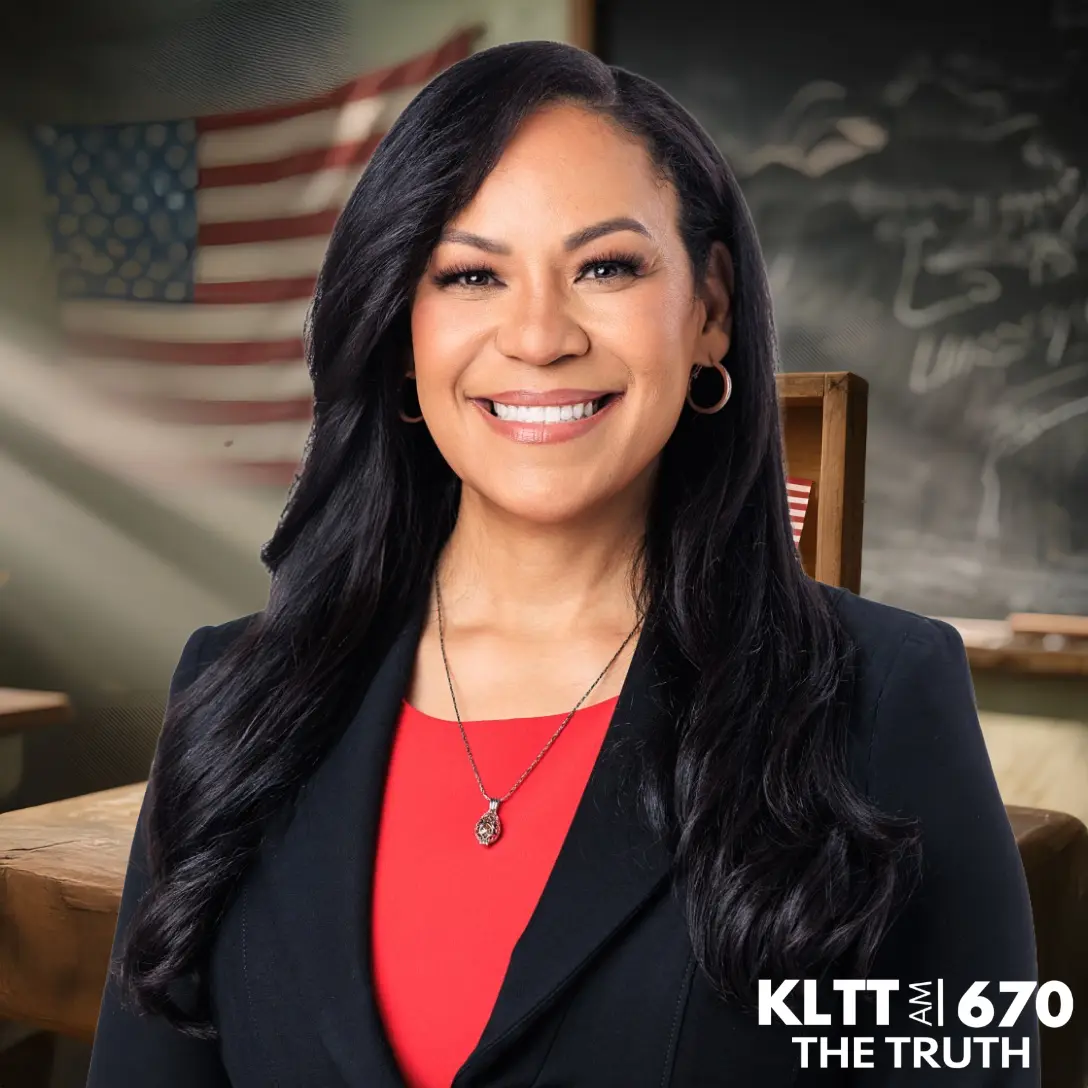
In this eye-opening episode, host Priscilla Rahn engages in a candid conversation with Sven Sharpen, a young advocate for autistic individuals and founder of the Autistic Freedom Network. Sven shares his personal journey from early autism diagnosis to his experiences within the school system, revealing the challenges and misconceptions he faced. Despite the adversities, Sven’s story is one of resilience, faith, and a determined fight for a better future for autistic individuals, shedding light on the importance of giving them a voice in society.
SPEAKER 02 :
Welcome to Restoring Education in America with Priscilla Rahn. She’s a master educator and author leading the conversation to restore the American mind through wisdom, virtue, and truth.
SPEAKER 01 :
Hello, everybody. Welcome to Restoring Education in America. I’m your host, Priscilla Rahn, and thank you so much for joining the conversation today. 2026, it’s rocking and rolling, and we have some exciting things happening in our community, namely Excalibur Classical Academy. They’re a new school that’s opening K-3 this fall in Centennial. So if you’re in the Denver area, I invite you to check them out. Their mission and vision is to restore America’s heritage by developing servant leaders who are keepers and defenders of the principles of freedom for which our founding fathers pledged their lives, fortunes, and sacred honor. If you’d like more information, please go to their website at Excalibur Classical Academy dot org. Today, I want to talk to you about a very serious subject. You know, we as educators and community activists and parents, we’ve been talking a lot about what’s been happening in schools and secrets from parents. But for the first time today, we are going to be talking to a student who’s going to be telling his personal story. And I’m going to invite to the stage my guest, Sven Sharpen. Hi, Sven.
SPEAKER 03 :
Hi, Priscilla. How are you doing?
SPEAKER 01 :
I’m really excited that you’ve decided to join me today to talk about your journey. But before we get into the conversation, I’m going to share a little bit of your bio with our listeners. So Sven Sharpen was diagnosed with autism at less than two years old, medicated at five and forcibly moved schools. He lost relationships and narrowly missed trans identification at 14, all with little to no parent consent. He’s doing whatever he can to make sure no child ever has to go through that again. So thank you for being vulnerable today. And so I wanted to have you on to share your story. You’re the first person I’ve interviewed that was a student going through this. So Sven, for the listeners who don’t know you, can you talk to us about your early childhood and your autism diagnosis and medication at an early age?
SPEAKER 03 :
yeah well first of all thank you very much for having me it’s a great blessing and yeah so it’s a bit of a simple bio it’s a much more complicated and tragic story but i was diagnosed with autism before i even turned two years old and since i turned 22 years old next month that means it was more than 20 years ago now and At the time, my parents could never have foreseen what was going to happen to me. Like the first thing that happened was I was put through a program called early intervention, which basically is you have to go start going to school at like two years old, which I think is way too early. Like you should start four at the earliest, not two. And it’s a program that is aimed at preparing you for kindergarten, which, I mean, it makes sense. But when you really look at it, it didn’t really work too well because once I got into kindergarten, it never helped. And the school had absolutely no clue what the heck they were even doing. They just… didn’t quite understand anything I was going through and I couldn’t really quite pick up on what the school was doing. And that’s really when I started knowing that the school system is not exactly a friendly place for kids to go. That’s when I first learned this. And it was around the same time. It was right around the time I started kindergarten, which is about five years old, that I was put on medications, probably through threats of like my failure or my over How do I put this like my overblown emotions that turned out to be kind of unfounded? And let’s be honest, they didn’t even help. And I was put on risperidone and Zoloft. These are two really controversial drugs that I don’t think should ever be given to a child under any circumstances. And because of that, I’ve developed these twitches that you may or may not be picking up on for life. Like, I don’t think these are ever going to go away. so i’ve i’m not a d-transitioner but i’ve got lifelong complications like one not to the sim not to the same extent but it’s still a lifelong complication that i developed needlessly over something that turned out to not be true or even helpful because i still had emotional outbursts like anybody you know even while i was taking this stuff So that was not helpful at all. And I think my parents were sort of forced to comply with it. My dad actually pushed back saying, I don’t want to put my five-year-old son on these drugs. But my mom was manipulated by big pharma to do this because she was most likely told it was her only option.
SPEAKER 01 :
So when you talk about that time, those early years in kindergarten and going forward, what were you noticing about how the teachers were treating you? Because you said you narrowly missed detransitioning or being transitioned, I should say. What were some of the things you were experiencing?
SPEAKER 03 :
Okay, well, the trans thing comes much, much later, like around between 8th and 9th grade. But for kindergarten, though, it was less a deliberate, offensive, abusive strategy and more just the school not really knowing what to do with an autistic kid. So they kind of just treated me roughly the same as the other kids. And there were a lot of rules that just didn’t make sense to me and probably to a lot of other kids, too. It was a very… I look back on it now and it’s very sort of communistic in a lot of ways. It was very collectivist. You know, there were just problems. And my parents were also forced to hire up some special, you know, I guess behavioral specialist or whatever, whoever that was or social worker, like just for me to have the right to attend that school.
SPEAKER 01 :
So fast forward to when you turned 14, your freshman year, what was happening in the school that was making you question, were you questioning your gender?
SPEAKER 03 :
it wasn’t really the school that was doing it yet i kind of just found it online i think i had maybe one or two separate encounters and i knew from the very beginning that that stuff was not gonna work for me but you know the social transition was the farthest i would have gone but then again like it often is a slippery slope that leads into the worst parts of it but But I avoided it, really, by the grace of God, for one. And I knew there was a lot of just really terrible things going on with me at the time. I was literally forced. I’ll just briefly go over between kindergarten and ninth grade. So I moved to the area I live in now when I was 10, so I had to sort of reset my social life, but I didn’t really have much of one prior to that. So it didn’t really matter. So I had started making decent friendships as early as fifth grade. And then this went into middle school as well. I was homeschooled, but that was my choice. It was my family’s choice. I did that to myself and I take responsibility for losing out on some of my. relationship time there. But once we got into seventh and eighth grade, things started changing. Like I wanted to hang out with friends more, of course. And so I did pretty good in seventh and eighth grade, building up a decent web of relationships that would be pretty much elite for an autistic person to have. And I realized I’ve been missing out on quite a lot of stuff. And I think it makes sense to hang out with all of these friends that I just made in high school. And I’m only going to have four years to do it. Like these are thoughts I had when I was 14. So it’s a pretty wise thing to do when you’re 14. And the next thing you know, I get this discussion saying, oh, actually, he’s probably going to have to move schools because the high school that his friends are about to go to doesn’t have what’s called an effective needs program. And effective needs kind of came up. around the mid 2010s about 10 years ago now and i was of course immediately placed in the program probably not even by choice most likely not by choice and i remember starting this and it was it was just garbage i mean it was terrible even in sixth grade like the whatever program it wasn’t much of one but it was terrible like i was actually forced to be given kindergarten and preschool level material in fifth and sixth grade even though i was smarter than my classmates at the time that was a huge thing that the school special education staff did they gave me preschool level material in fifth grade and a kindergarten level spelling test in sixth grade which of course laid the seeds for further problems and in seventh grade i couldn’t do anything without getting in trouble i stood up to my teachers in seventh grade and eighth grade alike and of course they punished me for that why wouldn’t they they don’t want kids standing up for themselves they want control not education And this is something I’ve known for a long time and it is all It hit the fan when they were saying he’s going to have to move schools because he can’t succeed without an effective needs program. District officials came to the false conclusion that I was going to fail without effective needs programs and threatened my parents that I was going to fail without those programs, sort of like a trans suicide hoax. It’s more of a hoax than a myth, let’s be honest. I think it was deliberately invented to manipulate parents into consenting. But the schools used similar tactics with my failure. I mean, it’s not as bad as threatening a kid’s suicide, but it’s still pretty bad. And this is sort of the opposite situation to the medications about eight years earlier, where I guess it was more like nine years earlier. My dad was the one manipulated this time, and mom was the one who pushed back. But they didn’t need dual parental consent. They just had to get the consent of one parent, even if the other objected. And they’ve just forced this through. And more recently, about four months ago, three months ago, Aaron Lee, who we talked with in that space the other day, She actually told me that if a school and district and parents disagree on where a kid should go to school, she told me that’s justification for child protective services, more like child kidnapping services to come in and take your kid. She told me that. It goes beyond gender ideology. And, you know, of course, since I had just made all these relationships, I was like, why? Why are you doing this? This makes no sense at all. Why is it that the friends that I just made don’t have to worry one bit about this? And yet I’m the one being subject to it. And, you know, a lot of it’s about control, as I’ve said, and there could even be an agenda. I don’t know this for sure yet, but who’s to say they aren’t deliberately trying to prevent people from having friends? And even in middle school, I learned That like they would deliberately not allow good friends to be in groups with each other in the name of it being too distracting or they would talk too much. You know, kids need to socialize. It’s not something a child can go without. It’s very key to development. And if you take that away, then they’re not going to know quite as much. They’re not going to be as well informed of things and they’ll have to learn everything themselves, probably the hard way.
SPEAKER 01 :
Yeah, you’re being very articulate about what you feel and your experience. Take me back. So I’m assuming this by this point in middle and high school, you were in public school.
SPEAKER 03 :
That was my only option. Another thing my parents tried to do is they tried to send me to private school, Christian school, or even charter school, and they never got me in because of my autism diagnosis. They used the autism diagnosis to destroy my school choice, the school system, so that government schools would be my only option. Wow. They basically said, we don’t have a program, even though a lot of these kids might be autistic, but more than likely if they’re getting in, they’re not diagnosed. So it was, it’s just a really terrible situation. Like, and yeah.
SPEAKER 01 :
Do you feel like your, your neurodivergence, what, what, what was in, in their mind, what was the school system saying you wouldn’t be able to handle if you went to regular classes?
SPEAKER 03 :
Well, I did go to regular classes, actually. They basically treated me for what’s called severe autism. Usually when people think of autism, they think of what RFK Jr. talks about, the one where you can’t pay taxes, take someone on a date, work a job, or play baseball, even though I could do all of those things if I wanted to. But the school treated me for a severe disability, you know, the one where you’re nonverbal and can’t do anything for yourself. I was being treated for that. Like, I understand that’s a real disability that I’ve seen myself many times over. And… it it’s really sad that that’s happening to some people and i feel terrible for them but my biggest problem in the system is that i was being treated for that even though i don’t have that disability and the only reason the school system thinks that i have that disability most certainly is because i’m diagnosed with the same thing
SPEAKER 01 :
So you talked about the cell phone and being on social media, and that’s where you started.
SPEAKER 03 :
Actually, it was more a laptop. I didn’t have a cell phone yet. That’s something my parents did right, by the way. I didn’t get a cell phone until I was 15. I think that was too early.
SPEAKER 01 :
I always assume as a teacher that kids are on their cell phones. So on your laptop, you were going into social media, some websites. What were you finding that was causing you to potentially question yourself?
SPEAKER 03 :
i never really questioned myself entirely it was more like something that the desires of the flesh were thinking about and you know again it’s by the grace of god that i did not go down that path but the path seemed appealing A, because I didn’t have much to lose. And B, I just had issues going on. Like I had a sort of, you know, every adolescent kid is going to have some kind of sex drive or libido as it’s really called. And, you know, if you have that drive without actually being able to fulfill it, and I’m not saying you should go around spreading your seed everywhere. That’s a terrible thing. It’s really without having intimate relationships, that drive is going to be a lot more extreme and add autism to the mix. And you’ve probably made it even more extreme. And then you add an easy access to pornography, which makes it even more extreme. Then you’re going to wind up in a reckless situation like it can get real devastating real quick. And if you’re being starved of intimate relationships like I was being, especially as I was moved schools and had a hard time actually dating, well, you just got a recipe for disaster.
SPEAKER 01 :
So on the X conversation that we were on, you mentioned that you felt like schools were targeting students in special education or specifically autistic children. Talk a little bit more about why you feel that way.
SPEAKER 03 :
Well, it was when I found out, it was a little more recently, around two years ago, when I found out that I was having a hard time finding autistic people of common sense anymore. And a lot of them were trans and the rest were usually non-straight, even if they weren’t trans. I had a hard time finding heterosexual, truthful autistic people. Uh, online and even in person, I’ve had in person examples, like an old friend of an old family friend of ours, their son went trans. And I was like, this can’t be right. There’s no way autistic people are more likely to have this. And then this, it said, oh, they actually are. All right. Why? And then I don’t get an answer to why. So. It tells me, okay, clearly there’s something they’re hiding from me, and that’s something I’m going to have to look into. So I’ve looked into it. I’ve done more interviews. I’ve even met detransitioners like Chloe Cole. I’ve met her. She’s a great woman to talk to. And, you know, especially as I’ve seen on X over the last couple years, like it’s becoming very clear that they do target people on the spectrum with this stuff. And they promise us the things that we’ve been robbed of, like relationships, like community, like faith even. Like they promise us the things we’ve yearned for our whole lives and love. That’s a big one. We’re talking about kids that haven’t really experienced true love before. And they’re being promised these things, but only if you decide that you’re trans, like if you’re if you don’t go trans, you don’t get that stuff. And I’ve heard I’ve listened to some interviews and watched some interviews with the transitioners, and they say there’s this term that the trans cult uses called egg or in their mind, somebody that they think is trans, even if the person that they’re targeting doesn’t know or knows them, that they’re not trans, like it’s basically someone they can target. And honestly, I’d say that every autistic person is an egg to them. It’s sort of the way the ultra nationalist Germans looked at Russia. They see us as an easy target that all they have to do is kick in the door and then we’re going to be trans before they even know it. So it’s certainly targeted, but when it come in my case, they didn’t really do this in schools yet. This was prior to COVID and they, I wouldn’t say they started doing this till after COVID like huge, like, especially as everyone was locked in their homes. I mean, it was a problem before, but because autistic people are usually stuck online because we have a hard time socializing because of the restrictions I talked about. And usually because of the cultural stigma as well. We’re often forced to interact online, and that’s where all this trans stuff is, platforms like Reddit, DeviantArt, Discord, and even YouTube, X, Instagram, and others, where some of the detransitioners I’ve met found it. They found it online. I found it on YouTube at 14. I think I just looked up, like, boy magically transforms into girl. That’s all I really looked up. That’s all you got to do. And, you know, I’m like, wait, people actually try this. I didn’t. Yeah. And I as soon as I saw it, I was like, there’s no way this is possible. This this doesn’t work. And it was just really the grace of God that had me know that. But, you know, it still pushed me to the edge.
SPEAKER 01 :
Well, yes, thank God. So talk a little bit about your faith and how you view your relationship with God. Considering all of this stuff that’s going on, how has your faith helped you through this time?
SPEAKER 03 :
Well, first of all, it’s by faith that I’m still alive today. Honestly, I was suicidal during this time. Again, I had lost years of relationship progress during my ninth grade year. I didn’t even go into the details of that yet, but… You know, I was raised in a Christian household and I was basically it was pretty much compulsory to go to church for most of my early childhood, even when we didn’t want to do. And, you know, I think that did help. I mean, it can definitely backfire because I didn’t go to church for years from about 11 to 18. So that’s that sort of not going to church wasn’t helping. But that doesn’t mean my faith was zero. You know, when things got tough, I still looked up to God and said, God, help me, you know, pray in Jesus name for a lot of these things. But over the last few years, I’ve grown a lot more faithful. I’ve taken my faith a lot more seriously. And, you know, there’s a lot at stake here. And, you know, I’ve just given my life to Jesus saying, take care of this for me. I can’t deal with it myself anymore. And I just give it all to God. And that’s the only one that I trust. So, yeah, I’m much more faithful than I’ve ever been. And I go to church now.
SPEAKER 01 :
Oh, that’s beautiful, Sven. Your testimony is really amazing. So at this time, you know, now that you’re an adult and you get to choose what your personal health care journey looks like, are you choosing a different path? Have you been able to, you know, get yourself healthy and get off of medications that weren’t making you feel good?
SPEAKER 03 :
Well, I’m already off two of them and I scheduled an appointment for this month. I just can’t remember what day I might call my psychiatrist, but I’ve been getting off the meds over the course of the past year and a half or so. I’ve gotten off of the Zoloft and Risperidone pretty quickly. The Risperidone, I got off of that one pretty slow, maybe three months, but Zoloft, which was the biggest dosage, I got off of that one in only three weeks. And it feels like cognitively, I’ve just ended up more like Joe Biden, not nearly as bad as Joe Biden, but still like just this sort of, you know, I, you know, I can’t get my mind straight. And, you know, I know there’s this thing called autistic burnout where you just don’t feel like doing anything. You can’t, you can’t even think properly. So, you know, it’s sort of like Joe Biden, but not as bad as Joe Biden.
SPEAKER 01 :
So is there any advice that doctors are giving you as you’re coming off of these medications to start to feel more cognitively awake and not as sleepy?
SPEAKER 03 :
Yeah, I mean I’ve sort of just – like I just maybe get some sugar-filled drink to at least keep me awake or keep me going. I had a nice salad last night. That helped, and I usually eat protein, meats. Like I don’t – bad food is just not appealing to me anymore. I don’t want chips. I don’t really want candy. I don’t want – you know ultra processed garbage food I want good food I want better pure chicken and beef and lettuce and broccoli or whatever just something that’s not ultra processed and the milk I mean that’s kind of what I’ve lived off of for the last decade almost like 12 years now goodness and Like getting off of the meds has helped me a lot emotionally, like I feel like I’m more in control of my emotions off the meds than on, which pretty much breaks the big pharma lie that you need to medicate your autistic kids to keep them calm. And, you know, I’ve just focused on self-control and, you know, I’ve watched a lot of videos of Charlie Kirk and I actually plan on meeting him on September 11th of last year, by the way, only for the unthinkable to happen. So that was really heartbreaking, but I’ve decided to take it upon myself to do for autistic people what Charlie Kirk did for the rest of the young generation. And that’s definitely helped me mentally. It’s calmed me down. It’s motivated me. And seeing people like Chloe Cole do their thing and Simon and Laura and other D transitioners that I’ve met up with, you know, they just watching them motivates me and watching Donald Trump do his stuff. It’s like, you know, I’ve got something to do. And the autistic are the only ones that don’t really have a truthful leader. They’ve got people influencing, but none of them are truthful. I haven’t found one other than myself. That’s actually, you know, trying to, that’s not only truthful, but it’s also fully committing his efforts and organizations to improve the wellbeing and quality of life of people on the autistic spectrum. So, you know, just sort of keeping my health together and watching these motivational things has helped me mentally for sure.
SPEAKER 01 :
So Sven, we have a couple of minutes left. When you think about your future, you’re in your early 20s, you’re out of the public education system and you’re able to take control of your life now and make a difference. What are your hopes and dreams for yourself? What do you see as your future?
SPEAKER 03 :
Well, hopefully something that’s actually meaningful for one. And I founded an organization called the Autistic Freedom Network. It’s autisticfreedom.com. So it’s a really accessible site. It’s already up. I’ve had it up for a couple months now. So you can look at it, you can donate, you can report abuse. You can start local and school chapters. You can do a lot with this site. And it’s really good. And it’s the only truthful organization I found since all the others like ASAN and Autistic Women’s Network are completely ideologically captured. So there’s that. And you can follow me at Sven underscore Sharpen. And make sure you spell Sharpen correctly. There’s a little C in there between the S and the H. So you should probably watch out for that. But if you spell it correctly, you’ll find me. You can probably just look up Sven Sharpen. And you’ll find me on YouTube, Instagram, and X. Those are the platforms I’m very active on. And you’ll find me, you’ll learn about what autistic people are going through. And it’s worse than what I went through. I consider myself blessed to have not gone through worse abuse. But we got to actually form a movement. That’s really my main goal is to create a movement similar to what the transitioners created and sort of reform the American system back to what our forefathers intended, the founding fathers, some of whom might have been on the spectrum themselves. We just don’t know that for sure. But they had traits that today would probably be diagnosed. And I think we should abolish special education. I think it’s got to go. It’s too harmful. Just leave that up to parents. Parents are the ones who know their kids more than anyone else.
SPEAKER 01 :
Sven, you’ve been really transparent. You know, you’ve articulated your passion so clearly for the listeners. I think it’s really important that we as educators, I’m a teacher still full time, that we are really careful about how we diagnose students and how we treat them. And in your case, it’s appalling. I know I’ve seen students who I’m wondering, why are they in the A.N. room? They seem really bright and capable of interacting with their classmates, you know, just like anybody else. And so keeping kids trapped in a program indefinitely without allowing you to get out, you know, seems like a kind of prison. I’m really sorry that you went through that.
SPEAKER 03 :
It’s not like they teach anything other than SEL. It’s communism, pretty much. It’s a gulag for kids that don’t fit in with the Marxist collective. And it’s getting worse. Like schools are diagnosing kids with stuff, even if they don’t have it, which in itself deletes relationships, stigmatizes them. And now they’re saying all creative, gifted, talented kids should be thrown in special education. And based on what I’ve told you, that’s exactly what’s going to happen to your kid if that becomes reality. We can’t allow that to happen. And I will fight to prevent that from happening and to reverse this negative course that we’ve been on for the last 30 years.
SPEAKER 01 :
We’ll spend one more time before we go. What’s the name of your website?
SPEAKER 03 :
It’s Autistic Freedom Network, autisticfreedom.com. No caps, no spaces, just autisticfreedom.com. And make sure you look me up on social media to know what’s going on as well. You can follow me there and learn what else has been happening to people on the spectrum. I report a lot of stories and news about that. So that’s really what I’m doing. And I’m hoping to have an event for Autistic Awareness Day, which I’m going to call Autistic Freedom Day, where we don’t really talk about autism itself as much as we talk about what life is like to grow up autistic, as well as what has been happening to us over the last 30 years. So it’s on April 2nd, West Steps of the Colorado State Capitol. Join me if you can, and hopefully we can have a great time. But until then, just keep in touch. Just keep catching up on what’s going on. I’ll keep updating you on my social media pages. But yeah, that’s about what I have to offer.
SPEAKER 01 :
Well, thank you. That’s amazing, Sven. And to my listeners, thanks for tuning in. Catch me next time. And remember that educating the mind without the heart is no education. So seek wisdom, cultivate virtue, and speak truth.
SPEAKER 02 :
Thanks for tuning in to Restoring Education in America with Priscilla Rahn. Visit PriscillaRahn.com to connect or learn how you can sponsor future episodes to keep this message of faith, freedom, and education on the air.
