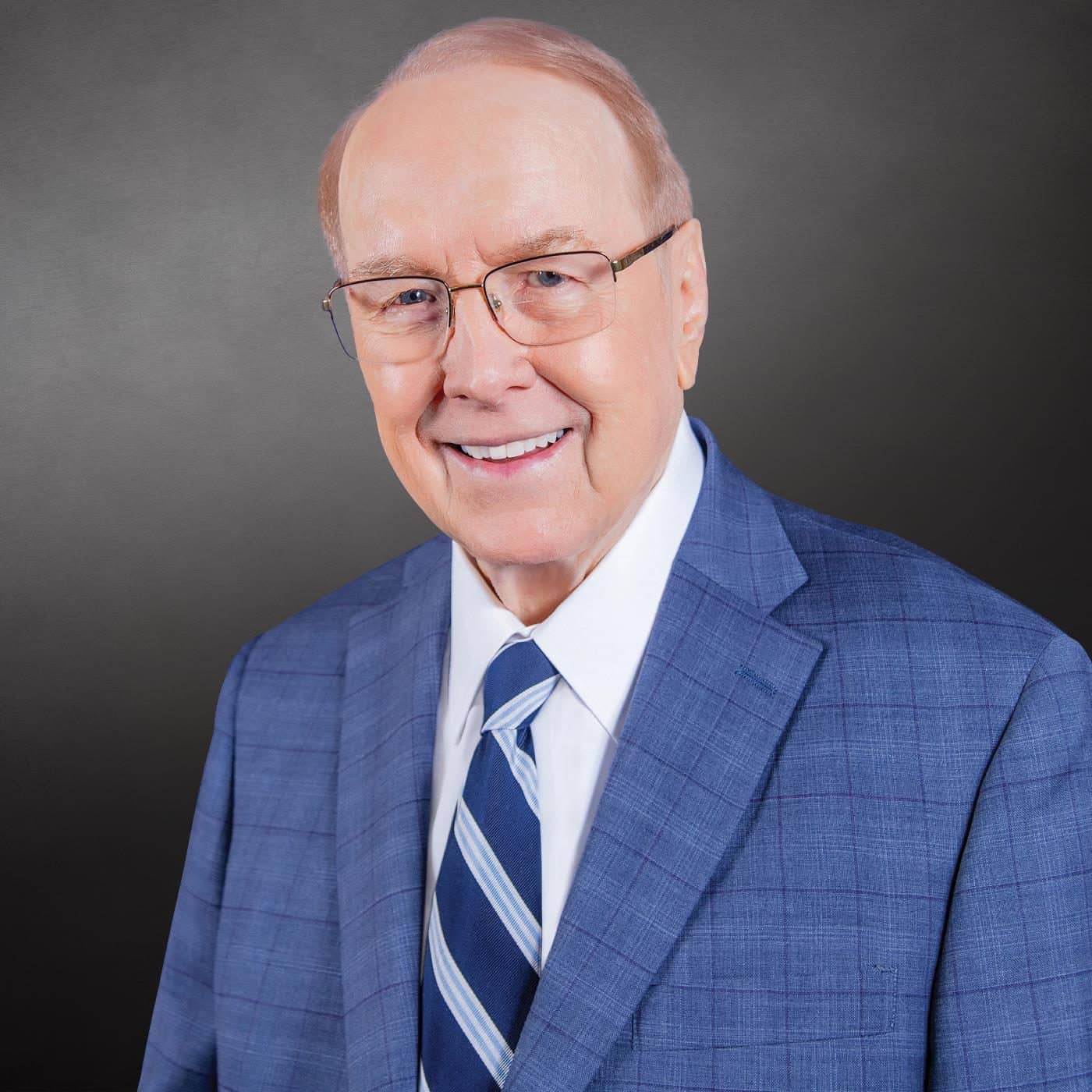


Join Dr. James Dobson as he speaks with Dr. Carol Swain about her life story characterized by impressive transformation and triumph. Born into a family of 12 children in a two-room shack, Dr. Swain’s challenges were immense. Listen as she recounts her path from dropping out of school to ultimately earning a Ph.D., highlighting the pivotal role of education and faith in her life. This episode is a moving reminder that with perseverance and faith, even the most daunting obstacles can be overcome, leading to a fulfilling life of purpose and success.
SPEAKER 03 :
Hello, everyone. You’re listening to Family Talk, a radio broadcasting ministry of the James Dobson Family Institute. I’m Dr. James Dobson, and thank you for joining us for this program.
SPEAKER 01 :
Well, welcome to Family Talk. I’m Roger Marsh. On today’s program, we’re going to hear a story of remarkable transformation, literally from a two-room shack with no indoor plumbing to the halls of academia. Our guest is Dr. Carol Swain, and she grew up as one of 12 children in rural Virginia, facing poverty, family dysfunction, and limited opportunities. And yet, through God’s providence and her own determination, she would rise to become an accomplished author and respected professor. Dr. Swain’s journey from dropping out of school to earning a Ph.D. reminds us that with faith and perseverance, no obstacle is too great to overcome with God’s help. Let’s get into this fascinating conversation as she talks with Dr. James Dobson about her story right here on Family Talk.
SPEAKER 03 :
You’re about to meet a woman with a fascinating story to tell. I met her at a conference and she stood up and talked at one point in the meeting. And I was so taken with her that afterwards I walked over and introduced myself. and even mentioned the possibility of your being a guest on the program, speaking to my guest. She is named Dr. Carol Swain. If you don’t know her, you should. She’s written six books, and she has had quite an experience through the years, and Her journey is unlike anything I’ve ever heard. Carol, welcome to Family Talk.
SPEAKER 02 :
Thank you. It’s quite a pleasure.
SPEAKER 03 :
I am delighted to have you here, and I want you to take us back to your childhood and give us a glimpse of, I called it a journey, your journey through life. And it began with you being one of 12 children. children in a state of abject poverty.
SPEAKER 02 :
Yes, I was born and raised in rural Virginia, a little community called Chambersburg that was so small that, you know, if you batted your eye, you could just pass right through it. And the house that I grew up in, it was, for the early part of my life, it was a two-room shack, pretty much.
SPEAKER 03 :
Literally a shack.
SPEAKER 02 :
literally a shack. I have some photographs of it that was taken a few years ago, but it was very tiny, and we had a living room and a kitchen, and the firstborn children slept on the kitchen floor. Later, my stepfather expanded the house to four rooms, and then we had a bedroom for the children, a bedroom for my mother and my stepfather, and there was a Bed for the girls. They all slept together in a bed for the boys. And no indoor plumbing. So six, seven, eight kids per bed? Well, at that time, it was not all 12 had been born. Yeah. And so probably there may have been nine of us that lived in that circumstance. Did you go to school? I did go to school, but in my family, we all dropped out after the eighth grade. And I can remember one year that we all failed school. And we failed because we missed 80 of 180 days. And so it didn’t matter that when I went to school and my older sister was We would almost always make A’s and B’s, even though we missed lots of school. That year, it snowed a lot. We did not have snowshoes or boots, so we stayed home until the snow melted, and that caused us to miss 80 of 180 days, and the whole family failed.
SPEAKER 03 :
How can you do well academically, Lou, missing that much school and still get A’s?
SPEAKER 02 :
Well, I think it was because, for one thing, I realized more and more just how intelligent my mother was and is. And then my grandmother, that these were people that were very intelligent. But I had access through my grandmother to books, the classics. And these were volumes that she had been given by a lady that she worked for. She was paid one time with a library. And so there was a bookcase that had encyclopedias, the classics, and she would give us access to that. And so even though, you know, I was in this dire poverty in Bedford, Virginia, my grandparents were a little bit better off and we could walk to their house and we could get access to those books. And for some reason, my older sister and I, we just did very well in school.
SPEAKER 03 :
You know, that reminds me of Dr. Ben Carson, whose mother insisted that he read. If a kid will read, he can overcome an awful lot of handicaps.
SPEAKER 02 :
I certainly will agree with that. And back then, living in the country, there wasn’t a whole lot to do. And you didn’t have all the competition that young people have today with the Internet and just various things competing for their time. But I was an avid reader, and I suppose my older sister as well. And we did extremely well in school. even though we missed a lot. And I can remember times when teachers would crack jokes, like maybe I’d walk into the classroom and the teacher would say, look, we have a visitor today, or look who showed up today. And if other students laughed, I can remember her saying, what are you laughing at? She knows more than you do, and you’re here every day.
SPEAKER 03 :
Obviously, you were a very bright kid.
SPEAKER 02 :
I think so.
SPEAKER 03 :
And your life since those days has proved it because you’ve gone on academically to do things that no one would have anticipated. Now, how difficult was it for you to live in a dysfunctional family like that? Your real dad, your biological father, left early, and your mother divorced your stepdad soon after that.
SPEAKER 02 :
Yeah, I don’t remember when my mother lived with my biological father and she had three children by him and they divorced. And so I had a stepfather. And in those circumstances, you know, it was difficult. Did you feel poor? I knew. It was very vivid. I knew I was poor. Were you embarrassed by that? We were teased in school. And at the time I started school, it was during the era of segregation, and so we went to a black school, and later that school was integrated. But during the time that I was there, we were the poorest of the poor. It was always that way. And we would be teased for all sorts of reasons. For one thing, my maiden name, was Payne, P-A-Y-N-E. And so that lent itself to quite a few jokes independently. None of them funny. None of them funny. And they would laugh at the lunches, if you didn’t have sliced bread. Back then, you know, my mother, she would make biscuits and put whatever she had in the biscuits. And to avoid being teased, we would eat our lunch either before school or after school. And we never had our hair fixed, you know, straightened. Back then, you know, black children that came from middle-class families, they had their hair straight. We had plaits and, you know, torn clothes, and I’m sure we were dirty. I’m sure we were smelly. We were the kids that were poor, and we knew we were poor. And what I can remember is that we act today like bullying is something that was just discovered. I can attest to the fact that bullying has always been around.
SPEAKER 03 :
It has, and it’s still as painful as it ever was.
SPEAKER 02 :
It is.
SPEAKER 03 :
Did you change your name to get away from that word pain? No.
SPEAKER 02 :
I didn’t mind leaving pain behind.
SPEAKER 03 :
Well, you’re a beautiful woman today and a very intelligent person. And life has not been easy for you, though, has it?
SPEAKER 02 :
No, I mean, when I think about my life, there’s been so much pain and suffering. I married at 16, not because I was in love, but to get away from home. And even before I married at 16, at some point, the circumstances, my mother was an alcoholic, stepfather, they would fight every weekend. And there was one particular fight that sort of seared in my mind. And And in the minds of some of my siblings, where my stepfather was chasing my mother with an axe, and we were screaming, you know, trying to keep him from killing her. And he eventually broke one of her legs, and she has polio. And so she was always a small woman. But my oldest sister and I went to live with the father we didn’t know in our early teens. At some point, you know, he got sick. And I literally went to the juvenile authorities and filed a petition to be placed in a foster home because at that point I knew some children that were in foster homes and I thought that was better. So I filed the petition, and what happened was other members of my family turned on me because they thought that the social workers would take all my mother’s children away and that even though I was in a bad circumstance, they made me feel tremendously guilty for having done that. The day of the court hearing, all I did was cry. I didn’t talk at all. And so the judge said I could live with my grandmother. And I lived with her for a little while, but that was not a good solution. And so my next wise idea was to get married at 16. And I remember that I was not old enough to get married when I made the decision. My mother had to sign the paperwork. And I didn’t marry at that time thinking that I would ever want to get out of it. I was so thrilled. that anyone would have me. And I married a man that lived next door to me. By this time, we’d moved into the city. He purchased my first store-bought clothes at a high-end women’s store.
SPEAKER 03 :
And so they were falling off my— You had never bought clothes before.
SPEAKER 02 :
No, and they were falling off my little girlish frame because they were women’s clothes. And so they were high-end, but they didn’t fit very well. Ha, ha, ha.
SPEAKER 03 :
You moved into town. How many of the 12 kids in your family successfully got out of poverty? How many of them went on to have successful lives?
SPEAKER 02 :
They’ve all struggled, and their children have struggled. And there are several that are working, but we all dropped out of high school after the eighth grade. No one went through the system and graduated with a high school diploma. But three of us have high school equivalencies. My oldest sister has a high school equivalency and one of my siblings. And The sibling that has it, he got his while he was in jail and he sent it to me, his prized possession. And he’s someone very intelligent. But it’s like when the odds are stacked against you and. Our family was downwardly mobile. It’s almost impossible to get out. And so I have been extremely blessed in the sense that for some reason, you know, God did set me apart, and he opened doors for me, and I was the only one to reach college. And I’ve had, you know, a very successful life within academia.
SPEAKER 03 :
Yeah, I want to talk about that in a minute. But you always felt… a little bit different from the rest of the kids.
SPEAKER 02 :
Yes.
SPEAKER 03 :
You told me you felt like you’d been parachuted in from outer space somewhere because you didn’t seem to fit the mold.
SPEAKER 02 :
Yeah, I can remember my earliest memories of myself. And my mother said I used to hide behind furniture and peer out. I guess I had a lot of fear, but it was like I had been dropped from outer space. I was observing, you know, these people live their lives and I was part of them, but I was not part of them. And from my earliest memories, I remember feeling like there’s something I’m supposed to do. And today as a Christian, I would say that it was the call on my life that somehow deep down I knew that there was something I was supposed to do. It didn’t make any sense to me. But I always had that sense of urgency and a sense that there was something I was supposed to do and that I was watching these people. And, you know, at some point I had a fantasy life to sort of— endure in those circumstances. But I was in the family, but not of the family.
SPEAKER 03 :
You said that on the bus, on the way to school, you would fantasize about who you really were.
SPEAKER 02 :
Yeah, I had a fantasy life. And in my fantasy life, you know, this is probably embarrassing and my enemies could use it against me, but I’ve always shared the truth about it. I used to fantasize that I was this rich white male named David. And David grew up as I grew up because this was over a period of years. And so when I was a kid, he was a kid. And then when I was a teen, he was a teen. And he was rich and he was powerful. And so even though I was trapped in that poverty, I had that mode of escape, and I sort of could go into my fantasy world while I was on my way to school, on the bus, and on my way back home, which is probably a 45-minute ride.
SPEAKER 03 :
When did you first become aware that God was alive, God was real, and that He also was watching you?
SPEAKER 02 :
Well, my first… experience with God that I knew that there was a God was when I was Probably 12, 11 or 12. I remember being in a church program. Now, we were not regular churchgoers, but my grandmother was a pastor’s daughter. And every now and then she would do something. And so she did a program, a church program, and she put her grandchildren in it. And I had a poem to recite one Easter. And as I was standing on the stage reciting my poem, The sun came through the window and it shone on me in such a way that I knew there was a God. And I knew I wanted to serve him. And when I got down off the stage, I told people I wanted to get baptized. I didn’t get baptized at that point. And then life went on. But that was the first encounter that I remember with God. And growing up, I’ve always known that there was something bigger than me guiding my life, but I would not have said it was Jesus Christ. I just always knew that there was more than what I was hearing from people around me. And some of what I heard from people around me was… You know, you’ve probably heard these things. There’s no such thing as spirits. Yet I knew that there was a spiritual world, and I don’t know how I knew that there was a spiritual world, but I always knew that there was more than what I was being told.
SPEAKER 03 :
Wouldn’t it have been wonderful if a little church nearby had come knocked on your door and got acquainted with you and befriended you and your family? and then introduced you to Christ, because you were sitting duck for him. You were waiting there for him to come along.
SPEAKER 02 :
Well, I mean, here’s what happened. Shortly after that experience in the Methodist church with the Easter program, there was a knock on my door, and it was Jehovah’s Witnesses. And they started a Bible study with me. And so part of my teen years was spent in affiliation with them. And I have mixed feelings about that experience. I can see the fact that it was a cult. And I broke away from them, you know, in my early, late teens, early 20s. I broke away from them.
SPEAKER 03 :
Yeah. So even though you dropped out of high school, you later got a GED, a general education degree.
SPEAKER 02 :
I did. And Part of the teen years was lots of depression, lots of suicide gestures where I would take bottles of pills and I would call someone and sort of set up my rescue. I guess suicide gesture is the right way to describe it because, no, it was a cry for help. And doing one of those suicide gestures, the doctor, he told me I was intelligent, I was attractive, I could do more with my life. And it stunned me because I had forgotten that I used to be smart. I had forgotten that when I was in school that I had been smart. And I was so embarrassed that I only had a high school equivalency. By that time, I’d had two children. And every time I gave birth, I had to put down the highs. Education of the mother, highest grade completed. And I was so embarrassed to put down eighth grade. When the doctor said that to me and reminded me that I was smart and around this time, my high school class was graduating, the class I would have graduated with. And I certainly knew a lot of the people that were graduating weren’t as smart as I was. I learned about the high school equivalency, the GED. And when I learned about it, I was too young to take the test because Virginia had a law that you had to wait until you were 20. But I took the test. I scored really high on everything except math. And that gave me a sense of accomplishment. And 1975 was a turning point year for me. And it was the year that Jehovah’s Witnesses had taught that the world would end. I left them before the world was supposed to have ended on October 14th. I had already broken off association because at that point I didn’t care. I got my high school equivalency. I had a daughter die of a crib death, and I filed for a divorce. And sometimes when I tell my story, I say my world ended in 1975. 1976, I started college, and the rest was like history for me.
SPEAKER 03 :
How did you get accepted to college?
SPEAKER 02 :
Well, it was a community college, and I was making C’s without trying. And when I decided to study, you know, I started making the dean’s list. And I graduated within the two-year period with a degree in business. That was not my choice. I wanted to do commercial art because I’ve always been artistic. I wanted to do art. I was told to be practical. And so my practical decision was to take business merchandising. So I graduated with that business degree and started applying for jobs. And I kept being told that I needed a four-year degree to be a store manager. I wanted to manage a store. I also noticed that as I was filling out the job applications that I didn’t have enough stuff to distinguish myself. I didn’t have many awards. I didn’t have these accolades for the application. I’d been on the dean’s list twice. So I decided I would get the four-year degree. I went through the college catalog of Roanoke College, which is a Lutheran school, looking for the major that had the least amount of math, and that was criminal justice. And I chose that as a major. But I also made a decision that I would be an honors student, and I graduated from Roanoke College magna cum laude. Did you really? Yeah. I did. And I was inducted into the highest honor societies they had. And later when they got Phi Beta Kappa, I was inducted into that. And I started a scholarship there for minorities that was meant to be an academic scholarship. And I did all of that, even though I was still working at the community college library full time. And this is God’s story in the sense that I had favor at that community college library because I was willing to work nights and weekends. I started as a work-study student. The regular employees would call out, you know, sick, or they didn’t show up. There would be a crisis about who’s going to work at night. I would always volunteer to work. So a full-time position was created for me nights and weekends in circulation, and I was able to keep that job for five years, go to the four-year college, full-time, and do my homework at night and take my children to the library when I needed to. And I see that as God’s provision.
SPEAKER 03 :
You know, Carol, this story of yours really is a story about God and His intervention in your life. You and I were standing in the hall before we came into the studio, and I told you that I thought one of the most incomprehensible things in my life through the years has been that God, the creator of the entire universe, who knows every secret, who is omniscient, who is all-knowing, all-caring, and created this universe that, as far as we know, runs at least 30 billion light years in all directions from the earth. Imagine that. And that’s probably not even the start of it because he’s infinite and his universe is infinite. And yet, and yet, he knows me. David said, who art thou that you are mindful of us? I can’t comprehend that. How did he come to know and care about Carol Swain? Why would he care? Why would he waste his time on us mere mortals? But he does, and he cares about everybody. And he was looking for you and a relationship with you when you didn’t even know it. And you were in sin, and you were not looking for him. And yet he was there. That’s a story in itself. But he was not through with you, Carol. And he’s not through with you yet. And your story is not complete. And we’re going to get right back into it tomorrow because it is a wonderful story of God’s intervention and God’s love here. And I know you love him with all your heart now, which is what I saw in that first encounter with you at a conference not too long ago. Thank you for being our guest today. And tomorrow we’re going to pick up with the story with you graduating from college. And now what? Thank you for being with us.
SPEAKER 02 :
Thank you.
SPEAKER 01 :
Dr. Carol Swain’s story of finding hope through education and faith reminds us that even in life’s darkest valleys, God’s hand is always at work, weaving a greater purpose than we can see in that moment. Friend, you’re listening to Dr. James Dobson’s Family Talk and part one of Dr. Dobson’s inspiring conversation with Dr. Carol Swain. Be sure to join us again next time when Dr. Swain continues to share her story. You will not want to miss the conclusion of her powerful testimony of God’s faithfulness. Now, if you’d like to listen to today’s broadcast again or share it with a friend, simply visit drjamesdobson.org forward slash family talk or download the free JDFI app from the Apple or Android store to access this and other great content. Looking for more wisdom for your family? Well, access free reading plans on parenting, discipline, and more when you search for the Dr. James Dobson Family Institute in the Bible app by YouVersion. You can do that today. Well, I’m Roger Marsh inviting you back for part two of Dr. Dobson’s conversation with Dr. Carol Swain. You’ll hear the conclusion of her journey from poverty to PhD coming up right here next time on the next edition of Dr. James Dobson’s Family Talk. This has been a presentation of the Dr. James Dobson Family Institute.