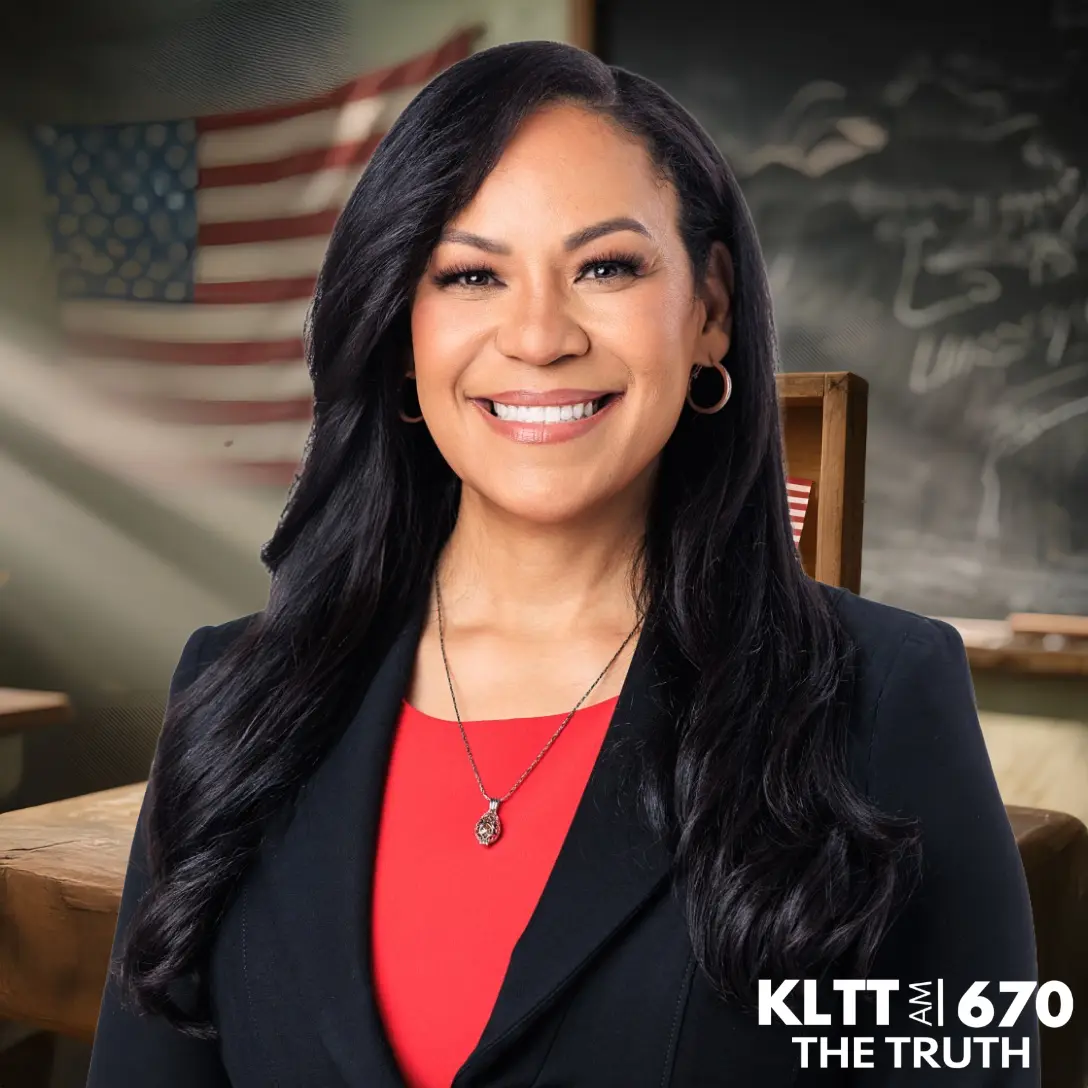

Join host Priscilla Rahn as she sits down with DJ Hapa, a trailblazing DJ, educator, and entrepreneur whose innovative approach is bridging the gap between traditional music education and the artistry of DJing. In this vibrant episode, discover how Hapa’s unique Start to DJ curriculum is not only elevating music education but also inspiring students through creative expression and technological engagement. Priscilla and Hapa dive deep into the vital role identity plays in learning, the powerful experience of curated music, and how students are developing new skills while embracing diversity in music genres.
SPEAKER 01 :
Welcome to Restoring Education in America with Priscilla Rahn. She’s a master educator and author leading the conversation to restore the American mind through wisdom, virtue, and truth.
SPEAKER 03 :
Well, hello, everybody. Welcome to Restoring Education in America. I’m your host, Priscilla Rahn. But during the day, I’m known as Coach Kimchi. But I’ll get back to that. Thanks for joining in today. You know, this fall, we are celebrating the opening of a new private school called Excalibur Classical Academy. And their mission and vision is restoring America’s heritage by developing servant leaders who are keepers and defenders of the principles of freedom for which our founding fathers pledged their lives, fortunes and sacred honor. And if you’re looking for a private classical school to send your children, please go to their website. It’s Excalibur Classical Academy dot org. They’re opening with kindergarten through third grade. They will be technology free, but I’m sure the children are going to have a wonderful time going to school despite the technology free part. And also, if you’re looking for a great place to teach, please send your resume to Excalibur Classical Academy. So some of you guys know I have been a full-time music teacher in Denver Public Schools. And there’s something really exciting that’s blowing up in America these days. And I have my friend here to talk about DJing. I’m going to welcome him to the stage, Coach Hoppa. Hey, Coach.
SPEAKER 02 :
Hey, I’m so glad to see you.
SPEAKER 03 :
I am so excited to share you with my listeners. But before we get into the conversation, I am going to share your bio with our listeners. So DJ Hoppa is a Los Angeles-based DJ, educator, and creative entrepreneur known for his signature feel-good sound, a high-energy, open-format style that seamlessly blends hip-hop, pop, EDM, funk, and throwbacks into one cohesive experience. With more than 20 years behind the desk, he has performed for global brands including Ferrari, Formula One, Microsoft, ESPN, Lululemon, and the Grammys, and has shared stages with artists ranging from Michael Jackson and Earth, Wind & Fire to Drake, Bruno Mars, and Marshmello. Beyond performance, Hapa is a respected DJ mentor and curriculum developer. A sociology graduate of UCLA, he combines academic insight with technical expertise across major DJ hardware and software platforms. He’s the creator of the Start to DJ curriculum. bringing structured project-based DJ education into schools and empowering the next generation of creatives through music technology and entrepreneurship. But I know your most important job, Hapa, is husband and dad to your beautiful babies. Tell us, how is the family doing first?
SPEAKER 02 :
The family’s great. Yeah, so that is the most important title out of them all. And yes, I’ve got four kids, 12, 10, 5, and 2. It’s busy.
SPEAKER 03 :
Yeah, and you’ve been able to bring a couple of your beautiful girls to my classroom. Okay, so let’s start with First of all, how we met. So we met, I’m on the board of Music Will, which is a foundation that gets instruments into the hands of teachers and professional development training for music educators. And I can’t tell you how many times I passed by your booth at the summit. And I was like, that’s for other people who understand DJing and music. three stopped me and said, Hey, come check out what we’re doing over here and play with some of these buttons. And I thought, Oh, this is harmless. And then I thought, Oh, this is actually something I could do. Yes, you got me. But when you really got me is when I went to your breakout session and you said, I have a curriculum, I have a book. Okay. So take, take me all the way back to the beginning because you’ve spent over 20 years as a DJ and What first drew you to the music and when did you realize this could be more than just a hobby for you?
SPEAKER 02 :
Yeah. So I started DJing in high school. So I was 16 years old and it Sometimes I would tell people that this started with a passion for music. I loved music. Growing up, I played in marching band and things like that. But it wasn’t. It was really this curiosity. As I was listening to the radio, I heard songs being played. seamlessly blended between one another. And you heard sort of there be no silence in between some of the songs and even hearing like this scratching sound. And I was like, how are they doing that? How come that sounds different from my tape or my CD? And so it was really a curiosity more than anything. And I grew up in San Francisco. My best friend growing up, his older brother had a pair of turntables in his room and he kind of caught wind that we were making these little mixtapes on cassette tapes. He was like, you guys call yourselves DJs? You don’t even know what DJing is. You should go and see these guys. And I remember he sent he gave us this like flyer or a performance that was happening after school at the Young Museum in San Francisco. And I swear there were like eight people in the room and we were two of them. And it was for the invisible scratch pickles who have who were doing something creative with the turntables. They’re using a vinyl turntable and they were playing as if they were a band. One of them was playing the drums like with his hands and a turntable. And the other ones were scratching in like a horn stab or some type of vocal sample. And I was like, this is crazy. What is this? And that’s, again, much like you passed by the booth and got curious. I got curious there. And I’ve just continued to pull out that string. And I didn’t really realize that this could be a career until I started businesses in this space. And until much, much later, after college and all of that, and I was just like, okay, well, let’s just see where this goes. And honestly, I’ve never made an actual decision that was, I am going to do this full time as a career. It just sort of unfolded over the years. And next thing I know, I look up and it’s now been almost 30 years of DJing. And it’s been now over 20 years of teaching DJing, which is just crazy to me.
SPEAKER 03 :
So talk about that, Hapa. What was the transition from performance to actual curriculum development?
SPEAKER 02 :
Yeah. So I got together with some friends in college or I met some DJs in college who were much better DJs than I was. And, you know, that was the education back then was you learned from other people. It was this informal apprenticeship that, you know, you were learning by doing experimentation, trial by fire, trial and error. And, I mean, I credit those guys and gals that were a part of that original DJ crew that I was a part of. I was the 10th person on this DJ crew at UCLA. And I had met these people because they were DJing in the quad one day. And I was bold enough to go up to them and be like, I’m trying to do what you’re doing. And I want to learn everything that you’re doing. And they were kind enough to bring me into their world. And because of that, I got a chance to – that was my education. And I got a chance to learn and grow. But what stemmed from that is I was also a part of – well, we had a couple of people in that group were very entrepreneurial. and one person in particular who became my college roommate and became my business partner was somebody who just he wasn’t so into school but he was really into djing and he was really into building something i don’t think he would even have classified himself as an entrepreneur but he saw an opportunity and so we ended up building a online record store first That online record store turned into a physical record store in Los Angeles. Mind you, all while we were still in college. And then that turned into me distributing records in college as well, like cold calling record stores. And that then turned into me bringing a DJ school from New York to L.A., which was Jam Master Jay’s DJ school called Scratch DJ Academy from New York to L.A., with no idea of how this would actually work or how I would even be able to teach this. But I had a passion for it. And once I saw people light up and I saw people, you know, come through the doors and be transformed, I was like, oh, this is what I want to do. And I still want to DJ, but that feeling that I get when I play a song and everybody goes, Oh, and like the dance floor lights up. I’m getting that feeling one-on-one with a person, but I’m getting it exponentially. And I can tell that I’m going to deposit something in that person that will allow them to have that feeling that I have. And at that point, I was just like, okay, I’m all in on education. And I started writing curriculum at scratch. I started building out different programming. And we ended up building six different schools throughout the U.S., all private DJ schools. And then I left that business in 2019, and I felt like I just needed to reach beyond what we were reaching. And I went back to school, finished my degree at UCLA. Became a professor teaching DJing. There was an opportunity that presented itself here in California. And I went for it and became a professor. And that then got me deeper into the realm and the space of more formal education. I wrote a book. I wrote a textbook during that time. Then the pandemic. All these things. There were so many things that lined up. And ultimately, the thing that brought me to the K-12 education space was my kids. And I thought about my kids and how they didn’t have access to this wonderful world of DJing. And what if I could take my skills that I have and some of the things that I’ve built over here, and what if I could distill that down to a K through 12 audience, but do it in a unique way that could reach as many kids as possible? And so that’s sort of how Start to DJ was born. And thankfully, we also had a great partner in Hal Leonard who also saw the vision and we were able to really join forces and bring this to the market.
SPEAKER 03 :
If you’re just tuning in, my guest today is Coach Hapa. He’s a DJ and the creator of the curriculum for Start to DJ. OK, so for those of us who are music educators who have gone through a traditional instrumental or vocal program who say, oh, this is really cool. But, you know, the music education world can be a little stiff. where we look at something outside of the classical realm or the straight-ahead jazz realm as something, you know, that’s like for those kids who do rap or street music, as something that’s not something that we see as part of our curriculum. And I have to admit, originally, I thought that it was so out of the box. Even though I’m married to a record producer and we have a world-class studio, I was like, that’s a whole nother… type of personality that can do that. But you’ve made it so attainable and easy step by step. It’s one of those things like initially I’m like, if I can just stay one step ahead of the kids, I think I can do this. But you have books, curriculum, videos, lessons. Talk about the structure so that those who might be curious take the mystery out of the curriculum.
SPEAKER 02 :
Yeah, I’m so grateful for coaches like yourself who are willing to put themselves in a vulnerable position to take themselves outside of their comfort zone. I fully understand that with our model, we use a facilitated learning model. So it is imperative that there’s a person in the classroom that says, I’ll help my kids, I’ll help get them there, even though I’m not a DJ, even though I don’t know much about this, I feel like this can impact the kids that are in my classroom, that are inside of my community. And so it really takes that, it takes that heart of that person first. And then we do our best to be able to come alongside of every single one of our coaches and hold your hand through that entire process This is something where you become an extension of our brand, of our organization. And yes, you’re still working inside of your public school or your private school or your community center, but you really are a part of Start to DJ and you’re a part of our coaching staff. And so, yeah, I think the process for this was inspired by things like Bill Nye the Science Guy. Or like other curricula that’s out there where it does not require you to be the expert, that it’s expert-led, but it’s also done in digestible chunks and allows for kids to get that straight from the source. And the irony that I’ve heard from a lot of our coaches is – I’ve heard coaches tell me they actually listen more to the screen than they do if I were to teach it live. I’ve had coaches be like, I don’t know, maybe it’s that they’re used to watching screens or whatever. And I think that there’s some truth to that. I think the way that we’ve recorded this and decided to put this all together, we wanted to make sure that there was multiple points of contact that we’re continuing to be reinforced. So I’m leading this from my perspective from the screen, but it’s in this short digestible content that allows for students to hang on to it for their attention span. And then they’re off to go and do the thing that I’ve just shown them how to do. And then we’re reinforcing that with like a student workbook or some type of assessment and quizzing that’s fun, that is really not meant to shame them or to get them you know, thinking too deep about it, but just reinforcing, do you know what you just did? Okay, great. Let’s move on. And that’s inspired by things like Duolingo and applications like this that use game theory and these sort of quick wins to be able to get somebody to the next step, which creates momentum. And when you have momentum, that is one of the main ingredients that you need in order to be successful at anything. We need the momentum. We need those quick wins to build confidence. And that’s really what we aim to achieve. In fact, you may have heard me say this before, but I believe that DJing and Start2DJ as a whole is really just the vehicle. Like what we’re really delivering is something way beyond mixing two songs together or learning what a loop is or being able to use a filter sweep. Like we’re doing a lot more than that. And that just happens to be the vehicle that we’re reaching the kids through.
SPEAKER 03 :
Okay, so Hapa, I think that is the key and that’s the pivotal point of why I decided that this was a must have in my classroom is the more than just, oh, we’re working on a Pioneer DDJ Flex 4 and we’re turning knobs. And by the way, Yes, students are experiencing success day one. And like you always say, go ahead, play. You can’t mess anything up. You can’t break anything. And that’s so true. And kids love that. But it’s that creative curating part. They understand they start to understand music theory quickly on a deeper level. They’re understanding BPM. They’re understanding how to sync. They’re understanding key changes. They’re understanding blending styles together. And even if there’s two songs that are totally different, how to fade in and get in and out of these things. And they’re starting to learn their style first. of music that they love to listen to. And so talk about that curating part because that’s a really powerful piece of intellectually and educationally why this is something that should be in every school.
SPEAKER 02 :
Yeah, no, thank you. And I think that the curation part of this, in the world that we live in currently, curation is creation. And I think moving forward, we’re going to really need to accept that part of it, that there are very few things that start from absolute zero, right? There are a lot of things that are already built or that there’s some framework for, that we our job is going to be how do we put these things that are already built how do we put these things together um and how do we make them work for us or how do we use these pieces that we have to be able to get to where we want to go or to express ourselves in this particular way and you know i feel like dj-ing is such a great way to exercise that. You’re using other people’s songs that are perfectly great the way they are, but what would this look like if I transition them together or I mash them up in some type of a way? These two things are beautiful the way they are. We’re not saying that they’re not good. These two songs are great in their own right. But what would happen if we took these two things and tried to find a way for them to intersect? So now what we start to talk about is how do we integrate two different ideas that might even be opposing ideas? How do we look at the world with a lens from like this idea of collaboration or bringing things together as opposed to things living in their silos? And one of the greatest things I love about a DJ controller is it was designed to be that way. There are two different decks and the whole idea is you have this mixer in the middle that’s meant to mix that together. And the output is some combination of the two. And I feel like our world needs that. I think our world needs people that can see things through a lens of, well, what would happen if we mixed them together? What would happen if we combined some of this and some of that instead of it can only be this way or it can only be that way in that middle ground is something so beautiful and so i think you know part of what we’re trying to instill in people and especially in young people is getting them thinking in that framework particularly when it comes to breaking down some of these barriers between genre between generations Who says you can’t mix a song from 30 years ago with a song that was put out today? And who says you can’t mix a reggae song with a rock song? This is an opportunity to be able to experiment and to try that. And I think once you do, you start to see the world in a completely different way.
SPEAKER 03 :
So Hapa, as I was getting into your curriculum and I was starting to see students having fun and I would have them come every Friday at lunch and DJ during lunch and the kids loved it. They kind of became like little rock stars at school and kids were coming up instead of eating their lunch saying, can you play this song? Can you play this song? And then they started DJing the school dances and it saved the school a lot of money from hiring a DJ for our activities and our field days because the students were DJing the activities. So let’s talk about logistically. So up until now, you started out in some afterschool programs, but now you’re seeing the program in the school day. Like for me, I teach DJing every single day. So what is the equipment that a teacher needs to get bare minimum in order to get started?
SPEAKER 02 :
Bare minimum is our curriculum. And so we have a program that even can be used on iPads or on Chromebooks, even without any type of physical gear. So you don’t necessarily need to go out and buy DJ controllers and things like that. in fact actually the experience on an ipad is incredible because you’re able to use you know just your fingers and yet you have a digital version of exactly what you would have on a physical piece of gear so we really wanted to lower the barrier of entry all the way down to that and Even then on a Chromebook now, we’ve got a couple of different apps that we use on Chromebook where, you know, you don’t need anything except for the school issued Chromebook. And we just need you need our curriculum because you wouldn’t know how to do this otherwise. But like you need our curriculum and that will give you all of our video lessons and things like that. And it would be paced perfectly for your students. And then you just need access to the app. And that’s bare minimum. And then we go all the way up. We have some schools that have invested a lot into physical controllers and things like that. And even then, I think sometimes people think that this instrument is very expensive. You can get controllers for $200, $300 a piece. They just need to be compatible. So don’t just go out and run out and get on Amazon right now and just start buying a bunch of stuff. Consult with us because we want to make sure that it’s compatible with what you have. Because that is an issue in our space. Because we rely so much on technology, it needs to line up with what the technology is that you have. So if you go out and you buy something that’s designed to work with a PC and all you have is Chromebooks, you’re going to get frustrated. And that’s the last thing we want is for you to get frustrated and feel that way. I’d also want to address the thought that you had about also the kids getting a chance to perform. you know, I’m definitely not trying to take jobs away from, you know, pro DJs. However, you know, let’s be honest as a pro DJ, most, most pro DJs do not want to be DJ in the middle school dance. Like that is not the highlight of your career. It should not be, you know, um, at the same time, maybe there is still an opportunity for some pro DJ in the market to still come by and set up like really great equipment and maybe DJ, you know, for like 30 minutes or something like that, but to also provide an opportunity to to mentor, like in the field, to be able to mentor some of these kids from the school as they play a majority of the event. But the vision that we have is exactly what you had talked about, is I want middle school kids performing middle school events. I want elementary school kids performing at elementary school events. And the confidence that kids get, I mean, I’ve had the pleasure of seeing some of your kids perform at lunchtime and perform even alongside of some of your kids. And it is, I mean, it is everything. You know, you really see them light up. You see them feel like they belong in a space. And you see the audience, their peers, get inspired by that as well. And that’s what we really hope to achieve. And I think we can do that with DJing sometimes a little bit easier than, you know, trying to set up a full band or have the orchestra play. You know, that’s a lot. as opposed to being able to have a DJ at lunchtime on Friday, you know?
SPEAKER 03 :
Well, one of the things I really appreciate as an educator, if I need help, your customer service is excellent. The people that you have hired to respond, they’re really quick. And I think that’s really important for teachers to know that a company has excellent customer service. So bravo on that.
SPEAKER 01 :
When I…
SPEAKER 03 :
You’re welcome. Okay, so when I opened the show, I said, I am Coach Kim Chi, because you encourage us to really get into the persona of being a DJ and pick your DJ name. Why was that important to you?
SPEAKER 02 :
Yeah, so identity is very important. I think we live in a world today where identity is constantly being challenged, right? And I mean, we can go down, we can have a whole episode around identity in particular, but I feel like it’s really important for us to allow not only the kids, but also our campus coaches to be able to show up as the person that they wish to be and for them to have some type of control over that. And not in a way where it’s like, I’m going to show up and I’m a duck today, so you need to quack at me or whatever. We’re not talking that. We’re talking, though, that somebody can say, As soon as somebody says, I’m DJ Kim Chi or I’m DJ Scratch and Stim, now they’ve got this identity that they are starting to create in their mind and they’re able to exercise their creativity. They’re also able to feel as though they are a part of what’s going on. And inclusion is incredibly important. For so many years, I mean, for decades, even still now today in certain circles, DJing is a bit of a closed circuit loop, if you will. And if you’re in the club, then you’re in the club. And if not, then you’re not. And there’s been some gatekeepers in our world and things like that. And I personally believe that some of that was maybe done with good intention. in order to preserve this culture that we have. But I believe that we’re at a place right now where in order to preserve the culture, we need to extend the culture. And we need to do so authentically. And we need to bring people into our world. That doesn’t mean that we should just… throw all these terms around like this, but it does mean that we should bring people into this space and allow them to play and allow them to experience and be able to give them the real understanding of what it means to be a DJ. And so I’m really proud of that in our curriculum as well, is that we’ve been very intentional about this is not just here, hit these buttons and now you’re a DJ. This is here, hit these buttons and now you’re having fun DJing. But we’re also telling you about who Cool Herc is. is, who is arguably the godfather of modern day DJing. And we’re introducing you to techniques that are founded in historical context. And we’re explaining some of the why between, you know, behind what it is that we’re doing. And so I’m more proud of not the output of them being able to do the what, but them understanding the who as well and the why. And I think that gives this program so much more context and so much more meaning to the people that interact with it.
SPEAKER 03 :
Well, Coach Hoppa, I’m looking at the time and we have to land our plane. So before we go, where can people find you and share your website?
SPEAKER 02 :
Yeah, for sure. So we have an organization called The DJ Coach. So this is our main company. So you can find us at thedjcoach.com. But if you’re specifically looking for the Start to DJ program, you can also go to starttodj.com. It’s just the way it’s spelled, S-T-A-R-T-T-O-D-J.com. And you can find out more information there. There’s a form on the site. Our job is to make sure that we respond to all of you that are out there who are interested in doing this. We’re excited to bring DJing to the masses and to these students and hopefully be able to find the next big DJ in one of these schools or communities.
SPEAKER 03 :
Well, thank you so much for your time, Hoppa. And to my listeners, thanks for tuning in and catch me next time. And remember, educating the mind without the heart is no education. So seek wisdom, cultivate virtue, and speak truth.
SPEAKER 01 :
Thanks for tuning in to Restoring Education in America with Priscilla Rahn. Visit PriscillaRahn.com to connect or learn how you can sponsor future episodes to keep this message of faith, freedom, and education on the air.