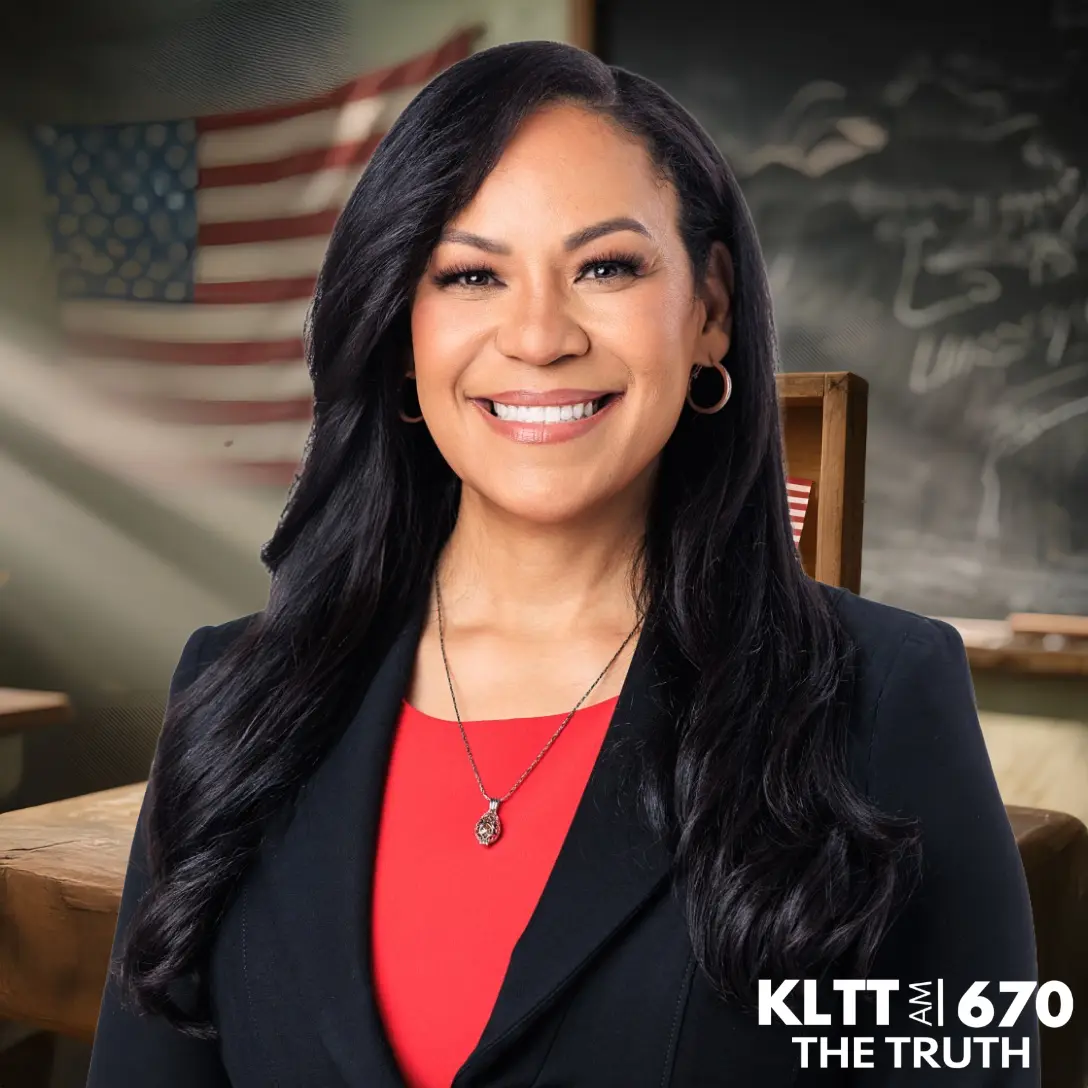
Join Priscilla Rahn and her guest, attorney Grant Van Der Jagt, as they explore the complex world of Homeowner Associations (HOAs) and their impact on property rights in America. Grant delves into his journey from HOA manager to author, highlighting the often unseen ways in which HOAs can infringe upon individual liberties and freedoms. This episode sheds light on the legal nuances and historical context of property rights and offers actionable advice for those affected by these organizations.
SPEAKER 01 :
Welcome to Restoring Education in America with Priscilla Rahn. She’s a master educator and author leading the conversation to restore the American mind through wisdom, virtue, and truth.
SPEAKER 03 :
Well, hello, everybody. Welcome to Restoring Education in America. I’m your host, Priscilla Rahn, and I am so thrilled that you’ve decided to join the conversation today. We are starting a new private classical school this fall in the Centennial, Colorado area. It’s called Excalibur Classical Academy, and their mission and vision is restoring America’s heritage by developing servant leaders who are keepers and defenders of the principles of freedom for which our founding fathers pledged their lives, fortunes, and sacred honor. So if you have a young child that’s starting kindergarten through third grade this fall, and you would like more information or a tour of the school, please go to their website, ExcaliburClassicalAcademy.org. Well, it’s America’s 250th birthday. There’s so many things that students all across America are learning about. And one of those things is our rights, particularly personal property rights. And I’m so excited to invite my friend to the stage right now, Mr. Attorney Grant Van Der Jagt. Hi, Grant.
SPEAKER 02 :
Hi, Priscilla. Thank you for having me on.
SPEAKER 03 :
It’s great to have you on today. And before we get into the conversation, I’m going to share a little bit of your bio with our listeners. So Grant Van Der Jagt is a Colorado-based attorney focusing on estate planning, real estate law, and complex civil matters. A graduate of the University of Denver Sturm College of Law, he has spent over a decade working at the intersection of property rights, governance, and public accountability. Vandriot is also a 2016 alumnus of the Leadership Program of the Rockies, where he engaged in advanced study of constitutional principles, free markets, and individual liberty. His legal career includes involvement in high profile disputes involving local governments and special districts. He is the author of Manufactured Compliance, How Government Entrapped Us into Involuntary Servitude, a critical examination of homeowners associations and special districts. But your number one job is husband to the amazing Dagny and dad to four children, three boys and one girl. Well, congratulations for being super dad, which I find you to be doing all these wonderful things in the community and congratulations on your new book. So tell us about how you came to write this book about HOAs.
SPEAKER 02 :
I’m glad you asked. Thanks for that wonderful introduction. Well, it’s not very ironic that you were part of the impetus for the book. My history with HOAs is long and deep, unfortunately. And I’ve been a licensed manager in the state of Colorado. I’ve been taught all the formalities that government wants us to know as far as how it’s supposed to be structured, all of their reasoning. and it never really connected with me. And the more that people like yourself would reach out to me and say, you know, I’m really upset with the way I’m being treated in this or that scenario. That’s ultimately what made me write the book. I’ve lived in HOA communities and I’m resourceful enough to be able to, at this point in my life, choose a location where there isn’t an HOA. And I recognize that that’s absolutely coming from a position of privilege that I’ve earned. I had to earn my way there. I was an inner city kid. We didn’t have HOAs in the inner city. And when I wanted to raise my family, it was an interesting conundrum, truthfully, because I was recently married and I wanted to pick a place where the schools were amazing. And I looked everywhere. I looked everywhere for a great school district. where there was a home that was not in an HOA, knowing that the state of Colorado has a constitutional obligation to educate us until we become the age of majority. I knew I had a right to educate my future children, but I was worried that in order to take advantage of these fantastic suburban schools, I was gonna have to live in a neighborhood where I didn’t have my rights. And so the best I could do is I came up with an optional HOA out in Centennial. It was $52, as everyone will remember, $52 a year. And there was a public pool. And hidden inside the documents, it said it’s optional for 20 years, and then it becomes mandatory. And it’s ironic that we’re having this conversation now because I’m in the middle of a big real estate transaction. And all of the lenders had heard that I wrote this book. And so they They were calling and badgering me, trying to get me to produce all these documents about all of these HOAs where I have real estate that I’ve owned in the past that had these HOAs. I started getting really frustrated. I think I told you about this yesterday because they kept hitting me with demand after demand. Show me proof that you’re in compliance with all of this stuff. And in the end, after giving them all of these documents, they had a big laugh. They called me up and they said, for somebody who hates HOAs, you sure own a lot of real estate in HOAs. We just wanted to badger you about it. Anyway, it’s been a long, long road, a long relationship with this thing we’re calling HOAs. And ultimately you gave me a call while I was in the middle of writing the book. And so the Priscilla that’s in my book is you and your story.
SPEAKER 03 :
I’m honored that I’m in your book and I’m frustrated that I’m in your book because to give people a little bit of a story, I was on my HOA. I got married. I wasn’t on the title, but in my faith, when you’re married, You co-own everything. And according to the state of Colorado, even if you get divorced, if your name’s not on the title, you split the property 50-50. So I was on my HOA and then I was not happy with the management company. We switched the management company and then I got off the HOA because I felt like, okay, we have a new management company. Well, the new management company started doing the same shenanigans, shocker. So I said, I want to get back on the HOA because I was hearing complaints from other homeowners about how they were being treated. I had to be a write-in. So I went around my whole neighborhood with copies of the proxy and got my neighbors to write in my name. And I got enough signatures to win a seat on the board. And then they told me I wasn’t qualified to be on the board because they couldn’t verify that I was a homeowner. They pretty much kept me off the HOA because I started asking questions about state statute and things that the HOA hadn’t been doing. And I was like, where are all these contracts? And they were stalling. So anyway, I don’t want to make this all about me, but I wanted to tell the listeners that these are problems. And I didn’t know what I didn’t know until I spoke to you. So I want to get into all of this knowledge in the short time that we have. For our listeners who may not be familiar, how do HOAs and special districts differ from traditional government, and why does that distinction matter legally?
SPEAKER 02 :
Well, so that’s an origin question. You’re going to go straight to the foundational basis of how an HOA became an HOA. Why do we call it an HOA? Why is it not some other entity name? We call corporations corporations and LLCs. All of these things are created by government. And so the origin of an HOA is government. Our legislature created the Colorado Common Ownership Interest Act. We call it Kiowa. And that’s what Colorado used to create this beast that we now call HOAs or common interest communities. And to some degree, it’s the same logic on special districts. So I lump them together. i think there should be a nuance there so when we get to the conclusion side of the conversation some special districts i do recognize have a private purpose and so the the answer to your question is it’s a creation by government it was never created by a private individual absent the preliminary foundational work the enabling act if you will that said this beast is going to be recognized in the state
SPEAKER 03 :
Okay, so your book argues that many Americans unknowingly give up their rights and their freedoms through these HOAs and special districts. So why is this a problem? Can you educate people? You think you’ve spent all this time getting a great job, you buy a home, and… You think, oh, it’s normal to move into a community that has an HOA, not knowing that you’re going to be surprised by how little control you have in your HOA. So talk about some of those freedoms that homeowners lose once they move into an HOA neighborhood.
SPEAKER 02 :
So it’s easiest to understand. Actually, I want to go back to the Bill of Rights. Why are we called an exceptionalist country? What is American exceptionalism? And the answer is actually a comparative analysis between Europe and the United States. So at the very foundation, pre-foundation of America, we had Europe, which was being ransacked by war after war, specifically in England. And there was this contention between the church and the state, which was the king, and ultimately the lords were able to negotiate these God-given powers that were given to the king and say, we’re going to carve out some rights from these God-given rights to the king that say the king can’t do the following things. And those exclusions were given by the king to the people, and they labeled it the Bill of Rights. The cynicism in what I’m going to say now should be evident. In the United States, we started with a protest, right? And in our protest, we labeled all of the things we hated about the king’s system. It included taxation without representation. It included everything in the Magna Carta. And then we fought a war, we won the war, and we created this contract with our new government that said, these are the items, all of the power goes to us as individuals. We have the God-given rights in this country, and we’re going to carve out a few enumerated rights that we’re going to give to our government. Above all of those is to protect our individual rights, okay? That’s an exact inversion of the British system, yet somehow we called it the Bill of Rights, the Constitution with the Bill of Rights. Enumerates tried to double down on the rights that we as citizens have by naming some of those rights. In other words, we start out with all rights, but by naming those rights, like your First Amendment, your Second Amendment, all of those other amendments, we by definition excluded what is meant by God-given. When we say I have the right to life, the word life doesn’t mean on particular government conditions. It means under every circumstance, we have the right to life, right? And when we start to label it and define it, you actually limit it. And those definitional provisions weren’t granted to government to be able to exclude. So year after year, we grow on these concepts and we start to forego our rights. And the HOAs is one massive step in the wrong direction. It started, there was a senator named John Corona in Arizona, and he originated the concept and part of the conditions of HOAs back then. included that the reserves were all held in banks that he held or held an interest in. So all of the interest was going into his banks out of Colorado. It was all in his state. And it also, very importantly, had the condition that in a very repetitive way, the homeowners had to unanimously vote on the rules regularly. And I mean every 30 years or so in order to have full buy-in on what the rules on that community are going to be. The HOAs got challenged a couple of times. They were broken apart for a period when some communities said that the private association had the right to segregate on the basis of race. So some cases came out and said, nope. even when you contract it, even when it’s an HOA, there’s some provisions you can’t force upon us. We’re going to recognize that segregation is one of those. Well, the 13th Amendment, ironically, is the only amendment that specifically says that we’re going to prohibit contractual terms that promote the vestiges of slavery, the small spurs that come after you simply abolish slavery. Anything that comes after that we’re going to say is related and we’re going to abolish that. And that comes through contract. You know, the 2nd amendment says shall not be infringed period. The 13th amendment says. Vestiges of slavery by contract, so the courts have said can’t segregate because of the 13th amendment. But what I find, you know, when I’m digging into this stuff. Is the 13th amendment still very much applies to the way that they are being conducted today. unlike the HOAs from John Corona’s days where you had to ratify the rules in order for those rules to continue, today those rules operate in perpetuity. For 250 years, close to it, we’ve had a rule in the United States that’s called the rule against perpetuities. No interest in real estate is allowed to continue for more than a life in being plus 21 years. if you write any kind of interest in real estate like if i said priscilla ron i’m gonna give you a piece of property and that piece of property is for eternity gonna be owned by the ron family it’s void on its face no court in this country will allow that and here’s the reason and this should resonate we are the land of the free our land is free from permanent covenants i cannot bondage my children or your children or seven generations down the road to conditions that you and I contractually agree to. That’s a foundational concept to being living in the land of the free. Yet these covenants, they run with the land forever. How did we get to this point? Did we consent? Do we have the capacity to consent? My book argues we don’t have the capacity to consent and any contract we sign, that consent is under duress. Why is it under duress? Because consent requires that it’s freely given and revoked. Can you freely refuse to abide by those covenants in your neighborhood? You cannot. Subject to what? If you don’t do it, what do they do? They take everything.
SPEAKER 03 :
Yeah.
SPEAKER 02 :
Right. So in my book, I go through many stories. It’s a small book. It’s not a very complicated book, but I try to go through the legal analysis, the moral analysis, and then I give these vignettes. They’re little storyboards that help explain it. And you’re one of the vignettes that is in here. At least I took most of the facts. I didn’t take it purely, but to really illustrate the problem. One of them is a story about JD in the book. He’s a police officer. And he was told in no uncertain terms, replace your driveway and refinish the paint on your house now. He said, why? And without an answer, they sent him back a penalty of $167 or something like that. And he said, now, wait a second, this is really wrong. So he made a big mistake. And he went to his neighbors and he said, I can’t afford this. I’m a police officer. I don’t have the money to do my driveway and my paint simultaneously. So the neighbors got together and did it for him. He was in compliance. He replaced the driveway. He refinished the paint, even though the HOA never said why he had to do it. Was there a chip? Was there a stain? Was there a bubble? What was the cost? know sometimes it’s just that the sheen has faded very arbitrary very capricious those are supreme court standards for whether a contract is arbitrarily enforced or capriciously enforced that would be void under most circumstances well so he argued and he said i have a contractual right in my covenants to take this to mediation so he went to mediation and he argued with the law firm And the law firm said, okay, we’re going to allow you to go to mediation. They charged him $12,000 for the mediation. And when he asked for reasons for the charge, they said, we don’t have to give them to you. When he said, I want to see how you got to $12,000, they said, we don’t have to give them to you. When he said to them that under the rules, they have to have a minute order by the board approving the specific litigation action against the member, They argued they changed those rules. Well, I’m sorry, but the rules say you can’t just change those rules. You actually have to have the consent of those that you’re governing to change those rules. So he called me and he said, what should I do? And I said, pay it. And that’s a shameful thing. I talked to Senator Evans about this. And I said, Senator, do you agree with where I’m coming from on these things? He said, actually, I ran a bill about the same thing. And I’ve got judgments against HOAs. you know, 8,000, 13,000, but he said, I spent $55,000 to get those judgments for my client who ultimately owes me all kinds of money. They got this judgment, but we can’t collect on it. So lawyers aren’t even taking these cases, right? So if we take out the fact that the procedure is rigged, we take out the fact that these boards are not abiding by those procedures if we we take out the fact that we didn’t necessarily consent attorneys are still not willing to take the case because they’re guaranteed losers even when they win there’s a great example of that let me let me jump into this real quick so by the way they’ve started foreclosure against jd um in broomfield there was a community that The HOA was acting in a very irresponsible way. A lot of money was lost. The homeowners sued. They sued at such a pace. There were so many lawsuits that were happening that the HOA couldn’t simply cash flow the lawyers quickly enough to pay them until they ran out of reserves. So they were insolvent. The homeowners won their lawsuit. The HOA went to bankruptcy, discharged the newly creditors, and used their super superiority priority lean and started foreclosure against the winners The people who won their lawsuits are now going to be foreclosed on by this thing. And this is curious. Hopefully this doesn’t come across as too scatterbrained. What is a super superiority lien? Where is that in the Constitution? I don’t remember anything that says government has the authority to create an entity that has more power than the IRS or any other agency of government. to where it has priority over private citizens. Think about that. You buy some land that’s free and clear, but subject to an HOA, and you put a mortgage on it, and you don’t pay the mortgage, the HOA gets the property. On what basis? Who said that they get this power? Who gave government the authority to give this so-called private entity the authority to take things at a priority over government? We’re just in a really bad spot.
SPEAKER 03 :
Yeah, Grant, you’re making a lot of great points. So in a situation where a homeowner feels like they have a strong case, but again, the HOA has the attorney that’s on retainer, and you as the homeowner have to go to mediation. A lot of times that’s just a joke. It’s just a step. The HOA knows they can go to mediation and not have to do anything, and they’ll probably end up coming out victorious. Do these types of cases… You have to sue, pay money out of your pocket in order to take it to court. And then it’s a gamble, right? 50-50. Or are you seeing more and more courts ruling if they have a great attorney like you that’s knowledgeable? Do homeowners have a chance of being victorious in some of these lawsuits?
SPEAKER 02 :
My honest opinion is no. Even if you have a great attorney, the laws and the procedures are written so one-sided that you can’t. You cannot win on the basis of most of the complaints that I’ve seen. I have seen some – there’s a woman, and she’s also in the book. Her name is Hannah Laughlin. And she has one of the most amazing stories of being victorious that I’ve read. And there are very few cases where people have won and been able to recover the damages. And she’s one of them. The HOA said no RVs. And her son has a very serious form of autism and he responds to motion and a specific humming sound. And the goal was to fall asleep. He would not fall asleep unless he was in motion with that humming noise. And there was only one vehicle that produced that sound. And that was a very expensive Mercedes RV. She bought that Mercedes RV and she parked it at her home here in Perry Park. And there were lots of RVs parked in Perry Park. The HOA said, you can’t have an RV in Perry Park. So they sued her and she answered. She said, my child has a medical prescription for this and you have no authority to take that away. And she won and she won big, but what’s interesting about that is that is a federal law. That now the courts have said, we’re going to recognize that we can, it was actually was the basis of it, not the, although I think she could have 1 on both. So the Colorado courts have recognized some federal laws apply. What bothers me is that Colorado has had the legislature review it and say HOAs can’t do the following. So they define it just like in the Bill of Rights. Once you define it, everything that you failed to exclude is permissive. So they said, HOAs can’t regulate flying the American flag or political signs of a certain size 45 days before and 45 days after an election. Okay, so those are restrictions on the 1st amendment. And those are the only restrictions on any amendment that by statute exist. Therefore, by definition. 100% of everything else you could conceive of. is permitted so if you’re a believer and you like to read the bible or some other religious script an hoa in theory has the authority to call that submersive and kick you out of the neighborhood because you have it how would they ever know well they can enter your home your fourth amendment does not apply according to colorado’s enumeration of what can’t be done to you
SPEAKER 03 :
This is crazy. Grant, I’m looking at the time and I want to make sure people know how to reach out to you if they want to hire you for legal assistance. And where can people find your book?
SPEAKER 02 :
So my book is on Amazon. It’s called Manufactured Compliance. And my phone number is 720-499-0000. You can find me at tacticallawyers.com. My email is grant at tacticallawyers.com.
SPEAKER 03 :
And your wife is an attorney as well. And so it’s a family affair. You guys do a lot of amazing things. So what’s your advice? What hope can you give to people? Is it as simple as saying don’t buy a house in an HOA or is there more advice?
SPEAKER 02 :
So the conclusion of my book is really that government needs to unrecognize HOAs as a private entity. We as the constituents need to ask our government officials to declare that these are proxies of government and demand our civil liberties back. The reality is if we were to abolish them, and I’m not asking for that, if we abolished them, all of the duties of an HOA would fall back on the commissioners. The commissioners are the ones that have conditioned having a common owner interest community management agreement to be in place before development is approved. So it was in their best interest to force this on us. And I think it’s in our best interest to force those duties back on them. And if we simply say, create an HOA court where we’re tried by a jury of our peers, not necessarily living in our community, then we’ll get our rights back. So the ask is really, if you’re going to be an elected official, say it. HOAs are government. And that’s it. The law is already there, what government owes us. But as long as we’re going to pretend that these are private entities and say that it’s consent-based, we’ve lost. And I, as an attorney, I have no standing in your HOA. I can’t do a class action. And I don’t want to be a member in every HOA to fight them. So I’m looking from the outside in and I’m saying, how can I help you? The answer is you need to call your legislative representative and say, I want you to recognize HOAs as a government entity. And the second they do that, you’ve won.
SPEAKER 03 :
All right, Grant Van Der Jagt, Esquire, manufactured compliance author. How government entrapped us into involuntary servitude. Thank you so much for your wisdom today. Everybody go out and buy his book. And to my listeners, thanks for tuning in and catch me next time. And remember, educating the mind without the heart is no education. So seek wisdom, cultivate virtue, and speak truth.
SPEAKER 01 :
Thanks for tuning in to Restoring Education in America with Priscilla Ron. Visit PriscillaRon.com to connect or learn how you can sponsor future episodes to keep this message of faith, freedom, and education on the air.