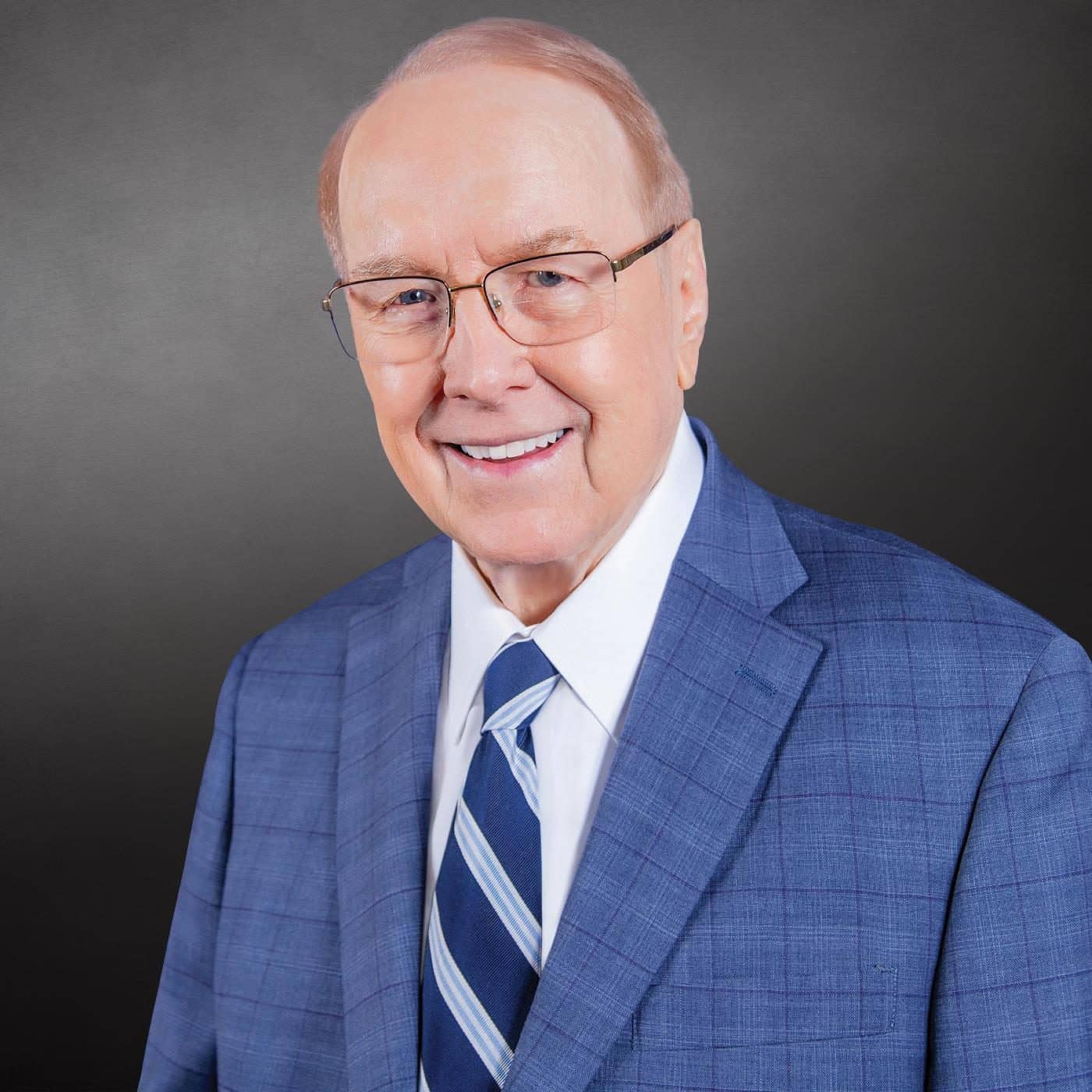

In this eye-opening episode of Family Talk, Dr. James Dobson engages in a profound conversation with Dr. Walt Larimore, a seasoned family physician and bestselling author, as they delve into the pressing issue of children’s health. Dr. Larimore, known for his visionary approach to health, compares it to a four-wheeled vehicle comprising physical, emotional, relational, and spiritual ‘wheels.’ They discuss the intricate balance required to keep these wheels ‘inflated’ and the pivotal role of nutrition, exercise, and everyday choices in shaping a child’s future. Through engaging dialogue, listeners are introduced to practical advice aimed at fostering holistic wellness in
SPEAKER 02 :
You’re listening to Family Talk, the radio broadcasting division of the James Dobson Family Institute. I am that James Dobson, and I’m so pleased that you’ve joined us today.
SPEAKER 01 :
Well, welcome to Family Talk. I’m Roger Marsh. You know, every parent wants their child to thrive. But what does that actually look like in everyday life? On today’s Family Talk broadcast, Dr. James Dobson continues his conversation with family physician and bestselling author, Dr. Walt Laramore. On our last Family Talk program, Dr. Larimore shared his vision of children’s health as a four-wheeled vehicle, physical, emotional, relational, and spiritual, and why all four wheels need to stay balanced and, dare I say, inflated. Well, on today’s edition of Family Talk, Dr. Dobson and Dr. Larimore will pick up that conversation with some very practical advice on nutrition, exercise, and the everyday choices that shape our children’s future.
SPEAKER 02 :
We’ve invited our physician in residence, my very good friend, Dr. Walt Larimore, to be with us. He is in a fine position to advise us on medical issues and other things. He was in private practice for 20 years. He’s received his medical degree from the Louisiana State University. As a graduate of USC, I sort of resent that, but that’s the way it is. And he went on to complete a residency in family medicine at Duke University Medical Center. He’s got all the medical credentials in the world and has written a book called The Highly Healthy Child. We talked with him last time. His name is Dr. Walt Larimore, but he’s on the hot seat again today because I have the privilege of asking him the questions about his book. Now, we talked last time about the fact that Dr. Larimore, we’re going to talk to you, Walt, in a moment, but he described health as being a car with four wheels. There’s the physical wheel that has to be properly inflated. And then there’s the emotional and the relational and the spiritual wheels, each of them representing an aspect of health that needs to be kept in proper balance. And so it’s not just enough to have the child be be seen by a pediatrician or a family doctor every so often. You need to look at the total child that involves those other dimensions or those other wheels to his car. I think that’s enough, Walt. Let’s get right into it. I read in preparation for today, and I think this is in your book, that people consume more than 30 pounds of French fries every year. Can you imagine the amount of fat that’s in those French fries? And then they’re also eating hamburgers and other things that have a lot of fat in them. And then we think about the little child that isn’t getting the proper exercise as well. And so that just portends very – poorly for the future because if you grow up as an overweight child, you have a much higher probability of being an overweight adult, or at least I think that’s true. Walt, comment on what I’ve just said. This problem of children not exercising enough and then eating too much fat and too many calories, that is very widespread, isn’t it?
SPEAKER 03 :
Jim, it’s epidemic. We’re seeing problems now among kids that we didn’t see 20 years ago. We’re seeing diabetes. We’re seeing heart disease. We’re seeing strokes. We’re seeing obesity. It’s epidemic. We’re seeing arthritis. We’re seeing skin problems. All related to too many calories, the wrong type of calories, and not enough exercise. And Jim, this is going to irritate some of our listeners, but this problem doesn’t stem with society, in my view. It doesn’t stem with the fast food industry. We’re not victims. We, as parents, are making choices for our children, allowing them to make choices that are making them gluttons, that are making them obese, that will shorten their life. The Center for Disease Control has predicted that one-third of them will become diabetics as adults. Jim, it’s horrible what’s happening. And there’s so much that can be done. And we as parents, by taking very small steps, and I outlined them in the book, simple, small, consistent steps, will impact not just our children, but their children. And on several broadcasts recently, you have talked about the studies that show that families that dine together, that simply sit down and eat together—
SPEAKER 02 :
and eat five times a week compared with a fast food thing and eating alone. Or eating in front of TV. Yeah, greatly reduces the incidence of adolescent rebellion and drug abuse and learning problems and all those things. I mean, it is dramatic what it does.
SPEAKER 03 :
School performance goes up, weight goes down, blood pressure goes down.
SPEAKER 02 :
Five times a week. What are there, 22 meals, 21 meals per week if you take three per day? Yeah. And only five of them will make a difference. And yet people don’t do it.
SPEAKER 03 :
And you can start with three. In fact, a study that was released last year showed that 100 percent, not 99 percent, 90 percent, but 100 percent of the national merit scholars last year. ate at home with their parents at least three times a week. Seventy percent of the National Merit Scholars ate at home with their families five or more times per week. And you’ve preached for years. I’ve heard you. I applied it to my family. Kate and Scott, you are not going to do 55 activities. You’re not going to do two sports and cheerlead and youth group and Sunday school. We’re going to very carefully select one activity two activities at the most per semester. We’re going to commit to those. We’re going to choose them wisely. We’re going to choose them as a family. But Jim, families that slow down together, families that turn off the TV or take it out of the home, the impact on those children physically, emotionally, relationally, and spiritually is stunning. We talk about TV, the research that’s coming out on TV-free homes. For example, a A parent who either turns the TV off for a week – we’ve encouraged on this program people do that once a year – those families will go from an average of six to seven minutes of meaningful talk per child per day with a parent to an hour. You know, little boys need their dads to say – You got what it takes. You’re special. You’re going to make it. I can’t wait to see what God’s going to do through you. And little girls need their daddy to say, you are beautiful. You are lovely. You are worthy of pursuit. You are worthy of protection. I will not let the Internet. destroy you. I will protect you. And little girls and little boys across this country are looking for that. Well, those are ageless, timeless principles that science has backed up. And you’ve got them in your book, The Highly Healthy Child. It’s just taking the… The wisdom of Scripture, the wisdom of Dr. Dobson, the wisdom of John Trent and Gary Smalley and Kevin Lehman. And you guys should get royalties for this book. But my prayer is that it will equip, empower, and enable parents to realize that they’re designed to make a difference. They can make a difference. I mean, our kids don’t need critics. They need cheerleaders. They need connectedness. They need affirmation. They need expectations. They need guidance. They need discipline. Jim, the principles that scientists laughed at you about 30 years ago have been proven again and again and again. And I thank you. I thank you, Jim, from the bottom of my heart. I was so, like anyone who gets to meet you has the opportunity to say, thank you, thank you, thank you. But I told you, I said, if my kids are goofed up, it’s your fault. And they’re not. I talked to Scott today, and he said, Dad, tell Dr. Dobson thanks again for what he’s done for our family. And, Jim, I think there’s millions of us across the country that would say that.
SPEAKER 02 :
You’re far too kind, Walt. You know, we’re just ordinary stuff, and the things that I – I have written about, I’ve been around forever, as I’ve said, and I don’t feel that guru status that you’re talking about. But I do believe certain things, and I have found them to be true, and they work. And the reason is because they’re rooted in Scripture. That’s right. And you’ve tried to include a lot of them in this book, The Highly Healthy Child. Let me go back to that issue of diet. We moved through that in a hurry, and it’s such an important one today. What do you say right now to the mother who’s out there who’s carrying a heavy load at work? She’s doing the best she can. She may have to work. She’s a single mom. Yeah, a single mom. And she comes home, and the thought of going in that kitchen and spending an hour cooking and then cleaning up and then getting these kids into bed, doing their homework and all the other praying with them, she just doesn’t have that much energy. And so she packs the kids in the car, and they go to McDonald’s or to Wendy’s or someplace. It fills a need or it wouldn’t happen. What advice do you have for them? Did you guys take your kids to the fast food places?
SPEAKER 03 :
You know, we really tried to avoid that, Jim. And not so much out of all the nutritional concerns, but just out of stewardship concerns. The average American spends 40% of their food income on fast food. It’s just amazing how much money we pour out. into it. But I remember on Saturday mornings when I was on call every other weekend. But when I wasn’t on call, I’d get up Saturday morning, and Kate and Scott and I would get up together while Barb rested. And we’d go into the kitchen, and we’d make, we called it pan perdu. It was a southern Louisiana French bread. But we didn’t just make the six pieces that we were going to eat. We’d take a whole loaf of bread. And we would fry it up together. The kids would measure the milk, and they would count the eggs. They learned math. They learned recipes. They participated. It was a little messier than if I did it myself, but we had a ball, and we’d cook the whole loaf of bread. Well, we’d eat what we needed while the rest cooled, and then we took all that cooked bread, put it back in the bread wrapper, and stuck it in the freezer. Well, guess what? For breakfast, you just take a couple of those out and stick them in the toaster. So, there are so many tips in this book for how families can maximize their time, still have good nutrition, but it’s looking at all four wheels, not just a single wheel. When the kids were – Kate was in high school, Scott was in junior high, and we were, as a family, getting a little heavier than we should. And so one of the things that we did, I talk about it in the book, is we just looked at our meals across a month. And in our case, there were 10 meals that we ate. You know, we’d have pizza two or three times a month and we’d have lasagna two or three times a month and fried chicken two or three times a month. So we took those meals, and then in the first month, we picked one. Now, in this case, we picked lasagna. And then Barb and I went on a search. We got the American Heart Association cookbook and the American Dietetic Association cookbook, and we looked for alternative lasagna menus that tasted great but were healthy. And Barb found one. Jim, it was wonderful. Now, what she didn’t tell us was that instead of meat, she put soy sprinkles in there. I mean, if she had told us, we wouldn’t have touched it with a 10-foot pole. But you didn’t know it. It tasted great. Well, we made that substitution. The next month, we picked fried chicken, not the healthiest meal. We tried several chicken recipes until finally Barb hit on a lemon chicken recipe that all of us loved. We substituted that. Well, within 10 months, our dinner meals had become highly healthy. We decided it as a family. We found stuff that was good, fun, easy to make. We step-by-step changed our nutrition. And parents can do that.
SPEAKER 02 :
Are those recipes in here?
SPEAKER 03 :
No, but the principles are of how you can find things that work. Even cutting back fast food. If you’re going out four times a week, cut back to three. You’ve improved your nutrition by 25%.
SPEAKER 02 :
Involving the kids in making meals. Speaking of 25%, you indicate here that 25% of kids grow up with both a mom and dad. That is a sad commentary. on the family today. It is. Seventy-five percent of them lose a mom or dad sometime during childhood.
SPEAKER 03 :
Now, I remember the day that you read the census data and came across that. And I don’t know if I’ve ever seen you as discouraged, Jim, as that day, because you told me, you said, Walt, I’ve been working and working and working for 30 years to try to help hurting families. When I started in an office with a half a secretary, the imaginary shingle that went up out on the door said what? help for hurting families here. And I think the family’s in worse shape today than when I started. I’m here to tell you, Jim, if you hadn’t have started, it’d be an even worse shape. Moms make a difference and dads make a difference. And kids are designed for a mom and a dad. But what do we do with the divorced families, the blended families, the single families? What I’ve done is to take the very best tips of you and other childcare experts to help that single mom, to help that blended family. deal, I mean, specific practical information on how do I deal with this incredibly difficult job that God has given me for the single mom to replace the best I can, the dad that’s not there. And Jim, I make the case in this book that This is where the church has to become active, that the widows and orphans of our culture are the single moms and their children. And especially for the men who are listening today, it’s our scriptural obligation to come alongside of those moms and to be the dads for those kids.
SPEAKER 02 :
If you doubt that, just look at the scripture and see that God cares about those individuals. Weeps for them. Yeah. You know, now we’ve got this specter of marriage between homosexuals coming along, and it’s so wrong. It is so wrong for the family. It’s not only wrong because it violates scriptural principles, but it’s wrong for what it will do to the family. I was listening to a speaker the other day talk about the fact that, you know, what is so great about having two fathers? Isn’t one father enough? Is two better than one? Is four better than two? Is four better than two? Are six better than four? Are two mothers? No. The child was designed for a mother and father. And if there are situations in divorce and circumstances that you can’t help, then you find a substitute for that other role model. But the same sex cannot provide… Both role models. It cannot be done. It’s a violation of God’s plan.
SPEAKER 03 :
And it’s harmful to children. Jim, we hear on all the major liberal news networks that same-sex couples are going to help our children. They’re not going to hurt our children. But if you look at the very scant literature we have, the very scant evidence we have, Even that shows that children who are being raised by two mommies or two daddies are harmed. I put part of a chapter in this book on that, and the publisher said, are you sure you want to do that? You may become a target. You may lose sales because you’re talking about that.
SPEAKER 02 :
So what?
SPEAKER 03 :
Absolutely. So what? Moms and dads need to know the truth. If we love kids, and if we honor kids, and if we want to as a country, and if we don’t, we’re sunk as a country, then we need to know the truth. And if we’re going to make social policy that’s going to affect millions of children, if we’re going to experiment with this ageless, timeless institution of a mom and a dad married in a healthy relationship, Oh, Jim, we do it at not only our peril, but the peril of our kids.
SPEAKER 02 :
Put all this in perspective. Let’s say that you are still in private practice and you have a typical family, typical mom with a child that comes in. What is most likely to be of concern to you, and what do you need to say to her above all else?
SPEAKER 03 :
You know, I still remember a single mom coming into my practice. Her husband had abandoned her for a girl that he met on the Internet. underage girl. She had three boys, two preteens and one a teen. She had to go to work. She had to leave the home. She was having to work two jobs just to make ends meet on a very, very scant income. And her kids were spinning out of control, Jim. They were absolutely going out of control. She came in to see me because she wasn’t eating well. She wasn’t sleeping well. She was convinced she was depressed and she needed a prescription for an antidepressant. Well, that may have been true, but what she needed more than that was help for a hurting family. And with that mom watching me, I picked up the phone, and I called her pastor. And I asked her pastor if he’d come to the office. And bless his soul, he did. He left what he was doing. He came to the office. And so we’ve got an emergency. We’ve got a physical, emotional, relational, and spiritual emergency. And this widow and these three orphans need you. They need the men in your church. And that pastor, bless his heart, mobilized the men of that church. And those kids were turned around, Jim, in seven to ten days. They had authority figures. They had coaches. They had disciplinarians. And two of them are in college now, and they’re doing great. But that is a family that would have ended up on the rocks had the church not come alongside and applied a few principles. And so as the physician for this family, it wasn’t my job to fix it, but it was certainly my job. to come alongside her. She was the health care quarterback, not me. But to help her build that team that would help those children become more highly healthy. And I’m so pleased how the Lord answered the prayers that she had that day with the church and with men.
SPEAKER 02 :
My heart aches at this moment, Walt. for single mothers who are listening to us and are saying, I wish somebody would put an arm around me in that way. I wish it helped me. I wish they would make my case to the church. I’ve got this little boy here. I don’t know how to teach him how to be a man. I’m doing the very best I can, and he seems to be making it okay. But I can’t give him everything he needs. I can’t show him how a boy thinks, how a man thinks. I hope there’s somebody else listening to us today that says, I can help with that.
SPEAKER 03 :
I remember my mom telling me, Walt, you’ve got what it takes. And as wonderful as that compliment was, Coach Keaton, my football coach in high school, when he said, Walt, you’ve got what it takes. Jim, it was different. Women cannot teach boys to be men any more than a man can teach a little girl to be a woman. God’s designed us. He’s created us to have a mother and a father. And apart from that, a mother figure or a father figure. Yes, God himself will mother us and he will father us, but he has designed us to relationally have that. And so there are those listening today who are those moms. And maybe it’s not the church. Maybe it’s going to the school to the principal or it’s going to that kid’s coach or it’s getting that little boy involved in the YMCA or scouts or something that will give him those male role models.
SPEAKER 02 :
Other team members is what you’re talking about here.
SPEAKER 03 :
Every parent needs a team. Absolutely. I talk about mentors. We as parents need parents that have gone before us. Bill and Jane Judge had raised five little girls up into womanhood, had married them off, had discipled their son-in-laws. And Barb and I identified them because our families weren’t where we were living. We said, Bill and Jane, will you mentor us? Will you be available for us when we get frustrated or angry or irritated? Or when we don’t have answers, can we call you and bless them? They said, anytime. And they did. And we developed a group of parents around us who studied these principles and held each other accountable to them. And Jim, I wish you could see the kids of those families. They’ve grown into wonderful young men and women who are loving the Lord and serving Him. These principles are designed by God the Creator to be effective.
SPEAKER 02 :
Well, our time is gone. Dr. Walt Larimore is the author of the book, The Highly Healthy Child. I think I only have time to ask you one last question as a way of kind of summarizing. Do we have highly healthy children? in the numbers that we should in North America. We don’t.
SPEAKER 03 :
We as parents, in and out of the church, have failed. And my prayer is that this will be one resource that can save a few, Jim, that parents listening today can say, I do want to make a difference.
SPEAKER 02 :
We are here to serve you, as you said. And if we can provide resources or advice or prayer or counseling or whatever it is, that’s what we’re here for. We don’t have all the answers. We don’t have all the resources. But what we have, we will share. Walt, it’s been a pleasure having you here. Thanks for this book, The Highly Healthy Child. It is published by Zondervan. It has a little designation on it, the Christian Medical Association.
SPEAKER 03 :
What does that mean? They’ve endorsed it as being medically reliable and biblically sound. And I was so pleased when I got a call one day in the office from John Trent, who somehow had gotten the manuscript. And he called and he said, Walt, I don’t write forwards for books. But will you let me write the foreword for this book? And he has done it. John Trent did that, and I’m so thankful to him. Jim, this book and the acknowledgments acknowledges my thanks to you for helping me as a dad and a parent. And my prayer is that we’ll take the principles that you have espoused and spread those around the globe through this new resource. And to the extent that it happens, may God receive the glory.
SPEAKER 02 :
Thank you, Walt. Those are very kind words, and it’s fun working with you. And God bless you, man. Thank you, Jim.
SPEAKER 01 :
Well, whether it’s the food on your family’s table, the time you carve out to simply be together, or the spiritual foundation you’re building day by day, every small intentional choice does add up. You’re listening to Dr. James Dobson’s Family Talk, featuring a practical conversation with Dr. Dobson and his dear friend, Dr. Walt Laramore. The topic of conversation, the highly healthy child. And if you missed any portion of today’s broadcast, or if you’d like to go back and listen to part one again, visit jdfi.net. And while you’re there, we invite you to begin preparing your heart for the upcoming Easter celebration by engaging with the special Easter content we have available on our homepage. You’ll find it all at jdfi.net. Well, I’m Roger Marsh. Thanks so much for listening to Family Talk today. And be sure to join us again next time right here for another edition of Dr. James Dobson’s Family Talk, the voice you trust for the family you love. This has been a presentation of the Dr. James Dobson Family Institute.
SPEAKER 02 :
Soon you and I will celebrate the most important holiday, literally Holy Day, on the Christian’s calendar.
SPEAKER 01 :
Here’s today’s Dr. Dobson Minute with Dr. James Dobson.
SPEAKER 02 :
Easter is not primarily a secular observance designed to usher in the warmth of spring, nor is it simply a day for children to hide eggs and overindulge on chocolate bunnies. Easter is, at its heart, the Christian commemoration of Christ’s death. And three days later, his emergence from the tomb and all the freedom and victory that these events entail. The resurrection is the historical marker that lies at the center of everything we believe. And within it is found the promise of eternal life for believers in Jesus Christ. For more information, visit drdobsonminute.org.