



SPEAKER 03 :
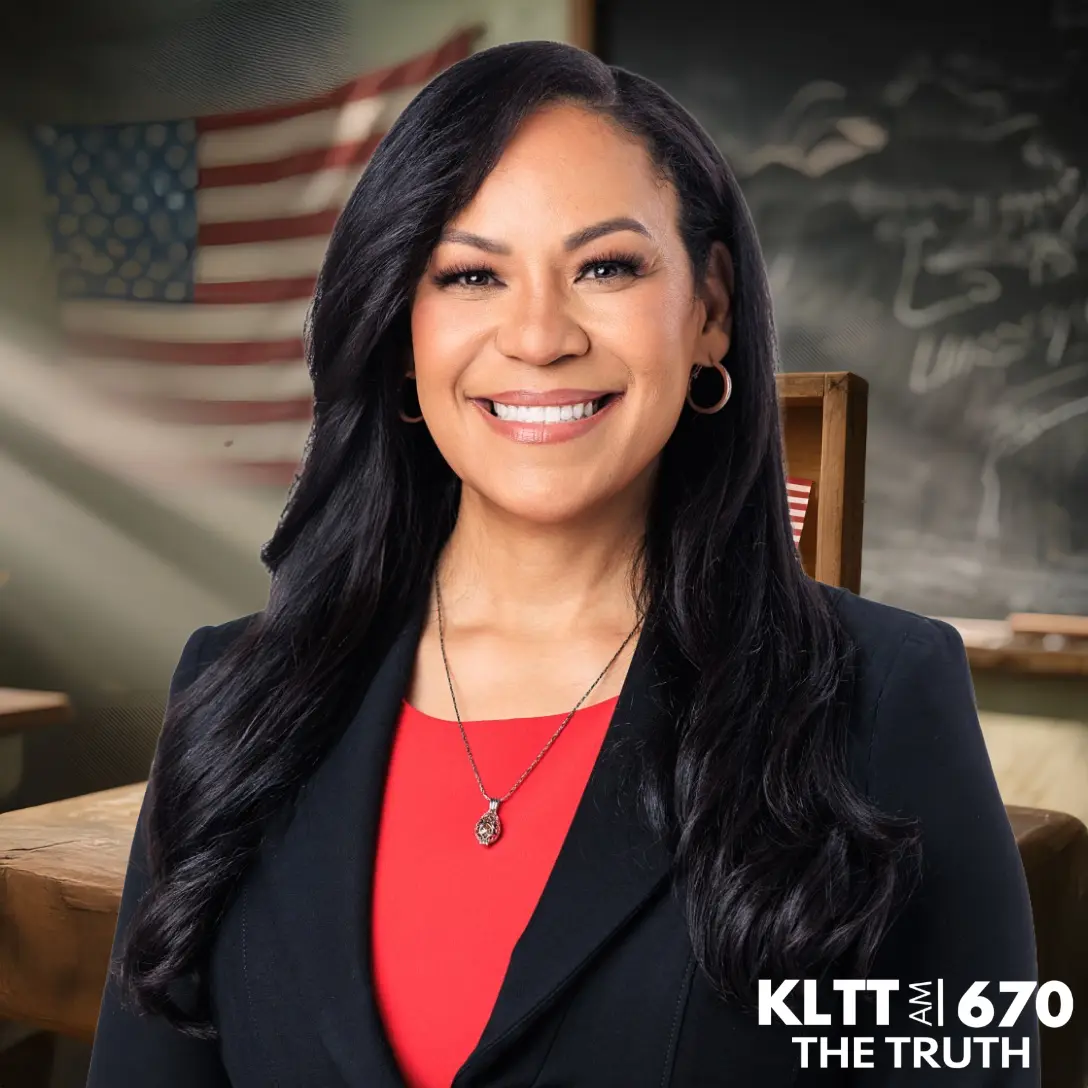
Welcome to Restoring Education in America with Priscilla Ron. She’s a master educator and author, leading the conversation to restore the American mind through wisdom, virtue, and truth.
SPEAKER 01 :
Well, hello, hello, everybody. Welcome back to Restoring Education. I’m your host, Priscilla Ron. I’m so excited you’ve decided to join the conversation today. I have an amazing guest that I’m going to bring on the stage right now. Welcome, Mr. Kendall Qualls. How are you?
SPEAKER 02 :
Priscilla, hi. Thank you for having me. I’m doing great. Thank you.
SPEAKER 01 :
So I met you a couple of years back when you came to Colorado Springs for the LPR Leadership Retreat. And you were on a panel and I was so impressed. And I’m so glad to get to have a conversation with you for the next half hour. But before we go any further, for those people who don’t know you, I’m going to share a little bit of your bio with the listeners. So Kendall Qualls is a Republican candidate for governor in Minnesota. He is a husband of 40 years to his wife, Sheila, father of five and grandfather of two boys. He is a U.S. Army veteran and 30 year executive in the health care industry. During his childhood, Mr. Qualls lived with his divorced mother and siblings in public housing projects of Harlem, New York. He worked full time to pay his way through college, and he worked his way all the way up the ranks at several Fortune 100 companies before he became global vice president marketing at a $850 million business unit. Kendall is also the founder and president of the nonprofit foundation Take Charge, an organization that promotes that the promise of America is available to everyone regardless of race or social standing. Kendall Quall serves on the advisory board of the National Medal of Honor Center for Leadership. He also serves on the board of trustees of Crown College, a private Christian university in Minnesota, as well as the board of Hope Farm School, a school for at-risk boys from Minneapolis. His message has reached millions of people as a speaker and as a guest on Fox and Friends, The Dennis Prager Show, and several other national and regional radio programs. He’s been published in the New York Post, Washington Examiner, The Federalist, The Daily Wire, Real Clear Politics, The Christian Post, and the Minneapolis Star Tribune. He recently authored a book, The Prodigal Project, Hope for American Families. Oh my goodness, we’re not worthy. Kendall, welcome.
SPEAKER 02 :
Glad to be here. It’s such an honor.
SPEAKER 01 :
Well, I know you’ve been busy on the campaign trail. You’re running for governor. That’s amazing. Thank you for doing that. You’ve served on several boards connected to education and youth development. How have those roles influenced your understanding of the challenges that students and families face in Minnesota?
SPEAKER 02 :
Well, let me give you an idea. Let’s start from the origin. I came from a broken family. My parents divorced when I was young. I lived in inner city Harlem, went to an inner city school, public school, from first to fifth grade. And then my father got me and my younger brother to live with him in Oklahoma. He was still on active duty, drill sergeant, and we lived in a trailer park. So I’ve seen the extremes of probably the bottom rung of public schools, but I got enough to be competitive to be in the marketplace in publicly traded companies. I got enough. Unfortunately, today, our kids from across the nation are not getting the education I received to be competitive in the marketplace today. That is a tragedy because the gateway for the opportunity in our country is a decent education, a strong education. And unfortunately, our kids are not getting that today. In fact, not only are they getting low academic preparation, they’re getting indoctrinated. They hate their own country. So those are issues that are very paramount to us. My wife and I both have started a Christian private school in the first ring suburbs here in Minneapolis to give working class families, poor families an option other than the public schools that are not providing a future for their kids.
SPEAKER 01 :
Well, first of all, thank you for your service. My father was in the Army as well, and I’m a proud Army brat. And we traveled all over the world. It was wonderful. And I learned how to love my country from my father and how to stand for the pledge and be patriotic. So thank you for serving our great nation. That’s really admirable. So this school, it’s called Hope Farm School, and their mission is to – to discipline, train, and educate young men in the spirit of Jesus Christ, all in a farm setting. And I thought, oh, that is so cool because I’m a member of the Douglas County Farm Bureau and I love going to their 4-H events and things like that. With Minnesota having a diverse education landscape from urban schools to rural districts, what has your work with the organizations like like Crown College and the Hope Farm School taught you about the needs of these different communities?
SPEAKER 02 :
Yeah. You know, at the end of the day, what we want to be able to do is educate our young people to think critically, to actually have a grasp of the basics of education from a math standpoint. reading, writing, all those different things. And also the sciences. So that used to be the norm in our culture. I tell people it’s amazing what we accomplished as a nation when all we had was a piece of chalk and a chalkboard, right? And we basically, everyone got trained in the classics of what they need to read from that perspective. And obviously the basics of science and all that was with that. We did all of that. became the most robust nation from, you know, from an economic standpoint, industry and put a man in the mood. We did all of these different things, desegregated our nation, all that before we had the Department of Education. So and as it relates to the school, the school that I’m on, the board that I’m on, we what we do, we we take these kids that are basically have dropped between the cracks of public schools. They are so far behind that they can’t even go to one of the private schools, Hope Academy, that’s there in the inner city of Minneapolis because there’s like three, four grades behind in reading, math, that they couldn’t keep up in like seventh or eighth grade. So we have a boarding school. It’s a 400-acre farm. And these kids stay there from Monday through Friday. They get to go home on the weekend. And this is not a punitive thing. These kids are not, they haven’t been jailed or haven’t been in juvenile detention. We want to get them before it leads in that direction. And so they raise cattle. They have a beef farm on there. So they sell the honey. They raise pigs, all those different things, just like a working farm. It’s actually terrific. And we’re teaching these kids not the value of work ethic, as well as the academic component, get them caught up on their academic readiness for adult life.
SPEAKER 01 :
If you’re just tuning in, my guest today is Kendall Qualls. He’s a candidate for governor for Minnesota, and he has been on many education boards. I’m sure you’ve been watching the news over the past few years where parents Parents were called terrorists for showing up to school board meetings and trying to advocate for their children as they saw things happening in their schools and they didn’t know that their children were learning or I should say being indoctrinated. at school and how they were turned away and ridiculed and basically not welcomed into the educational process of their children. How do you view the role of parents in school governance?
SPEAKER 02 :
Well, it’s primary. I mean, the parents are the primary advocates for education for their children. And what our public schools are is they’re there as partners with parents for a complete application, comprehensive education and readiness for our kids. And so from my perspective, Priscilla, this is not preparation for college, it’s preparation for life because a student could choose to go into trades or they can go to college or whatever their decision, their technology degree. There are a lot of professions now that don’t require a college education. And so when I was a kid growing up, We had vocation and technical education in high school. Well, just because someone wanted that track didn’t make them, oh, that’s their plan B or they’re not good enough. That was never the acquisition for these kids, but it has become so today, unfortunately. And the trades should have never been taken out of high school. And we’re suffering for it now. If you think about the overall profession of trades now, These guys are aging out, they’re retiring, and there’s not a backfill for these guys. The second part of this is that these guys have a successful life and they don’t have a college debt. There’s no market for these guys with a bachelor’s degree in liberal arts in the marketplace today like it was when I was growing up.
SPEAKER 01 :
Yeah, I was about to go there and you beat me to it. So talking about the college debt and how we talk about college and career ready, but we’ve taken a lot of these trade schools out of the public education system. I remember as a young teacher teaching at a high school, the high school kids would change my oil for free at the high school while I was teaching because they were in shop class and they learned how to do that. And it was a win-win because I didn’t have to pay for an oil change and they learned how to change oil. And that’s so practical that these young people would be able to go straight from high school into a career, making a great income without the debt in a field that they could actually grow, buy a home, raise a family straight away versus someone like me who got into a lot of debt in education and then got out making $18,000 a year and had a lot of debt. So I think that’s really important to continue to talk about, especially in our community, in the Black community, where we’re trying to address the education gap and the economic gap What you’re doing, you and your wife, it’s amazing. So your nonprofit, Take Charge, focuses on strengthening families and promoting opportunity. You’re big on meritocracy, which we need to continue to to push that in our community, in all communities. OK, what do you believe schools should be doing to better support strong family involvement?
SPEAKER 02 :
Yeah, here’s the scenario we’re in today. It’s unfortunate. There’s two things. So the reason why we got involved in starting a private school is one of the things that we’ve discovered is when we would send our young families out to after school programs in the black community, and we would tell these elementary, middle school kids, hey, look, you can have the same life too. You can be successful. Your past or your parents’ past doesn’t have to be your future. And so all you have to do is these three, the success sequence, if you will, get an education, you know, get a job first. If you go to college or trade, doesn’t matter. Get married, then have children. And these young kids will say, well, wait a minute. Why do I need to get married first? No one’s ever told me that, you know, no one in their communities are married. So we said, oh, my God, we got to start from the very beginning of this thing. They’re not being taught this sequence, this moral education. Many times at home, at church, many of these churches, they may not go to church. And unfortunately, some of these churches don’t even teach that. And they’re definitely going to not be taught that in public school, not today. So we felt that we needed to add a not only academic high expectations of academic standards, but we need to start teaching a moral education. And the third leg of this three legged stool is civic education. You know, there’s Vody Bachman, you know, God bless him. He’s passed away now. He’s he once said that there are black people all around the world that would love to call themselves American citizens, except native born black Americans. We’re being taught to hate the country. It’s sad. And I’ll give you an example. And it spans not just in the black community, but everywhere. There was a survey done of 41,000 Americans. And of this survey, all they did was give these Americans the US citizenship test, the same test you got to take as an illegal immigrant. If you were 60 and older in this test, the results of this test, those that were 60 and older, 74% of them passed the test. And it’s not like these 60-year-olds are in schools anytime soon. There weren’t any refresher programs. But those that were 45 years and younger, only 19% could pass the U.S. citizenship test. And here’s the scenario on this. Here’s the reality. It’s not like these 45 and younger have a lower IQ. They were never taught it. In fact, they were taught all the sins of our nation and none of its virtues. And it’s being deliberately done, Priscilla. I mean, a lot of these teachers’ colleges have socialist Marxist professors, and they’re not going to teach the virtues of our country. They’re going to do things to undermine our country, and they’ve done it. You’re not going to be an advocate for your country if you don’t know anything about it. You’re not going to enlist or be involved in the military if you’re not proud of your country. And that’s what we’ve done to a generation of young people that are the least patriotic of any generation in our nation.
SPEAKER 01 :
You’ve hit the nail on the head when you talk about the church and the responsibility and the weight of, the church has the ability to change the culture, to move the Overton window and change how young people start to think about themselves and how they interact in the United States and what their future looks like. I mean, that is so critical. My guest today is Kendall Qualls. He is a candidate for governor. He’s a Republican candidate for, oh my goodness, a conservative, a Black conservative running for public office. Yes. I mean, that’s not the most important thing about you, but we’re a little bit of a unicorn. He’s also a Project 21 ambassador where We lend our voice in the public space because the left tries to give a narrative of who we are. They try to put us in a box and say, because you are black or a descendant of enslaved Africans, that you must think a certain way. But I think like you, the more we learn about our history and the great things our nation has done, it makes us understand and love our country more. And to your point where you said You know, the citizenship test. My mother is an immigrant. My husband is an immigrant. They both had to take the citizenship test. In fact, I’m amazed at how much my immigrant mother knows about U.S. history. I remember one time like you, I ran for office and I didn’t win the first time or the second time. But my mom said. Priscilla, don’t worry. Abraham Lincoln ran eight times before he became president of the United States. And I thought, how did you know that? So you’re right. We need to, in our universities, do a better job of preparing educators to teach civics. in an honest way and to teach it comprehensively so that young people can grow up believing that they are in a land of opportunity and there’s nothing that can keep them from using their mind and creating and pulling themselves up with their ambition, just like you did. There’s no excuses. Right. There’s no excuse for you. And your life mirrors, unfortunately, so many young people. But what’s the difference between you and someone who is still living in poverty? You just.
SPEAKER 02 :
Well, you know what? I’m glad you said that because people say, well, you’re exceptional. I tell. Look, I’m not exceptional. I have an average IQ on my best days. You know what? I live in an exceptional country. I serve an exceptional God. anyone can accomplish this. Now here’s the dramatic thing about this, Priscilla. You just mentioned we’re unicorns. We do surveys amongst Black Americans across the country every year for the last three years. And these surveys are pretty expensive. They’re five figures cost, but we use national polling companies because we want it accurate and we want it valid. And we have Black Americans They have said that the federal government should be incentivizing two-parent families instead of incentivizing single-parent homes. 80% for the last three years, over 80% suggested that. You would never know that if you listen to mainstream media. The second one is that the vast majority of Black Americans, 75% or higher, want school choice for their children because they don’t believe that their children are getting prepared for the future as adults. They want school choice. Not even black elected officials in their own communities are advocating school choice because they’re owned by the school, the teachers unions. They’ll never go against them, even though the vast majority of people in their communities want it. So we are probably the most censored demographic in the nation majority of black america
SPEAKER 01 :
Yeah, I saw some data that said 80 percent of black and Hispanic parents are pro school choice.
SPEAKER 02 :
That’s right.
SPEAKER 01 :
And we don’t want to defend. I know as a teacher, I’m still a full time teacher in the classroom. I no longer can defend a system that is holding our kids back and under delivering on the promise that we made to students. We have to do better. So let’s let’s talk a little bit about Minnesota, according to. To Kids Count education ranking in 2024, Minnesota is 19th in the nation. It dropped from its historical top 10 status. And nearly one in three Minnesota students is chronically absent. That’s like 10% or more days. If elected governor, what are some education reforms you would like to pursue?
SPEAKER 02 :
Yeah, so again, this is really a back to the basics run. It’s an accelerated run to back to the basics. So number one, when you think about phonics reading, that is a primary foundation. I obviously want school choice, but even in those states that have school choice, universal school choice, nearly 70% of kids are still in public schools. So the vast majority of parents and kids are coming out of that system. So we need to improve it. It is about academic readiness. And so we’re going to do that. And it’s going to be around getting the curriculum, the pedagogy all corrected and updated. So we are then focused on academic performance, meritocracy, and those things that we know that worked, as I mentioned, vocational education back in the high schools. And I’m a big favor of those that have done it should teach it. See one, do one, teach one. And think about those people that are semi-retired or retired that had a career 10 plus or more years as a nurse, as an accountant. They go back into public schools and lend their experiences directly to these students. So I’m going to be looking at those type of innovative type things. that we can do to help our kids perform well?
SPEAKER 01 :
Yeah, it’s such a simple thing, right? Going back to the basics, phonics, everybody’s talking about that. What happened to phonics that we need to bring that back and also creating an environment for teachers where they feel safe at school because we know we have we’re starting to see an epidemic of, you know, not safe schools and with President Trump signing his executive order, ending DEI and the Department of Ed. All of those decisions now are coming back to the state level. And I feel like it’s a great opportunity for more local control, which is, you know, decisions closest to the people is the best decision.
SPEAKER 02 :
Right. And if I could weigh in on there, and what’s the sad part about this in our state of Minnesota, we have a governor here that came out of the education system. So the fact that has gone from number seven down to number 19 and literally four years under his watch says a lot. So I don’t want to make this about politics is not. This is really about education and performance. I mean, the numbers speak for themselves that that ranking that you I believe is the foundation. It’s it’s a it’s a public scorecard. It’s not a political scorecard. There there are black kids in Mississippi reading far much higher in academic performance at grade level than black kids in Minneapolis. Literally, black kids in Mississippi are rated number one in fourth grade reading. Black kids in Minneapolis have dropped to number 39 in the nation.
SPEAKER 01 :
Yeah, and someone may ask, why does it matter, the skin color? Well, it shouldn’t be happening, period. We have had access to public schools since the 60s, as far as segregation is no longer a thing in our public education system. We have the same access an opportunity as any child growing up in the United States. And so we have to take a look. We have to diagnose why is it that we still have an education disparity? Why is it that we still have an economic disparity? Part of that responsibility, I believe, falls back on our community. Part of that falls back on us. As you mentioned earlier in the interview, women and men being married. I mean, that’s the true privilege. My father married my mother. They were married at the time of my birth. They were still married at the time I graduated from high school. That is privilege.
SPEAKER 02 :
And so if I can, if I can, that’s not privilege. That’s the way it should be. That’s the standard. In fact, if I may, there was a study done in California five years ago And offline, I’ll get you the name of the professor that did this. And he was a university professor out of California, California State University, did a meta analysis, tens of thousands of black and Latino kids. And he said, with from these kids that were black and Latino from married families, from religious married families, the academic gap, performance gap disappeared. that there was no academic performance gap from these families. Now, I would think that, wow, this study has been around for five years. Why haven’t we have heard that from the NAACP, the National Urban League, and a lot of our churches should be promoting this? We’re definitely not going to hear from our liberal media. But the formula works. And the reason why we still have these persistence gaps, to your point from the 60s, is because marriage has declined in the black community from 80% two-parent families when I was a kid to 80% fatherless homes without one initiative to reverse the trend. That’s one of the main drivers behind not just academic disparities, we see it financially, we see it socially, all of these different things. is the key driver is the fatherless home crisis in our communities.
SPEAKER 01 :
Well, and that needs to be the message going forward, loud with a bullhorn to our community. Get married first, then have babies. Well, graduate from high school. Let’s start there. Get married, have babies, get a job, do all the things in the right order. I cannot believe, Kendall, we’re out of time. What we are. And our plane. But before we go, we have about, you know, 30, 40 seconds. First, where can people find you? Tell me, where can people find you?
SPEAKER 02 :
Sure, sure. So they can find out more about our organization, Take Charge, at TakeChargeUS.com. And I have a website at KendallQuals.com, my first and last name, .com. And there you can find out more about my book, the initiatives that I’m involved in politically, as well as helping to make our state much better than it was just a few short years ago, 10 years ago.
SPEAKER 01 :
Give us the name of your book and where they can find it.
SPEAKER 02 :
Yeah, it’s at Prodigal Project. You can find it at Amazon and all the other bookstores you go to.
SPEAKER 01 :
And if you want to support Kendall Qualls for his campaign, you can go to his website, because when you’re running for office, it takes money to advertise and get out there, pay for gas, all the things. And, you know, Minnesota deserves a governor that’s going to stand for the people, that’s going to turn things around. Policy matters. It’s important. So go out and support Kendall Qualls. And to my guests, thank you so much for tuning in to Restoring Education in America. I’m Priscilla Ron, your host. I hope you join me next time. And remember that educating the mind without the heart is no education. So seek wisdom, cultivate virtue, and speak truth.
SPEAKER 03 :
Thanks for tuning in to Restoring Education in America with Priscilla Ron. Visit PriscillaRon.com to connect or learn how you can sponsor future episodes to keep this message of faith, freedom, and education on the air.
